
Introduction
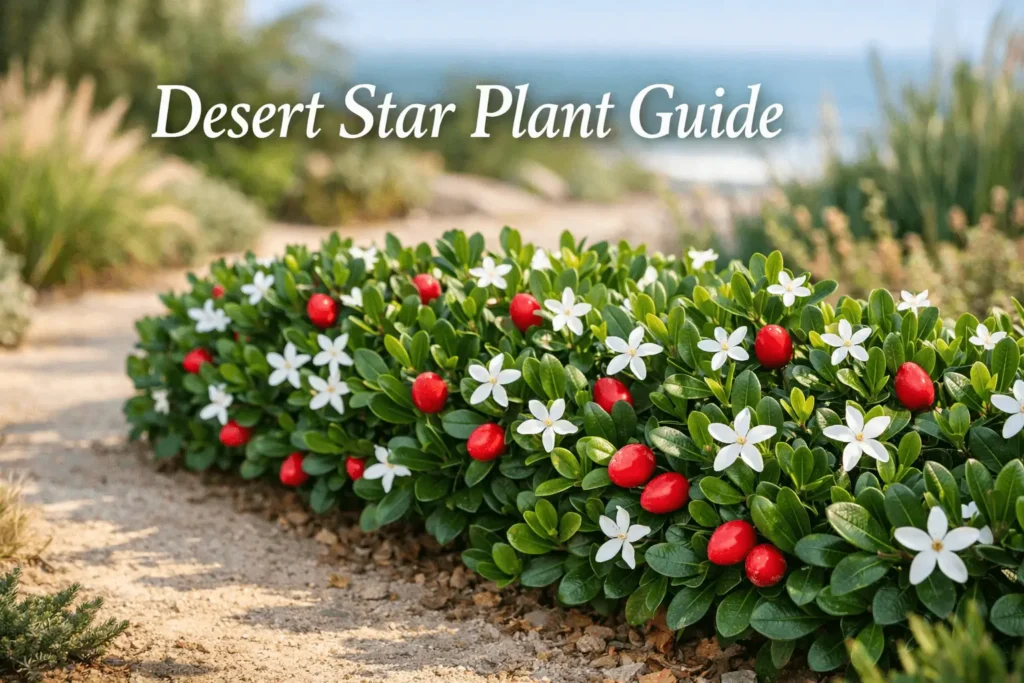
The desert star plant is a compact evergreen shrub valued for its glossy foliage, fragrant white flowers, and edible red fruit. Scientifically known as carissa macrocarpa desert star, this plant is a dwarf cultivar of natal plum (Carissa macrocarpa). It is widely used in coastal gardens, landscape borders, and low hedges because of its dense growth and salt tolerance. Native to southern Africa, the plant adapts well to warm climates and is popular in regions such as natal plum Australia gardens. In landscape design, it is valued for both ornamental appeal and practical use as a hedge or border shrub. This guide explains how the plant grows, how it is used in carissa desert star landscaping, and how to care for it successfully.
What Is the Desert Star Plant?
The desert star plant is a dwarf cultivar of Carissa macrocarpa, commonly known as natal plum. This cultivar, called carissa macrocarpa desert star, was developed for residential landscaping where a compact and manageable shrub is preferred. Unlike larger natal plum varieties, desert star plants grow in a lower, spreading form that makes them suitable for hedges, borders, and foundation planting. The plant belongs to the Apocynaceae family, which includes several ornamental shrubs known for evergreen foliage and fragrant flowers. The desert star cultivar differs from larger varieties such as carissa grandiflora natal plum, which can grow into large shrubs. Desert star remains smaller and more compact, making it easier to maintain in residential gardens. Because of this controlled growth habit, it is frequently used as a hedge or ornamental shrub in landscape design.
The desert star plant is a dwarf cultivar of Carissa macrocarpa, commonly known as natal plum. The species itself originates from southern Africa and belongs to the Apocynaceae plant family.
Plant Characteristics and Botanical Identity
The species Carissa macrocarpa is an evergreen shrub native to southern Africa and widely cultivated in warm climates. The plant is commonly referred to as the natal plum plant or carissa natal plum, depending on regional naming conventions.
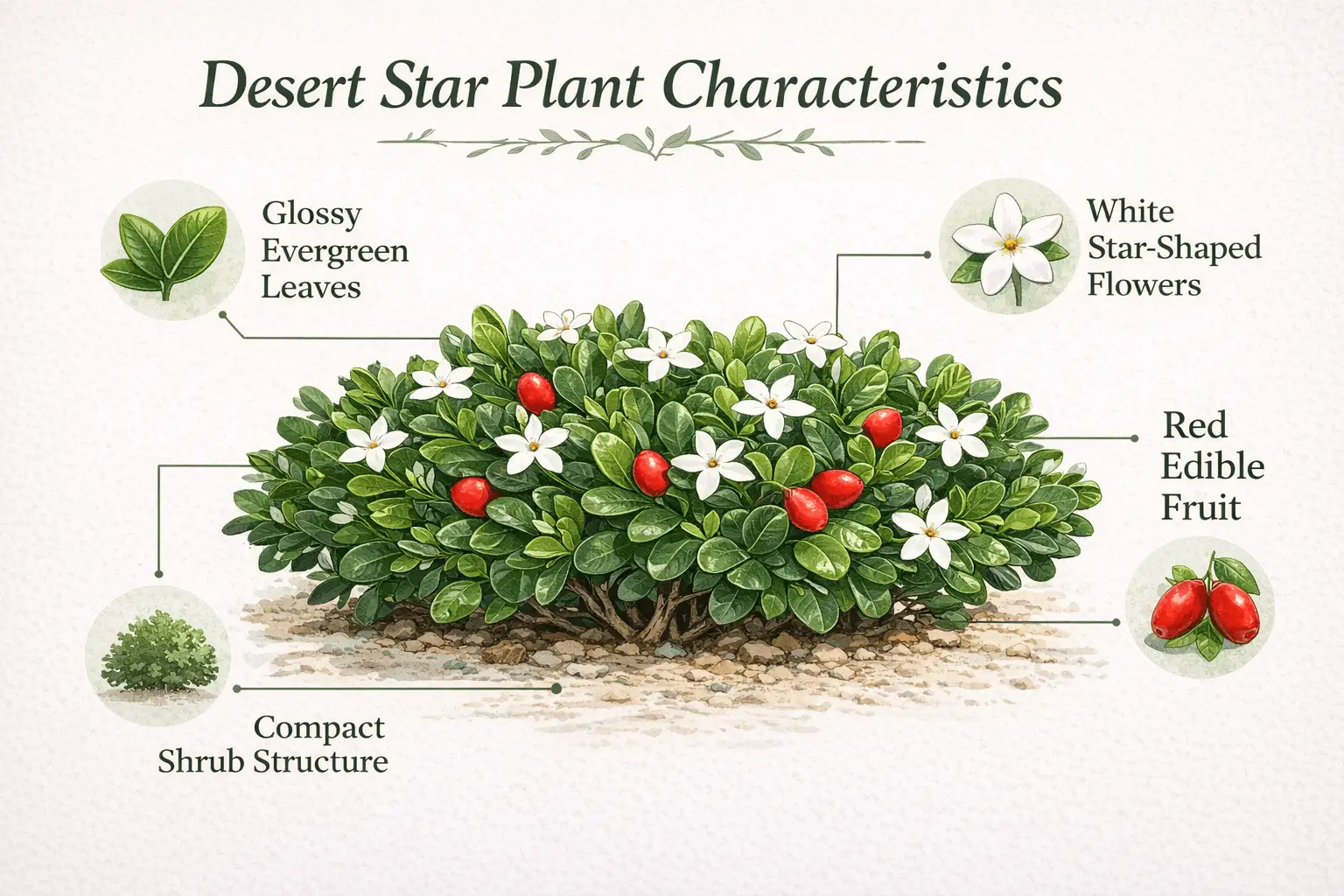
The desert star cultivar shares the main characteristics of the species while maintaining a smaller size. Key botanical traits include:
- Dense evergreen shrub growth habit
- Thick, glossy dark-green leaves
- Fragrant white star-shaped flowers
- Bright red edible fruit
The flowers typically appear during warm months and are known for their pleasant fragrance. After flowering, the plant produces oval red fruit that resembles small plums.
In many coastal landscapes, especially natal plum Australia gardens, the plant is appreciated for its durability and ornamental value.
Plant Size
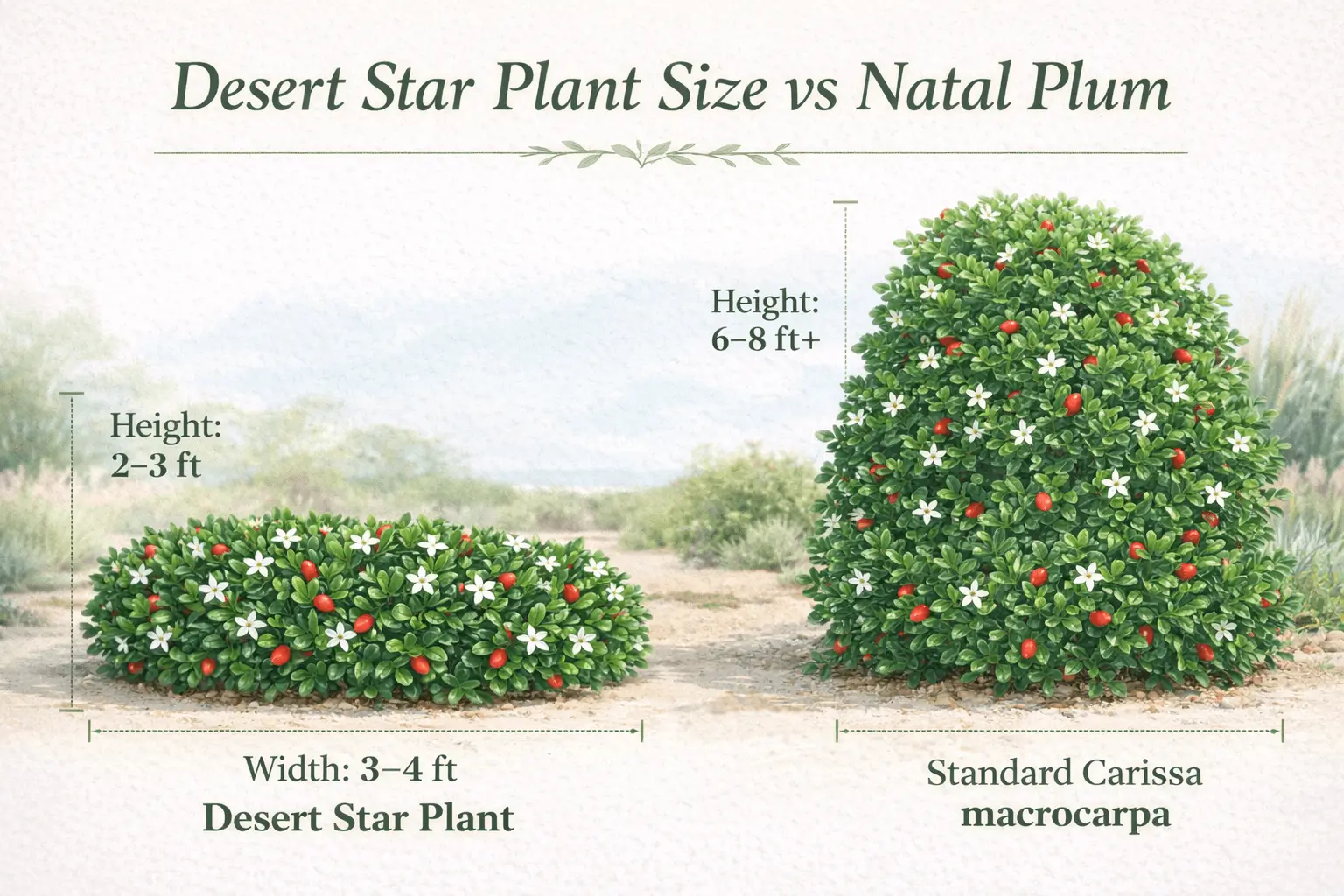
The desert star plant height and width are smaller than those of standard natal plum shrubs. At maturity, the plant typically grows between 2 to 3 feet tall and 3 to 4 feet wide.
This compact size makes it well suited for low hedges and border plantings. In contrast, standard Carissa macrocarpa varieties can grow significantly larger, often reaching several meters in height.
Environmental conditions can influence the plant’s size. Factors affecting growth include:
- Sunlight exposure
- Soil fertility and drainage
- Pruning frequency
Regular pruning helps maintain a dense structure when used as a desert star plant hedge.
Growth Rate
The carissa desert star growth rate is generally considered moderate. While the plant is sometimes described as fast growing, its growth is usually steady rather than rapid. In warm climates with consistent sunlight and well-draining soil, the shrub gradually expands into a dense form suitable for hedges. Seasonal growth typically increases during warmer months. Cooler weather slows development but does not usually harm established plants. Soil quality and environmental conditions also affect growth speed. Plants growing in well-drained soil with sufficient sunlight tend to develop more quickly and maintain healthier foliage.
Care Guide
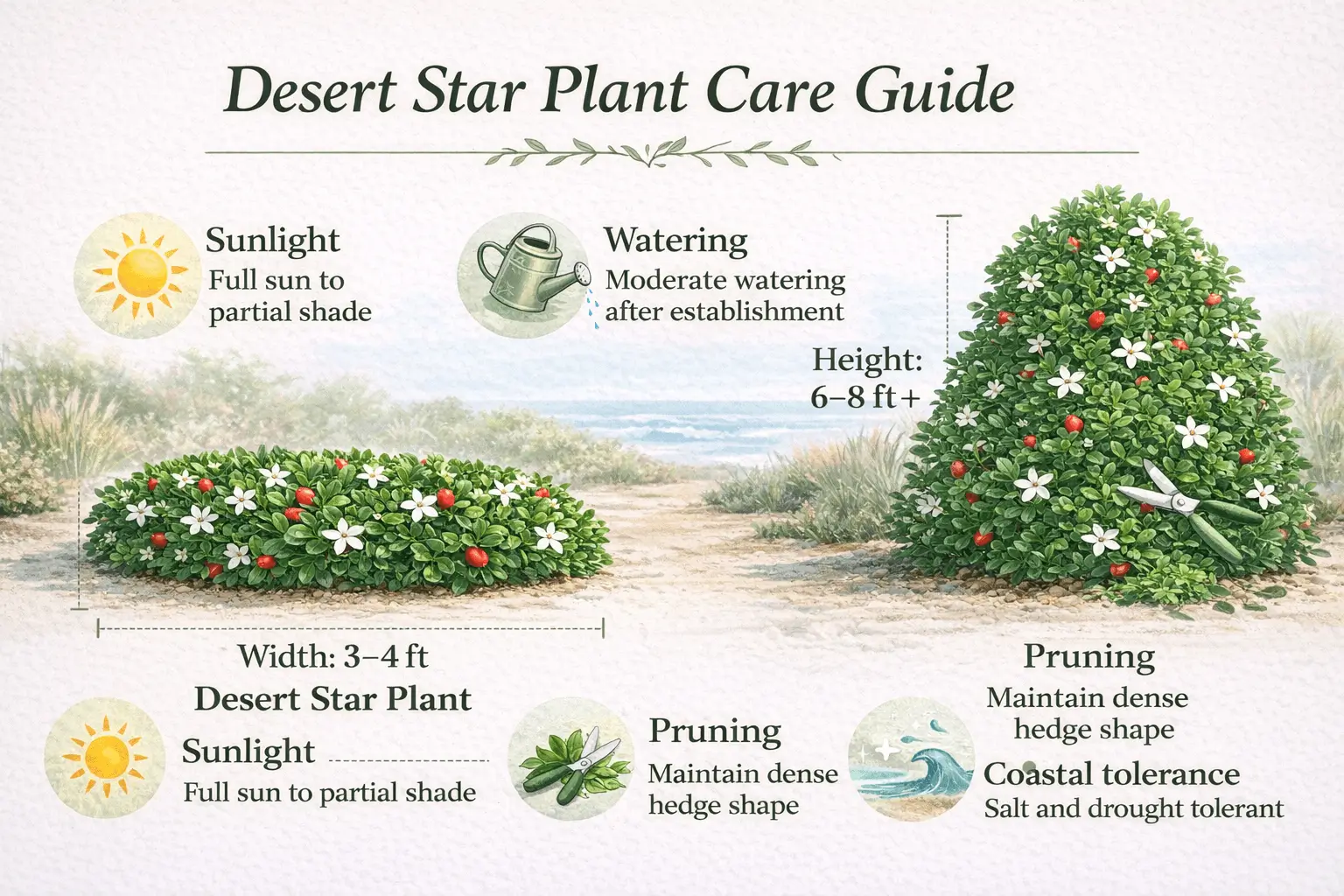
The desert star plant is considered relatively low maintenance when grown in suitable conditions.
- Watering is most important during the establishment phase. Newly planted shrubs should be watered regularly until roots develop. Mature plants become more drought tolerant and require less frequent watering.
- The plant grows best in full sun to partial shade. Adequate sunlight encourages stronger flowering and denser foliage.
- Well-draining soil is essential because poor drainage can lead to root problems. Sandy or loamy soil works particularly well.
- Fertilization can support healthy growth and flowering. A balanced fertilizer applied during the growing season helps maintain vigorous foliage.
- Pruning is commonly used in carissa desert star landscaping, especially when shaping hedges. Regular trimming encourages dense branching and maintains the plant’s compact structure.
- The plant also shows strong tolerance to coastal conditions, including salt spray and drought.
Desert Star Plant Fruit and Edibility
The desert star plant fruit resembles the fruit of the natal plum plant and is edible when fully ripe. The fruit is typically bright red and oval in shape.
The taste is mildly sweet with a slightly tart flavor. In some regions, the fruit is used in jams or eaten fresh.
However, not all parts of the plant are edible. Like other members of the Apocynaceae family, the plant contains a milky latex sap that may cause irritation if ingested or handled improperly.
This latex often leads to confusion about whether carissa desert star poisonous concerns are valid. The fruit itself is edible, but caution should be used when handling other parts of the plant.
Landscaping Uses of Carissa Desert Star
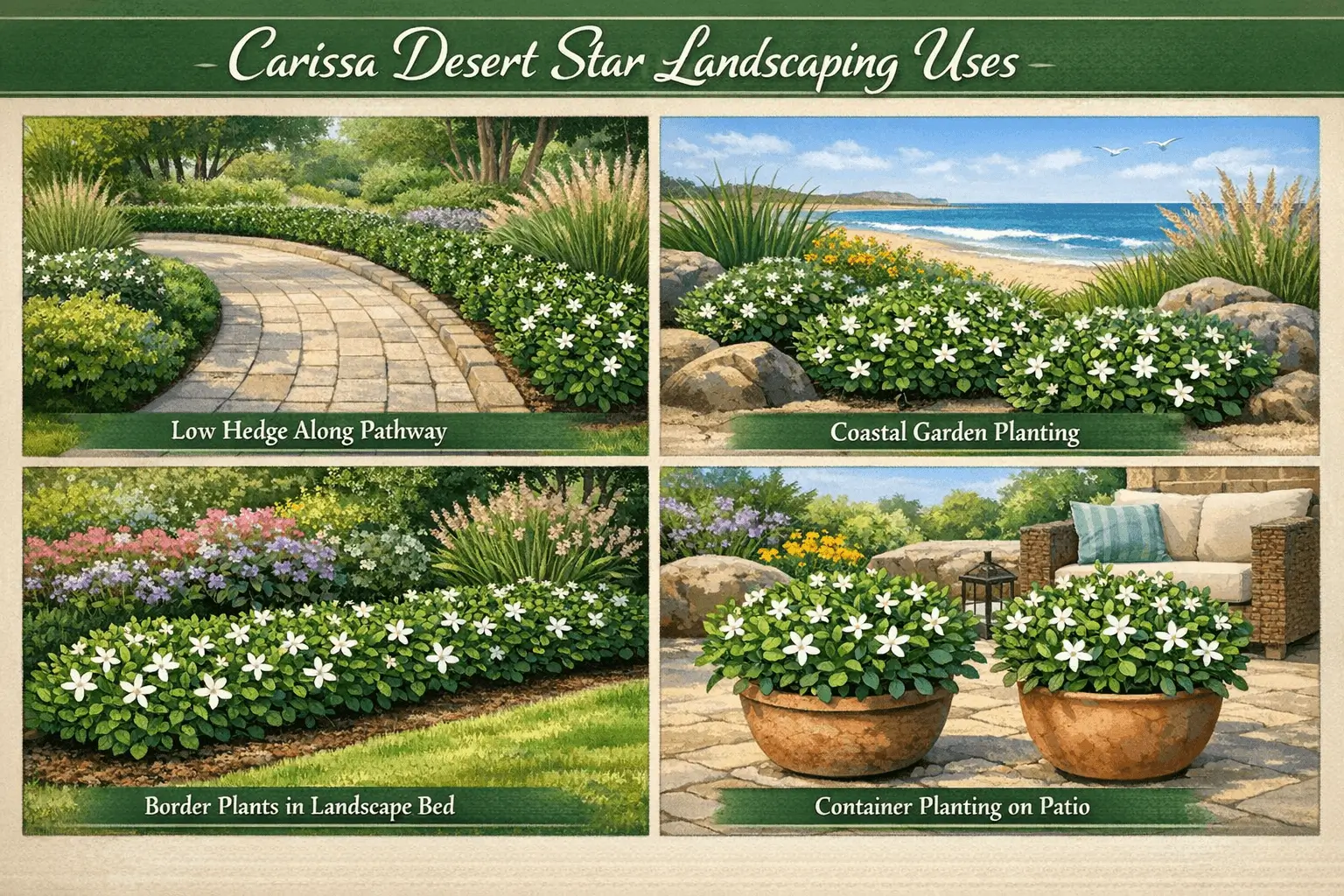
The shrub is widely used in carissa desert star landscaping due to its dense growth habit and ornamental appearance.
Common landscape uses include:
- Low hedges
- Garden borders
- Coastal plantings
- Container gardens
When planted closely together, the shrubs form a dense carissa desert star hedge that can provide privacy or define garden spaces. Because the plant responds well to pruning, it is easy to maintain in structured landscape designs. Carissa desert star hedges are often used alongside other dense shrubs in privacy landscaping. Gardeners looking for taller options can also explore Tropical Screening Plants to create layered garden screens.
When designing hedge rows, spacing is an important factor for creating dense coverage. For comparison with other hedge plants, gardeners often refer to guides like How Far Apart to Plant Lilly Pilly for Dense Hedges when planning structured garden borders.
Comparison With Similar Landscape Shrubs
The desert star plant is sometimes compared with shrubs such as oriental pearl rhaphiolepis and oriental pearl indian hawthorn.
These plants share similar uses in landscape design, particularly as hedges or border shrubs. However, several differences exist.
Desert star plants have thicker evergreen foliage and produce fragrant white flowers followed by red fruit. Indian hawthorn varieties typically produce pink or white flowers and do not produce the same edible fruit.
Gardeners often choose desert star plants when they want a more compact hedge with strong coastal tolerance.
Propagation Methods
The most common desert star plant propagation method involves stem cuttings.
Semi-hardwood cuttings taken from healthy plants can be rooted in well-draining soil or propagation media.
Successful propagation usually requires:
- Warm temperatures
- Indirect sunlight
- Consistent moisture without waterlogging
Propagation tends to be most successful during the active growing season when the plant is producing new growth.
Common Desert Star Plant Problems
Although relatively hardy, the plant can occasionally develop carissa desert star problems.
Common issues include:
- Poor drainage causing root stress
- Yellowing leaves
- Slower growth
- Occasional pest activity
Most problems are related to environmental conditions rather than disease.
Why Carissa Desert Star Problems Occur
Plant problems often result from improper growing conditions.
Overwatering is a common issue because the plant prefers well-draining soil. Excess moisture can stress roots and reduce plant vigor.
Other causes include:
- Heavy clay soil that retains water
- Insufficient sunlight
- Improper pruning practices
Identifying the underlying cause helps restore plant health.
How to Fix and Prevent Plant Problems
Proper care practices can prevent most desert star plant problems.
Watering should be moderate, allowing soil to dry slightly between irrigation cycles.
Improving soil drainage is important when planting in heavy soil. Adding organic matter or planting in raised beds can help.
Placing plants in areas with adequate sunlight encourages stronger growth and reduces stress.
Regular pruning also improves airflow and helps maintain the plant’s natural structure.
Environmental Limitations and Growing Conditions
Desert star plants perform best in warm coastal regions and Mediterranean-style climates.
The plant tolerates drought and salt spray, which makes it suitable for coastal landscaping.
However, certain environmental factors can limit growth:
- Frost exposure
- Waterlogged soil
- Heavy shade
Protecting plants from prolonged cold conditions helps maintain healthy foliage.
Where Desert Star Plants Are Commonly Grown
The plant is widely grown in warm regions around the world. In particular, it is commonly used in natal plum Australia landscapes, where it serves as a reliable hedge or ornamental shrub. The plant is also popular in suburban gardens, coastal landscapes, and residential developments where durable evergreen shrubs are required.
Beginner Mistakes When Growing Desert Star Plants
- Several common mistakes can affect the health of desert star plants.
- Planting shrubs in poorly drained soil often leads to root stress.
- Overwatering newly planted shrubs can also slow establishment. While young plants need consistent moisture, excessive watering can damage roots.
- Another common mistake is planting in heavy shade. The plant performs best with sufficient sunlight.
- Finally, neglecting regular pruning may cause hedges to become uneven or sparse.
Gardeners looking for additional planting inspiration, care resources, and comparison guides can explore the Desert Star landscape planning hub for more practical information.
Conclusion
The desert star plant is a compact evergreen shrub derived from carissa macrocarpa desert star, a cultivar of natal plum valued for its ornamental flowers, edible fruit, and strong landscaping performance. Frequently used in carissa desert star landscaping, this adaptable shrub works well as a hedge, border plant, or coastal garden feature. Its glossy foliage, fragrant flowers, and moderate growth make it both decorative and practical for residential landscapes. With proper sunlight, well-draining soil, and occasional pruning, the desert star plant remains a durable and attractive choice for warm-climate gardens.
FAQs
What is the desert star plant?
The desert star plant is a dwarf cultivar of Carissa macrocarpa, commonly known as natal plum. It is valued for its glossy evergreen foliage, fragrant white flowers, and edible red fruit.
How fast does the carissa desert star grow?
The carissa desert star growth rate is generally moderate. With adequate sunlight and well-draining soil, plants gradually develop dense foliage and can form hedges over several growing seasons.
Is the desert star plant poisonous?
The fruit of the natal plum plant is edible when ripe. However, other parts of the plant contain latex sap that may cause irritation if ingested or handled improperly.
Can desert star plants be used as a hedge?
Yes. The shrub is commonly used as a carissa desert star hedge because it grows densely and tolerates pruning well.
How do you propagate a desert star plant?
The most common desert star plant propagation method is rooting semi-hardwood cuttings in well-draining soil during the warm growing season.



2 Responses
Thank you for these excellent notes. They are the most comprehensive I have found online to date.
I have had a Desert Star in my garden for some years. It is positioned where it gets direct sun from around 10am to 4pm every day. It is potted and looks very healthy, but it has never flowered.
A major problem I am experiencing with it is that, instead of growing upright, it has spread itself out over the edge of the pot and over the ground. The branches are all spindly and would be incapable of bearing weight.
From the main stem outward, these branches are all bare and the leaf coverage only exists where the branches are in touch with the ground.
The plant is due for repotting. Due you think it is worth doing so, or is there some major problem which warrants my disposing of it? Would the plant survive a hard prune?
Hi Stephen, thank you so much for the kind words — really glad the guide has been useful!
What you’re describing is pretty common with Desert Star (Ceropegia/Huernia-type succulents, depending on which “Desert Star” you have) when they don’t get quite enough direct light or when the pot has gotten too small for the root system. A few thoughts:
Why it’s spreading instead of standing upright: Spindly, bare stems that only leaf out where they touch soil is a classic sign of the plant reaching for more light or energy. Even with 6 hours of direct sun, if it’s a bit filtered or the intensity drops seasonally, the plant can compensate by trailing rather than bulking up.
Should you repot? Yes — since it’s overdue, repotting will help. Use a fresh, well-draining succulent/cactus mix, and go up only slightly in pot size (an oversized pot holds excess moisture and can actually discourage flowering).
Will it survive a hard prune? Generally yes. These plants root very easily from cuttings, so a hard prune is low-risk — worst case, you’ve got cuttings to propagate as backup. I’d cut back the bare, spindly growth to just above a node, which should encourage bushier, more upright new growth instead of continued trailing.
On flowering: Non-flowering is often tied to light intensity, feeding, or root-bound stress rather than the plant being unhealthy — so this may resolve once it’s repotted and pruned back.
Would definitely repot rather than dispose of it — it sounds structurally salvageable, just needs a reset.