
Introduction
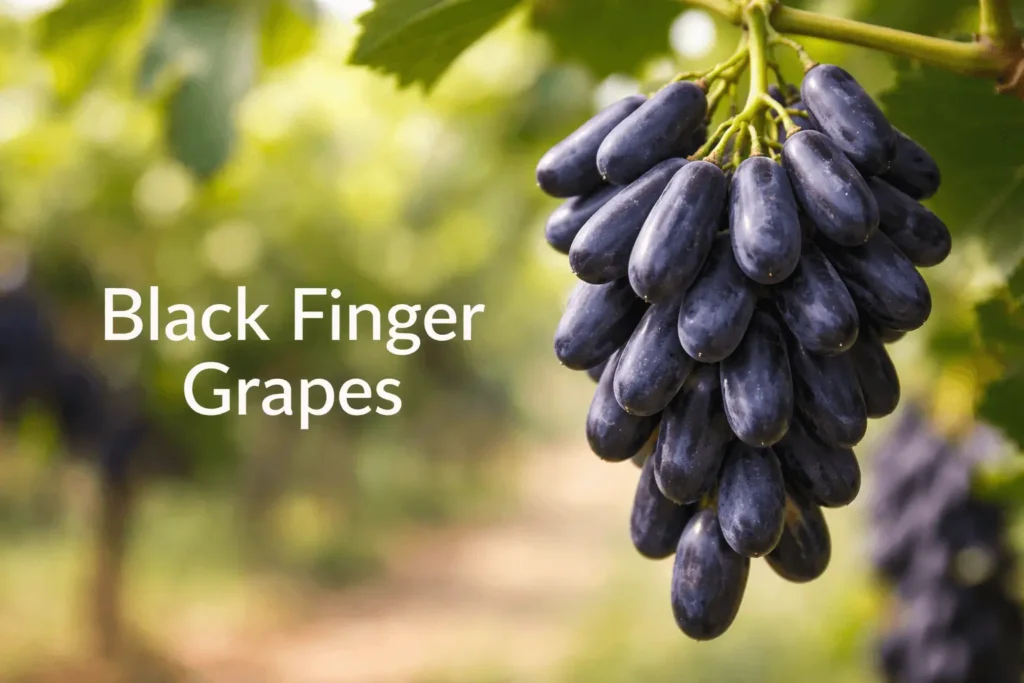
Black finger grapes are a unique variety of elongated, seedless table grapes known for their crisp texture, deep color, and naturally sweet flavor. Unlike traditional round grapes, these grapes have a distinctive cylindrical shape that makes them visually striking and easy to recognize. Often associated with varieties like Sweet Sapphire and Moon Drop grapes, they have gained popularity among fruit enthusiasts and home gardeners. Their appeal lies not only in their appearance but also in their firm bite, balanced sweetness, and suitability for fresh consumption.
Quick Summary
- Black finger grapes are elongated, seedless grapes known for sweetness and crisp texture
- They are commonly linked to varieties like Sweet Sapphire and Moon Drop grapes
- These grapes are edible, nutritious, and increasingly popular for home growing
- Growth, availability, and characteristics vary based on climate and cultivar
What Are Black Finger Grapes and How Do They Differ from Regular Grapes?
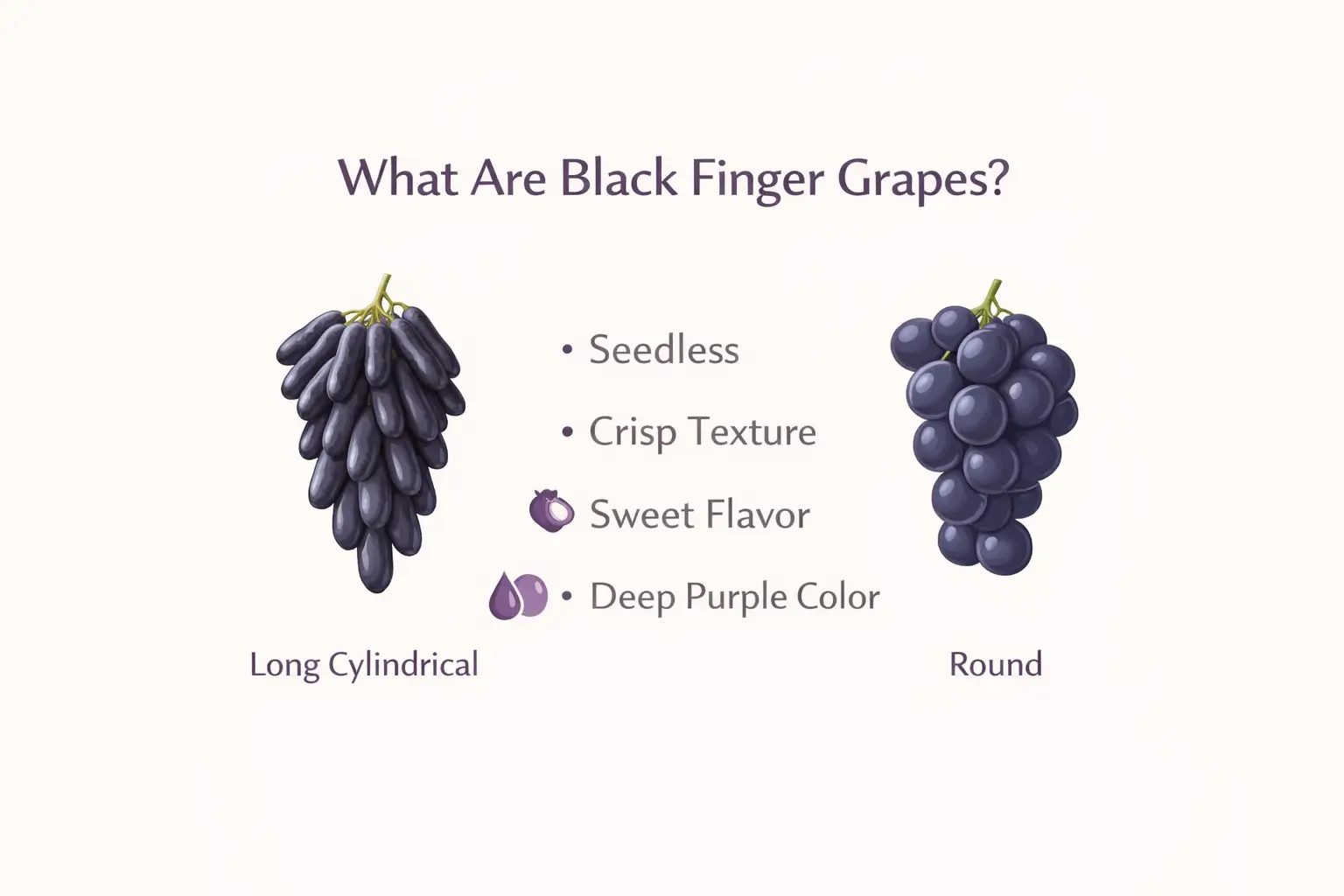
Black finger grapes are elongated grape varieties characterized by their cylindrical shape, seedless interior, and firm texture, unlike traditional round grapes which are typically softer and vary in seed content. These grapes belong to specialized cultivars of Vitis vinifera developed for unique appearance and taste.
They differ from regular grapes in several ways:
- Shape: Long and finger-like vs round or oval
- Texture: Crisp and firm vs soft and juicy
- Appearance: Deep purple to almost black color
Related varieties include sweet sapphire grapes and moon drop grapes, both widely marketed forms of black seedless finger grapes. Naming variations such as finger grapes, long finger grapes, and black seedless finger grapes often refer to similar or closely related cultivars across regions. Black finger grapes belong to the species Vitis vinifera, the same group that includes most cultivated grapes worldwide (learn more on Wikipedia).
Types and Varieties of Finger Grapes (Sweet Sapphire, Moon Drop, and More)
Key Finger Grape Varieties Explained
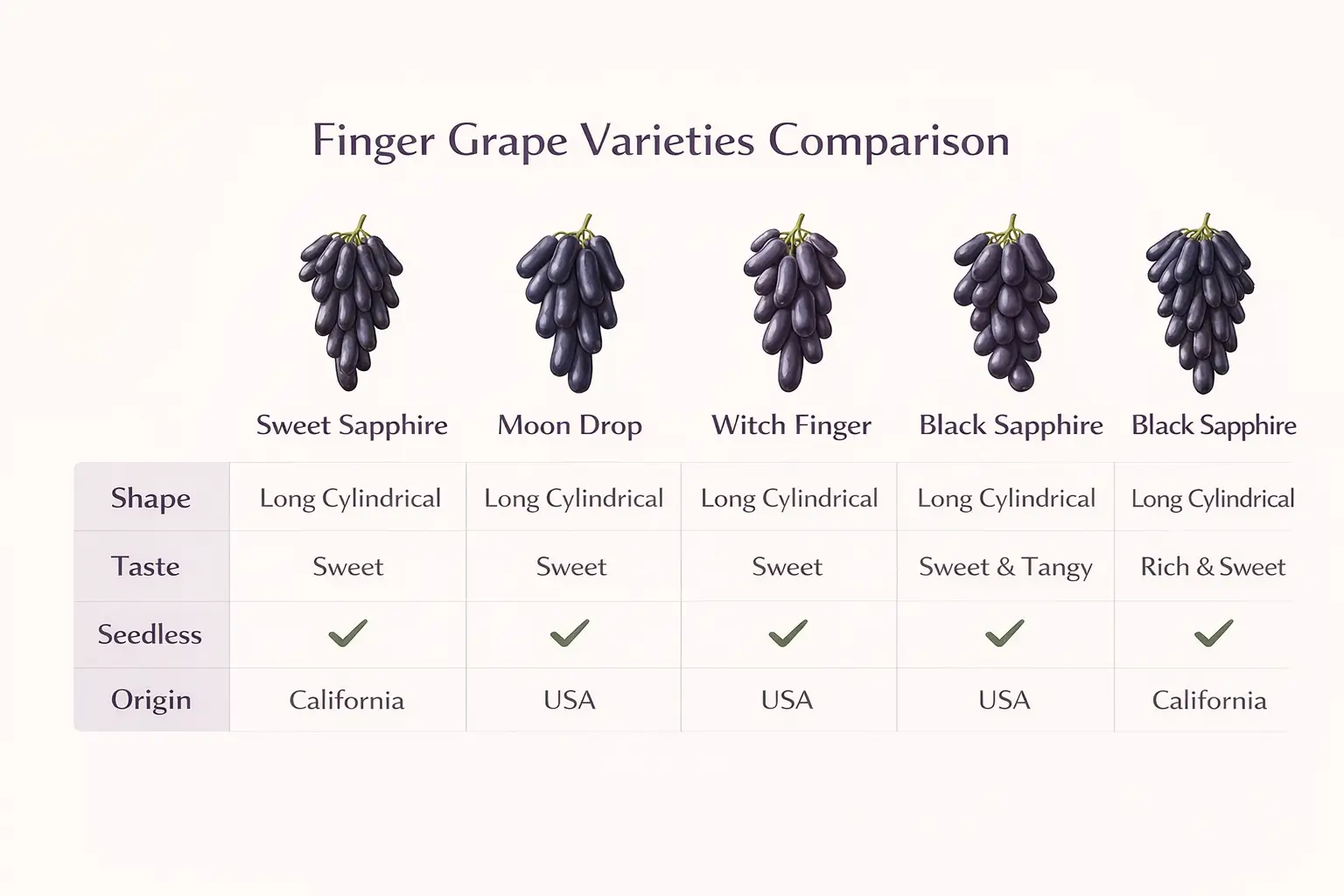
- Sweet Sapphire Grapes: Known for their deep color, elongated shape, and very sweet flavor
- Moon Drop Grapes: Popular commercial variety with a slightly firmer bite and intense sweetness
- Witch Finger Grapes: Earlier cultivar with thinner skin and mild flavor
- Black Sapphire Grapes: Another name often used interchangeably with Sweet Sapphire in some markets
Comparison of Popular Finger Grape Varieties (Table Section)
| Variety | Shape | Taste | Seedless | Origin |
| Sweet Sapphire | Long, tubular | Very sweet | Yes | USA (California) |
| Moon Drop | Long, slightly curved | Rich, sweet | Yes | USA |
| Witch Finger | Thin, elongated | Mild sweetness | Yes | USA |
| Black Sapphire | Thick, elongated | Sweet | Yes | Commercial hybrid |
These varieties differ slightly in texture and sweetness but share similar visual traits. Naming differences often arise due to branding or regional marketing.
Origin and Development of Black Finger Grapes
Where Do Black Finger Grapes Come From?
Black finger grapes, especially Moon Drop grapes, were developed in California through advanced breeding programs aimed at improving shape, texture, and shelf life. Sweet Sapphire grapes were also developed using selective breeding to enhance sweetness and firmness.
Are Finger Grapes Natural or Genetically Modified?
Finger grapes are not genetically modified. They are created through selective breeding, a traditional agricultural method where plants with desirable traits are crossbred over multiple generations.
- No genetic engineering is involved
- Traits like shape and sweetness are naturally selected
- Similar methods are used for many modern fruit varieties
This clarifies the common misconception that unusual shapes indicate genetic modification.
Taste, Texture, and Edibility of Black Finger Grapes
What Do Black Finger Grapes Taste Like?
Black finger grapes taste sweet with a slightly richer flavor than standard grapes, often described as having a candy-like sweetness with a firm, crisp bite. Their texture is one of their defining features.
Compared to regular grapes:
- Sweeter profile
- Less watery
- More satisfying crunch
These grapes are also commonly used in fresh preparations and juices, similar to insights found in Fruit Juice Benefits Chart, where natural fruit sugars and hydration benefits are emphasized.
Are Black Finger Grapes Edible and Seedless?
Yes, black finger grapes are fully edible and typically seedless, making them convenient for fresh consumption. Their skin is thin enough to eat, and the seedless interior enhances their appeal for snacking.
These characteristics make them popular among consumers looking for both taste and convenience.
Nutritional Value and Health Benefits of Black Finger Grapes
Nutritional Breakdown (Table Section)
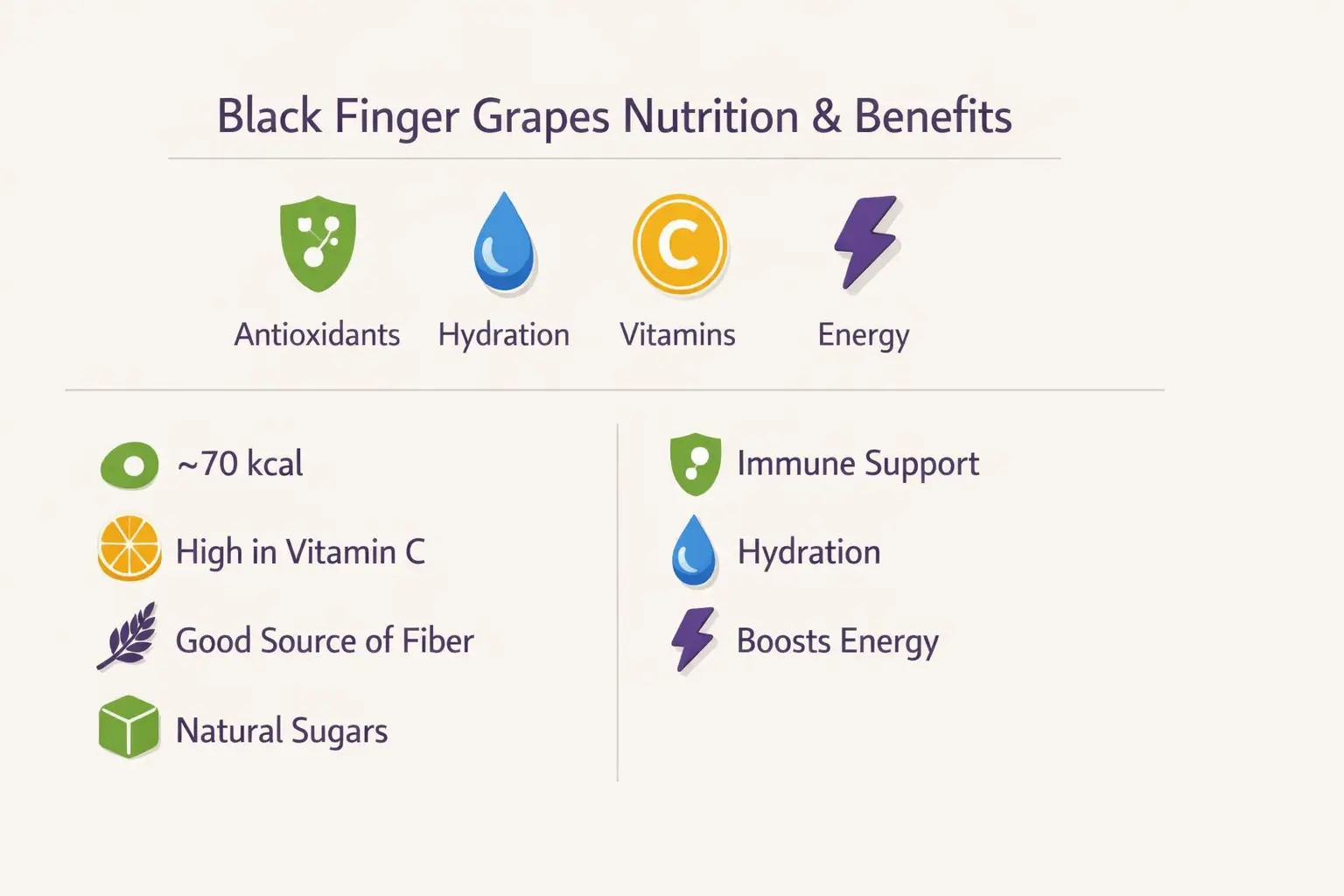
| Nutrient | Amount (per 100g) | Benefit |
| Calories | ~70 kcal | Energy source |
| Vitamin C | Moderate | Immune support |
| Fiber | Low to moderate | Digestive health |
| Antioxidants | High | Cell protection |
| Natural sugars | Moderate | Quick energy |
Health Benefits of Finger Grapes
Black finger grapes provide several health benefits:
- Rich in antioxidants such as polyphenols
- Support hydration due to high water content
- Provide natural sugars for quick energy
These benefits align with general grape nutrition, supporting heart health and overall wellness. Black finger grapes share similar antioxidant properties with other nutrient-rich fruits, as seen in Aguaje Fruit Benefits, which also highlights natural compounds that support overall wellness.
Growth Rate and Plant Characteristics of Finger Grape Vines
Growth Habit and Vine Structure
Finger grape plants grow as climbing vines typical of Vitis vinifera. They require support structures like trellises and produce elongated fruit clusters hanging downward.
- Vigorous climbing growth
- Requires pruning for shape control
- Produces clustered, uniform fruit
Growth Speed and Seasonal Development
Finger grape vines grow at a moderate to fast rate depending on climate and care conditions. They typically follow seasonal cycles:
- Spring: Bud break and leaf growth
- Summer: Fruit development
- Late summer to fall: Harvest period
Proper sunlight and nutrient availability significantly influence growth speed.
How to Grow Black Finger Grapes at Home
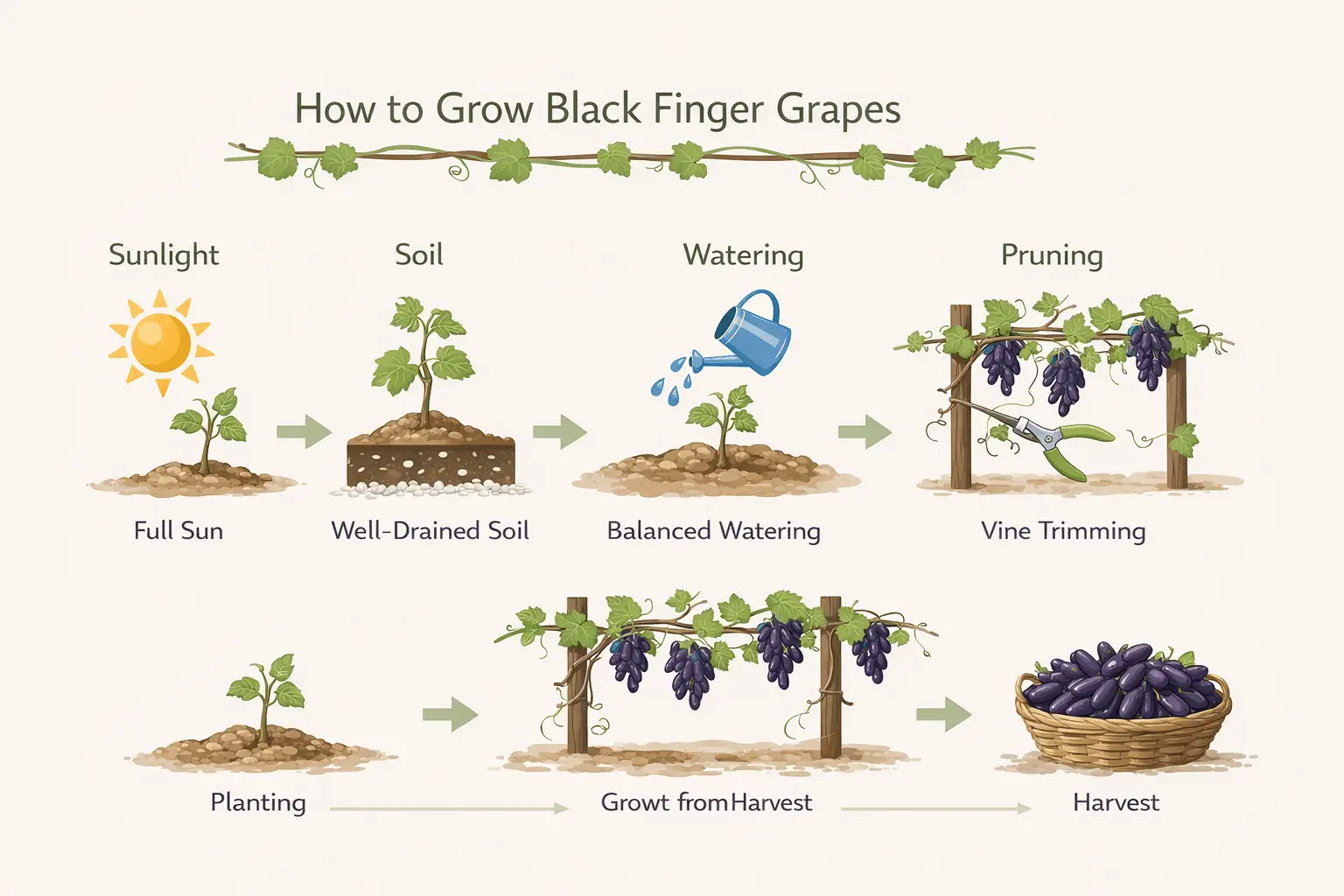
Ideal Growing Conditions
Black finger grapes require:
- Full sunlight (6–8 hours daily)
- Well-drained soil with moderate fertility
- Warm climates for optimal fruiting
Planting and Maintenance Steps
To grow finger grape plants:
- Plant in early spring
- Provide trellis support
- Water regularly but avoid overwatering
- Prune annually to maintain vine health
Beginner insight: Overwatering is one of the most common mistakes and can lead to poor fruit quality. If you’re new to plant care, understanding basic plant needs like those explained in Japanese Money Plant Care can help you manage watering, light, and growth more effectively.
Where and When Black Finger Grapes Are Grown
Growing Regions and Climate Suitability
Black finger grapes are commonly grown in warm regions such as California and Australia. They thrive in climates with long growing seasons and plenty of sunlight.
- Adaptable to Mediterranean climates
- Sensitive to extreme cold
Harvest Season and Availability
These grapes are typically harvested in late summer to early fall. Market availability depends on region but generally aligns with the grape season.
Common Problems When Growing Finger Grapes (And How to Fix Them)
Common Issues
- Poor fruit development due to lack of sunlight
- Pest infestations such as aphids
- Slow growth from poor soil conditions
Solutions and Prevention Tips
- Ensure full sun exposure
- Use proper pruning techniques
- Improve soil drainage and nutrient levels
Regular monitoring helps prevent most issues before they affect yield.
Comparison: Black Finger Grapes vs Regular Table Grapes
Key Differences
| Feature | Black Finger Grapes | Regular Grapes |
| Shape | Long, cylindrical | Round or oval |
| Texture | Crisp and firm | Soft and juicy |
| Taste | Sweet, rich | Mild to sweet |
| Growing Needs | Slightly specialized | Standard |
Which Type Is Better for Home Growing?
Regular grapes are easier for beginners, but black finger grapes offer higher visual appeal and unique texture. Choice depends on gardener experience and climate suitability.
Beginner Mistakes to Avoid When Growing Finger Grapes
Common mistakes include:
- Overwatering leading to root problems
- Insufficient sunlight reducing fruit quality
- Incorrect pruning affecting vine productivity
Avoiding these improves both yield and fruit quality.
Conclusion
Black finger grapes are a distinctive and flavorful variety of elongated grapes that combine visual appeal with excellent taste and nutritional benefits. Their unique shape, crisp texture, and sweet flavor set them apart from traditional grapes. Understanding their varieties, growth requirements, and seasonal patterns helps both gardeners and consumers make the most of this increasingly popular fruit.
FAQs
What are black finger grapes?
Black finger grapes are elongated, seedless grapes known for their sweet flavor and crisp texture, often associated with varieties like Sweet Sapphire or Moon Drop grapes.
Are black finger grapes genetically modified?
No, most finger grape varieties are developed through selective breeding rather than genetic modification.
What do moon drop grapes taste like?
Moon drop grapes have a rich, sweet flavor with a firm, crisp bite, often sweeter than regular grapes.
Can you grow black finger grapes at home?
Yes, with proper sunlight, soil, and care, finger grape vines can be grown successfully in home gardens.
Are black finger grapes healthy?
Yes, they contain antioxidants, vitamins, and natural sugars that support overall health.
When are black finger grapes in season?
They are typically available in late summer to early fall, depending on the region.



2 Responses