
Introduction
Jasmine rice plant refers to the tropical rice variety known for producing fragrant, long-grain rice commonly called Thai jasmine rice. This plant is a type of rice (Oryza sativa) grown primarily in warm, water-rich environments. Understanding how the jasmine rice plant grows, what it looks like, and how it differs from other rice types helps clarify its origin, cultivation, and unique characteristics. It is widely cultivated in Southeast Asia and valued for its soft texture and subtle floral aroma after cooking. This plant is a type of rice (Oryza sativa) grown primarily in warm, water-rich environments.
Quick Summary
- The jasmine rice plant is a tropical rice variety known for aromatic, long-grain white rice.
- It grows from rice seeds in flooded or moist field conditions called plantations.
- Most jasmine rice comes from Southeast Asia, especially Thailand.
- It differs from basmati rice in aroma, texture, and growing conditions.
What Is the Jasmine Rice Plant and Where Does It Come From?
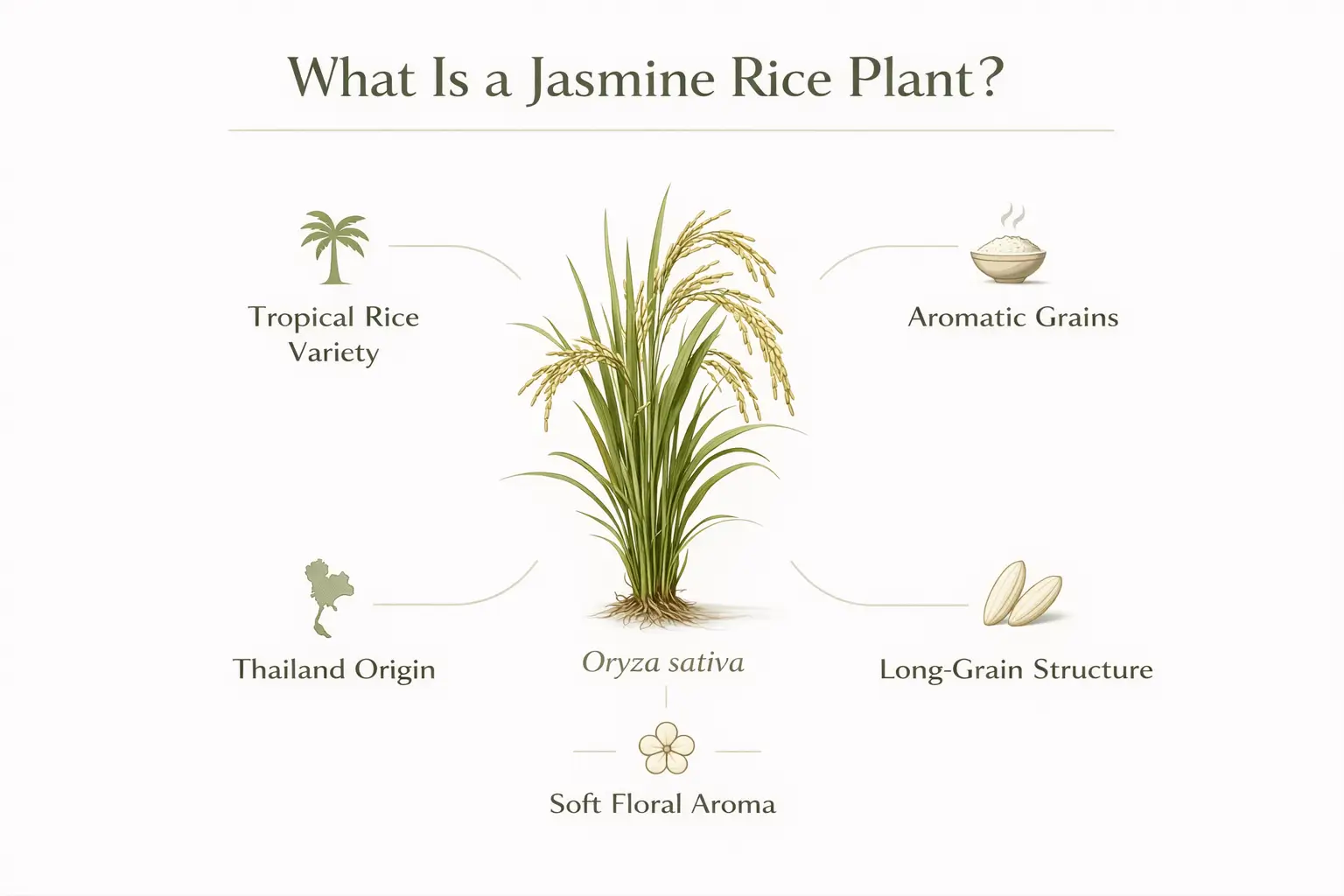
The jasmine rice plant is a specific variety of Oryza sativa cultivated for its fragrant grains. It belongs to the grass family (Poaceae) and is biologically similar to other rice plants, with differences arising from its genetic variety.
Jasmine rice originates mainly from Thailand, where it is known as Thai Hom Mali rice, a premium-quality cultivar. It is also grown in neighboring Southeast Asian regions under similar climatic conditions.
The name “jasmine rice” comes from its naturally occurring floral aroma. This scent is produced by aromatic compounds such as 2-acetyl-1-pyrroline—not from jasmine flowers. Despite the name, the plant does not contain or grow jasmine.
What Does a Jasmine Rice Plant Look Like?
A jasmine rice plant looks like a tall, grass-like plant with slender leaves and upright stems. It follows the general structure of rice plants but develops distinctive grain clusters during maturity.
The plant goes through several growth stages, starting from rice seeds and progressing to a mature grain-producing plant.
Key Features:
- Long, narrow green leaves
- Upright stems (culms) that support growth
- Grain clusters (panicles) forming at the top
- Color transition from green to golden as it matures
At full maturity, the plant turns golden, indicating readiness for harvest.
How Is Jasmine Rice Grown? (From Seeds to Harvest)
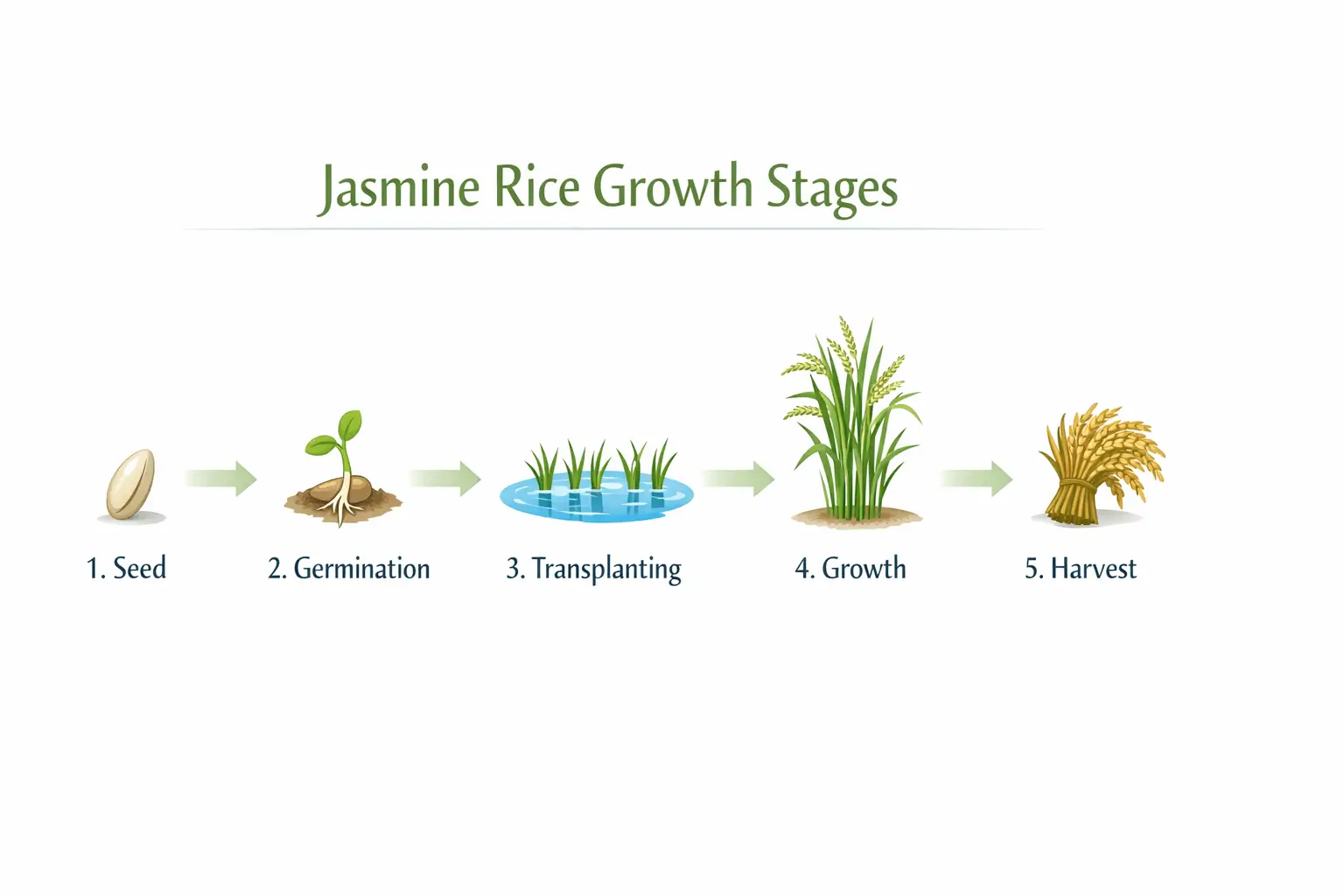
Jasmine rice is grown through a structured agricultural process that involves water management and warm climate conditions.
Step-by-Step Process:
- Seed selection: Farmers use viable jasmine rice seeds or white rice seeds suitable for planting
- Germination: Seeds are placed in wet soil to sprout
- Transplanting: Seedlings are moved into flooded fields (paddies)
- Growth and maturation: Plants grow under standing water and sunlight
- Harvesting and drying: Mature plants are cut, dried, and processed
The entire lifecycle typically takes 3 to 6 months depending on environmental conditions.
Ideal Growing Conditions for Jasmine Rice Plants
Jasmine rice plants require specific environmental conditions to grow successfully. These conditions are typically found in tropical and subtropical regions.
| Factor | Requirement |
| Climate | Tropical / Subtropical |
| Water | High (flooded or moist fields) |
| Soil | Clay or loamy soil |
| Temperature | Warm (20–35°C) |
| Sunlight | Full sun exposure |
Jasmine rice is mainly grown in Southeast Asia, with limited cultivation in regions like the United States under controlled conditions.
Can You Plant Jasmine Rice at Home?
Yes, you can plant jasmine rice at home, but it requires specific conditions to succeed. Jasmine rice needs consistent warmth, water control, and sufficient sunlight.
Key Considerations:
- Suitable for warm climates or greenhouse environments
- Requires water-retentive soil or controlled flooding
- Can be grown in containers, though yield may be low
- Difficult to grow in cold or dry climates
Small-scale growing is possible, but it is often experimental outside tropical regions. Growing jasmine rice at home depends heavily on seasonal climate conditions, which makes planning similar to regional planting strategies outlined in Brisbane Planting Guide.
Where to Buy Jasmine Rice Seeds and Planting Options
Jasmine rice seeds can be sourced from specialized suppliers, but not all rice sold for consumption is suitable for planting. You may also explore local suppliers or specialty stores similar to those mentioned in Plant Nursery Ipswich Guide to find viable planting seeds.
Where to Buy:
- Specialty seed suppliers
- Agricultural stores
- Online gardening marketplaces
Important Note:
Edible rice is often processed and may not germinate. Only untreated, viable seeds should be used for planting.
Types and Varieties of Jasmine Rice Plants
There are several varieties of jasmine rice plants, each adapted to specific regions and farming practices.
Common Types:
- Thai Hom Mali (premium variety)
- Organic jasmine rice variants
- Regionally adapted cultivars
These varieties differ slightly in yield, aroma intensity, and environmental tolerance.
Jasmine Rice vs Basmati Rice: Key Differences
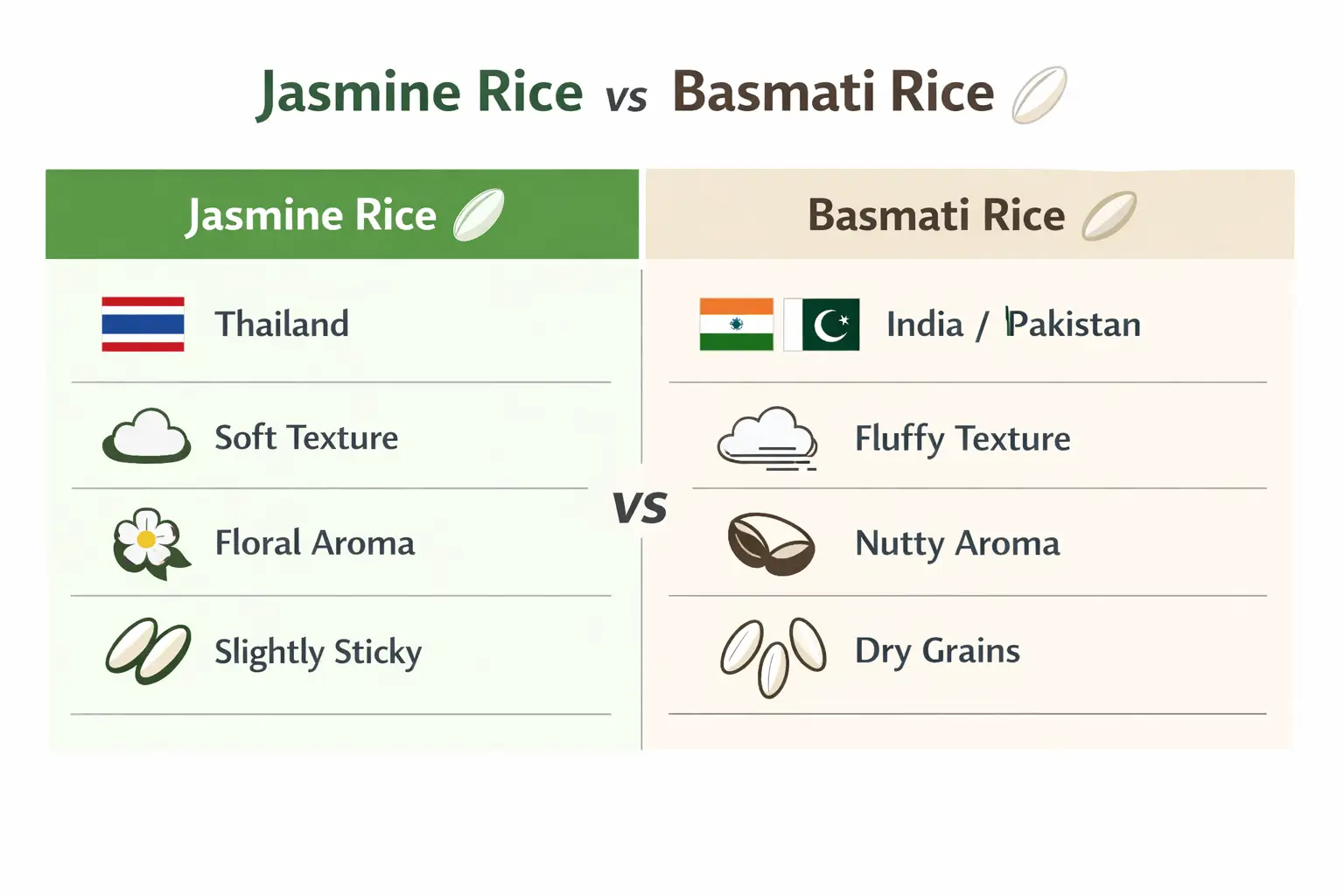
Jasmine rice and basmati rice are both aromatic long-grain rice types but differ in origin, texture, and aroma.
| Feature | Jasmine Rice | Basmati Rice |
| Origin | Thailand | India / Pakistan |
| Grain Type | Long grain, slightly sticky | Long grain, fluffy |
| Aroma | Floral, soft | Nutty, stronger |
| Texture | Soft and moist | Dry and separate |
| GI Index | Moderate to high | Lower |
These differences influence how each rice type is used in cooking and cuisine.
Is Jasmine Rice a Different Plant from Other Rice Types?
No, jasmine rice is not a different plant species. It belongs to the same species, Oryza sativa.
The differences between jasmine rice and other rice types come from genetic variations within the species. Jasmine rice is also a type of white rice, processed by removing the outer husk and bran layers.
Common Problems When Growing Jasmine Rice (And Solutions)
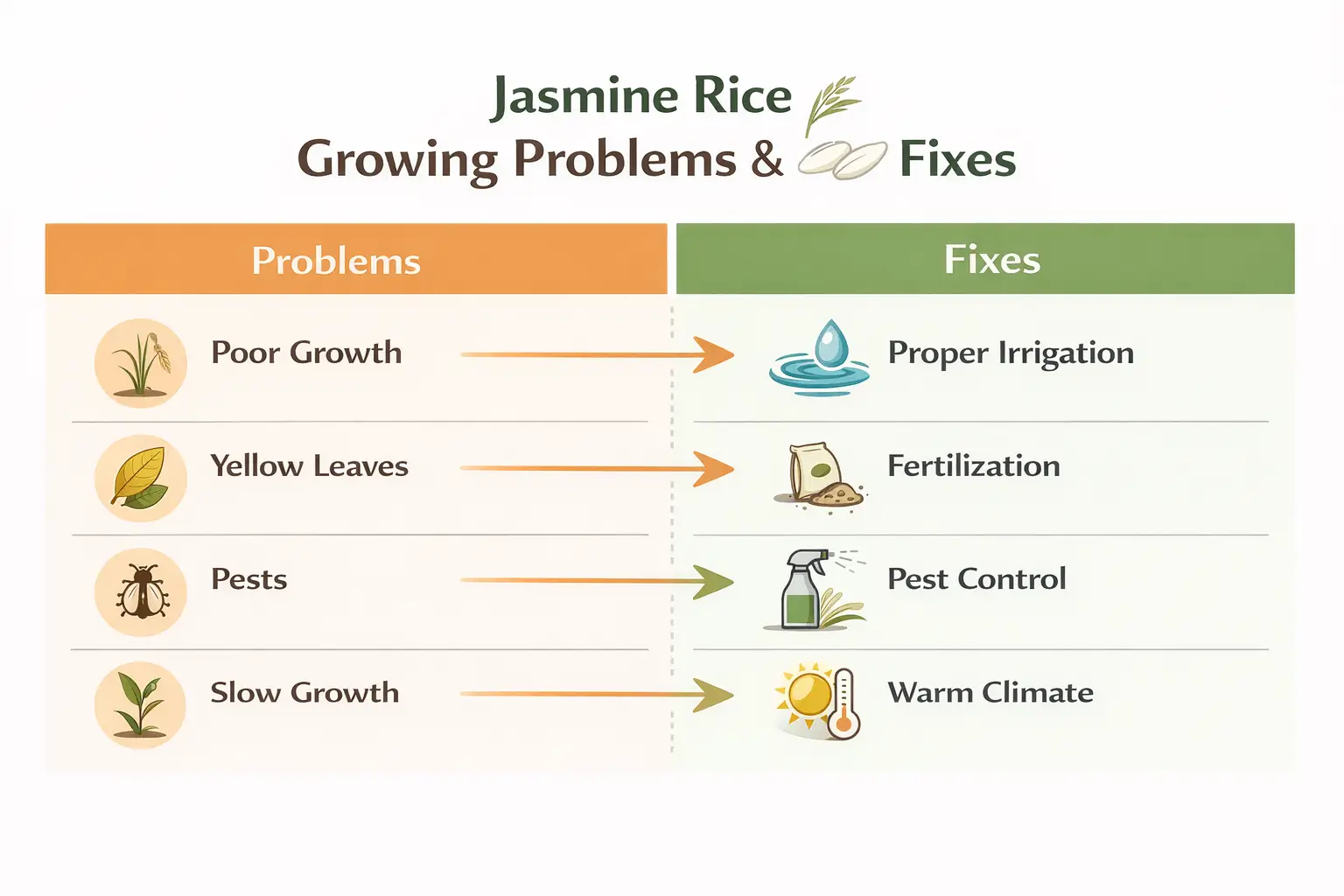
Growing jasmine rice can present challenges, especially outside ideal environments.
Problems & Solutions:
- Poor growth: Caused by insufficient water → improve irrigation
- Yellowing leaves: Nutrient deficiency → apply fertilizers
- Pest damage: Common in wet fields → use pest control methods
- Slow growth: Low temperatures → maintain warm conditions
Proper environmental management helps prevent most issues.
Beginner Mistakes to Avoid When Growing Rice Plants
Many beginners encounter avoidable issues when growing rice plants.
Common Mistakes:
- Using non-viable rice instead of planting seeds
- Underestimating water requirements
- Attempting to grow in cold climates
- Poor soil preparation
Avoiding these mistakes increases success rates significantly.
Environmental and Geographic Limitations of Jasmine Rice Cultivation
Jasmine rice cultivation is highly dependent on environmental conditions.
Limitations:
- Requires tropical or subtropical climates
- Needs significant water resources
- Difficult to scale in colder regions
- Limited productivity outside Southeast Asia
These factors restrict widespread global cultivation.
How Is Jasmine Rice Different in Taste and Structure?
Jasmine rice has a distinctive taste and texture compared to other rice varieties. It does not taste like jasmine flowers but has a mild floral aroma.
Key Characteristics:
- Slightly floral scent due to natural compounds
- Soft, moist texture after cooking
- Slight stickiness compared to other long-grain rice
This unique combination makes it popular in many cuisines. Jasmine rice has a subtle floral aroma, similar to the light fragrance found in certain herbal beverages—this is why it is sometimes compared to naturally aromatic foods like those discussed in Fruit Tea Benefits, Recipes & Best Time to Drink.
Conclusion
The jasmine rice plant is a tropical rice variety valued for its aromatic grains and specific growing conditions. Originating mainly from Thailand, it thrives in warm, water-rich environments and differs from other rice types primarily in aroma and texture rather than species. Understanding its growth process, limitations, and unique traits helps both gardeners and consumers better appreciate how jasmine rice is cultivated and why it remains one of the most popular rice varieties worldwide.
FAQs
1. What plant does jasmine rice come from?
Jasmine rice comes from a variety of the rice plant (Oryza sativa), specifically cultivated for its aromatic long grains.
2. Can you grow jasmine rice from store-bought rice?
Usually no, because most store-bought rice is processed and not viable for planting.
3. Why is it called jasmine rice?
It is named for its subtle floral aroma, not because it contains jasmine flowers.
4. Where is jasmine rice mainly grown?
It is primarily grown in Thailand and other Southeast Asian countries.