Introduction
Banksia varieties are a diverse group of native Australian plants known for their striking banksia flowers, unique foliage, and adaptability to different landscapes. From tall banksia trees to compact dwarf banksia varieties, these plants suit a wide range of garden styles. Each banksia plant offers distinct growth habits, flower colors, and ecological benefits. Understanding the different types of banksia helps gardeners choose the right banksia shrub or tree for their space, climate, and design goals.
Quick Summary
- Banksia varieties range from large trees to dwarf and ground cover forms
- Popular species include banksia integrifolia, banksia spinulosa, and banksia ericifolia
- Dwarf banksias are ideal for small gardens and containers
- Banksias prefer well-drained soil and full sun conditions
What Are Banksia Varieties and Why They Matter
Definition and classification of banksia
Banksia varieties refer to the different species, cultivars, and hybrids within the Banksia genus, part of the Proteaceae family. Species are naturally occurring, cultivars are selectively bred forms, and hybrids result from crossbreeding. Australian banksia plants play a key ecological role by supporting pollinators such as birds and insects.
The genus Banksia belongs to the Proteaceae family and includes a wide range of species adapted to Australian environments.
Key identifying features of banksia plants
Banksia plants are easily recognized by their unique features:
- Cone-shaped flower spikes made up of hundreds of tiny flowers
- Leaves vary from narrow to broad (e.g., banksia integrifolia leaves vs banksia spinulosa leaf)
- Growth forms include banksia bush, shrub, tree, or ground cover
Types of Banksia Varieties (Major Categories Explained)
-
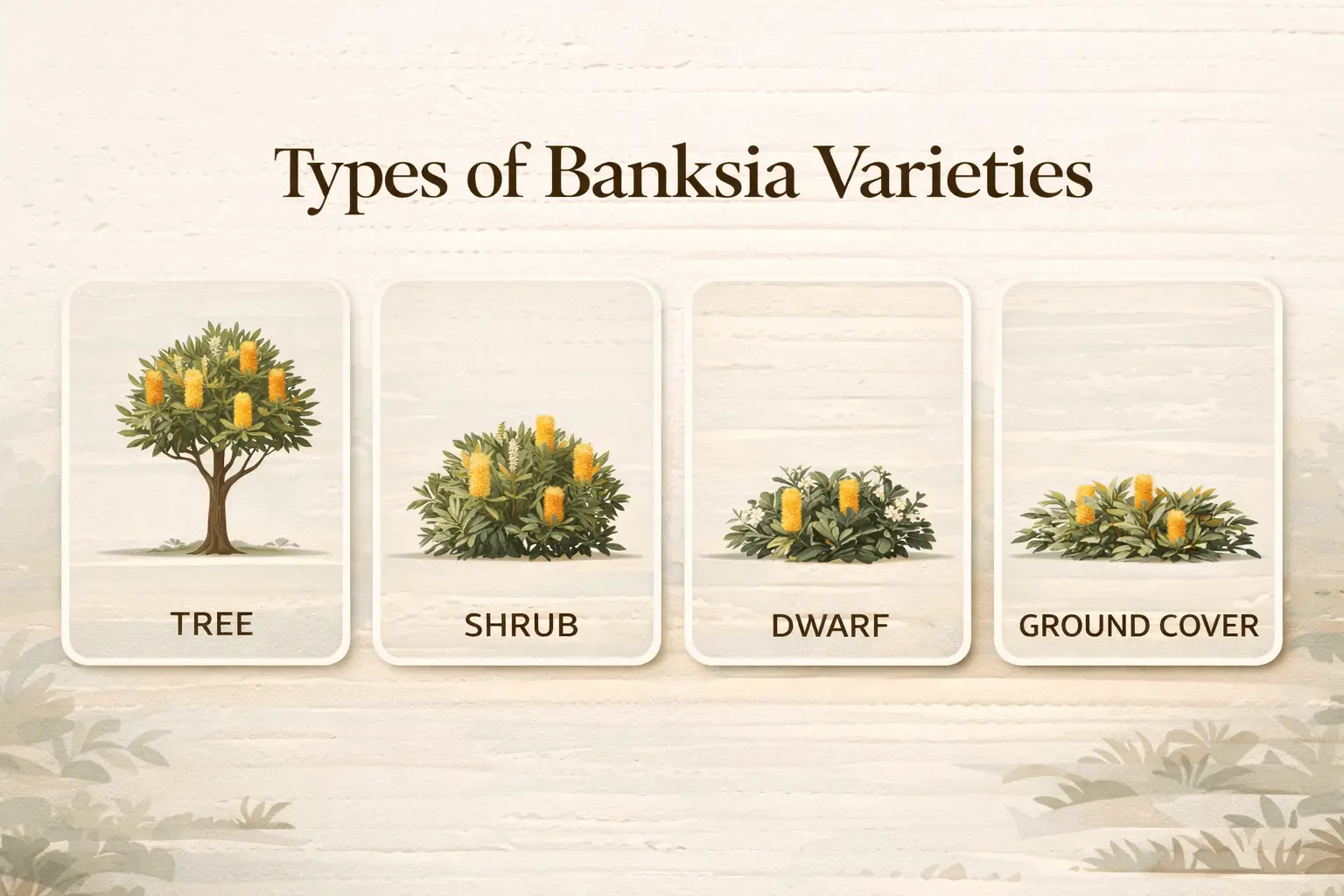
Tree banksia varieties
Tree banksia varieties include larger species like banksia integrifolia (coastal banksia) and banksia menziesii. These can reach significant heights and are often used for windbreaks and shade in landscaping. For broader landscaping ideas using native species, explore fast-growing options in Fast Growing Australian Native Trees: 8+ Smart Picks, which complement banksia tree varieties in large gardens.
-
Shrub and bush banksia varieties
Shrub types such as banksia ericifolia, banksia spinulosa, and banksia marginata form dense, flowering bushes. These are popular for hedging and decorative planting.
-
Dwarf and miniature banksia varieties
Dwarf banksia varieties like Little Eric banksia and banksia spinulosa dwarf are compact and suitable for small gardens or containers.
-
Ground cover and prostrate banksia varieties
Low-growing and prostrate banksia varieties spread horizontally and are useful for erosion control and ground coverage. For additional low-growing landscaping options, Australian Violet Ground Cover: Care, Growth & Uses Guide highlights plants that pair well with prostrate banksia varieties.
Popular Banksia Species and Varieties (With Key Characteristics)
-
Banksia integrifolia (Coastal Banksia)
Banksia integrifolia grows into a medium to large tree, often reaching up to 10–25 meters. It tolerates coastal conditions, including wind and salt, making it highly adaptable.
-
Banksia spinulosa (Hairpin Banksia)
Banksia spinulosa is a versatile species available in dwarf and upright forms. It produces yellow to orange flower spikes and grows well in compact spaces.
-
Banksia ericifolia (Heath-leaved Banksia)
Banksia ericifolia features narrow leaves and vibrant orange-red flowers. It grows as a shrub and is popular for ornamental use.
-
Banksia menziesii and other notable species
Banksia menziesii stands out with red and pink flowers and thrives in Western Australia. Other species show diverse colors and adaptations across regions.
Banksia Colours and Flower Variations
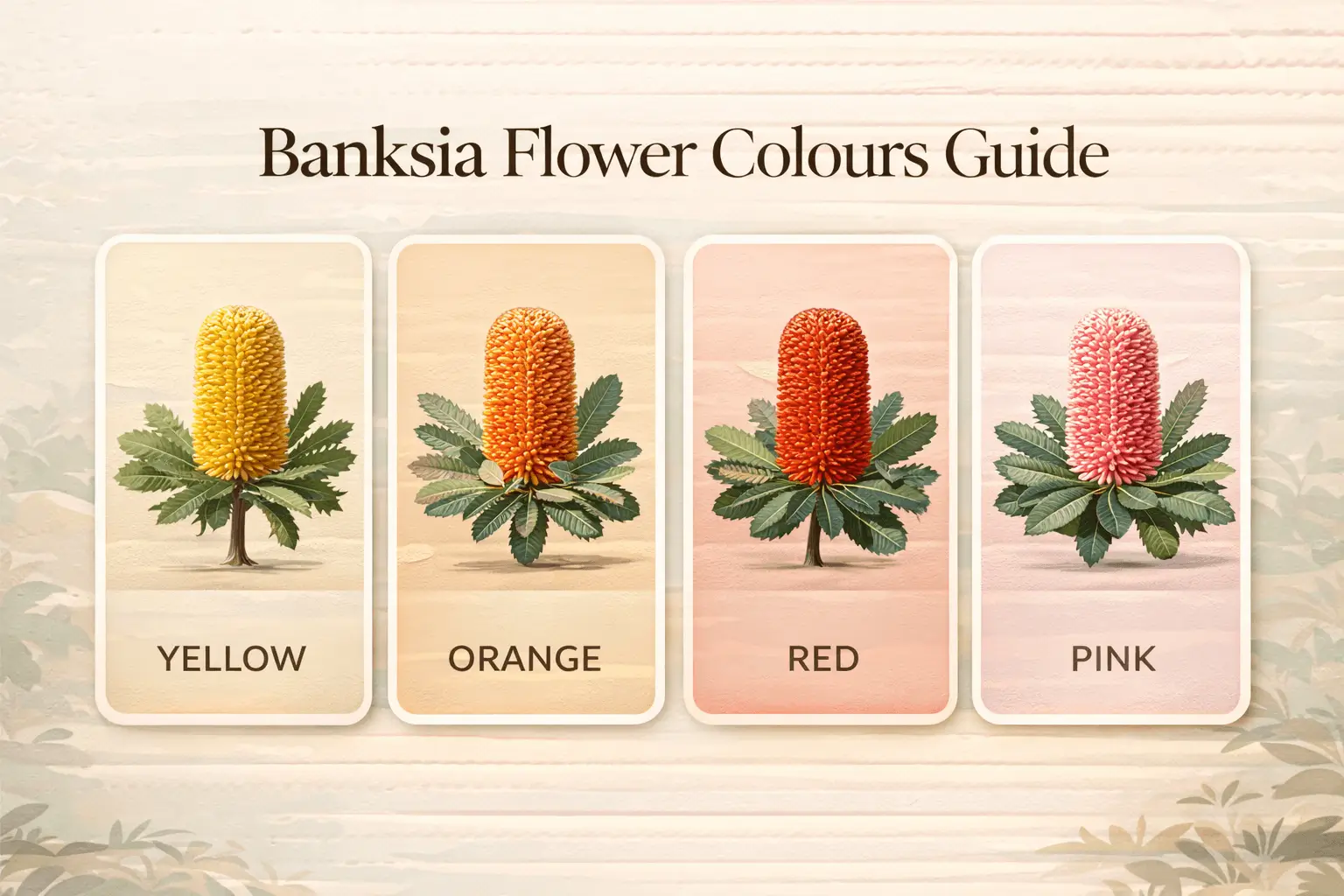
Banksia flowers vary widely in color and form, aiding identification.
- Yellow: common in coastal banksia
- Red/orange: typical of banksia ericifolia
- Pink: less common but visually striking
Flower spikes differ in size and density, and blooming seasons vary depending on species. If you’re designing a vibrant native garden, pairing banksias with flowering species like those in Kangaroo Paw Care: 6+ Essential Tips for Healthy Blooms enhances seasonal color diversity.
Dwarf Banksia Varieties for Small Gardens
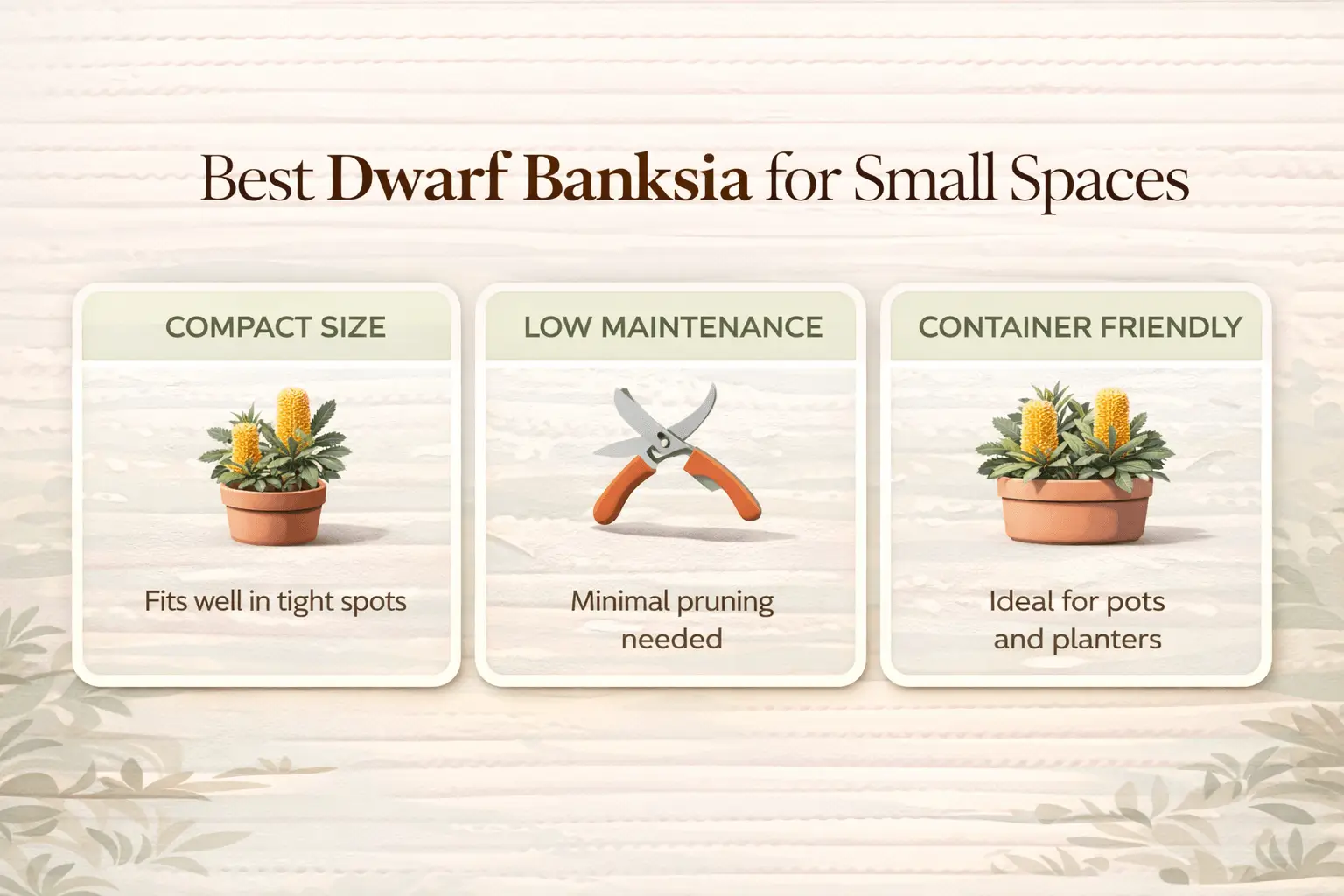
Best dwarf banksia options
Dwarf varieties like banksia spinulosa dwarf and dwarf banksia integrifolia are ideal for patios, balconies, and small landscapes.
Benefits of miniature banksia plants
- Space-efficient for compact gardens
- Require less pruning and maintenance
- Suitable for container planting
Regional Adaptation of Banksia Varieties in Australia
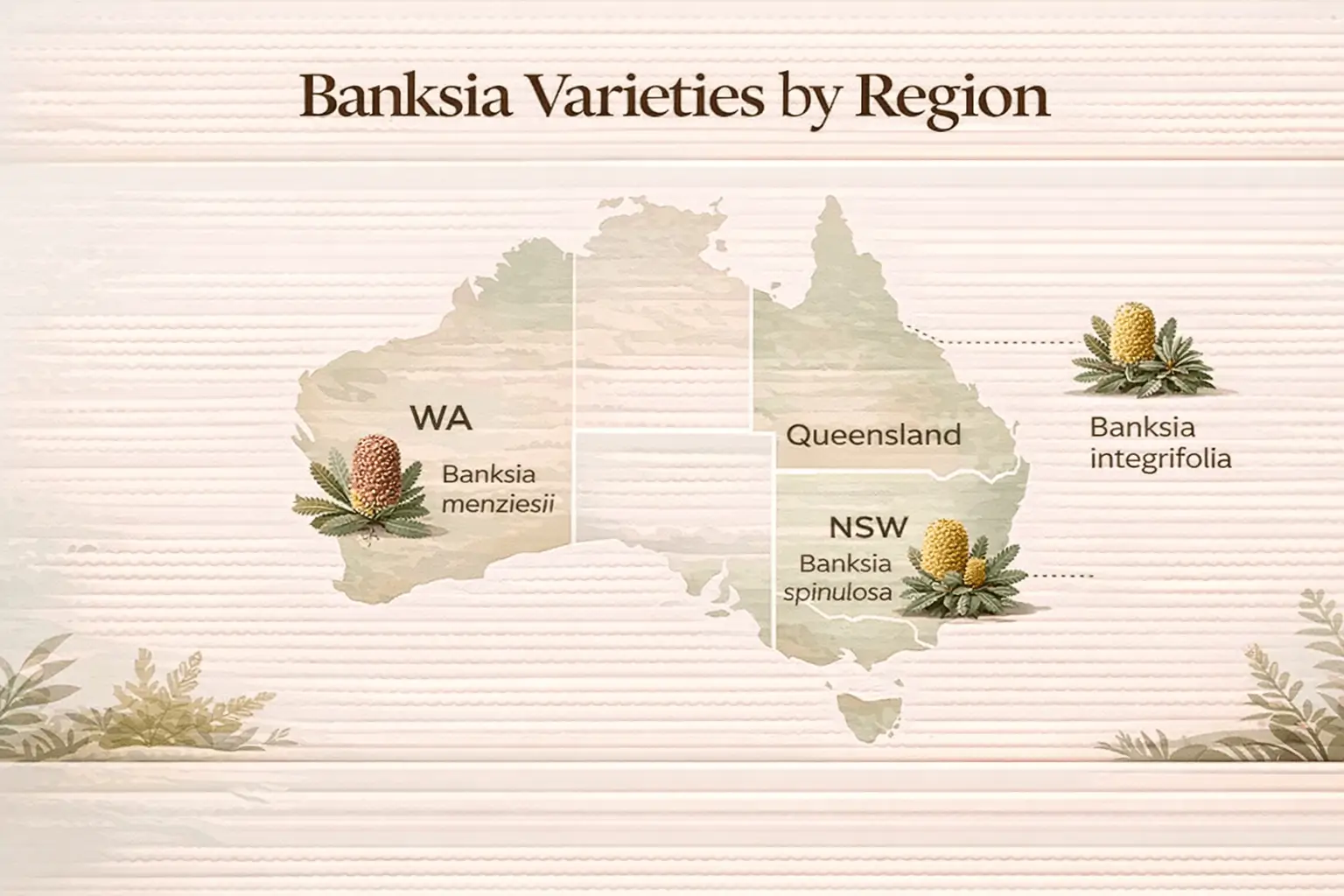
Climate-based selection
Banksias vary by climate:
- Coastal varieties tolerate salt and wind
- Inland types are more drought-tolerant
Regional suitability examples
| Region | Suitable Banksia Varieties | Key Traits |
| WA | Banksia menziesii | Heat-tolerant, colorful flowers |
| NSW | Banksia spinulosa | Adaptable, compact growth |
| Queensland | Banksia integrifolia | Coastal resilience |
Growth Size and Growth Rate of Banksia Trees
Plant size variations
Banksia plants range from small shrubs under 1 meter to trees exceeding 20 meters. Size depends on species and environmental conditions.
Growth rate factors
Growth is influenced by:
- Soil drainage quality
- Sun exposure levels
- Climate and rainfall patterns
Banksia Care Guide (Essential Growing Conditions)
Banksias require specific conditions for optimal growth:
- Watering: low to moderate; drought-tolerant once established
- Light: full sun exposure
- Soil: well-drained, sandy soil preferred
- Fertilization: low phosphorus fertilizers only
- Pruning: helps maintain shape and encourage bushy growth
Key tips:
- Avoid heavy clay soils
- Do not over-fertilize
- Ensure proper airflow
Common Problems with Banksia Plants (And How to Fix Them)
Yellowing leaves or poor growth
Yellow leaves often result from poor drainage or nutrient imbalance. Improve soil aeration and adjust watering.
Root rot and fungal issues
Root rot is caused by excess moisture. Prevent by ensuring well-drained soil and avoiding overwatering.
Pest and environmental stress
Heat stress and strong winds can damage banksia plants. Provide shelter and maintain proper care conditions.
Banksia vs Other Native Plants (Comparison Section)
Banksia vs Grevillea
Banksias have cone-shaped flowers, while Grevilleas feature spider-like blooms. Banksias typically require less frequent pruning.
Banksia vs Callistemon
Callistemon (bottlebrush) plants have brush-like flowers and often tolerate wetter soils compared to banksias.
| Feature | Banksia | Grevillea | Callistemon |
| Flower Type | Cone spikes | Spider-like | Brush-like |
| Water Needs | Low | Moderate | Moderate |
| Soil Preference | Well-drained | Well-drained | More tolerant |
Choosing the Right Banksia Variety for Your Garden
Choosing the right banksia depends on space, climate, and design preferences.
- Small garden → dwarf banksia varieties
- Coastal area → banksia integrifolia
- Decorative flowers → banksia ericifolia
Conclusion
Banksia varieties offer an exceptional range of forms, from large trees to compact dwarf plants, making them suitable for nearly any garden. By understanding the different types of banksia, their growth habits, and care needs, gardeners can select the most suitable option for their environment. Whether planting for visual appeal or ecological benefits, banksia plants provide long-term value and resilience.
FAQs
What are the most popular banksia varieties?
Popular banksia varieties include banksia integrifolia, banksia spinulosa, banksia ericifolia, and banksia menziesii due to their adaptability and visual appeal.
Which banksia varieties are best for small gardens?
Dwarf banksia varieties such as banksia spinulosa dwarf and Little Eric banksia are ideal for limited spaces and container planting.
What colors do banksia flowers come in?
Banksia flowers appear in yellow, orange, red, and pink depending on the species and variety.
How tall do banksia trees grow?
Banksia trees can grow over 10 meters tall, while dwarf varieties remain under 2 meters.
Are banksias easy to grow?
Yes, banksia plants are relatively easy to grow if planted in full sun with well-drained soil and minimal fertilization.



2 Responses
Are you able to provide me with some retail outlets for banksia integrifolia green cape dwarf form please?
Hi Rob,
Thanks for your question! For Banksia integrifolia, you could check out Evergreen Trees Direct here:
https://www.evergreentrees.com.au/products/banksia-integrifolia-coast-banksia
Just a heads-up — that link is for the standard Coast Banksia (which grows quite large, 8–15m), and the stock looks to be currently sold out across all sizes. They do stock a compact cultivar called ‘Sentinel’ if you’re after something smaller, but it’s not labelled specifically as “Green Cape Dwarf.”
‘Green Cape Dwarf’ can be a bit harder to track down — I’d suggest contacting a few specialist native plant nurseries directly (or groups like the Australian Native Plants Society) to ask if they have that specific dwarf form in stock, since availability for named cultivars like this varies a lot by season and region.
Hope that helps!