
Introduction
Growing fruit refers to the process of cultivating fruit-bearing plants—trees, shrubs, and vines—to produce edible crops at home or in gardens. It involves selecting suitable varieties, preparing soil, planting correctly, and maintaining plants according to climate and growth conditions. Whether you are starting a backyard fruit tree garden or growing fruit in containers, understanding the fundamentals ensures healthy growth, optimal fruit production, and consistent harvests.
Quick Summary
- Growing fruit successfully depends on climate, soil quality, and proper planting techniques.
- Fruit trees can be grown in backyards, containers, or indoors depending on space.
- Fast-growing fruit trees provide quicker harvests but still require proper care.
- A well-planned fruit tree garden layout improves yield and long-term maintenance.
What Does Growing Fruit Involve?
Understanding the Basics of Fruit Cultivation
Growing fruit involves selecting appropriate species, planting in suitable locations, and maintaining plants through their life cycle. Fruit cultivation requires knowledge of plant life cycles, pollination, and the stages of fruit production. Effective fruit growing relies on proper soil preparation, watering schedules, and climate-adapted care. Understanding fruit cultivation and pollination is essential for maximizing yield and ensuring healthy fruit development.
Types of Fruit Plants You Can Grow
- Trees: Apple, mango, citrus, pear.
- Vines: Passion fruit, grapes, kiwi.
- Shrubs: Blueberries, raspberries, blackberries.
Indoor and outdoor options depend on space and light availability, with some fruits thriving better indoors, such as dwarf citrus and small berries.
How to Grow Fruit Trees Successfully
Step-by-Step Fruit Tree Planting Guide
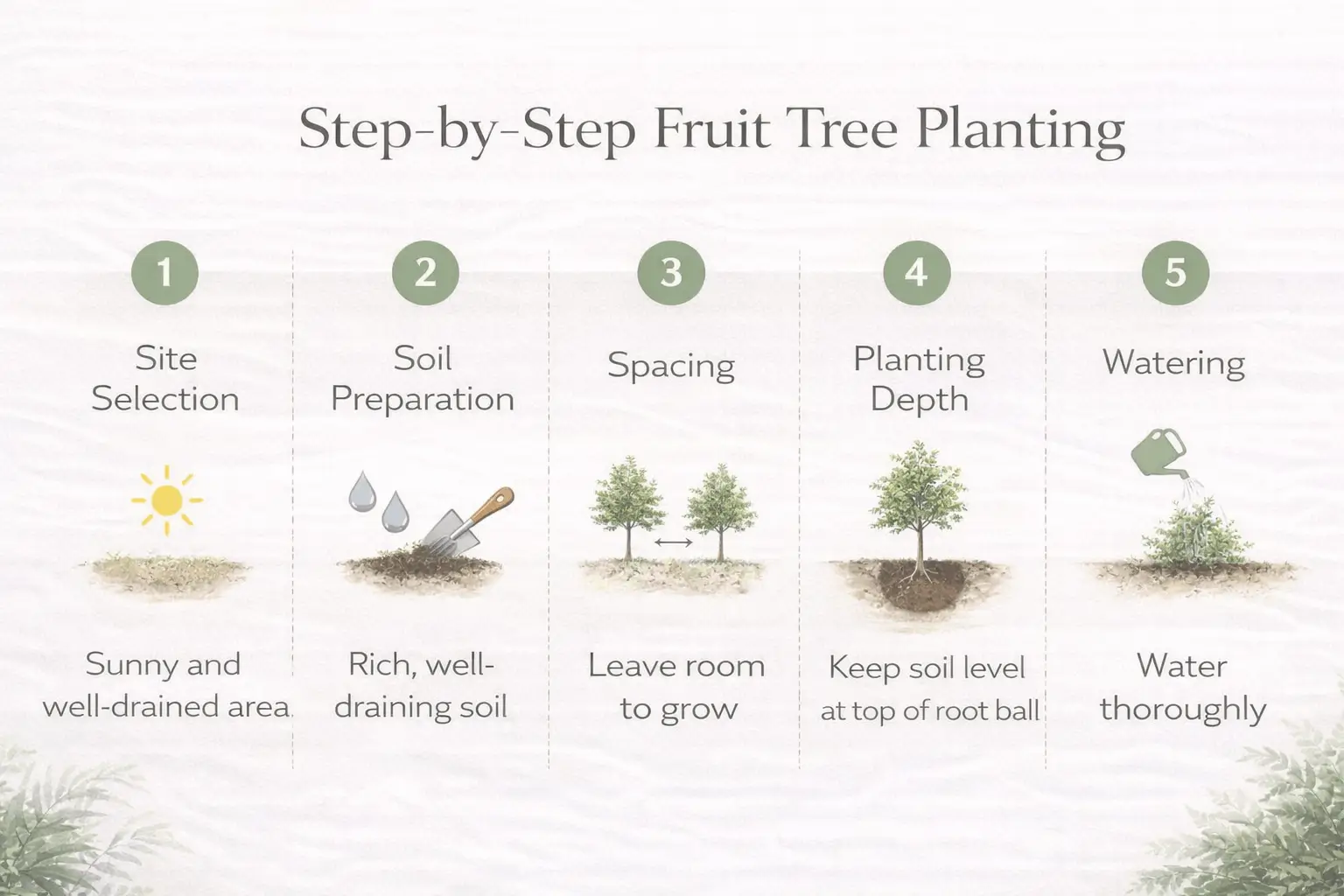
- Site Selection: Choose a location with full sunlight and good air circulation.
- Soil Preparation: Ensure well-draining, nutrient-rich soil with balanced pH.
- Spacing: Maintain adequate distance to prevent overcrowding and root competition.
- Planting Depth: Plant at the correct depth to avoid root stress.
- Initial Care: Water immediately after planting and mulch to retain soil moisture.
Essential Growth Conditions
- Sunlight: Most fruit trees need at least 6–8 hours of direct sunlight daily.
- Soil Types: Well-draining sandy loam or loamy soils enriched with organic matter.
- Irrigation: Regular watering schedules based on plant size and soil type.
- Climate Considerations: Tropical, subtropical, and temperate fruit trees require specific temperature ranges for optimal growth.
Choosing the Best Fruit Trees for Different Climates
Climate-Based Fruit Tree Selection
- Cold Climates: Apple, pear, cherry, plum.
- Tropical Climates: Mango, papaya, guava, lychee.
- Drought-Tolerant Trees: Fig, pomegranate, olive.
Seasonal adaptability and frost tolerance are critical for long-term productivity.
Regional Examples (Australia-Focused Context)
- Warm Regions: Mango, lychee, papaya.
- Cooler Regions: Apple, pear, cherry.
Proper regional selection ensures successful fruit growth across diverse Australian climates.
Fast Growing Fruit Trees and Quick Harvest Options
What Makes a Fruit Tree Grow Faster?
Growth rate is influenced by soil fertility, irrigation, sunlight, species genetics, and pruning. Fast-growing trees produce fruit sooner but may have shorter lifespans or require more maintenance.
Examples of Fast and Fastest Growing Fruit Trees
- Fast-Growing Varieties: Papaya, fig, mulberry.
- Seed vs Grafted Trees: Grafted trees often bear fruit sooner than seed-grown trees.
For those interested in fast-growing fruit trees in Australia, you can explore options like apple trees and other fast-growing Australian natives for quicker harvests.
Comparison Table: Growth Speed vs Yield Time
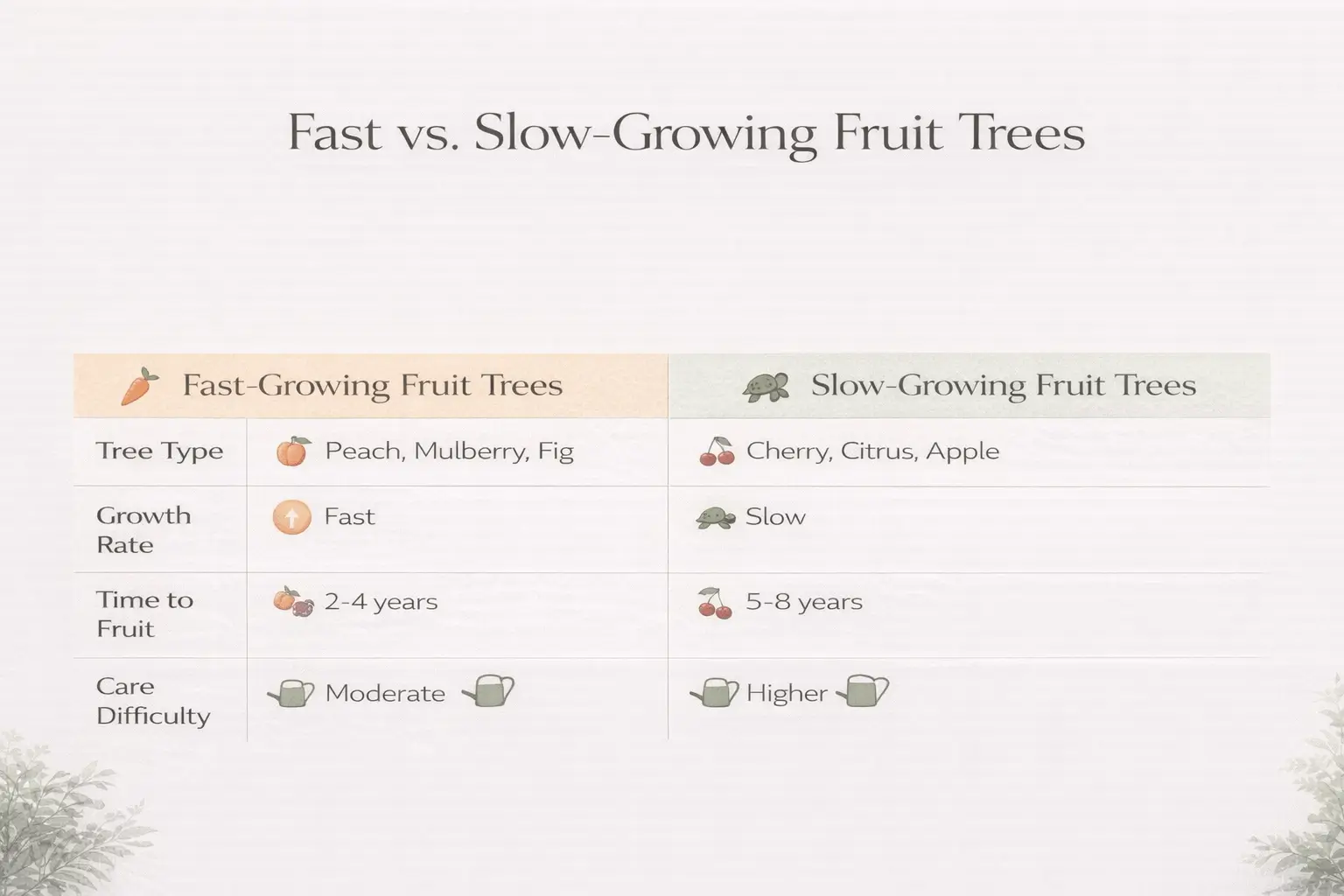
| Tree Type | Growth Rate | Time to Fruit | Care Difficulty |
| Papaya | Fast | 6–12 months | Medium |
| Fig | Fast | 1–2 years | Low |
| Apple (Grafted) | Moderate | 2–3 years | Medium |
| Mango | Slow | 4–6 years | Medium-High |
Backyard Fruit Tree Garden Planning and Layout
Designing a Fruit Tree Garden
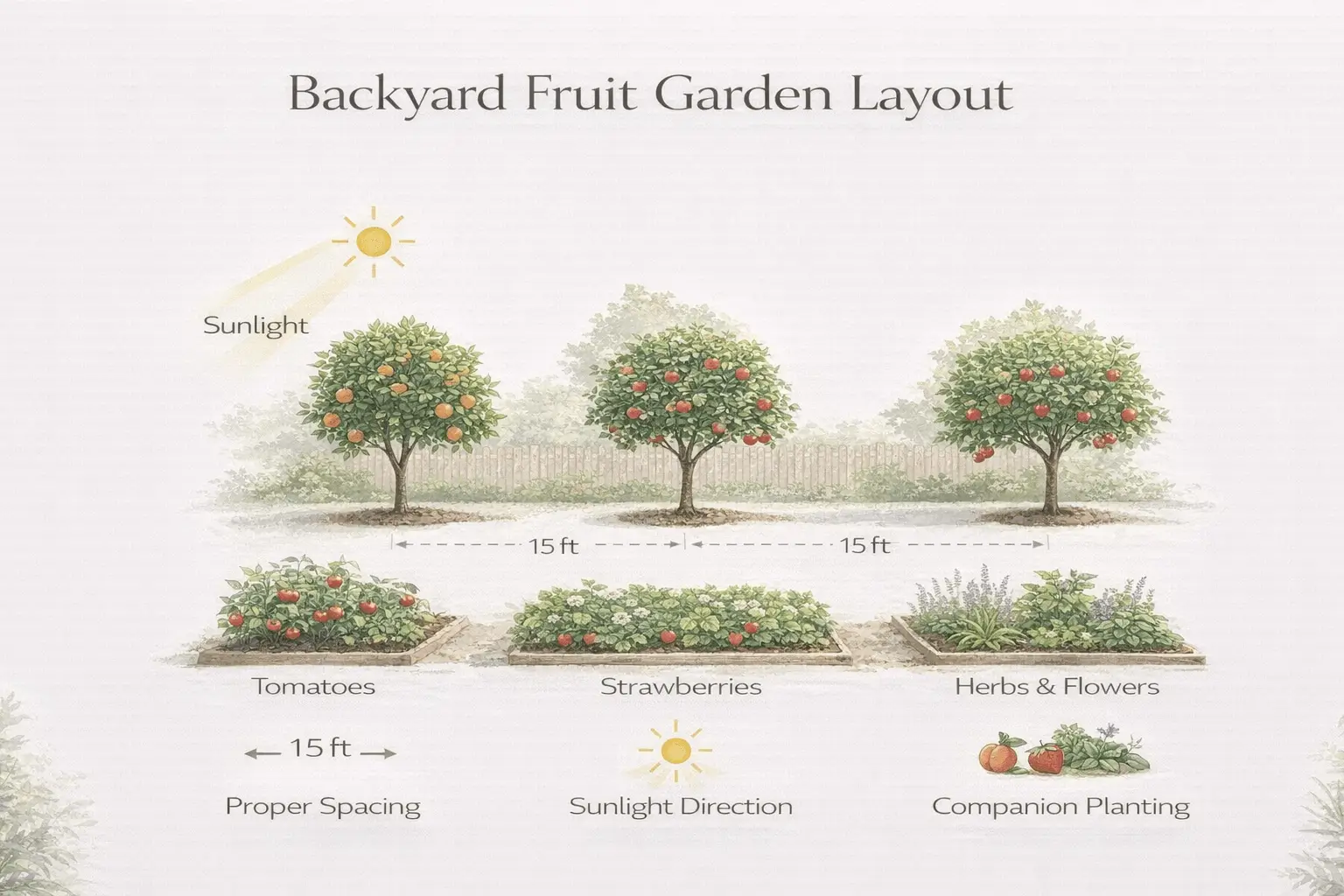
Plan spacing and sunlight access, use companion planting to enhance growth, and avoid overcrowding. Proper layout minimizes root competition and optimizes yield.
Landscaping with Fruit Trees Ideas
Combine aesthetics and productivity using edible landscaping concepts, integrating fruit trees into garden design for visual appeal and harvestable produce. Companion planting with hedges like Lilly Pilly or using tropical screening plants can enhance your backyard fruit garden’s productivity and aesthetics.
Growing Fruit in Small Spaces and Containers
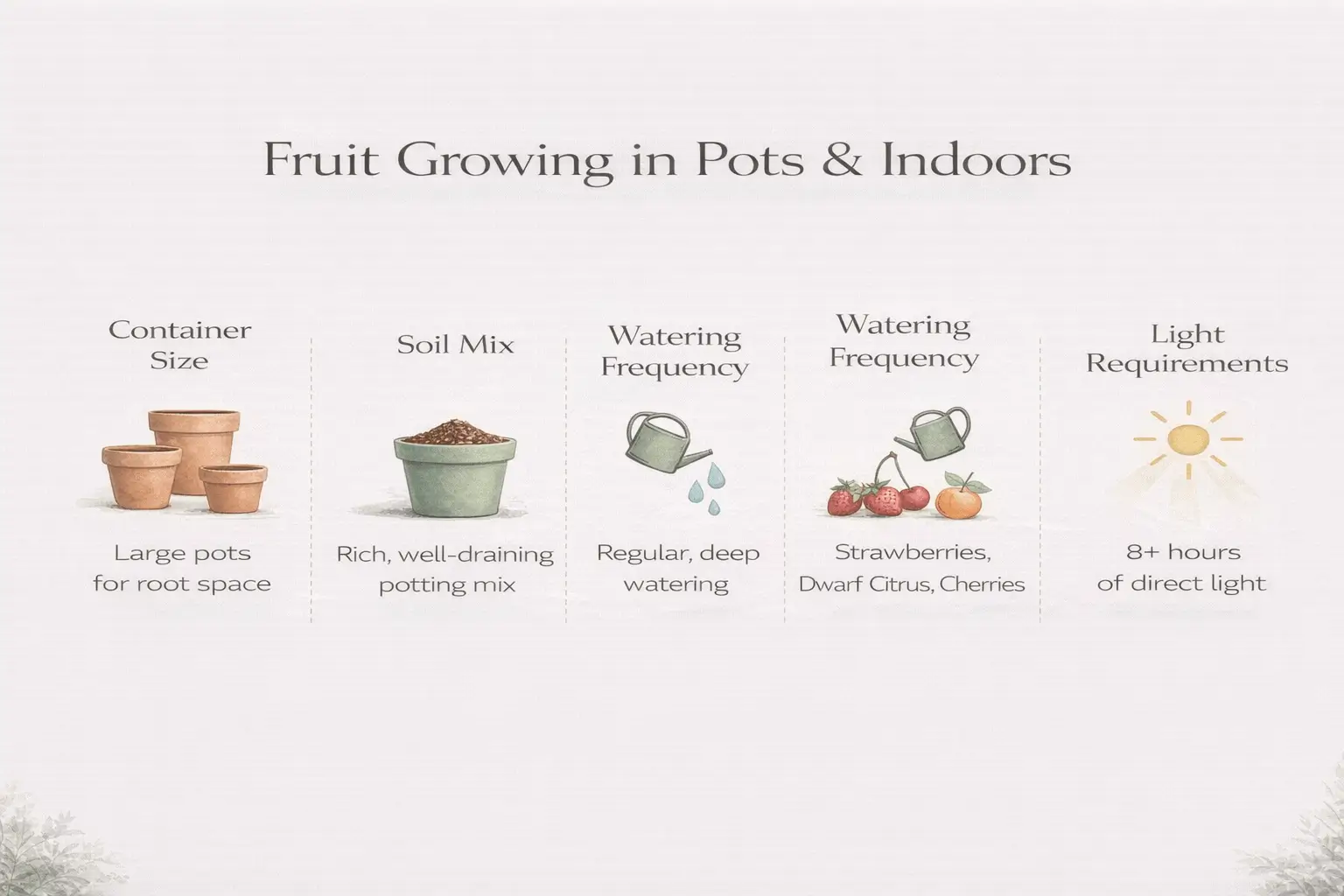
Growing Fruit Trees in Pots and Containers
- Use large containers with good drainage.
- Apply well-draining soil mixes and maintain regular watering.
- Suitable varieties include dwarf citrus, fig, and blueberries.
Indoor Fruit Growing Possibilities
Indoor fruit cultivation requires high light levels, often with supplemental grow lights. Dwarf varieties are preferred due to size limitations, and care must include proper humidity and temperature control. Indoor fruit trees can thrive alongside other indoor fruit and ornamental plants, as well as air-purifying plants like the Spider Plant.
Propagation Methods: How Fruit Trees Are Grown
Growing Fruit Trees from Seed
Seeds require germination periods and may take longer to produce fruit. Limitations include slower growth and potential variability in fruit quality.
Growing Fruit Trees from Cuttings and Grafting
Cuttings and grafted plants provide faster fruiting and uniform quality. Cloning parent plants ensures desired traits are maintained.
Common Problems When Growing Fruit
Why Fruit Trees Fail to Grow or Produce
- Poor soil quality or drainage issues.
- Inadequate sunlight or watering.
- Nutrient deficiencies affecting growth.
Common Beginner Mistakes
- Overwatering or underwatering.
- Planting in unsuitable climates.
- Incorrect spacing or poor plant selection.
How to Fix and Prevent Issues
- Improve soil with organic matter.
- Implement basic pruning and pest control.
- Choose climate-appropriate species.
Care Guide for Healthy Fruit Growth
Watering, Feeding, and Soil Management
Regular irrigation schedules, organic fertilization, and monitoring soil pH promote healthy tree growth.
Pruning and Maintenance
Pruning ensures better fruit yield, prevents disease, and maintains tree structure.
Seasonal Care Considerations
Adjust watering, fertilization, and protection measures based on seasonal changes and local climate.
Comparing Growing Methods: Trees vs Containers vs Indoor
Structured Comparison Block
- Trees offer higher yield but require more space and maintenance.
- Containers are flexible and suitable for small areas.
- Indoor cultivation allows year-round fruiting but needs controlled conditions.
Table Section
| Growing Method | Space Needed | Growth Speed | Yield Potential | Maintenance Level |
| Ground Trees | High | Moderate | High | Medium-High |
| Containers | Medium | Moderate | Medium | Medium |
| Indoor | Low | Moderate | Low-Medium | Medium-High |
Beginner Tips for Growing Fruit Successfully
- Start with easy-to-grow fruit trees.
- Choose climate-appropriate varieties.
- Focus on soil health first.
- Plan a long-term garden layout for sustainability.
Conclusion
Growing fruit is a rewarding process combining careful planning, species selection, and ongoing care. Understanding how to grow fruit trees, selecting suitable varieties, and optimizing garden layout ensures healthy growth and abundant harvests. Whether in backyards, containers, or indoors, aligning plant needs with environmental conditions is key to successful fruit cultivation.
FAQs
What is the easiest fruit to grow for beginners?
Easy-to-grow fruits include those that adapt well to local climates and require minimal care, such as figs, blueberries, and papayas.
How long does it take for fruit trees to produce fruit?
Fast-growing trees can produce fruit in 2–3 years, while slower-growing species may take 4–6 years to bear fruit.
Can fruit trees grow in pots successfully?
Yes, many fruit trees thrive in containers when provided with appropriate soil, sunlight, and regular watering.
What are the best conditions for growing fruit?
Fruit trees generally need full sunlight, well-draining soil, and consistent watering for optimal growth.
Is it better to grow fruit trees from seed or cuttings?
Cuttings and grafted trees usually produce fruit faster and maintain uniform fruit quality compared to seed-grown trees.



2 Responses