

Introduction
The lucky money plant is a popular indoor plant associated with prosperity, good fortune, and positive energy in many cultures. Often referred to as a chinese lucky plant, it is widely connected with feng shui traditions and indoor gardening. Many households grow these plants not only for their decorative appearance but also for their symbolic meaning. The term lucky money plant is commonly used for several plants believed to attract wealth and abundance. This guide explains what the lucky money plant is, its meaning, symbolism, care requirements, and how it relates to plants like the Chinese money plant (Pilea peperomioides) and the money tree.
What Is a Lucky Money Plant?
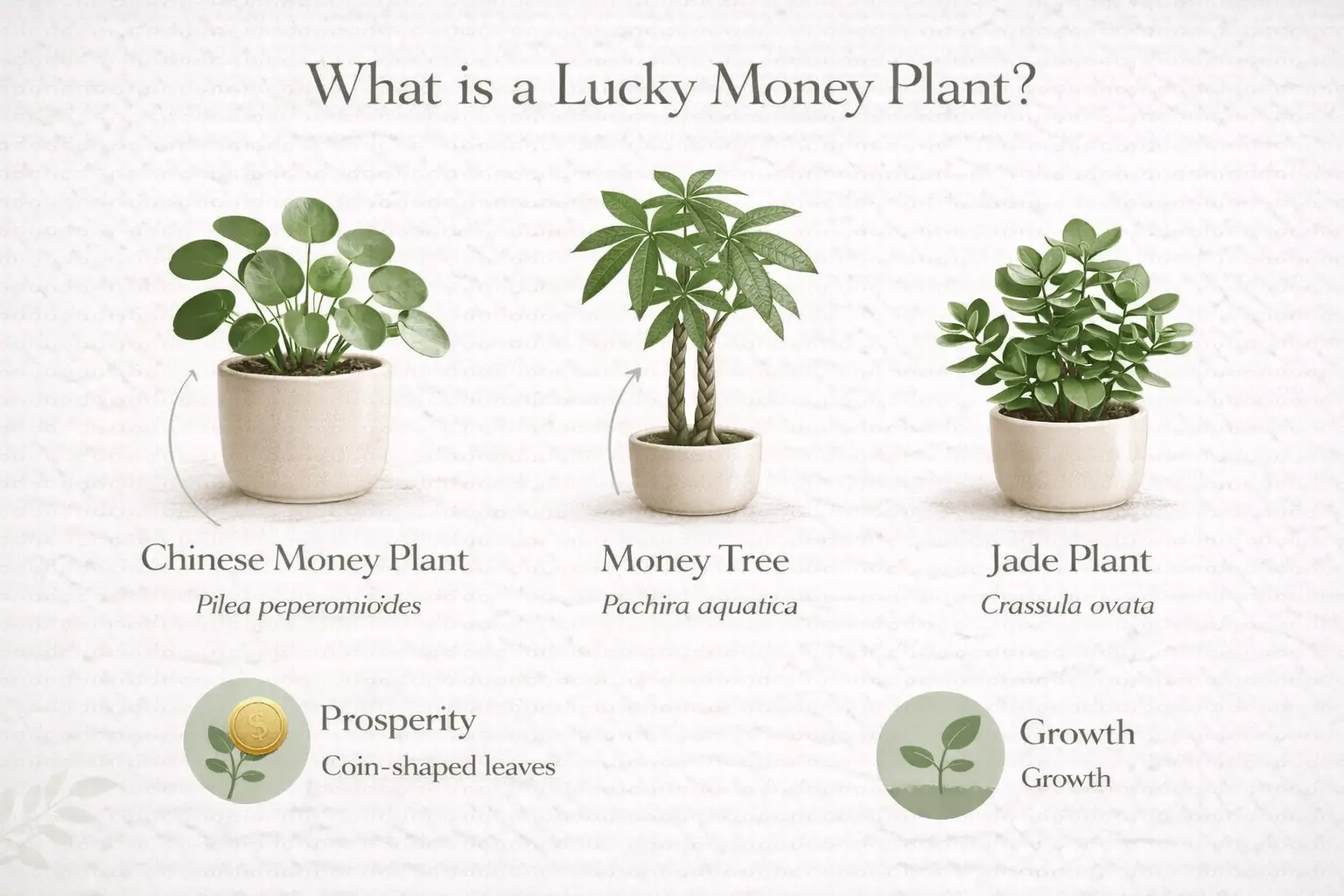
A lucky money plant is a general term used for houseplants believed to symbolize wealth, prosperity, and positive energy. In indoor gardening and cultural traditions, several plants share this association, which is why the phrase does not refer to just one specific species.
Common Plants Referred to as Lucky Money Plants
The term lucky money plant may refer to several indoor plants commonly associated with prosperity. These include the chinese lucky plant, the Chinese money plant, the money tree, and the japanese money plant. Although these plants belong to different botanical families, they are grouped together because of their symbolic connection to financial growth and good fortune.
Many people select these plants for homes, offices, or businesses because they are believed to create a positive atmosphere and represent steady growth, similar to the way wealth accumulates over time.
Scientific and Common Names of Money Plants
The phrase money plant is widely used as a common name rather than a scientific classification. Different plants may share the same nickname depending on cultural or regional traditions. For example, the Chinese money plant is scientifically known as Pilea peperomioides and belongs to the family Urticaceae.
Similarly, the money tree is Pachira aquatica, a tropical species from the Malvaceae family. Because of these naming differences, understanding money plant names and species helps clarify which plant someone is referring to when discussing a lucky money plant.
Lucky Money Plant Meaning and Symbolism
Lucky money plants are widely associated with prosperity, abundance, and positive life energy. Their symbolism often reflects growth, stability, and financial success.
Cultural Meaning of the Lucky Money Plant
Across many cultures, money plants symbolize prosperity and good fortune. The idea behind money plant symbolism comes from the plant’s steady growth and healthy green leaves, which represent vitality and abundance.
In homes and workplaces, these plants are often seen as reminders of financial stability and long-term success. The money plant significance is therefore connected not only with wealth but also with balance, harmony, and sustainable growth.
Chinese Money Plant Spiritual Meaning
The Chinese money plant carries strong symbolic meaning in spiritual traditions. Its round, coin-shaped leaves resemble coins, which is why it is often linked with financial luck.
In addition to representing wealth, the plant’s growth pattern symbolizes renewal and expansion. As the plant produces new shoots, it is often interpreted as a sign of ongoing prosperity and opportunity.
Lucky Money Plant in Feng Shui
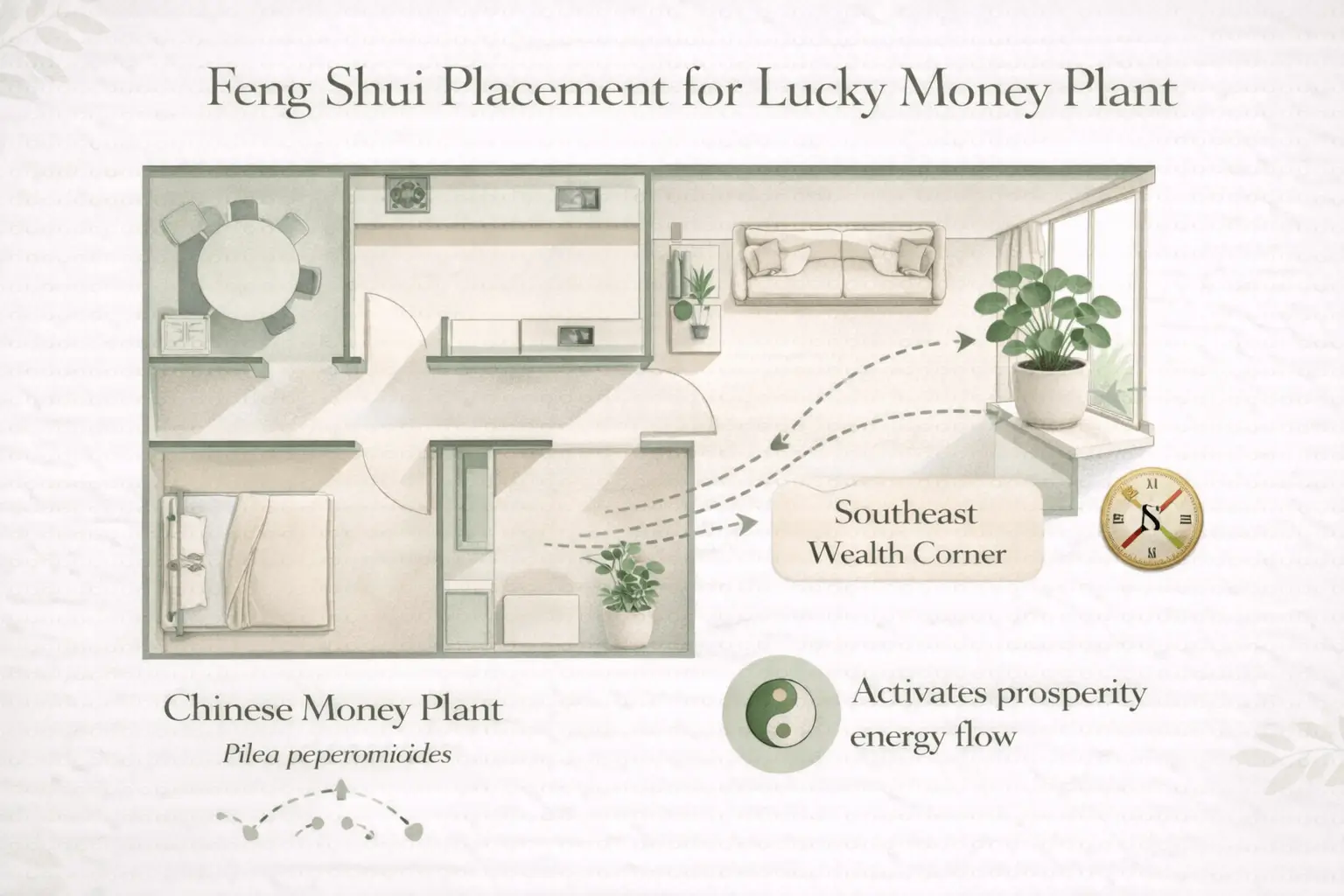
In feng shui practices, plants are believed to influence energy flow within a space. Lucky money plants are commonly used to attract positive energy and encourage prosperity.
Feng Shui Placement for Prosperity
Feng shui traditions suggest placing money plants in areas associated with wealth. The southeast sector of a home or office is traditionally considered the wealth corner.
Positioning a lucky money plant feng shui arrangement in this area may symbolize financial growth. Similar placement principles apply to the money tree feng shui tradition and the feng shui Chinese money plant, where healthy plants represent strong, positive energy.
Plants Associated With Wealth and Good Luck
Several plants are widely considered symbols of prosperity. These include plants that attract wealth, good luck plants, and indoor plants that bring money and good luck.
Examples often mentioned include the Chinese money plant, jade plant, money tree, and lucky bamboo. These plants are valued both for their decorative qualities and their cultural associations with fortune and success.
Types of Plants Commonly Called Lucky Money Plants
Several indoor plants are frequently referred to as lucky money plants. Each species has unique botanical characteristics and symbolic meanings.
Chinese Money Plant (Pilea Peperomioides)
The Chinese money plant (Pilea peperomioides) is known for its distinctive round leaves. These coin-shaped leaves give the plant its nickname, the coin plant.
Native to southwestern China, the plant grows upright stems with glossy green foliage. Its compact size and easy propagation make it a popular houseplant worldwide.
Money Tree (Pachira Aquatica)
The money tree (Pachira aquatica) is another plant strongly associated with prosperity. It often features braided trunks and glossy green leaves arranged in clusters.
This plant is widely used in offices and homes because of its connection to wealth in feng shui traditions.
Jade Plant and Other Prosperity Plants
The jade plant (Crassula ovata) is another plant often linked with financial prosperity. Its thick, oval leaves resemble small coins, reinforcing its association with wealth.
Comparisons such as lucky jade plant vs money plant often appear in gardening discussions because both plants share similar symbolism.
How to Grow a Lucky Money Plant Indoors
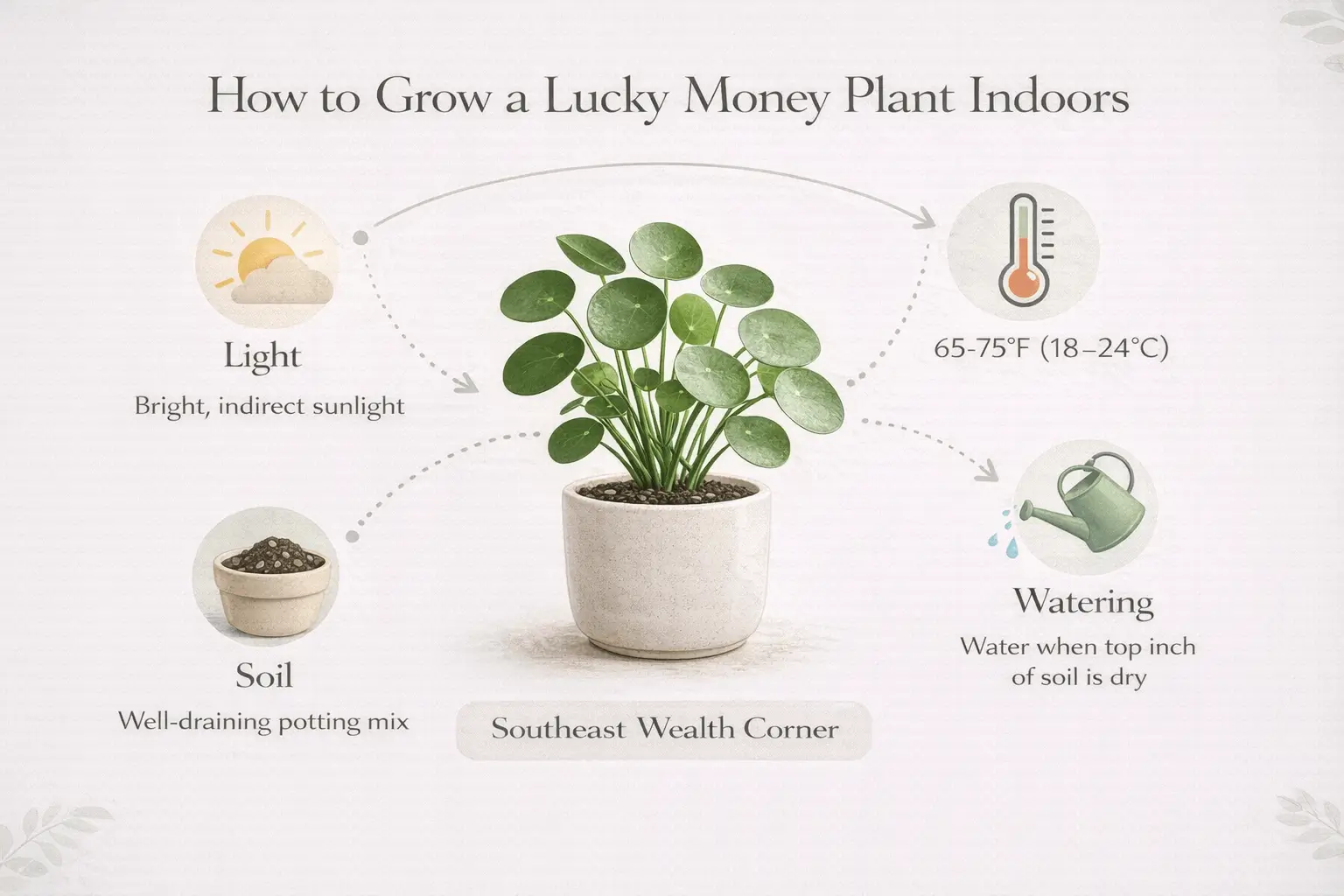
Most lucky money plants grow successfully indoors when provided with the right environment. Basic care requirements include appropriate lighting, soil conditions, and watering.
-
Light and Sun Requirements
Most money plants prefer bright, indirect light. Direct sunlight may cause leaf damage, while low light may slow plant growth.
For example, the Chinese money plant sun requirement typically involves bright indirect light near a window.
-
Soil and Potting Needs
Well-draining soil is essential for healthy indoor plants. A standard houseplant potting mix combined with perlite or sand improves drainage.
Containers should also have drainage holes to prevent water accumulation.
-
Watering and Environmental Conditions
Moderate watering supports healthy growth. Most indoor lucky money plants prefer soil that dries slightly between watering sessions.
Indoor environments with stable temperatures and moderate humidity provide ideal growing conditions.
Lucky Money Plant Care Tips
Consistent care practices help ensure that lucky money plants remain healthy and visually appealing indoors.
-
Chinese Money Plant Care and Maintenance
Chinese money plant care involves maintaining balanced light, moderate watering, and occasional fertilization during the growing season.
Regularly rotating the plant helps maintain even growth and prevents leaning toward the light source.
-
Indoor Plant Growth and Size
Chinese money plants typically grow between 12 and 18 inches tall indoors. Under optimal conditions, they may produce small offshoots known as plant pups.
These offshoots can be propagated to grow new plants, making them popular among indoor gardeners.
Common Lucky Money Plant Problems and Solutions
Like most houseplants, lucky money plants may experience occasional health issues.
Brown Leaves and Plant Stress
Chinese money plant brown leaves are commonly caused by watering imbalance, excessive sunlight, or dry indoor air.
Adjusting watering frequency and ensuring indirect light often resolves these issues.
Fungal or Disease Issues
Chinese money plant fungus may occur when soil remains overly moist for extended periods. Poor air circulation can also contribute to fungal growth.
Using well-draining soil and allowing the top layer of soil to dry between watering sessions helps prevent these problems.
Benefits of Keeping a Lucky Money Plant Indoors
Lucky money plants provide both decorative and symbolic advantages when grown indoors.
Decorative and Indoor Benefits
Money plants indoor are valued for their attractive foliage and compact growth. Their clean leaf shapes complement modern interior design styles.
They are also relatively easy to maintain compared with many other houseplants.
Symbolic Prosperity Benefits
Lucky money plant benefits often relate to their symbolism of wealth and positive energy. Many people keep these plants as reminders of financial growth and opportunity.
In cultural traditions, gifting a money plant is often considered a gesture of goodwill and prosperity.
Comparison: Lucky Money Plant vs Other Prosperity Plants
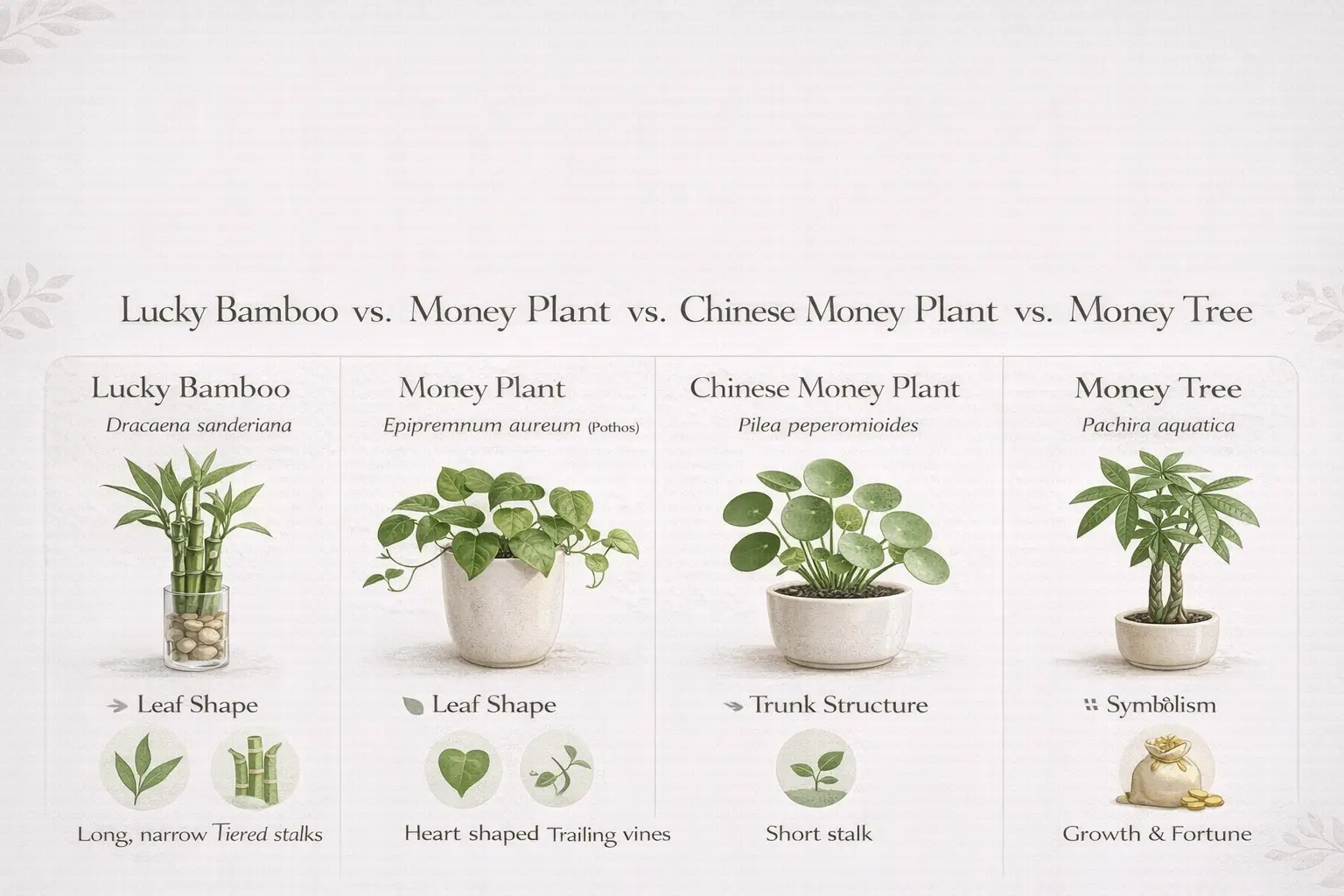
Many plants share symbolic associations with prosperity. Understanding their differences helps gardeners choose the most suitable plant.
Lucky Bamboo vs Money Plant
Lucky bamboo and money plants differ significantly in structure and botanical classification. Lucky bamboo (Dracaena sanderiana) grows as a slender stalk plant, while money plants typically have broad leaves.
Both plants are commonly used in feng shui practices.
Chinese Money Plant vs Money Tree
The Chinese money plant grows as a compact houseplant with circular leaves, while the money tree grows taller and features braided trunks.
Both plants represent prosperity but differ in size and growth habits.
Creative Ways to Display Lucky Money Plants Indoors
Lucky money plants can enhance interior spaces through creative placement and decorative containers.
Indoor Decorative Arrangements
Terrariums, ceramic pots, and decorative containers provide attractive ways to display plants. A lucky money plant terrarium can create a visually appealing centerpiece for desks or shelves.
Lucky Plants in Interior Design
Lucky plants and good fortune plants are often used as decorative elements in modern interiors. Their vibrant green leaves introduce natural texture and balance into living spaces.
Conclusion
The lucky money plant is widely appreciated for both its symbolism and ease of care. Often referred to as a chinese lucky plant, it represents prosperity, growth, and positive energy in many cultures. Whether you grow the Chinese money plant, the money tree, or another plant associated with wealth, understanding its meaning, feng shui placement, and care requirements helps ensure it thrives indoors. With the right environment and care, the lucky money plant can serve as both a decorative houseplant and a symbol of good fortune.
Learn more: zamioculcas zamiifolia
FAQs
What is a lucky money plant?
A lucky money plant refers to houseplants associated with wealth and prosperity, such as the Chinese money plant and the money tree.
Is the lucky money plant the same as the Chinese money plant?
Not always. The term can refer to multiple plants, but the Chinese money plant is one of the most commonly associated with the name.
Where should a lucky money plant be placed in feng shui?
It is often placed in the southeast area of a home or office, which is traditionally linked with wealth and prosperity.
How big can a Chinese money plant grow?
Most Chinese money plants grow between 12 and 18 inches tall indoors when properly cared for.
Are lucky money plants easy to grow indoors?
Yes. With indirect light, moderate watering, and well-draining soil, most lucky money plants grow easily indoors.



4 Responses