

Introduction
The Japanese money plant, commonly referring to Pilea peperomioides, is a popular indoor houseplant known for its distinctive round, coin-shaped leaves and compact growth habit. Often called the coin plant, penny plant, or Chinese penny plant, it has gained worldwide popularity because it is easy to care for and visually distinctive. Many beginners choose it because basic japanese money plant care requires only moderate light, balanced watering, and well-draining soil. The plant thrives indoors but can tolerate limited outdoor money plant placement in mild climates. In this guide, you will learn essential care practices including watering, soil selection, propagation techniques, troubleshooting common problems, and the cultural symbolism associated with this unique houseplant.
What Is a Japanese Money Plant?
The Japanese money plant is a small ornamental plant recognized for its round, glossy leaves that resemble coins. Botanically known as Pilea peperomioides, it originates from the mountainous regions of southern China. Over time, it spread globally as a houseplant due to its unusual appearance and ease of propagation.
Botanical Classification and Plant Identity
Pilea peperomioides belongs to the Urticaceae family, which also includes nettle plants. Although it is widely called the Japanese money plant, it is more accurately known as the Chinese money plant because of its origin in China. The plant is often grouped with other pilea plants, but it is distinct due to its circular leaves and upright growth habit.
It is sometimes confused with other plants called “money plants,” such as the money tree or jade plant, but these belong to different botanical families.
Key Visual Characteristics
The most recognizable feature of the plant is its perfectly round leaves, which grow on long petioles extending from the main stem. The leaves resemble small green coins, which inspired its common name.
A full grown Chinese money plant typically reaches about 30–40 cm (12–16 inches) in height indoors. Mature plants may also produce small offshoots at the base. Some cultivars, such as the Japanese silver money plant, may display subtle leaf variations or larger foliage as they mature.
Japanese Money Plant Care Basics
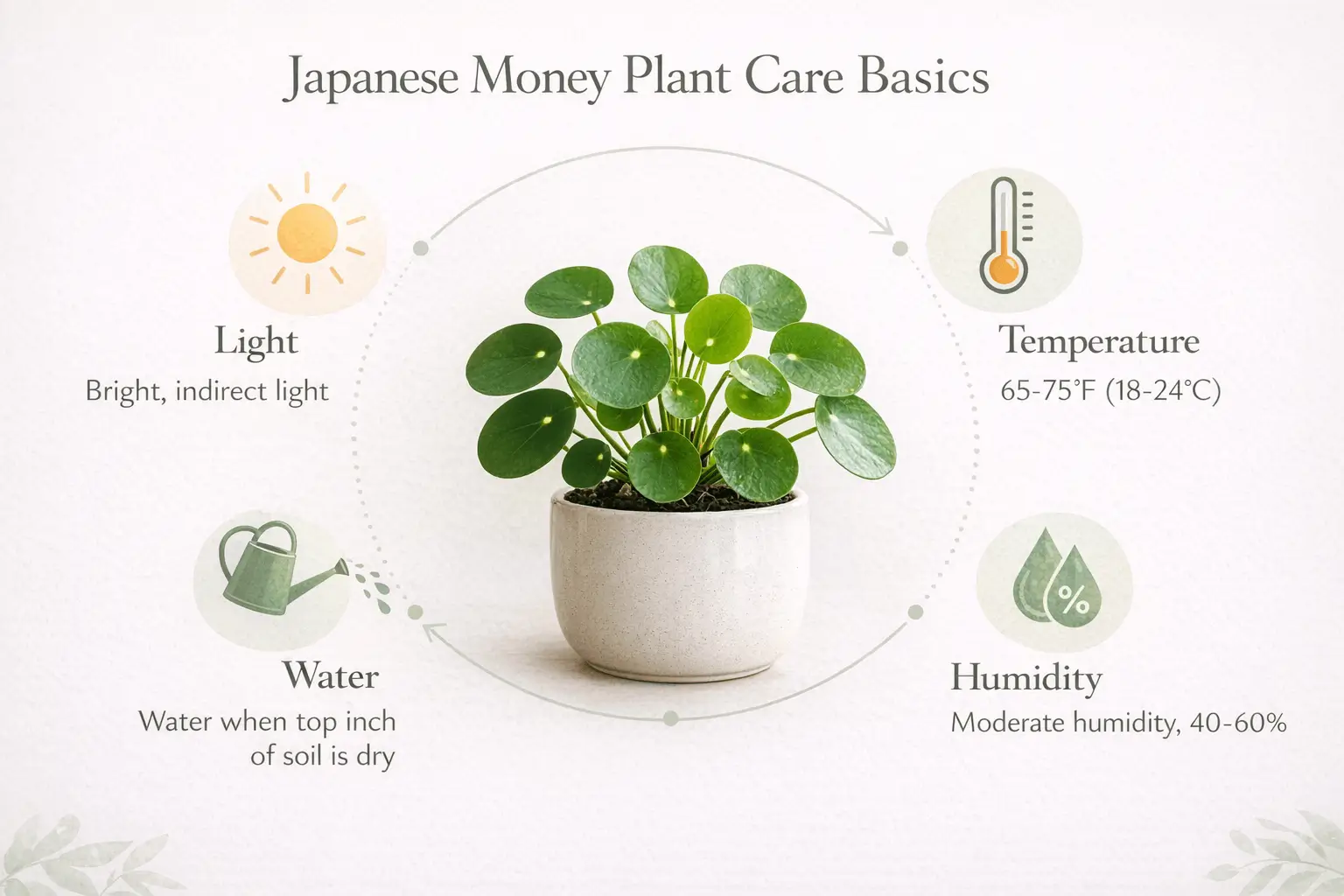
Proper japanese money plant care focuses on balanced light, consistent watering, and stable environmental conditions. These factors help the plant maintain compact growth and vibrant foliage.
-
Light Requirements for Healthy Growth
The plant grows best in bright indirect light. Direct sunlight can scorch the leaves, while low light can cause leggy stems and widely spaced leaves.
A suitable indoor placement is near an east- or north-facing window where filtered light is available. Rotating the plant every week ensures even light exposure and prevents leaning growth.
-
Watering Needs and Moisture Balance
Many people ask how often to water japanese money plant. The ideal approach is to water when the top 2–3 cm of soil becomes dry.
Overwatering can lead to root rot, while underwatering may cause drooping or curling leaves. Similar to chinese money plant watering guidelines, the soil should remain slightly moist but never waterlogged.
-
Temperature and Humidity Conditions
The plant thrives in average indoor temperatures between 16–24°C (60–75°F). It tolerates normal household humidity levels and does not require high humidity environments.
Avoid placing it near heaters, air conditioners, or cold drafts because sudden temperature changes can stress the plant.
Best Soil and Potting Conditions for Japanese Money Plants
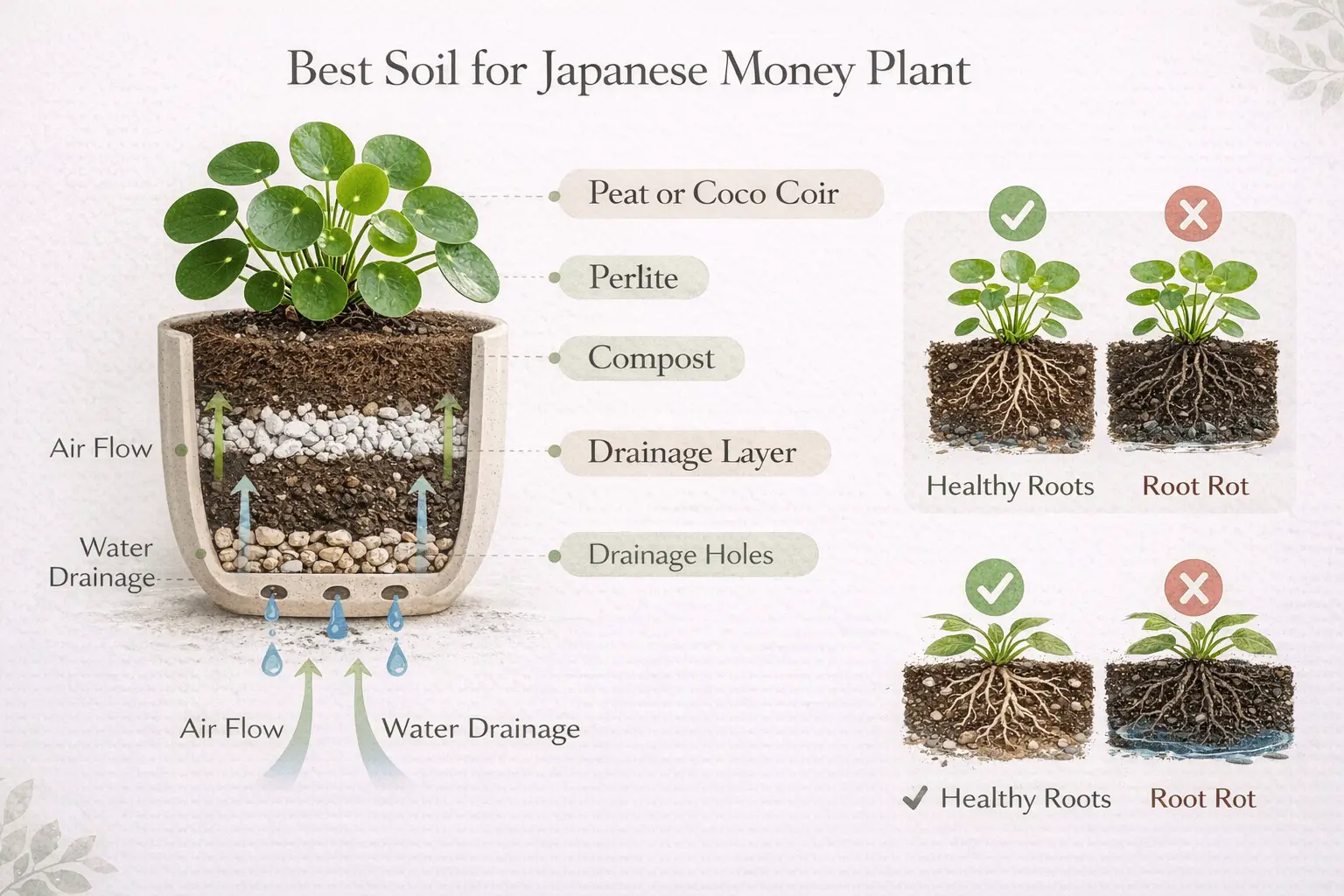
Choosing the right soil for money plant growth is essential for healthy roots and stable development.
Recommended Soil Mix and Drainage
The best soil for japanese money plant is a well-draining potting mix. A balanced mixture typically includes:
- Peat or coco coir for moisture retention
- Perlite for aeration
- Compost or organic matter for nutrients
This combination supports root health and prevents excess moisture buildup, which reduces the risk of root rot.
Repotting Japanese Money Plants
Repotting becomes necessary when roots begin filling the container or growing through drainage holes. Young plants may need repotting every 12–18 months.
Signs that a plant needs repotting include slowed growth, compacted soil, or reduced water absorption.
How to Grow and Maintain a Healthy Japanese Money Plant
Maintaining healthy growth involves routine observation and small maintenance practices.
Pruning and Shaping the Plant
Learning how to prune japanese money plant helps maintain balanced growth. Removing damaged leaves and trimming overly long stems encourages stronger branching and improved shape.
Pruning also helps redirect the plant’s energy into producing new leaves.
Encouraging Balanced Growth Indoors
Indoor plants can become uneven if light comes from only one direction. Rotating the plant weekly helps maintain symmetrical growth.
Consistent lighting and occasional pruning also support a compact and healthy appearance.
Japanese Money Plant Propagation Methods
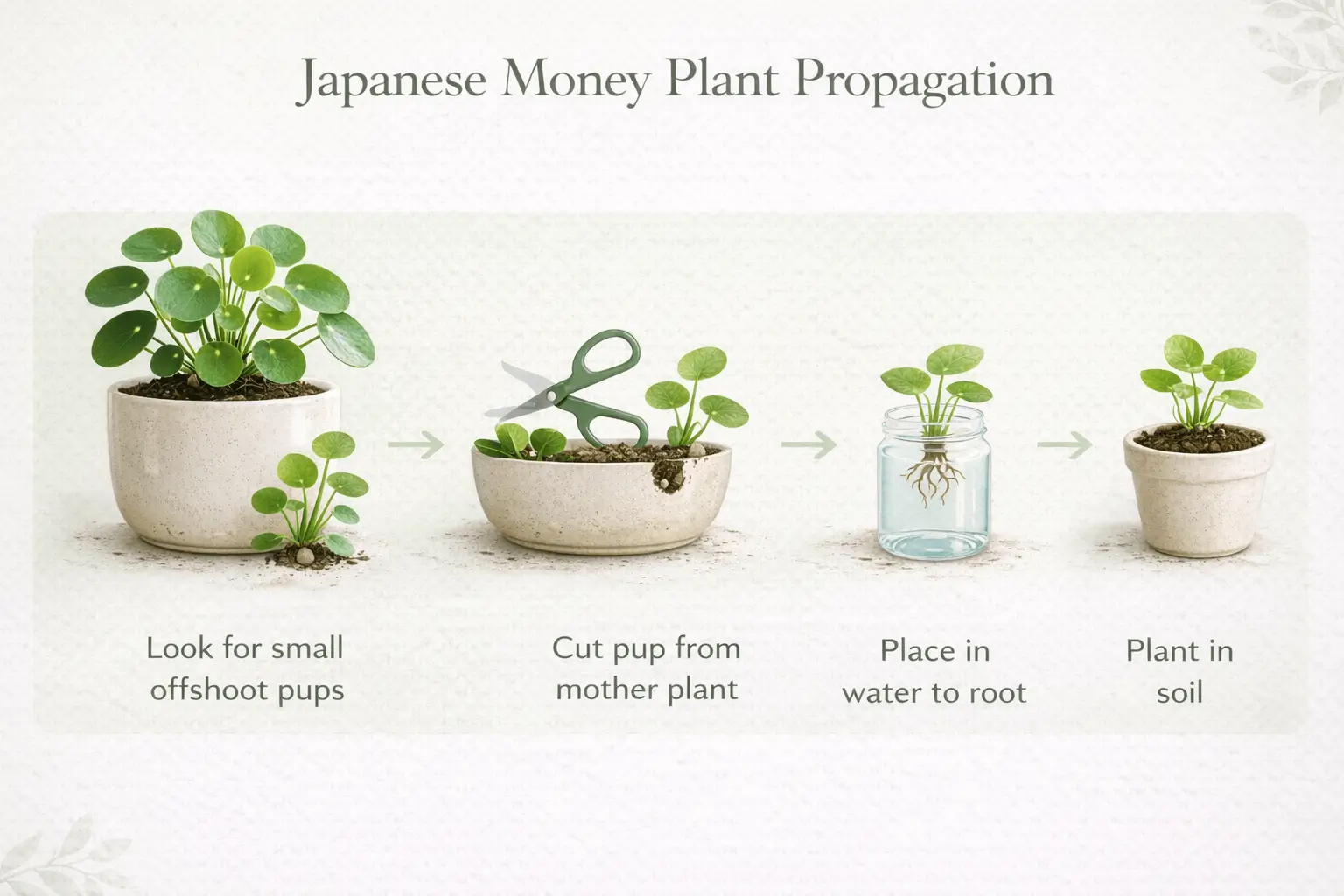
One reason the plant is widely shared among gardeners is its easy japanese money plant propagation.
Propagating Offshoots or “Pups”
Small plantlets, commonly called pups, often grow around the base of mature plants. These offshoots can be separated once they develop their own roots.
Using clean scissors, the pup can be removed and replanted in fresh soil.
Water Propagation Techniques
Another method involves propagating chinese money plant in water. The offshoot is placed in a container of water until roots form.
Once the roots reach several centimeters in length, the new plant can be transferred into soil.
Common Japanese Money Plant Problems and Solutions
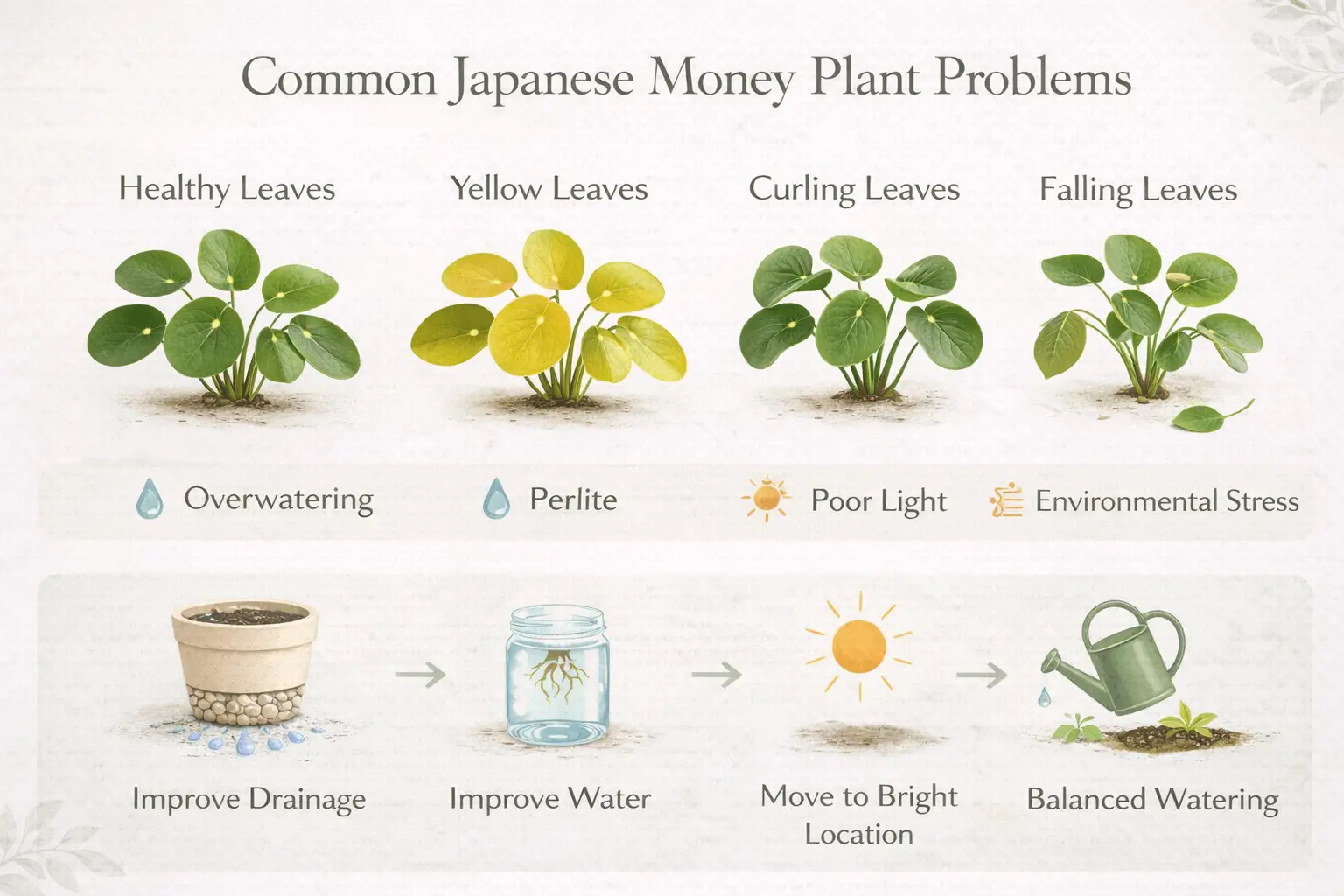
Even resilient plants may experience occasional issues.
-
Why Leaves Turn Yellow
If you notice japanese money plant yellow leaves, the most common causes are overwatering or poor drainage. Excess moisture deprives roots of oxygen and damages plant tissues.
Improving soil drainage and adjusting watering schedules usually resolves the issue.
-
Curling Leaves and Drooping Growth
Japanese money plant leaves curling may indicate stress from inconsistent watering or inadequate light. Moving the plant to a brighter location and maintaining consistent watering often restores normal leaf shape.
-
Leaves Falling Off the Plant
Occasional leaf drop can be normal as older leaves age. However, frequent japanese money plant leaves falling off may signal environmental stress such as temperature fluctuations or watering problems.
Indoor vs Outdoor Money Plant Growing Conditions
Although typically grown indoors, the plant can sometimes adapt to outdoor conditions.
Growing Japanese Money Plant Indoors
Most gardeners prefer keeping the plant indoors because indoor environments provide stable temperature and lighting conditions.
This controlled environment supports predictable growth and reduces environmental stress.
When Outdoor Placement Works
In mild climates, outdoor money plant placement can be successful during warm seasons. The plant should be placed in shaded areas where direct sun and heavy rain are avoided.
Outdoor exposure should remain temporary in regions with cold winters.
Cultural Meaning and Symbolism of the Money Plant
The plant carries symbolic meaning in several cultures.
Feng Shui and Prosperity Symbolism
In money plant feng shui, the round leaves symbolize coins and financial abundance. Many people believe the plant attracts prosperity and positive energy into a home or workplace.
Meaning of Money Plant Flowers and Growth
Although flowering is rare indoors, money plant flowers meaning is often associated with growth, renewal, and good fortune.
The plant’s rapid propagation and healthy growth reinforce its reputation as a symbol of prosperity.
Japanese Money Plant Varieties and Similar Plants
Several plants share similar names or appearances with the Japanese money plant.
Differences Between Pilea and Money Trees
The pilea peperomioides plant is often confused with Pachira aquatica, commonly known as the money tree plant. While both are associated with prosperity symbolism, they belong to entirely different plant families.
Pilea plants have round leaves and compact stems, while money trees grow as small indoor trees with braided trunks and palm-like foliage.
Conclusion
The japanese money plant remains one of the most recognizable and beginner-friendly houseplants. With proper care—including balanced watering, bright indirect light, and well-draining soil—the plant can grow vigorously and produce new offshoots for many years. Simple maintenance practices such as pruning, rotating the plant for even light exposure, and monitoring leaf health help maintain its compact form. Because it propagates easily and adapts well to indoor environments, the plant is widely shared among plant enthusiasts. Its distinctive coin-shaped leaves and symbolic connection to prosperity make it both an attractive decorative plant and a meaningful addition to many homes.
Learn more: benefits of fruit tea
Frequently Asked Questions
How often should you water a Japanese money plant?
Water a Japanese money plant when the top layer of soil becomes dry. In most indoor environments, this typically means watering once every 7–10 days. During winter months, watering frequency may decrease as plant growth slows.
Can Japanese money plants grow outdoors?
Yes, Japanese money plants can grow outdoors in mild climates where temperatures remain warm and stable. They should be placed in shaded or partially shaded areas because strong direct sunlight can damage the leaves.
What is the best soil for a Japanese money plant?
The best soil is a well-draining potting mix containing peat or coco coir, perlite, and organic compost. This combination provides moisture retention while allowing excess water to drain quickly, preventing root rot.
Why are my Japanese money plant leaves turning yellow?
Yellow leaves commonly result from overwatering, poor drainage, or insufficient light. Adjusting watering frequency, improving soil drainage, and providing brighter indirect light typically corrects the problem.
How do you propagate a Japanese money plant?
Propagation usually occurs through small offshoots called pups that grow around the base of the plant. These can be separated and replanted in soil or rooted in water before planting.
Do Japanese money plants produce flowers?
Yes, the plant can produce small flowers under ideal conditions, although flowering is rare indoors. When it occurs, the flowers appear as small clusters on thin stems and do not significantly affect the plant’s growth.



5 Responses