

Introduction
Fruit tea refers to a beverage made by steeping dried fruits, herbs, or fruit blends in hot water, creating a naturally flavored drink often free of caffeine. Its benefits include hydration support, antioxidant intake, digestive comfort, and a naturally sweet alternative to sugary drinks. The health effects of fruit tea vary depending on the fruit and herbal ingredients used, brewing methods, and consumption habits, making it a versatile option for daily wellness routines.
What Is Fruit Tea and How Is It Different From Traditional Tea
Fruit tea is a herbal infusion made primarily from dried fruits, peels, herbs, and flowers rather than tea leaves from the Camellia sinensis plant. Unlike traditional teas such as green, black, or oolong, fruit teas contain no natural caffeine unless blended with actual tea leaves. Related terms include fruity tea, fruit teas, and herbal fruit blends, all emphasizing plant-based flavor without relying on traditional tea leaves.
Ingredients Commonly Used in Fruit Tea
Common ingredients include dried berries (strawberries, blueberries, raspberries), citrus peels (orange, lemon), hibiscus, apple pieces, rosehip, and tropical fruits such as mango or pineapple. These components influence the flavor profile, aroma, and nutritional value. For example, citrus peels provide vitamin C, hibiscus adds antioxidants, and berries enhance natural sweetness and color.
How Fruit Tea Is Made
Fruit tea is prepared by steeping dried or fresh fruit pieces in hot water, typically between 175–212°F (80–100°C). Steeping time and water temperature impact flavor extraction and nutrient retention. High-quality ingredients and proper brewing result in a balanced infusion with maximum aroma and beneficial plant compounds.
Is Fruit Tea Healthy
Yes, fruit tea can be healthy when consumed without added sugars. It provides hydration, contains natural plant compounds such as polyphenols, and is low in calories. Health effects depend on specific ingredients and preparation. For instance, teas rich in berries or hibiscus provide antioxidants, while citrus blends enhance vitamin C intake.
Natural Antioxidants in Fruit Tea
Fruit teas often contain polyphenols, flavonoids, and vitamin C from their fruit ingredients. These compounds may support overall health by reducing oxidative stress, supporting the immune system, and promoting cellular health. Ingredients such as hibiscus, berries, and rosehip are particularly high in antioxidants.
Hydration and Low-Calorie Beverage Benefits
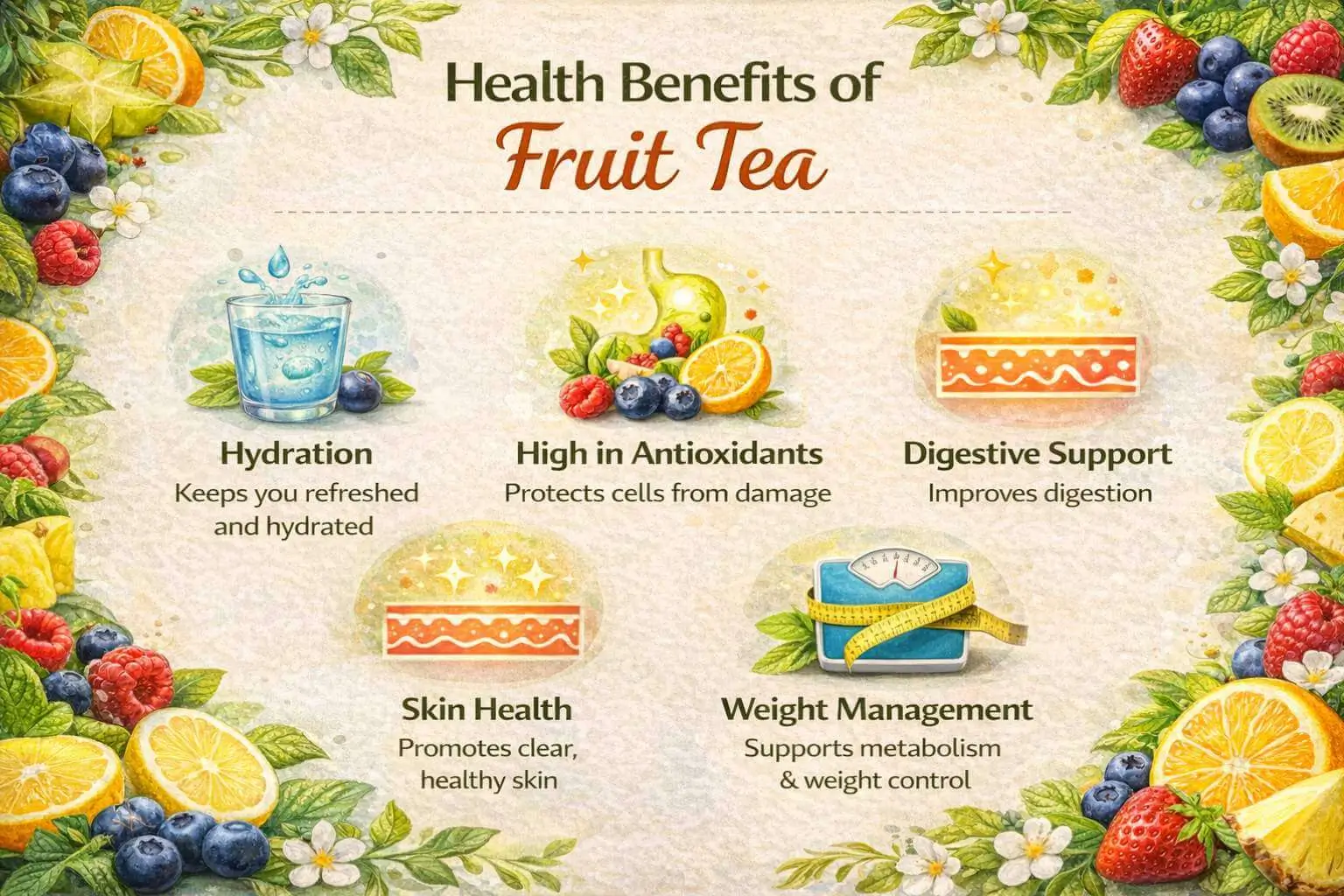
Fruit tea is a naturally hydrating, low-calorie alternative to sugary drinks and sodas. Its water content contributes to daily hydration goals, while the natural sweetness of fruits allows for a flavorful beverage without added sugars. This makes fruit tea suitable for weight-conscious individuals and those aiming to reduce processed sugar intake.
Key Health Benefits of Fruit Tea
-
Benefits of Fruit Tea for Skin Health
Antioxidants and hydration from fruit tea can support skin appearance and overall health. Vitamin-rich fruits, such as citrus and berries, may help protect skin from oxidative damage, improve elasticity, and maintain a healthy glow.
-
Benefits of Fruit Tea for Weight Management
Fruit tea may help reduce calorie intake when it replaces sweetened beverages. Hydration from the tea supports appetite awareness and can prevent unnecessary snacking, contributing to healthy weight management over time.
-
Digestive and Metabolism Support
Ingredients such as ginger, citrus peel, and certain fruits may aid digestion and promote gut comfort. Compounds in these ingredients can help reduce bloating, support enzyme activity, and assist in healthy metabolism.
Best Time to Drink Fruit Tea
Drinking Fruit Tea in the Morning
Fruit tea can be enjoyed as a refreshing, caffeine-free morning beverage. Its light flavor and natural sweetness make it a suitable option to start the day without relying on caffeinated drinks.
Benefits of Drinking Fruit Tea at Night
Many fruit teas are naturally caffeine-free, making them ideal for evening consumption. Drinking fruit tea at night can provide hydration and relaxation without interfering with sleep.
Popular Types of Fruit Tea and Their Unique Benefits
-
Passion Fruit Tea Benefits
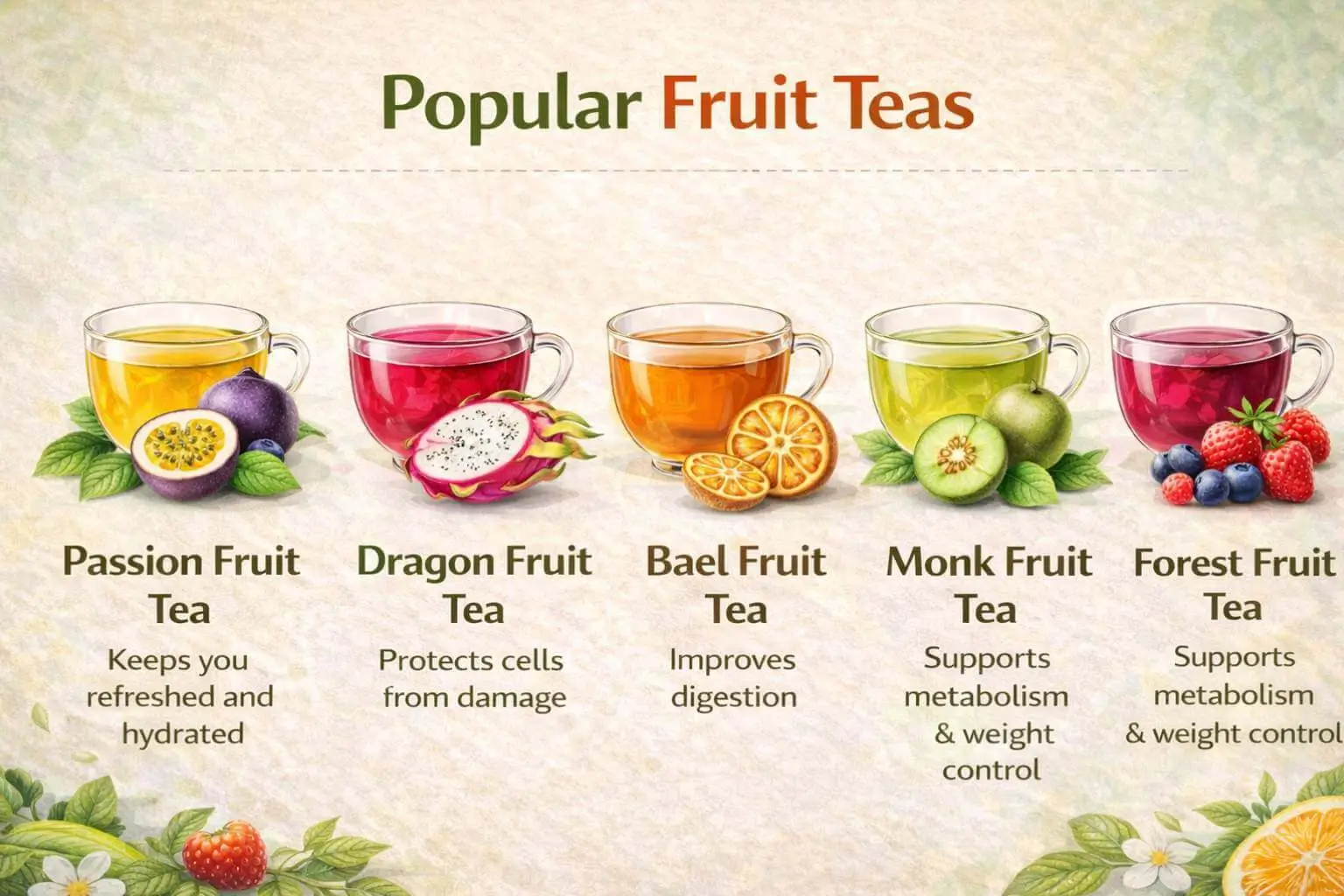
Passion fruit tea contains antioxidants, vitamins, and minerals. Its potential calming effects and bright flavor make it a soothing and nutritious herbal infusion.
-
Dragon Fruit Tea Benefits
Dragon fruit tea provides hydration, vitamin C, and visually appealing color. Its mild flavor and nutrient content support overall wellness and hydration.
-
Bael Fruit Tea Benefits
Bael fruit tea is traditionally consumed for digestive support. Its natural compounds may promote gut health and aid in regular digestion.
-
Monk Fruit Tea Benefits
Monk fruit is naturally sweet with minimal calories, making it suitable for herbal blends. It can enhance flavor without increasing sugar intake.
-
Forest Fruit Tea Benefits
Forest fruit or mixed berry teas contain antioxidants and polyphenols. Blends of berries provide flavor complexity and potential protective health effects.
How to Make Fruit Tea at Home

Simple Fruit Tea Recipe
- Boil water to 80–100°C (175–212°F).
- Add 1–2 tablespoons of dried fruit or 1 cup of fresh fruit slices.
- Steep for 5–10 minutes.
- Optional: add herbs, citrus slices, or natural sweeteners.
- Strain and serve hot or chilled.
Variations and Flavor Combinations
Citrus, berries, tropical fruits, or combinations can create unique flavor profiles. Blending herbs such as mint, chamomile, or lemongrass adds aroma and additional health benefits.
Possible Side Effects of Fruit Tea
Natural Sugar Content in Some Fruit Blends
Some fruit teas contain natural sugars from dried fruits. Frequent consumption of highly sweet blends may contribute additional calories.
Ingredient Sensitivities or Allergies
Certain fruits or herbs may cause reactions in sensitive individuals. Common allergens include citrus peels, berries, or exotic fruits.
Common Mistakes When Drinking Fruit Tea
Adding Too Much Sweetener
Excessive sugar reduces the health benefits of fruit tea. Using natural fruit sweetness or minimal sweetener preserves its low-calorie advantage.
Over-Steeping Fruit Tea
Steeping fruit tea too long can create bitterness or overly concentrated flavors. Following recommended brewing times ensures optimal taste and nutrient retention.
Fruit Tea vs Other Teas
Fruit Tea vs Herbal Tea
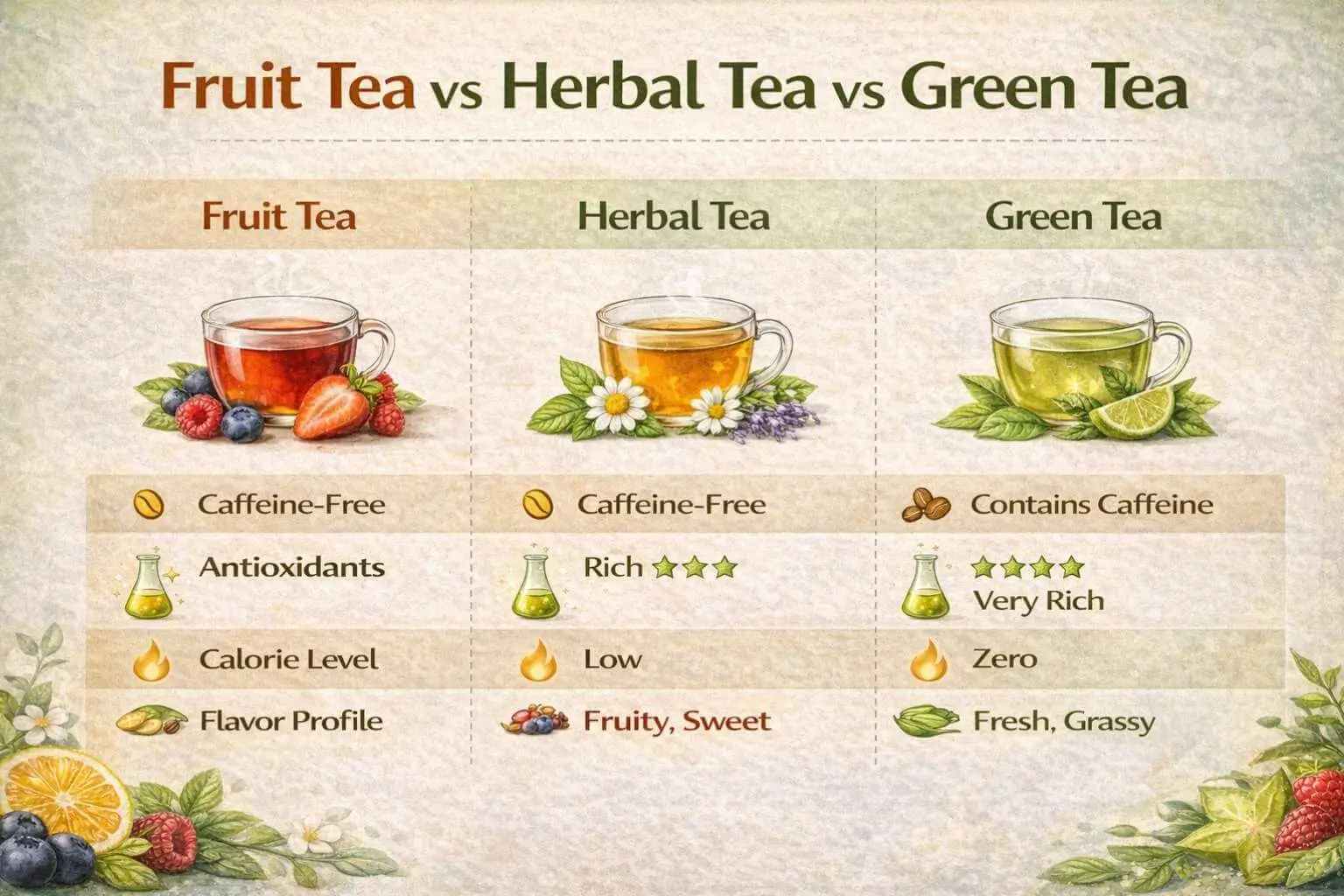
Fruit teas are technically a subset of herbal infusions, emphasizing fruit and botanical flavors over leaves from the Camellia sinensis plant.
Fruit Tea vs Green Tea
Green tea contains natural caffeine and catechins, while fruit tea is usually caffeine-free and rich in fruit-derived antioxidants, offering a distinct flavor profile and health benefits.
How Fruit Tea Fits Into a Healthy Lifestyle
Fruit tea complements broader wellness habits such as hydration, balanced nutrition, and plant-based beverage consumption. Replacing sugary drinks with fruit tea can support daily hydration, antioxidant intake, and mindful dietary choices.
Conclusion
Fruit tea is a naturally flavorful beverage made from fruits, herbs, and botanical ingredients rather than traditional tea leaves. Its benefits include hydration, antioxidants, digestive support, and a low-calorie alternative to sugary drinks. The health effects depend on ingredients, preparation, and personal habits. Consumed without excessive sweeteners, fruit tea is a simple, plant-based way to enhance daily wellness routines.
Learn more: jagua fruit benefits
FAQs
What are the main benefits of fruit tea?
Fruit tea supports hydration, provides antioxidants, and serves as a naturally flavored alternative to sugary drinks.
Is fruit tea good for you?
Fruit tea can be healthy when consumed without added sugar, as many blends contain natural plant compounds and are caffeine-free.
Can fruit tea help with weight management?
Yes, fruit tea may help reduce calorie intake when it replaces sugary beverages, though it is not a direct weight-loss solution.
Is fruit tea safe to drink every day?
Most fruit teas are safe for daily consumption, but ingredient sensitivities, sugar content, and individual health conditions should be considered.
Does fruit tea contain caffeine?
Most fruit teas are naturally caffeine-free because they are made from fruits and herbs rather than tea leaves.
How do you make fruit tea at home?
Fruit tea can be prepared by steeping dried or fresh fruits in hot water for several minutes, adjusting flavor with herbs or citrus slices.



One Response