

Introduction
The candelabra tree (Euphorbia ingens) is a striking succulent native to arid regions of southern Africa, recognized for its tall, upright branching structure that resembles a traditional candelabra. The candelabra tree Euphorbia ingens thrives in hot, dry climates and is widely valued as a sculptural ornamental plant for xeriscapes and large indoor spaces. It belongs to the Euphorbia genus, not true cacti, and produces a toxic milky latex sap typical of the euphorbia tree family. Its bold form, drought tolerance, and architectural shape make it a standout specimen in modern desert landscaping.
Quick Summary
- The candelabra tree (Euphorbia ingens) is a tall succulent with candelabra-like branching.
- Native to South Africa and Namibia, it can reach 20–30 feet outdoors.
- It is drought-tolerant but toxic due to its milky latex sap.
- Requires full sun, well-drained soil, and minimal watering.
- Best suited for experienced growers in warm, frost-free climates.
What Is a Candelabra Tree?
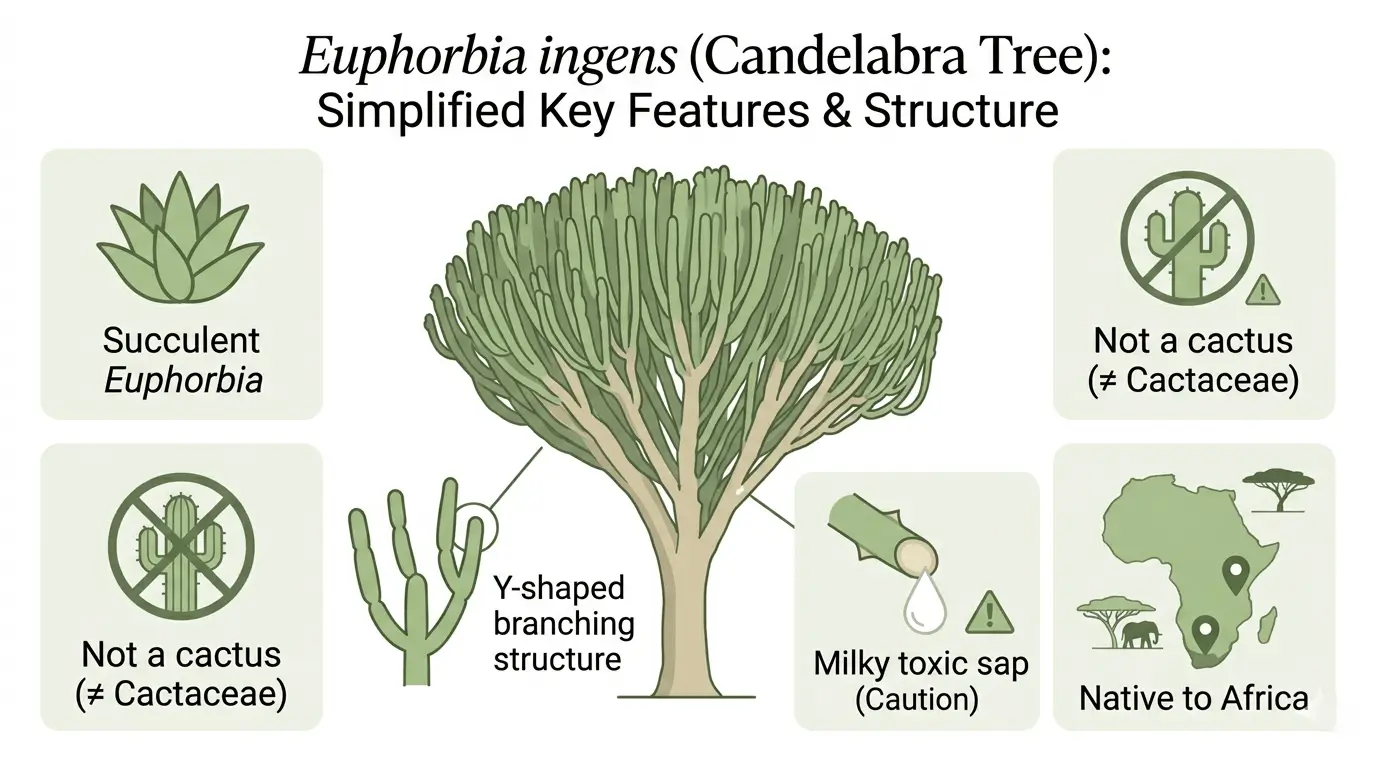
Botanical Features
- Thick, fleshy green stems up to 5 inches wide
- Distinct Y-shaped branching structure resembling a candelabra
- Contains white, toxic latex sap typical of euphorbias
- Segmented arms that store water for drought survival
The candelabra tree belongs to the genus Euphorbia, one of the largest succulent plant groups in the world, as described in the broader classification of the Euphorbia genus on Wikipedia.
Natural Habitat
- Dry savannas and rocky slopes
- Native to South Africa, Namibia, and parts of Zambia
- Adapted to extreme heat and long dry seasons
Plant Size
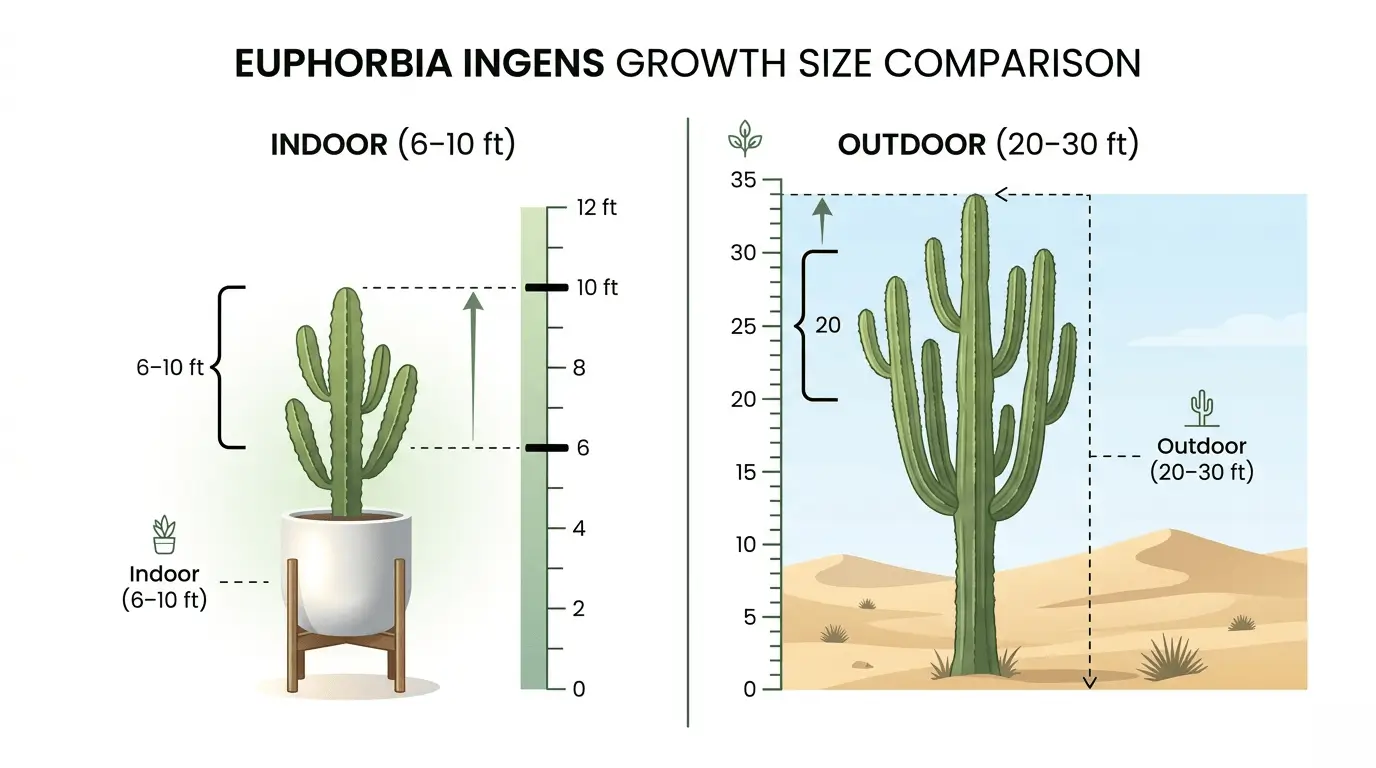
Outdoor Size
- Height: 20–30 feet
- Width: 10–15 feet
- Grows best in open, full-sun landscapes
Indoor Size
- Height: 6–10 feet over 10–20 years
- Growth restricted by pot size and root space
Growth Influencing Factors
- Sunlight exposure strongly increases vertical growth
- Poor drainage slows development and increases root stress
- Temperature stability supports long-term structure formation
Growth Rate
Seasonal Growth Pattern
- Initial growth: 1–2 feet per year in optimal conditions
- Slows significantly after reaching maturity
- Active growth occurs in warm seasons (spring and summer)
- Dormancy occurs in cooler months
Growth Boost Factors
- Heat (70–90°F) enhances metabolic activity
- Infrequent watering prevents root damage
- Strong sunlight improves structural development
Care Guide
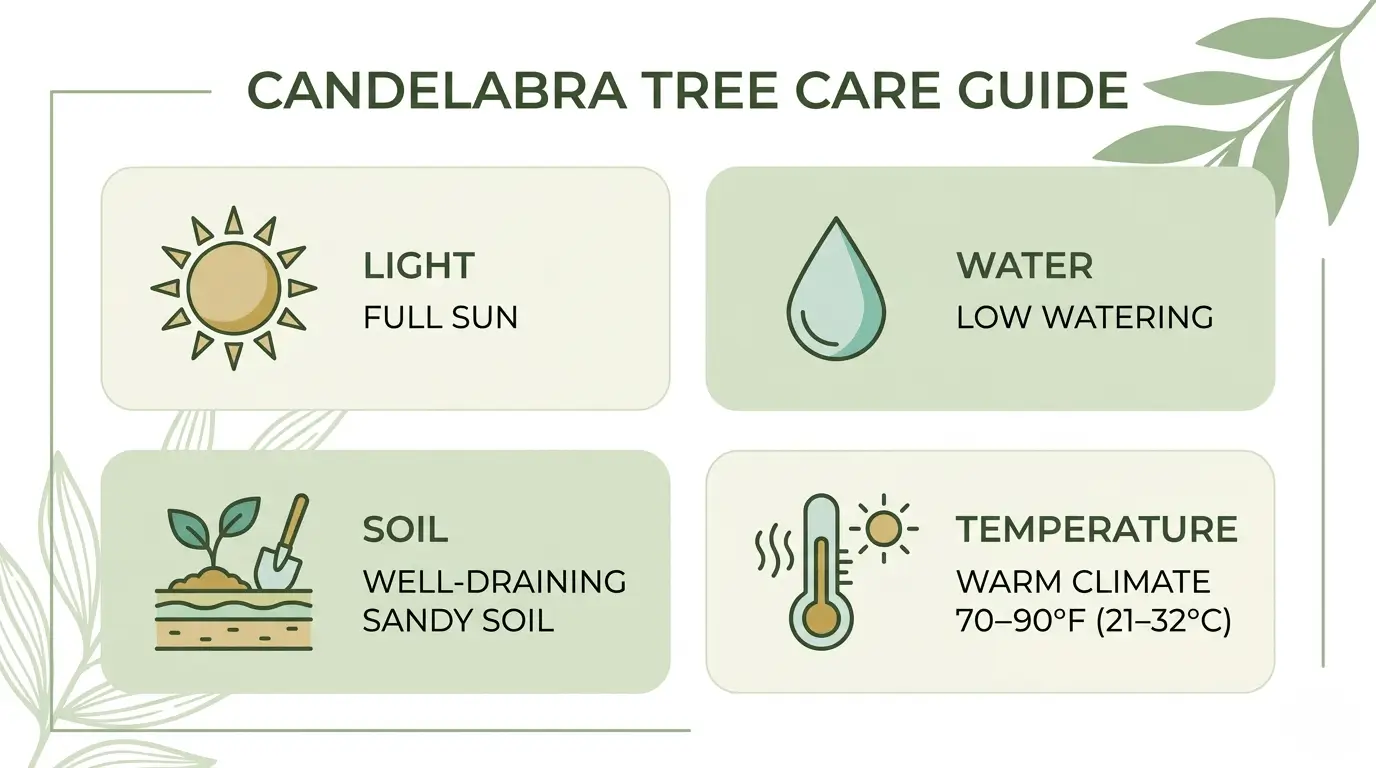
Watering
- Water deeply every 2–4 weeks in summer
- Avoid watering in winter dormancy
- Allow soil to fully dry between watering cycles
Light Requirements
- Requires full sun (6+ hours daily)
- Partial shade causes weak, stretched growth
Soil Needs
- Well-draining cactus or succulent mix
- Sandy or gritty texture preferred
- pH range: 6.0–7.5
Fertilization
- Monthly feeding during growing season
- Use diluted cactus fertilizer
Pruning
- Remove damaged branches using gloves
- Allow sap to seal cuts naturally
Climate Tolerance
- USDA zones 9–11
- Cannot tolerate frost below 50°F
For other easy-care indoor greenery with similar low-water needs, you can also explore Japanese Money Plant Care: Light, Watering & Propagation Guide and Zamioculcas Zamiifolia Care Guide: ZZ Plant Growing Tips, both ideal for beginners managing drought-tolerant houseplants.
Care Requirements Table
| Factor | Spring/Summer | Fall | Winter |
| Water | Every 2–4 weeks | Reduce watering | None |
| Light | Full sun | Full sun | Bright indirect |
| Fertilizer | Monthly | None | None |
Problems and Solutions
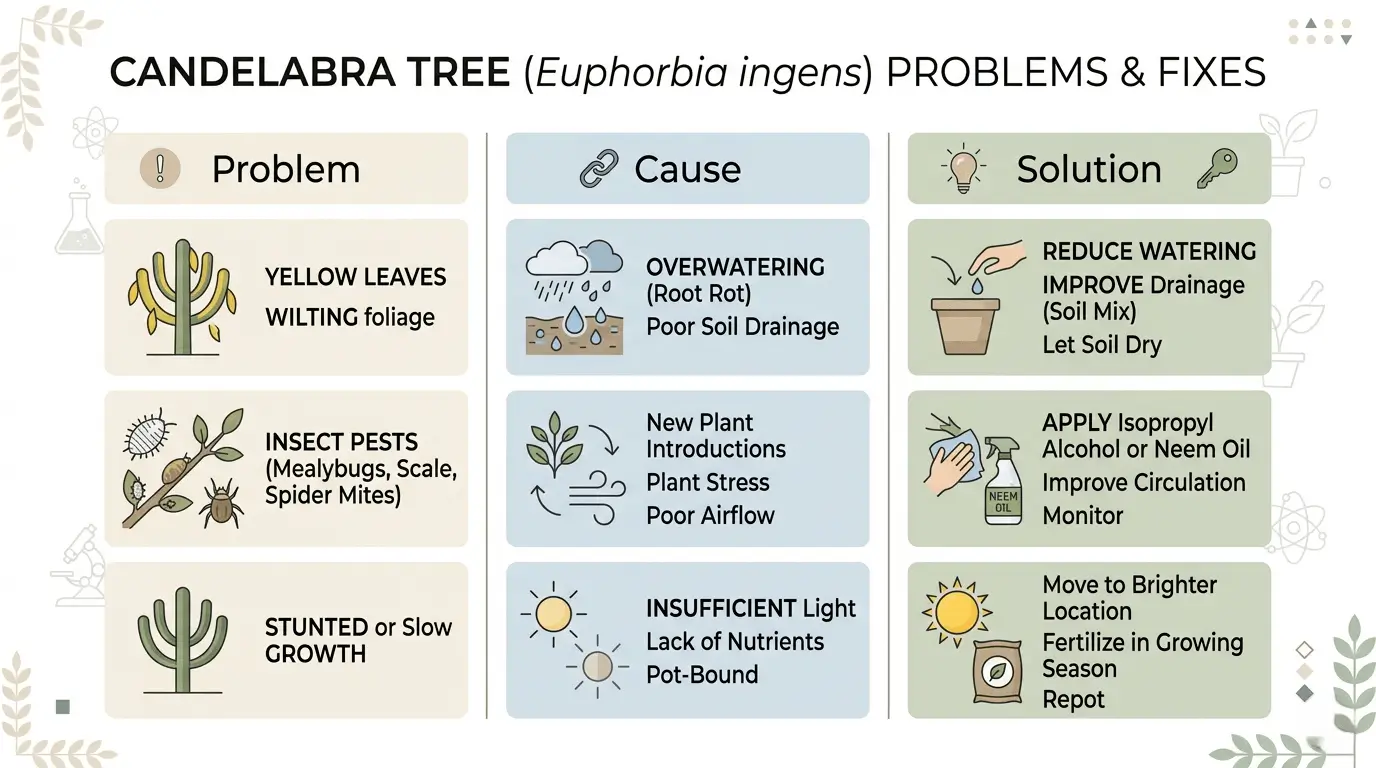
Yellowing or Soft Stems
- Cause: Overwatering or root rot
- Solution: Reduce moisture and repot in dry, well-draining soil
Pest Infestation
- Common pests: mealybugs and scale insects
- Treatment: neem oil or insecticidal soap
Slow Growth
- Cause: Insufficient sunlight or low temperatures
- Fix: Increase sun exposure and maintain warmth
Sap Burns
- Cause: Toxic latex contact
- Prevention: Always wear gloves when pruning or handling
Comparison with Similar Succulents
Comparison Table
| Feature | Candelabra Tree (Euphorbia ingens) | African Milk Tree (Euphorbia trigona) | Pachypodium |
| Height | Up to 30 ft | Up to 6–8 ft | 3–15 ft |
| Branching | Tree-like candelabra | Columnar upright | Spiny trunk |
| Toxicity | High (latex sap) | High (latex sap) | Moderate |
| Cold Tolerance | Low | Low | Moderate |
Related Indoor & Succulent Plant Guides
If you’re interested in other low-maintenance and visually striking plants similar to the candelabra tree, explore these detailed guides:
- Japanese Money Plant Care: Light, Watering & Propagation Guide
- Zamioculcas Zamiifolia Care Guide: ZZ Plant Growing Tips
- Peperomia Rotundifolia Care Guide: 6+ Proven Easy Tips
These plants share similar traits such as drought tolerance, indoor adaptability, and minimal care requirements, making them excellent companions for Euphorbia ingens in modern plant collections.
Propagation Methods
Stem Cuttings
- Cut healthy branch using sterile tools
- Allow cut to dry and callous for 1–2 weeks
- Plant in dry, gritty soil mix
Seed Propagation
- Sow in warm sandy soil
- Germination takes 2–4 weeks
- Requires stable heat and low moisture
Toxicity and Safety
Sap Toxicity
- Causes skin irritation and eye damage on contact
- Ingestion may lead to nausea and vomiting
Safety Practices
- Always wear gloves when pruning or repotting
- Keep away from pets and children
Conclusion
The candelabra tree (Euphorbia ingens) is a visually striking, low-maintenance succulent ideal for dry landscapes and large containers. Its dramatic structure, drought tolerance, and minimal care requirements make it highly desirable for experienced plant enthusiasts. However, its toxic sap and sensitivity to overwatering require careful handling. With proper sunlight, well-drained soil, and minimal watering, it becomes a long-lasting sculptural plant that enhances any arid garden or indoor space.
FAQs
How tall does a candelabra tree grow indoors?
It typically reaches 6–10 feet indoors over many years due to container limitations.
Is the candelabra tree poisonous?
Yes, its milky sap is toxic and can irritate skin and eyes.
How do you prune a candelabra tree?
Use sterilized tools and gloves, then allow sap to seal naturally after cutting.
What causes yellowing in candelabra trees?
Overwatering is the main cause; reduce moisture and improve drainage.
Can Euphorbia ingens be propagated easily?
Yes, through stem cuttings that are dried before planting in dry soil.