

Introduction
Elephant ear plant indoor benefits make this tropical foliage plant a popular choice for homes and indoor gardens. Known for their dramatic, heart-shaped leaves, elephant ear plants add bold visual impact and a lush tropical feel to indoor spaces. These plants belong to several tropical genera such as Alocasia, Colocasia, and Xanthosoma, all recognized for their large decorative foliage. Many homeowners grow elephant ear plants indoors not only for aesthetics but also for their calming presence and symbolic meanings in traditions like feng shui. Understanding the elephant ear plant indoor benefits helps gardeners choose proper placement, maintain healthy growth, and appreciate the plant’s decorative and cultural value as a houseplant.
What Is an Elephant Ear Plant?
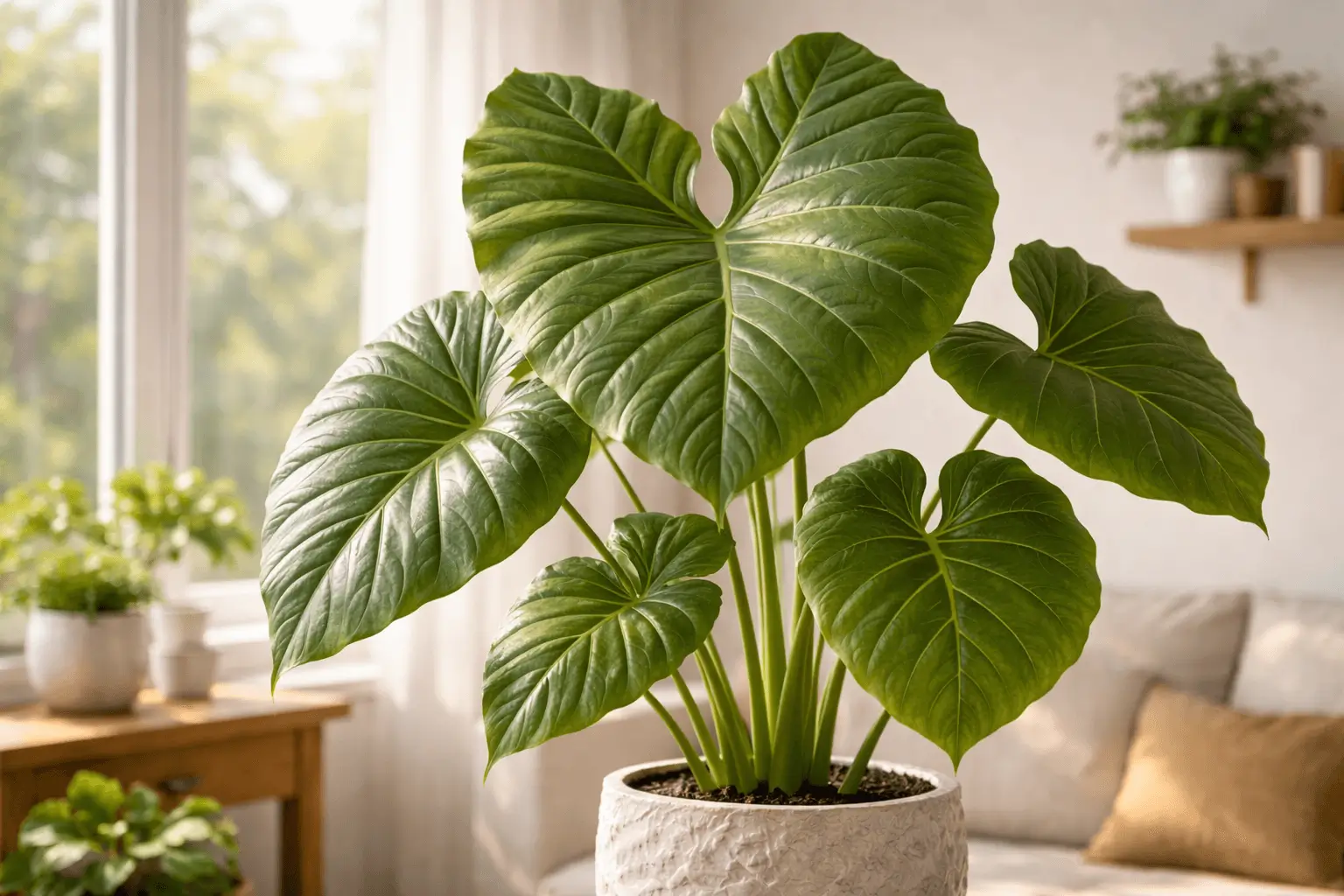
Elephant ear plants are tropical foliage plants known for their oversized leaves that resemble the shape of an elephant’s ear. These plants are primarily grown for ornamental purposes and are widely used in gardens and indoor plant collections.
The most common botanical groups associated with elephant ear plants include:
- Alocasia (African mask plants)
- Colocasia (taro plants)
- Xanthosoma species
All belong to the Araceae family, which includes many popular tropical houseplants.
Elephant ear plants have become popular indoor plants because their dramatic foliage creates a strong visual statement. As an elephant ear plant houseplant, they can instantly transform living rooms, entryways, and indoor plant displays.
A common beginner question is whether elephant ear plants are indoor or outdoor plants. The answer is that they can grow in both environments. In warm climates they thrive outdoors, while in cooler regions they are commonly grown indoors as decorative tropical houseplants.
Main Elephant Ear Plant Indoor Benefits
The main elephant ear plant indoor benefits include enhancing interior aesthetics, creating a tropical indoor atmosphere, and contributing to calming environments through the presence of greenery. Their large foliage makes them one of the most visually striking houseplants for indoor décor.
Elephant ear plants are valued for both decorative and environmental reasons. When placed indoors, they help create vibrant plant displays while adding structure and depth to indoor plant collections.
Enhancing Interior Design and Indoor Aesthetics
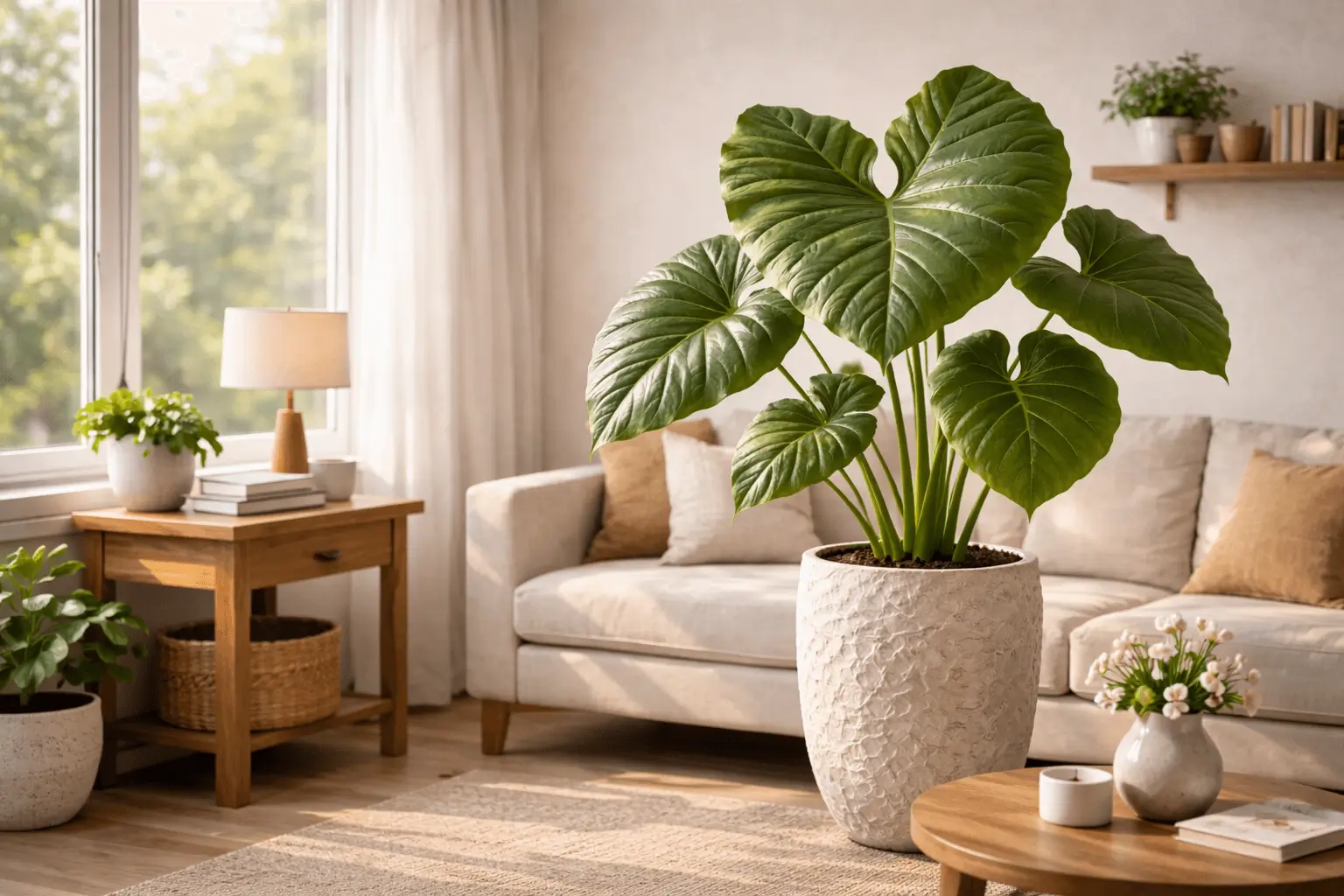
Elephant ear plants are widely used in interior design because their large leaves create a bold focal point. The plant’s dramatic foliage contrasts well with minimalist interiors and modern décor styles.
Interior designers often place elephant ear plants in:
- Living rooms
- Entryways
- Indoor plant corners
- Sunlit reading spaces
Because of their size and leaf structure, elephant ear plants function as statement houseplants, meaning a single plant can transform the visual balance of a room.
Creating a Tropical Indoor Environment
Elephant ear plants contribute to a tropical indoor atmosphere due to their large lush leaves. Their foliage mimics the dense greenery of tropical rainforests.
Large-leaf houseplants visually soften interior spaces by adding organic shapes that contrast with straight architectural lines. As a result, they are often used in indoor jungle-style décor and tropical plant collections.
Supporting a Calm and Relaxing Indoor Space
Indoor plants are associated with psychological comfort and improved mood. While elephant ear plants do not directly alter air quality in measurable ways, their presence contributes to a relaxing indoor environment.
Many people report that maintaining indoor greenery helps create peaceful living spaces and encourages mindful plant care routines.
Spiritual Meaning and Symbolism of Elephant Ear Plants
The spiritual meaning of elephant ear plants is often linked to the symbolism of elephants, which represent wisdom, strength, protection, and prosperity in many cultures.
Because the leaves resemble an elephant’s ears, the plant is sometimes interpreted as symbolizing awareness, listening, and resilience.
Elephant Ear Plant Indoor Benefits in Spiritual Beliefs
In spiritual interpretations, elephant ear plants are associated with positive energy and abundance. Some cultural traditions believe that large leaves symbolize protection and prosperity within the home.
The symbolism often relates to the broader meaning of elephants in spiritual traditions, which represent stability and wisdom.
Elephant Ear Plant Indoor Benefits in Feng Shui
In feng shui practices, large leafy plants are believed to support balanced indoor energy. Elephant ear plants are sometimes placed in areas of the home associated with growth and prosperity.
Common placement suggestions include:
- Near entryways
- In living rooms
- In wealth or growth areas of the home
These beliefs are symbolic rather than scientifically proven, but many homeowners enjoy incorporating plants into feng shui-inspired interiors.
Can Elephant Ear Plants Grow Indoors Successfully?
Yes, elephant ear plants can grow indoors successfully when provided with bright indirect light, consistent moisture, and high humidity similar to their tropical natural habitat.
In nature, elephant ear plants grow in warm, humid environments with filtered sunlight. Indoor environments can replicate these conditions with proper care.
Indoor growth differences include:
- Slower growth compared to outdoor plants
- Smaller leaf size
- Greater sensitivity to dry air
Best Indoor Conditions for Elephant Ear Plants
Elephant ear plants grow best indoors when placed in bright indirect light near windows. East-facing or north-facing windows often provide ideal lighting conditions.
Optimal environmental conditions include:
- Temperature: 65–80°F (18–27°C)
- Moderate to high humidity
- Consistently moist soil
Maintaining humidity is particularly important because these tropical plants are sensitive to dry indoor air.
How to Care for an Elephant Ear Plant Indoors
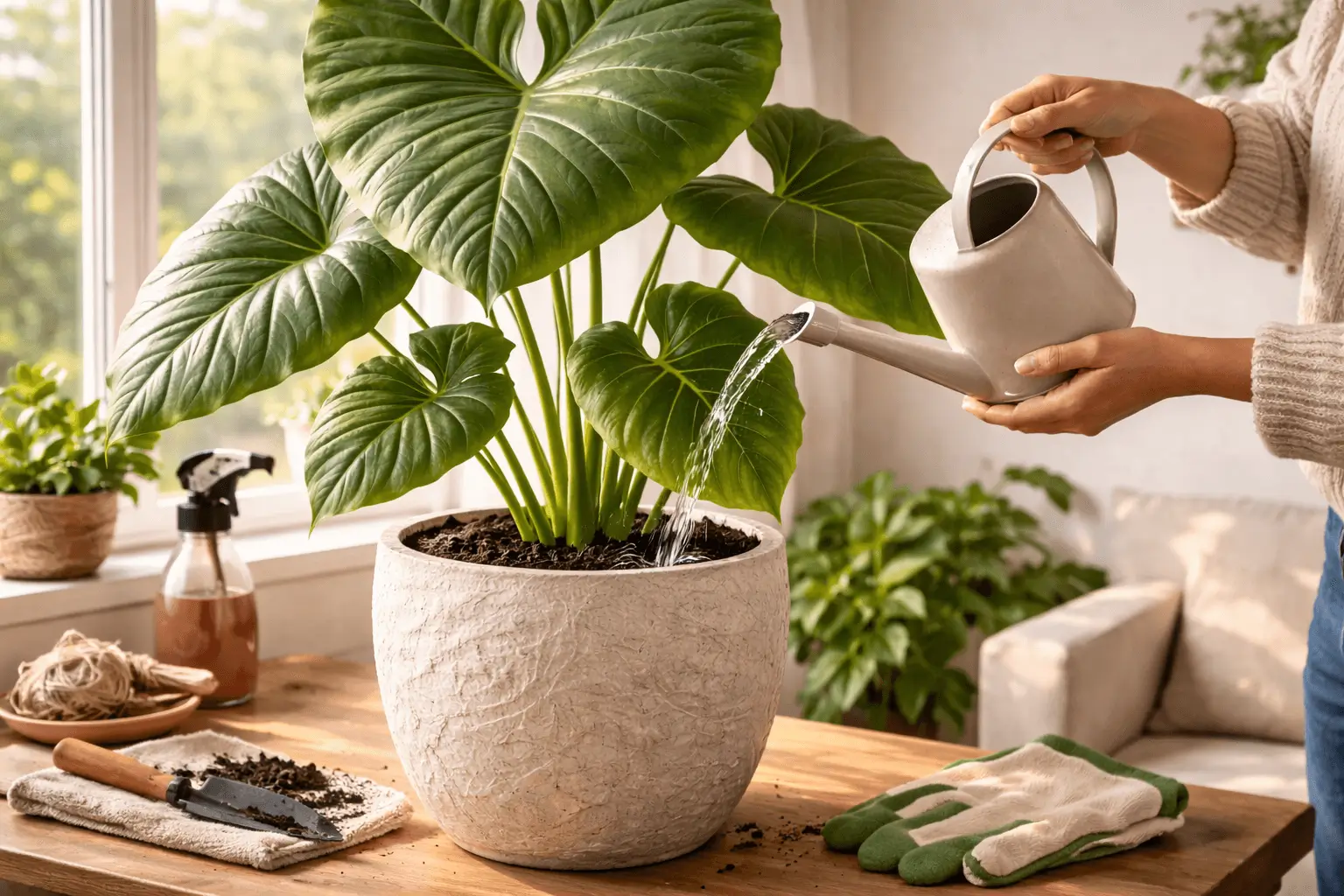
Proper elephant ear indoor plant care involves providing sufficient light, maintaining moisture, and using well-draining soil. These factors support healthy leaf growth and prevent common houseplant problems.
Light and Placement
Elephant ear plants prefer bright, indirect sunlight. Direct midday sunlight can scorch the leaves, while low light may slow growth.
Ideal locations include:
- Near bright windows
- Sunrooms
- Well-lit indoor plant shelves
Watering and Humidity Needs
Elephant ear plants require consistently moist soil. Allowing the soil to dry completely can cause drooping leaves.
A practical watering routine is:
- Water when the top inch of soil begins to dry
- Increase humidity using a humidifier or pebble tray
Dry indoor air is one of the most common reasons elephant ear plants struggle indoors.
Soil and Container Requirements
Elephant ear plants grow best in well-draining potting soil rich in organic matter.
Recommended soil mixture:
- Standard houseplant soil
- Perlite for drainage
- Compost or peat moss
Containers should have drainage holes to prevent waterlogging.
Common Indoor Elephant Ear Plant Problems
Indoor elephant ear plant problems often involve watering mistakes, low humidity, or pests.
Understanding these issues helps maintain healthy plants.
Leaves Turning Yellow
Yellow leaves are commonly caused by overwatering, poor drainage, or insufficient light.
Solutions include:
- Allowing soil to dry slightly between watering
- Improving drainage
- Moving the plant to brighter light
Slow Growth or Drooping Leaves
Slow growth or drooping leaves usually occur due to low humidity or nutrient deficiencies.
Increasing humidity and applying balanced houseplant fertilizer during the growing season can improve plant health.
Pests and Indoor Plant Stress
Common pests affecting elephant ear plants include:
- Spider mites
- Aphids
- Mealybugs
Regular leaf inspections and gentle cleaning can help prevent infestations.
Types of Elephant Ear Plants Suitable for Indoors
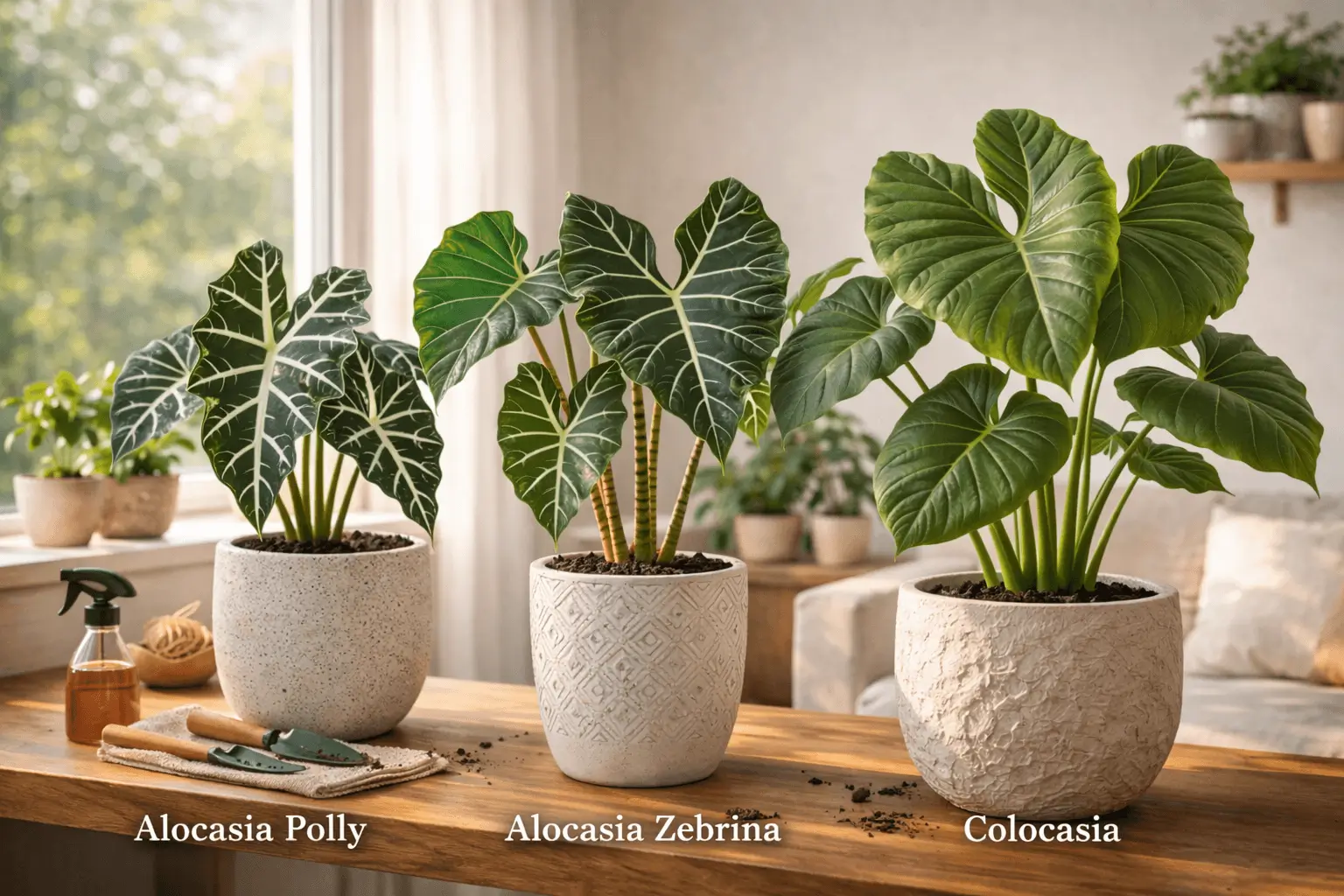
Several elephant ear varieties adapt well to indoor environments.
Popular indoor species include:
- Alocasia amazonica
- Alocasia Polly
- Alocasia zebrina
- Colocasia esculenta
Alocasia species are particularly favored as houseplants because their leaves remain compact while still displaying dramatic shapes.
Comparison: Elephant Ear Plants vs Similar Large-Leaf Houseplants
Elephant ear plants are sometimes confused with other large-leaf tropical plants.
Similar plants include:
- Monstera deliciosa
- Philodendron species
- Caladium plants
However, elephant ear plants differ because their leaves grow from central stems and maintain a distinctive heart-shaped or shield-like form.
Indoor vs Outdoor Growing: When Elephant Ear Plants Thrive Best
Elephant ear plants thrive best outdoors in warm tropical climates where humidity and sunlight support rapid growth.
However, they can grow indoors successfully when environmental conditions mimic their natural habitat.
In colder climates, many gardeners grow elephant ear plants outdoors during summer and bring them indoors during winter.
Practical Uses of Elephant Ear Plants Beyond Decoration
Elephant ear plants are mainly grown as ornamental plants, but related species have historical uses in food and traditional practices.
For example:
- Colocasia esculenta produces taro, a root vegetable used in many tropical cuisines.
- Taro leaves, sometimes called dasheen leaves, are used in traditional dishes after proper cooking.
However, ornamental elephant ear varieties grown indoors are typically not intended for consumption.
Conclusion
Elephant ear plant indoor benefits extend beyond simple decoration. These tropical foliage plants bring dramatic visual appeal, create lush indoor environments, and contribute to calming living spaces through their large, sculptural leaves. Species within the Alocasia, Colocasia, and Xanthosoma genera are especially valued as houseplants because they add height, texture, and a bold tropical character to interior plant collections.
When grown indoors under the right conditions—bright indirect light, consistent moisture, warm temperatures, and adequate humidity—elephant ear plants can thrive as striking statement plants. Understanding proper care practices such as balanced watering, well-draining soil, and pest monitoring helps prevent common indoor plant problems and supports healthy foliage growth.
Beyond their visual impact, elephant ear plants also hold symbolic meaning in some cultural traditions, where they represent strength, prosperity, and protection. Whether appreciated for their aesthetic presence, tropical atmosphere, or cultural symbolism, elephant ear plants remain one of the most distinctive large-leaf houseplants for indoor environments.
Learn more: spider plant indoor benefits
FAQs
1. Is the elephant ear plant good for indoor spaces?
Yes, elephant ear plants are good for indoor spaces because they add dramatic foliage, enhance interior aesthetics, and help create a lush tropical atmosphere within homes and indoor gardens.
2. Can elephant ear plants live indoors year-round?
Elephant ear plants can live indoors year-round if they receive adequate light, warmth, humidity, and consistent watering. Indoor environments must replicate tropical conditions for optimal growth.
3. Where should I place an elephant ear plant indoors?
Place elephant ear plants near bright windows where they receive indirect sunlight. Living rooms, sunrooms, and plant display areas with good light and humidity are ideal.
4. What does the elephant ear plant symbolize spiritually?
Elephant ear plants symbolize wisdom, strength, protection, and prosperity in many cultural interpretations due to their resemblance to elephant ears.
5. Why are the leaves of my indoor elephant ear plant turning yellow?
Yellow leaves usually occur because of overwatering, poor drainage, insufficient light, or low humidity. Adjusting watering habits and improving light conditions often resolves the problem.



One Response