
Introduction
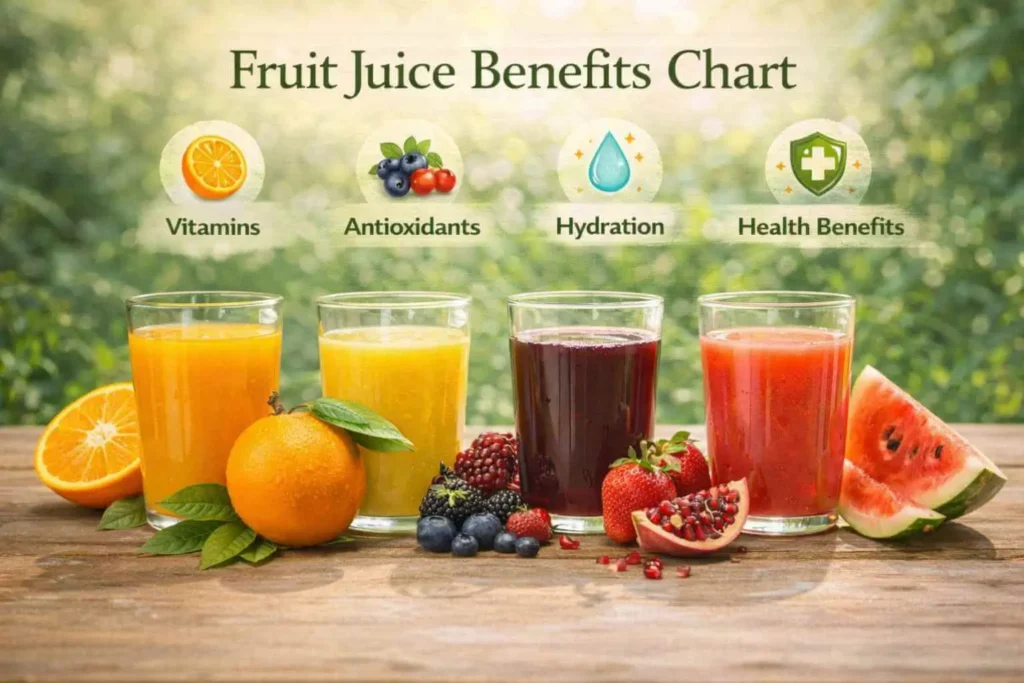
Fruit juice benefits charts help people quickly understand the nutritional value and health benefits of different fruit juices. A well-structured fruit juice benefits chart compares vitamins, antioxidants, hydration benefits, and potential health effects of commonly consumed juices. By looking at these charts, readers can learn which juices support digestion, immunity, heart health, and daily nutrition needs. Understanding fruit juice nutrition and juicing benefits also helps people decide what juice to drink daily and how to include natural juices in a balanced diet.
What Is a Fruit Juice Benefits Chart and Why Is It Useful?

A fruit juice benefits chart is a visual comparison tool that summarizes the nutrients and health benefits of different fruit juices. It typically highlights vitamins, minerals, antioxidants, hydration levels, and potential health effects so readers can quickly compare juices and identify the most suitable options for their nutrition goals.
Juice benefits charts simplify complex nutrition information by presenting fruit nutrition juice data in an easy-to-understand format. Instead of researching each fruit individually, readers can compare multiple juices side by side to evaluate juicing benefits and select juices that support immunity, digestion, energy, or hydration.
How Juice Nutrition Charts Compare Different Fruits
Juice nutrition charts categorize important nutrients such as vitamin C, potassium, natural sugars, antioxidants, and water content. These nutrients are typically displayed in rows or columns so readers can compare how different fruits contribute to health.
For example, orange juice is usually highlighted for vitamin C content, apple juice for hydration and mild digestive support, and berry juices for antioxidant compounds such as anthocyanins. Tropical fruits like pineapple or mango may be noted for enzyme content and vitamin A levels.
Understanding Health Indicators in Juice Charts
Health indicators in juice charts describe the potential wellness benefits associated with each juice. Labels often include digestion support, immune support, heart health, hydration, or energy support.
Readers interpret these indicators by connecting the nutrients in each fruit to their known physiological roles. For instance, vitamin C is associated with immune health, potassium with heart and muscle function, and antioxidants with cellular protection.
Common Fruit Juice Benefits Chart (Key Juices and Their Health Effects)

A fruit juice benefits chart often compares popular juices to highlight how each fruit supports specific aspects of health. While many juices provide hydration and vitamins, different fruits contribute unique nutrients that affect the body in different ways.
Common healthy fruit drinks include citrus juices, apple juice, berry juices, and pomegranate juice. These juices are frequently included in fruit juice healthy comparisons because they contain vitamins, antioxidants, and hydration benefits that contribute to daily nutrition.
-
Orange Juice Benefits
Orange juice is widely recognized for its high vitamin C content, which supports immune system function and helps protect cells from oxidative stress. Citrus fruits belong to the Rutaceae family and are rich in antioxidants such as flavonoids.
Fresh orange juice benefits may also include improved hydration and support for metabolism due to its natural sugars, potassium, and vitamin C content.
-
Apple Juice Benefits
Apple juice contains natural plant compounds known as polyphenols that may contribute to digestive health and antioxidant protection. Apples belong to the Rosaceae family and contain compounds associated with mild digestive support.
Apple juice also provides hydration and may support gentle detoxification processes because of its water content and naturally occurring fruit acids.
-
Berry Juice Benefits
Berry juices, including blueberry, strawberry, and blackberry juice, are known for their high antioxidant levels. These fruits contain anthocyanins, compounds that support brain health and cardiovascular function.
Because berries are nutrient-dense and relatively low in calories, berry juices are often included in charts highlighting heart health and antioxidant protection.
-
Pomegranate Juice Benefits
Pomegranate juice contains polyphenols and compounds such as punicalagins that are associated with cardiovascular health. The fruit comes from the plant Punica granatum and is widely studied for its antioxidant properties.
These compounds may help support heart health and reduce inflammation, making pomegranate juice a commonly recommended juice in nutrition comparisons.
Which Fruit Juice Is Good for Health and Daily Nutrition?
The best fruit juice for health depends on its nutrient density, natural sugar levels, and portion size. Juices that provide high levels of vitamins, antioxidants, and hydration while remaining moderate in sugar are generally considered beneficial.
When evaluating which fruit juice is good for health or what fruit juice is good for you, it is helpful to consider nutrient variety and balance rather than relying on a single juice.
Nutrient-Dense Juices for Immunity and Energy
Citrus juices such as orange and grapefruit provide vitamin C and antioxidants that support immune health. Pomegranate and berry juices also contain antioxidant compounds that contribute to cellular protection and energy metabolism.
Juices That Support Digestion and Gut Health
Apple juice, pineapple juice, and other enzyme-rich fruits are often associated with digestive support. Pineapple contains bromelain, an enzyme that may help break down proteins and support digestion.
Hydrating Juices for Daily Wellness
Water-rich fruits such as watermelon, oranges, and grapes produce juices that contribute to hydration. These juices contain natural electrolytes like potassium that help maintain fluid balance.
How Much Fruit Juice Should You Drink Per Day?
Moderate consumption of fruit juice can support hydration and provide vitamins, but it should complement rather than replace whole fruits. Nutrition guidelines generally recommend limiting juice intake because juices lack the fiber found in whole fruit.
When considering which juice we should drink daily or what should I juice everyday, balance and portion control are important factors.
Recommended Daily Juice Portion
Many dietary guidelines recommend limiting fruit juice to about 150–250 ml per day for adults. This amount provides vitamins and hydration without contributing excessive sugar intake.
Juice vs Whole Fruit for Nutrition
Whole fruits contain dietary fiber that slows sugar absorption and supports digestive health. Juicing removes most of this fiber, which means juice provides nutrients quickly but may lead to faster sugar absorption.
Benefits of Drinking Natural Juices
Natural juices provide vitamins, minerals, antioxidants, and hydration when prepared from fresh fruits. Compared with processed beverages, fresh juices typically contain fewer additives and more naturally occurring nutrients.
Benefits of drinking natural juices include improved hydration, vitamin intake, and antioxidant support when consumed as part of a balanced diet.
Vitamin and Antioxidant Support
Fresh juices often provide vitamins such as vitamin C, vitamin A precursors, and polyphenols. These nutrients support immune function, skin health, and protection from oxidative stress.
Hydration and Energy Benefits
Natural fruit sugars combined with water and electrolytes help provide quick energy and hydration. Fruits with high water content contribute to maintaining fluid balance throughout the day.
Vegetable Juice vs Fruit Juice Benefits Chart

Vegetable juice benefits charts compare the nutritional differences between vegetable and fruit juices. While fruit juices provide vitamins and antioxidants, vegetable juices often contain fewer sugars and higher mineral levels.
Fruit and vegetable juice benefits charts help readers evaluate which juices better support specific health goals.
When Vegetable Juices May Be Healthier
Vegetable juices such as carrot, celery, spinach, and tomato juice are typically lower in natural sugars and higher in minerals like potassium and magnesium. These characteristics make vegetable juices beneficial for people monitoring sugar intake.
Combining Fruits and Vegetables in Juice
Combining fruits and vegetables creates balanced juices that offer both flavor and nutrition. Common combinations include carrot-apple-ginger or beetroot-apple blends that provide vitamins, antioxidants, and minerals.
Popular Juice Combinations and Their Health Benefits

Juice blends combine multiple fruits or vegetables to create beverages that provide diverse nutrients. These blends are often designed to support detoxification, immunity, or overall nutrition.
ABC Juice (Apple Beetroot Carrot) Benefits
ABC juice, made from apple, beetroot, and carrot, is known for its iron content, antioxidant compounds, and vitamin A precursors. This combination is commonly associated with skin health, blood circulation, and detox support.
Citrus Juice Blends for Immunity
Citrus juice blends often combine oranges, lemons, and grapefruits. These fruits provide vitamin C, flavonoids, and antioxidants that support immune system function and cellular protection.
Is Juicing Good for You? Benefits and Limitations
Juicing can be beneficial when it helps increase fruit and vegetable intake, but it also has limitations related to fiber loss and sugar concentration. Understanding both aspects helps people use juicing responsibly.
Potential Health Benefits of Juicing
Juicing allows nutrients such as vitamins and antioxidants to be absorbed quickly because they are delivered in liquid form. This can make it easier for some people to increase fruit and vegetable consumption.
Possible Downsides of Excess Juice Consumption
Drinking large amounts of juice may lead to excessive sugar intake and reduced fiber consumption. Without fiber, natural fruit sugars are absorbed more rapidly, which may affect blood sugar levels.
Common Juicing Mistakes and Health Considerations
Some juicing practices may reduce the nutritional value of juices or lead to imbalanced diets. Awareness of common mistakes helps people use juicing more effectively.
-
Drinking Too Much Juice
Consuming large quantities of fruit juice can increase calorie and sugar intake. Moderation helps prevent excessive energy intake while still providing nutrients.
-
Ignoring Balanced Nutrition
Juice should complement a diet rich in whole fruits, vegetables, grains, and proteins. Relying only on juices may reduce dietary fiber and other essential nutrients.
-
Using Only Sweet Fruits
Juices made only from sweet fruits can contain high sugar levels and limited nutrient diversity. Including vegetables or low-sugar fruits improves nutritional balance.
Conclusion
Fruit juice benefits charts provide a simple way to understand how different juices support health, hydration, and nutrition. By comparing vitamins, antioxidants, and health effects across fruits, these charts help readers identify which juices support immunity, digestion, and overall wellness. While natural juices can be a valuable addition to a balanced diet, they work best when consumed in moderation and combined with whole fruits and vegetables. Using a fruit juice benefits chart makes it easier to choose juices that support daily nutrition and long-term health.
Learn more: Lulo Fruit Benefits: Nutrition, Taste, and Health Uses
Frequently Asked Questions
Which fruit juice is the healthiest to drink daily?
Some of the healthiest juices include orange juice, pomegranate juice, and berry juices because they contain high levels of vitamin C, antioxidants, and essential nutrients.
Is drinking fruit juice every day good for health?
Moderate consumption of natural fruit juice can provide vitamins and hydration, but it should be balanced with whole fruits to maintain fiber intake.
What fruit juice is best for digestion?
Apple juice, pineapple juice, and citrus juices are often associated with digestion support due to natural enzymes and mild acidity.
Are vegetable juices healthier than fruit juices?
Vegetable juices often contain less sugar and more minerals, making them a good complement to fruit juices in a balanced diet.
What should I juice every day for overall health?
Balanced juices combining fruits and vegetables—such as apple, carrot, beetroot, and citrus—can provide a range of vitamins, antioxidants, and hydration benefits.



One Response