
Introduction
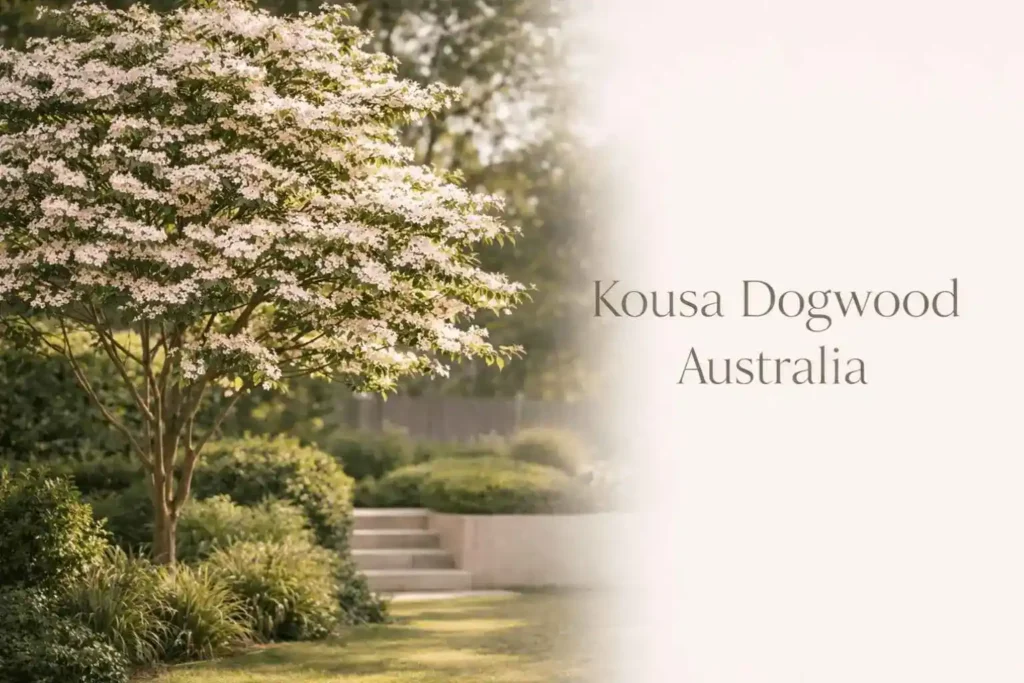
Kousa dogwood Australia refers to the cultivation and growing conditions of Cornus kousa, a flowering ornamental tree valued for its layered branching, seasonal blooms, and adaptability to temperate Australian climates. Unlike traditional dogwood varieties, this species—often called Japanese or Chinese dogwood—offers improved disease resistance and striking year-round visual appeal. It is increasingly popular in Australian landscapes due to its resilience, manageable size, and ability to provide multi-season interest, making it a reliable choice for both residential gardens and structured planting designs.
Quick Summary
- Kousa dogwood is a hardy ornamental tree suited to cooler Australian regions.
- It differs from traditional flowering dogwood in bloom timing, structure, and resilience.
- Ideal for small gardens due to moderate size and controlled growth habit.
- Requires well-drained soil, partial sun, and seasonal pruning for best performance.
What Is Kousa Dogwood and How Does It Grow in Australia?
Kousa dogwood Australia refers to the cultivation of Cornus kousa in temperate regions where climate conditions support its seasonal growth cycle. Native to East Asia, this species adapts well to mild Australian climates and is valued for its durability and ornamental structure. Kousa dogwood belongs to the broader dogwood family, which includes several ornamental species known for their seasonal beauty (see Dogwood for general classification and characteristics).
Botanical Identity and Classification
- Scientific name: Cornus kousa
- Common names: Kousa dogwood, Chinese dogwood, Japanese dogwood
- Belongs to the Cornus genus
- Deciduous ornamental tree known for layered branching
This species includes variants such as Cornus kousa chinensis, often used in ornamental planting across Australia.
Climate Suitability in Australia
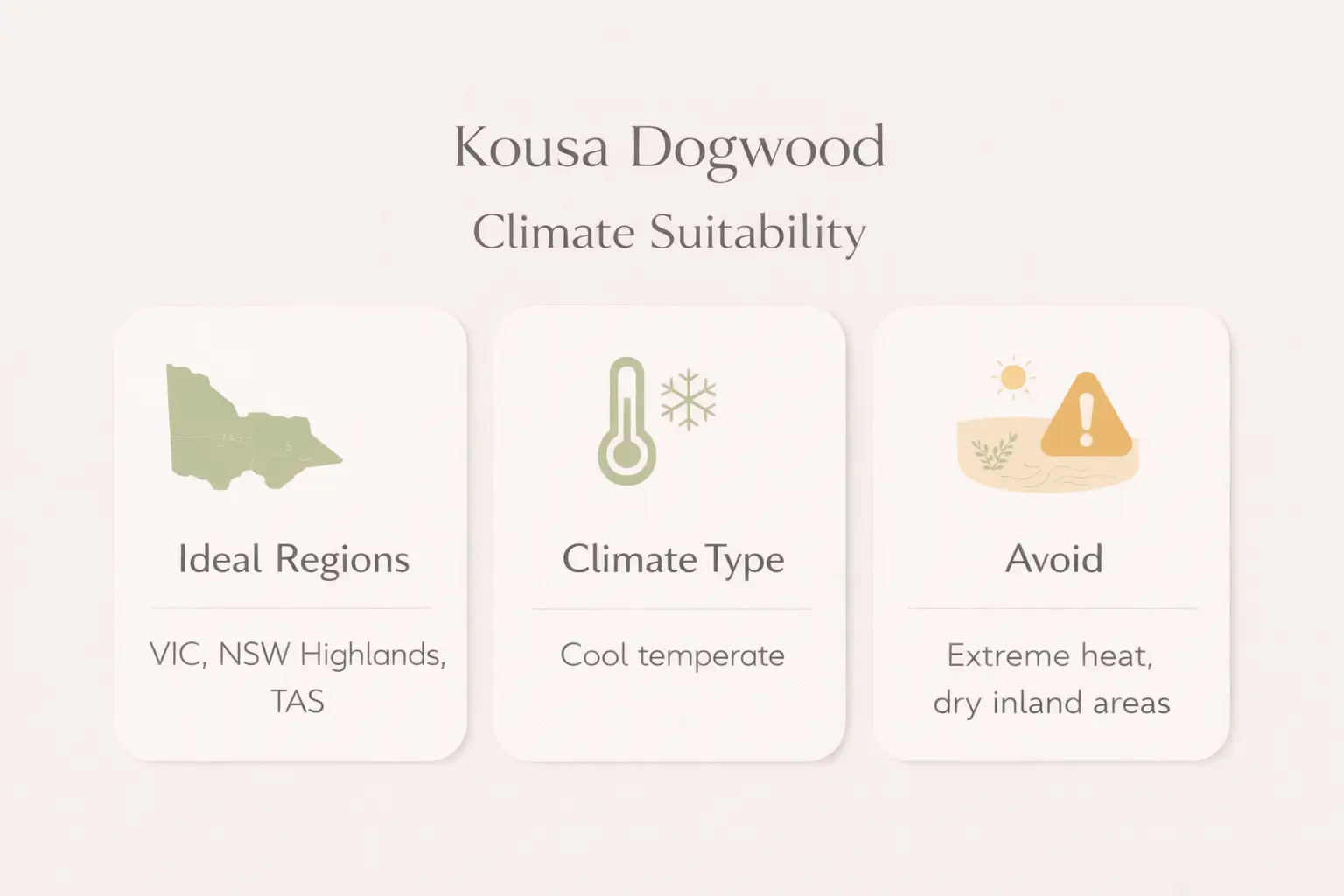
- Thrives in cool temperate and mild climates
- Suitable for regions such as Victoria, NSW highlands, and Tasmania
- Sensitive to extreme heat and prolonged dry inland conditions
It performs best where seasonal variation supports flowering and foliage changes.
If you’re comparing climate-adapted trees, you can also explore fast growing Australian native trees to find alternatives suited to similar regional conditions.
Kousa Dogwood Characteristics and Seasonal Features
Kousa dogwood characteristics include its layered canopy, distinctive flowers, and strong seasonal transitions that provide year-round visual interest.
Flowering and Appearance
- Star-shaped bracts in white, cream, or soft pink tones
- Flowers appear after leaves emerge in late spring
- Structured, tiered canopy enhances landscape design
Pink dogwood and white dogwood tree Australia variations are commonly used for visual contrast.
Seasonal Changes
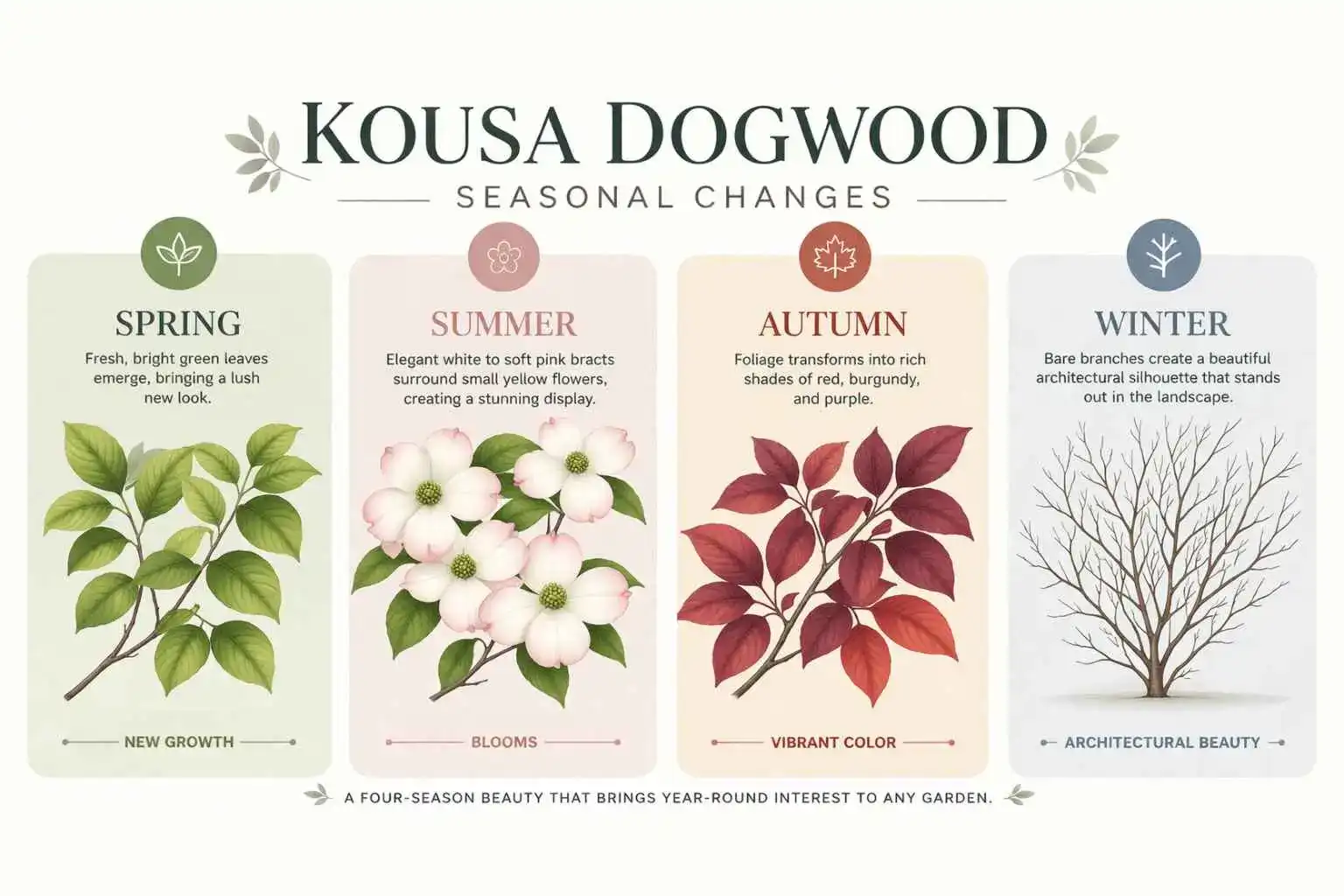
- Spring: Fresh green foliage emerges
- Summer: Prominent flowering display
- Autumn: Leaves turn red to purple
- Winter: Bare branches reveal architectural form
Kousa Dogwood Australia Size, Height, and Growth Rate
Kousa dogwood Australia size and growth depend on environmental conditions, but it generally remains manageable for residential spaces.
Typical Mature Size
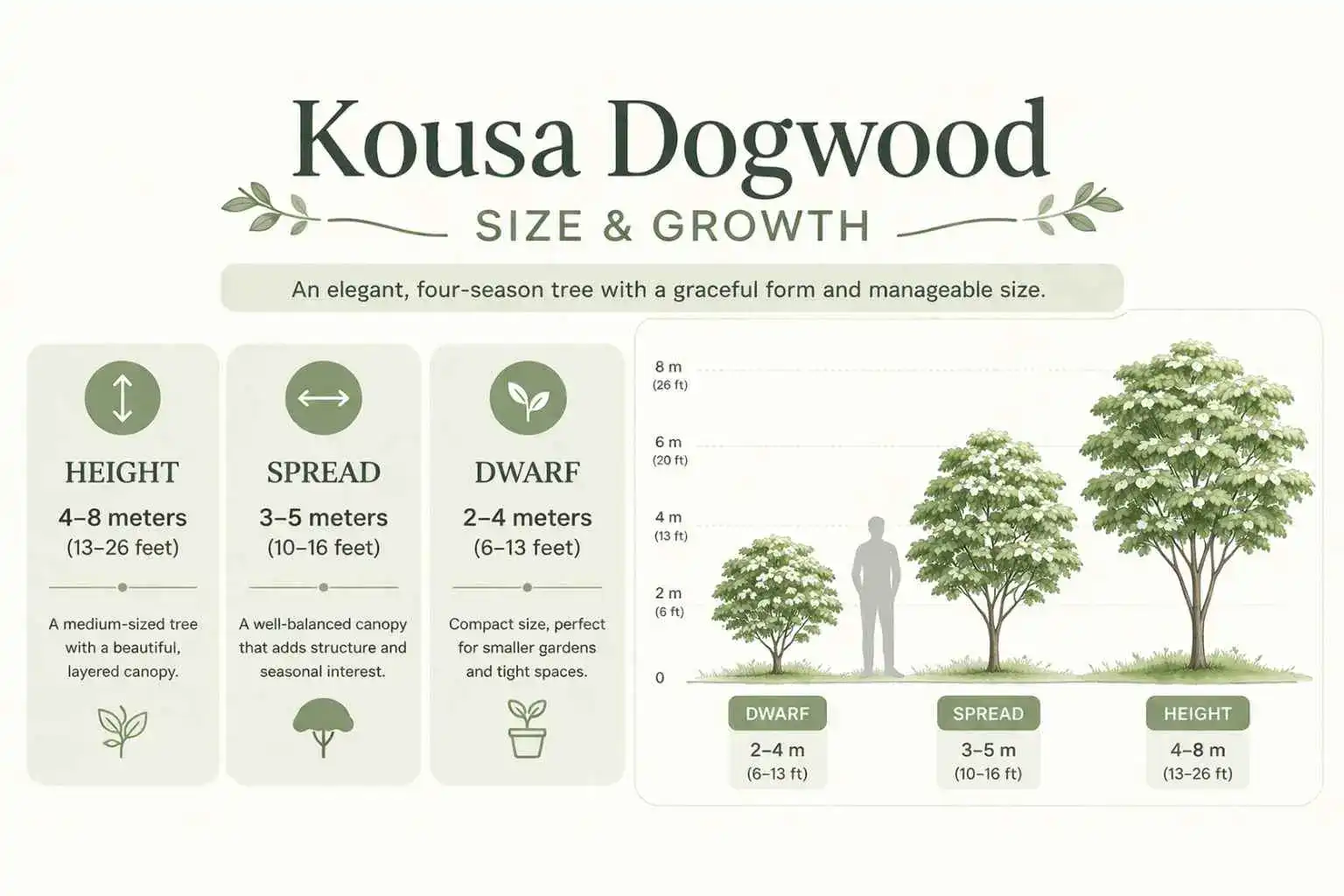
- Height: 4–8 meters
- Spread: 3–5 meters
- Dwarf varieties: 2–4 meters
These dimensions make it suitable for both medium and small gardens.
Growth Rate and Influencing Factors
- Moderate growth rate
- Influenced by:
- Soil quality
- Water availability
- Climate conditions
Consistent care ensures steady and balanced development.
Kousa Dogwood Care Guide for Australian Conditions
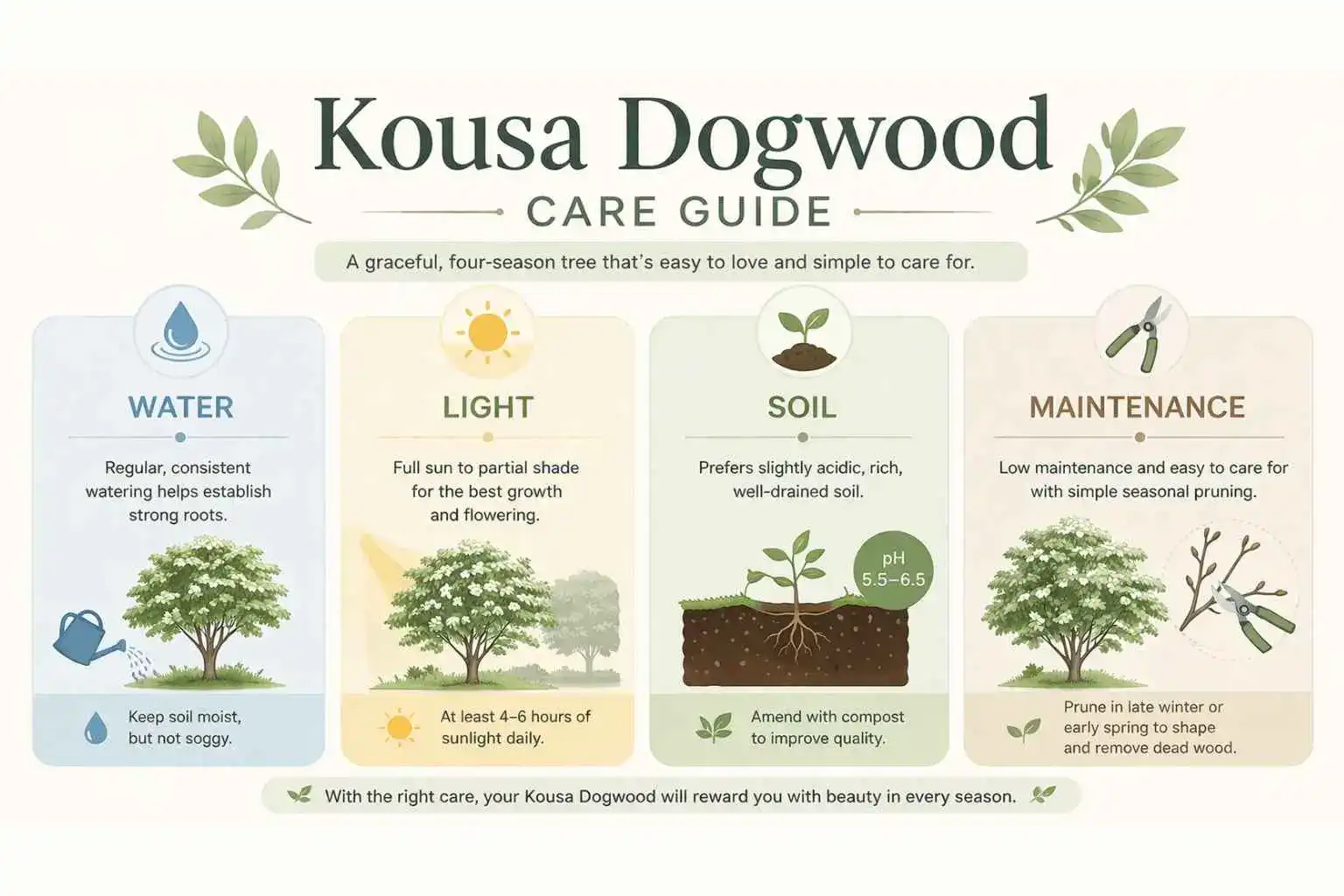
Kousa dogwood Australia care focuses on maintaining soil quality, moisture balance, and appropriate sunlight exposure.
Watering and Soil Requirements
- Prefers well-drained, slightly acidic soil
- Requires regular watering during establishment
- Avoid waterlogged conditions
Mulching helps regulate soil moisture and temperature.
Light and Positioning
- Grows in full sun to partial shade
- Benefits from protection against harsh afternoon sun in warmer areas
Placement is key to preventing leaf scorch.
Fertilization and Maintenance
- Light feeding in early spring
- Minimal fertilization required once established
- Mulching supports root health
For a broader understanding of ornamental tree care, this guide on maple tree care provides additional insights into watering, soil balance, and seasonal maintenance.
Pruning and Maintenance of Kousa Dogwood in Australia
Kousa dogwood Australia pruning helps maintain structure and overall health.
When and How to Prune
- Best pruned in late winter or early spring
- Remove dead, damaged, or crossing branches
- Preserve natural layered growth habit
Common Maintenance Practices
- Monitor for signs of stress or pests
- Maintain mulch layer for soil stability
- Avoid excessive or heavy pruning
Comparison: Kousa Dogwood vs Other Dogwood Trees
Understanding the difference between dogwood and kousa dogwood helps in selecting the right species for Australian conditions.
Key Differences Table
| Feature | Kousa Dogwood (Cornus kousa) | Flowering Dogwood (Cornus florida) | Evergreen Dogwood (Cornus capitata) |
| Bloom Time | Late spring | Early spring | Summer |
| Disease Resistance | High | Moderate | High |
| Evergreen | No | No | Yes |
| Climate Suitability | Temperate | Cool climates | Warmer climates |
Types and Varieties of Kousa Dogwood in Australia
Kousa dogwood types vary in size, flower appearance, and growth habit.
Popular Varieties
- Aurora dogwood
- Venus dogwood (noted for large flowers and vigorous growth)
- Dwarf compact varieties suitable for smaller spaces
These cultivars offer flexibility in landscape design.
Is Kousa Dogwood Invasive or Safe for Gardens?
Kousa dogwood is not invasive and is considered safe for residential gardens. It has a non-aggressive root system, making it suitable near structures and pathways. It is generally non-toxic, although its fruit is not commonly consumed. The species integrates well into managed landscapes without spreading uncontrollably.
Common Problems and Solutions for Kousa Dogwood
Kousa dogwood may encounter environmental stress, but most issues are manageable with proper care.
Common Issues
- Leaf scorch due to excessive heat
- Poor flowering caused by insufficient light or nutrients
- Slow growth linked to poor soil conditions
Solutions and Prevention
- Provide partial shade in hotter climates
- Improve soil moisture retention with mulch
- Ensure proper spacing and airflow for healthy development
Beginner Mistakes to Avoid When Growing Dogwood in Australia
Common mistakes can limit the success of kousa dogwood in Australian gardens.
- Planting in areas with harsh, direct afternoon sun
- Overwatering in poorly drained soil
- Ignoring regional climate suitability
- Over-pruning and disrupting natural structure
Avoiding these issues improves long-term plant health.
Landscaping Uses of Kousa Dogwood in Australian Gardens
Kousa dogwood use in landscaping focuses on structure, seasonal color, and visual balance.
- Feature tree in small to medium gardens
- Accent element in layered landscape designs
- Seasonal focal point with flowers and autumn foliage
Its versatility makes it a valuable addition to diverse garden styles.
If you’re planning structured planting layouts, these trees to plant along driveway for shade offer practical ideas for combining aesthetics with functionality.
Conclusion
Kousa dogwood Australia highlights a versatile and visually striking ornamental tree suited to temperate climates. With its unique flowering pattern, manageable size, and adaptability, Cornus kousa stands out among dogwood trees in Australia. Proper care, location selection, and understanding its growth habits ensure long-term success in residential landscapes.
FAQs
What is the difference between kousa dogwood and flowering dogwood?
Kousa dogwood blooms later, has better disease resistance, and features more structured branching compared to flowering dogwood.
How big does a kousa dogwood grow in Australia?
Typically reaches 4–8 meters in height, with dwarf varieties remaining smaller.
Can kousa dogwood grow in hot Australian climates?
It prefers cooler temperate regions and may struggle in extreme heat without shade.
Is kousa dogwood suitable for small gardens?
Yes, due to its moderate size and controlled growth habit.
When should I prune a kousa dogwood?
Late winter or early spring is ideal before new growth begins.