

Introduction
Lilly pilly facts reveal why these Australian native plants are among the most popular choices for hedging, landscaping, and edible gardens. Known for their glossy foliage, fast growth, and colorful berries, lilly pillies (Syzygium species) are versatile plants used in both ornamental and practical gardening. They belong to the Myrtaceae family and are widely grown for privacy hedges, decorative borders, and wildlife-friendly gardens. Their adaptability to different climates and soil conditions makes them suitable for both beginners and experienced gardeners. This guide explains their characteristics, uses, safety, growth habits, and common issues in a clear, easy-to-understand way.
Quick Summary
- Lilly pillies are evergreen trees or shrubs valued for hedging, privacy, and edible berries.
- Their berries are generally edible, but safety for pets (especially dogs) requires caution.
- Growth rate, size, and appearance vary widely across varieties.
- Common problems include pests and diseases, but they are generally low-maintenance plants.
What Are Lilly Pillies? (Definition and Basic Description)
Lilly pilly description and plant identity
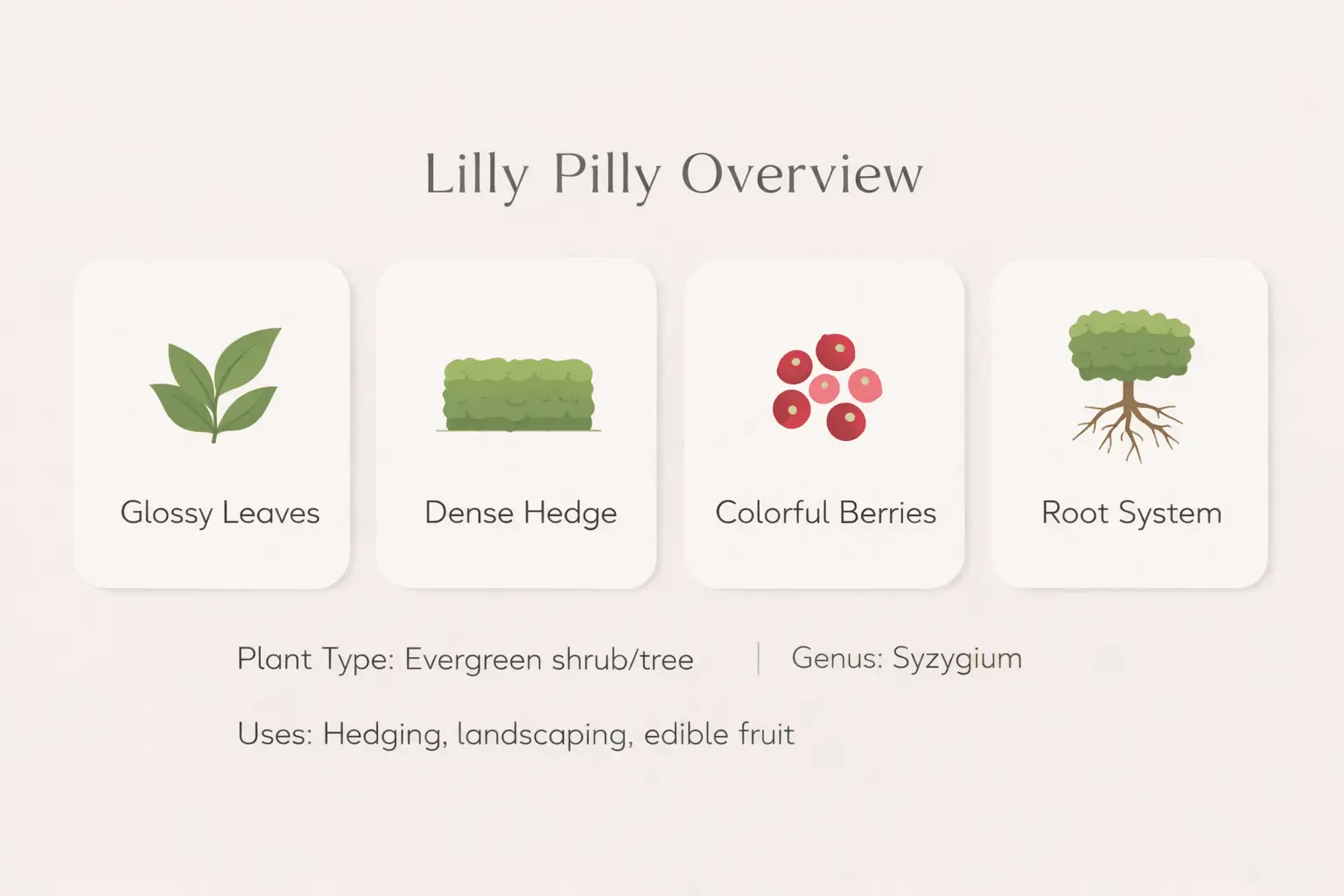
Lilly pillies are evergreen trees and shrubs from the Syzygium genus, native to Australia and Southeast Asia. Native to Australia and Southeast Asia. They are widely used in landscaping due to their dense growth and attractive foliage.
Define lilly pilly tree (Syzygium genus)
A lilly pilly tree refers to species within the Syzygium genus, part of the Myrtaceae family. These plants range from small shrubs to tall trees, depending on the variety.
Explain appearance: glossy leaves, dense growth, colorful berries
They feature glossy green leaves, often with reddish new growth, and produce small berries in shades of pink, red, or purple. Their dense structure makes them ideal for hedges.
Introduce common naming variations (lilly pillies)
They are commonly referred to as lilly pilly, lilly pillies, or sometimes brush cherry, depending on the species and region.
Key Lilly Pilly Facts and Interesting Characteristics
Interesting facts about lilly pilly
Lilly pillies are native to Australia and thrive in a wide range of climates. They are widely used in landscaping for privacy hedges and ornamental planting.
- Produce edible berries in various colors
- Can be pruned into formal hedges or grown naturally
- Highly adaptable to soil and environmental conditions
Lilly pilly facts for kids (simplified explanation)
Lilly pillies are easy-to-grow plants with shiny leaves and small fruits you can eat. They grow quickly and provide shelter for birds and insects, making them great for gardens.
Lilly Pilly Size, Height, and Growth Rate
How tall and wide do lilly pillies grow?
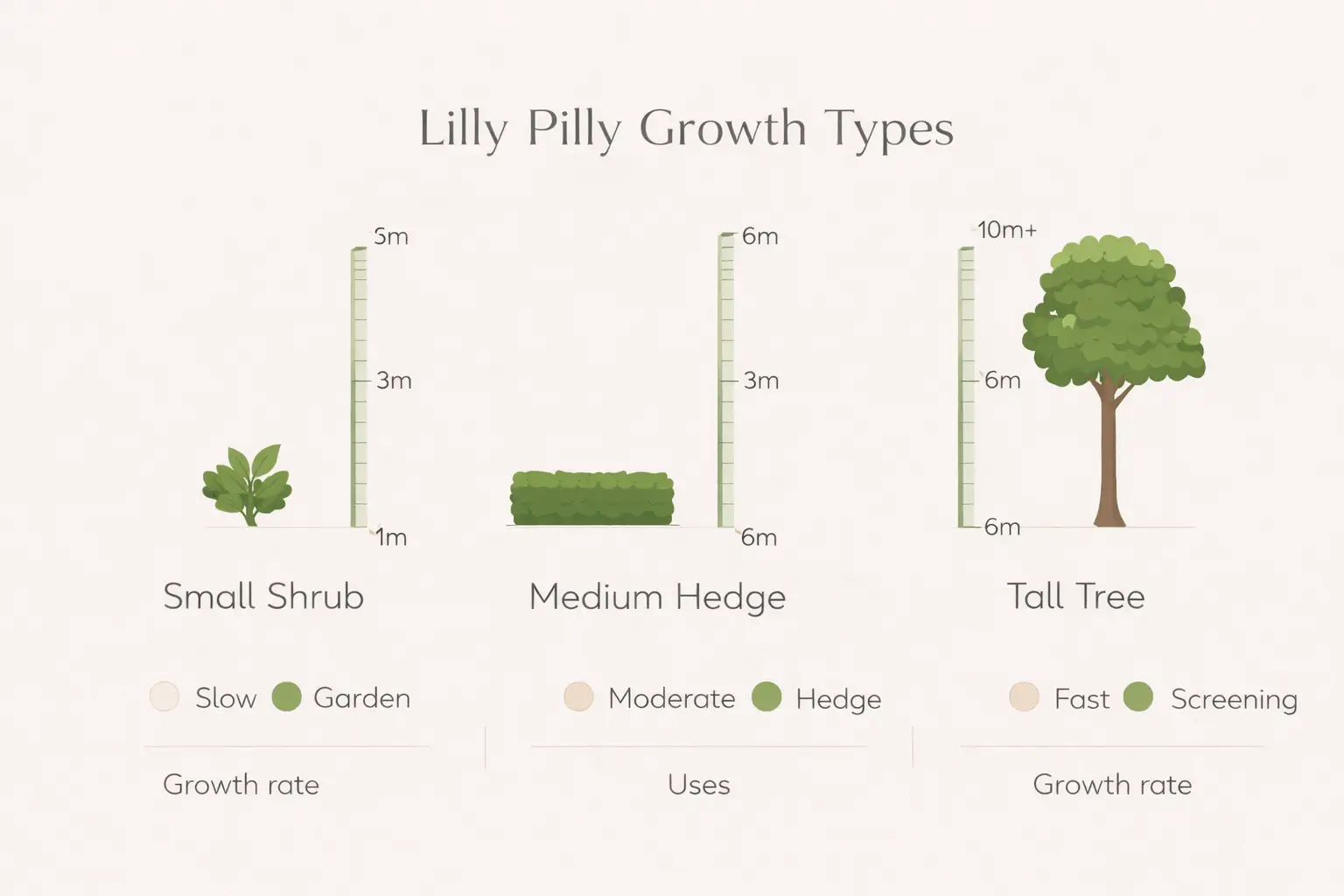
Lilly pillies can grow anywhere from 1 meter to over 10 meters tall, depending on the variety. Width also varies, especially when used as hedges.
Typical lilly pilly height and dimensions
Small varieties remain compact, while larger species can form tall screening trees.
Differences between small lilly pilly varieties and tall trees
Compact varieties are ideal for small gardens, while taller types are used for privacy screens and windbreaks.
Growth speed and yearly growth
Most lilly pillies are fast-growing plants under suitable conditions.
Fast growing lilly pilly vs slower varieties
Fast-growing types can quickly form dense hedges, while slower varieties are easier to manage in confined spaces.
How much does a lilly pilly grow each year
They typically grow 30–60 cm per year, depending on water, sunlight, and soil quality.
Environmental factors affecting growth
Growth depends on sunlight exposure, soil drainage, watering consistency, and climate conditions.
| Type | Height Range | Growth Rate | Use Case |
| Small varieties | 1–3 m | Moderate | Small gardens, borders |
| Medium hedges | 3–6 m | Fast | Privacy hedges |
| Tall trees | 6–10+ m | Fast | Windbreaks, screening |
Types and Varieties of Lilly Pilly Plants
Small and compact varieties
Small lilly pilly varieties are ideal for tight spaces and decorative hedging. They are commonly used in front yards and urban landscapes. For a deeper breakdown of different species and landscaping uses, explore this detailed guide on Types of Lilly Pilly: Varieties, Heights & Best Uses.
Weeping and ornamental forms
Weeping forms have drooping branches and softer shapes, making them visually appealing for ornamental use. These are often used as feature plants.
Berry-free varieties
Some varieties are bred to produce little or no fruit. These are preferred in areas where falling berries may cause mess or attract pests.
Lilly Pilly Berries: Edibility, Uses, and Nutrition

Are lilly pilly berries edible?
Yes, lilly pilly berries are edible and safe for human consumption. They have a tart flavor similar to cranberries.
Explain edibility and taste profile
The berries vary in taste depending on the species, but are generally mildly sweet to tangy.
Clarify confusion around “poisonous lilly pilly fruit”
Despite common concerns, the fruit is not poisonous to humans and is widely used in food preparation.
Common uses of lilly pilly fruit
The berries are commonly used in culinary applications.
| Use | Description |
| Fresh eating | Tart, cranberry-like taste |
| Jam/jelly | Popular homemade preserve |
| Recipes | Used in sauces and desserts |
Safety and Toxicity: Are Lilly Pillies Safe for Humans and Dogs?
Are lilly pilly berries poisonous or toxic?
Lilly pilly berries are not considered toxic to humans and are commonly eaten.
Are lilly pilly berries toxic to dogs?
They are not highly toxic to dogs, but consuming large amounts may cause mild digestive upset.
Are lilly pilly leaves poisonous?
Leaves are not commonly consumed and may cause mild irritation if ingested, so they should be kept away from pets.
Lilly Pilly Care Guide (Water, Soil, and Maintenance)
Basic care requirements
Lilly pillies are low-maintenance plants that adapt well to various environments.
How much water lilly pilly needs
They require regular watering during establishment but become moderately drought-tolerant once mature.
Soil preferences and sunlight
They prefer well-draining soil and full sun to partial shade for optimal growth.
Pruning and shaping
Regular pruning helps maintain dense growth and desired shape, especially for hedges.
Climate tolerance
They tolerate a range of climates but grow best in warm, temperate regions.
If your goal is dense hedging, this guide on Lilly Pilly Privacy Screen: 7+ Essential Growing Tips explains spacing, pruning, and maintenance in detail.
Common Lilly Pilly Problems, Pests, and Diseases
Common problems with lilly pilly
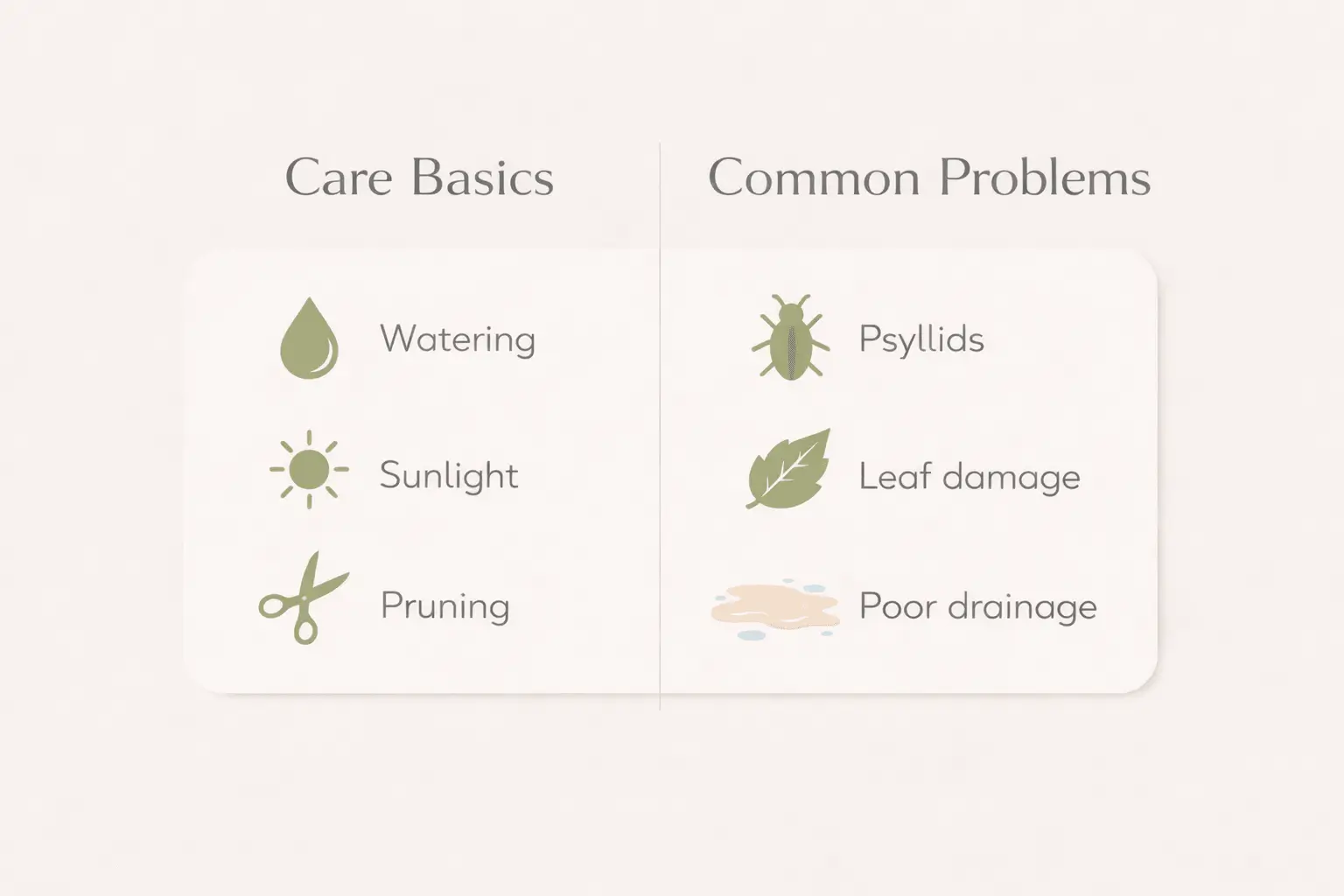
Issues may include yellowing leaves, slow growth, or poor hedge density.
Pests and diseases
Common pests include psyllids, which cause leaf damage and distortion.
Prevention and solutions
- Ensure proper watering and drainage
- Prune regularly to improve airflow
- Use pest control measures if necessary
Comparison: Lilly Pilly vs Other Hedge Plants
Why choose lilly pilly over alternatives?
Lilly pillies offer fast growth, edible fruit, and dense foliage compared to many hedge plants.
| Feature | Lilly Pilly | Other Hedge Plants |
| Growth speed | Fast | Moderate |
| Edible fruit | Yes | Usually no |
| Maintenance | Moderate | Varies |
| Density | High | Moderate |
Beginner Mistakes and Practical Growing Tips
Common mistakes
- Overwatering or poor drainage
- Incorrect pruning techniques
- Choosing a variety too large for the space
Practical tips for success
- Select the right variety for your garden size
- Space plants properly to allow airflow
- Prune regularly to maintain shape and density
One common mistake is incorrect spacing—learn the ideal distances in this guide on How Far Apart to Plant Lilly Pilly for Dense Hedges.
Conclusion
Lilly pilly facts highlight a versatile, fast-growing, and attractive plant that suits a wide range of gardening needs. From edible berries to dense hedging capabilities, lilly pillies offer both beauty and functionality. Understanding their growth habits, safety considerations, and care requirements helps gardeners make the most of this resilient plant.
FAQs
What are the most important lilly pilly facts to know?
Lilly pillies are evergreen plants with edible berries, fast growth, and strong adaptability, commonly used for hedging and landscaping.
Are lilly pilly berries safe to eat?
Yes, lilly pilly berries are generally edible and used in jams and recipes, though taste varies by variety.
Are lilly pilly berries toxic to dogs?
They are not considered highly toxic, but ingestion may cause mild digestive upset, so caution is recommended.
How fast do lilly pillies grow?
Most varieties grow quickly, often 30–60 cm per year under good conditions.