
Introduction
Trees that like wet feet are specially adapted species that thrive in consistently moist or waterlogged soils where most plants struggle to survive. These trees are ideal for boggy gardens, creek banks, flood-prone zones, and heavy clay soils with poor drainage. Unlike typical species that suffer root rot in saturated conditions, they have evolved unique survival mechanisms. This guide explores the best trees that like wet feet, especially Australian natives, and explains how to successfully use them in wet soil landscapes for long-term stability and ecological value.
Quick Summary
- Trees that like wet feet survive saturated soils using specialized root adaptations.
- Australian natives like Melaleuca and Casuarina perform best in wet clay conditions.
- Wet soil trees help reduce flooding, stabilize land, and improve biodiversity.
- Proper species selection is critical to avoid planting failure in waterlogged areas.
What Are Trees That Like Wet Feet?
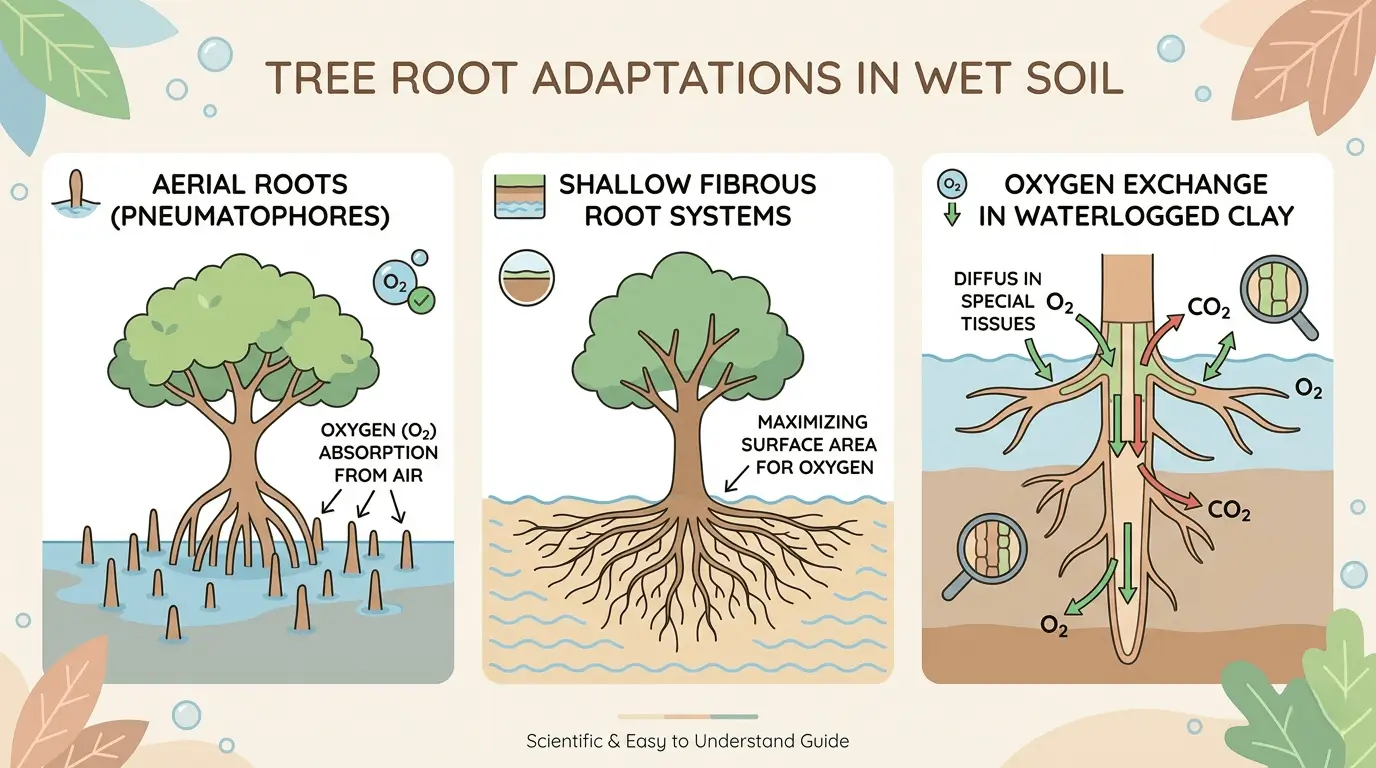
Trees that like wet feet are plant species adapted to grow in hydric or waterlogged soils where oxygen levels are low. These environments include swamps, floodplains, and poorly drained clay areas.
These ecosystems are commonly associated with wetlands, which are defined as areas where water covers or saturates the soil either permanently or seasonally.
These trees survive through specialized adaptations:
- Aerial roots or pneumatophores for oxygen intake in saturated soil
- Fibrous root systems that spread horizontally for stability in mud
- Tolerance to fluctuating pH levels in clay-heavy environments
These features allow them to thrive in conditions that would typically cause root suffocation or decay in non-adapted plants.
Why Plant Trees in Wet Soil Areas?
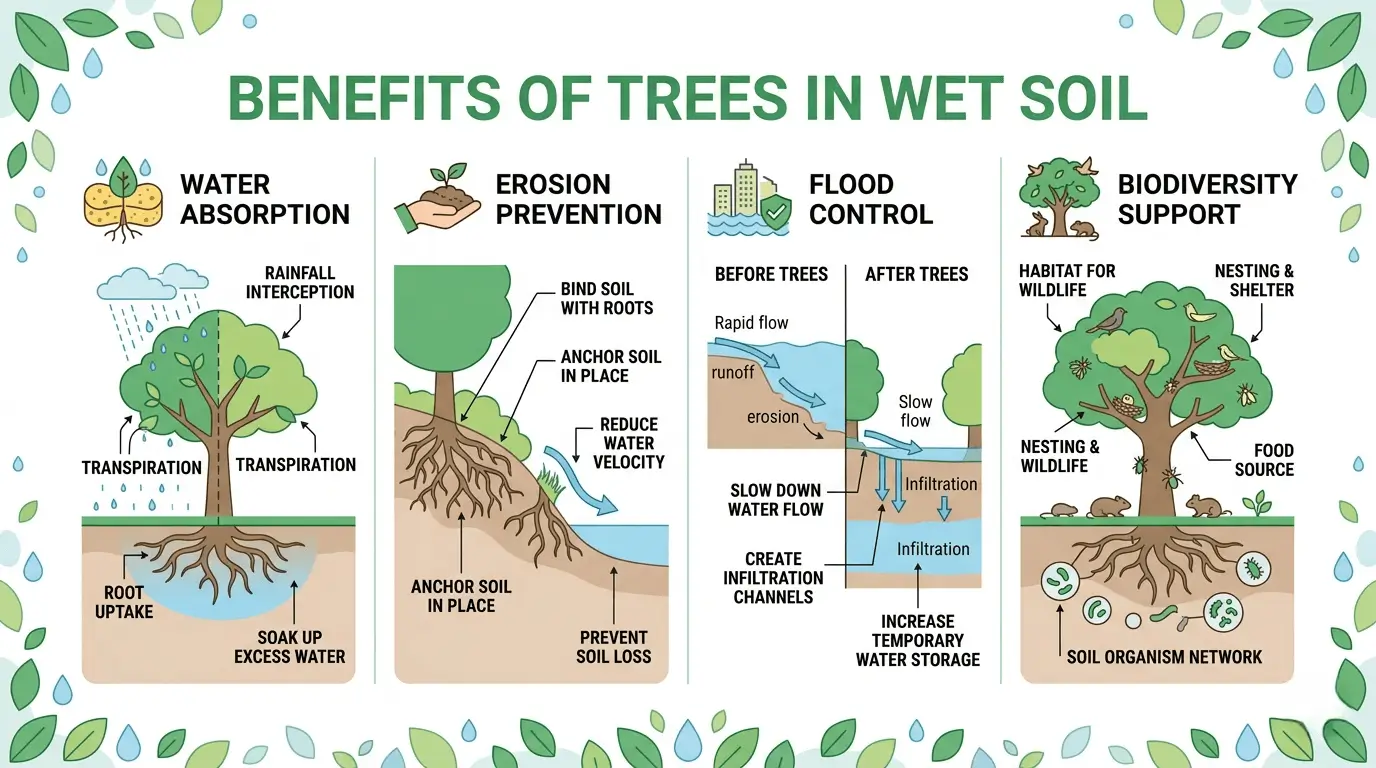
Planting trees in wet soil areas is beneficial because these species stabilize soil, manage excess water, and support local ecosystems.
Key benefits include:
- Reducing surface runoff and improving stormwater management
- Supporting native wildlife such as birds, frogs, and pollinators
- Preventing soil erosion along creek banks and slopes
- Improving long-term soil structure in clay-dominant landscapes
These trees play a crucial role in transforming difficult wet areas into functional green spaces. In landscape design, wet soil areas are often combined with Best Heliconia for Screening: Top Tall Varieties for Privacy to create layered tropical screening and improve biodiversity in damp garden zones.
Best Trees for Wet Soil in Australia
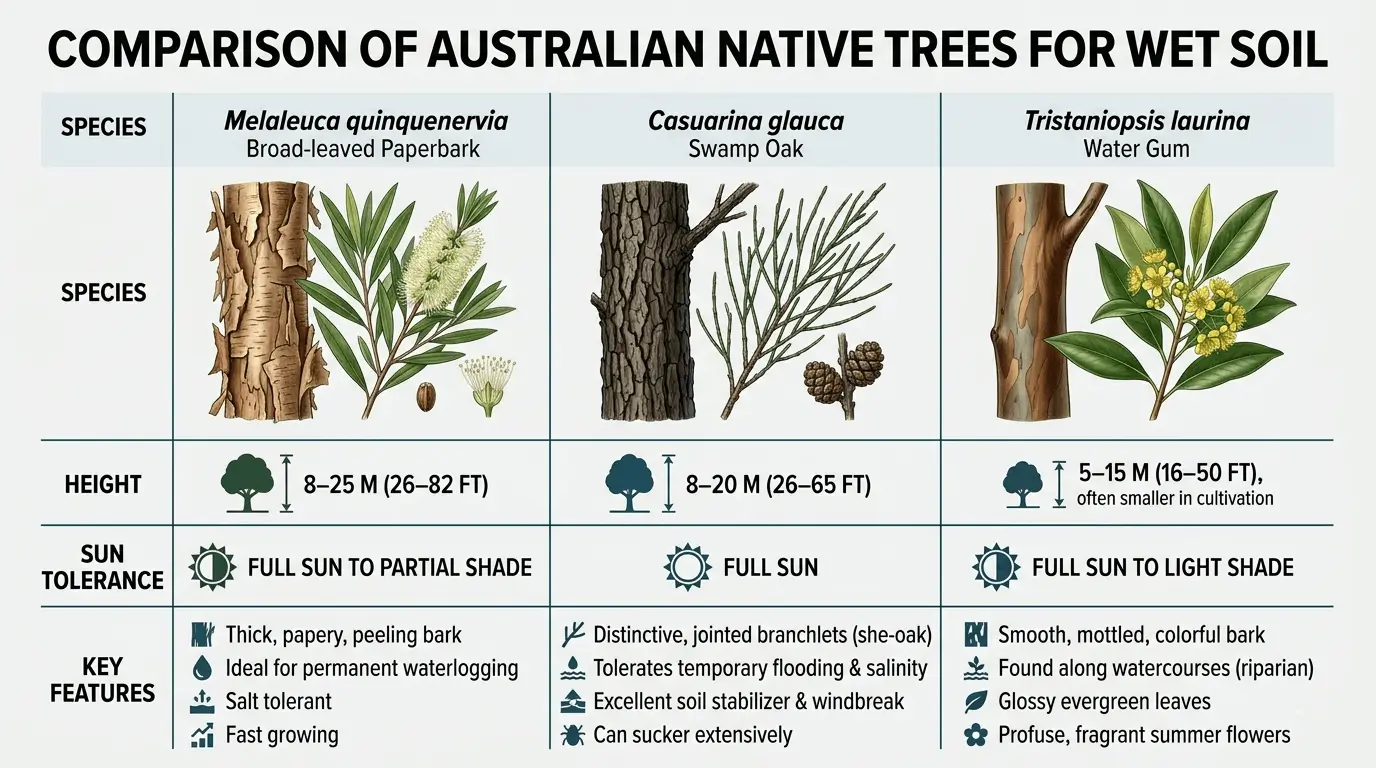
Australian native trees are highly suited to wet soil due to their adaptation to variable rainfall and clay-heavy environments.
| Tree Species | Mature Height | Sun/Shade Tolerance | Key Features |
| Melaleuca quinquenervia (Paperbark) | 10–20m | Full sun to part shade | Erosion control, white flowers |
| Casuarina glauca (Swamp Oak) | 10–15m | Full sun | Salt tolerance, windbreak |
| Tristaniopsis laurina (Water Gum) | 5–15m | Full sun/part shade | Urban tolerance, glossy foliage |
These species are widely used as trees that like wet soil in Australia due to their resilience and low maintenance requirements. Many gardeners also compare wet soil species with Fast Growing Australian Native Trees: 8+ Smart Picks when selecting plants for rapid establishment in flood-prone or clay-heavy landscapes.
Small Trees That Like Wet Soil Australia
Small trees that like wet soil in Australia are ideal for suburban gardens, compact landscapes, and areas near structures.
Common options include:
- Lophostemon suaveolens
- Backhousia myrtifolia
Selection tips:
- Choose frost-tolerant varieties in cooler regions
- Maintain spacing of 4–6 meters for root expansion
- Prefer native species for higher survival rates
Plants and Shrubs for Wet Soil and Clay Areas
Wet soil gardens benefit from a mix of shrubs and trees to create layered structure and improve drainage efficiency.
Comparison:
| Aspect | Shrubs (Callistemon) | Trees (Melaleuca) |
| Height | 2–5m | 10–20m |
| Maintenance | Low pruning | Moderate |
| Water Absorption | High localized uptake | High large-scale uptake |
These plants improve moisture balance in clay-heavy environments. Wet soil shrubs are often combined with Tropical Screening Plants: Best Choices for Garden Privacy to create dense, year-round privacy barriers in humid or waterlogged environments.
Plants That Like Wet Soil and Shade Australia
Shade-tolerant wet soil plants are ideal for under-canopy or low-light garden areas.
Common examples include:
- Lomandra species
- Backhousia myrtifolia
- Alocasia varieties
Key conditions:
- Require dappled or indirect light
- Benefit from mulch to retain moisture
- Prefer stable, consistently damp soil
Plant Size
Plants that like wet feet vary in size depending on species and environmental conditions.
- Outdoor growth reaches full mature height in open wet soils
- Indoor or restricted environments significantly reduce size
- High moisture availability increases overall growth potential
Environmental factors such as sunlight, soil depth, and drainage strongly influence final plant dimensions.
Growth Rate
Wet soil trees typically grow at moderate to fast rates under optimal conditions.
- Fastest growth occurs during warm, wet seasons
- Growth slows significantly during winter dormancy
- Consistent moisture improves long-term development
Care Guide
Proper care ensures healthy growth of trees that like wet feet:
- Keep soil consistently moist but not stagnant
- Provide full sun or partial shade depending on species
- Use acidic or clay-adapted soil types
- Apply spring fertilization for nutrient support
- Light pruning to maintain structure
- Ensure subtropical or temperate climate suitability
Trees That Grow in Standing Water
Some species can survive in permanently waterlogged environments such as ponds and wetlands.
Example:
- Taxodium distichum (Swamp Cypress)
These trees are adapted to oxygen-poor soils and can tolerate prolonged flooding conditions.
Comparison of Sun vs. Shade Wet Soil Plants
Light exposure significantly affects wet soil plant performance.
| Light Condition | Examples | Growth Notes |
| Full Sun | Callistemon, Melaleuca | Faster growth, more flowering |
| Shade | Lomandra, Backhousia | Slower growth, dense foliage |
Sun-exposed plants generally grow faster and produce more blooms.
Common Problems with Wet Soil Plants
Wet soil plants can fail when conditions are mismatched.
- Yellow Leaves: Often caused by iron deficiency in clay soils; treat with chelated iron
- Root Rot: Caused by stagnant water and fungal growth; improve aeration
- Slow Growth: Due to nutrient lockup in compacted soil; aerate annually
Seasonal and Environmental Limitations
Wet soil plants respond strongly to seasonal changes.
- Summer: Require increased moisture support
- Winter: Growth slows or becomes dormant
- Dry periods: Require mulching to prevent stress
Proper seasonal management ensures long-term plant health.
Conclusion
Trees that like wet feet are essential for transforming waterlogged or clay-heavy soils into productive landscapes. Australian native species such as Melaleuca and Casuarina offer reliable performance, low maintenance, and strong environmental benefits. The key to success is selecting the right species based on sunlight, soil type, and moisture conditions to ensure long-term stability in wet environments.
FAQ
What are the best native trees that like wet soil in Australia?
Melaleuca quinquenervia and Casuarina glauca are among the best-performing native trees for wet and clay soils.
Can small trees that like wet feet grow in shaded wet areas?
Yes, species like Backhousia myrtifolia tolerate partial shade and compact growth conditions.
How do I plant trees in wet clay soil Australia?
Use wide planting holes, minimal soil amendment, and heavy mulching to maintain moisture balance.
What shrubs that like wet feet Australia absorb the most water?
Callistemon viminalis is highly effective at absorbing excess water while thriving in wet soils.
Why do plants for wet areas Australia fail in my garden?
Most failures occur due to incorrect drainage improvement or poor light matching for the chosen species.