
Introduction
Trees with wide canopy are valued for their ability to provide broad shade, improve microclimates, and enhance landscape aesthetics. A wide canopy tree spreads its branches horizontally, creating a large shaded area that can reduce heat, protect soil moisture, and support biodiversity. From fast-growing shade trees in Australia to compact backyard options, understanding canopy structure helps in selecting the right tree for different environments.
Quick Summary
- Trees with wide canopy provide maximum shade, cooling, and landscape coverage.
- Both evergreen and deciduous canopy trees serve different seasonal needs.
- Fast-growing and native Australian shade trees support long-term sustainability.
- Tree choice depends on space, climate, growth rate, and maintenance.
What Is a Canopy Tree and Why It Matters
What defines a canopy tree
A canopy tree is defined by its broad, spreading crown that forms a continuous layer of leaves, known as the canopy. Tree canopies consist of branches and foliage that extend outward, creating shade and ecological coverage.
- Crown spread determines shade width
- Branch architecture influences structure
- Leaf density affects shade intensity
A canopy tree differs from narrow or upright trees by its horizontal growth pattern.
Why wide canopy trees are important
Wide canopy trees play a key role in environmental regulation and landscape function.
- Reduce surface temperatures through shade
- Improve backyard comfort and usability
- Protect soil from moisture loss and erosion
- Support birds, insects, and biodiversity
Types of Trees with Wide Canopy (By Structure & Growth Habit)
Spreading vs round canopy trees
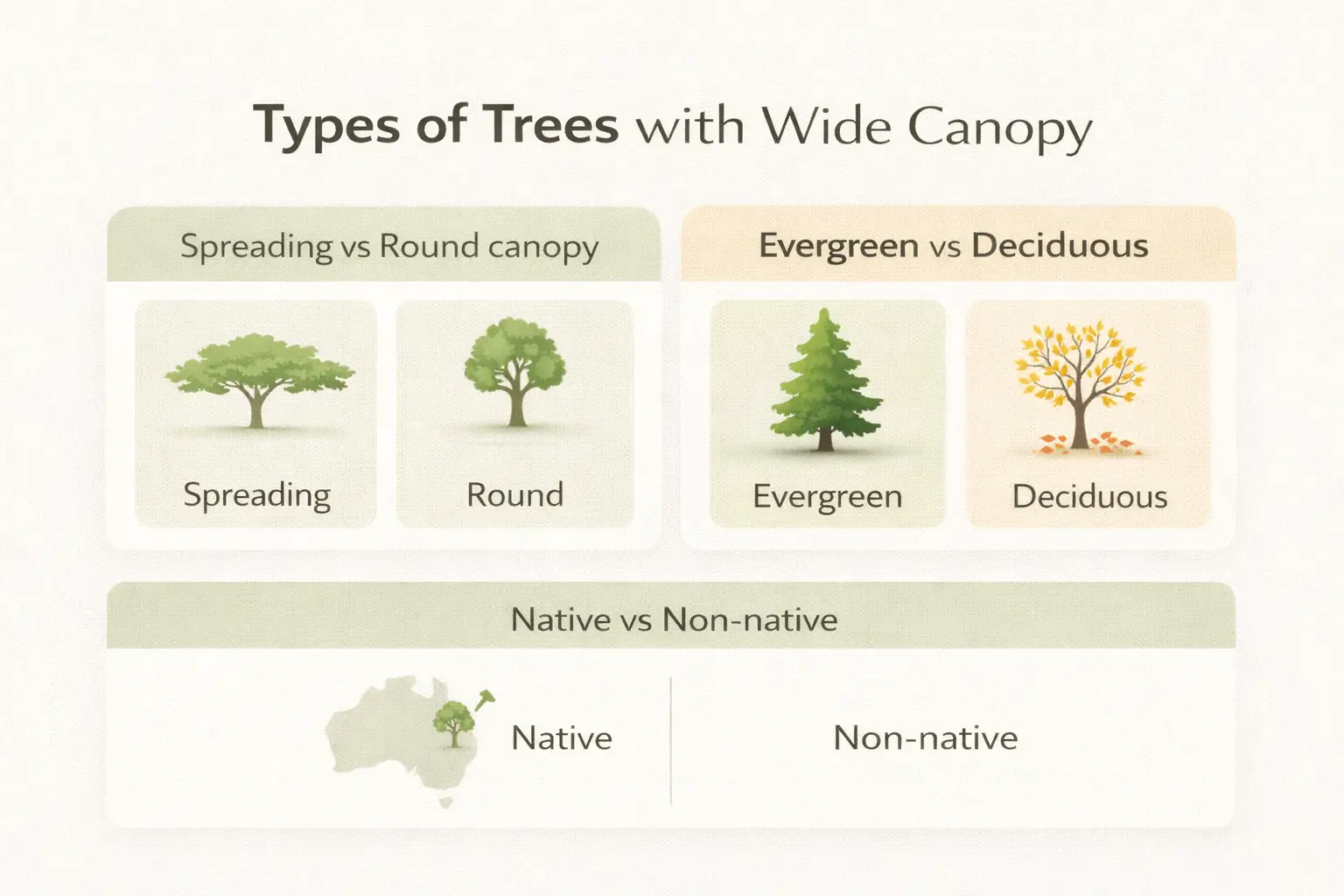
Spreading canopy trees grow horizontally with extended branches, while round canopy trees form a symmetrical, dome-like crown.
- Spreading trees: wider shade coverage
- Round trees: balanced and aesthetic form
Evergreen vs deciduous canopy trees
Evergreen trees maintain foliage year-round, while deciduous trees shed leaves seasonally.
- Evergreen shade trees: consistent shade and privacy
- Deciduous trees: allow winter sunlight, reduce summer heat
Native vs non-native canopy trees
Australian native canopy trees are adapted to local climates, making them more resilient and low-maintenance compared to non-native species.
Best Trees with Wide Canopy for Different Needs
Best overall wide canopy trees
The best trees combine wide spread, manageable roots, and moderate maintenance.
- Balanced growth rate
- Dense shade coverage
- Suitable for climate conditions
Trees for backyard shade
Backyard shade trees should provide coverage without damaging structures.
- Medium-sized canopy trees are ideal
- Non-invasive root systems are essential
- Adequate spacing prevents overcrowding
Strategic placement is key for maximum shade—this list of 8+ Smart Trees to Plant Along Driveway for Perfect Shade highlights ideal positioning and spacing ideas.
Trees for privacy and coverage
Dense canopy trees or fast-growing species are effective for privacy.
- Fast growing trees for privacy create quick coverage
- Dense foliage enhances screening
- Vertical growth complements horizontal spread
For denser coverage and layered screening, combining canopy trees with shrubs can be effective—explore Tropical Screening Plants: Best Choices for Garden Privacy for complementary options.
Small, Medium, and Tall Wide Canopy Trees (Size-Based Guide)
Small and dwarf canopy trees
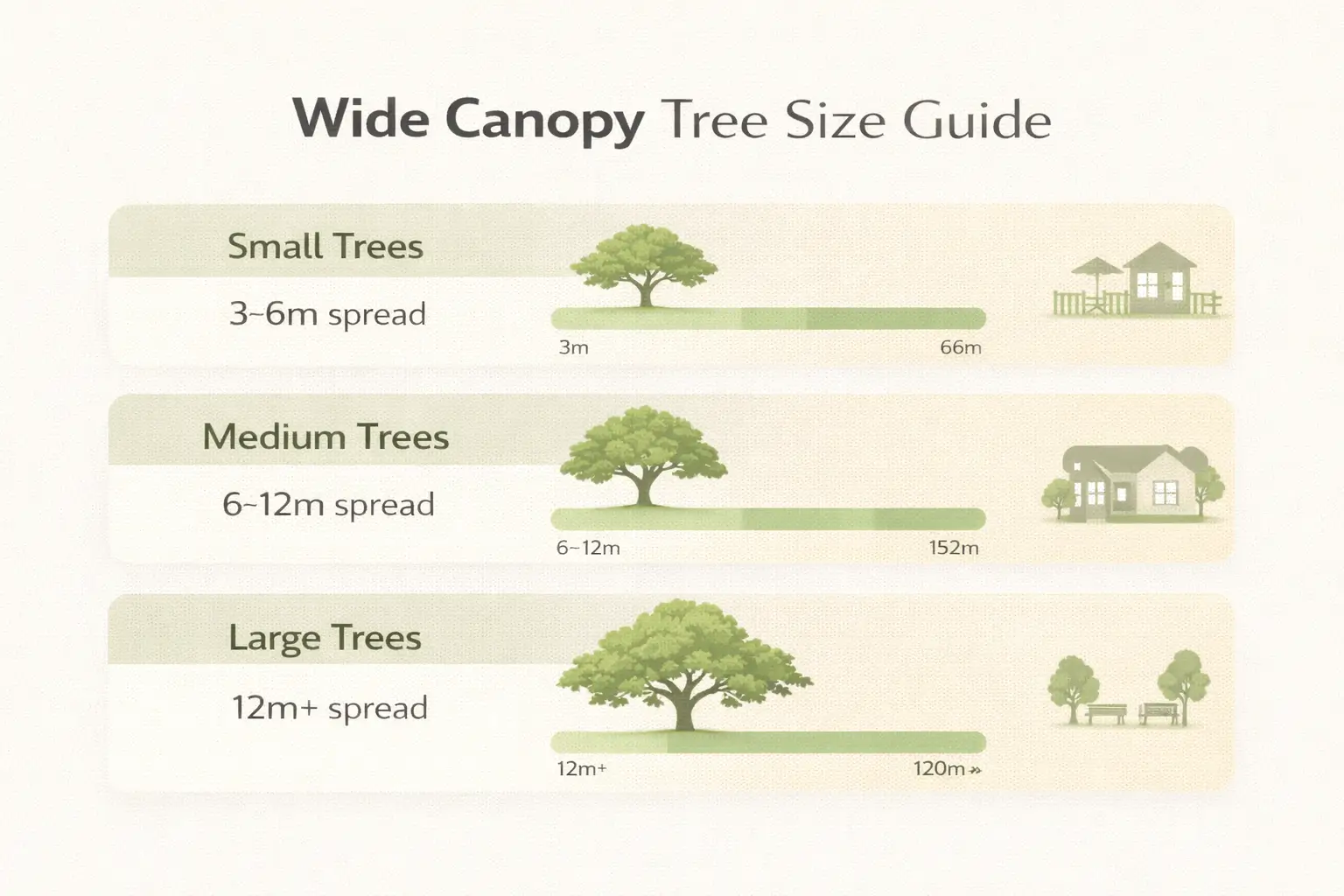
Small trees with wide canopy are ideal for compact spaces.
- Suitable for small backyards and patios
- Can be grown in large pots
- Provide localized shade
Medium-sized canopy trees
Medium trees offer a balance between size and coverage.
- Easier to maintain than large trees
- Suitable for suburban landscapes
- Provide effective shade without overwhelming space
Tall and large canopy trees
Large canopy trees are best for expansive areas.
- Provide maximum shade
- Require significant space
- Ideal for parks and rural settings
Size Comparison Table
| Size Category | Canopy Spread | Best Use |
| Small | 3–6 meters | Backyard, patios |
| Medium | 6–12 meters | Residential gardens |
| Large | 12+ meters | Parks, rural land |
Fast Growing Trees with Wide Canopy
Fastest growing shade trees
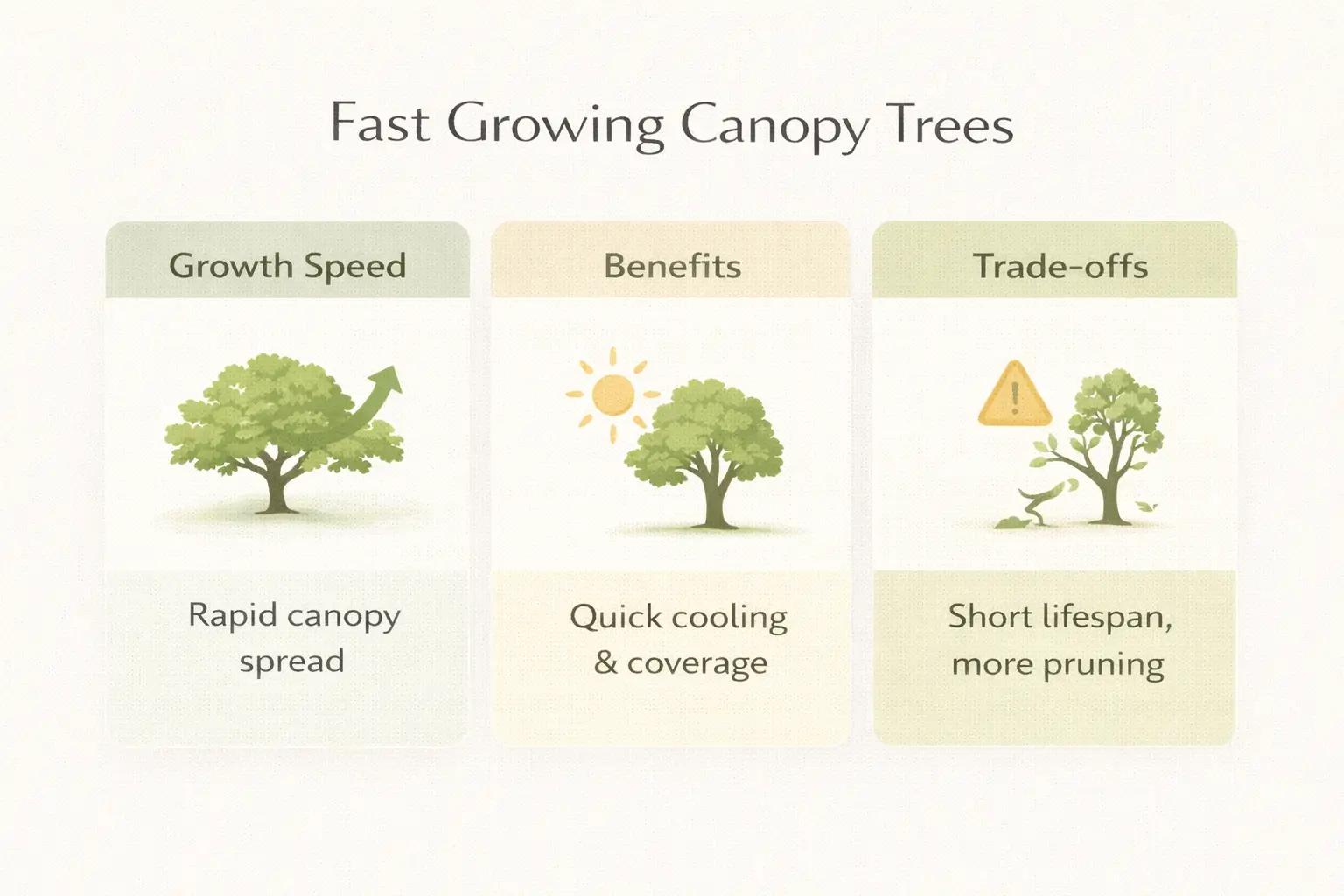
Fast-growing trees typically establish quickly and expand canopy within a few years, though they may have shorter lifespans. Many homeowners choose fast-growing options to establish shade quickly, especially in warmer regions—see this guide on Fast Growing Australian Native Trees: 8+ Smart Picks for regionally adapted choices.
Fast growing trees in Australia
Many fast-growing trees in Australia adapt well to regional climates.
- Rapid canopy development
- Suitable for quick shade needs
- Require proper spacing and maintenance
Evergreen fast-growing canopy trees
Fast-growing evergreen trees provide year-round shade and privacy.
- Maintain foliage throughout the year
- Ideal for screening and cooling
- Require pruning to manage spread
Australian Native Shade Trees with Wide Canopy
Popular native canopy trees
Australian native shade trees are well-suited for local conditions and ecosystems.
- Adapted to soil and climate
- Require less water and maintenance
- Support native wildlife
Regional considerations
Tree selection varies across regions such as NSW, Victoria, Queensland, and Western Australia due to climate differences.
Benefits of native trees
- Higher climate resilience
- Lower maintenance requirements
- Better ecosystem integration
Shade-Tolerant and Low-Light Canopy Trees
Trees that grow in shade
Shade-tolerant trees can grow in low-light environments, making them suitable for understory planting.
Small trees for shaded areas
Compact trees are ideal for shaded gardens or limited sunlight spaces.
- Thrive in partial shade
- Suitable for tight urban areas
- Provide localized canopy coverage
Care Guide for Wide Canopy Trees
Watering and soil requirements
Proper watering and soil conditions support canopy development.
- Well-drained soil promotes root health
- Water needs vary by climate and species
Light and spacing requirements
Adequate sunlight is essential for full canopy growth.
- Full sun encourages dense foliage
- Proper spacing prevents competition
Pruning and maintenance
Regular pruning helps shape canopy structure and control spread.
- Remove weak or crossing branches
- Maintain balanced crown shape
Common Problems with Wide Canopy Trees (And Solutions)
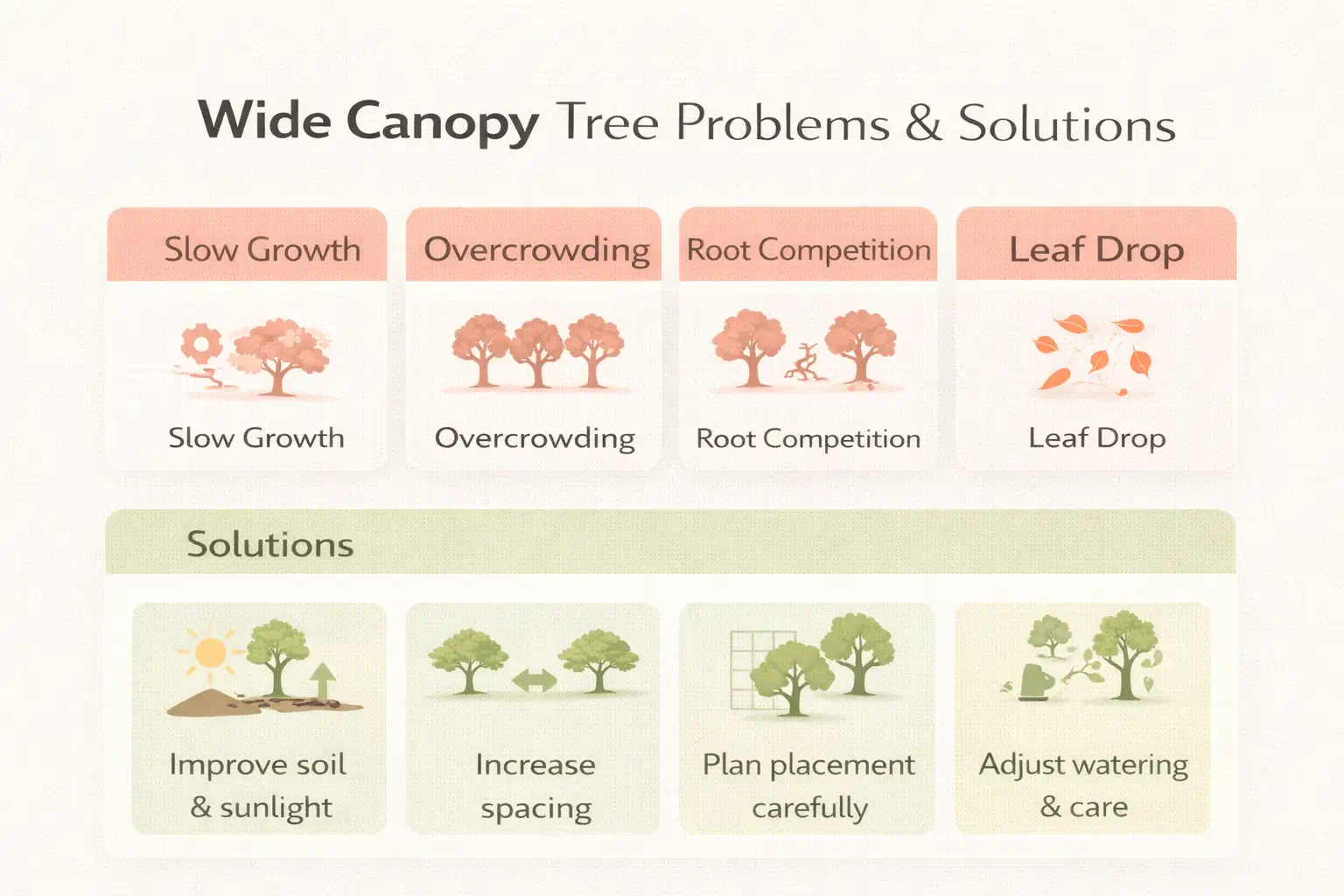
Slow or uneven canopy growth
Poor growth is often caused by inadequate sunlight or poor soil.
- Improve soil quality
- Ensure sufficient spacing
Overcrowding and root competition
Close planting leads to competition for nutrients and water.
- Maintain proper planting distance
- Avoid planting near structures
Excessive leaf drop or maintenance issues
Leaf shedding may be seasonal or stress-related.
- Identify stress factors
- Adjust watering and care practices
Largest and Widest Tree Canopies in the World
Tree with widest canopy
The banyan tree is known for having one of the widest canopy spreads due to its aerial root system. One of the most famous examples is the banyan tree, known for its massive canopy spread supported by aerial roots (see Banyan).
Largest tree canopy in the world
Some banyan trees form extensive canopy systems covering large areas, functioning like a forest from a single organism.
Comparison: Choosing the Right Wide Canopy Tree
Key comparison factors
Selecting the right tree depends on several factors:
- Growth rate
- Mature size
- Evergreen vs deciduous
- Maintenance needs
Comparison Table
| Tree Type | Canopy Size | Growth Speed | Maintenance |
| Small canopy | Low | Moderate | Low |
| Medium canopy | Medium | Moderate | Medium |
| Large canopy | High | Fast | High |
Tree Canopy Planning and Policies
What is tree canopy policy
Tree canopy policy refers to urban planning strategies aimed at increasing tree coverage in cities.
Importance in cities
Urban tree canopies contribute to:
- Heat reduction
- Improved air quality
- Enhanced urban livability
Conclusion
Trees with wide canopy play a critical role in providing shade, improving environmental conditions, and enhancing outdoor spaces. Whether selecting fast-growing shade trees in Australia, native canopy trees, or compact backyard options, the right choice depends on space, climate, and maintenance preferences. Understanding canopy structure and growth patterns ensures long-term success and sustainable landscaping.
FAQs
What are the best trees with wide canopy for backyard shade?
Medium or small canopy trees with controlled root systems are ideal for backyard shade, providing coverage without structural risks.
Which fast-growing trees develop a wide canopy quickly?
Fast-growing shade trees, including certain native Australian species, establish canopy coverage quickly but may need regular pruning.
Are evergreen trees with wide canopy better than deciduous trees?
Evergreen trees provide year-round shade, while deciduous trees offer seasonal flexibility by allowing sunlight during cooler months.
What is the difference between a canopy tree and a regular tree?
A canopy tree has a wide, spreading crown designed for shade and coverage, unlike narrow or upright tree forms.
Can small trees have a wide canopy?
Yes, many dwarf or small trees are cultivated to develop a broad canopy suitable for compact spaces.