
Introduction
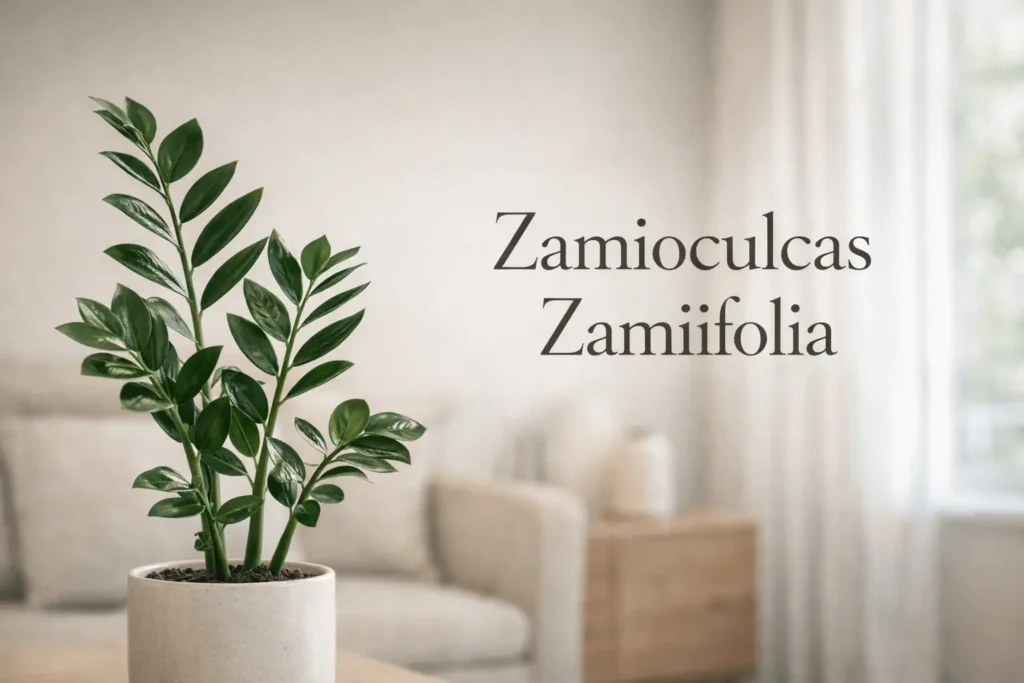
Zamioculcas zamiifolia, commonly known as the ZZ plant, is a resilient tropical houseplant valued for its glossy foliage and ability to thrive in low-maintenance indoor environments. Native to Eastern Africa, this plant has become popular worldwide because it tolerates low light, irregular watering, and indoor conditions that challenge many other houseplants. Understanding zamioculcas zamiifolia care, propagation, varieties, and safety considerations helps gardeners keep this plant healthy and long-lived while avoiding common problems. Its thick rhizomes store water efficiently, allowing the plant to survive drought periods that would damage most indoor plants, which is why it is widely recommended for beginner plant owners and offices.
What Is Zamioculcas Zamiifolia? (Plant Identity and Classification)
Botanical Background and Natural Habitat
Zamioculcas zamiifolia is a tropical perennial species belonging to the Araceae family, which also includes plants such as philodendron and peace lilies. The plant genus Zamioculcas contains only one widely recognized species: zamioculcas zamiifolia, commonly grown as a houseplant.
The species originates from Eastern Africa, including regions of Kenya, Tanzania, and Zanzibar. In its natural habitat, the plant grows under forest canopies where light levels are moderate to low and rainfall may be irregular. These conditions explain why the zz plant zamioculcas zamiifolia tolerates shade and drought exceptionally well.
One of the plant’s most important adaptations is its underground rhizome system, which stores water and nutrients. This structure allows the plant to survive extended dry periods. Thick, upright stems and waxy leaflets also reduce moisture loss.
Common Names and Recognizable Features
The plant is known by several common names including ZZ plant, emerald palm plant, and Zanzibar gem. These names reflect both its appearance and geographic origin.
The zamioculcas zamiifolia common name “ZZ plant” comes from the initials of its scientific name. The foliage consists of thick, glossy leaflets arranged along upright stems, giving the plant a symmetrical and polished appearance.
A full grown zz plant may reach 2–3 feet tall indoors. The plant forms clumps of stems emerging from underground rhizomes, and its waxy leaves help reflect light while conserving moisture. These distinctive features make zz plants easy to recognize among indoor tropical plants.
Zamioculcas Zamiifolia Care: Growing Conditions for Healthy Plants
-
Light, Temperature, and Indoor Placement
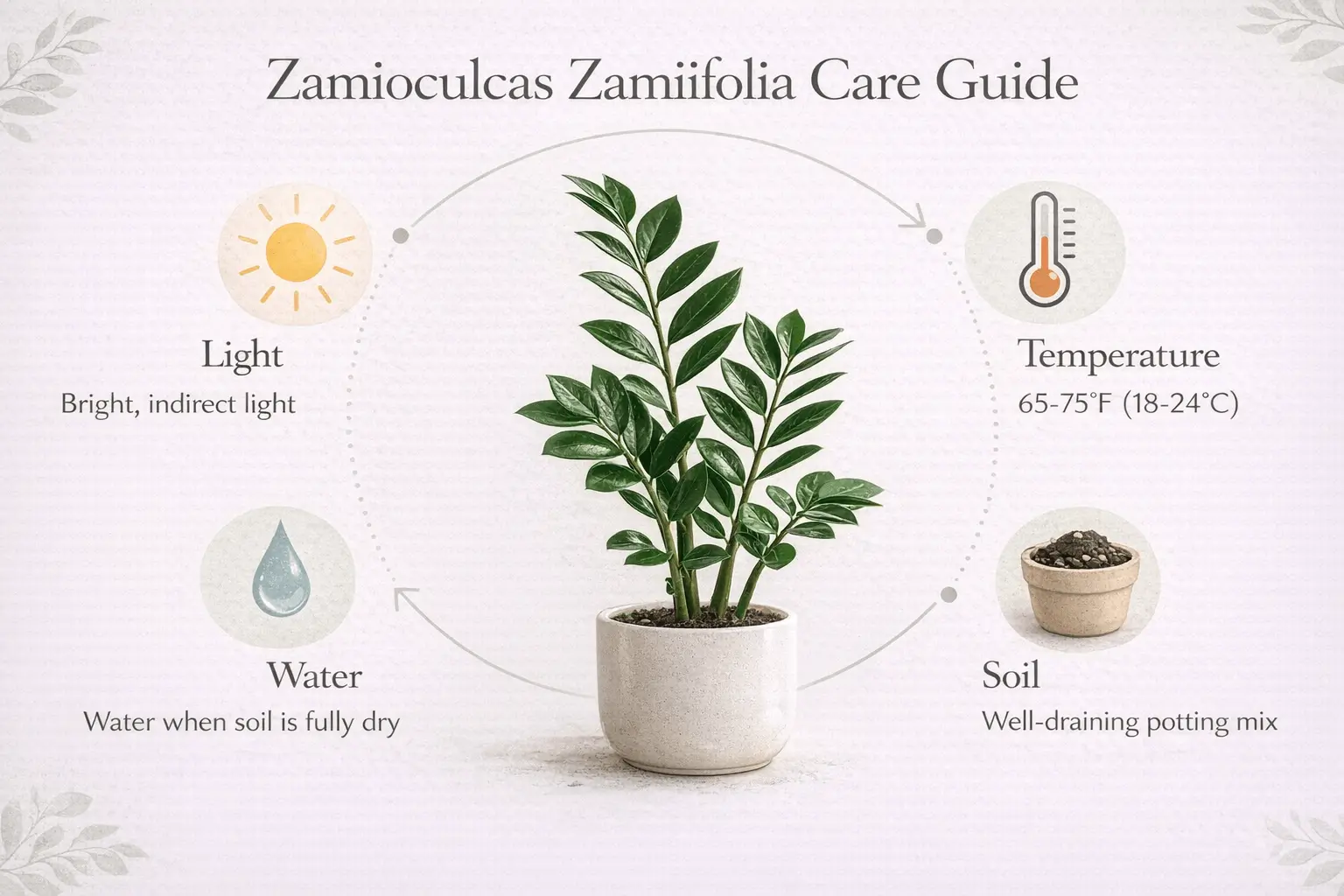
ZZ plants thrive in indoor environments with indirect light. While they tolerate low light conditions extremely well, moderate filtered sunlight encourages stronger growth and fuller foliage.
The zz indoor plant performs best when placed near north- or east-facing windows, where sunlight is gentle and indirect. Direct sunlight can scorch leaves, especially during hot summer months.
Typical indoor temperatures between 18–26°C (65–79°F) are ideal. The zz plant indoor environment should remain stable, as sudden cold drafts or temperatures below 10°C can damage foliage. In regions such as the zz plant UK indoor growing environment, consistent indoor warmth is especially important.
-
Soil Requirements and Potting Conditions
The best zamioculcas zamiifolia soil is loose, well-draining, and aerated. A mix designed for succulents or cacti works well because it prevents excess moisture accumulation around the roots.
The plant’s rhizomes are sensitive to waterlogged conditions, which means drainage is essential. Pots should contain drainage holes, and heavy soils should be avoided.
Many growers use a mixture of potting soil, perlite, and coarse sand to improve aeration. This structure ensures water drains quickly and oxygen reaches the root system effectively.
-
Watering and Routine Maintenance
Proper watering is the most important part of zamioculcas plant care. ZZ plants prefer infrequent watering because their rhizomes store moisture.
A common schedule for caring for a zz plant is watering every 2–3 weeks, allowing the soil to dry completely between watering sessions. Overwatering is the most common mistake in zz plants care and can lead to root rot.
Routine maintenance includes wiping dust from leaves, rotating the plant for even growth, and occasionally trimming damaged foliage. With minimal effort, care of zamioculcas plants remains straightforward for most indoor gardeners.
How to Propagate Zamioculcas Zamiifolia
Leaf and Stem Propagation Methods
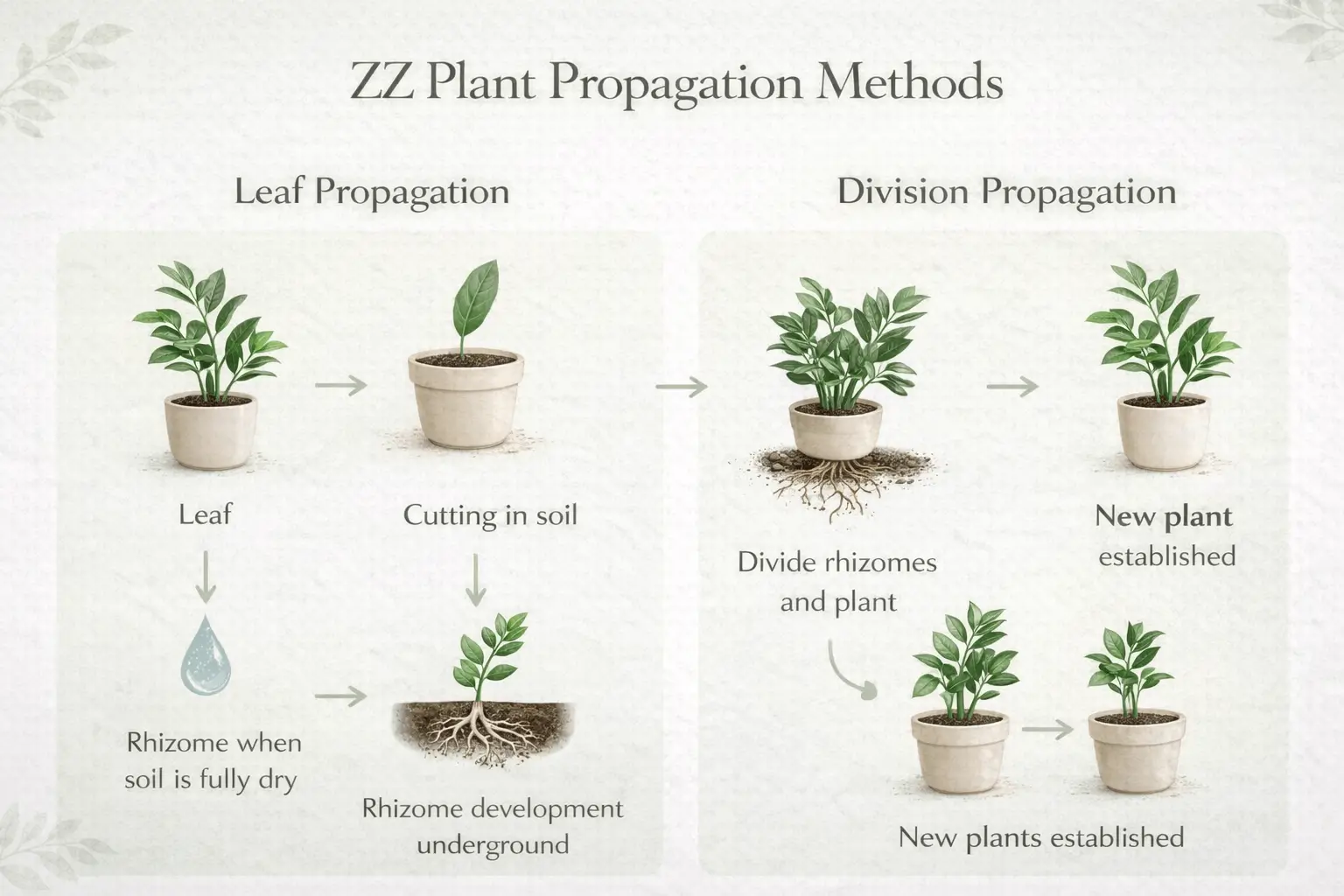
Propagating zz plant cuttings is possible using leaf or stem sections. This process is slow but reliable.
To begin zamioculcas zamiifolia propagation, remove a healthy leaflet or stem and place it into moist, well-draining soil. Over time, the cutting develops a small rhizome beneath the soil surface.
New shoots may appear after several months. Because propagating zz plants requires patience, gardeners often wait 3–9 months before visible growth occurs. Despite the slow process, propagation zz plant techniques are widely used by hobby growers.
Division Propagation
Zamioculcas plant propagation through division is faster than leaf propagation. Mature plants naturally produce multiple rhizomes beneath the soil.
When repotting, gardeners can gently separate rhizomes into individual sections. Each section should contain both roots and stems.
After division, the plants typically establish themselves within a few weeks. ZZ plant propagation by division is the most efficient method for producing new plants quickly.
ZZ Plant Flowers: Do Zamioculcas Zamiifolia Plants Bloom?
What the Zamioculcas Flower Looks Like
The zamioculcas flower is small and often hidden near the base of the plant. It consists of a spadix surrounded by a spathe, a structure typical of the Araceae plant family.
A zz plant flower resembles the flowers of peace lilies or philodendrons but is usually partially concealed beneath foliage. Because the flower appears close to the soil, many indoor gardeners never notice it.
Although flowering zz plant specimens are possible, they occur rarely in typical indoor conditions.
Conditions That Encourage Flowering
The zamioculcas zamiifolia flower typically appears when plants reach maturity and experience stable environmental conditions.
Factors that may encourage flowering include consistent warmth, adequate indirect light, and long periods of uninterrupted growth. Outdoor or greenhouse plants are more likely to bloom than indoor plants.
However, even healthy ZZ plants may never flower indoors, which is normal and does not indicate poor plant health.
Varieties and Cultivars of Zamioculcas Zamiifolia
-
Zamioculcas Raven
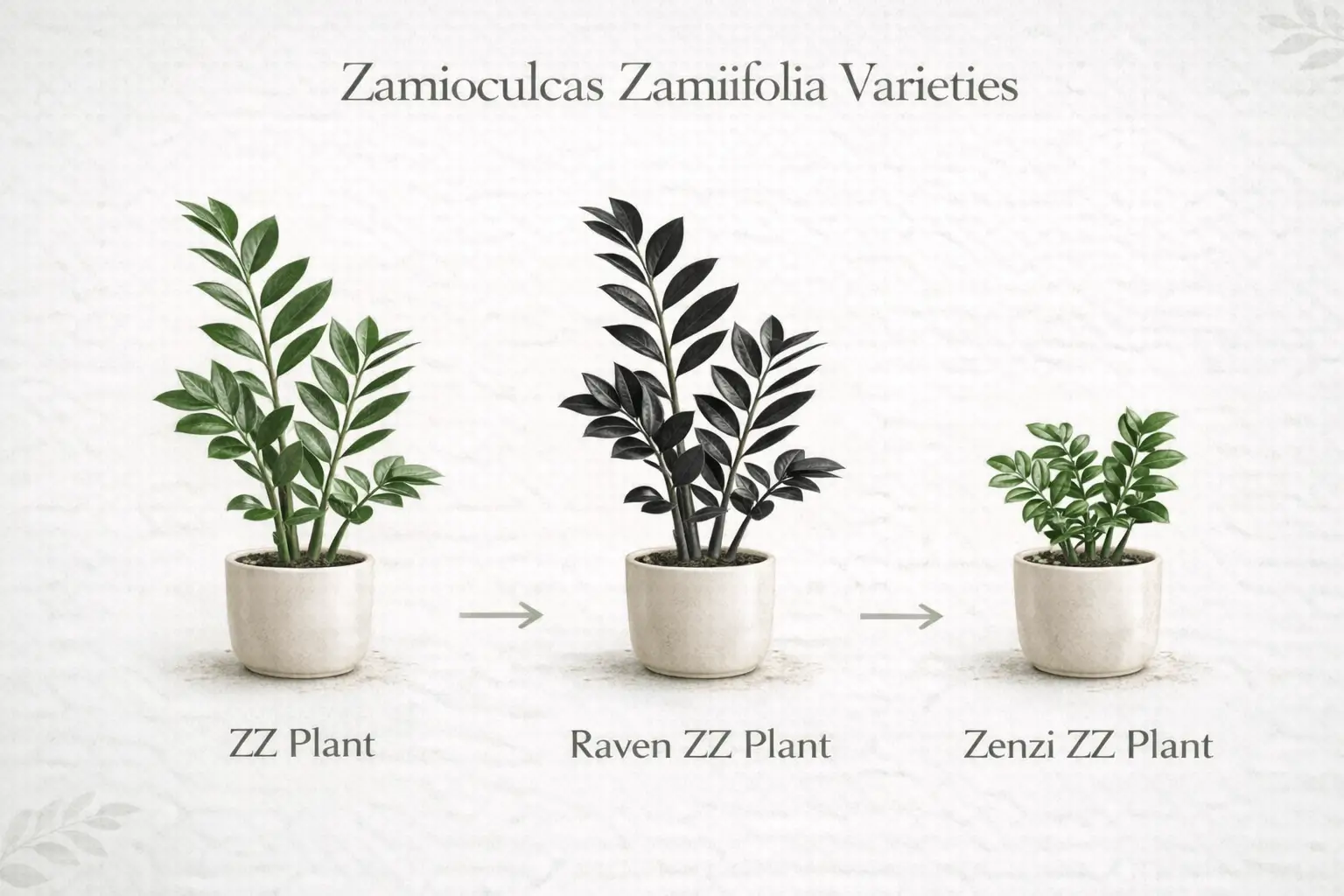
Zamioculcas zamiifolia raven is a striking cultivar known for its dark purple-black foliage. New leaves emerge bright green before gradually turning nearly black as they mature.
This cultivar maintains the same growth habits and resilience as the standard ZZ plant but provides a dramatic ornamental contrast.
-
Zamioculcas Zenzi
Zamioculcas zenzi is a compact cultivar with thicker, tightly clustered leaves and a shorter growth habit. Its dense foliage makes it popular for desks, shelves, and smaller indoor spaces.
The plant maintains the same drought tolerance as the standard species while remaining more compact.
-
Other Notable Varieties
Another cultivar, zamioculcas zamiifolia dowon, is known for its distinctive leaf structure and ornamental appearance. These cultivars vary slightly in leaf size, growth habit, and visual texture while retaining the durable nature typical of the species.
Benefits of Zamioculcas Zamiifolia as an Indoor Plant
The zamioculcas zamiifolia benefits primarily relate to its durability and adaptability in indoor spaces.
The zz plant benefits at home include its ability to tolerate low light and inconsistent watering schedules. This resilience makes it suitable for offices, apartments, and beginner gardeners.
Many people also appreciate the aesthetic value of the plant. Its glossy foliage and upright stems provide a clean, architectural look that complements modern interior design. Because of its durability, the zee zee plant benefits include long life and minimal care requirements.
Toxicity and Safety: Are ZZ Plants Poisonous to Cats or Pets?
Yes, zamioculcas zamiifolia toxic compounds are present in the plant. ZZ plants contain calcium oxalate crystals, which can cause irritation if ingested.
Symptoms of ingestion in pets may include drooling, mouth irritation, vomiting, or difficulty swallowing. For this reason, are zz plants toxic to cats is a common concern among pet owners.
Both zamioculcas zamiifolia poisonous properties and the risk of irritation mean the plant should be kept away from pets. The zanzibar gem toxic to cats classification applies primarily when animals chew leaves or stems.
Keeping zz plant cats interactions limited by placing the plant on elevated surfaces can prevent accidental ingestion.
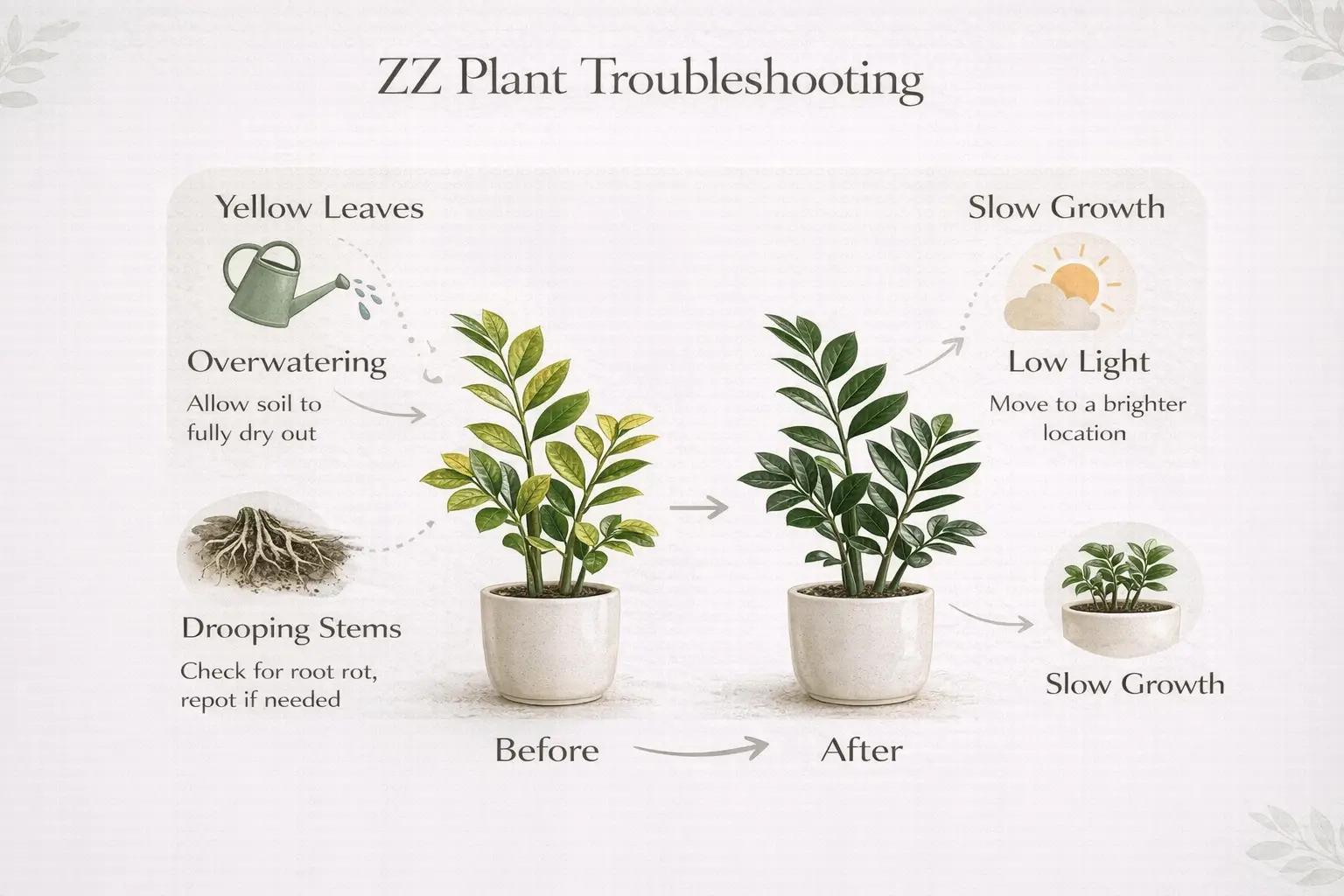
Common ZZ Plant Problems and How to Fix Them
-
Yellow Leaves and Overwatering
Yellow leaves are often caused by excess watering. ZZ plants store water in rhizomes, so soggy soil can quickly lead to root rot.
Improving drainage, reducing watering frequency, and allowing soil to dry fully can prevent this issue.
-
Slow Growth or Stunted Plants
Slow growth is common when light levels are very low. While ZZ plants tolerate shade, moderate indirect light encourages faster development.
Nutrient deficiencies or overcrowded roots may also limit growth, so occasional repotting may help.
-
Drooping or Soft Stems
Drooping stems may indicate water stress or environmental shock. Sudden changes in temperature, drafts, or inconsistent watering can weaken stems.
Restoring stable environmental conditions usually allows the plant to recover.
Environmental Limitations and Indoor Growing Considerations
Indoor growing success depends on environmental factors such as humidity, light, and seasonal changes.
Typical household humidity levels are usually adequate for the plant. However, extremely dry indoor air may slow growth slightly.
Seasonal light changes also affect development. During winter, shorter daylight hours reduce growth rates. In regions such as zamioculcas zamiifolia UK environments, indoor lighting and consistent warmth support healthy plants.
Understanding these environmental limitations helps growers maintain healthy zamioculcas uk indoor plants throughout the year.
Conclusion
Zamioculcas zamiifolia is one of the most adaptable houseplants available, making it an excellent choice for beginners and experienced indoor gardeners alike. With its glossy foliage, drought tolerance, and ability to thrive in low-light spaces, the ZZ plant remains a reliable addition to homes and offices. By understanding proper zamioculcas zamiifolia care, propagation methods, varieties like raven and zenzi, and safety considerations for pets, plant owners can maintain healthy plants for many years while avoiding common growing mistakes.
Learn more: japanese money plant
Frequently Asked Questions
How often should you water a Zamioculcas zamiifolia plant?
ZZ plants prefer infrequent watering. Most indoor plants should be watered only when the soil becomes completely dry, typically every two to three weeks depending on indoor conditions.
Can Zamioculcas zamiifolia grow in low light?
Yes. The plant tolerates low light conditions very well. However, moderate indirect sunlight encourages faster growth and fuller foliage.
How long does ZZ plant propagation take?
Propagation through leaf cuttings can take several months. Rhizomes may develop slowly, and new shoots often appear between three and nine months after planting.
Are ZZ plants toxic to cats and dogs?
Yes. ZZ plants contain calcium oxalate crystals that may irritate the mouth and digestive system if ingested by pets.
What is the difference between ZZ plant and Zamioculcas Raven?
Zamioculcas Raven is a cultivar of the ZZ plant that develops dark purple-black leaves instead of the bright green foliage seen in the standard species.
Why is my ZZ plant not growing?
Slow growth is common in low-light environments or during colder seasons. Increasing indirect light and maintaining stable indoor temperatures may improve growth.



One Response