
Introduction
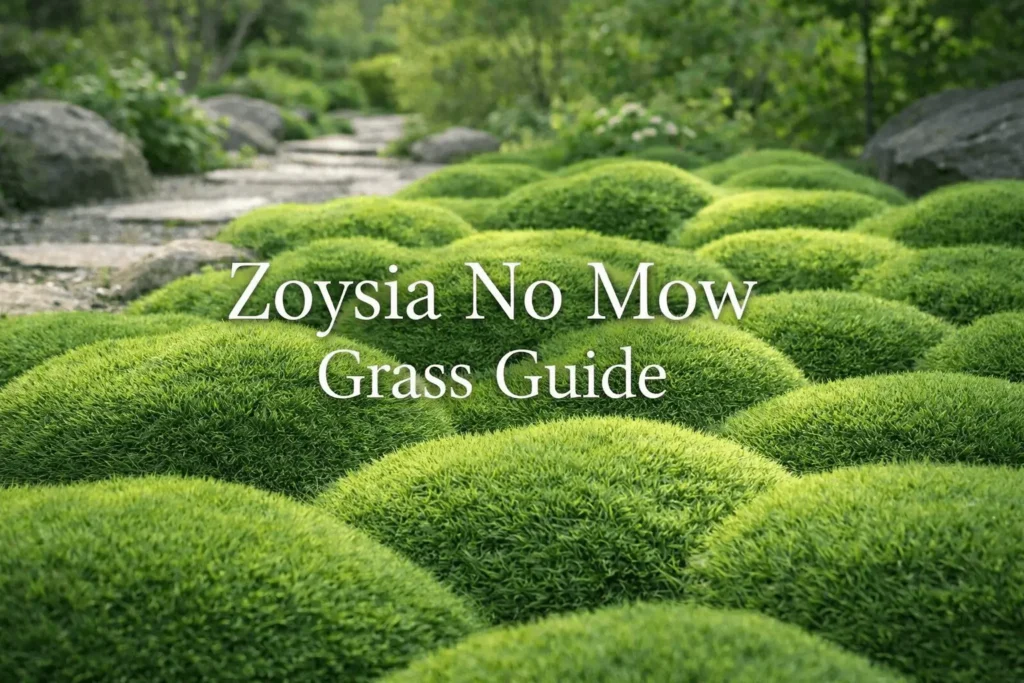
Zoysia no mow grass is a unique ornamental lawn alternative known for its soft texture, low height, and minimal mowing requirements. Often referred to as nomo grass, Korean no mow grass, or Korean velvet grass, this plant forms a dense, cushion-like groundcover that behaves differently from traditional turf lawns.
Unlike typical grasses designed for frequent mowing, zoysia no mow grass grows in small, sculptural mounds that create a textured lawn surface. Botanically associated with Zoysia tenuifolia, this grass is widely used in landscape design as an ornamental groundcover rather than a conventional turfgrass.
Gardeners often choose this plant when they want a lawn-like appearance with significantly less maintenance. Understanding how it grows, spreads, and performs in different environments helps determine whether it is a suitable lawn replacement.
What Is Zoysia No Mow Grass?
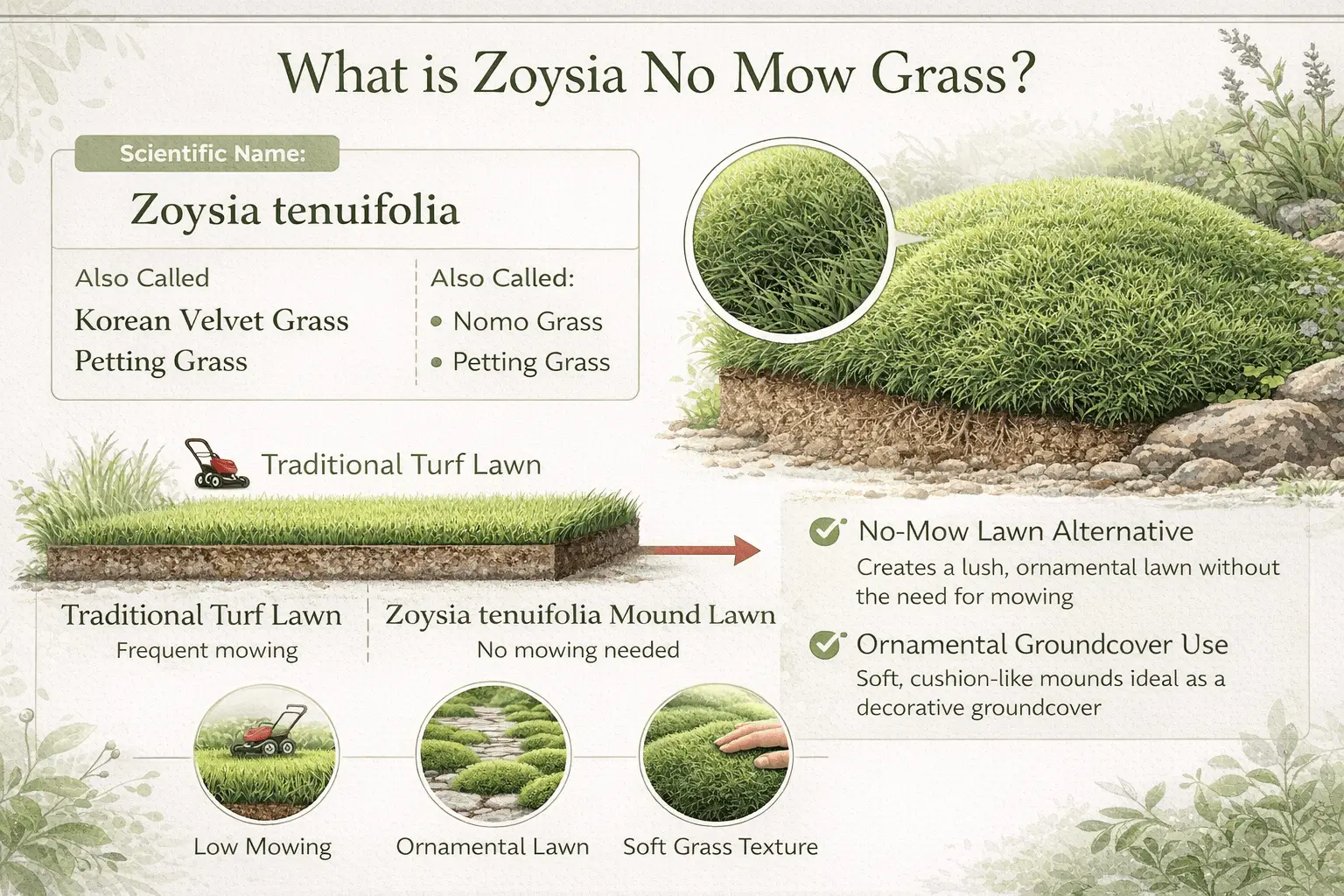
Zoysia no mow grass refers to a type of ornamental lawn grass that grows naturally in soft mounds and requires little or no mowing. Unlike traditional turfgrass that forms a flat surface, this lawn type produces rounded cushions that create a textured landscape appearance. The species most commonly associated with this lawn style is Zoysia tenuifolia, a warm-season grass known for its fine blades and slow growth habit. Because of its unique growth pattern, it is widely used as an ornamental groundcover rather than a traditional turf lawn. This grass is commonly called Korean grass, Korean grass lawn, or petting grass, names that reflect its soft, dense texture.
Botanical Identity of Zoysia No Mow
The scientific name of the plant most commonly called zoysia no mow grass is Zoysia tenuifolia, a species within the Poaceae family and part of the Zoysia grass genus.
Zoysia tenuifolia is closely related to other zoysia turf species but behaves differently in landscapes. Instead of producing a uniform turf surface, it develops small cushion-like mounds that create a distinctive ornamental lawn.
This textured growth occurs because the grass produces extremely fine leaves and short vertical shoots. The result is a groundcover that resembles small grassy pillows rather than a flat lawn.
For this reason, Zoysia tenuifolia is often categorized as an ornamental groundcover grass, while other zoysia varieties function as traditional turfgrass.
How Zoysia No Mow Grass Grows and Spreads
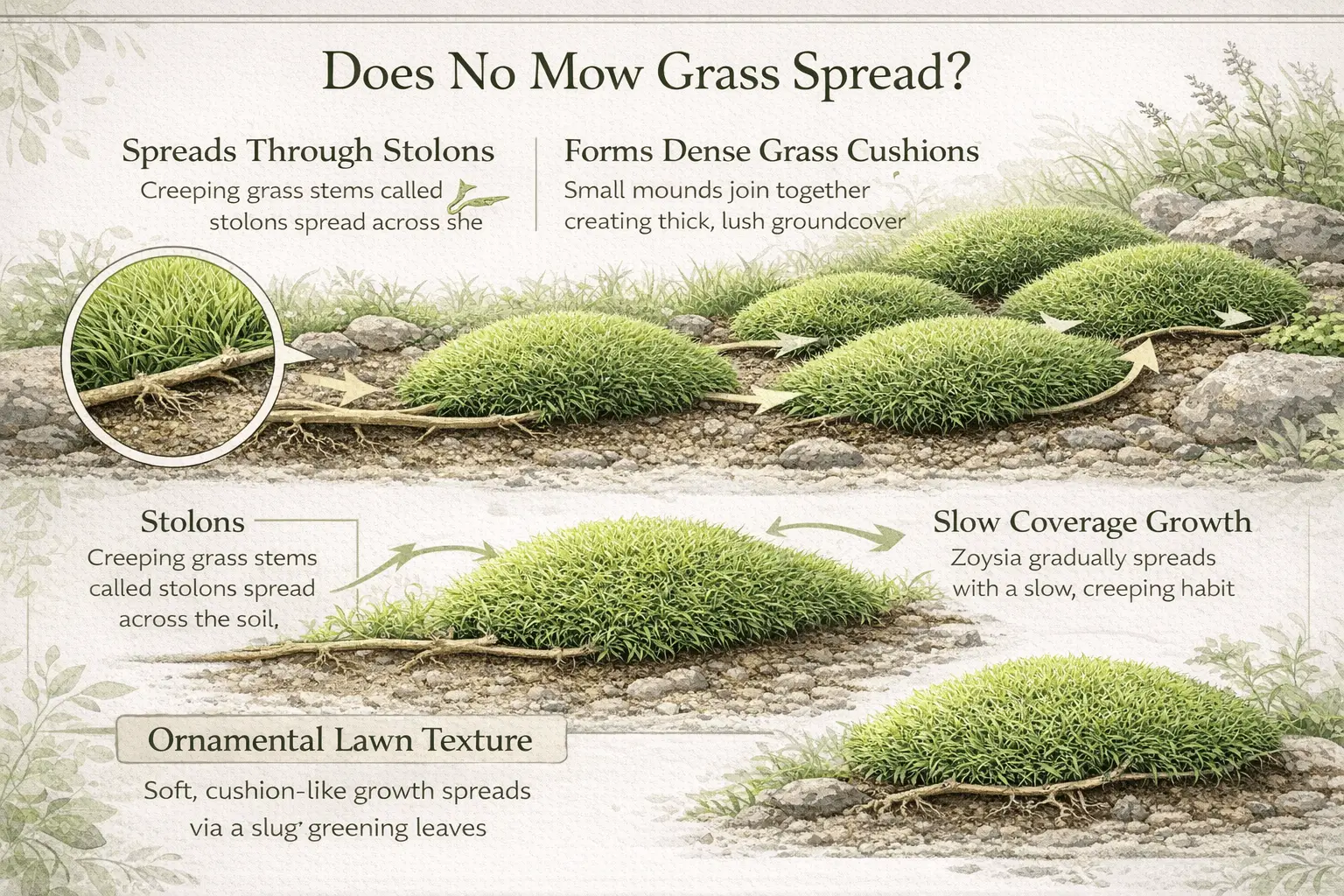
Many gardeners ask whether no mow grass spreads, and the answer is yes, but slowly.
Zoysia no mow grass spreads through stolons, which are creeping stems that grow horizontally across the soil surface. These stolons gradually root and produce new shoots, allowing the grass to expand outward over time.
However, this spreading process occurs at a much slower rate than most turfgrasses. Instead of quickly forming a flat lawn, the plant expands gradually and develops small mound clusters that eventually connect.
Because of this slow growth habit, establishing a full lawn can take several growing seasons.
Growth Habit and Groundcover Behavior
Zoysia tenuifolia no mow grass groundcover expands gradually through creeping growth and mound formation. Each plant forms a dense tuft of fine grass blades. As stolons extend outward, new mounds develop around the original plant, creating a patchwork pattern that slowly fills open spaces. The groundcover becomes denser over time, but the lawn rarely appears completely flat. Instead, it retains its signature cushion-like surface even when fully established. Some gardeners combine ornamental grasses with other low-growing plants such as Australian violet ground cover to create layered landscape designs that provide texture and seasonal interest.
Plant Size and Lawn Appearance
A mature zoysia tenuifolia lawn typically grows between 2 to 4 inches (5–10 cm) tall when left untrimmed. The natural mound texture creates a sculptural lawn surface that many gardeners consider visually appealing. Each mound resembles a small grassy cushion, giving the lawn a soft, undulating appearance. If occasional trimming is performed, the lawn surface can appear slightly smoother. However, many homeowners prefer the natural look created by the plant’s organic mound pattern. As the grass matures, these cushions become denser and more tightly spaced.
Growth Rate and Seasonal Development
Zoysia tenuifolia no mow grass generally grows at a slow to moderate rate.
Like most zoysia species, it is a warm-season grass, meaning it grows most actively during warm temperatures and sunny conditions. Growth slows significantly during cooler months.
Temperature, sunlight, and soil warmth strongly influence its spread. In cooler climates, the grass may enter seasonal dormancy and temporarily stop growing.
During dormancy, the lawn may turn slightly brown but typically recovers when warm weather returns.
Care Guide for Zoysia No Mow Grass
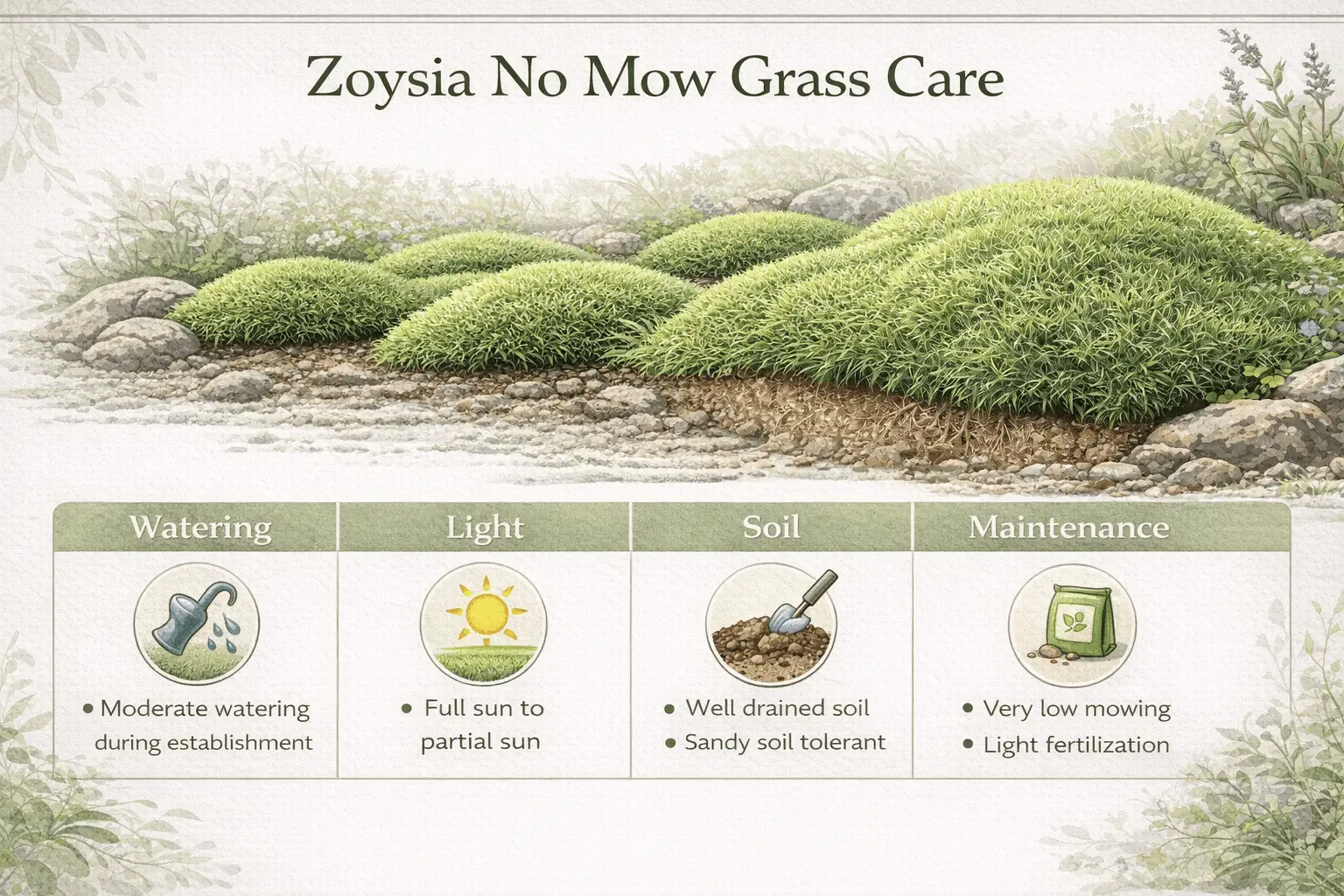
A no mow lawn requires different maintenance compared with conventional turfgrass.
Because of its slow growth and dense texture, zoysia no mow grass generally needs less mowing, fertilization, and watering. However, environmental conditions such as sunlight, soil drainage, and watering practices still influence plant health.
Proper care during establishment is especially important for creating a dense groundcover.
-
Watering Requirements
Once established, zoysia no mow grass is moderately drought tolerant.
During the establishment phase, regular watering helps new plants develop strong roots and encourages stolon growth. After the lawn matures, watering can be reduced.
Overwatering should be avoided because dense grasses can experience root stress in poorly drained soil.
-
Light Requirements
Zoysia tenuifolia performs best in full sun to partial sun.
Strong sunlight promotes dense mound formation and healthy growth. In shaded areas, the grass may grow more slowly and produce less compact cushions.
While it can tolerate light shade, extended heavy shade may reduce lawn density.
-
Soil Preferences
This grass grows best in well-drained soil.
It adapts well to sandy or coastal soils, which is one reason it is commonly used in warm coastal landscapes. Proper soil preparation before planting helps improve establishment.
Loose, aerated soil encourages healthy root growth and better stolon spread.
-
Fertilization and Maintenance
Zoysia no mow grass requires only light fertilization compared with traditional turf lawns.
Occasional trimming may be performed to shape mounds or maintain a desired lawn appearance. However, frequent mowing is generally unnecessary.
Overall, the grass is considered a low-maintenance lawn alternative.
How to Plant Zoysia No Mow Grass
Planting zoysia no mow grass involves preparing soil, spacing plants properly, and allowing time for gradual establishment.
Gardeners typically begin by clearing existing weeds and loosening soil to improve drainage. Plants are then spaced evenly to allow creeping stolons to expand outward.
Establishment may take several growing seasons, especially in cooler climates.
Planting From Seed vs Established Plants
Some gardeners search for zoysia no mow seeds or zoysia tenuifolia seeds, but seed propagation is not the most common method of establishment.
Vegetative planting using plugs, sod pieces, or established plants generally produces faster results. This approach allows the grass to begin spreading through stolons immediately.
Seed propagation can take longer to develop a dense lawn.
Where Zoysia No Mow Grass Grows Best
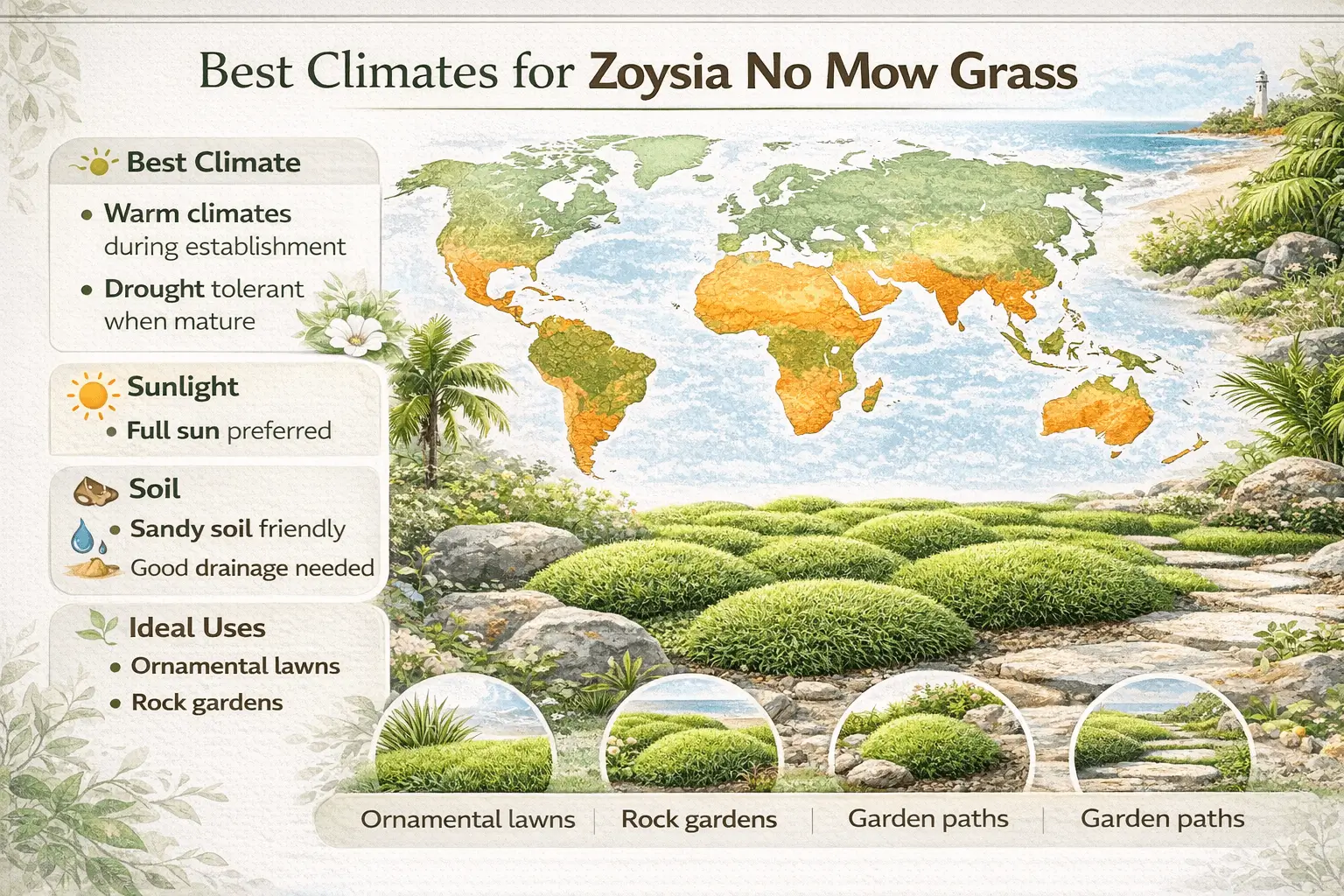
Zoysia no mow grass performs best in warm climates with long growing seasons.
It is commonly grown in regions with mild winters and warm summers. In places such as Australia, this ornamental lawn is often used as a low-maintenance landscape groundcover.
Warm temperatures and sunlight encourage healthy growth and mound formation.
Climate Suitability and Regional Conditions
Warm climates such as no mow grass Australia landscapes provide ideal conditions for growth.
Regions like Brisbane and other subtropical environments allow the grass to grow actively for much of the year. Coastal climates with sandy soils are particularly suitable.
Consistent warmth and good drainage help maintain healthy lawns.
Common Problems With Zoysia No Mow Grass
Although generally low maintenance, some homeowners encounter zoysia no mow problems.
Most issues occur when the plant is grown in unsuitable environments or when expectations do not match its natural growth habit.
Understanding these limitations helps prevent frustration.
Slow Coverage and Establishment
One common concern is the grass’s slow spread.
Because it expands gradually through stolons, full lawn coverage may take several seasons. This slow establishment can surprise gardeners expecting rapid turf growth.
Patience is often required when establishing this type of ornamental lawn.
Drainage and Overwatering Issues
Poor drainage can stress the plant’s root system.
Dense grasses may struggle when soil remains waterlogged for long periods. Ensuring proper soil drainage and avoiding excessive watering helps prevent root problems.
Comparison With Other Zoysia Lawns
- Not all zoysia grasses behave the same way.
- Traditional turf varieties such as Sir Grange zoysia produce a flatter lawn surface and require periodic mowing to maintain appearance. These varieties are bred specifically for turf use.
- In contrast, Zoysia tenuifolia naturally forms mounds and functions primarily as an ornamental groundcover rather than a sports or recreational lawn.
Common Beginner Mistakes When Growing No Mow Grass
- Several mistakes commonly occur when gardeners plant this lawn type.
- Planting in heavy shade often leads to weak growth and sparse coverage. Another frequent issue is expecting rapid lawn establishment, which does not match the plant’s slow growth habit.
- Overwatering dense grasses can also create root stress. Finally, using this lawn in high-traffic areas may damage the delicate mound structure.
Landscaping Uses for Zoysia No Mow Grass
Zoysia tenuifolia no mow grass groundcover is widely used in ornamental landscape design. It works particularly well in rock gardens, garden pathways, and low-traffic lawn areas. The soft, sculptural mounds provide visual interest and contrast with stone or architectural landscaping elements. Because it requires little mowing, it is also used as an alternative lawn in decorative gardens. In larger landscapes, zoysia no mow grass can also be paired with tropical screening plants to create layered garden designs that combine low groundcover with taller privacy plantings.
Conclusion
Zoysia no mow grass offers a distinctive alternative to traditional turf lawns. Known botanically as Zoysia tenuifolia, this ornamental grass forms soft, mound-shaped cushions that create a textured lawn surface with minimal mowing requirements. Although the grass spreads slowly and performs best in warm climates, it can provide an attractive low-maintenance lawn option when planted in suitable conditions. Homeowners considering this lawn type should understand its gradual growth habit, preference for sunlight, and ornamental groundcover nature. When used appropriately, zoysia no mow grass can transform landscapes with a unique and visually striking lawn style.
FAQs
What is zoysia no mow grass?
Zoysia no mow grass is an ornamental lawn grass derived from the species Zoysia tenuifolia. It forms soft, mound-like groundcover and requires minimal mowing compared with traditional turf lawns.
Does zoysia no mow grass spread?
Yes, the grass spreads slowly through creeping stolons. Over time, these horizontal stems produce new growth that gradually fills gaps and creates dense groundcover.
How do you plant zoysia no mow grass?
Planting involves preparing well-drained soil, spacing plugs or plants evenly, and watering regularly during establishment. The grass spreads gradually through stolons as it develops.
Is zoysia no mow grass good for lawns?
It works well as an ornamental lawn in warm climates and low-traffic areas. However, traditional turf may be better for heavily used lawns or sports areas.
What is Korean velvet grass?
Korean velvet grass is another common name for Zoysia tenuifolia, the species associated with zoysia no mow grass and its distinctive mound-forming growth habit.
Can no mow grass grow in warm climates?
Yes. Zoysia no mow grass thrives in warm regions with long growing seasons, where sunlight and warm temperatures support steady growth.



One Response