
Introduction
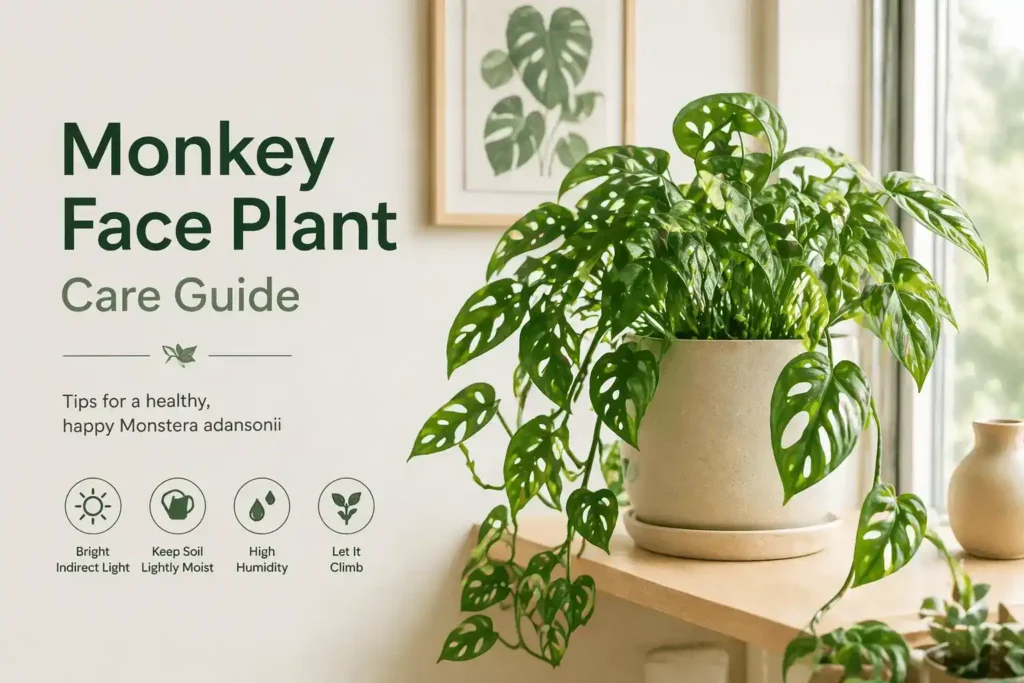
The monkey face plant is a popular tropical houseplant known for its distinctive leaf holes and trailing growth habit. Often referred to as the monkey mask plant or monstera monkey leaf, it belongs to the Monstera genus and is widely grown indoors for its decorative foliage and relatively simple care requirements. Native to Central and South America, this plant thrives in warm, humid environments and adapts well to indoor conditions. Its unique appearance and versatility make it a common choice for hanging baskets, shelves, and vertical plant displays in modern indoor gardening. This plant is closely related to other Monstera varieties, and you can explore more in this Ultimate Hanging Monstera Guide: Care, Varieties & Tips for deeper insights into similar trailing species.
Quick Summary
- The monkey face plant is a trailing Monstera variety with natural leaf holes.
- It grows best in bright, indirect light with moderate watering.
- Yellow or brown leaves are usually caused by watering or lighting issues.
- It can be easily propagated using stem cuttings with nodes.
What Is the Monkey Face Plant?
Names and Plant Identity
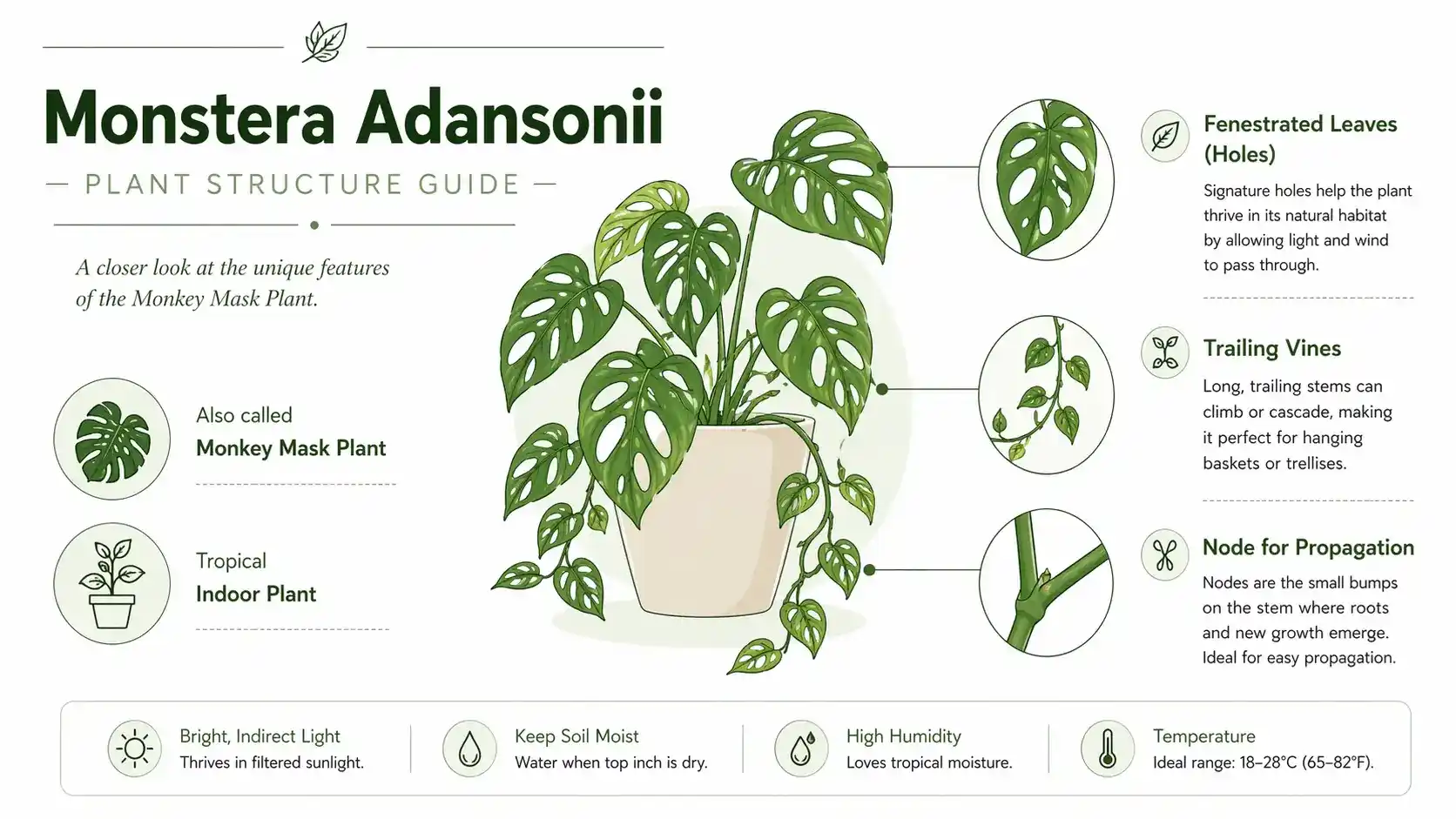
The monkey face plant is scientifically known as Monstera adansonii, a member of the Araceae family. It is commonly called:
- Monkey mask plant
- Monstera monkey leaf
- Monkey leaf monstera
- Monkey face monstera
- Monstera monkey mask
These names refer to the same species but vary based on regional and commercial labeling. The plant is often confused with Monstera deliciosa, which has larger leaves and develops splits instead of early holes. Terms like “monkey plant houseplant” or “monkey monstera” are informal and not botanically distinct.
The monkey face plant is scientifically known as Monstera adansonii, a member of the Araceae family (see Monstera adansonii on Wikipedia for botanical details).
Key Characteristics of the Monkey Face Plant
Leaf Structure and Growth Pattern
The defining feature of the monkey face plant is its oval leaves with natural holes, known as fenestrations. These holes appear early in the plant’s development.
Key traits include:
- Thin, elongated green leaves
- Natural perforations for airflow and light passage
- Flexible stems that support trailing or climbing growth
Indoors, the plant remains relatively compact, with smaller leaves and closer spacing. Outdoors or in optimal conditions, leaves grow larger and more spaced, with more pronounced fenestrations.
Monkey Face Plant Indoor Growing Conditions
Ideal Environment for Indoor Growth
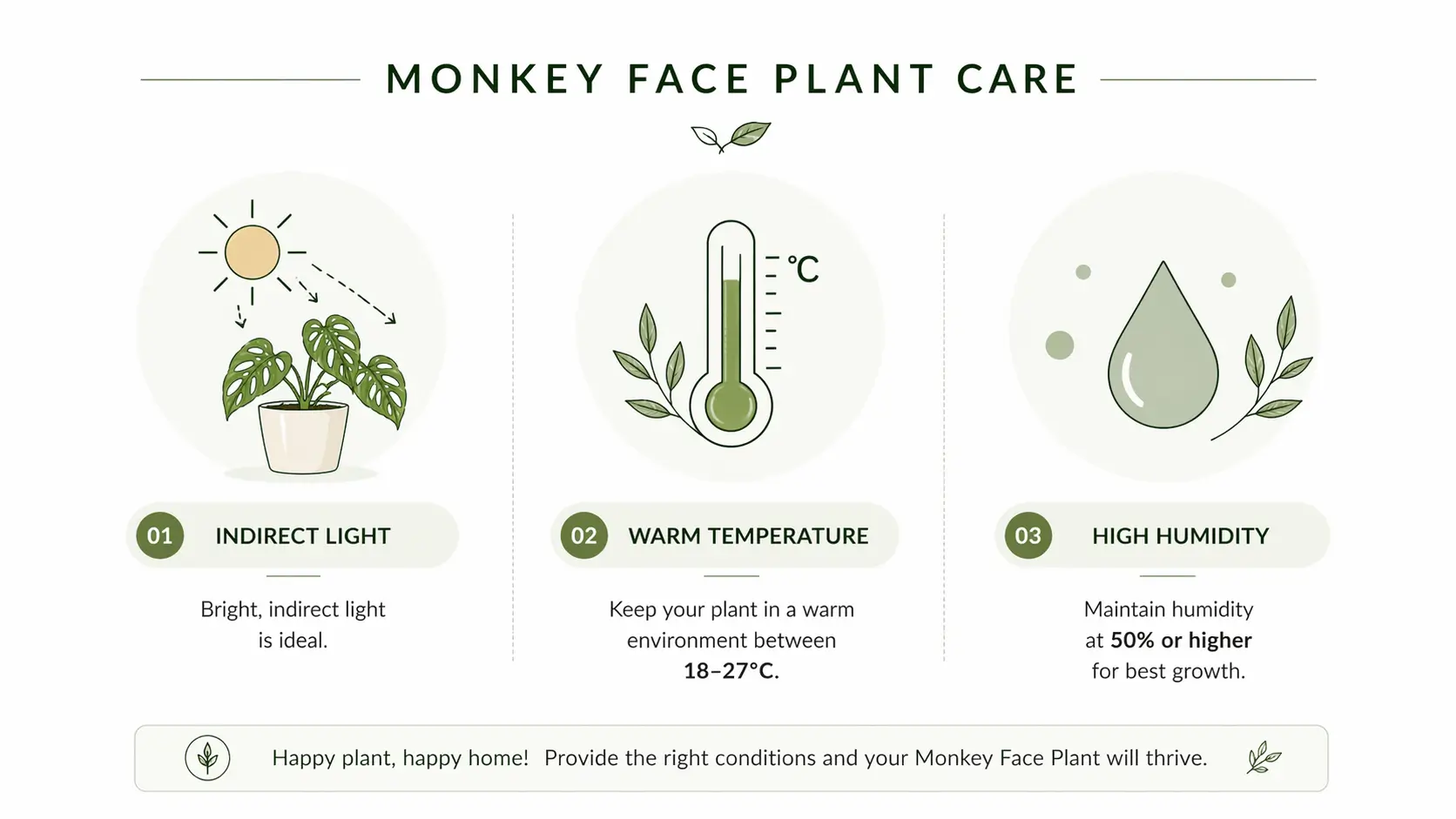
The monkey face plant thrives when its natural tropical conditions are replicated indoors.
Light
- Bright, indirect sunlight is ideal
- Avoid direct sunlight, which can scorch leaves
Temperature
- Best range: 18–27°C (65–80°F)
- Sensitive to cold drafts and sudden temperature changes
Humidity
- Prefers moderate to high humidity (above 50%)
- Benefits from misting or humidifiers
Indoor conditions directly influence leaf size, color, and growth rate. Low light may result in smaller leaves with fewer holes, while dry air can cause browning.
Monkey Face Plant Care Guide
Basic Care Requirements
Proper care ensures healthy growth and prevents common issues.
Watering
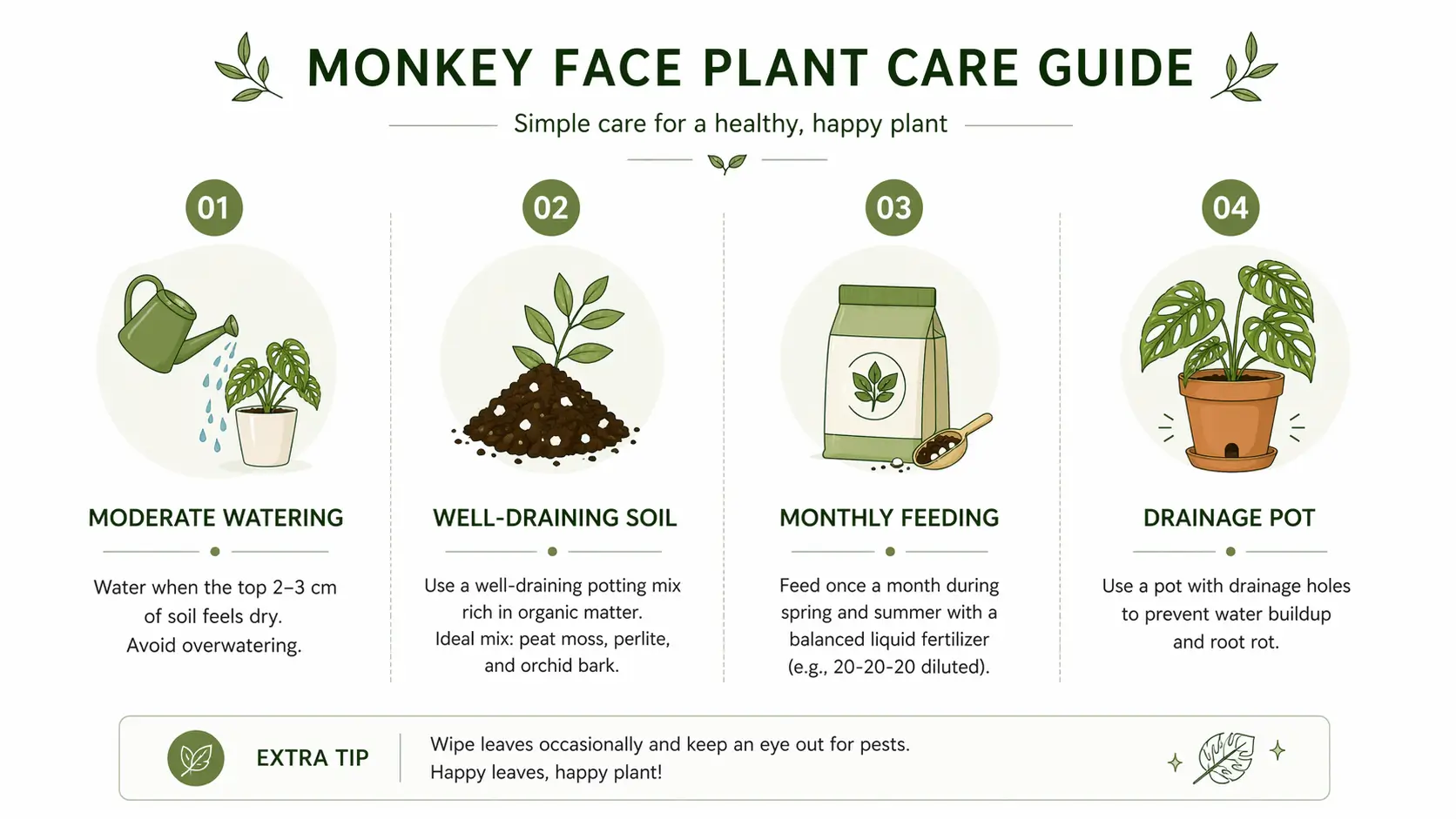
- Water when the top 2–3 cm of soil is dry
- Avoid waterlogging to prevent root rot
Soil
- Use a well-draining mix (peat, perlite, bark)
Fertilizer
- Feed every 4–6 weeks during the growing season
- Reduce feeding in winter
Pot Selection
- Choose pots with drainage holes
- Hanging pots support trailing growth
Choosing the right container is essential, and selecting the best pot for Monstera can significantly improve drainage and root health.
For regions like the UK, where light is lower and temperatures are cooler:
- Reduce watering frequency
- Place near bright windows
- Avoid cold exposure
Growth Rate and Trailing Behavior
How Fast Does It Grow?
The monkey face plant has a moderate growth rate, which increases under ideal conditions.
Growth is faster when:
- Temperature is warm
- Humidity is high
- Light is sufficient
Trailing vs Climbing Growth
This plant can grow in two distinct ways:
Trailing
- Naturally cascades from hanging pots
- Suitable for shelves and baskets
Climbing
- Uses support like a moss pole
- Produces larger leaves when vertical
Climbing often results in stronger stems and more mature leaf development.
Monkey Face Plant Propagation Methods
Propagation by Stem Cuttings
The most effective method is propagation through cuttings.
Steps:
- Cut a stem with at least one node
- Place in water or moist soil
- Keep in warm, bright (indirect) light
Roots typically develop within 2–4 weeks.
Can It Grow from Seeds?
Propagation from seeds is rare and uncommon for indoor growers due to limited availability and slower results.
Common Problems and Solutions
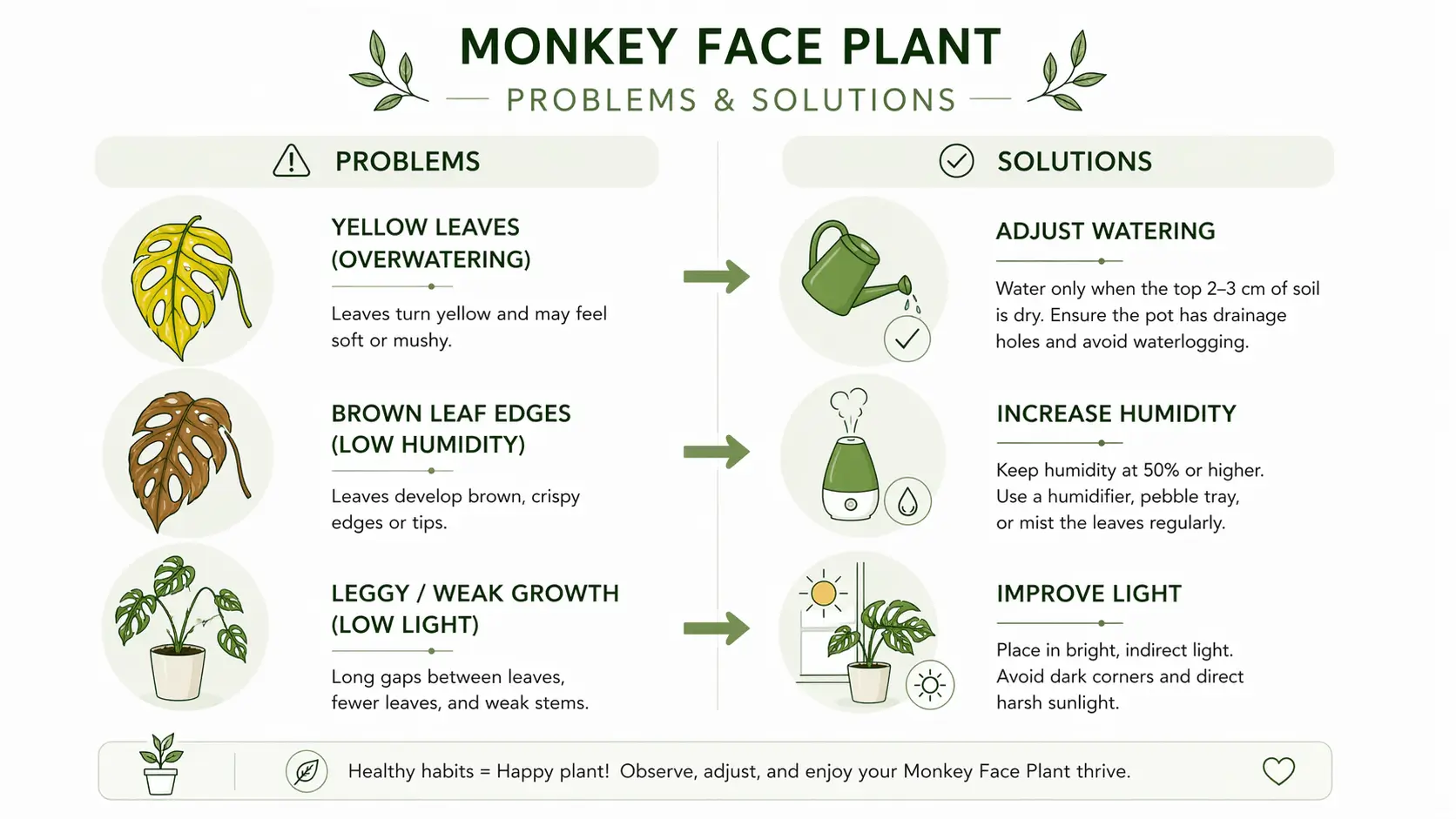
Yellow Leaves Issues
Why it happens
- Overwatering
- Poor drainage
How to fix
- Reduce watering frequency
- Improve soil drainage
Prevention
- Check soil moisture before watering
Brown Leaves Causes
Why it happens
- Underwatering
- Low humidity
How to fix
- Increase watering slightly
- Improve humidity levels
Prevention
- Maintain consistent watering schedule
Slow Growth or Weak Leaves
Why it happens
- Low light
- Nutrient deficiency
How to fix
- Move to brighter location
- Apply balanced fertilizer
Prevention
- Ensure proper lighting and feeding routine
Beginner Mistakes to Avoid
Common mistakes include:
- Overwatering the plant → leads to root rot
- Placing in direct sunlight → causes leaf burn
- Ignoring humidity needs → results in browning
- Using poor soil drainage → restricts root health
Avoiding these mistakes improves long-term plant health and growth.
Comparison: Monkey Face Plant vs Other Monstera Types
Key Differences Table
| Feature | Monkey Face Plant | Other Monstera Varieties |
| Leaf holes | Present early | Develop later |
| Growth habit | Trailing/climbing | Mostly upright |
| Size | Compact indoor | Larger |
The monstera monkey leaf differs mainly in its early fenestration and flexible growth habit compared to species like Monstera deliciosa.
Environmental Limitations and Seasonal Care
Seasonal Changes
- Growth slows in winter
- Watering frequency should be reduced
Environmental Constraints
- Sensitive to cold temperatures
- Requires consistent humidity
Indoor heating during winter can reduce humidity, so additional moisture support may be necessary.
How the Monkey Face Plant Fits into Indoor Gardening
The monkey face plant is widely used in indoor gardening due to its adaptability and visual appeal.
Common uses:
- Hanging baskets for trailing display
- Shelf decoration
- Vertical plant walls
It is especially suitable for small spaces and modern interiors, making it a popular tropical houseplant choice. It pairs well with other compact indoor plants like Peperomia, which you can learn about in this Peperomia Rotundifolia Care Guide for similar low-maintenance options.
Conclusion
The monkey face plant is a visually distinctive and adaptable houseplant that thrives indoors with proper care. By maintaining the right balance of light, watering, and humidity, growers can prevent common issues such as yellow or brown leaves. Its ability to trail or climb adds versatility to indoor spaces, while simple propagation makes it easy to expand your collection. Understanding its environmental needs ensures consistent growth and long-term health, making it a reliable addition to any indoor plant setup.
For more detailed plant care guides and indoor plant insights, explore our complete resource on Plants: Benefits and Guides.
FAQs
1. What is the monkey face plant called scientifically?
The monkey face plant is scientifically known as Monstera adansonii, a tropical species recognized for its perforated leaves.
2. How often should I water a monkey face plant?
Water when the top layer of soil dries out, typically every 1–2 weeks depending on environmental conditions.
3. Why are my monkey mask plant leaves turning yellow?
Yellow leaves are usually caused by overwatering or poor drainage, which can lead to root stress.
4. Can the monkey face plant grow indoors easily?
Yes, it grows well indoors when provided with bright, indirect light and moderate humidity.
5. How do you propagate a monkey face plant?
Propagation is done by cutting a stem with a node and placing it in water or soil until roots develop.
6. Does the monkey face plant need support to grow?
It can trail naturally, but using a moss pole encourages climbing and larger leaf growth.