
Introduction
Gardenia Brisbane refers to gardenia varieties commonly grown in Brisbane’s warm subtropical climate. These evergreen shrubs are valued for their glossy dark green foliage and intensely fragrant white flowers. Popular species such as Gardenia magnifica, Gardenia florida (also known as Gardenia augusta), and Gardenia radicans are widely planted across Queensland landscapes. Gardenias are commonly used as hedges, feature shrubs, or container plants due to their dense growth and attractive blooms. Understanding the best gardenia for Brisbane conditions—including hedge spacing, plant size, and care requirements—helps gardeners grow healthy plants that flower consistently throughout the warm months.
What Is Gardenia Brisbane and Why It Grows Well in Subtropical Climates
Gardenia Brisbane refers to gardenia varieties suited to Brisbane’s humid subtropical climate, where warm temperatures and mild winters allow these evergreen shrubs to grow vigorously. Gardenias are widely planted throughout Queensland because they tolerate humidity well and produce fragrant flowers during the warm growing season. Gardenias in Australia are commonly used in residential landscaping because they provide year-round greenery combined with highly scented blooms. These plants belong to the Rubiaceae plant family, the same botanical group as coffee plants. Their glossy foliage and dense branching make them attractive as ornamental shrubs or hedging plants. Brisbane’s climate is particularly suitable for evergreen gardenia varieties because winter temperatures rarely drop low enough to damage foliage. Gardenias thrive when grown in warm conditions with moderate humidity and acidic soil. Gardenias belong to the Rubiaceae family, a botanical group that includes many tropical flowering plants, and the genus Gardenia is widely cultivated worldwide for its fragrant blooms.
Climate and Environmental Conditions for Gardenias
Gardenias grow best in warm climates with mild winters and moderate humidity. Brisbane’s subtropical environment provides the ideal conditions for strong growth and consistent flowering.
These plants prefer slightly acidic soil with a pH between about 5.0 and 6.5. Acidic soil allows the roots to absorb nutrients such as iron and magnesium efficiently, helping prevent yellowing leaves.
Gardenias perform best in locations receiving morning sun and afternoon shade. While some varieties tolerate full sun in Australia, intense afternoon heat can sometimes stress plants, especially in dry conditions.
Where to Plant Gardenias in Brisbane Gardens
Gardenias are commonly planted in landscape borders, along fences, and near entryways where their fragrance can be enjoyed. Many gardeners also place them near patios or outdoor seating areas to benefit from their scented flowers.
In Brisbane gardens, gardenia shrubs are often used as hedges or small feature plants. Their dense foliage makes them suitable for creating natural privacy screens or defining garden beds. Gardenia bushes can also be planted individually as ornamental shrubs within mixed landscape plantings.
Gardenia Varieties Commonly Grown in Brisbane
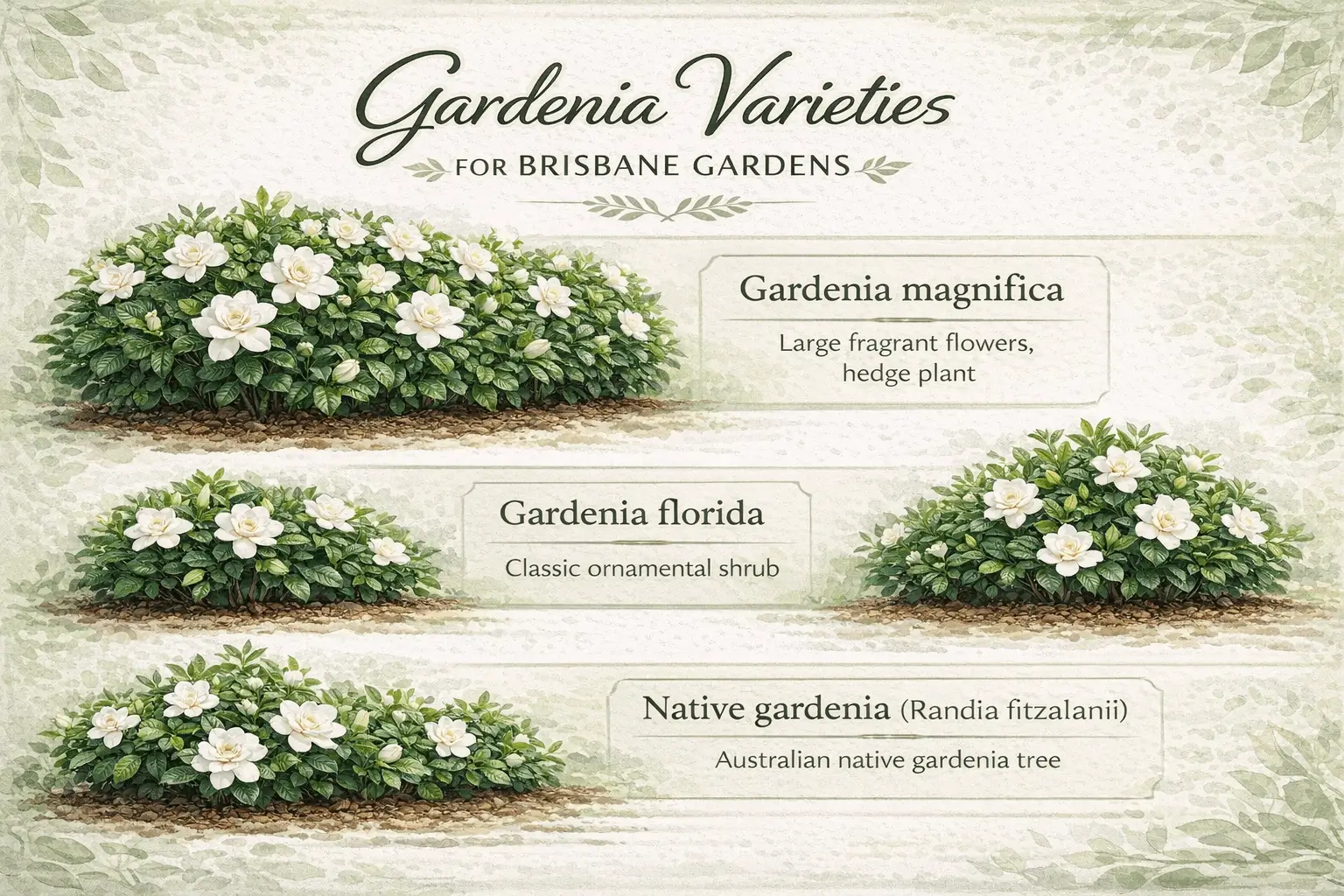
Several gardenia varieties are widely grown in Brisbane gardens because they perform well in warm subtropical conditions. These plants differ in size, growth habit, and landscape use.
Common ornamental gardenias include Gardenia magnifica, Gardenia florida, and Gardenia radicans. Each variety offers different benefits depending on the intended garden design.
-
Gardenia Magnifica Brisbane
Gardenia magnifica is a popular hedge plant in Brisbane landscapes. It produces large white flowers with a strong fragrance and has dense evergreen foliage that forms thick hedges.
This variety grows into a medium-sized shrub and is often used to create structured garden borders. Because of its dense branching, Gardenia magnifica is frequently planted as a gardenia magnifica hedge in residential gardens.
-
Gardenia Florida Brisbane
Gardenia florida, also known as Gardenia augusta florida, is one of the most widely cultivated ornamental gardenias. It produces classic creamy white flowers and glossy foliage.
This variety is commonly used as a decorative shrub or hedge plant. Compared with magnifica, Gardenia florida can have a slightly more open growth habit but still provides excellent coverage when planted in groups.
-
Gardenia Radicans Brisbane
Gardenia radicans is a low-growing gardenia variety commonly used as ground cover. Scientifically known as Gardenia jasminoides radicans, this plant forms spreading growth rather than tall shrubs.
It is ideal for borders, small gardens, or low hedges. Gardenia radicans works well as a groundcover gardenia because it grows wider than tall and creates dense coverage across garden beds.
-
Native Gardenia Brisbane (Randia fitzalanii)
Randia fitzalanii, often called the native gardenia, is an Australian species found in tropical and subtropical regions. Unlike ornamental gardenias, it grows as a small tree rather than a shrub. This native plant produces white flowers and rounded fruit. In Brisbane landscapes, it can be grown as a native gardenia tree that supports local ecosystems while still providing ornamental value. If you are interested in the fruit produced by this Australian species, see Native Gardenia Fruit for more information about its taste, uses, and cultivation.
Gardenia Magnifica vs Florida: Key Differences
Gardenia magnifica and Gardenia florida are two commonly compared varieties used in Australian landscaping. Both produce fragrant flowers and glossy foliage but differ slightly in growth habit and landscape use. Gardeners comparing these varieties may also benefit from a detailed comparison in Gardenia Florida vs Magnifica, which explores their growth habits, hedge suitability, and flowering characteristics.
Size and Growth Habit Differences
Gardenia florida typically grows to around 1.5 to 2 meters in height depending on pruning and conditions. It forms a rounded shrub suitable for hedges or feature plantings.
Gardenia magnifica tends to produce denser foliage and is often preferred for creating thick hedges. Its compact growth habit makes it easier to maintain a uniform hedge structure.
Best Landscape Uses for Each Variety
Gardenia magnifica is commonly planted as a hedge because of its dense foliage and uniform growth pattern. It forms a thick green barrier that responds well to pruning.
Gardenia florida works well as a feature shrub or decorative plant within mixed garden beds. It can also be used in hedges but is often grown individually to highlight its flowers.
Gardenia Hedge Guide: Spacing, Height, and Layout
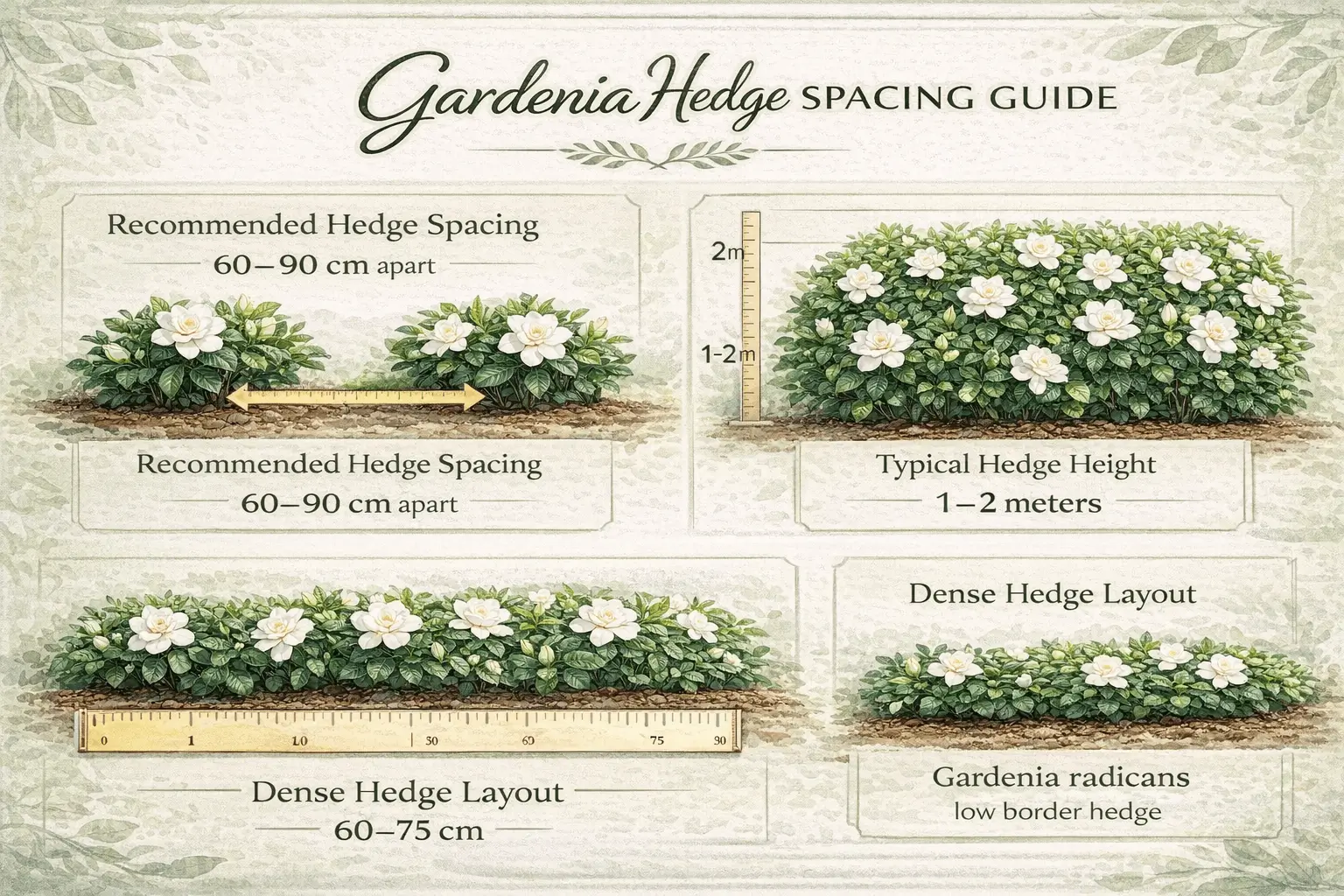
Gardenias are frequently used as hedging plants in Brisbane landscapes because their dense evergreen foliage creates attractive privacy screens.
-
Gardenia Hedge Spacing Recommendations
For most gardenia hedges, plants are spaced about 60 to 90 centimeters apart. This spacing allows shrubs to grow together while still having enough room for root development.
Spacing may vary depending on the mature size of the variety used. Compact varieties can be planted slightly closer together.
-
Gardenia Hedge Height and Mature Size
Most gardenia hedges grow between 1 and 2 meters tall depending on variety and pruning. Gardenia magnifica and Gardenia florida typically reach this height when maintained as hedges.
Regular pruning helps control hedge height and encourages dense branching.
-
Gardenia Radicans Hedge for Low Borders
Gardenia radicans is often used for low borders or groundcover hedges. This variety usually grows around 30 to 60 centimeters tall.
Because of its spreading growth habit, it works well for defining garden edges or filling spaces between larger shrubs.
Gardenia Plant Size and Growth Rate
Gardenias vary in size depending on the species and growing conditions. Some varieties grow into compact shrubs while others can reach the size of small trees.
Typical Mature Size of Gardenias
Most ornamental gardenias grow between 1 and 2 meters tall with a similar spread. Compact varieties such as radicans remain much smaller.
Tree-like species such as native gardenia can grow significantly larger when mature.
Growth Rate in Brisbane Climate
In Brisbane’s warm climate, gardenias generally grow at a moderate rate. Active growth occurs mainly during spring and summer when temperatures are warm and moisture is available.
Good soil quality, adequate watering, and proper fertilization can encourage healthy growth.
Growing Gardenias in Brisbane: Essential Care Guide
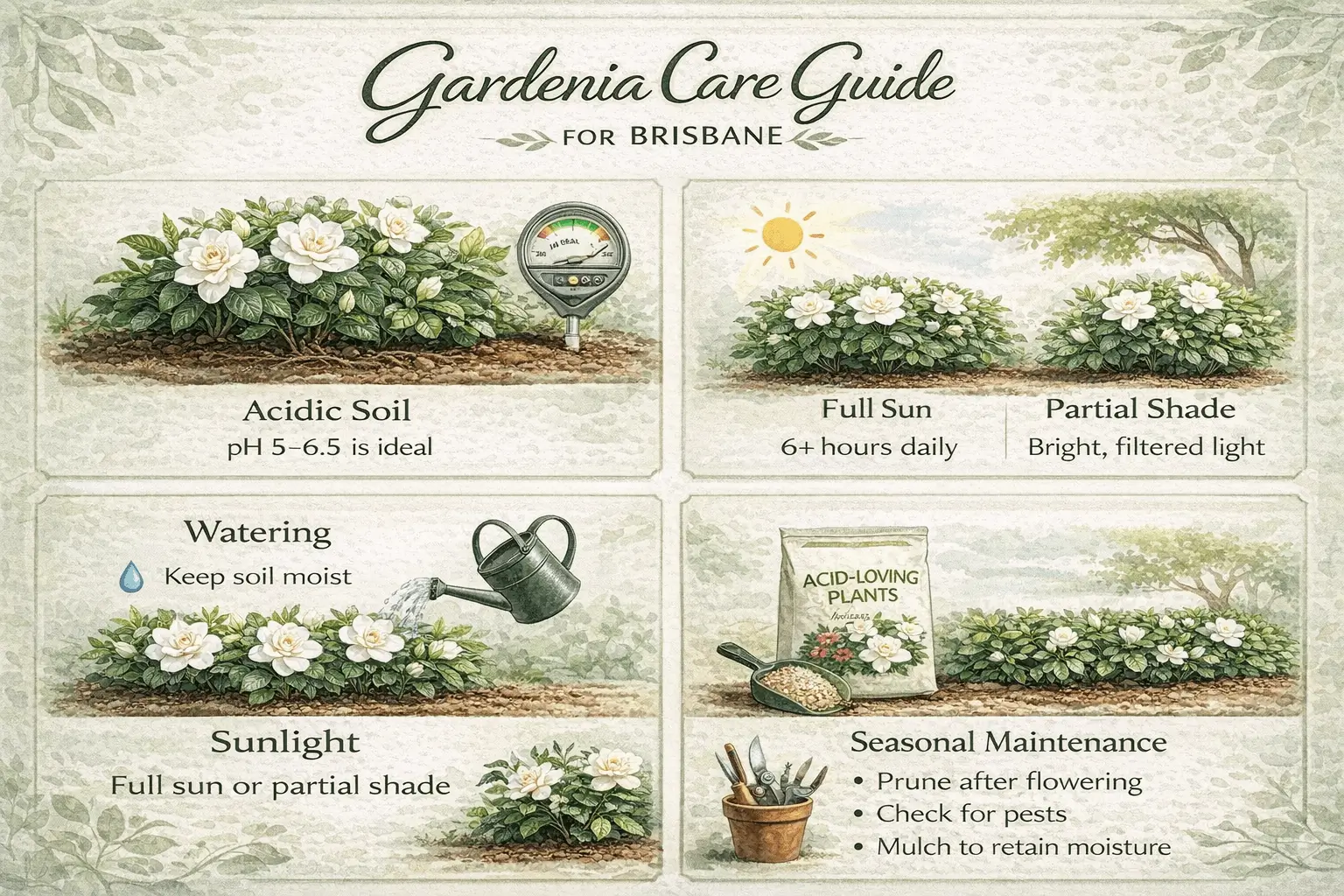
Growing gardenias successfully requires attention to soil, water, sunlight, and nutrients.
-
Soil and Water Requirements
Gardenias prefer acidic, well-drained soil enriched with organic matter. Compost and mulch help improve soil structure and maintain moisture levels.
Regular watering is important, particularly during dry periods, but the soil should not remain waterlogged.
-
Light Requirements
Gardenias grow best with several hours of sunlight each day. In Brisbane, partial shade during the hottest afternoon hours can help prevent heat stress.
Some varieties tolerate full sun if the soil remains consistently moist.
-
Fertilizing and Seasonal Maintenance
Gardenias benefit from fertilizers formulated for acid-loving plants. Feeding during spring and early summer supports healthy foliage and flowering.
Regular mulching helps conserve moisture and regulate soil temperature.
Growing Gardenias in Pots in Australia
Gardenias can also grow successfully in containers, making them suitable for patios, balconies, and small gardens.
Best Gardenia Types for Pots
Compact varieties such as Gardenia radicans are ideal for container gardening. Their smaller size makes them easier to maintain in pots.
Using large containers with well-draining acidic soil helps support healthy growth.
Container Care Tips
Potted gardenias require more frequent watering than plants in the ground. Containers dry out quickly, especially in warm climates.
Regular fertilization and occasional repotting help maintain plant health.
When Do Gardenias Flower in Brisbane and Australia
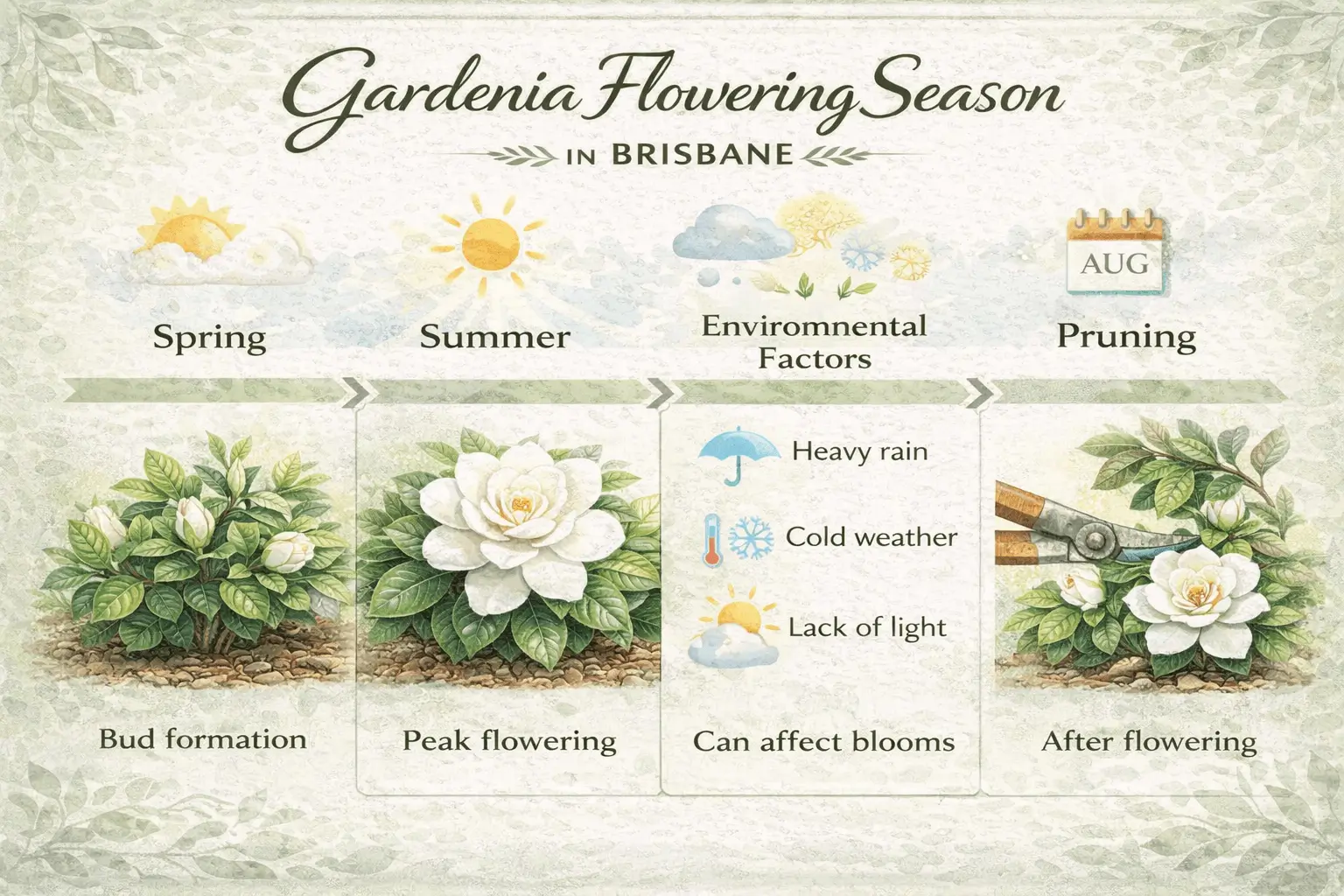
Gardenias typically flower during the warm months when temperatures encourage active growth.
Flowering Season and Bloom Duration
In Brisbane, most gardenias begin flowering in spring and continue through summer. Under ideal conditions, some plants produce multiple flushes of blooms.
Factors That Affect Flowering
Flower production depends on adequate sunlight, proper fertilization, and correct pruning timing. Stress factors such as poor soil or irregular watering may reduce flowering.
When to Prune Gardenias in Queensland
Pruning helps maintain plant shape and encourages healthy growth.
Best Time of Year to Prune
Gardenias should generally be pruned after their main flowering period. In Queensland, this usually occurs in late summer.
Pruning earlier may remove developing flower buds.
How Pruning Affects Hedge Shape and Growth
Regular trimming encourages dense foliage and helps maintain a uniform hedge height. Proper pruning also improves air circulation within the plant canopy.
Common Gardenia Problems and How to Fix Them
Gardenias can sometimes develop issues related to soil, nutrients, or environmental conditions.
-
Yellow Leaves and Nutrient Deficiencies
Yellowing leaves often indicate nutrient deficiencies or alkaline soil. Applying iron supplements and maintaining acidic soil can help correct this problem.
-
Lack of Flowers
If gardenias fail to bloom, the cause may be insufficient sunlight, incorrect pruning timing, or nutrient imbalance.
-
Pest and Environmental Stress
Common pests include aphids, scale insects, and whiteflies. Regular inspection and appropriate pest control methods can prevent damage.
Common Beginner Mistakes When Growing Gardenias
One of the most common mistakes is planting gardenias in soil that is not acidic enough. Gardenias require acidic soil to absorb nutrients effectively.Overwatering is another frequent issue. While gardenias need consistent moisture, waterlogged soil can damage roots.Incorrect spacing when planting hedges can also cause overcrowding and poor air circulation.
Conclusion
Gardenia Brisbane varieties thrive in warm subtropical gardens when planted in acidic soil, partial sun, and well-spaced hedges. Popular types such as Gardenia magnifica, Gardenia florida, and Gardenia radicans provide fragrant flowers and evergreen foliage, making them ideal for hedges, shrubs, or container gardens. With proper spacing, seasonal pruning, and consistent care, gardenias can become a long-lasting and visually appealing feature in Brisbane landscapes.
FAQs
What is the best gardenia for Brisbane gardens?
Gardenia magnifica, Gardenia florida, and Gardenia radicans are among the best gardenias for Brisbane gardens. These varieties tolerate warm subtropical conditions and produce fragrant flowers while maintaining attractive evergreen foliage.
How far apart should gardenia hedges be planted?
Gardenia hedges are typically planted about 60 to 90 centimeters apart. This spacing allows plants to grow together and form dense hedges while still providing enough space for root development.
How tall do gardenia hedges grow?
Most gardenia hedges grow between 1 and 2 meters tall depending on the variety and pruning practices. Regular trimming helps maintain the desired height and shape.
When do gardenias flower in Brisbane?
Gardenias in Brisbane generally flower from spring through summer. Warm temperatures and proper care encourage multiple blooming periods.
Can gardenias grow in full sun in Australia?
Gardenias can grow in full sun in Australia if the soil remains moist and temperatures are not excessively hot. In many gardens, partial shade during the afternoon provides the best balance.
Can gardenias grow in pots in Australia?
Yes, gardenias grow well in pots when planted in acidic soil with good drainage. Compact varieties such as Gardenia radicans are especially suitable for container gardening.



One Response