
Introduction
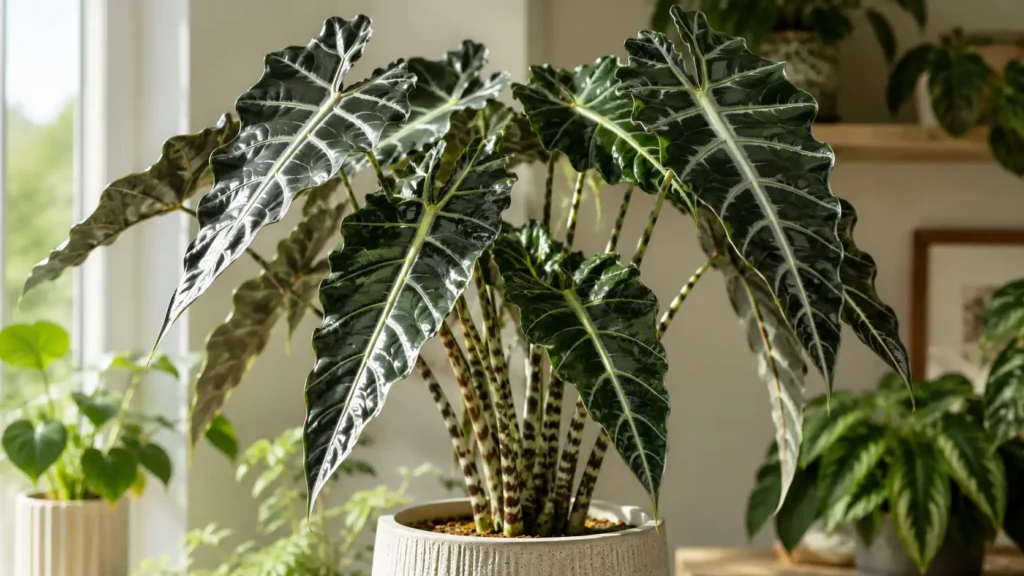
Alocasia Sarian is a striking tropical hybrid plant prized for its oversized arrow-shaped leaves, dramatic white veining, and architectural appearance. Developed from a cross between Alocasia zebrina and Alocasia micholitziana, this plant combines the best traits of both parents into a bold ornamental specimen. While its appearance may seem intimidating, successful Alocasia Sarian care comes down to understanding its tropical growing requirements. Bright indirect light, consistent moisture, high humidity, and well-draining soil are the foundations of healthy growth. Whether grown indoors as a statement houseplant or outdoors in warm climates, Alocasia Sarian rewards attentive care with impressive foliage and vigorous seasonal growth. Alocasia Sarian is one of many tropical houseplants featured in our comprehensive Plants Benefits and Guides resource, which covers plant care fundamentals, growing tips, and common maintenance practices.
Quick Summary
- Alocasia Sarian is a large tropical hybrid that thrives in bright indirect light and high humidity.
- Consistent watering is important, but overwatering is one of the most common causes of plant problems.
- Well-draining soil and proper drainage are essential for healthy root development.
- Indoor plants remain relatively compact, while outdoor specimens can reach impressive sizes.
- The plant is best suited for intermediate growers familiar with tropical houseplant care.
What Is Alocasia Sarian?
Alocasia Sarian is a cultivated hybrid known for its dramatic foliage and tropical appearance. It belongs to the Araceae family and was developed by combining the characteristics of Alocasia zebrina and Alocasia micholitziana. Alocasia Sarian belongs to the Alocasia genus, a group of tropical foliage plants valued for their large ornamental leaves and dramatic appearance.
Unlike many Alocasia varieties, Sarian is recognized for its exceptionally long stems, striking white leaf veins, and large upright leaves. These features create a bold visual impact that makes it a popular centerpiece in indoor plant collections. Since Alocasia Sarian inherits many characteristics from Alocasia zebrina, understanding its parent plant can provide additional insight into stem growth patterns and care requirements.
The plant is inspired by tropical rainforest conditions where warmth, humidity, and filtered sunlight support vigorous growth. Although it is commonly grown as a houseplant, it can also thrive outdoors in suitable climates. Gardeners interested in related elephant ear plants may also find Chinese Taro plant varieties useful for comparing growth habits and tropical care needs.
What makes Alocasia Sarian unique?
- Large elongated leaves with pronounced white veining
- Tall zebra-patterned stems inherited from Alocasia zebrina
- Strong upright growth habit
- More dramatic architectural appearance than many indoor Alocasias
- Fast growth during warm growing seasons
Is Alocasia Sarian Rare?
Alocasia Sarian is no longer considered extremely rare, but it remains a specialty tropical houseplant in many regions.
As interest in exotic foliage plants has increased, commercial growers and specialty nurseries have expanded production. This has made Alocasia Sarian more accessible through local garden centers and online plant retailers.
Availability often depends on location. In areas with active houseplant communities, Sarian plants are relatively easy to find. However, they may still be less common than traditional houseplants such as pothos, philodendrons, or snake plants.
Because of its unique appearance and strong demand among collectors, it continues to be viewed as a premium tropical plant rather than a mainstream houseplant.
How Big Does Alocasia Sarian Get?
Alocasia Sarian can become surprisingly large under ideal growing conditions. Mature size varies depending on whether it is grown indoors or outdoors.
Indoor plants typically reach:
- Height: 3 to 6 feet
- Spread: 2 to 4 feet
Outdoor plants in tropical or subtropical climates may reach:
- Height: 6 to 10 feet
- Spread: 4 to 6 feet
Several environmental factors influence final size:
- Light intensity
- Humidity levels
- Pot size
- Soil quality
- Water availability
- Temperature consistency
Growth is typically strongest during spring and summer when temperatures are warm and daylight hours increase.
Indoor vs Outdoor Size Differences
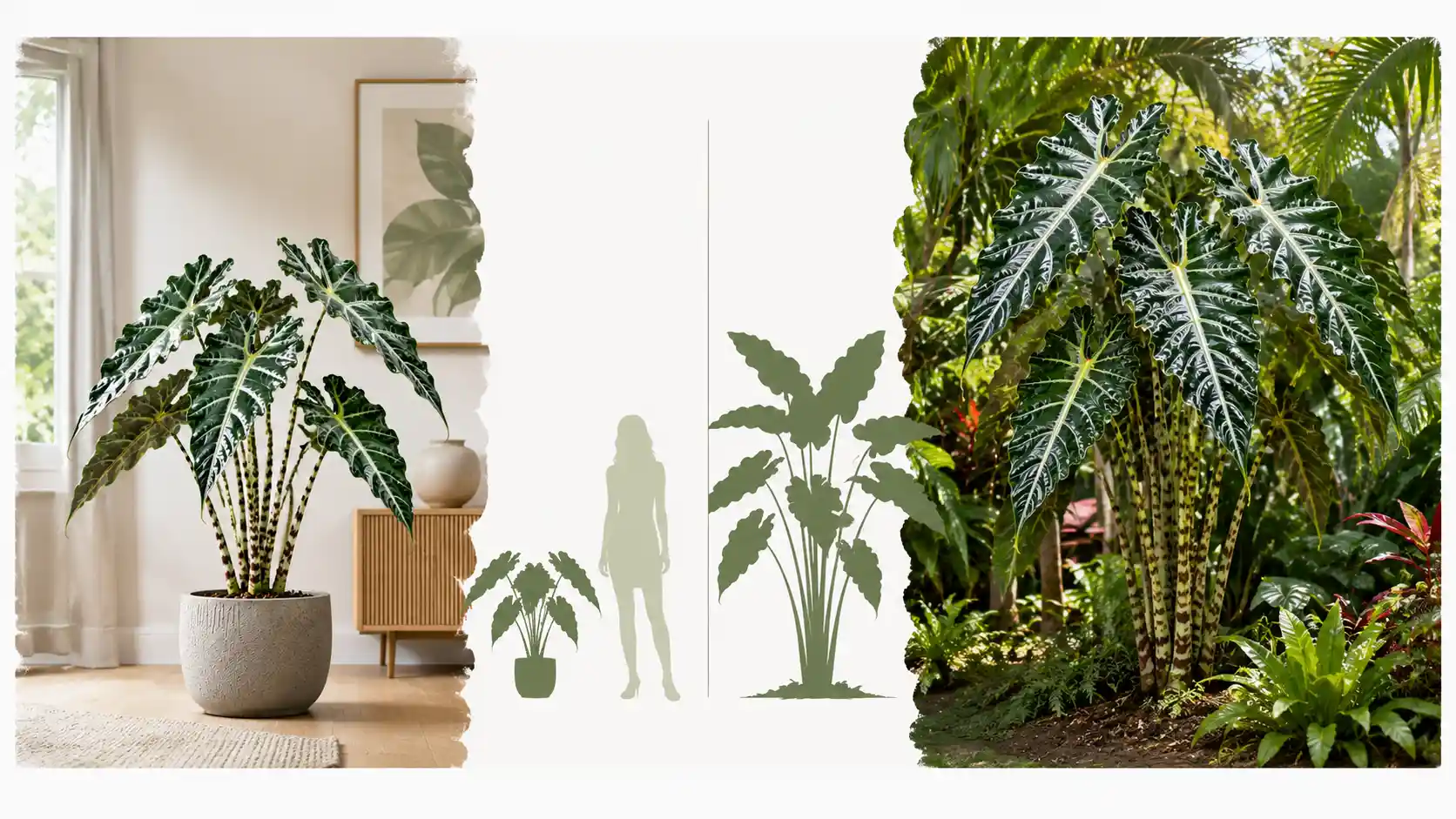
Indoor growing naturally limits the size of Alocasia Sarian due to restricted root space and reduced light intensity.
When grown in containers, roots have limited room to expand, which slows overall growth. Indoor humidity levels are also often lower than tropical outdoor conditions.
Outdoor planting allows roots to spread freely and access greater amounts of moisture and nutrients. Combined with stronger natural light and higher humidity, outdoor plants often grow significantly larger than their indoor counterparts.
For gardeners in warm climates, outdoor cultivation can produce truly impressive specimens with massive leaves and towering stems.
Growth Rate: What to Expect
Alocasia Sarian is generally considered a moderate to fast-growing plant when conditions are favorable. Seasonal changes play a major role in growth speed, dormancy, and leaf production for many indoor tropical plants.
During spring and summer, healthy plants frequently produce new leaves and noticeable stem growth. Warm temperatures and consistent moisture encourage rapid development. Growth speed varies based on light, humidity, temperature, and nutrition. Use our plant growth calculator to estimate how quickly your Alocasia Sarian may develop under different growing conditions.
Growth typically slows during autumn and may nearly stop during winter dormancy. In cooler climates, the plant conserves energy and produces little to no new growth until temperatures rise again.
To encourage faster growth:
- Maintain temperatures above 65°F (18°C)
- Provide bright indirect light
- Keep humidity levels above 60%
- Fertilize regularly during active growth
- Repot when roots become crowded
Alocasia Sarian Care: Complete Indoor Growing Guide
Successful Alocasia Sarian care depends on recreating tropical conditions indoors. Each aspect of care contributes to healthy foliage, strong roots, and consistent growth.
Light Requirements
Alocasia Sarian thrives in bright, indirect light.
Filtered sunlight supports healthy leaf production without exposing foliage to excessive heat. Direct afternoon sun can scorch leaves, causing brown patches and permanent damage.
Low light conditions often result in:
- Smaller leaves
- Slower growth
- Leggy stems
- Reduced vigor
Ideal placement includes:
- Near east-facing windows
- Near north-facing windows with bright ambient light
- Several feet away from south-facing windows behind sheer curtains
In darker homes, full-spectrum grow lights can provide sufficient illumination for healthy growth.
Watering Alocasia Sarian: How Often and How Much
Alocasia Sarian should be watered when the top 2 inches of soil feel dry.
Rather than following a fixed schedule, monitor soil moisture regularly. Watering needs vary depending on season, humidity, temperature, and pot size.
During active growth:
- Water more frequently in spring and summer
- Keep soil lightly moist but never soggy
During dormancy:
- Reduce watering frequency
- Allow soil to dry slightly more between waterings
Do you water Alocasia from top or bottom?
Both methods can work effectively.
Bottom watering offers several benefits:
- Encourages deeper root growth
- Promotes even moisture distribution
- Reduces soil compaction
- Helps prevent dry pockets within the pot
Top watering is also acceptable when excess water is allowed to drain completely.
Common watering mistakes include:
- Overwatering, which leads to root rot
- Underwatering, which causes drooping and crispy leaves
- Allowing plants to sit in standing water
Soil and Potting Mix Requirements
Alocasia Sarian requires a well-draining, highly aerated soil mix that balances moisture retention with oxygen availability.
An effective mix often contains:
- High-quality potting soil
- Perlite
- Orchid bark
- Coconut coir
- Coarse sand
Is Miracle-Gro potting mix good for Alocasia?
Miracle-Gro potting mix can work, but it often benefits from amendments such as perlite or bark to improve drainage and airflow.
Can I grow Alocasia in just perlite?
No. Perlite alone lacks the nutrients and moisture-retention properties needed for long-term growth. It works best as a soil amendment rather than a complete growing medium.
The goal is a mix that remains lightly moist while allowing excess water to drain quickly.
Choosing the Right Pot: Deep or Shallow?
Alocasia Sarian prefers moderately deep pots with excellent drainage. The plant develops a substantial root system that benefits from adequate depth while still requiring enough airflow around the roots. Pot size can significantly influence root development and overall growth performance, especially in fast-growing tropical plants.
Do Alocasia like deep or shallow pots?
Alocasias generally perform best in moderately deep pots rather than shallow containers. Their roots grow downward and need sufficient space to establish healthy growth.
When selecting a pot:
- Choose containers with drainage holes
- Use a pot only slightly larger than the root ball
- Avoid oversized pots that retain excess moisture
- Repot every 1 to 2 years as the plant grows
A pot that is too large often leads to overwatering problems because excess soil stays wet longer than the roots can absorb moisture.
Humidity and Temperature Needs
Alocasia Sarian is a tropical plant that thrives in high humidity and warm temperatures.
For best results:
- Maintain humidity levels above 60%
- Aim for temperatures between 65°F and 85°F (18°C to 29°C)
- Protect the plant from cold drafts
- Keep it away from air conditioning vents and heating vents
Ways to increase humidity include:
- Using a room humidifier
- Placing the plant on a pebble tray
- Grouping tropical plants together
- Growing the plant in naturally humid rooms
Low humidity often causes:
- Brown leaf edges
- Curled leaves
- Slower growth
- Increased susceptibility to pests
Fertilization
Alocasia Sarian benefits from regular feeding during active growth. Understanding different fertilizing schedules can help growers avoid nutrient deficiencies while preventing overfeeding.
Apply a balanced liquid fertilizer approximately once per month throughout spring and summer. During autumn and winter, reduce or stop fertilization because growth naturally slows.
Suitable fertilizer options include:
- Balanced liquid houseplant fertilizers
- Slow-release fertilizers
- Organic compost-based fertilizers
- Fish emulsion products
Avoid excessive fertilization because it may cause:
- Salt accumulation in the soil
- Root burn
- Leaf damage
- Reduced overall plant health
Organic fertilizers are often gentler and less likely to create nutrient imbalances.
Pruning and Maintenance
Regular maintenance helps keep Alocasia Sarian healthy and attractive.
Remove:
- Yellowing leaves
- Damaged foliage
- Pest-infested growth
- Dried stems
Pruning allows the plant to redirect energy toward healthy new growth rather than maintaining declining leaves.
Large leaves should also be cleaned periodically using a damp cloth. Dust accumulation can reduce photosynthesis and limit the plant’s ability to absorb light effectively.
Alocasia Sarian Care Outdoors
Alocasia Sarian can thrive outdoors in warm climates where temperatures remain consistently mild.
It is generally suitable for USDA hardiness zones 9 through 11, although local conditions may affect success.
Outdoor growing recommendations include:
- Plant in partial shade
- Protect from intense afternoon sun
- Choose locations sheltered from strong winds
- Maintain evenly moist soil
- Increase watering during hot weather
When moving plants outdoors seasonally:
- Introduce them gradually over several days.
- Begin in a shaded location.
- Slowly increase light exposure.
- Monitor for signs of stress or leaf burn.
Bringing plants indoors before temperatures drop below 60°F (16°C) helps prevent cold damage.
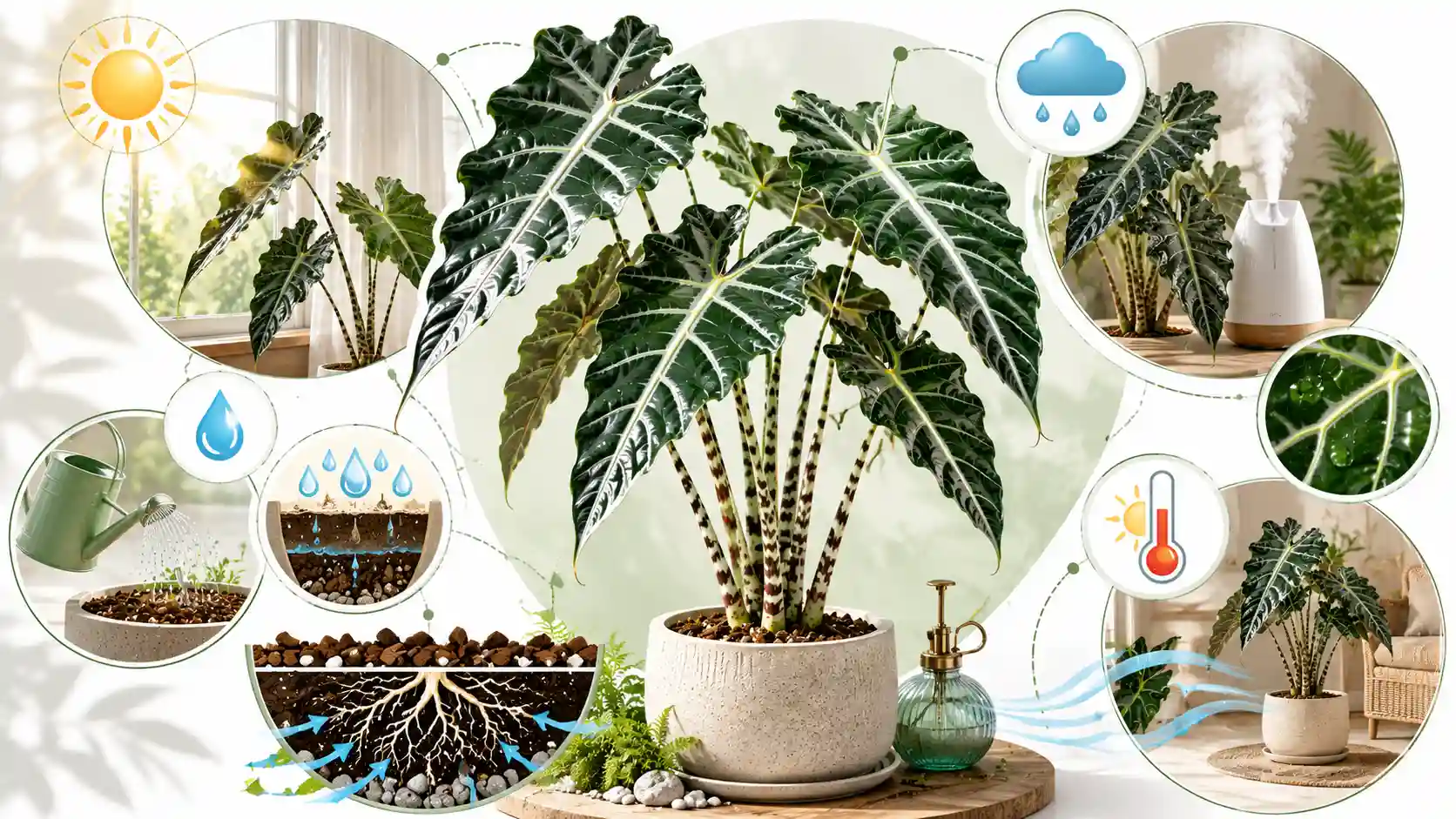
📊 Alocasia Sarian Care at a Glance (Table)
| Care Factor | Requirement |
| Light | Bright indirect light |
| Watering | When top 2 inches of soil are dry |
| Humidity | 60% or higher |
| Temperature | 65–85°F (18–29°C) |
| Soil | Well-draining, aerated mix |
| Fertilizer | Monthly during growing season |
| Pot Type | With drainage holes, moderately sized |
Common Problems with Alocasia Sarian and How to Fix Them
Alocasia Sarian Yellow Leaves: Causes and Solutions
Yellow leaves are one of the most common concerns among Alocasia Sarian owners. Several factors may contribute to discoloration.
Overwatering
Why it happens:
Excess water deprives roots of oxygen and encourages fungal growth.
How to identify it:
- Yellow leaves
- Soft stems
- Wet soil
- Foul-smelling roots
How to fix it:
- Reduce watering frequency
- Improve drainage
- Repot if root rot is present
Underwatering
Why it happens:
The plant lacks sufficient moisture to support healthy foliage.
How to identify it:
- Dry soil
- Crispy leaf edges
- Wilting
How to fix it:
- Water thoroughly
- Establish consistent moisture monitoring
Low Humidity
Why it happens:
Tropical plants require moisture in the surrounding air.
How to identify it:
- Browning edges
- Curling leaves
- Yellow patches
How to fix it:
- Increase humidity levels
- Use a humidifier
Nutrient Deficiency
Why it happens:
Insufficient nutrients limit chlorophyll production.
How to identify it:
- Pale foliage
- Slow growth
- Uniform yellowing
How to fix it:
- Apply balanced fertilizer during active growth
Natural Leaf Cycling
Older leaves naturally decline as new growth develops.
How to identify it:
- One or two lower leaves yellowing
- Healthy new growth present
How to fix it:
- Remove aging foliage
- Continue normal care
Why Are Alocasias So Hard to Keep Alive?
Alocasias are often considered difficult because they are highly sensitive to environmental changes.
The primary challenges include:
- Overwatering sensitivity
- High humidity requirements
- Temperature fluctuations
- Seasonal dormancy
- Pest susceptibility
Many beginners mistake dormancy for plant death or unintentionally overwater during slower growth periods.
With proper knowledge, these challenges become manageable. Most failures occur because growers treat Alocasias like average houseplants rather than tropical rainforest species.
Pest Problems: What to Watch For
Several pests commonly affect Alocasia Sarian indoors.
Spider Mites
Identification:
- Fine webbing
- Speckled leaves
- Leaf discoloration
Treatment:
- Increase humidity
- Wash foliage
- Apply insecticidal soap
Mealybugs
Identification:
- White cotton-like clusters
- Sticky residue
Treatment:
- Remove with alcohol-soaked cotton swabs
- Apply insecticidal treatments
Fungus Gnats
Identification:
- Small flying insects around soil
- Larvae feeding on organic matter
Treatment:
- Allow soil to dry slightly
- Use sticky traps
- Improve drainage
Healthy watering practices and proper humidity management significantly reduce pest outbreaks.
Root Rot and Overwatering Recovery
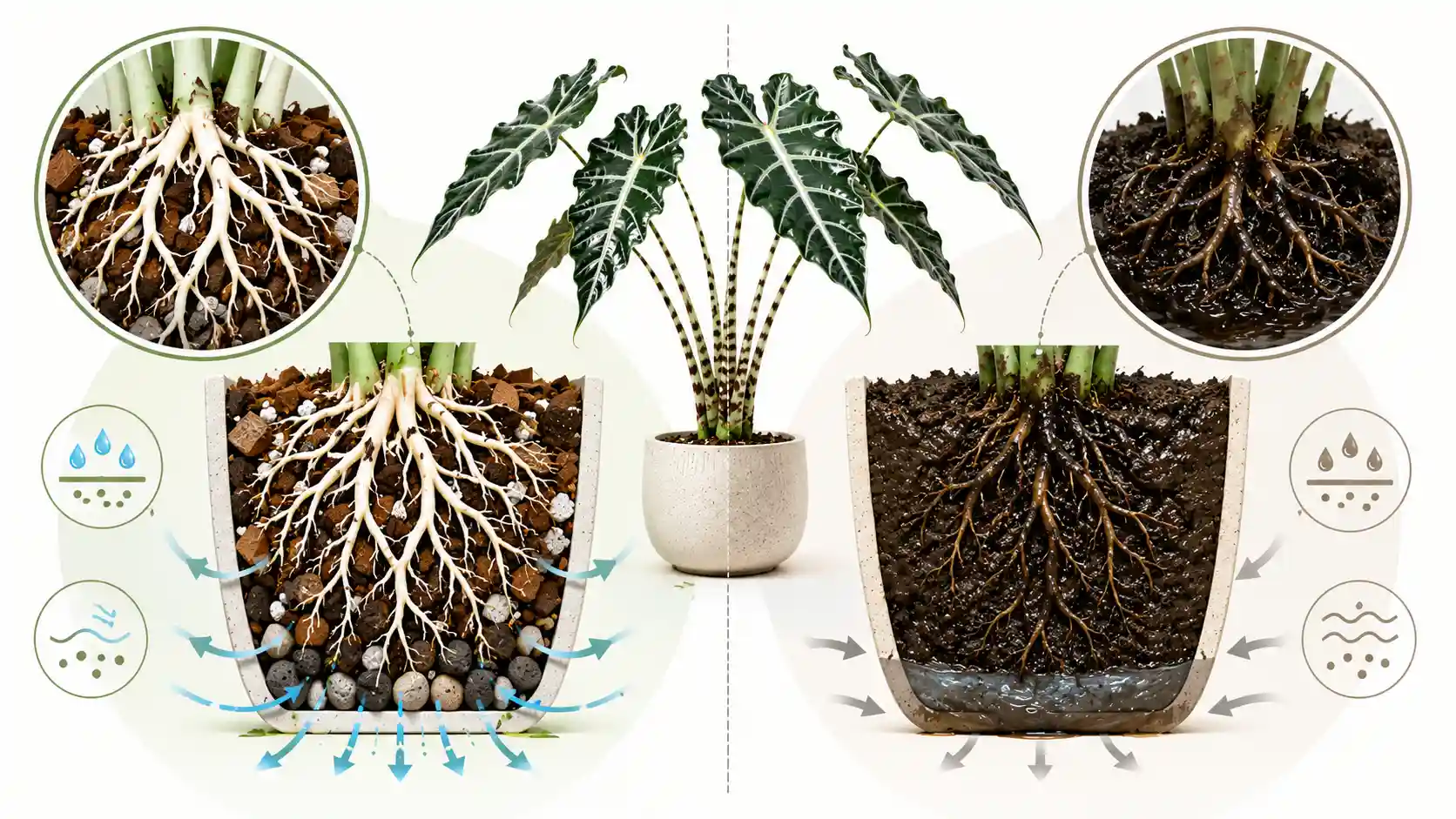
Root rot is one of the most serious problems affecting Alocasia Sarian.
Signs include:
- Yellow leaves
- Soft stems
- Persistent wilting
- Black or mushy roots
Recovery steps:
- Remove the plant from its pot.
- Inspect the root system.
- Trim damaged roots using sterile scissors.
- Discard old soil.
- Repot into fresh well-draining mix.
- Reduce watering until recovery begins.
Preventing root rot is far easier than treating it. Proper drainage and careful watering remain the most effective safeguards.
Alocasia Sarian Corm: What It Is and Why It Matters
Alocasia Sarian produces underground structures known as corms.
Corms function as storage organs that help the plant survive periods of stress or dormancy. During winter, above-ground growth may decline while the corm remains healthy beneath the soil.
These structures are important because they:
- Store nutrients
- Store energy reserves
- Support dormancy survival
- Enable propagation
Many owners mistakenly discard dormant plants, not realizing the corm is still alive and capable of producing new growth when conditions improve.
How to Propagate Alocasia Sarian
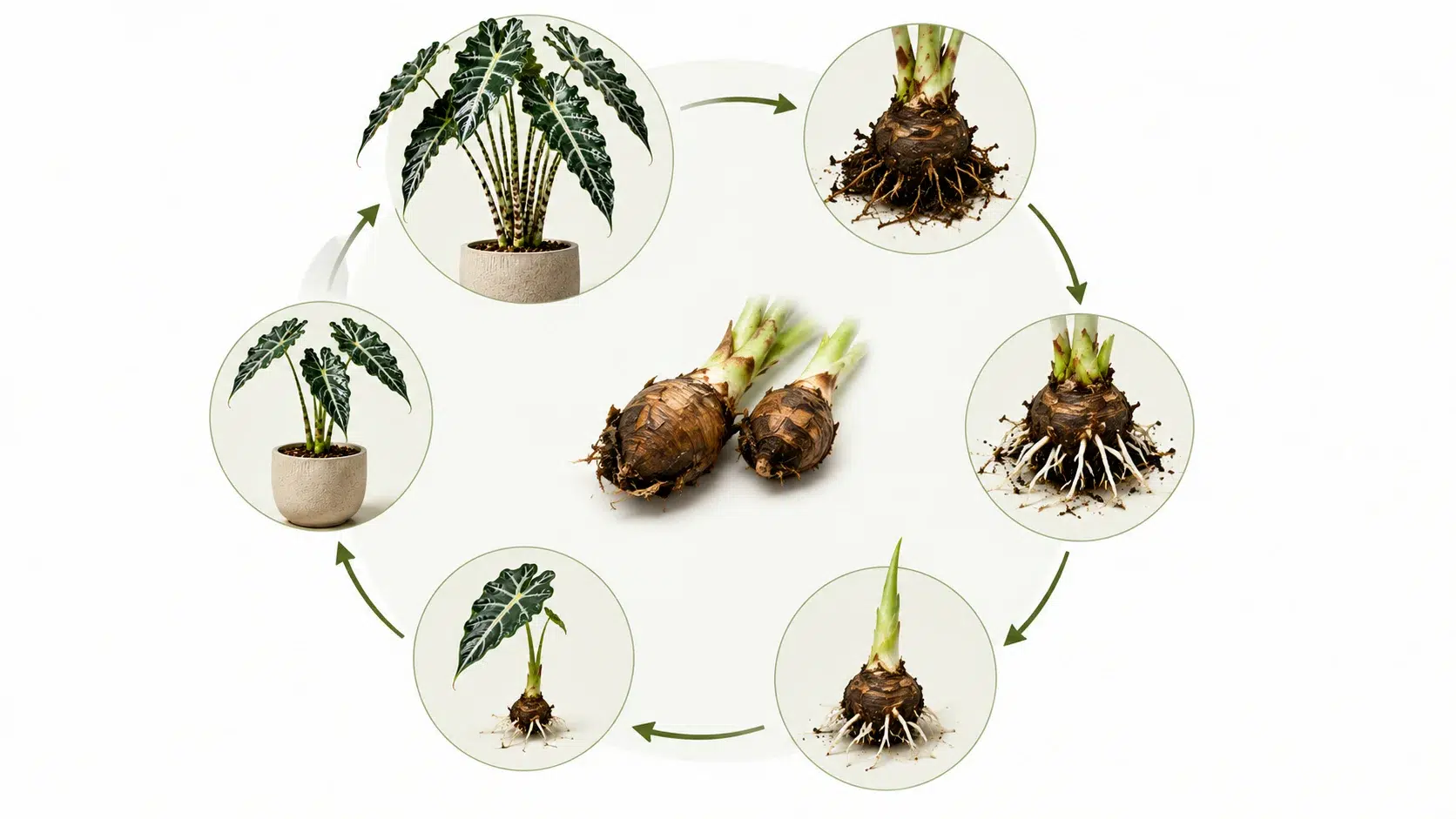
Corm division is the most reliable method for propagating Alocasia Sarian.
The best time for propagation is during spring repotting when active growth resumes.
Steps:
- Remove the plant from its container.
- Locate healthy corms near the root system.
- Gently separate the corms.
- Place them in moist sphagnum moss or a well-draining propagation medium.
- Maintain warmth and humidity.
- Wait for roots and shoots to develop before potting individually.
Common propagation mistakes include:
- Removing immature corms
- Allowing corms to dry out
- Using excessively wet media
- Attempting propagation during dormancy
Successful propagation allows growers to expand their collection without purchasing additional plants.
Comparison: Alocasia Sarian vs Similar Plants
Alocasia Sarian vs Alocasia Wentii
Alocasia Sarian and Alocasia Wentii are both popular tropical foliage plants, but they differ in appearance, growth habits, and environmental tolerance.
Alocasia Sarian is known for its dramatic white-veined leaves and tall zebra-patterned stems, while Alocasia Wentii is recognized for its broad green leaves with distinctive copper-purple undersides.
| Feature | Alocasia Sarian | Alocasia Wentii |
| Leaf Shape | Large, elongated with white veins | Broad, glossy, copper underside |
| Cold Tolerance | Low | Moderate |
| Indoor Suitability | High | High |
| Mature Size | Very large | Large |
| Care Difficulty | Intermediate | Beginner-friendly |
For indoor tropical plant enthusiasts seeking dramatic foliage, Alocasia Sarian is often the more visually striking option. However, gardeners in cooler climates may find Alocasia Wentii easier to maintain due to its greater tolerance of temperature fluctuations.
What Are the Cons of Alocasia Sarian?
Alocasia Sarian is a stunning plant, but it comes with several challenges that prospective owners should understand.
The main drawbacks include:
- Toxicity to pets and humans if ingested
- Sensitivity to overwatering
- Requirement for consistently high humidity
- Susceptibility to spider mites and other pests
- Seasonal dormancy that can appear alarming
- Sensitivity to cold temperatures and drafts
One of the most misunderstood aspects of the plant is dormancy. During cooler months, the plant may lose leaves or appear inactive. New owners often assume the plant has died when it is simply conserving energy for future growth.
These challenges do not make Alocasia Sarian unsuitable as a houseplant, but they do require more attention than many beginner-friendly species.
What Is the Lifespan of an Alocasia?
With proper care, an Alocasia can live for many years and remain a long-term feature in an indoor plant collection.
Many healthy Alocasias survive for a decade or more when provided with:
- Consistent watering habits
- Proper humidity levels
- Adequate lighting
- Routine pest management
- Periodic repotting
Seasonal dormancy is often mistaken for plant decline. During dormancy, the plant may lose leaves and temporarily stop growing. However, healthy roots and corms remain alive beneath the soil and typically produce new growth when conditions become favorable.
Factors that support a longer lifespan include:
- Avoiding chronic overwatering
- Maintaining stable temperatures
- Preventing severe pest infestations
- Using appropriate soil and containers
- Fertilizing during active growth periods
Is Alocasia Sarian Hard to Care For?
Alocasia Sarian is moderately difficult to care for, making it best suited for intermediate plant owners.
The plant’s reputation for being difficult largely comes from its sensitivity to environmental conditions. Unlike more forgiving houseplants, Alocasia Sarian quickly reacts to improper watering, low humidity, or sudden temperature changes.
Its primary care challenges include:
- Maintaining high humidity
- Preventing root rot
- Managing seasonal dormancy
- Protecting against pests
Compared to other houseplants, Alocasia Sarian is more demanding than pothos or snake plants but generally easier than many rare collector tropicals.
Difficulty rating:
| Plant Type | Difficulty Level |
| Snake Plant | Easy |
| Pothos | Easy |
| Philodendron | Easy to Moderate |
| Alocasia Wentii | Moderate |
| Alocasia Sarian | Moderate to Intermediate |
| Rare Jewel Alocasias | Advanced |
For growers willing to provide proper tropical conditions, Alocasia Sarian is highly manageable and exceptionally rewarding.
Beginner Mistakes to Avoid with Alocasia Sarian
Many Alocasia problems result from a handful of common mistakes. Avoiding these issues significantly increases the chances of long-term success.
Overwatering
The most common mistake is watering too frequently.
Fix:
- Check soil moisture before watering
- Allow the top 2 inches to dry slightly
Placing the Plant in Direct Sunlight
Strong direct sunlight can scorch foliage and damage leaves.
Fix:
- Provide bright indirect light
- Use sheer curtains when necessary
Using Heavy, Poorly Draining Soil
Dense soil traps excess moisture and increases root rot risk.
Fix:
- Use a chunky, well-aerated soil mix
- Incorporate perlite and bark
Ignoring Humidity Requirements
Dry indoor air often causes leaf damage and stress.
Fix:
- Maintain humidity above 60%
- Use humidifiers or pebble trays
Mistaking Dormancy for Plant Death
Dormant plants may lose leaves and stop growing.
Fix:
- Reduce watering during dormancy
- Continue monitoring the corm and root system
- Wait for new growth in spring
Understanding these common mistakes helps growers maintain healthier plants while avoiding unnecessary stress and corrective treatments.
Conclusion
Alocasia Sarian care centers around five key principles: bright indirect light, well-draining soil, careful watering, high humidity, and awareness of seasonal growth cycles. As a hybrid tropical plant, it thrives when its rainforest-inspired growing conditions are replicated indoors or outdoors.
Although Alocasia Sarian requires more attention than many common houseplants, its dramatic foliage and impressive size make the effort worthwhile. Understanding proper watering practices, maintaining humidity, and recognizing dormancy cycles are the most important factors for long-term success.
With consistent care and a suitable environment, the Alocasia Sarian plant can remain healthy for many years, rewarding growers with striking tropical foliage and vigorous seasonal growth.
Frequently Asked Questions About Alocasia Sarian Care
1: Is Alocasia Sarian hard to care for?
Alocasia Sarian is considered moderately difficult to care for. It requires bright indirect light, consistent moisture, high humidity, and warm temperatures. While not ideal for complete beginners, it is manageable for intermediate plant owners who understand tropical plant care requirements.
2: How often should I water Alocasia Sarian?
Alocasia Sarian should be watered when the top 2 inches of soil become dry. The exact frequency depends on temperature, humidity, light levels, and season. Most plants require more frequent watering during spring and summer than during winter dormancy.
3: Do you water Alocasia from the top or bottom?
Both top watering and bottom watering are effective methods. Bottom watering promotes even moisture distribution and encourages deeper root growth, while top watering is convenient when excess water is allowed to drain completely from the pot.
4: How big does Alocasia Sarian get?
Indoor Alocasia Sarian plants typically reach 3 to 6 feet tall with a spread of 2 to 4 feet. Outdoors in ideal tropical conditions, mature plants may exceed 6 to 8 feet in height and develop significantly larger foliage.