
Introduction
Pandanus varieties refer to a group of tropical plants, commonly known as screw pines, that display a wide range of forms, uses, and growth habits. These plants include ornamental species, edible varieties, and landscape trees commonly associated with coastal environments and tropical gardens. Often called pandanus palm or mistakenly referred to as pandanas palm, they are not true palms but share a similar appearance. Some varieties produce fruit, while others are valued for their fragrant leaves or decorative structure. This article explains the different types of pandanus varieties, their uses, edible species, and key care differences.
Quick Summary
- Pandanus varieties include edible, ornamental, and coastal landscaping plants.
- Some species produce pandanus fruit, while others are grown for fragrant leaves.
- Not all pandanus are edible—correct species identification is essential.
- Common types include Pandanus tectorius, Pandanus amaryllifolius, and dwarf varieties.
What Is a Pandanus Plant?
Pandanus is a tropical plant genus known for its spiral leaf arrangement, aerial roots, and tree-like or shrub-like growth habit. Often called the screw pine, it belongs to the Pandanaceae family and is commonly mistaken for a palm, leading to names like pandanus palm or pandanas palm, although it is not a true palm. Botanically, pandanus belongs to the Pandanaceae family, a group of tropical plants widely studied for their ecological and culinary importance (see Pandanus for detailed classification).
Botanical Identity and Structure
Pandanus plants feature:
- Long, narrow, spiny-edged leaves arranged in a spiral pattern
- Aerial prop roots that provide stability
- Woody stems with branching growth in mature species
Naming Clarification
The pandanus common name “screw pine” refers to the twisted leaf arrangement, not a pine relationship. Despite visual similarities, pandanus differs from palm trees in both structure and classification.
Types of Pandanus Varieties (Core Classification)
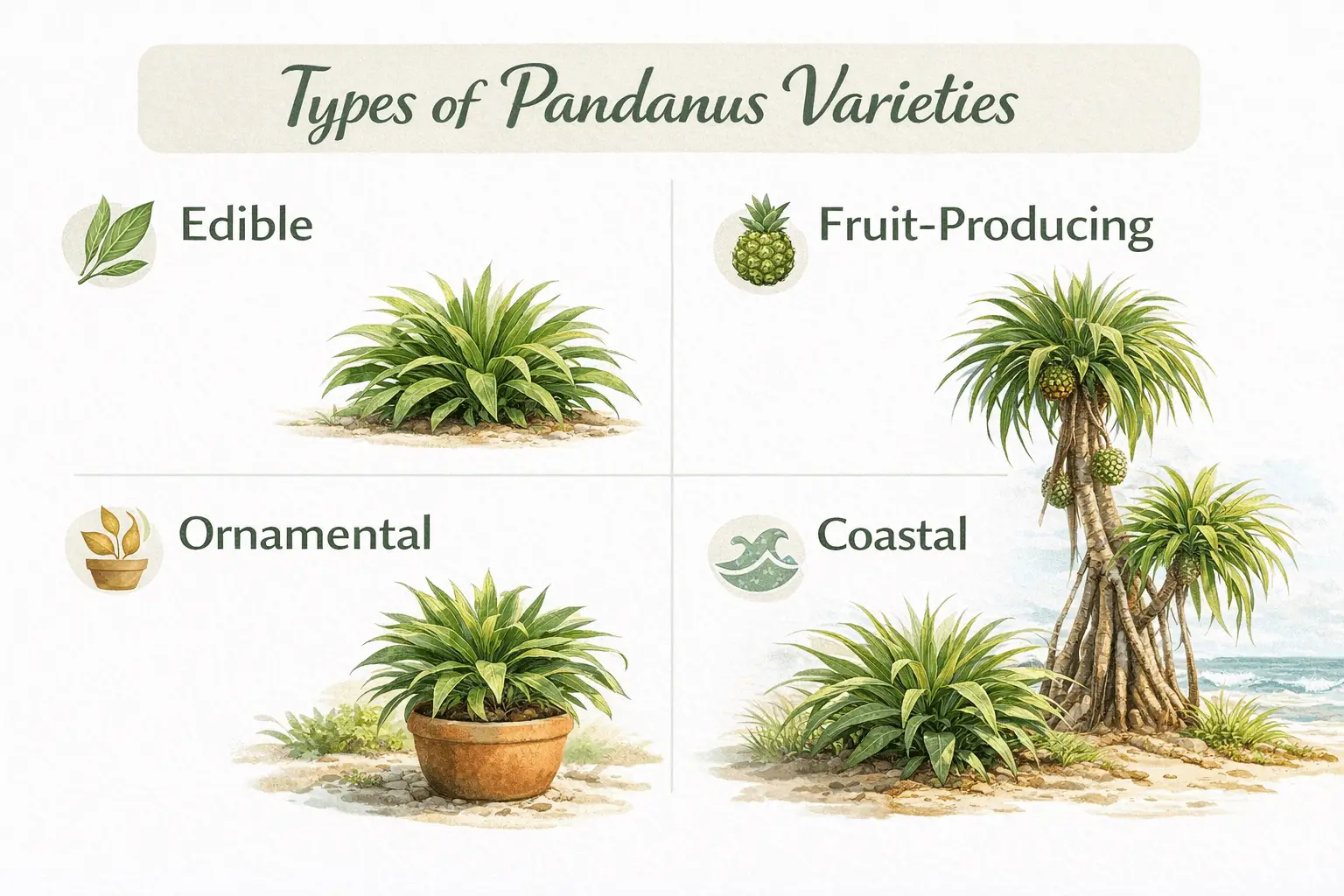
Pandanus varieties can be categorized based on their primary function: edible, fruit-producing, ornamental, or ecological. For similar tropical landscaping ideas, see Best Heliconia for Screening, which highlights other large structural plants used in tropical garden design.
Edible & Culinary Varieties
These varieties are used in cooking and food preparation:
- Pandanus amaryllifolius: Known for fragrant leaves used in Southeast Asian cuisine
- Select forms of pandanus tectorius may have edible components
Fruit-Producing Varieties
Some species produce large, segmented fruits:
- Typically found in coastal species
- Edibility depends on the species and maturity
Ornamental & Landscape Varieties
Used for decorative purposes:
- Dwarf pandanus varieties
- Variegated dwarf pandanus with striped foliage
Coastal & Wild Varieties
Adapted to harsh environments:
- Salt-tolerant species like Pandanus tectorius
- Common in tropical shorelines and sandy soils
Key Pandanus Species Explained
Certain species are widely recognized for their distinct uses and characteristics.
Pandanus tectorius
A coastal species commonly found in tropical regions, including pandanus Australia landscapes. It produces large fruit and is valued for erosion control and environmental resilience.
Pandanus amaryllifolius
This is the primary culinary pandan, grown for its fragrant leaves. It does not typically produce fruit and is widely used in cooking.
Pandanus pedunculatus
A less common ornamental species, valued for its structure and adaptability in tropical landscapes.
Edible vs Non-Edible Pandanus Varieties
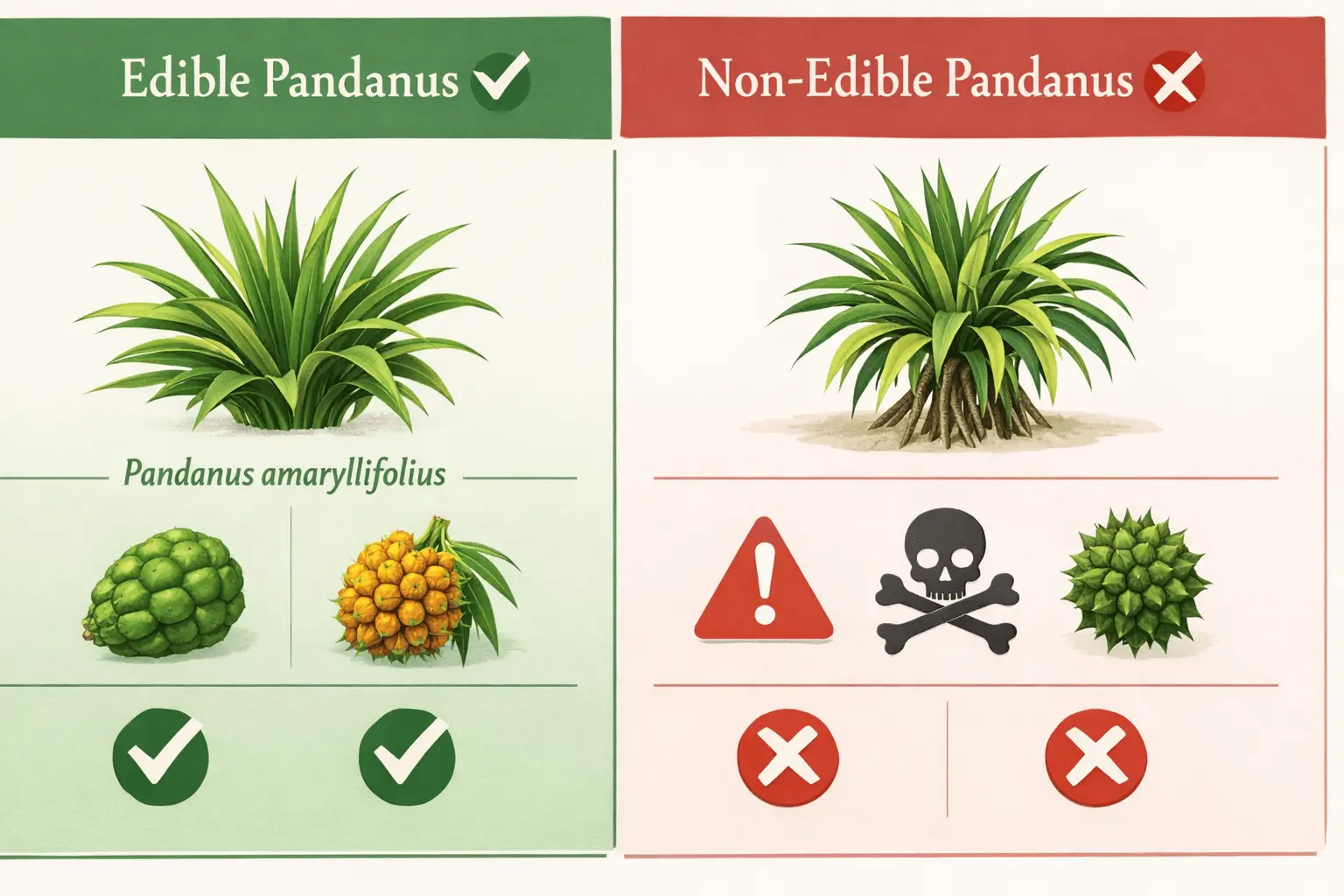
Some pandanus species are edible, while others are not suitable for consumption.
Key Differences
Edible pandanus varieties are typically used for leaves or fruit, while ornamental types are grown purely for appearance.
Important Notes
- Not all pandanus fruit is edible
- Some parts may be fibrous or mildly toxic
- Proper species identification is essential
Edibility Guide
- Edible:
- Pandanus amaryllifolius
- Select Pandanus tectorius varieties
- Non-edible:
- Ornamental hybrids
- Unknown or decorative species
- Always verify species before consumption
Comparison: Popular Pandanus Varieties
| Variety | Primary Use | Edibility | Size | Best Environment |
| Pandanus tectorius | Fruit & coastal | Partially edible | Large | Coastal/tropical |
| Pandanus amaryllifolius | Culinary leaves | Edible | Small-medium | Indoor/tropical |
| Dwarf pandanus | Ornamental | Non-edible | Small | Indoor/garden |
| Variegated pandanus | Decorative | Non-edible | Small-medium | Landscaping |
Dwarf and Variegated Pandanus Varieties
Dwarf pandanus varieties are compact plants with decorative appeal, often featuring striped or variegated leaves.
Characteristics
- Compact growth habit
- Decorative foliage patterns
- Suitable for containers
Use Cases
- Indoor décor
- Tropical landscaping accents
If you’re exploring compact indoor-friendly plants, Zamioculcas Zamiifolia Care Guide offers another low-maintenance option suitable for modern indoor spaces.
Benefits
- Easy to manage size
- Lower maintenance than large species
- Ideal for urban gardening
Pandanus in Australia and Tropical Regions
Pandanus Australia varieties are commonly found in coastal and tropical environments.
Growing Conditions
- High tolerance to salt and wind
- Thrive in tropical and subtropical climates
Regional Uses
- Coastal landscaping
- Natural shoreline stabilization
These plants are well adapted to harsh environmental conditions and play a role in ecological balance.
Growth Size and Structure of Pandanus Trees
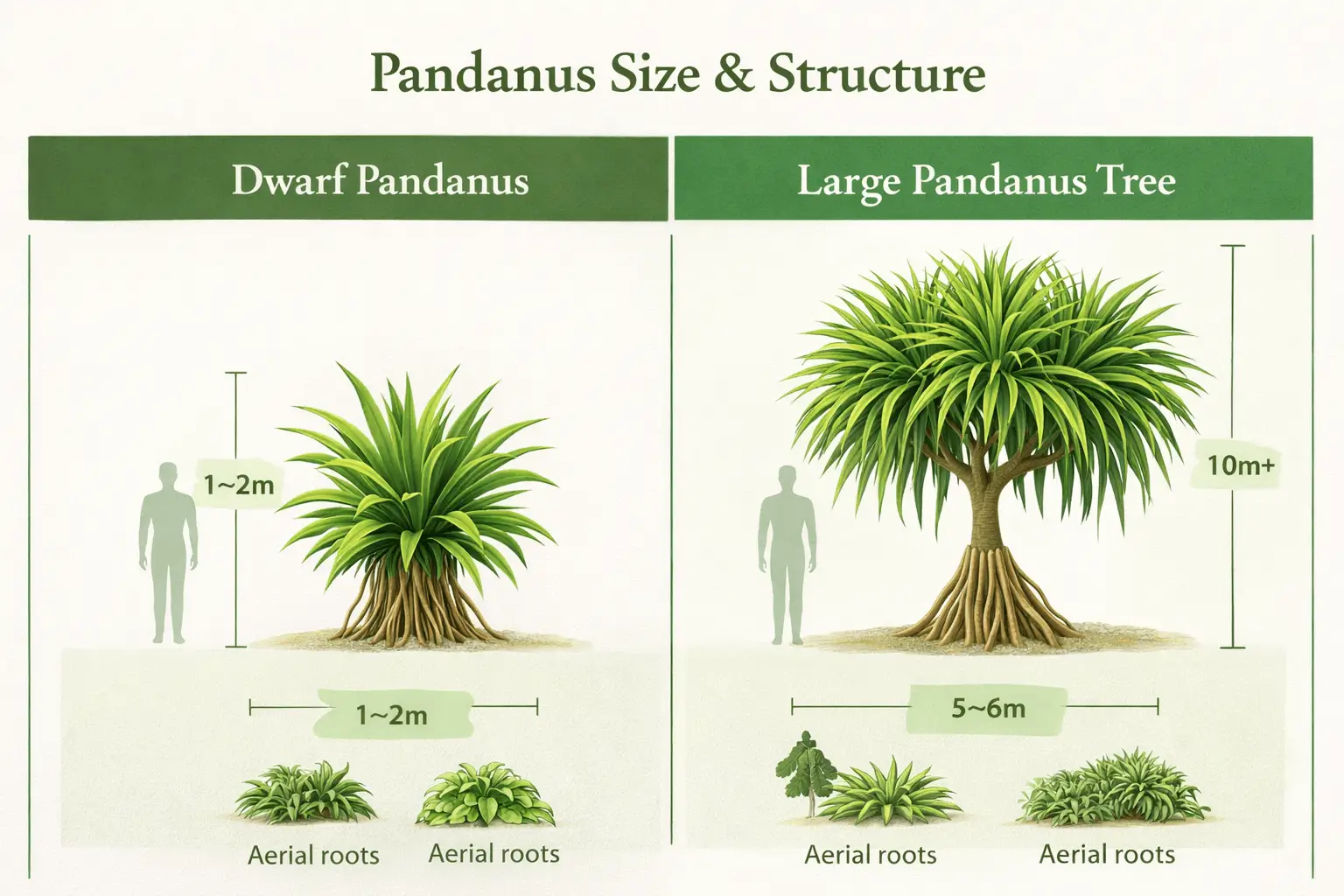
Pandanus plants vary widely in size depending on species and environment.
Typical Size Range
- Dwarf varieties: 1–2 meters
- Large species: up to 10+ meters
Growth Characteristics
- Strong aerial roots for support
- Wide canopy spread in mature plants
Indoor plants typically remain smaller due to limited space and light.
Growth Rate of Pandanus Varieties
Pandanus plants generally exhibit moderate to fast growth in suitable climates.
Growth Speed
- Faster in tropical environments
- Slower indoors
Influencing Factors
- Light availability
- Soil quality
- Temperature
Seasonal changes and climate conditions significantly affect growth patterns.
Basic Care Guide for Pandanus Plants
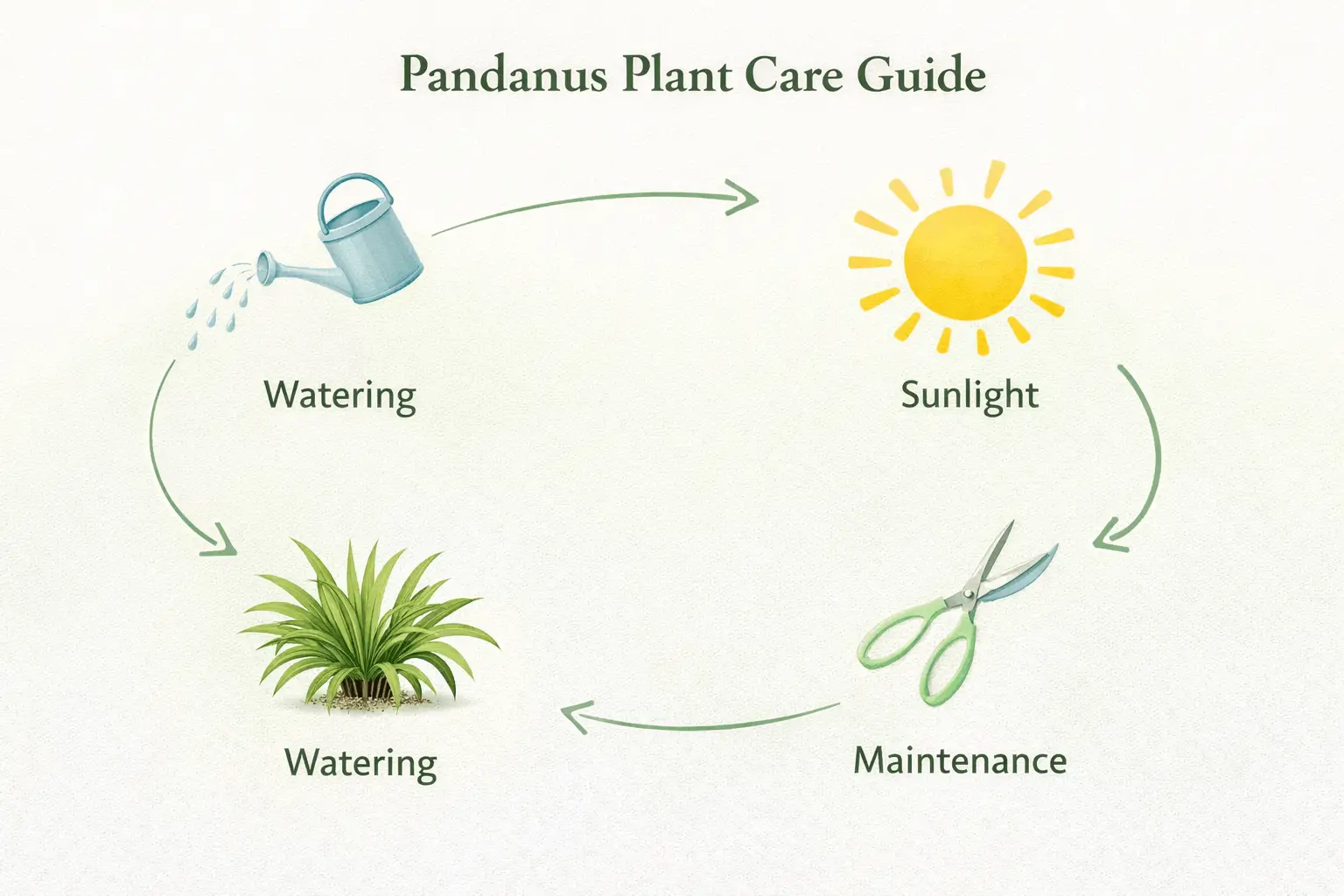
Proper care ensures healthy growth and longevity.
Watering
- Moderate watering
- Avoid waterlogged soil
Light
- Full sun to partial shade
Soil
- Well-draining sandy or loamy soil
Maintenance
- Minimal pruning required
- Remove dead or damaged leaves
Key Care Tips
- Thrives in humid conditions
- Tolerates coastal environments
- Sensitive to frost
Common Problems and Solutions
Understanding common issues helps maintain plant health.
Yellowing Leaves
Cause: Overwatering or poor drainage
Fix: Improve soil drainage and reduce watering
Slow Growth
Cause: Low light or nutrient deficiency
Fix: Increase sunlight exposure and fertilization
Root Instability
Cause: Weak aerial root development
Fix: Allow natural root expansion and avoid disturbance
Prevention Tips
- Use well-draining soil
- Monitor watering frequency
- Provide adequate light
Common Beginner Mistakes
Avoiding common errors improves success with pandanus plants.
- Overwatering tropical plants
- Misidentifying edible varieties
- Planting large species in small spaces
These mistakes often lead to poor growth or safety issues.
Is Pandan the Same as Pandanus?
Pandan refers specifically to Pandanus amaryllifolius, while pandanus is the broader genus that includes many species.
Explanation
“Pandan” is commonly used in culinary contexts, whereas “pandanus” is the correct botanical term for the entire plant group. This distinction is important for understanding edible versus ornamental uses.
Conclusion
Pandanus varieties include a diverse group of tropical plants used for food, decoration, and landscaping. From edible pandan leaves to large coastal trees, each species offers unique benefits. Understanding the differences between varieties is essential for proper use, care, and safety. Whether for culinary purposes or ornamental gardening, pandanus remains a versatile and valuable plant group. Choosing the best pandanus plant depends on factors such as available space, climate conditions, and intended use. For readers who want a broader overview of species, care considerations, and comparison resources, this pandanus plant resource hub provides additional information to support the selection process.
FAQs
1. What are the most common pandanus varieties?
The most common pandanus varieties include Pandanus tectorius, Pandanus amaryllifolius, and dwarf ornamental types used in indoor and landscape settings.
2. Is pandanus fruit edible?
Some pandanus species produce edible fruit, but not all are safe to eat. Edibility depends on the species and proper identification.
3. What is the difference between pandan and pandanus?
Pandan refers to a specific edible species, while pandanus is the broader genus that includes all related plant varieties.
4. Can pandanus grow indoors?
Yes, smaller and dwarf pandanus varieties can grow indoors with sufficient light, proper watering, and well-draining soil.
5. Are pandanus plants poisonous?
Most pandanus plants are not highly toxic, but some species are not edible and should not be consumed without proper identification.