
Introduction
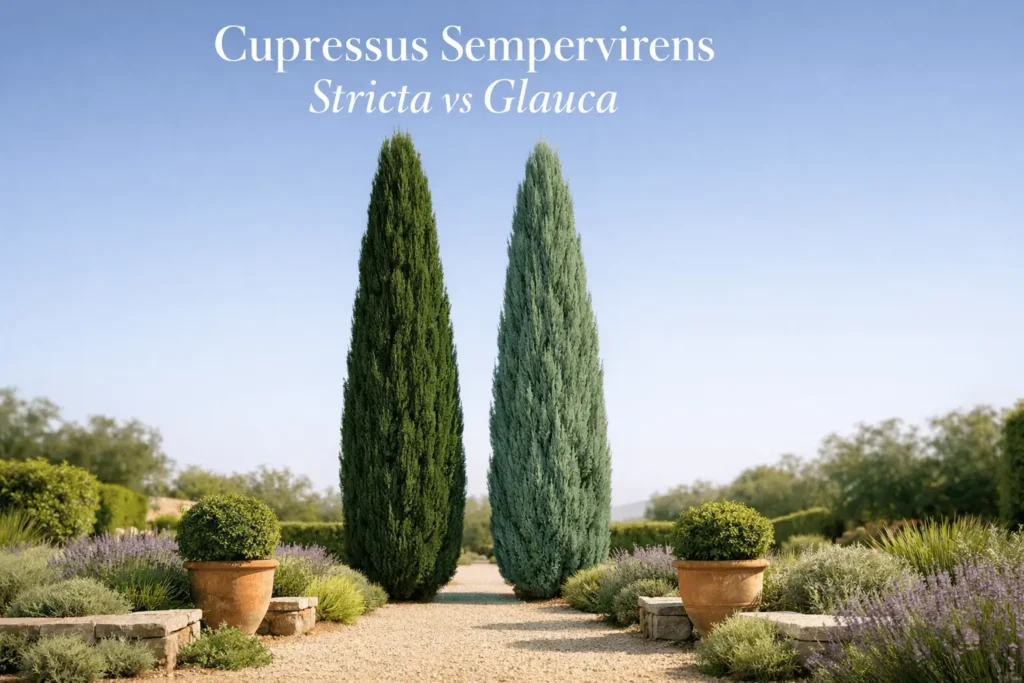
Cupressus sempervirens stricta vs glauca refers to two popular varieties of the Italian pencil pine (Cupressus sempervirens), widely used for vertical landscaping, hedging, and formal garden design. While both share a tall, narrow form, they differ in color, growth habit, and ideal use cases.
This guide explains their differences in simple terms, helping you choose the right pencil pine tree for your garden or landscape.
Quick Summary
- Stricta = classic dark green, very narrow, formal look
- Glauca = bluish-green foliage, slightly softer appearance
- Both are tall, columnar Italian pencil pine varieties used for hedges and feature planting
- Choice depends on color preference, spacing, and landscape style
What Is Cupressus Sempervirens? (Italian Pencil Pine Explained)
Cupressus sempervirens is a Mediterranean evergreen conifer known for its tall, narrow growth and strong architectural form. (You can learn more about its botanical classification on Wikipedia.)
This species belongs to the Cupressaceae family and naturally grows in a columnar shape, making it ideal for vertical accents. It is drought-tolerant once established and thrives in full sun with well-drained soil.
Key Characteristics:
- Evergreen conifer species
- Naturally columnar growth habit
- Commonly used in formal gardens and hedges
- Known for low canopy spread and height dominance
Cupressus Sempervirens Stricta vs Glauca: Core Differences
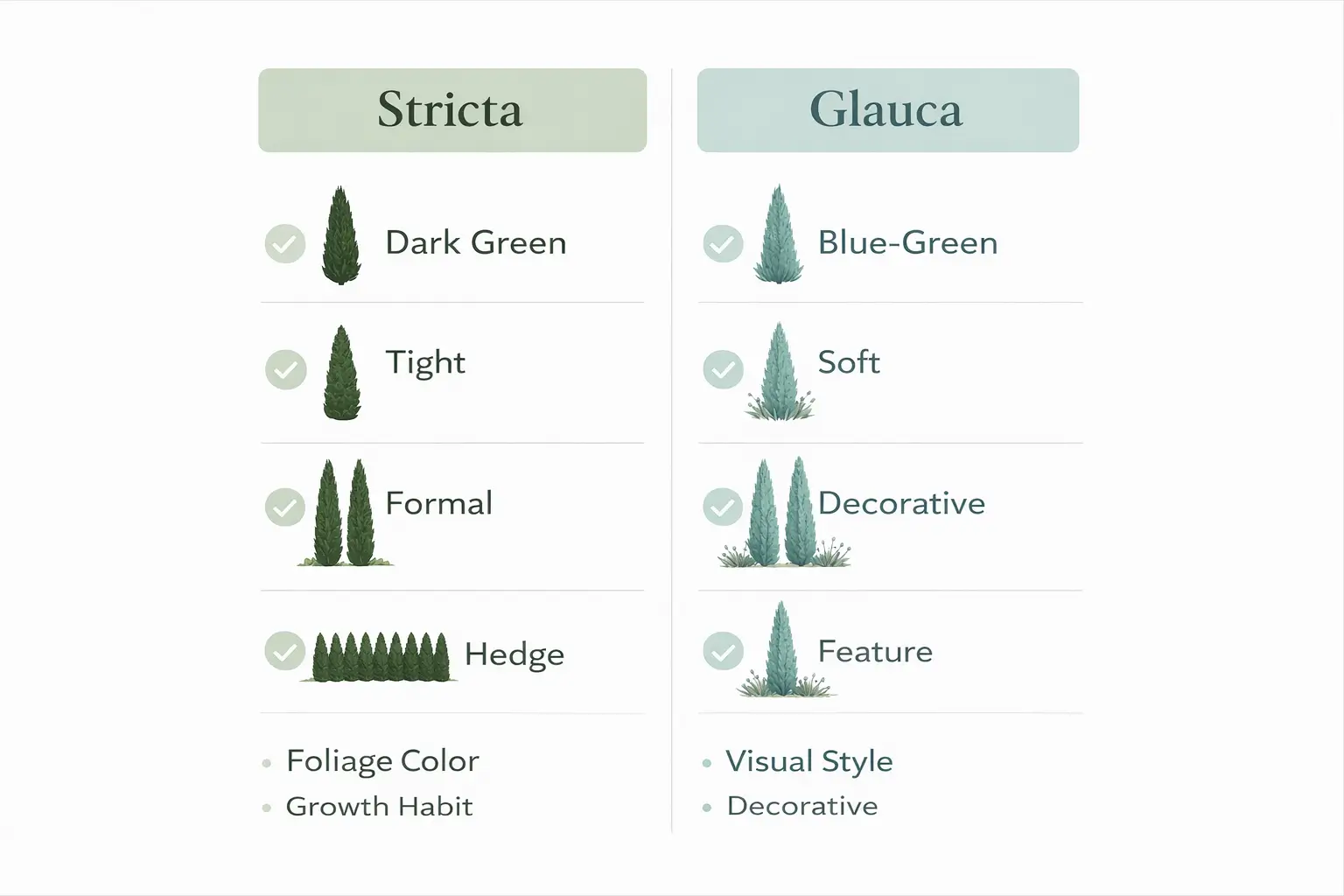
Cupressus sempervirens stricta vs glauca differs mainly in foliage color, growth tightness, and visual style, making each suitable for different landscaping goals.
| Feature | Cupressus Stricta | Cupressus Glauca |
| Foliage Color | Dark green | Blue-green / silvery |
| Growth Habit | Very tight, upright | Slightly softer, less rigid |
| Visual Style | Formal, classic | Decorative, softer tone |
| Use Case | Formal hedges, screening | Feature planting, contrast |
| Maintenance | Low | Low |
Cupressus stricta is often preferred for symmetrical hedges and formal layouts, while cupressus sempervirens var glauca is chosen for its softer color and decorative appeal.
Appearance and Foliage Differences
Stricta: Dense and Classic Vertical Form
Cupressus sempervirens stricta leaves are dark green and tightly packed, forming a dense, upright column. The structure is highly symmetrical, making it ideal for formal designs and uniform hedging.
Glauca: Softer Blue-Green Tone
Italian cypress glauca, also known as cupressus sempervirens glauca, features silvery-blue foliage. Its structure is slightly more open, giving it a softer visual effect and making it useful for contrast planting.
Size and Growth: How Tall Do Pencil Pines Grow?
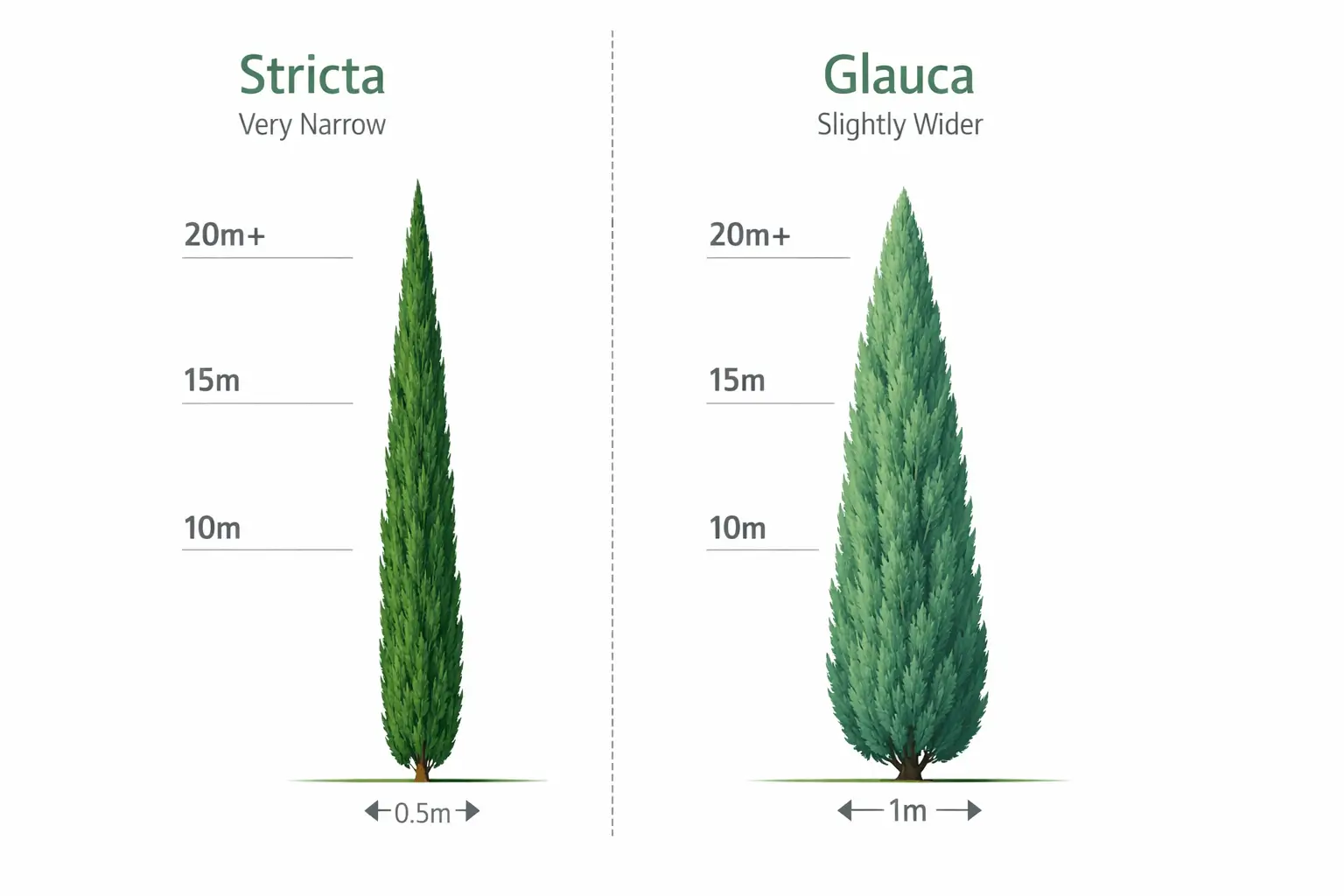
Pencil pine trees can grow very tall, often reaching 10–20 meters or more depending on conditions.
| Variety | Typical Height | Width | Growth Pattern |
| Stricta | Tall (10–20m+) | Very narrow | Upright, fast vertical |
| Glauca | Similar height | Slightly wider | Moderate vertical growth |
The cupressus sempervirens stricta size tends to remain narrower, while cupressus sempervirens glauca height is similar but slightly broader. Climate, soil quality, and spacing significantly influence final size.
Growth Rate and Long-Term Development
Both varieties grow relatively fast in their early years, especially under optimal conditions.
- Faster growth in full sun
- Slower in poor soil or shade
- Growth influenced by pruning and spacing
The cupressus sempervirens glauca growth rate is moderate, with rapid vertical development initially, followed by slower growth as the tree matures. Adequate sunlight, water, and spacing are key factors.
Root System and Spacing Considerations
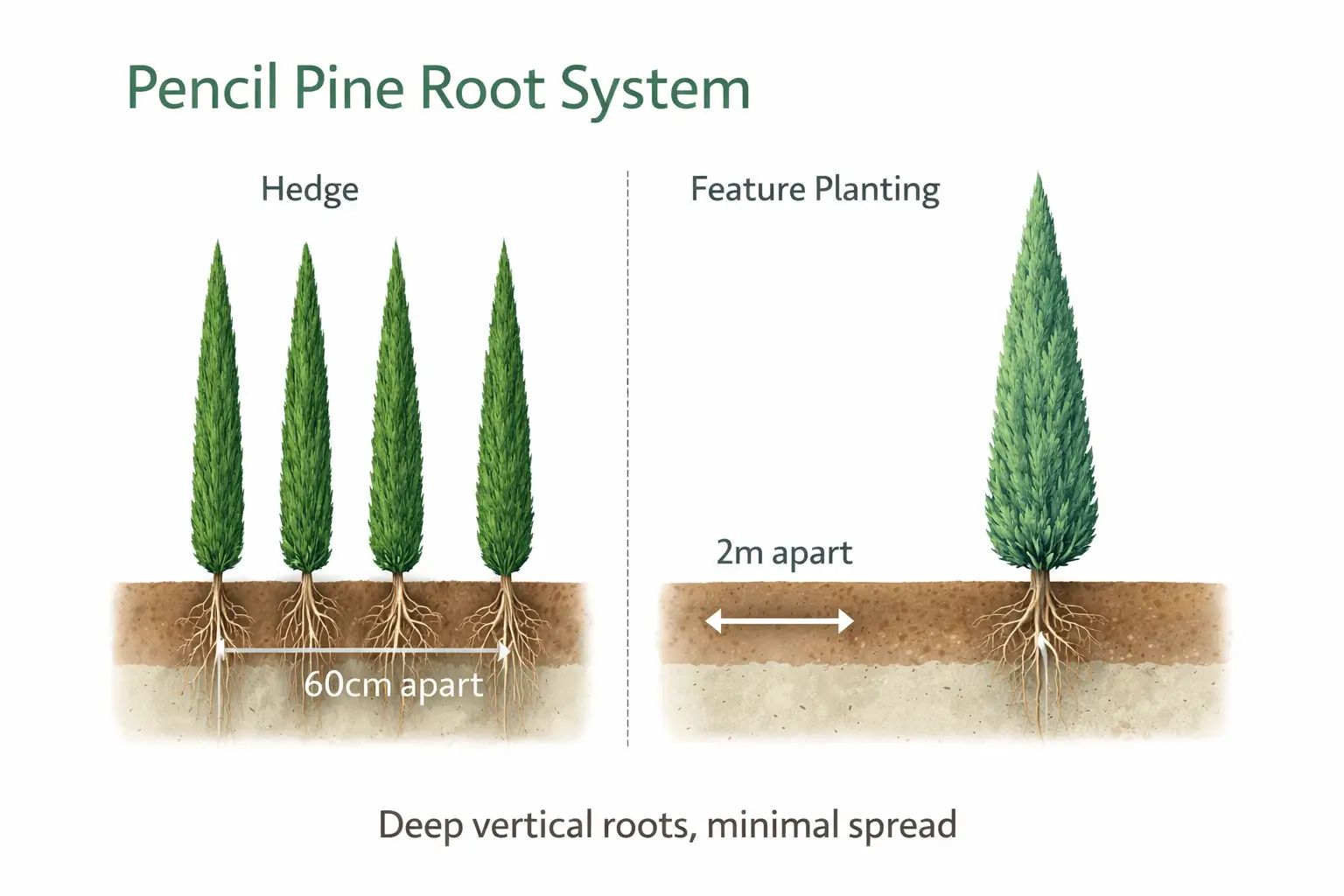
The pencil pine root system is generally non-invasive and grows deep rather than spreading aggressively.
- Suitable near structures with proper spacing
- Requires well-drained soil
- Spacing affects density in a hedge
Proper spacing ensures airflow and prevents disease. For hedges, closer spacing creates density, while wider spacing suits feature planting.
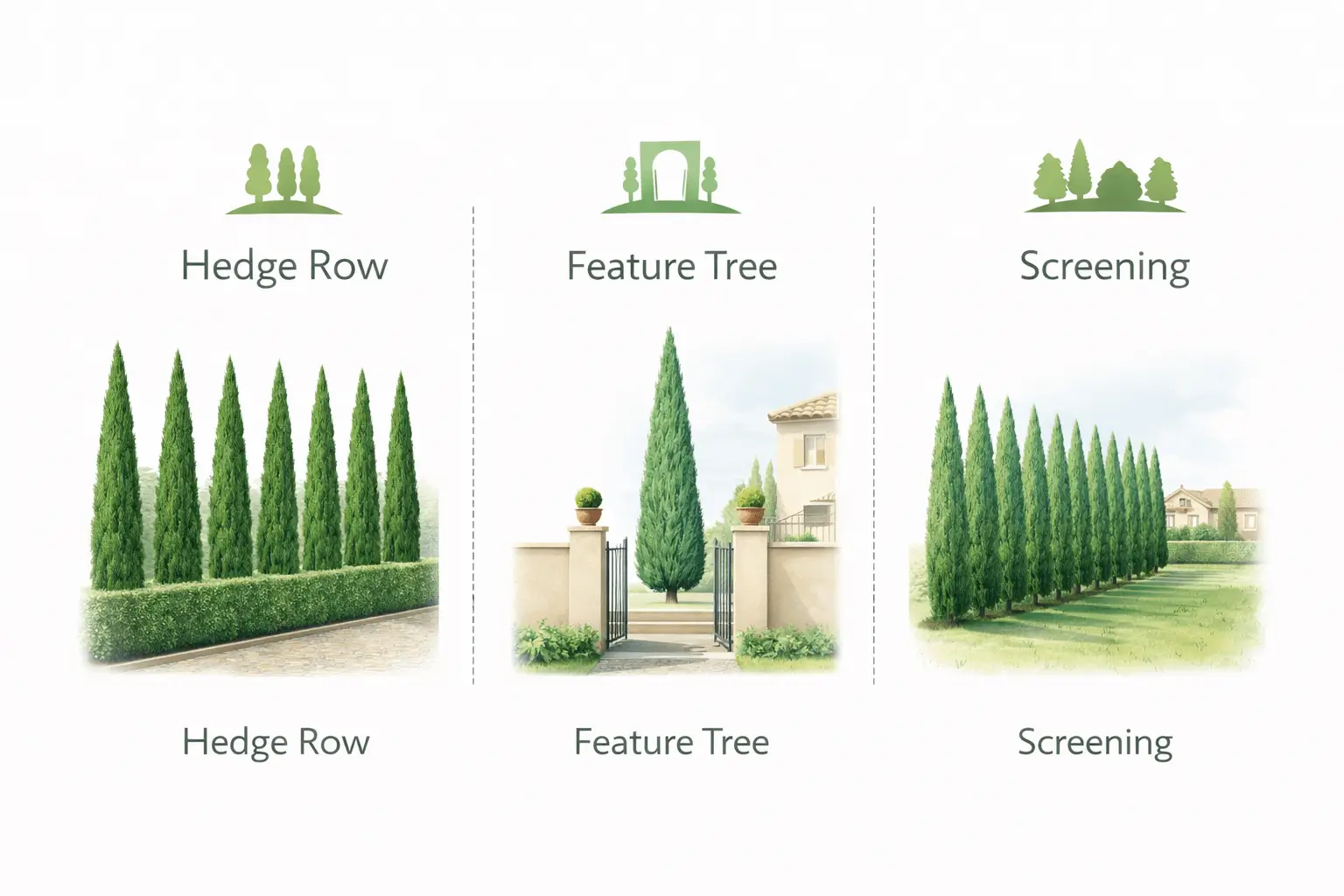
Best Uses: Hedge, Feature Tree, or Screening?
Pencil Pine Hedge Applications
Pencil pine hedge planting, including cupressus sempervirens hedge, is ideal for privacy and windbreaks. If you need quicker results, fast growing Australian native screening plants can provide rapid privacy compared to slower-growing pencil pines. Dense planting creates a continuous vertical barrier. Pencil pine hedge planting, including cupressus sempervirens hedge, is ideal for privacy and windbreaks. For more privacy-focused landscaping ideas, explore tropical screening plants that offer dense coverage and fast growth.
Feature Tree and Landscape Design
Italian cypress tree plantings are often used as focal points along driveways, entrances, or pathways.
- Hedges for privacy and windbreaks
- Single planting for focal points
- Suitable for formal and modern landscape styles
Comparison With Other Varieties and Cultivars
Nitschke’s Needle and Other Compact Forms
Nitschke’s needle (cupressus nitschke’s needle) is a compact cultivar with narrower and shorter growth compared to standard varieties like cupressus sempervirens totem or compacta.
Comparison Points:
- Narrower or shorter growth
- Better for small gardens
- Slower growth rates
These dwarf forms are suitable for limited spaces where full-size pencil pines may be too large.
Care Guide for Pencil Pine Trees
Water, Soil, and Light Requirements
Pencil pines prefer full sun and well-drained soil. Moderate watering is required, especially during establishment.
Fertilization and Pruning
Minimal pruning is needed. Light shaping can maintain hedge form and symmetry.
Climate Tolerance
These trees are drought-tolerant once established but sensitive to waterlogged soil, which can cause root issues.
Common Problems and Solutions
Common Problems
- Browning foliage
- Slow growth
- Root rot (overwatering)
Solutions
- Improve drainage
- Adjust watering schedule
- Ensure full sunlight
Prevention Tips
- Avoid heavy clay soil
- Do not overwater
- Maintain spacing for airflow
Choosing Between Stricta and Glauca: Which Is Better?
The better choice depends on your landscape goal, color preference, and spacing requirements.
Choose Stricta if:
- You want a formal, uniform hedge
- You prefer deep green foliage
- Space is limited
Choose Glauca if:
- You want a softer, decorative look
- You prefer blue-toned foliage
- You are designing contrast landscapes
Beginner Mistakes to Avoid
- Planting too close together
- Overwatering young trees
- Ignoring soil drainage
- Expecting fast lateral growth
Conclusion
Cupressus sempervirens stricta vs glauca highlights two visually similar yet distinct Italian pencil pine varieties. While both offer tall, elegant structure, Stricta provides a tighter, more formal appearance, whereas Glauca introduces softer color and texture.
Choosing the right one depends on your landscape goals, spacing, and visual preference.
FAQs
1. What is the main difference between Stricta and Glauca pencil pines?
Stricta has darker green foliage and a tighter, more upright form, while Glauca features bluish-green foliage and a slightly softer appearance.
2. How tall do pencil pine trees grow?
Most pencil pine trees can reach 10–20 meters depending on climate, soil, and care conditions.
3. Which variety is better for hedging?
Stricta is generally preferred for hedging due to its dense, narrow growth habit.
4. Do pencil pines have invasive roots?
No, the pencil pine root system is typically non-invasive when planted with proper spacing and drainage.
5. What is Nitschke’s Needle compared to standard pencil pines?
Nitschke’s Needle is a more compact cultivar of cupressus, ideal for smaller spaces and tighter planting designs.
6. Can I grow Cupressus sempervirens in small gardens?
Yes, especially compact varieties like Totem or Nitschke’s Needle, which are better suited for limited spaces.



One Response