
Introduction
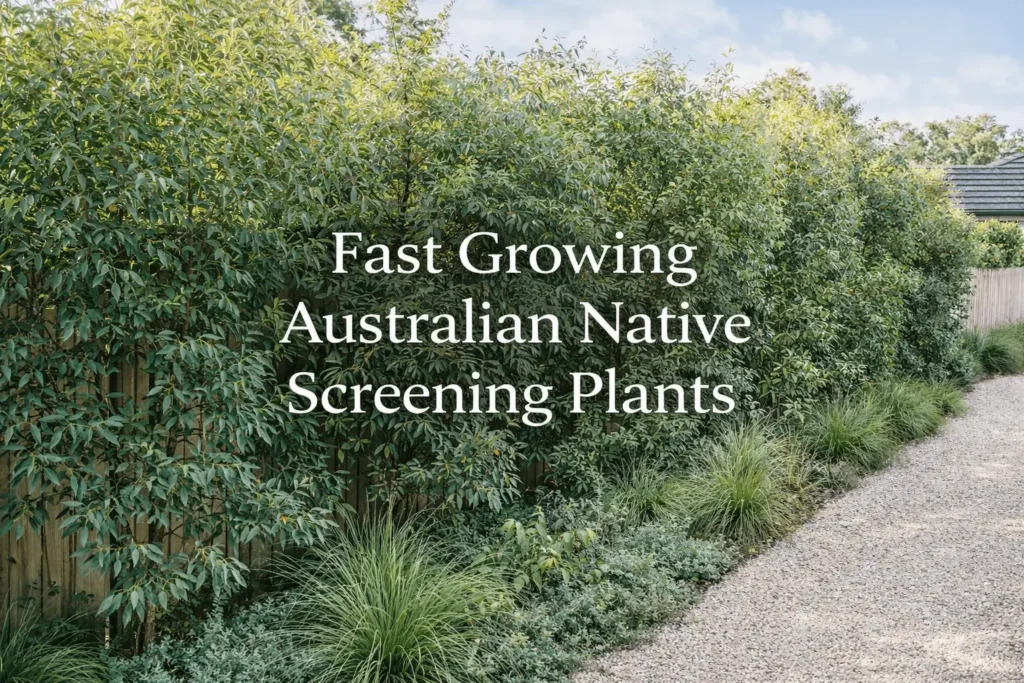
Fast growing Australian native screening plants are widely used in residential landscapes to create natural privacy barriers, protect gardens from wind, and define property boundaries. These plants function as living screens, forming dense hedges or tall green walls that reduce visibility and noise between properties.
In Australian gardens, native species are often preferred over exotic hedging plants because they are adapted to local climate conditions. Many native screening trees and shrubs tolerate drought, poor soils, and intense sunlight better than imported species. Australian native hedges and native hedge plants also support biodiversity by attracting birds and pollinators. Choosing fast growing natives for screening allows homeowners to establish privacy more quickly while creating a resilient and environmentally beneficial garden structure.
What Are Fast Growing Australian Native Screening Plants?
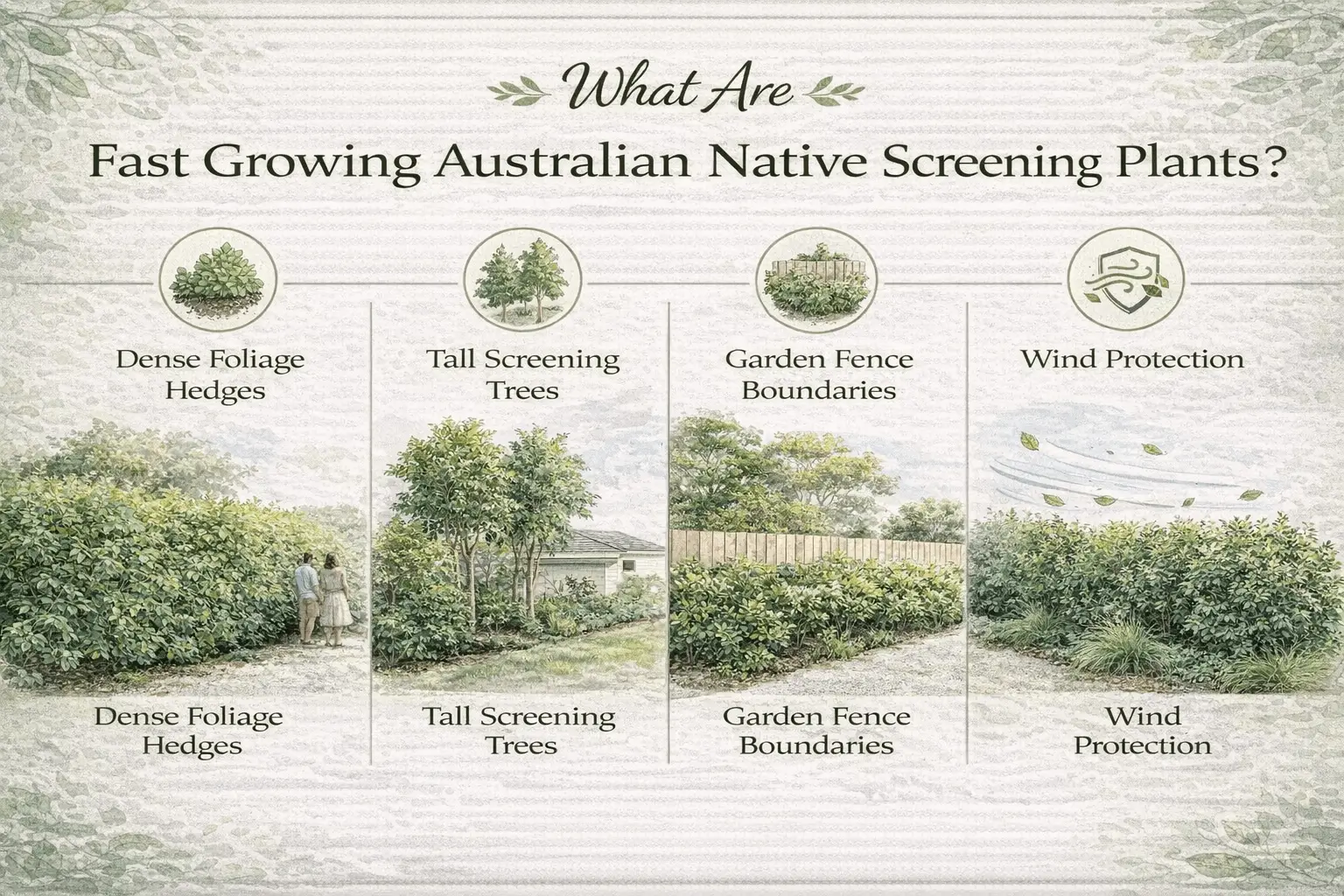
Fast growing Australian native screening plants are trees or shrubs used to create dense vegetation barriers that block views, reduce wind exposure, and improve privacy in outdoor spaces. These plants grow quickly and produce thick foliage, making them suitable for forming natural fences in residential gardens.
Native screening plants are commonly planted along boundaries, fences, and driveways to separate properties and soften hard landscape edges. Compared with artificial fencing, living screens provide shade, habitat for wildlife, and visual greenery.
How Screening Plants Create Natural Privacy
Screening plants for privacy function as living fences that block visibility between properties. When planted closely together, they form dense foliage walls that act as visual barriers.
The effectiveness of privacy screen plants depends on several factors:
- Dense foliage that prevents gaps
- Adequate plant height
- Rapid growth speed
Many native screening plants fast growing varieties are selected specifically for these qualities. Fast growing plants for screening can establish tall green barriers within a few years, offering quicker privacy than slower ornamental shrubs.
Why Native Plants Are Ideal for Screening in Australia
Australian native plants suitable for screening perform well because they evolved in the continent’s unique environmental conditions. Many species tolerate drought, poor soils, and temperature extremes.
Native plants good for screening also require less irrigation and fertilizer compared with exotic hedge plants. These species are considered native plants because they naturally occur in a specific region and have adapted to local environmental conditions over time. In addition, native Australian screening plants contribute to ecological balance by providing food and shelter for native birds and beneficial insects.
Characteristics of the Best Fast Growing Australian Native Screening Plants
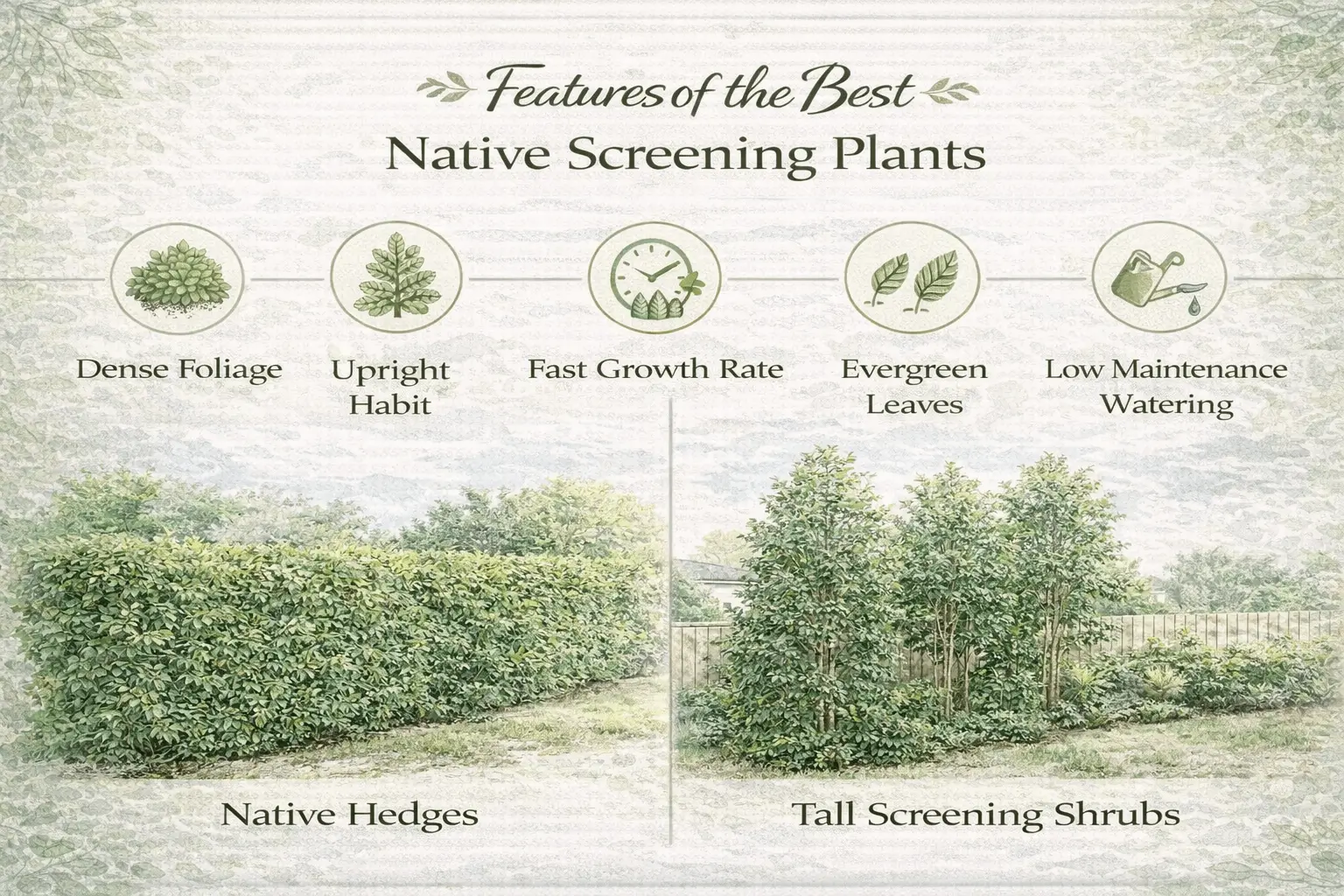
Not all plants function well as privacy screens. The best native screening plants share several structural and growth characteristics that make them suitable for garden hedging.
Key traits include:
- Dense evergreen foliage
- Upright growth habit
- Rapid establishment
- Good response to pruning
The best Australian native screening plants typically grow quickly and maintain consistent foliage coverage from ground level to the top of the plant. This creates a continuous privacy barrier.
Many homeowners also prefer low maintenance screening plants Australia gardens can support without frequent watering or fertilization. Native species often meet this requirement because they are naturally adapted to local climates.
Popular Fast Growing Australian Native Screening Trees
Native trees are often used when tall privacy screens are needed. These plants grow higher than shrubs and can create effective windbreaks and visual barriers for larger properties.
Native Screening Trees for Tall Privacy Screens
Native screening trees are useful when homeowners want significant height for backyard privacy. Australian native screening trees can grow several metres tall, making them effective at blocking neighbouring views.
These trees also provide shade and wind protection. Fast growing Australian native trees for privacy are commonly planted along property boundaries, driveways, and rural fence lines.
Tall trees are particularly useful in large landscapes where hedges alone may not provide sufficient coverage.
Fast Growing Native Trees Suitable for Screening
Several fast growing native trees Australia gardeners use for screening are valued for their rapid establishment and strong vertical growth.
Fast growing Australian native trees often develop thick foliage and upright branching structures that enhance privacy. The fastest growing native trees Australia landscapes include species that can establish effective screening within three to five years under favourable conditions.
These trees are frequently used to create windbreaks, shelterbelts, and natural property boundaries.
Fast Growing Native Hedging Plants for Garden Screens
Shrubs and hedge plants are commonly used to create structured garden screens. Unlike trees, hedges are typically maintained at a controlled height through regular pruning. Many gardeners also choose lilly pilly varieties for dense native hedges. Understanding the different Types of Lilly Pilly can help homeowners select the best species for fast privacy screening and structured garden boundaries.
Native Gardenia Hedge and Other Native Hedge Plants
A native gardenia hedge is a popular option for dense, evergreen screening. Native hedge plants are valued for their thick foliage and ability to tolerate trimming.
Common native hedge plants Australia gardeners use are selected for:
- Compact growth
- Dense leaf structure
- Good pruning response
Native Australian hedge plants can form neat garden borders or taller privacy hedges depending on spacing and pruning practices.
Australian Native Hedge Plants for Structured Screening
Australian native hedges are often used in formal garden designs where structured plant lines are required. Native plant hedges can be shaped and maintained at consistent heights, creating orderly green walls. Proper spacing is also important when establishing native hedges, especially when planting lilly pilly varieties for privacy screens. Gardeners can learn the correct hedge spacing in this guide on How Far Apart to Plant Lilly Pilly for Dense Hedges to ensure thick, uniform growth.
Native hedges Australia gardens use differ from screening trees because they typically remain shorter and more controlled. Native Australian hedges are ideal for pathways, fences, and suburban boundaries where space is limited.
Fast Growing Australian Native Screening Plants for Narrow Spaces
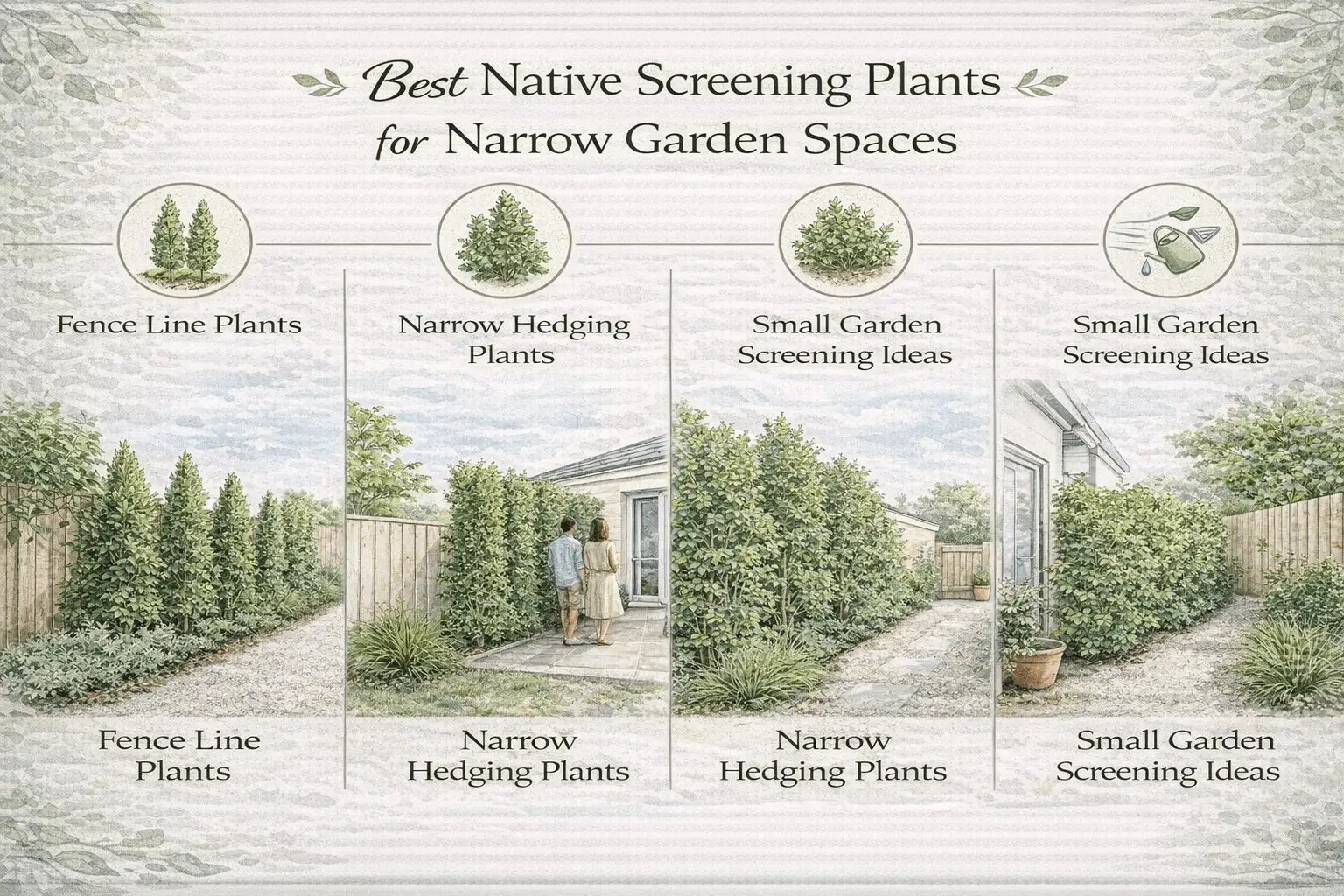
Many residential gardens have limited space along fences or property lines. In these areas, narrow screening plants are preferred to prevent overcrowding.
Native screening plants for narrow spaces grow vertically rather than spreading outward. These plants maintain a slim profile while still providing effective privacy.
Tall narrow screening plants Australia gardeners select are particularly useful for tight urban gardens.
Screening Plants Suitable for Fence Lines
Fence line planting requires species that grow upright without spreading too widely. The best plants for fence line Australia gardens typically have columnar growth habits.
Fence line screening plants for narrow spaces should also tolerate restricted root zones and reflected heat from fences. Many homeowners also look for the best plants for fence line Australia low maintenance landscapes can support.
Narrow Hedging Plants for Small Gardens
Small garden spaces often require compact hedging species. Narrow hedging plants Australia gardeners choose are typically shrubs that grow tall but remain slender.
Small Australian native hedge plants are useful for:
- Courtyard gardens
- Narrow side yards
- Urban properties
Narrow screening plants Australia landscapes use allow homeowners to achieve privacy without sacrificing valuable garden space.
Growing Fast Growing Australian Native Screening Plants in Pots
Container screening plants are useful in patios, balconies, and courtyards where in-ground planting is not possible. Fast growing Australian native screening plants for pots can create privacy barriers in confined outdoor spaces.
However, container growth has limitations. Plants grown in pots typically reach smaller sizes than those planted in the ground because root systems are restricted.
For successful container screening:
- Use large containers with good drainage
- Choose suitable soil mixes for native plants
- Provide regular watering and occasional fertilization
Screen plants Australia gardeners grow in containers are commonly used to create movable privacy screens or balcony wind protection.
Climate Considerations for Australian Native Screening Plants
Australia has diverse climate zones, ranging from cool temperate regions to subtropical and arid areas. Climate conditions strongly influence which native plants perform well for screening.
Selecting plants suited to local conditions improves growth success and reduces maintenance requirements.
-
Screening Plants Suitable for Victoria
Fast growing Australian native screening plants Victoria gardens use must tolerate cooler winters and occasional frost. Plants selected for this region should handle seasonal temperature variation.
Gardeners in Victoria often choose species that remain evergreen while still tolerating mild frost conditions.
-
Screening Plants Suitable for New South Wales
Fast growing Australian native screening plants NSW landscapes use must adapt to varied climates, including coastal, inland, and subtropical environments.
Plants suitable for New South Wales often tolerate moderate rainfall, coastal winds, and seasonal heat.
Low Maintenance Australian Native Screening Plants
Many native species require less care than exotic hedging plants. Low maintenance screening plants are popular because they reduce watering and fertilization needs.
Low maintenance screening plants Australia gardens favour typically possess natural drought tolerance. Their root systems adapt well to Australian soils, allowing them to survive dry conditions.
Best screen plants Australia homeowners select often require only occasional pruning and minimal irrigation once established.
Common Mistakes When Choosing Screening Plants
Homeowners often encounter problems when selecting privacy plants without considering long-term growth characteristics.
Common mistakes include:
- Choosing plants that grow too wide for the available space
- Ignoring sunlight requirements
- Selecting species that grow slowly instead of fast growing natives for screening
- Planting species unsuitable for the local climate or soil
Proper planning helps avoid overcrowding, poor growth, and ineffective privacy screens.
Environmental Benefits of Using Australian Native Screening Plants
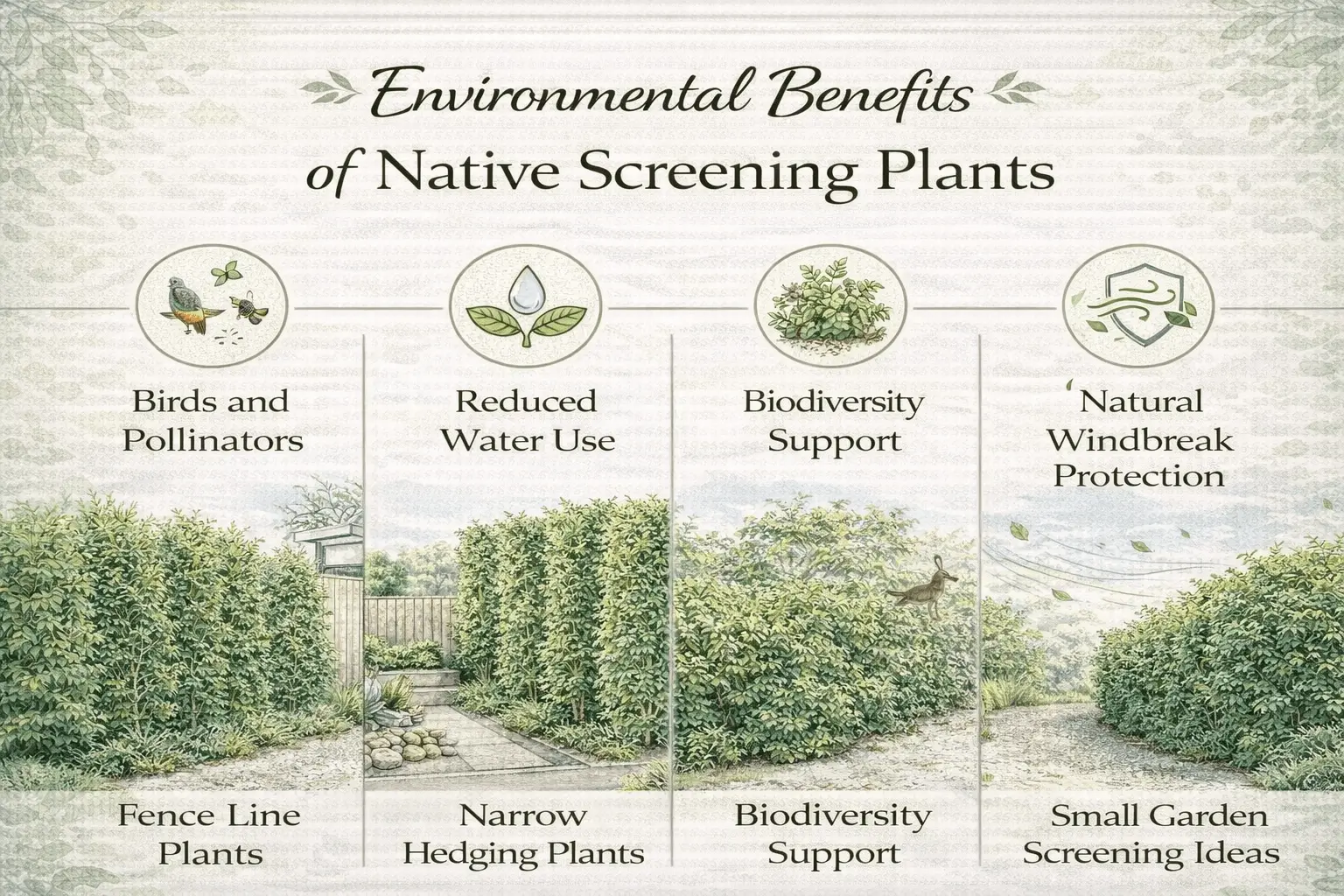
Australian native screening plants provide several ecological advantages compared with exotic hedges.
Native plant hedges support local wildlife by providing shelter and food sources for birds, insects, and pollinators. Many flowering native shrubs attract beneficial insects that contribute to garden health.
Additional environmental benefits include:
- Reduced water consumption
- Improved biodiversity
- Natural windbreak creation
- Habitat for native fauna
These ecological benefits make native screening plants valuable components of sustainable garden design.
Conclusion
Fast growing Australian native screening plants provide an effective solution for creating natural privacy barriers in residential landscapes. These plants establish dense foliage quickly, helping homeowners achieve garden screening, wind protection, and property boundaries in a relatively short time.
Because native species evolved in Australian conditions, they often require less maintenance and water than exotic hedge plants. Both native screening trees and native hedging plants can be selected to suit different garden sizes, climates, and design preferences.
Choosing the best native screening plants depends on available space, regional climate, and desired hedge height. With careful plant selection, homeowners can create attractive, low-maintenance privacy screens that also support local biodiversity.
Frequently Asked Questions
What are the fastest growing Australian native screening plants?
The fastest growing Australian native screening plants include certain native trees and hedging shrubs known for rapid establishment and dense foliage. These plants are commonly used to form privacy screens, windbreaks, and natural garden boundaries within a few years.
Which native plants make the best privacy screens in Australia?
The best privacy screens are created using native plants that combine dense foliage, strong vertical growth, and rapid establishment. Plants with evergreen leaves and upright growth habits are typically preferred because they maintain year-round privacy coverage.
Can Australian native screening plants grow in narrow garden spaces?
Yes, many Australian native screening plants are suitable for narrow spaces. Tall, upright species with columnar growth habits can be planted along fence lines or side yards without spreading too widely.
Are native screening plants low maintenance compared with exotic hedges?
Native screening plants are often lower maintenance because they are adapted to Australian climate conditions. Many require less watering, tolerate poor soils, and need minimal fertilization once established.
How tall do native screening trees usually grow?
Native screening trees vary in height depending on the species. Some shrubs used as hedges remain around two to four metres tall, while taller screening trees can grow well beyond this height if not pruned. Regular pruning can control growth and maintain desired screening height.



6 Responses