
Introduction
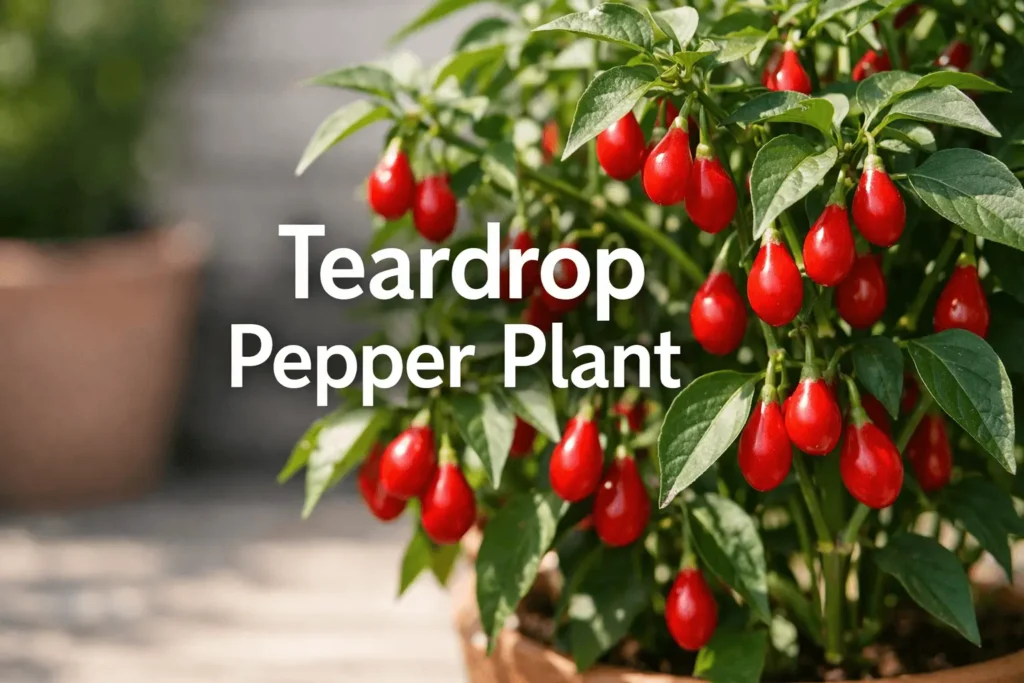
The teardrop pepper plant is a unique and visually striking pepper variety known for its tiny, droplet-shaped fruits and mild, slightly sweet flavor. Often called sweety drop peppers, biquinho pepper plant, or simply tiny red peppers sweet, this plant is popular in home gardens for both ornamental and culinary use.
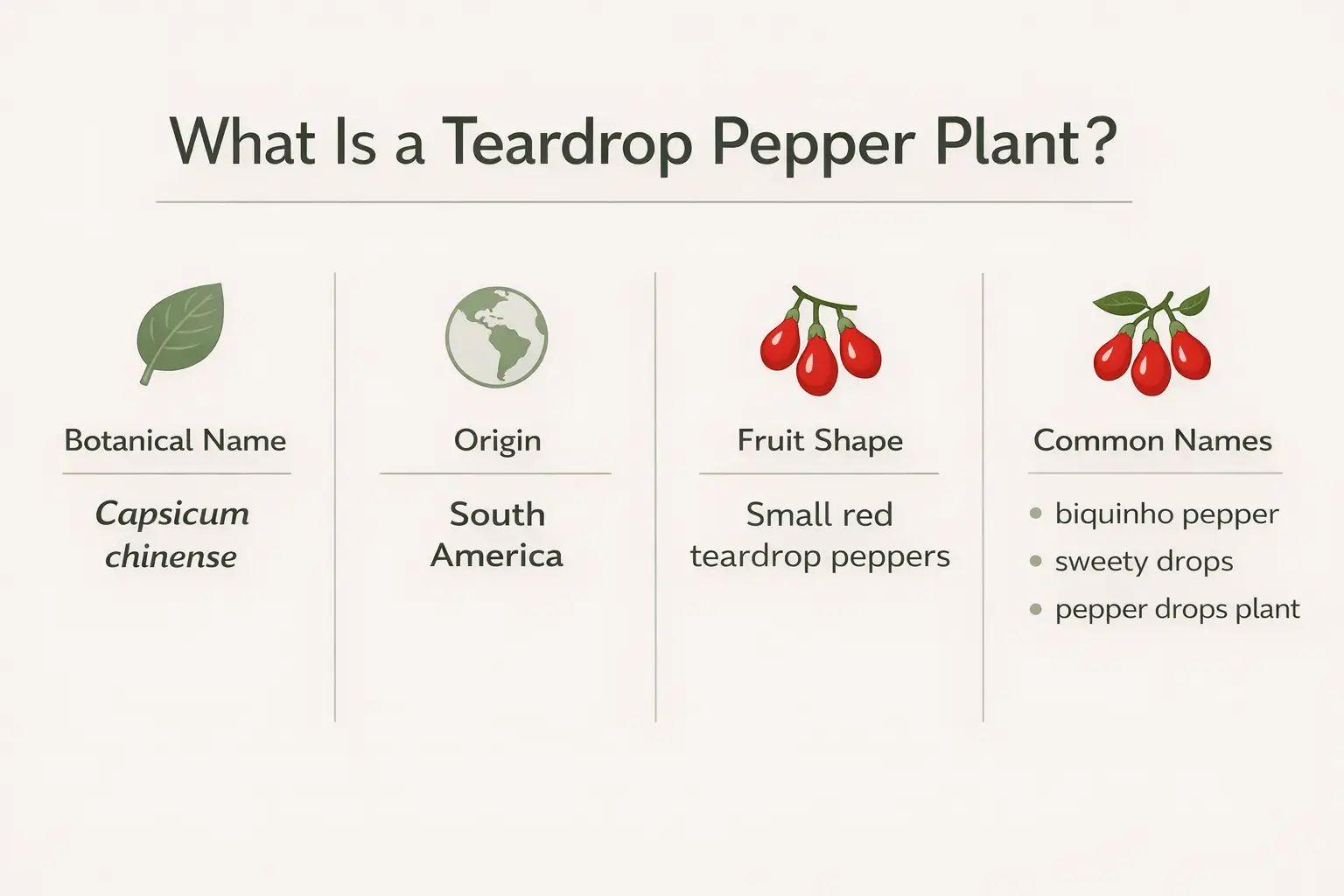
Scientifically classified as Capsicum chinense, the teardrop pepper plant originates from South America and is widely grown for its compact growth and high productivity.
This guide explains what teardrop peppers are, how they grow, and how to care for them successfully.
Quick Summary
- Teardrop pepper plant produces small, mild, sweet peppers often called sweety drops or biquinho peppers
- Ideal for containers and gardens due to compact size and high yield
- Requires warm conditions, sunlight, and moderate watering
- Popular for fresh eating and pickling due to their unique flavor
What Is a Teardrop Pepper Plant?
Names, origins, and classification
The teardrop pepper plant belongs to the species Capsicum chinense, a member of the Solanaceae family (learn more on Wikipedia). It is commonly known as the biquinho pepper plant, sweety drop pepper plant, and pepper drops plant.
The fruits are often referred to as teardrop peppers, tiny sweet peppers, or sweet teardrop peppers due to their distinctive droplet shape.
For those asking, what are the tiny little red peppers called, the answer is typically biquinho peppers or sweety drops, depending on the region.
Flavor profile and culinary identity
Teardrop peppers are known for their very mild heat, often close to zero on the Scoville scale.
Their flavor is:
- Sweet and slightly tangy
- Crisp and refreshing
- Mild enough for all palates
They are commonly used:
- Fresh in salads
- As garnishes
- Preserved in brine or vinegar
Teardrop Pepper vs Biquinho Pepper (Are They the Same?)
Comparison of names and varieties
Yes, the teardrop pepper plant and biquinho pepper plant refer to the same species. The difference lies mainly in naming conventions across regions.
Names like red biquinho pepper, biquinho red peppers, and sweety drops all describe the same small, sweet pepper variety.
Table: Teardrop vs Biquinho vs Sweety Drops
| Name | Region | Flavor | Appearance | Common Use |
| Teardrop Pepper | Global term | Sweet, mild | Small, droplet-shaped | Fresh, garnish |
| Biquinho Pepper | Brazil | Sweet, slightly tangy | Bright red, pointed tip | Traditional dishes |
| Sweety Drops | Peru | Sweet, mild | Glossy, small, red | Pickled, salads |
These naming variations include peruvian sweety drop peppers and sweety drop peruvian peppers, reflecting their commercial and regional identities.
Plant Size and Growth Characteristics
Typical plant height and spread
The teardrop pepper plant typically grows:
- Height: 30–60 cm (12–24 inches)
- Spread: 30–50 cm
Its compact, bushy structure makes it ideal for:
- Containers
- Balcony gardens
- Small garden beds
Growth habit and fruit production
The plant has a dense, branching growth habit and produces a large number of fruits throughout the growing season.
Key characteristics:
- High-yield production
- Continuous fruiting under proper conditions
- Small fruits known as teardrop tiny peppers
This makes the pepper drop plant both decorative and productive.
Growth Rate of Teardrop Pepper Plant
Growth speed and lifecycle stages
The teardrop pepper plant follows a moderate growth rate.
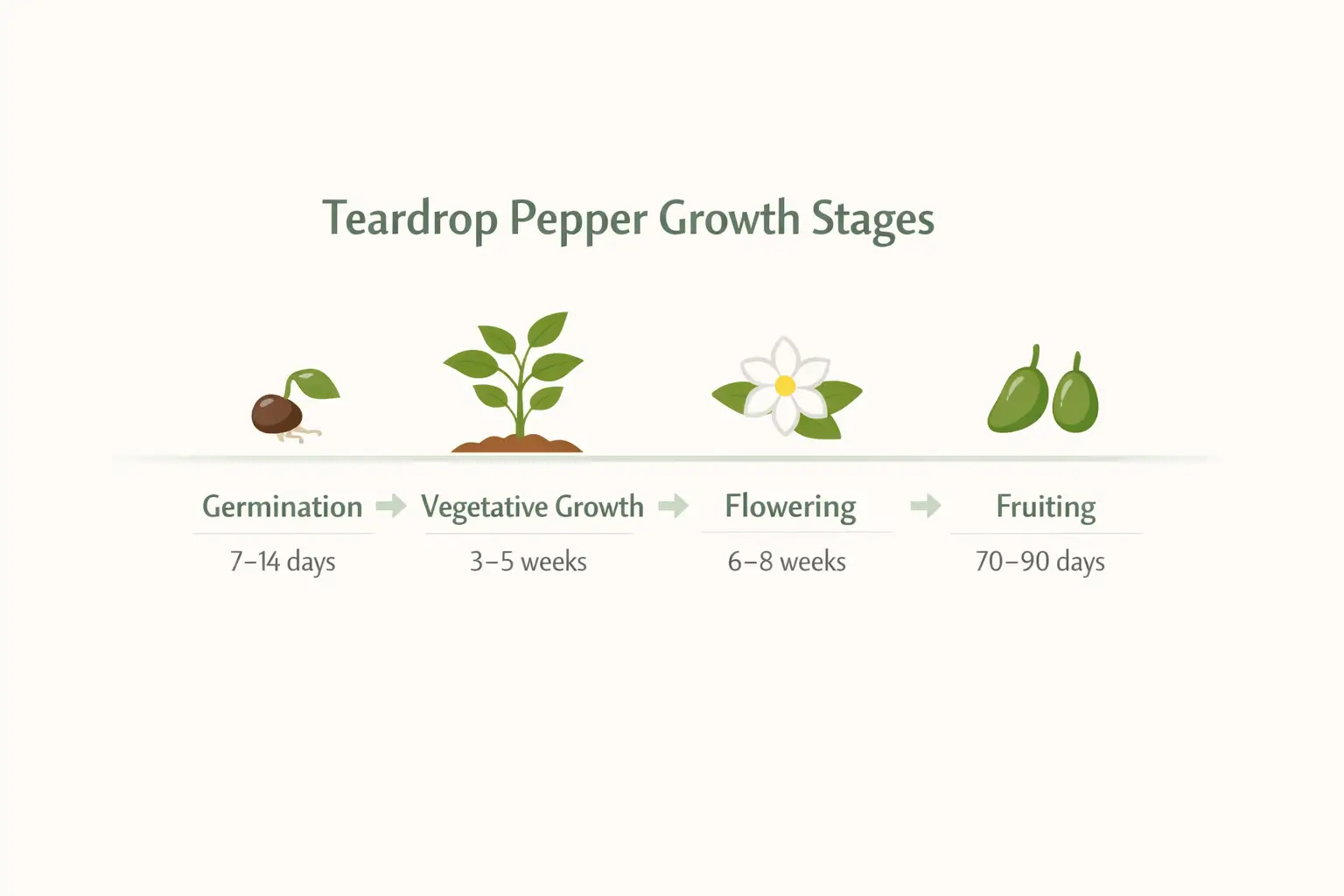
Typical lifecycle:
- Germination: 7–14 days
- Vegetative growth: 3–5 weeks
- Flowering: 6–8 weeks
- Fruit production: 70–90 days after transplant
Growth is fastest in warm seasons with stable temperatures.
Factors affecting growth rate
Growth speed depends on several environmental factors:
- Temperature: Optimal range 20–30°C
- Sunlight: At least 6–8 hours daily
- Soil quality: Rich, well-draining soil
- Watering: Consistent but not excessive
Beginner gardeners often underestimate the importance of warmth and light, which directly impact productivity.
Teardrop Pepper Plant Care Guide
Light, water, and soil requirements
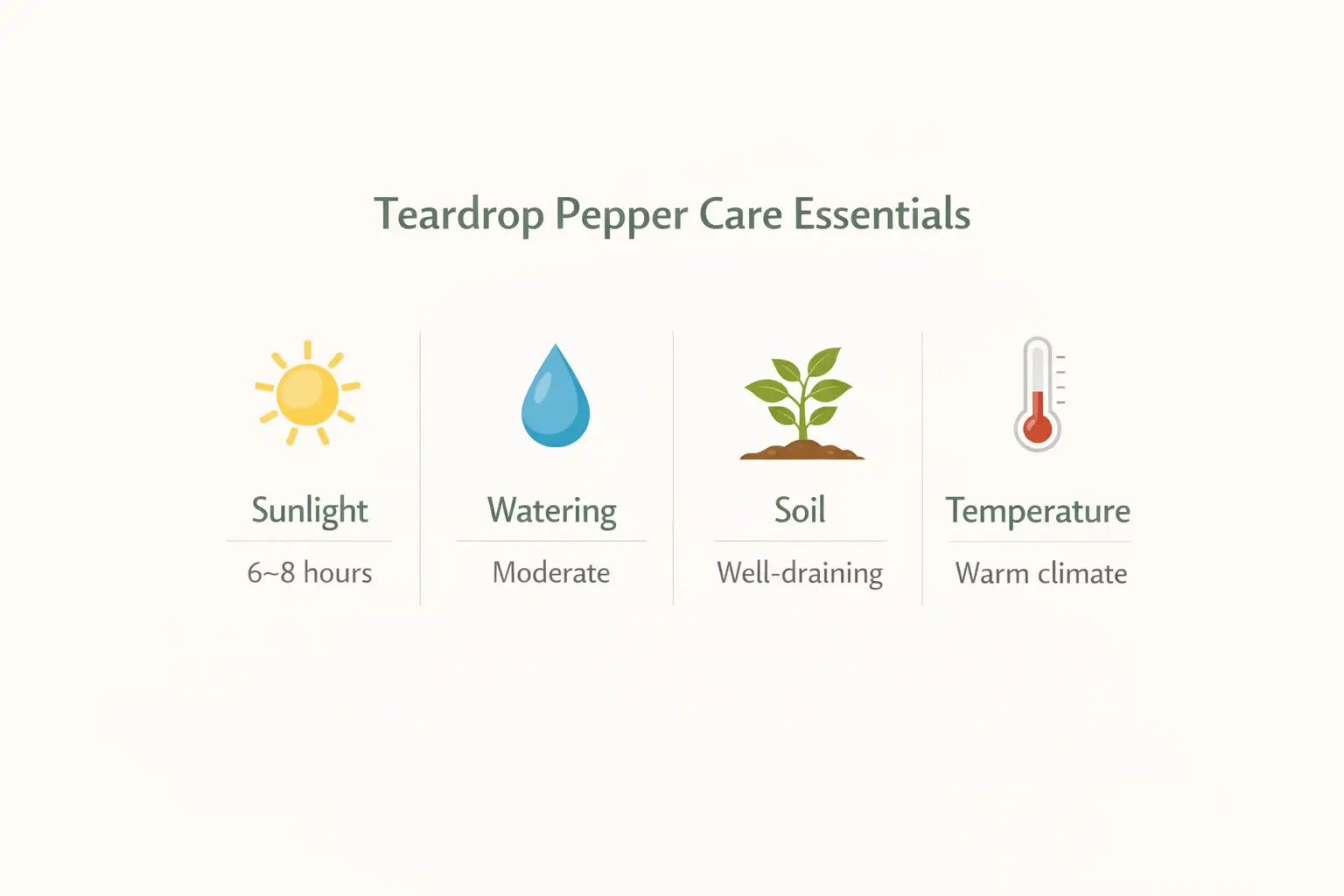
For healthy growth, provide:
- Full sun exposure (minimum 6 hours daily)
- Well-draining soil rich in organic matter
- Moderate watering, allowing soil to dry slightly between watering
Overwatering is one of the most common mistakes. Proper watering and light balance are essential for most compact plants, similar to care techniques explained in Japanese Money Plant Care.
Fertilization and pruning tips
To maximize yield:
- Use a balanced fertilizer every 2–3 weeks
- Switch to potassium-rich fertilizer during fruiting
- Light pruning improves airflow and fruit production
Climate and growing conditions
Teardrop peppers prefer:
- Warm, frost-free climates
- Indoor growing in cooler regions
- Stable temperatures without sudden drops
They perform well both outdoors and in containers indoors with sufficient light.
Growing Teardrop Pepper Plant from Seeds
Seed selection and planting process
Seeds are widely available as:
- Teardrop pepper seeds
- Biquinho seeds
- Pepper drops seeds
- Sweety drop seeds
Planting steps:
- Sow seeds indoors 6–8 weeks before last frost
- Maintain soil temperature around 22–28°C
- Keep soil moist but not waterlogged
Seedling care and transplanting
Once seedlings develop:
- Provide strong light
- Transplant after 4–6 weeks
- Maintain spacing of 30–45 cm
Healthy root development is essential for long-term productivity.
Common Problems and How to Fix Them (Problem-Solution)
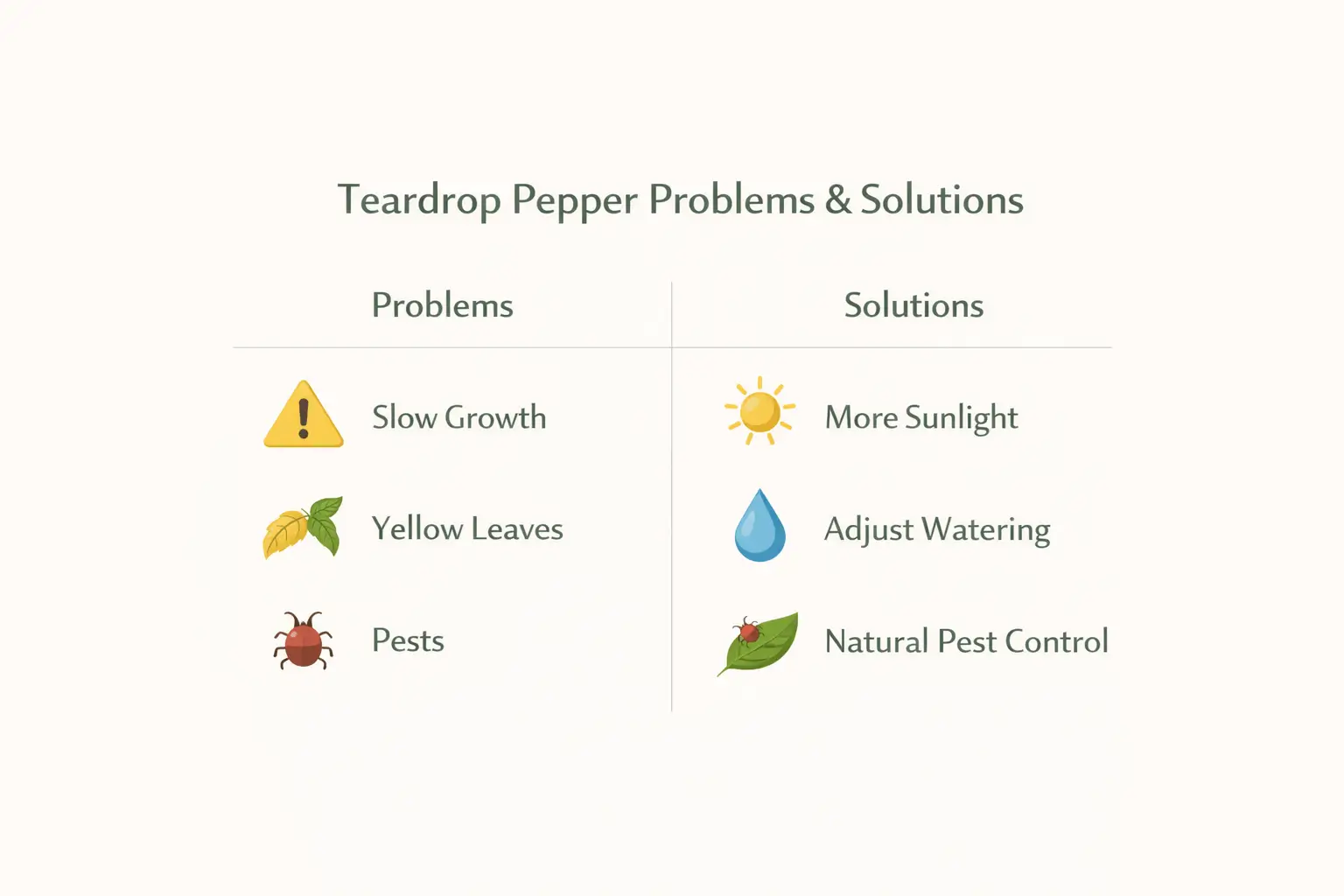
Slow growth or no fruiting
The main causes are lack of sunlight and poor soil nutrition.
Solutions:
- Increase sun exposure
- Use balanced fertilizer
- Ensure warm growing conditions
Yellow leaves and overwatering
Yellow leaves usually indicate excess water or poor drainage.
Fixes:
- Reduce watering frequency
- Improve soil drainage
- Use pots with drainage holes
Pests and environmental stress
Common pests include:
- Aphids
- Whiteflies
- Spider mites
Prevention methods:
- Use neem oil
- Maintain airflow
- Inspect plants regularly
Harvesting and Uses of Teardrop Peppers
When and how to harvest
Teardrop peppers are ready when they turn bright red.
Harvesting tips:
- Pick regularly to encourage more fruiting
- Use gentle hand picking or scissors
- Harvest continuously throughout the season
Culinary uses and preservation
These peppers are widely used for:
- Fresh eating
- Salad toppings
- Garnishing dishes
They are especially popular as sweety drops peppers in pickled form, valued for their sweet and tangy flavor.
Beginner Mistakes to Avoid When Growing Teardrop Peppers
Common growing mistakes
Beginners often make these errors:
- Overwatering the plant
- Providing insufficient sunlight
- Planting too close together
Practical tips for better results
To improve outcomes:
- Water only when soil feels dry
- Ensure full sun exposure
- Maintain proper spacing
- Use nutrient-rich soil
These small adjustments significantly improve plant health and yield. Many beginners struggle with overwatering, a common issue also discussed in Zamioculcas Zamiifolia Care Guide, where controlled watering is key to plant health.
Teardrop Pepper Plant vs Other Small Pepper Varieties (Differentiation)
Comparison with other mild peppers
Compared to other small peppers, teardrop peppers stand out due to:
- Distinct droplet shape
- Mild sweetness instead of heat
- Higher ornamental value
Why gardeners choose teardrop peppers
Gardeners prefer this plant because:
- It is visually attractive
- Produces high yields
- Suitable for small spaces
- Offers both decorative and edible value
Like many compact ornamental plants, including those highlighted in Kalanchoe Plant Benefits, teardrop peppers offer both decorative appeal and practical use.
Conclusion
The teardrop pepper plant is a versatile and beginner-friendly plant known for its sweet flavor, compact size, and attractive fruit. Its identity as biquinho peppers or sweety drops highlights its global popularity and culinary appeal.
By understanding its growth rate, care requirements, and common challenges, gardeners can successfully grow healthy plants with consistent yields. Whether used for decoration or cooking, the teardrop pepper plant remains a practical and rewarding choice.
FAQs
What are teardrop peppers called in different regions?
Teardrop peppers are commonly known as biquinho peppers, sweety drops, or tiny sweet peppers, depending on the region.
Are teardrop peppers spicy or sweet?
They are mostly sweet with very mild heat, making them ideal for fresh consumption.
How long does a teardrop pepper plant take to grow?
Typically, it takes about 70–90 days from transplanting to produce mature peppers.
Can teardrop pepper plants grow in pots?
Yes, their compact size makes them perfect for container gardening.
Why are my teardrop pepper plants not producing fruit?
Common reasons include lack of sunlight, poor soil nutrition, or improper watering.