
Introduction
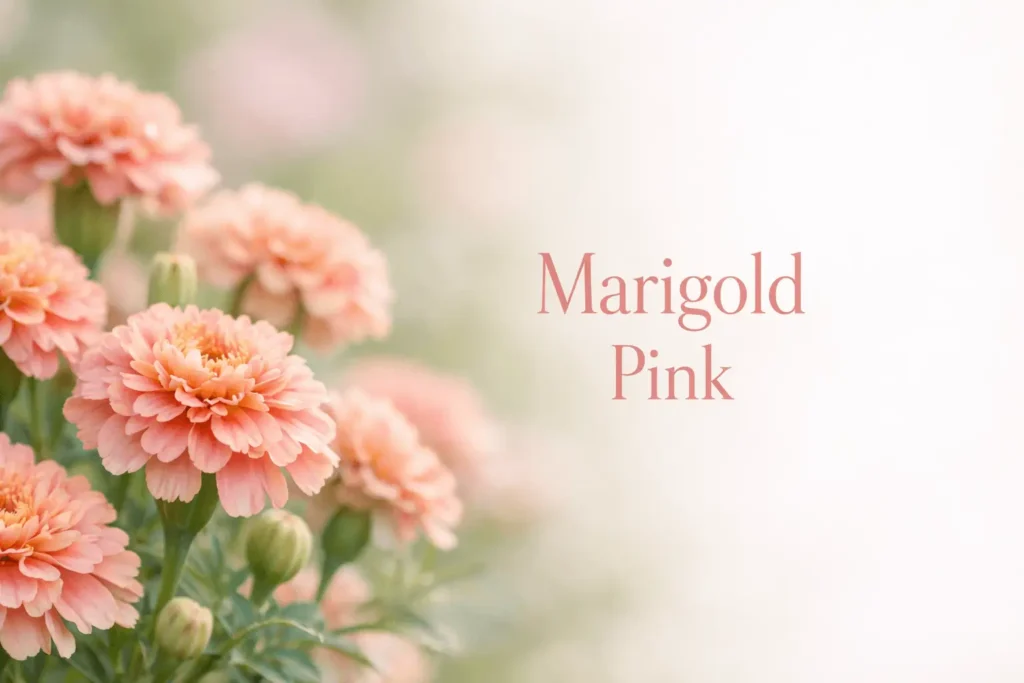
Marigold pink refers to rare pink-toned marigold varieties and color variations often seen in cultivars like strawberry blonde marigold. While traditional marigolds are yellow, orange, or red, breeders have developed soft pink and blush shades that expand the classic marigold color range. Understanding marigold pink color, its meaning, and how these flowers grow helps gardeners and plant enthusiasts identify real varieties and care for them properly.
Quick Summary
- Pink marigolds are not naturally pure pink but appear in blended shades like peach, blush, and rose.
- The most well-known variety is strawberry blonde marigold, especially among French marigolds.
- Marigold pink meaning often relates to warmth, creativity, and emotional expression.
- Color variation depends on genetics, temperature, and growing conditions.
What Is Marigold Pink and Does It Really Exist?
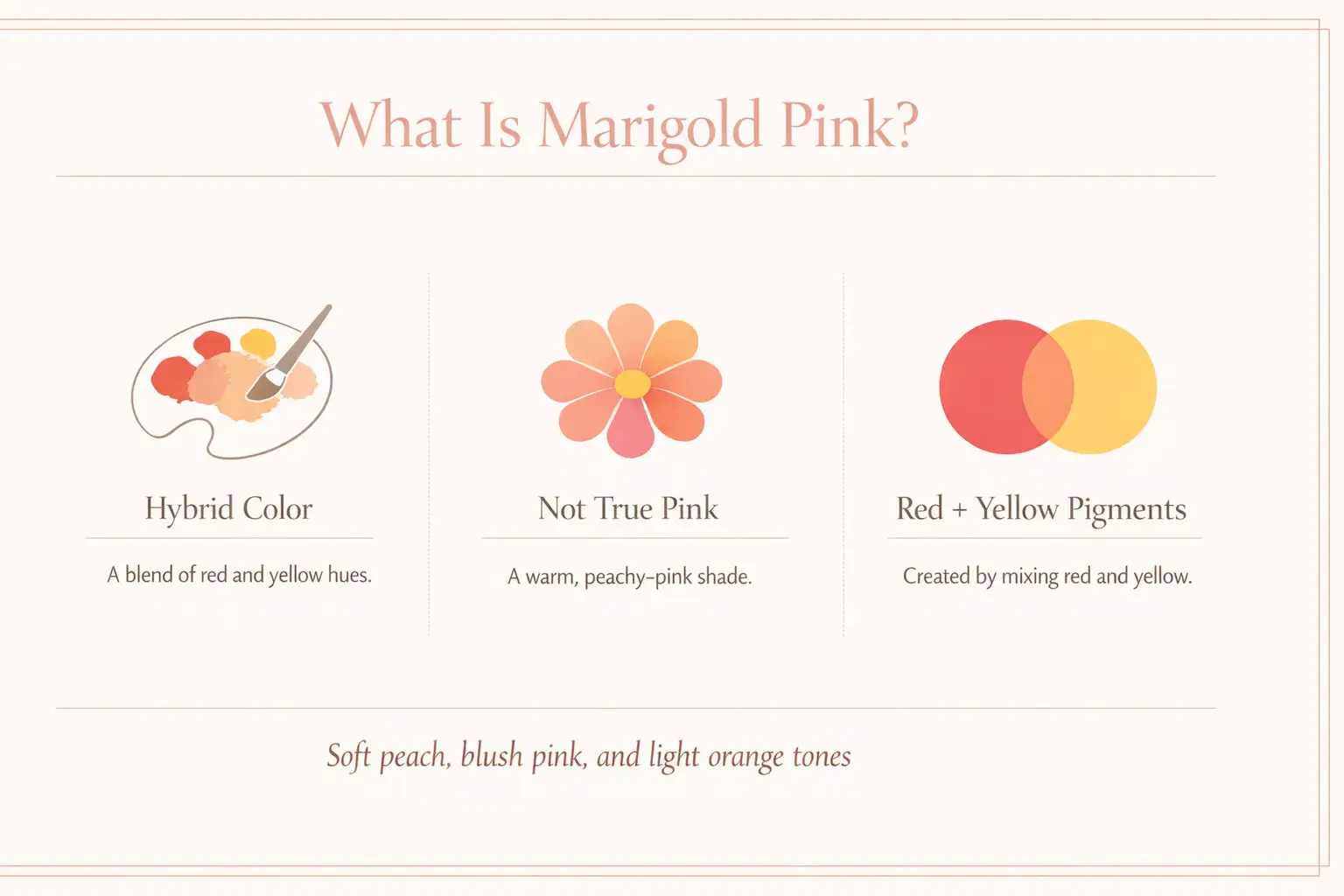
Marigold pink refers to marigold flowers that display soft pink, peach, or blush tones rather than true pink pigmentation. These flowers do exist, but they are hybrid variations rather than naturally occurring pure pink species.
Pink marigold flower types are typically the result of selective breeding, where red and yellow pigments combine to create unique shades. A marigold plant pink appearance often varies depending on environmental conditions and cultivar genetics. Pink marigold variations are similar to other uncommon color claims—if you’re curious about rare shades, you can also explore Purple Marigold Flower, which explains color myths and hybrid variations in detail.
Fully pink marigolds are uncommon because marigolds naturally produce pigments that favor yellow, orange, and red tones. What gardeners see as marigolds pink is usually a blend of these pigments rather than a true pink flower.
Types of Pink Marigold Varieties
French Marigold Pink and Strawberry Blonde Variants
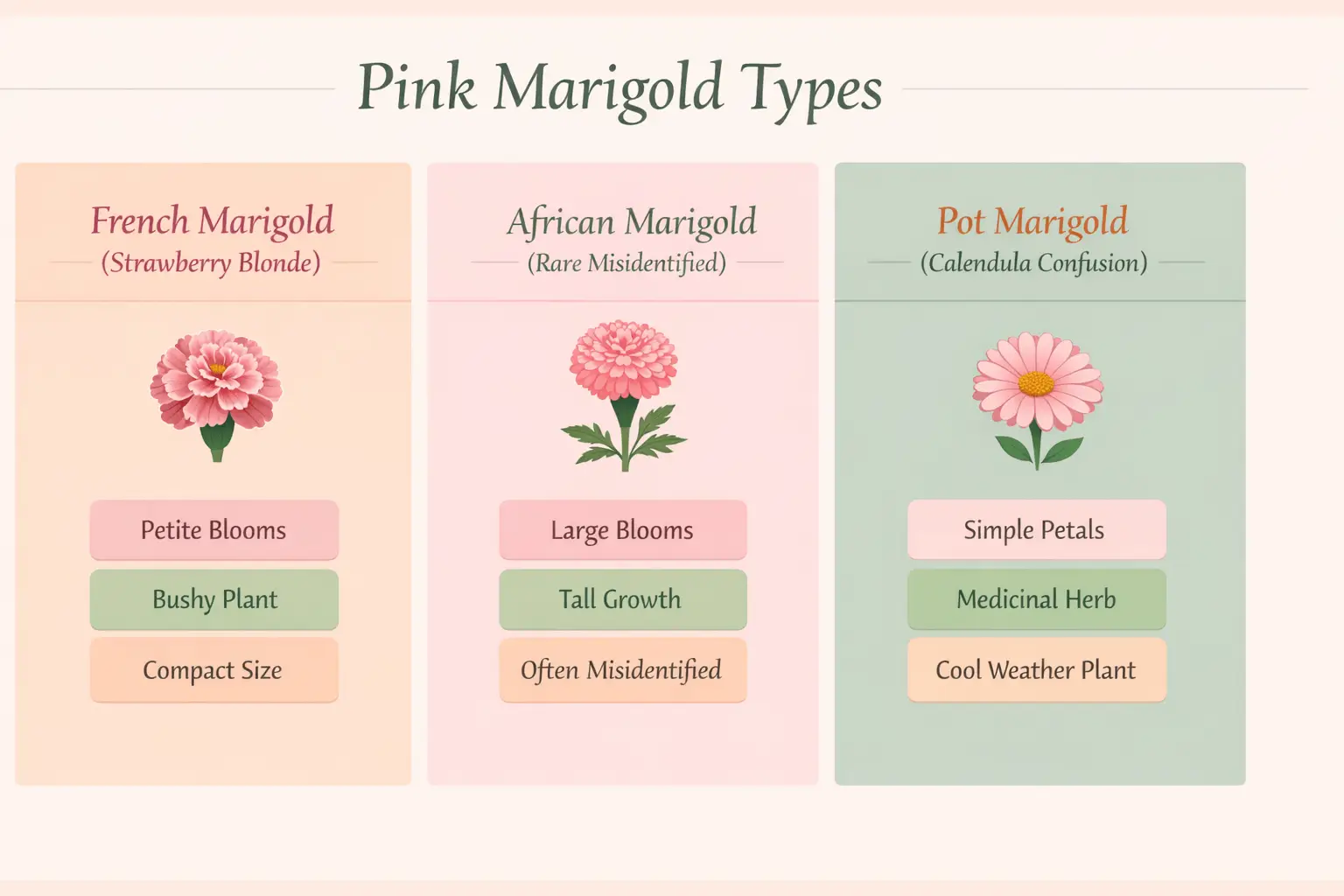
French marigolds (Tagetes patula) are the most common source of pink-toned varieties. The strawberry blonde marigold is the best-known example, producing blooms that shift between pink, peach, and rose hues.
- Strawberry blonde french marigold changes color with temperature
- Pink french marigolds often show gradient petals
- Marigold strawberry blonde is widely available in seed form
These varieties are popular because they provide soft, pastel-like tones not typically associated with marigolds.
Other Variations and Misidentified Types
Some plants labeled as african marigold pink are often misidentified, as true African marigolds (Tagetes erecta) rarely produce pink tones.
Pot marigold pink usually refers to Calendula officinalis, which is not a true marigold. Varieties like “pink surprise” calendula can resemble pink marigolds but belong to a different plant genus.
Marigold Pink Color Explained (Color Science + Visual Traits)
What defines marigold color / marigold pink color / marigold pink colour
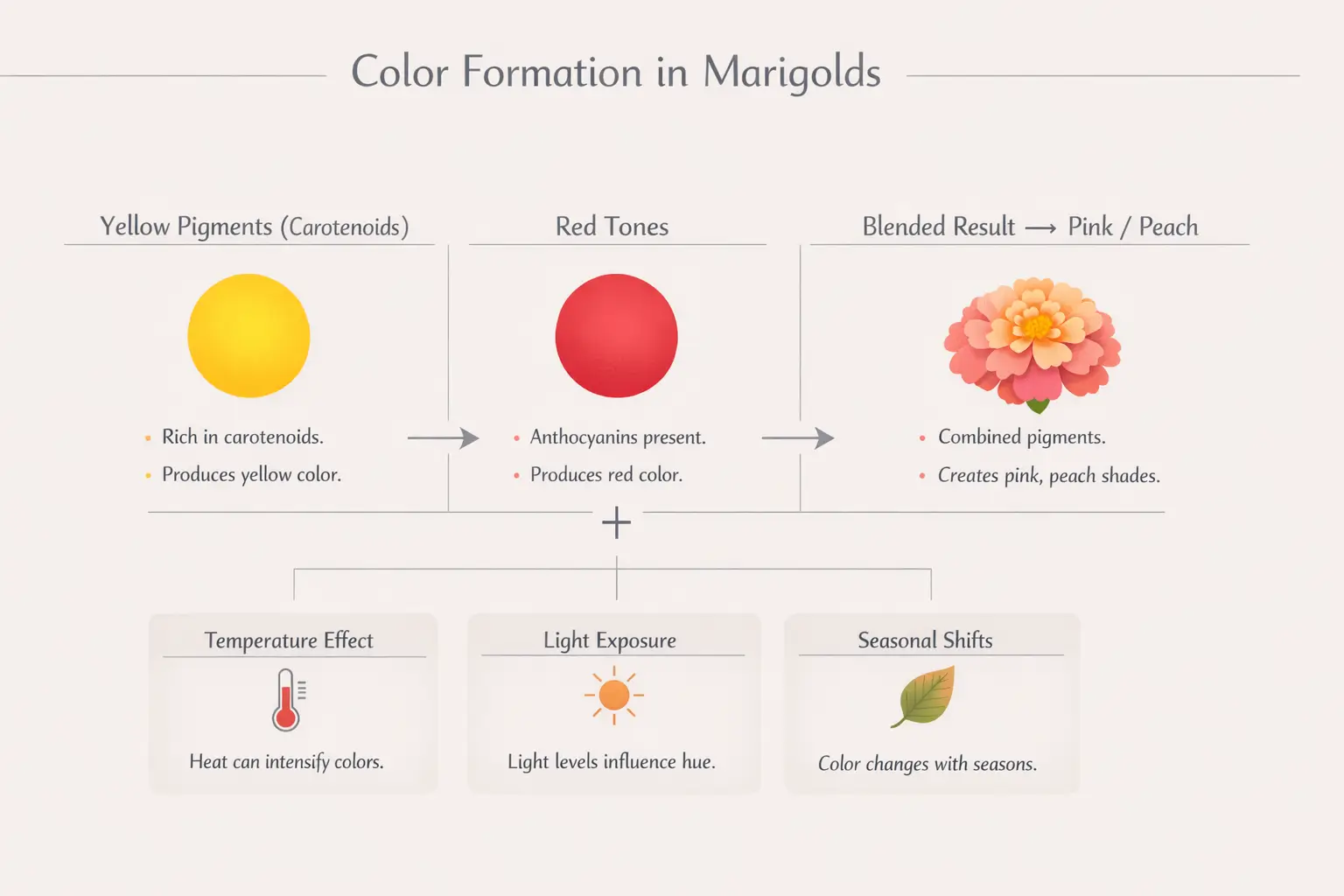
Marigold color is primarily determined by carotenoid pigments, which produce yellow and orange tones. Pink shades appear when these pigments blend with red tones and environmental factors influence expression.
How pink shades form from yellow and red pigments
Pink-toned marigolds form through a mix of yellow and red pigments, creating softer hues like peach, blush, or rose rather than true pink.
Relationship with marigold red / marigold flower red / red marigold flowers
Red marigold flowers contain stronger anthocyanin-like influences, which contribute to deeper hues. Pink varieties are essentially lighter expressions of these red pigment interactions.
Key Factors Influencing Color:
- Pigment blending (carotenoids + anthocyanin influence)
- Environmental effects on color intensity
- Seasonal color shifts
Marigold color schemes vary widely depending on temperature, light exposure, and genetics, explaining why the same plant may show different shades over time. Marigolds belong to the Tagetes genus, a group of flowering plants known for their vibrant pigments and wide color range (learn more about their botanical classification on Wikipedia).
Marigold Pink Meaning and Symbolism
Marigold pink meaning is associated with warmth, creativity, and emotional expression. Unlike traditional marigold symbolism, which often relates to energy and celebration, pink tones introduce softer emotional interpretations.
Symbolic Associations:
- Creativity and warmth
- Gentleness and affection
- Celebration and uniqueness
Pink marigolds are often seen as more delicate and expressive compared to the bold symbolism of yellow and orange marigolds. Flower color plays a major role in symbolism, similar to how shades are interpreted in other blooms like Blue Cosmos Flower, where color meaning also shifts emotional perception.
Growth and Appearance of Pink Marigold Plants
Plant Size
Pink marigold plants typically grow between 6 to 18 inches tall for French varieties, with a compact, bushy spread. The term “marigold tree pink” is misleading, as marigolds are herbaceous annuals, not trees.
- French marigolds: compact and low-growing
- African marigolds: taller but rarely pink
- Spread depends on spacing and soil conditions
Growth Rate
Pink marigolds grow at a moderate to fast rate, similar to standard marigolds.
- Germination occurs within 5–10 days
- Flowering begins in 6–8 weeks
- Blooming continues throughout the warm season
Growth speed is influenced by sunlight, temperature, and soil quality.
How to Grow Pink Marigolds from Seeds
Growing pink marigolds from seeds follows the same process as standard marigolds, with seeds such as strawberry blonde marigold seeds or pink french marigold seeds.
Step-by-Step Guide:
- Start seeds indoors 4–6 weeks before the last frost
- Use well-draining soil with light moisture
- Provide full sunlight or strong artificial light
- Transplant seedlings after temperatures stabilize
- Space plants 6–12 inches apart
Proper spacing and sunlight ensure healthy growth and better color development.
Care Guide for Pink Marigold Plants
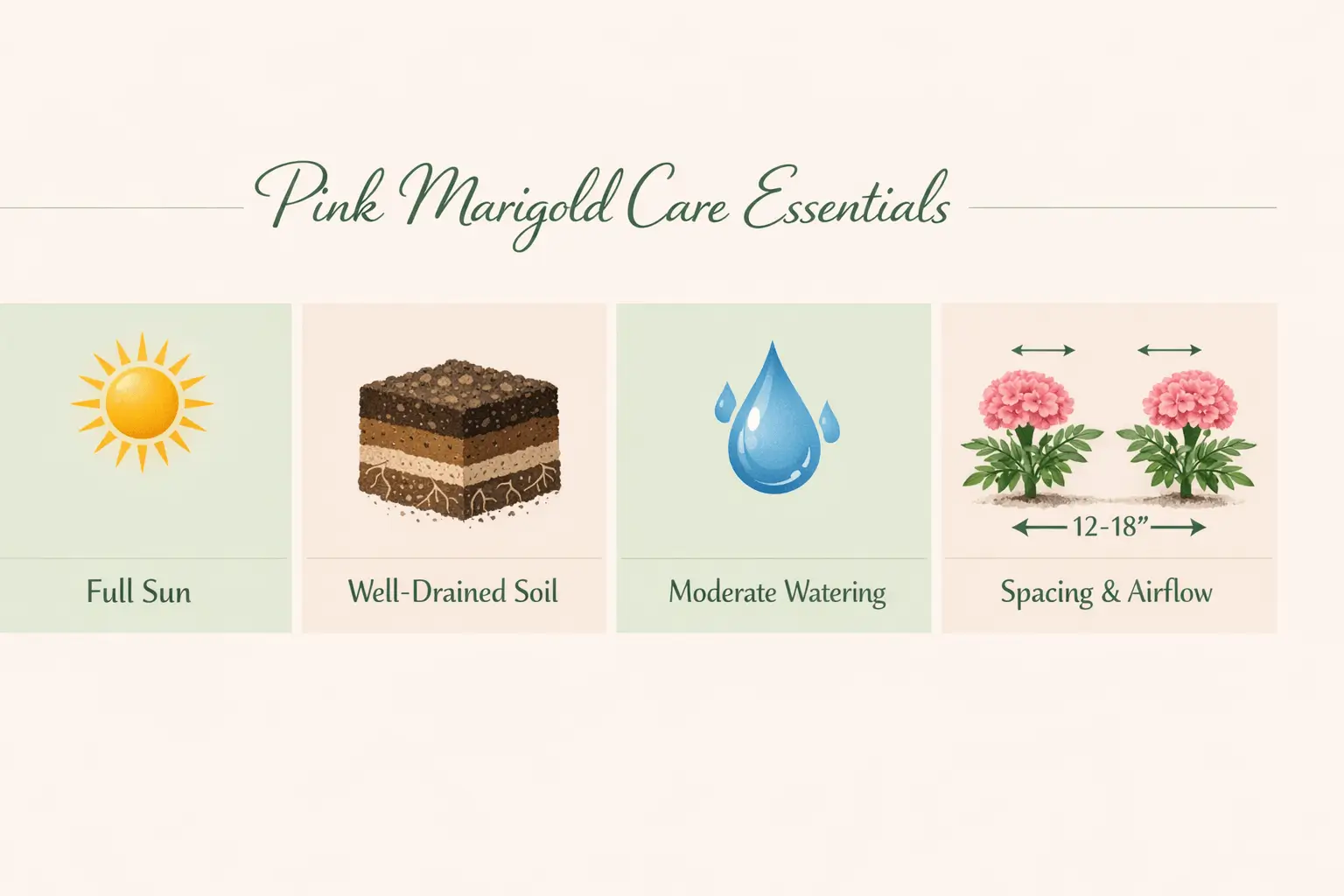
Pink marigolds require simple, consistent care similar to other annual flowers.
Essential Care Tips:
- Full sun requirement (6–8 hours daily)
- Well-drained soil to prevent root rot
- Moderate watering; avoid overwatering
- Occasional fertilization for better blooms
These plants tolerate heat well but may show color changes depending on climate conditions.
Common Problems and Color Changes in Marigolds
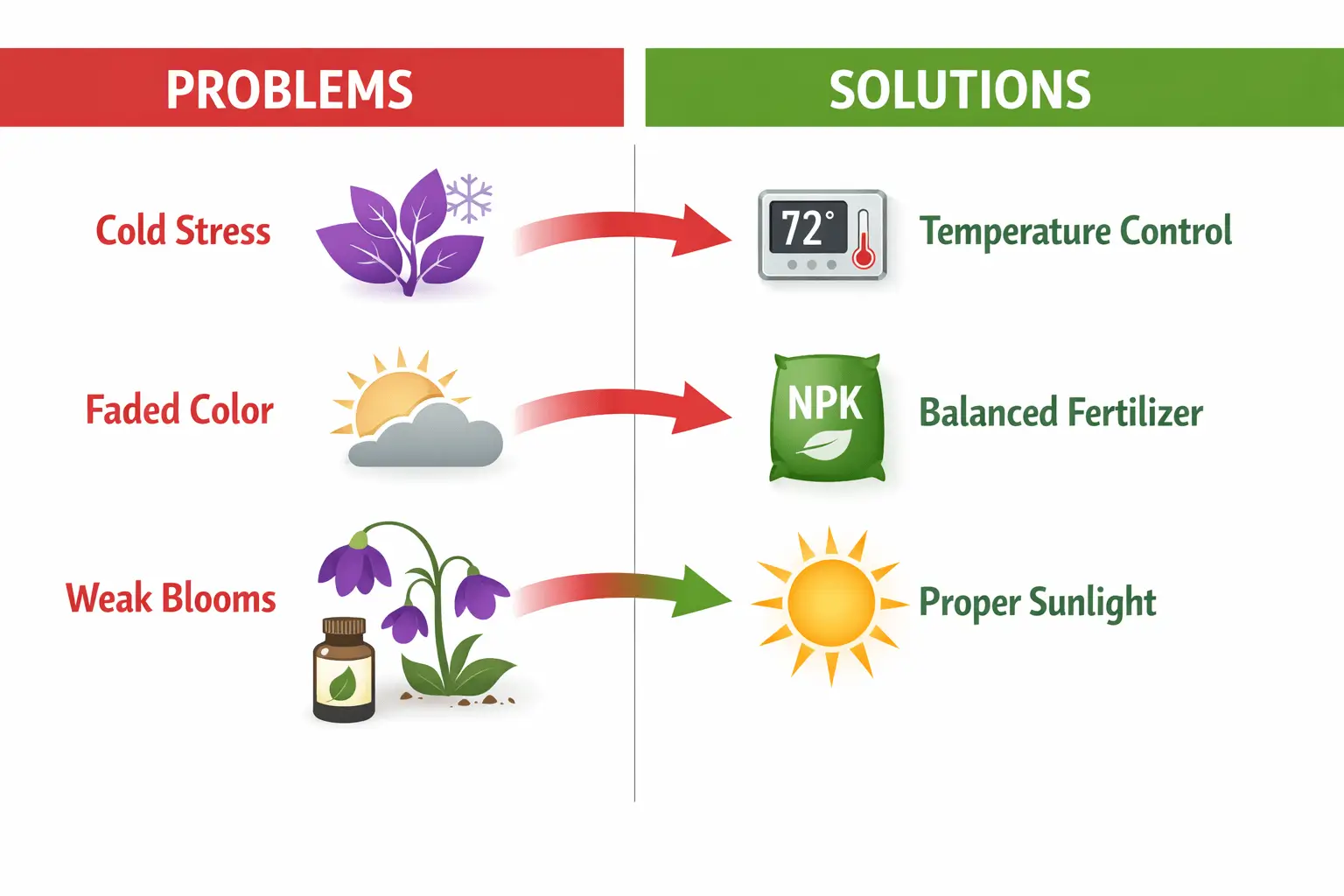
Why Do Marigold Leaves Turn Purple?
Marigold leaves turn purple due to stress, most commonly caused by cold temperatures, phosphorus deficiency, or environmental shock.
Early-stage seedlings are especially sensitive to temperature drops, which can trigger purple pigmentation in leaves.
Why Pink Shades Fade or Change
Pink marigold colors may fade or shift due to environmental conditions.
Causes:
- High temperatures intensifying orange tones
- Low light reducing pigment expression
- Nutrient imbalances
Fixes:
- Maintain consistent sunlight exposure
- Improve soil nutrition
- Avoid temperature extremes
Prevention Tips:
- Use balanced fertilizer
- Ensure proper drainage
- Grow in stable seasonal conditions
Comparison: Pink vs Red vs Traditional Marigold Colors
| Feature | Pink Marigold | Red Marigold | Yellow/Orange Marigold |
| Rarity | High | Medium | Very common |
| Color Source | Hybrid blending | Natural pigments | Natural pigments |
| Popular Variety | Strawberry Blonde | Red French Marigold | African/Standard |
Pink marigolds stand out due to their rarity and hybrid origin, while traditional colors remain more stable and widely available.
Are Pink Marigolds Natural or Hybrid?
Pink marigolds are primarily hybrid plants developed through selective breeding. They are not naturally occurring in the wild as true pink species. Breeders combine genetic traits to produce softer color variations, resulting in unique cultivars like strawberry blonde marigold. This explains why pure pink marigolds remain rare. This concept is similar to other plant color misconceptions—just like in Can Strawberries Be Blue?, where unusual colors are often the result of hybridization or misunderstanding.
Beginner Mistakes When Growing Pink Marigolds
Common mistakes can affect both growth and color quality.
- Overwatering, leading to root issues
- Poor sunlight exposure, reducing blooms
- Expecting true pink blooms instead of blended tones
Understanding these factors helps gardeners achieve better results and avoid disappointment.
Conclusion
Marigold pink represents a unique and evolving variation within the marigold family, most commonly seen in hybrid cultivars like strawberry blonde marigold. While true pink marigolds are rare, these blended tones offer a softer alternative to traditional yellow and orange blooms. By understanding their color behavior, growth patterns, and care needs, gardeners can successfully grow and maintain vibrant pink-toned marigolds.
FAQs
1. Are pink marigolds real or artificially created?
Pink marigolds are real but typically hybrid varieties, not naturally occurring pure pink flowers.
2. What is the most popular pink marigold variety?
The most recognized variety is strawberry blonde marigold, especially among French marigolds.
3. Can marigolds turn pink naturally?
They do not turn fully pink naturally, but hybrid breeding produces pink-toned blooms.
4. Why are my marigold leaves turning purple?
This usually happens due to cold stress, nutrient deficiency, or environmental changes.
5. Do pink marigolds require different care than regular marigolds?
No, their care requirements are nearly identical—full sun, well-drained soil, and moderate watering.



One Response