
Introduction
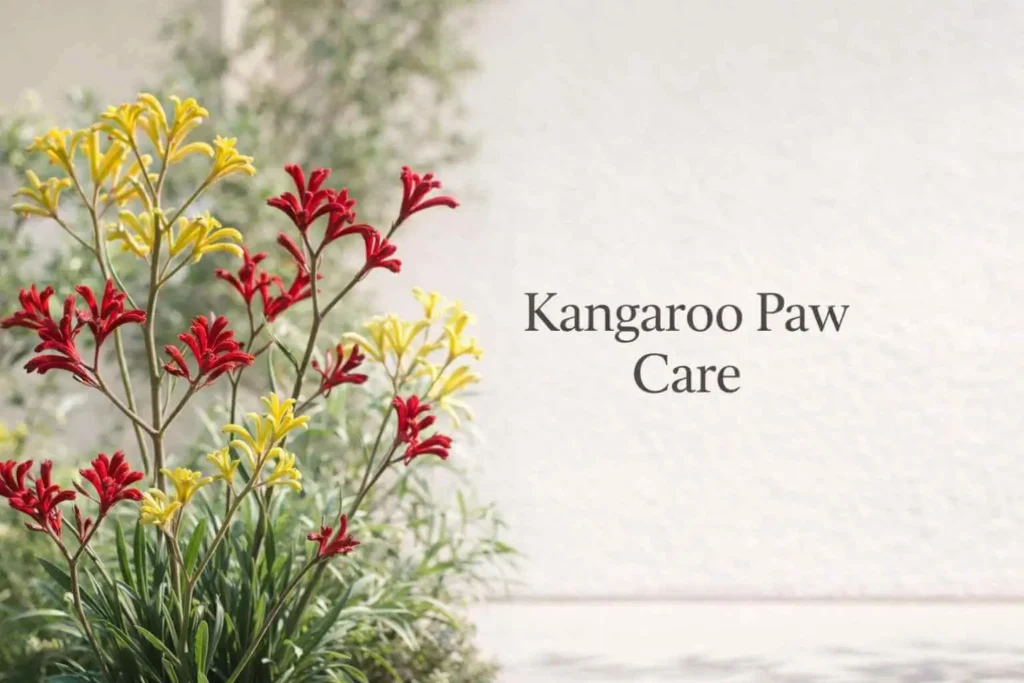
Kangaroo paw care refers to the essential growing, maintenance, and environmental practices needed to keep kangaroo paw plants (Anigozanthos) healthy, vibrant, and flowering. Known for their fuzzy, claw-shaped blooms and wide range of kangaroo paw colours, these Australian natives require specific conditions related to sunlight, soil drainage, watering, and pruning to thrive successfully.
Quick Summary
- Kangaroo paw thrives in full sun, well-draining soil, and low humidity
- Proper pruning and seasonal care ensure continuous flowering
- Overwatering and poor drainage are the main causes of plant decline
- Suitable for both pots and garden beds with slight care differences
What Is Kangaroo Paw and Why Does It Require Specific Care?
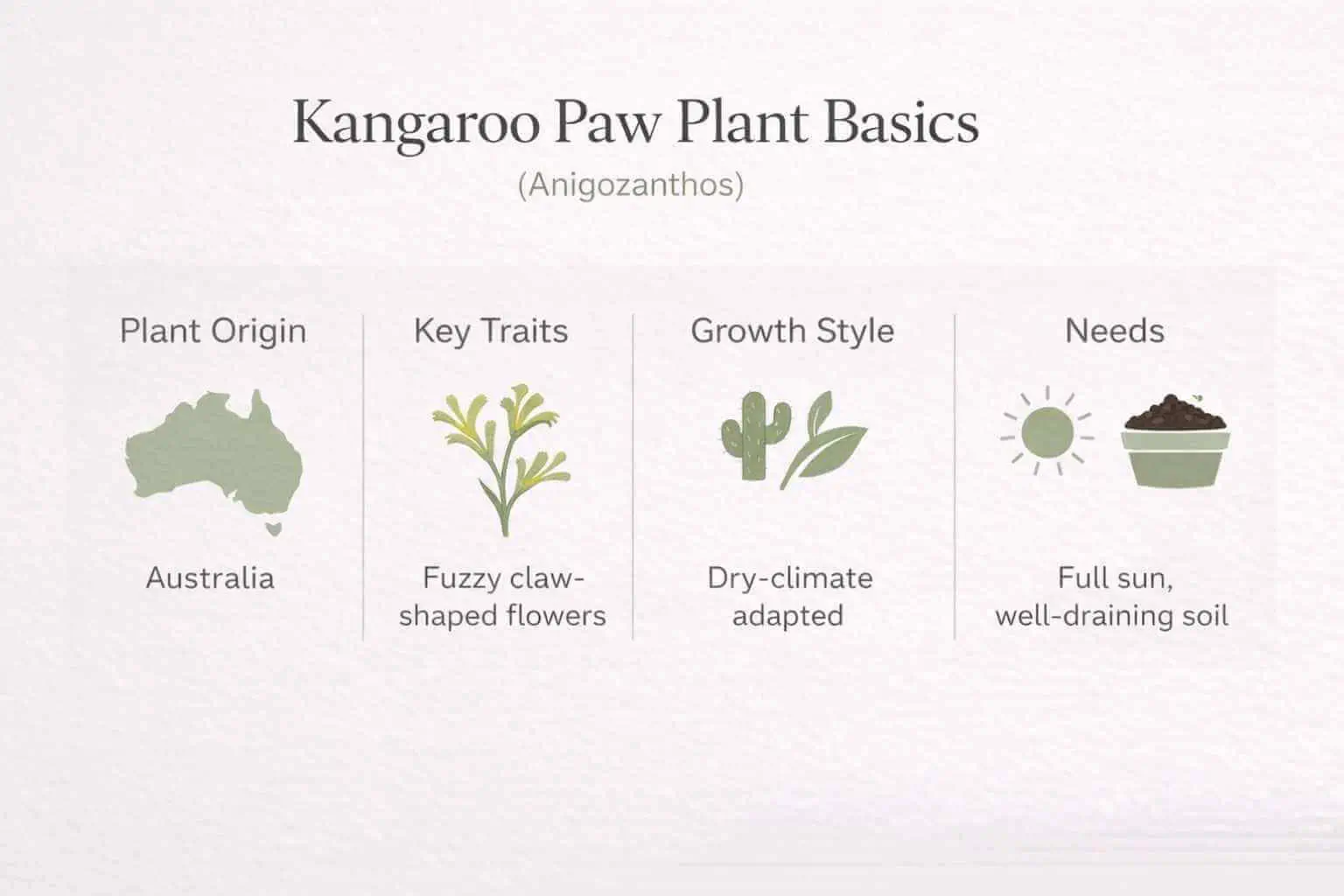
Kangaroo paw (Anigozanthos) is a flowering plant native to Australia, adapted to dry, nutrient-poor environments. Its structure and root system differ from typical garden plants, making specialized care essential for long-term health.
Unlike moisture-loving plants, kangaroo paws prefer:
- Dry conditions
- Excellent airflow
- Minimal soil moisture retention
Because of this adaptation, standard gardening practices—especially heavy watering and rich soil—can harm the plant. Understanding kangaroo paws plant care begins with recognizing its natural habitat. Kangaroo paw (Anigozanthos) is a flowering plant native to Australia, adapted to dry, nutrient-poor environments. Its structure and root system differ from typical garden plants, making specialized care essential for long-term health. (Source: Wikipedia – Anigozanthos)
Ideal Growing Conditions for Kangaroo Paw
Sunlight Requirements: Full Sun vs Kangaroo Paw Shade
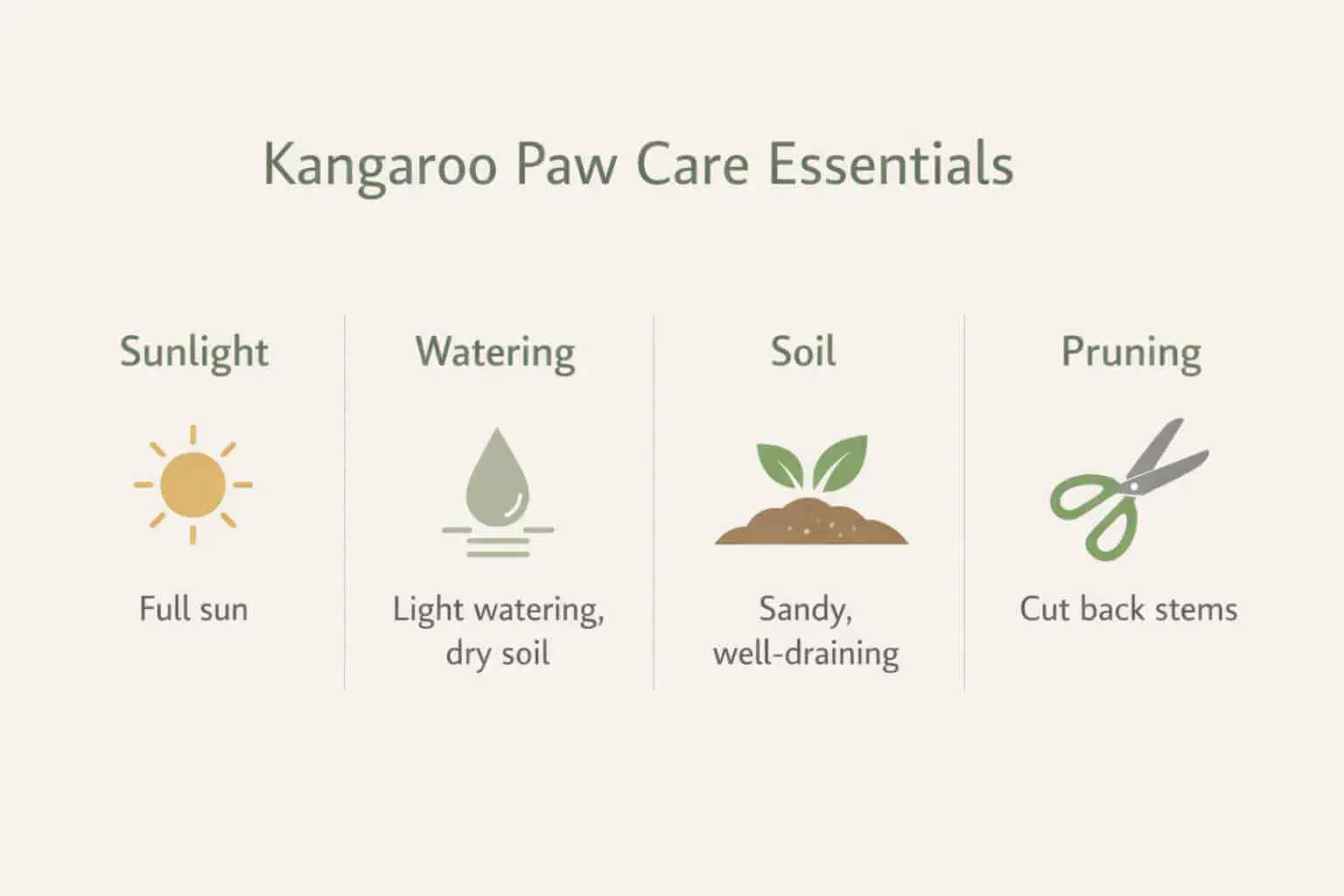
Kangaroo paw requires full sun for optimal flowering and strong growth. Partial kangaroo paw shade may reduce bloom production and weaken stems.
- Outdoor care: Direct sunlight for at least 6–8 hours daily
- Indoor care: Needs bright, direct light; often insufficient indoors
Low light leads to:
- Fewer flowers
- Leggy growth
- Reduced color vibrancy
Best Soil for Kangaroo Paw (Drainage Is Critical)
Kangaroo paw soil must be sandy, well-draining, and low in organic matter to prevent root rot.
Key soil characteristics:
- Fast drainage
- Slightly acidic to neutral pH
- Minimal water retention
Poor soil causes:
- Root rot
- Fungal infections
- Plant decline
When planting kangaroo paw:
- Mix sand or gravel into soil
- Avoid heavy clay
- Ensure raised beds or proper drainage systems
This drainage requirement is similar to low-maintenance plants like Zamioculcas Zamiifolia Care Guide, where excess moisture quickly leads to root problems.
Temperature and Climate Needs
Kangaroo paw thrives in warm, dry climates similar to Australia.
- Ideal temperature: 15–30°C
- Sensitive to frost
- Struggles in high humidity
In cooler regions (e.g., kangaroo paw care UK), protection is required:
- Grow in pots for mobility
- Move indoors during frost
- Ensure dry conditions
As an Australian native, kangaroo paw shares similar growing conditions with species featured in Fast Growing Australian Native Screening Plants, especially in warm, dry climates.
Kangaroo Paw Care Guide (Step-by-Step)
Watering Needs and Moisture Control
Kangaroo paw should be watered lightly and only when the soil dries out.
- During growth: moderate watering
- During dormancy: minimal watering
Overwatering is the leading cause of kangaroo paws dying due to root rot. Similar to structured watering routines used in plants like Japanese Money Plant Care, kangaroo paw also benefits from allowing soil to dry between watering cycles.
Best practices:
- Allow soil to dry between watering
- Avoid waterlogged conditions
- Use well-draining containers
Fertilizer Requirements
Use a low-phosphorus kangaroo paw fertilizer to avoid damaging roots.
- Apply during growing season (spring–summer)
- Avoid excessive feeding
Native plants like Anigozanthos are sensitive to phosphorus, which can disrupt nutrient absorption.
Pruning and Deadheading for Healthy Growth
Pruning is essential to maintain plant health and encourage new blooms.
- Remove spent flowers
- Cut dead stems regularly
- Perform annual hard pruning after flowering
When to prune kangaroo paws:
- After flowering season
- When stems dry out
How to deadhead kangaroo paw:
- Cut flower stems at the base
- Remove faded blooms promptly
Cutting back kangaroo paws correctly:
- Trim to ground level if needed
- Avoid damaging new shoots
Proper pruning boosts regrowth, improves airflow, and reduces disease risk.
Kangaroo Paw Flowering and Lifespan
When Do Kangaroo Paws Bloom?
Kangaroo paws bloom primarily during spring and summer. Climate influences the exact flowering period.
In warm climates:
- Longer blooming season
In cooler climates:
- Shorter, delayed flowering
How Long Do Kangaroo Paws Live?
Kangaroo paw lifespan typically ranges from 2 to 5+ years, depending on care quality.
Factors affecting lifespan:
- Soil drainage
- Pruning habits
- Climate conditions
- Disease management
Growing Kangaroo Paw in Pots vs Ground
| Feature | Pots | Ground |
| Drainage | Easier control | Depends on soil |
| Mobility | High | Fixed |
| Water Needs | More frequent | Less frequent |
| Growth Size | Slightly smaller | Full size |
Pots allow better drainage control and are ideal for colder climates. Use containers with drainage holes and avoid water retention.
Kangaroo Paw Plant Size and Growth Rate
Kangaroo paw plant size varies by variety:
- Dwarf: 30–50 cm
- Medium: 60–100 cm
- Tall: up to 2 meters
Growth rate is moderate to fast under ideal conditions.
Environmental factors influencing growth:
- Sunlight exposure
- Soil quality
- Water control
Types and Colours of Kangaroo Paw
Common Kangaroo Paw Colours and Varieties
Kangaroo paw colours include:
- Red
- Yellow
- Green
- Black
- Bi-color combinations
Popular varieties:
- Bush Pearl
- Masquerade
- Dwarf hybrids
Differences may exist in care:
- Red varieties may tolerate more heat
- Yellow varieties may need slightly more light
Fern kangaroo paw and hybrid cultivars offer diversity in appearance and size.
Seasonal Care: Winter and Dormancy
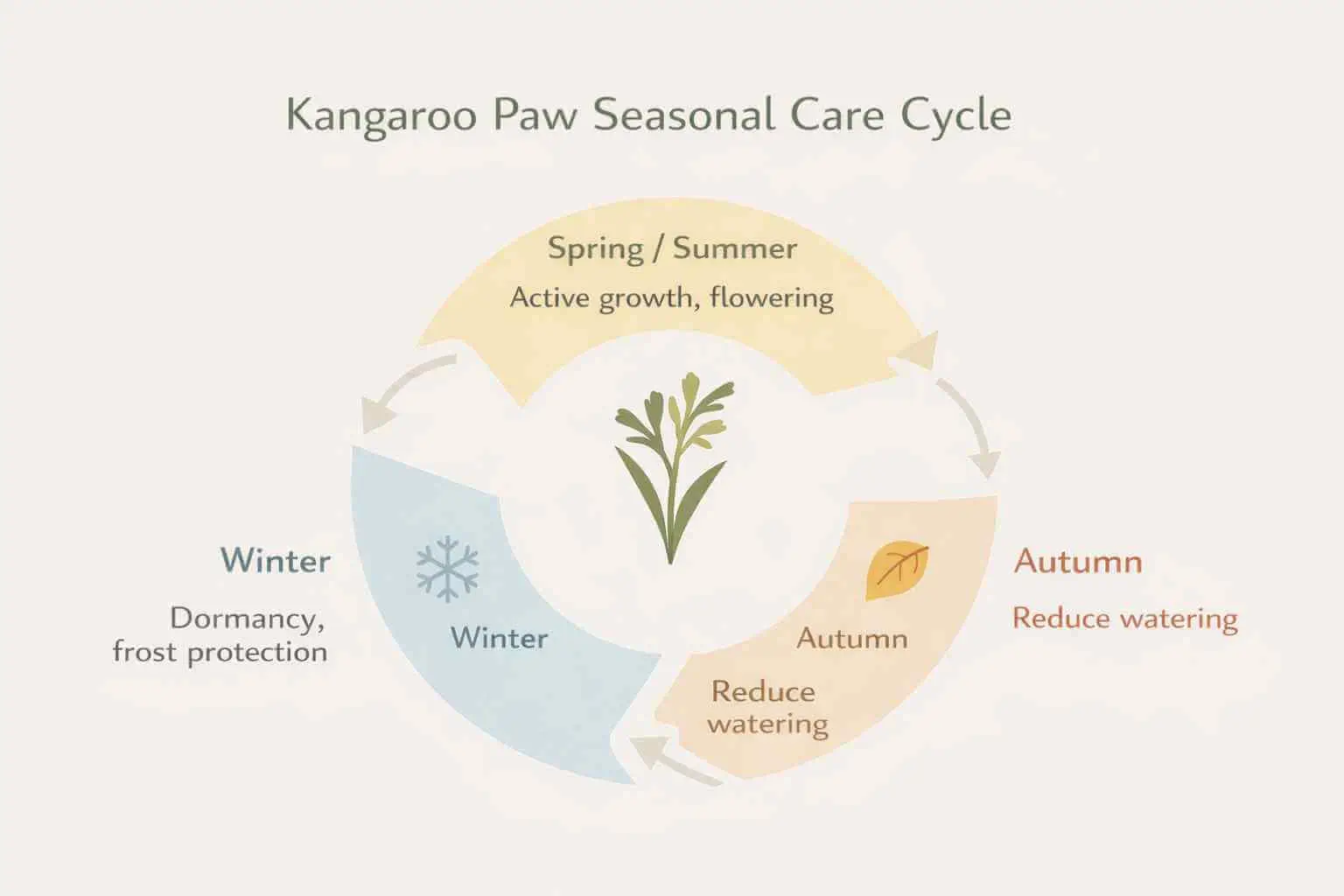
Kangaroo paw enters a semi-dormant phase during winter.
Care adjustments:
- Reduce watering significantly
- Protect from frost
- Avoid fertilizing
Dormancy helps the plant conserve energy for the next flowering season.
Propagation Methods: How to Grow More Kangaroo Paw
Division vs Cuttings
Propagation is best done through root division.
How to propagate kangaroo paw:
- Divide clumps at the root level
- Replant immediately in well-draining soil
Kangaroo paw cuttings:
- Possible but unreliable
- Lower success rate
Division ensures stronger, faster-growing plants.
Common Problems and Solutions
Why Are Kangaroo Paws Dying?
Kangaroo paws die primarily due to improper care.
Common causes:
- Overwatering
- Poor drainage
- Fungal diseases
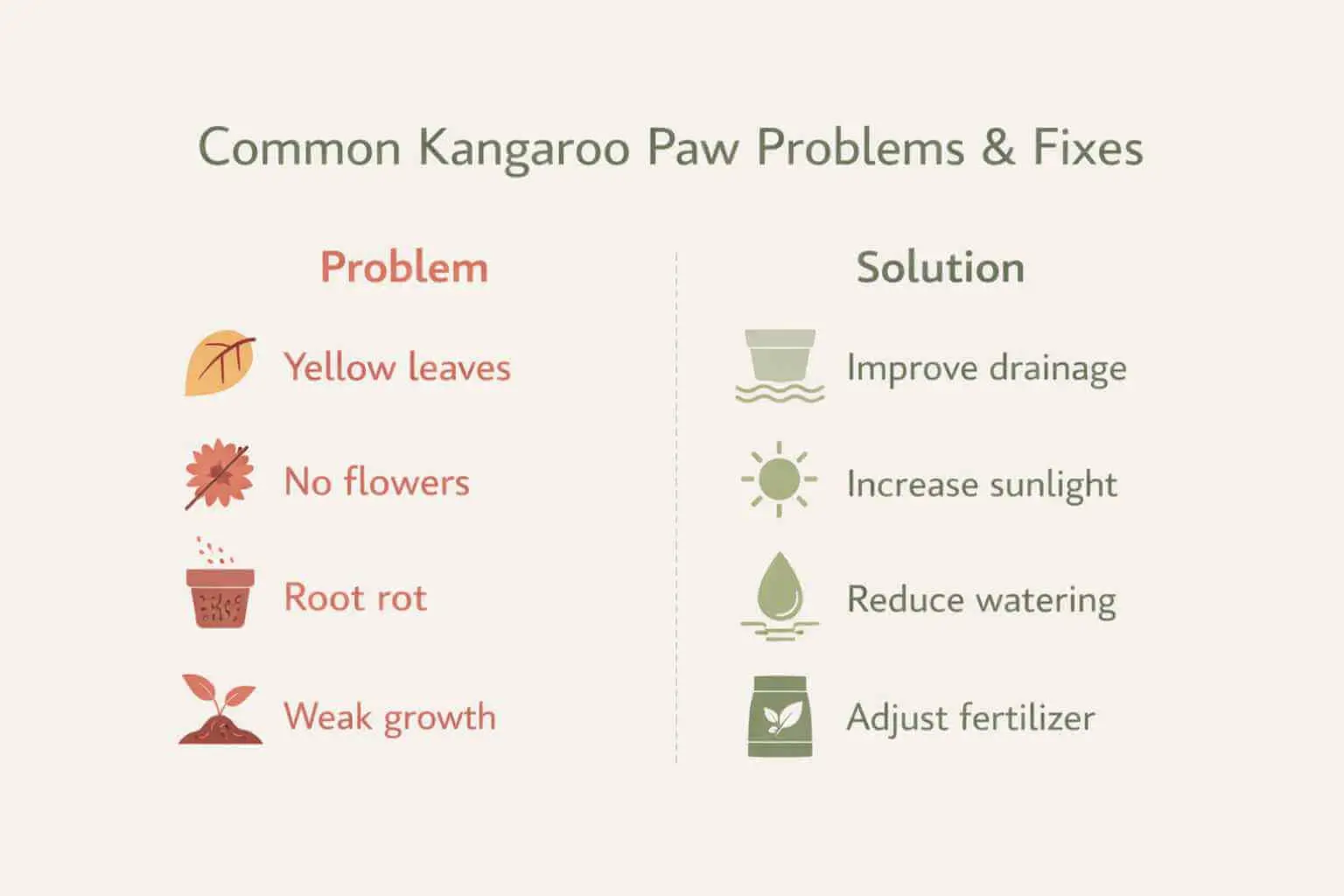
Common Issues and Fixes
- Yellow leaves: Improve drainage
- No flowers: Increase sunlight exposure
- Weak growth: Adjust fertilizer and soil
Preventive care is more effective than treatment.
Beginner Mistakes to Avoid
- Planting in heavy, water-retentive soil
- Overwatering frequently
- Skipping pruning
- Using high-phosphorus fertilizer
Avoiding these mistakes significantly improves plant health and longevity.
Conclusion
Kangaroo paw care centers on providing full sunlight, well-draining soil, controlled watering, and consistent pruning. These plants thrive when their natural dry-climate conditions are replicated. With proper care, kangaroo paw plants produce vibrant blooms, maintain steady growth, and remain low-maintenance additions to gardens or containers.
FAQs
How do you take care of a kangaroo paw plant?
Kangaroo paw care involves full sun, well-draining soil, minimal watering, and regular pruning to maintain healthy growth and flowering.
Can kangaroo paw grow indoors?
Kangaroo paw can grow indoors with strong sunlight, but it performs best outdoors due to higher light requirements.
When should kangaroo paws be pruned?
They should be pruned after flowering or when stems die back to encourage new growth.
How often should kangaroo paw be watered?
Water lightly and allow the soil to dry between watering to prevent root rot.
Can you grow kangaroo paw from cuttings?
Propagation from cuttings is possible but unreliable; root division is the preferred and more effective method.



4 Responses