
Introduction
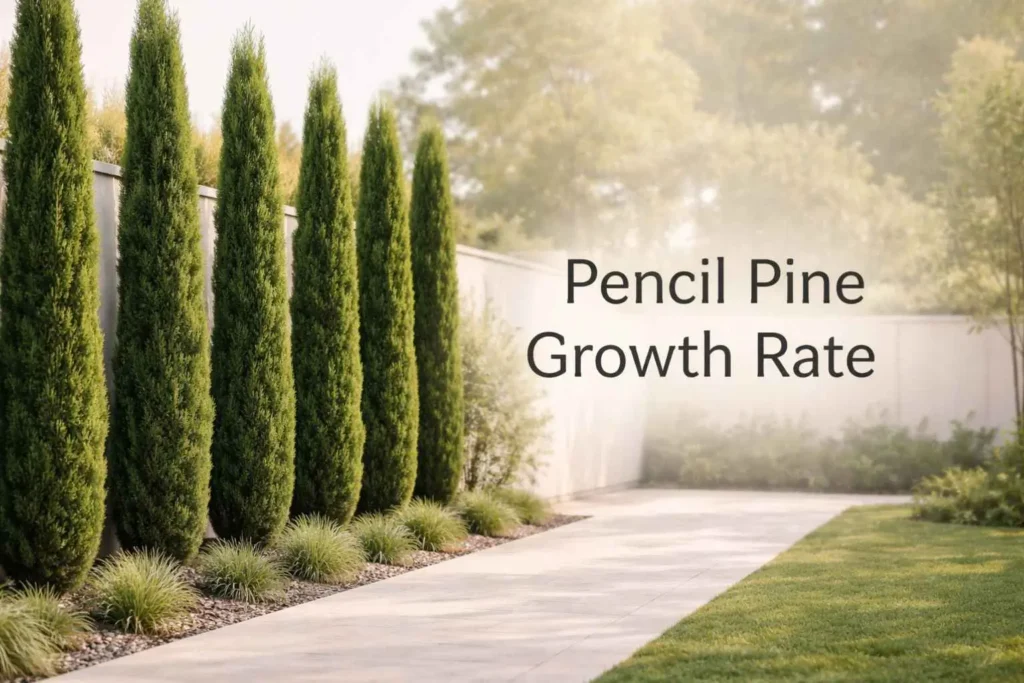
Pencil pine growth rate refers to how quickly this tall, narrow evergreen tree (Cupressus sempervirens ‘Glauca’) increases in height and width over time. Widely used in landscaping, especially in Australia, pencil pines are valued for their upright structure, minimal spread, and low maintenance requirements. These conifer trees provide vertical interest and privacy without occupying much space. Understanding how fast pencil pines grow helps gardeners plan hedging, spacing, and long-term garden structure more effectively.
Quick Summary
- Pencil pine growth rate is typically moderate to fast (30–60 cm per year) in ideal conditions
- Growth depends on soil quality, sunlight, water, and spacing
- Mature trees reach 8–15 meters tall but remain narrow (1–2 meters wide)
- Proper planting and care significantly improve growth speed and health
What Is Pencil Pine and Why It’s Popular in Landscaping
Pencil pine (Cupressus sempervirens ‘Glauca’), also known as Italian pencil pine, is a narrow, columnar evergreen conifer species of the Mediterranean cypress (learn more on Wikipedia). It belongs to the Cupressaceae family and is commonly used as a structural tree in modern landscapes. Pencil pines are a popular choice among evergreen landscaping options, especially when compared to other species featured in our guide on 7+ Essential Evergreen Trees Brisbane Gardens Need.
Key Characteristics:
- Evergreen foliage with dense, upright growth
- Extremely narrow shape (ideal for tight spaces)
- Common varieties include:
- Glauca pencil pine (most popular)
- Golden pencil pine (lighter foliage)
Why It’s Popular:
- Works as a tall skinny tree for privacy screening
- Suitable for urban gardens (e.g., Brisbane landscapes)
- Requires minimal pruning and maintenance
Pencil Pine Growth Rate Per Year (Realistic Expectations)
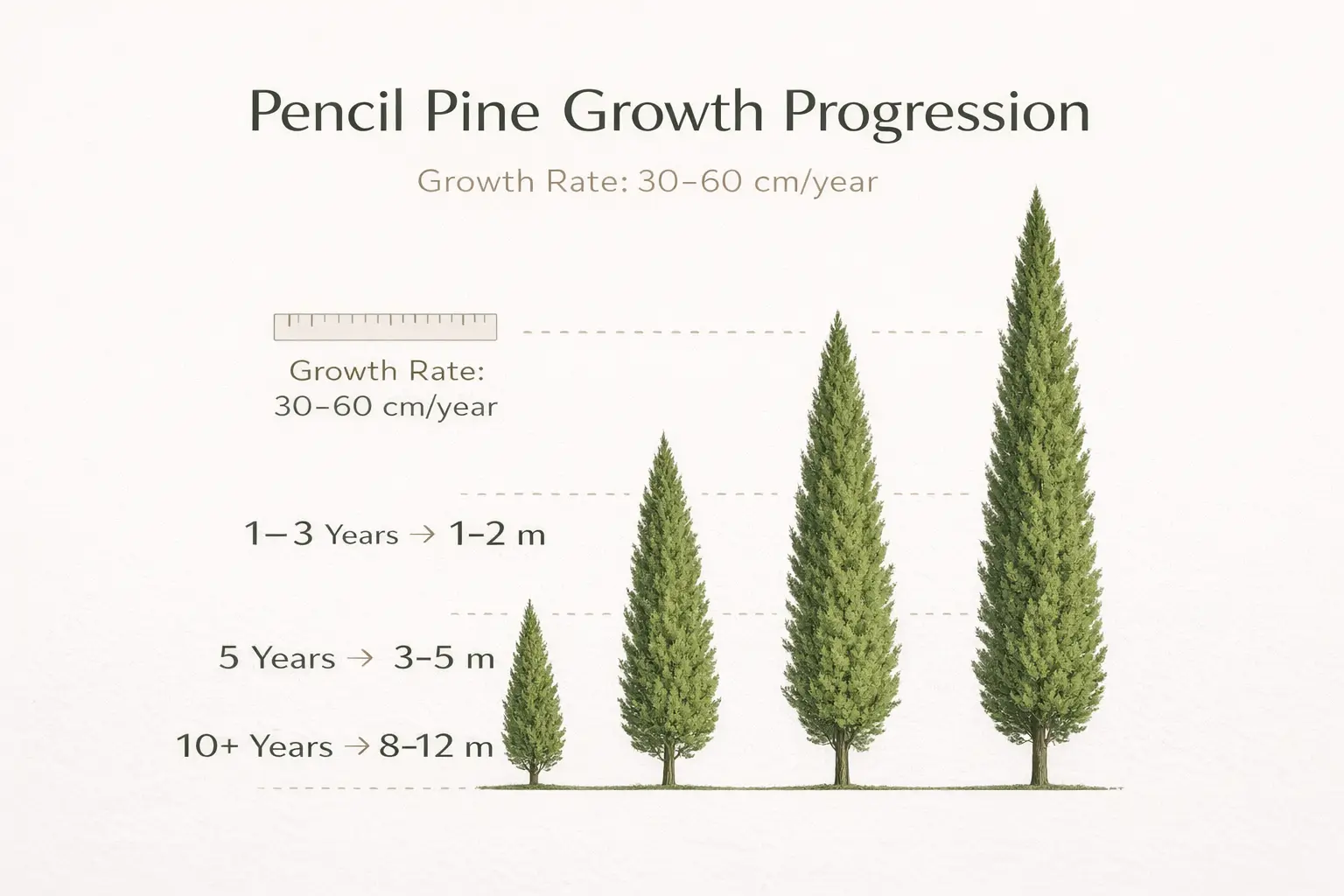
Pencil pine growth rate is considered moderate to fast, depending on environmental conditions.
How Fast Do Pencil Pines Grow?
Pencil pines typically grow 30–60 cm per year under ideal conditions, especially in warm climates with proper care.
Growth Rate Breakdown:
- Average growth: 30–60 cm annually
- Faster growth: warm regions with full sun
- Slower growth: poor soil or drought stress
If you’re comparing varieties, see our detailed breakdown of Cupressus Sempervirens Stricta vs Glauca to understand growth habits and structure differences.
Pencil Pine Growth Rate Comparison
| Type | Growth Rate | Notes |
| Glauca pencil pine | Moderate-fast | Most widely planted variety |
| Golden pencil pine | Moderate | Slightly slower growth |
| Italian pencil pine | Moderate-fast | Classic tall form |
How Tall and Wide Do Pencil Pines Grow Over Time
Pencil pines grow tall but maintain a narrow profile, making them ideal for vertical landscaping.
Typical Size:
- Height: 8–15 meters at maturity
- Width: 1–2 meters
- Growth form: upright, columnar
Growth Timeline
For a deeper breakdown by cultivar, our narrow columnar screening trees growth rate database tracks growth data across multiple screening species.
It’s a useful reference if you’re comparing pencil pine’s growth pace against other columnar varieties before planting.
| Age | Height Range |
| 1–3 years | 1–2 m |
| 5 years | 3–5 m |
| 10+ years | 8–12 m |
Factors That Affect Pencil Pine Growth Speed
Several environmental and care-related factors influence how fast pencil pines grow.
Key Growth Factors:
- Sunlight: Full sun promotes faster growth
- Soil: Well-drained soil is essential
- Watering: Consistent moisture during early years
- Spacing: Overcrowding reduces growth speed
- Climate: Warmer zones accelerate growth
Pencil Pine Root System Explained (Structure & Behavior)
Pencil pine roots are adapted to support tall, narrow growth without becoming invasive.
Root Characteristics:
- Shallow but moderately spreading roots
- Non-aggressive compared to large shade trees
- Provide stability in upright trees
Do Pencil Pines Have Invasive Roots?
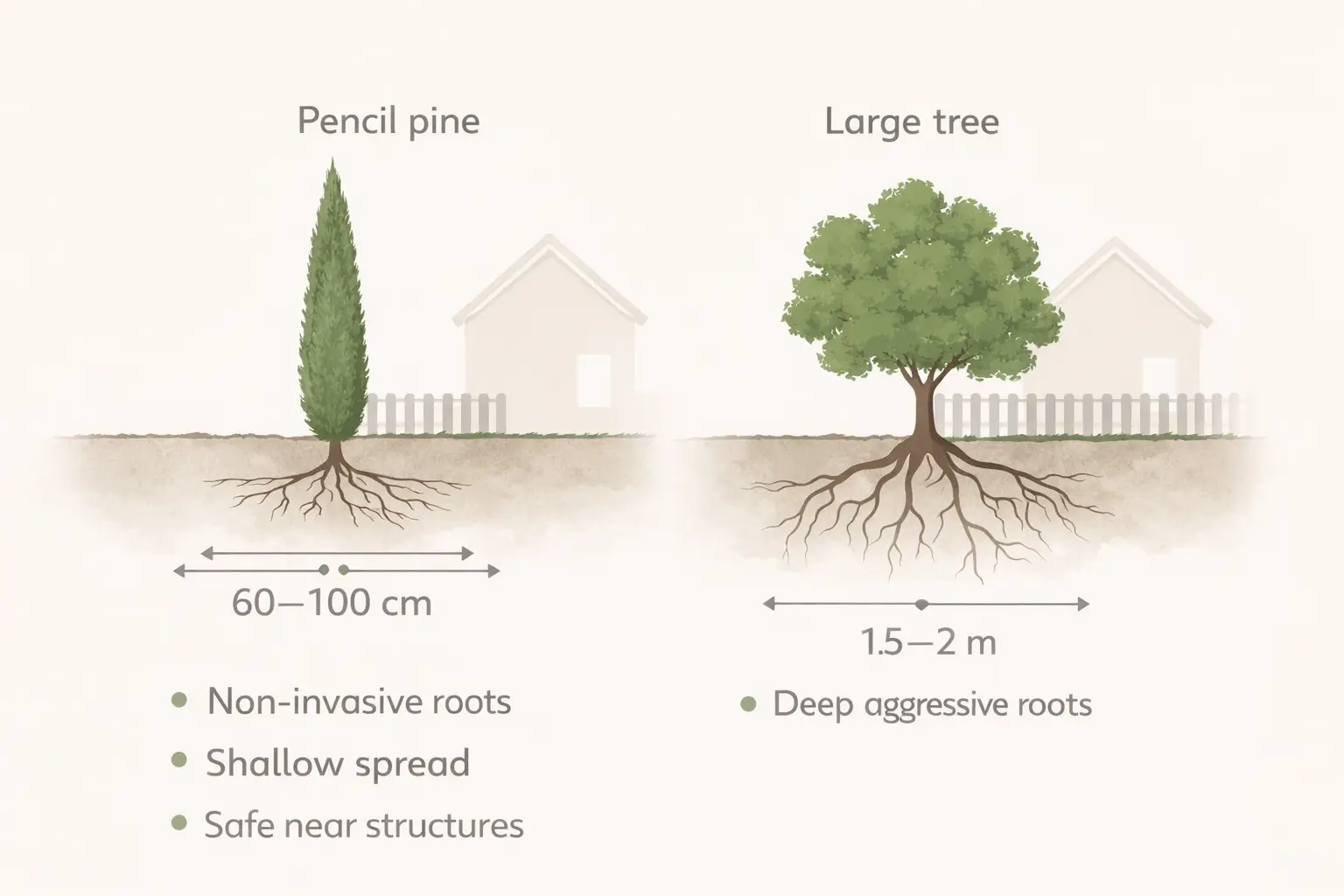
No, pencil pines do not have invasive roots. Their root system is generally shallow and non-aggressive, making them safe near structures.
Comparison: Root Behavior
- Pencil pine → shallow, controlled roots
- Large shade trees → deep, aggressive roots
This makes pencil pines suitable for planting near fences, driveways, and buildings.
Ideal Planting Distance for Healthy Growth
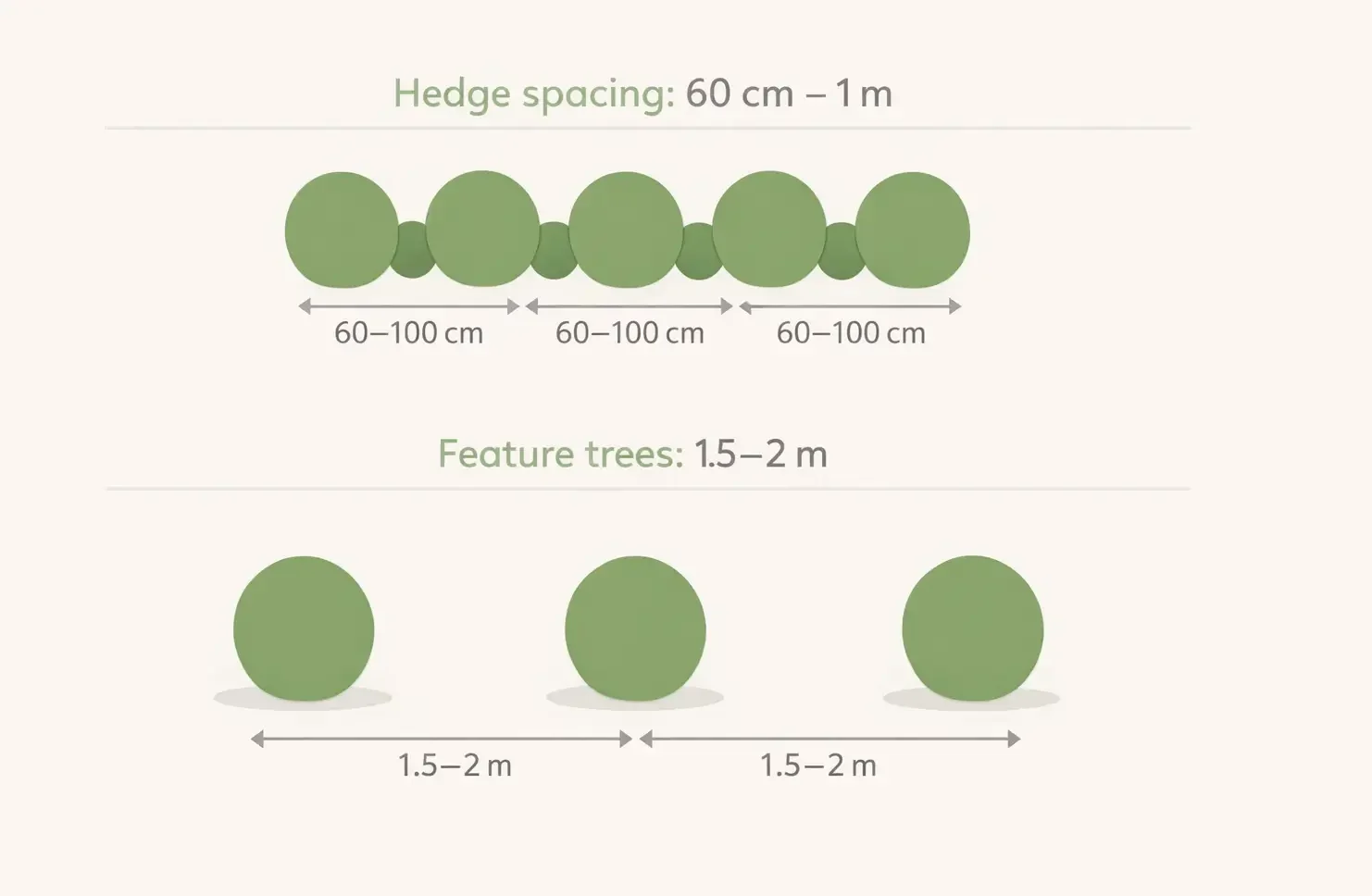
Proper spacing is essential for maximizing pencil pine growth rate.
Recommended Spacing:
- Hedge planting: 60 cm – 1 meter apart
- Feature trees: 1.5–2 meters apart
Closer spacing may create dense hedges but can slow growth due to root competition.
How to Grow Pencil Pine Faster and Healthier
Improving growth requires proper care and environmental conditions.
Practical Tips:
- Use well-draining soil to prevent root rot
- Water regularly during establishment phase
- Apply slow-release fertilizer in spring
- Avoid waterlogged or compacted soil
Experience Insight:
New gardeners often overwater pencil pines in clay soil, which slows growth. Controlled watering is more effective than frequent saturation.
Common Pencil Pines Problems and How to Fix Them
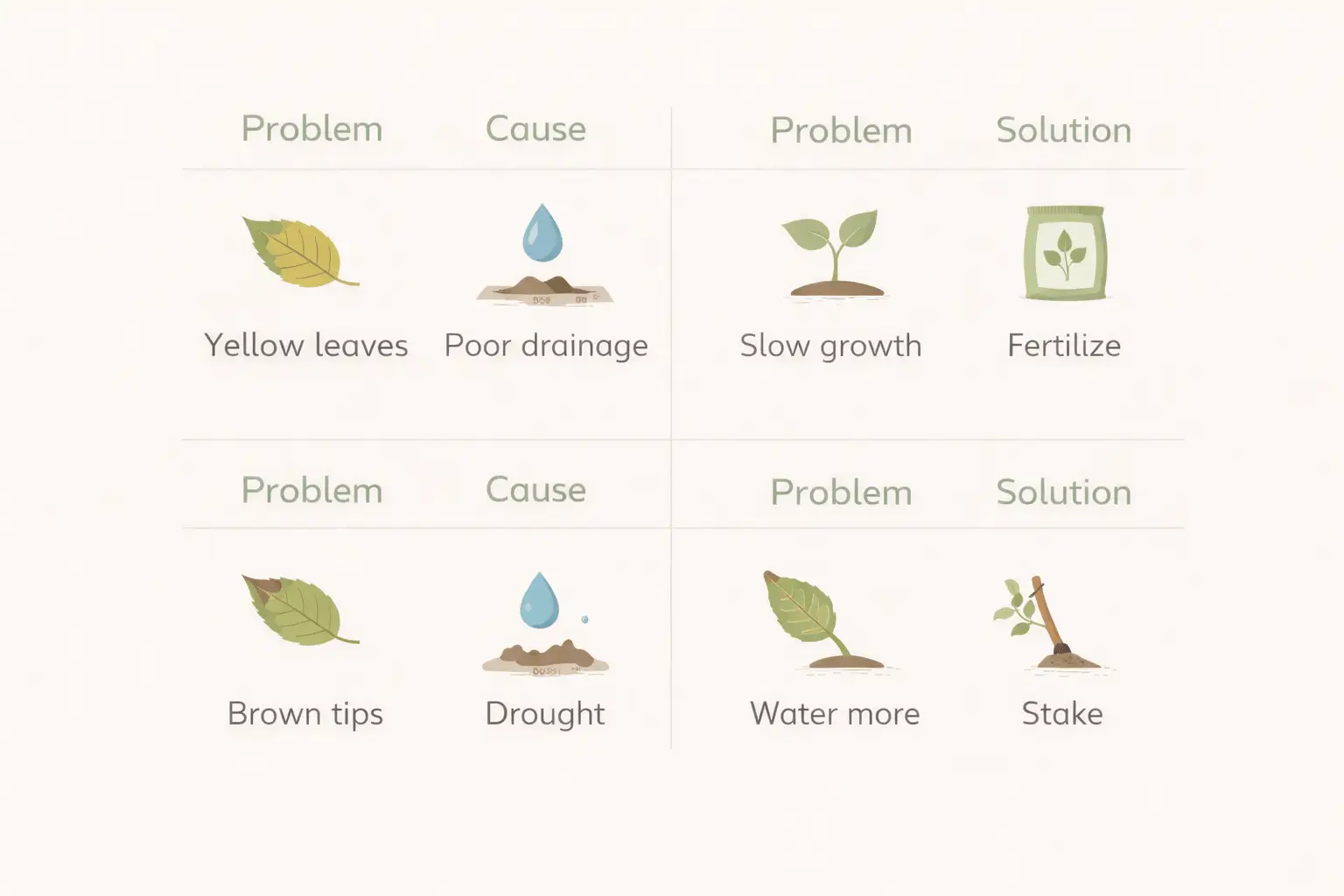
Pencil pines are low-maintenance but can face issues if conditions are poor.
Common Problems:
- Yellowing leaves → poor drainage → improve soil structure
- Slow growth → nutrient deficiency → fertilize
- Browning tips → drought stress → increase watering
- Leaning trees → weak roots → stake during early growth
Best Uses: Screening, Hedges, and Narrow Landscaping
Pencil pines are highly versatile in landscape design.
Common Uses:
- Privacy hedges
- Driveway borders
- Poolside screening
- Vertical accents in small gardens
Their narrow form makes them ideal where space is limited. For broader options beyond pencil pines, explore other excellent privacy solutions in our guide to Tropical Screening Plants.
Comparison: Pencil Pine vs Other Narrow Trees
If you want to filter and sort these narrow tree options side-by-side, our interactive narrow tree growth and size comparison tool lets you weigh pencil pine against 15 columnar alternatives.
You can sort by annual growth rate, mature spread, and light needs to find the tightest-footprint option for your space.
Key Differences
| Feature | Pencil Pine | Other Narrow Trees |
| Width | Very narrow | Moderate |
| Growth rate | Moderate-fast | Variable |
| Maintenance | Low | Medium |
| Best use | Screening | Mixed landscaping |
Climate Suitability and Regional Growth Differences
Pencil pines adapt well to various climates but perform best in warm, dry conditions. For region-specific notes and sourcing behind these climate observations, see our pencil pine regional growth notes and source sheet.
It compiles the data points used to compare growth performance across different climate zones.
Climate Insights:
- Faster growth in warm regions like Brisbane
- Drought-tolerant once established
- Sensitive to waterlogged soil
Beginner Mistakes That Slow Pencil Pine Growth
Common Mistakes:
- Planting too close together
- Overwatering in heavy soil
- Lack of sunlight exposure
- Poor soil preparation before planting
Environmental Limitations and Growth Constraints
Growth Limitations:
- Strong wind can affect upright growth
- Clay soil restricts root expansion
- Shade significantly reduces growth speed
Conclusion
Pencil pine growth rate is generally moderate to fast, making this narrow evergreen tree an excellent choice for vertical landscaping and privacy screening. With growth of 30–60 cm per year, proper spacing, sunlight, and well-drained soil are essential for optimal performance. Understanding growth patterns, root behavior, and environmental factors allows gardeners to achieve strong, healthy pencil pines that maintain their elegant, upright form over time.
FAQs
How fast do pencil pines grow each year?
Pencil pines typically grow 30–60 cm per year under ideal conditions, with faster growth in warm climates and slower growth in poor soil.
How long does it take for a pencil pine to reach full height?
It generally takes 10–15 years for pencil pines to reach their mature height of 8–15 meters.
Do pencil pines need a lot of maintenance?
No, pencil pines are low-maintenance trees requiring minimal pruning, occasional watering, and basic fertilization.
Are pencil pine roots safe near buildings?
Yes, their roots are non-invasive and safe near structures when planted with proper spacing.
Can pencil pines be used for hedges?
Yes, they are commonly used for dense, vertical hedges due to their narrow growth habit and evergreen foliage.



One Response