
Introduction
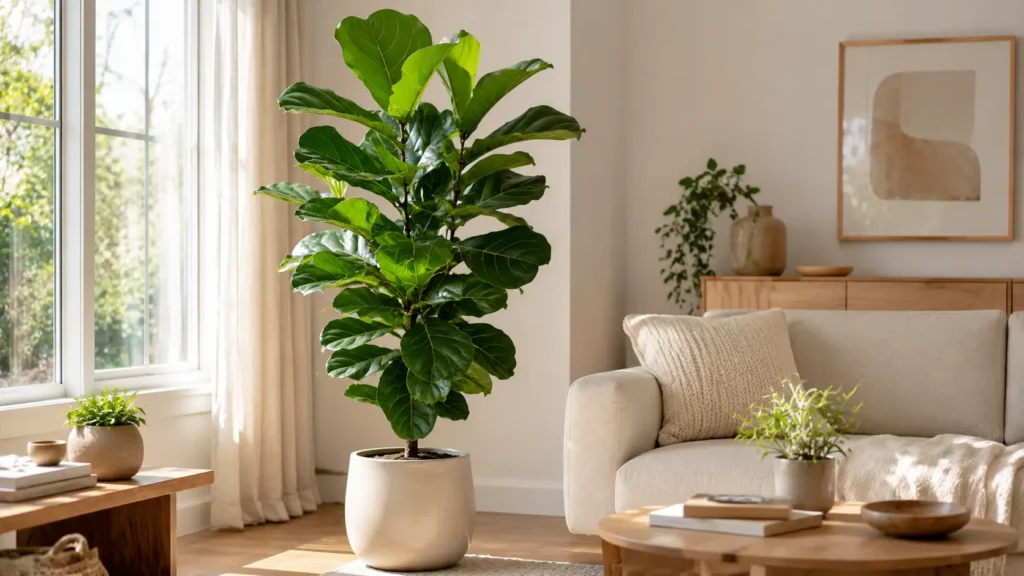
Fiddle leaf figs are among the most striking indoor plants, but they are also known for being sensitive to changes in their environment. If you’re wondering how to take care of fiddle leaf fig, success comes down to understanding its natural growing conditions and providing consistent care. Scientifically known as Ficus lyrata, this tropical plant is admired for its large violin-shaped leaves, upright growth, and dramatic appearance. However, improper watering, poor lighting, and sudden environmental changes can quickly affect its health. This guide explains everything you need to know, including watering, lighting, soil, growth, pruning, propagation, and troubleshooting common problems. If you’re interested in caring for more indoor and outdoor plants, explore our Plants: Benefits and Guides (Complete Care, Types & Growing Tips) for expert growing advice and maintenance tips.
Quick Summary
- Fiddle leaf figs thrive in bright, indirect light and should only be watered when the top 2 inches of soil are dry.
- Overwatering, drafts, and sudden temperature changes are the most common causes of brown spots and leaf drop.
- Use a well-draining, aerated potting mix and fertilize monthly during spring and summer.
- With proper care, a fiddle leaf fig can grow 6–10 feet indoors and live for several decades.
What Is a Fiddle Leaf Fig and Why Is It So Hard to Care For?
A fiddle leaf fig (Ficus lyrata) is a tropical evergreen tree native to the lowland rainforests of West Africa. It is valued as a houseplant because of its large, glossy, violin-shaped leaves and architectural appearance. Although beautiful, it has earned a reputation as one of the more demanding indoor plants due to its sensitivity to environmental changes. For additional botanical information about Ficus lyrata, including its native habitat and taxonomy, see the Wikipedia article on Ficus lyrata.
Botanical Background
- Scientific name: Ficus lyrata
- Plant family: Moraceae
- Native habitat: Tropical rainforests of West Africa
- Plant type: Evergreen tree
- Common names: Fiddle leaf fig, fiddle fig, fig leaf plant
Its natural habitat provides warm temperatures, filtered sunlight, high humidity, and consistently well-drained soil. Replicating these conditions indoors greatly improves plant health.
Why Are Fiddle Leaf Figs Difficult to Care For?
The main reason is consistency. Unlike many common houseplants, fiddle leaf figs respond quickly to environmental stress.
Common challenges include:
- Sensitivity to overwatering
- Poor tolerance for drafts and cold air
- Leaf drop after being moved
- Requirement for bright but indirect sunlight
- Root rot in compact or waterlogged soil
Even small changes in watering schedules or light exposure may cause visible stress.
What Are the Disadvantages?
Some disadvantages include:
- Higher maintenance than beginner-friendly houseplants
- Leaves may drop dramatically after stress
- Recovery from root problems can take months
- Requires adequate indoor light year-round
Despite these challenges, healthy fiddle leaf figs reward growers with rapid vertical growth, large glossy foliage, and exceptional decorative value.
Fiddle Leaf Fig Size and Growth Rate Indoors
Under proper indoor conditions, fiddle leaf figs typically reach 6–10 feet in height, while mature outdoor specimens in tropical climates may exceed 40–50 feet.
Growth Rate
Fiddle leaf figs have a moderate growth rate.
Typical growth includes:
- Around 1–2 feet of height per year
- Faster growth during spring and summer
- Slower or dormant growth during winter
Seasonal changes naturally influence growth rates. Our How Does Season Affect Indoor Plant Growth guide explains what to expect throughout the year.
How Often Should a Fiddle Leaf Fig Grow a New Leaf?
Healthy plants usually produce:
- One new leaf every 4–6 weeks during the active growing season
- Faster leaf production with excellent lighting, nutrition, and stable temperatures
A lack of new leaves often indicates insufficient light, nutrient deficiencies, root problems, or seasonal dormancy.
Lifespan
With proper care, a fiddle leaf fig commonly lives 25–50 years, making it one of the longest-living indoor ornamental trees.
Factors That Affect Growth
Growth depends on several environmental conditions:
- Bright indirect sunlight
- Proper watering habits
- Healthy root system
- Pot size
- Warm temperatures
- Seasonal daylight availability
Every fiddle leaf fig grows at a different pace depending on light, watering, temperature, pot size, and seasonal conditions. If you’d like to estimate how these factors influence your plant’s development, try our Plant Growth Calculator to better understand expected growth and monitor progress over time.
Fiddle Leaf Fig Light Requirements
Bright, indirect light is the single most important factor for successful indoor fiddle leaf fig care.
Ideal Light Conditions
Place the plant:
- Near a south-facing window with filtered light
- Near an east-facing window receiving gentle morning sun
- Where it receives 6–8 hours of bright indirect light daily
Too Little Light
Insufficient light commonly causes:
- Slow growth
- Small new leaves
- Leaf drop
- Leaning toward windows
- Sparse branching
Too Much Direct Sun
Excess afternoon sunlight may result in:
- Bleached patches
- Brown or tan burn marks
- Crispy leaf edges
Morning sunlight is generally tolerated better than harsh afternoon exposure.
Why Consistency Matters
Fiddle leaf figs dislike frequent relocation.
Moving the plant repeatedly can trigger:
- Leaf drop
- Temporary growth slowdown
- Increased stress
Once you find an ideal location, leave the plant there whenever possible.
Rotate for Balanced Growth
Rotate the pot about one-quarter turn every two to four weeks to encourage even canopy development without changing its growing environment.
How to Water a Fiddle Leaf Fig Correctly
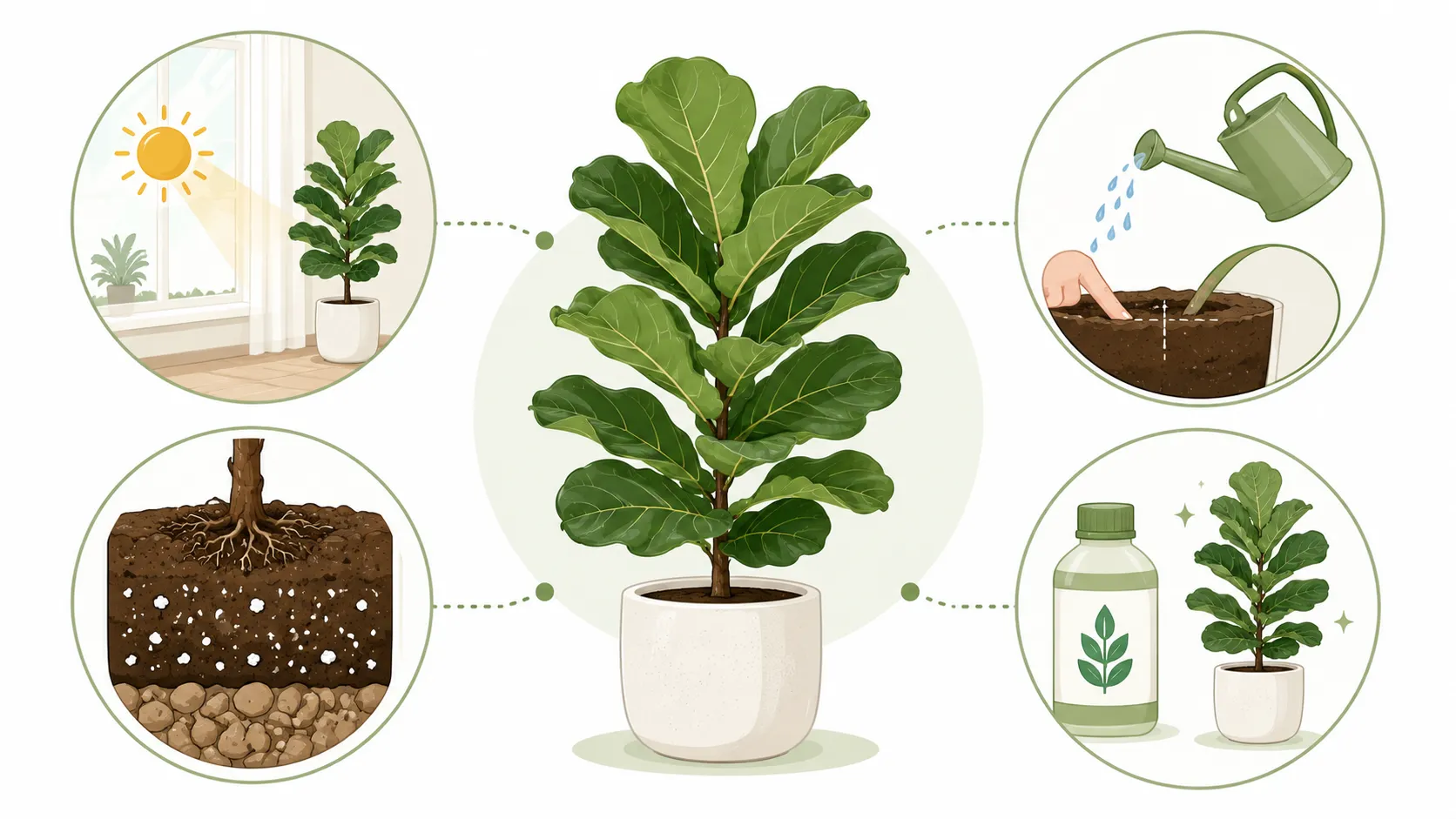
Watering correctly prevents most common fiddle leaf fig problems.
When Should You Water?
Water only after the top 2 inches of soil feel dry.
Average watering schedule:
- Spring and summer: every 7–10 days
- Fall and winter: every 2–3 weeks, depending on indoor conditions
Always adjust watering based on soil moisture rather than following a strict calendar.
Signs of Overwatering vs. Underwatering
| Overwatering | Underwatering |
| Yellow leaves | Dry leaves |
| Brown spots near leaf centers | Crispy brown edges |
| Mushy stem base | Curling foliage |
| Wet soil for extended periods | Soil pulling away from pot |
| Root rot | Slow recovery after watering |
What Does an Overwatered Fiddle Leaf Fig Look Like?
Common symptoms include:
- Yellowing foliage
- Brown spots in the center of leaves
- Mushy stem base
- Persistent wet soil
- Leaves dropping while still green
- Root rot with unpleasant odor
Why Pot Size Matters
Oversized containers hold moisture longer.
Using pots that are significantly larger than the root ball increases the likelihood of:
- Waterlogged soil
- Poor root oxygen
- Root rot
Always choose pots with drainage holes and only increase pot diameter by 1–2 inches during repotting.
How to Tell If Your Fiddle Leaf Fig Is Happy
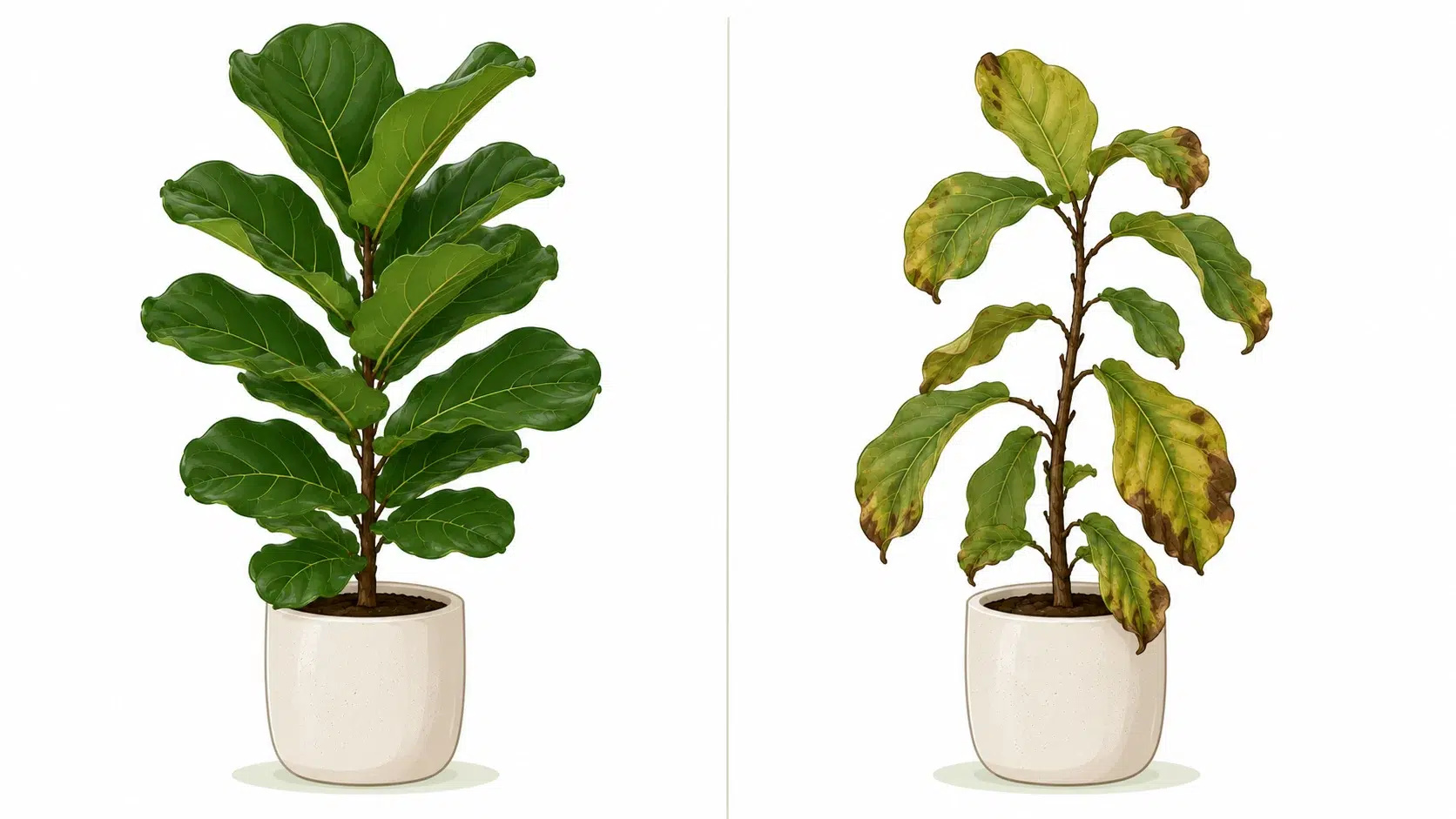
A healthy fiddle leaf fig displays several clear signs of vigorous growth.
Signs of a Healthy Plant
Look for:
- Upright stems
- Large glossy green leaves
- Regular new leaf production
- Strong overall structure
- No widespread yellowing or brown spots
Signs of Stress
Watch for:
- Drooping leaves
- Excessive leaf drop
- Brown edges
- Yellow foliage
- Leaning stems
- Stalled growth
Weekly Plant Check Routine
Each week:
- Check soil moisture.
- Inspect leaves for pests or discoloration.
- Rotate the pot if necessary.
- Remove dust from leaves with a damp cloth.
- Observe for new growth.
Consistent monitoring helps detect problems before they become severe.
Best Soil for Fiddle Leaf Fig
Fiddle leaf figs require loose, well-draining soil that supplies oxygen while retaining moderate moisture.
Ideal Soil Characteristics
The best soil should be:
- Well-draining
- Aerated
- Rich in organic matter
- Slightly acidic to neutral (pH 6.0–7.0)
Recommended Soil Mix
A reliable homemade blend includes:
- 2 parts quality indoor potting mix
- 1 part perlite
- 1 part coarse sand or orchid bark
This combination improves drainage while reducing root rot risk.
Why Heavy Soil Causes Problems
Dense soils trap excess water around roots.
This often leads to:
- Poor aeration
- Root rot
- Slow growth
- Nutrient deficiencies
Soil Type Comparison
| Soil Type | Advantages | Disadvantages |
| Standard potting mix | Affordable and widely available | May retain too much moisture alone |
| Peat-based mix | Good moisture retention | Can become compact over time |
| Cactus mix | Excellent drainage | Often dries too quickly by itself |
| Custom fiddle leaf mix | Balanced drainage and aeration | Requires mixing multiple ingredients |
Both commercial fiddle leaf fig mixes and well-balanced DIY blends perform well when paired with proper watering practices.
Fertilizing Your Fiddle Leaf Fig
Providing the right nutrients helps a fiddle leaf fig maintain healthy foliage, produce steady new growth, and recover from normal seasonal stress. Fertilizing is most beneficial during the plant’s active growing season when it is producing new leaves. Unsure how frequently to feed indoor plants? Read Bi-Weekly vs Monthly Fertilizing for Houseplants to choose the right fertilizing schedule for healthy growth.
Best Fertilizer Type
A balanced liquid fertilizer with a 3-1-2 NPK ratio is generally recommended because it supplies slightly more nitrogen, which supports healthy leaf development.
Suitable fertilizer options include:
- Liquid houseplant fertilizer with a 3-1-2 ratio
- Slow-release fertilizers formulated for foliage plants
- Balanced water-soluble fertilizers used at the recommended dilution
Always follow the manufacturer’s instructions to avoid fertilizer burn.
Fertilizing Schedule
Feed your fiddle leaf fig:
- Once a month during spring
- Once a month during summer
- Reduce or stop fertilizing during fall
- Avoid fertilizing during winter dormancy
Applying fertilizer while the plant is not actively growing may lead to salt buildup in the soil.
Is Miracle-Gro Good for Fiddle Leaf Figs?
Yes, Miracle-Gro can be suitable if the product has an appropriate nutrient balance for foliage plants and is applied according to the label directions.
Keep these precautions in mind:
- Avoid using stronger concentrations than recommended.
- Never fertilize completely dry soil.
- Water the plant before applying fertilizer if the soil is very dry.
- Flush the soil occasionally to reduce excess fertilizer salts.
Do Coffee Grounds Help Fiddle Leaf Figs?
Coffee grounds may provide small amounts of organic matter and slight soil acidification, but they should not be used as a primary fertilizer.
Potential drawbacks include:
- Mold growth
- Compacted soil
- Excess acidity
- Attraction of fungus gnats
If used, coffee grounds should be fully composted first and applied sparingly.
Should You Add Epsom Salt?
Epsom salt supplies magnesium, which plants need in small amounts. However, it should only be used when a magnesium deficiency has been confirmed.
Routine use is generally unnecessary because quality fertilizers already contain balanced nutrients.
Common Fertilizing Mistakes
Avoid these common errors:
- Fertilizing too frequently
- Applying fertilizer during winter
- Using excessive concentrations
- Fertilizing stressed or newly repotted plants
- Assuming more fertilizer equals faster growth
How to Repot a Fiddle Leaf Fig
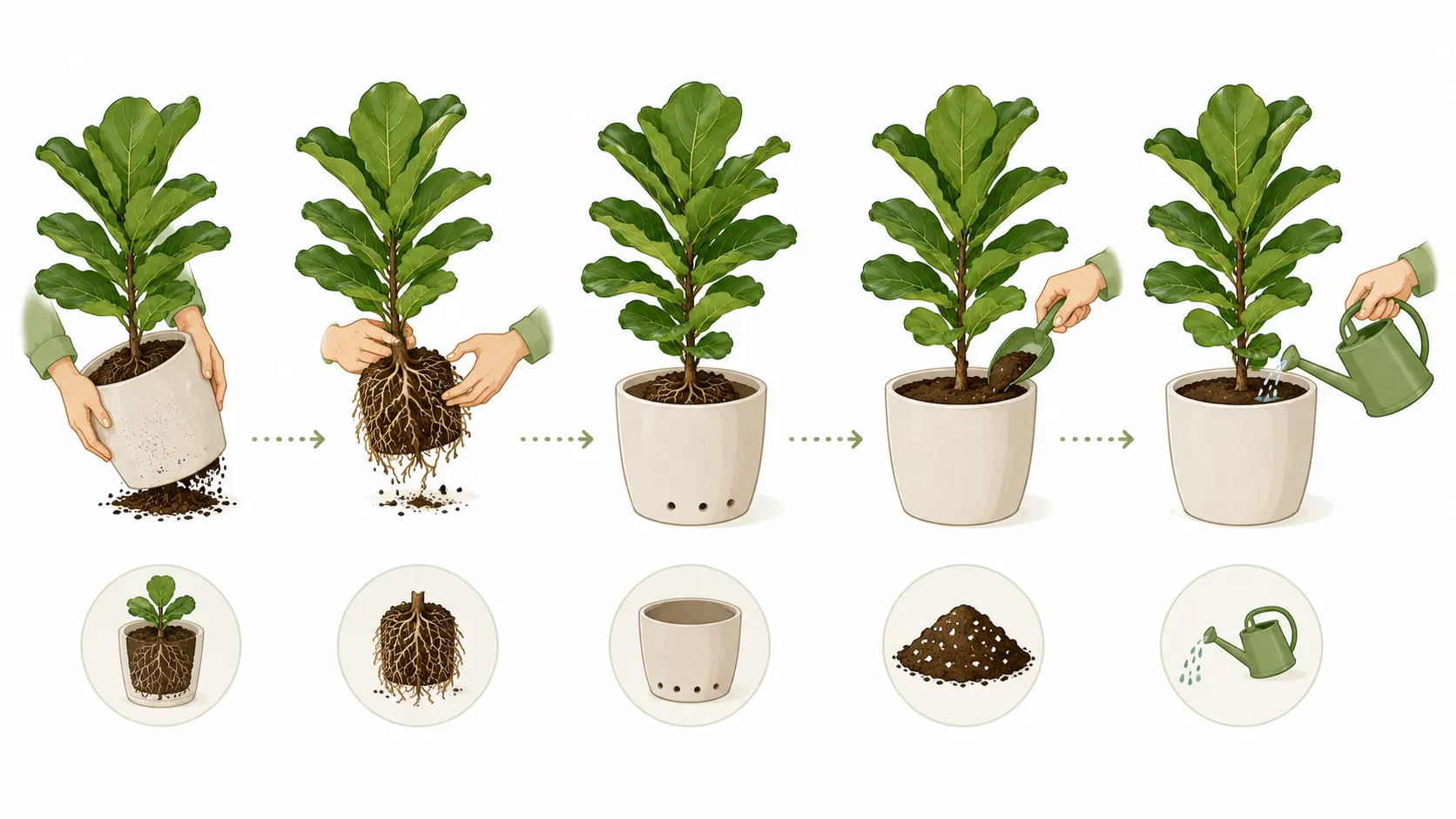
Repotting refreshes the soil, provides additional space for root growth, and prevents plants from becoming severely root-bound. Most healthy fiddle leaf figs only need repotting every one to two years.
When Should You Repot?
Signs it’s time to repot include:
- Roots growing through drainage holes
- Roots circling inside the pot
- Water draining unusually fast
- Soil breaking down and becoming compact
- Slowed growth despite proper care
Choosing the Right Pot
Select a new container that is only 1–2 inches larger in diameter than the current pot.
Understanding container size can significantly improve root health. Learn more in our Does Pot Size Affect How Fast a Plant Grows? Complete Guide.
Avoid oversized pots because they:
- Hold excess moisture
- Increase the risk of root rot
- Slow healthy root development
Always choose a pot with drainage holes.
Step-by-Step Repotting Process
- Select a clean pot with drainage holes.
- Prepare fresh, well-draining potting mix.
- Carefully remove the plant from its current container.
- Loosen tightly circling roots gently.
- Position the plant at the same depth in the new pot.
- Fill around the roots with fresh soil.
- Water lightly to settle the soil.
- Place the plant back in bright, indirect light.
Why Pot Size Matters
A properly sized pot allows the soil to dry at a healthy rate while encouraging strong root development.
Containers that are too large retain moisture for extended periods, increasing the likelihood of fungal diseases and root rot.
Signs Your Plant Is Root-Bound
Common indicators include:
- Thick roots circling the container
- Frequent wilting despite watering
- Reduced growth
- Soil drying unusually quickly
- Roots emerging from drainage holes
How to Prune a Fiddle Leaf Fig
Pruning improves the plant’s structure, encourages branching, and helps control overall height. It is also useful for removing damaged or unhealthy growth.
Why Pruning Matters
Proper pruning helps:
- Encourage fuller branching
- Maintain manageable size
- Improve air circulation
- Remove damaged leaves
- Create a balanced canopy
Best Time to Prune
The ideal time is:
- Spring
- Early summer
Avoid major pruning during winter when growth naturally slows.
Step-by-Step Pruning Guide
- Locate a healthy node on the stem.
- Sterilize pruning shears.
- Cut just above the node at approximately a 45-degree angle.
- Wipe away the white milky sap.
- Wear gloves because the sap may irritate sensitive skin.
Understanding Nodes
Nodes are small raised points on the stem where leaves and new branches emerge.
Making cuts above healthy nodes encourages branching and fresh growth.
Encouraging Branching
A technique called notching involves making a shallow cut above a node to stimulate dormant buds.
Although not every notch produces a branch, successful notching can help create a fuller canopy.
Common Pruning Mistakes
Avoid:
- Cutting below a node
- Removing excessive foliage at one time
- Using dirty tools
- Pruning during winter
- Ignoring damaged branches
How to Propagate a Fiddle Leaf Fig
Propagation allows you to grow new plants from an existing healthy fiddle leaf fig. The two most reliable methods are stem cuttings and air layering.
Stem Cutting Method
Follow these steps:
- Cut a healthy stem with at least one node and one healthy leaf.
- Place the cutting in clean water.
- Keep it in bright, indirect light.
- Replace the water every week.
- Wait until roots grow 1–2 inches long.
- Transfer the cutting into well-draining potting soil.
Air Layering Method
Air layering works well for mature stems.
The process involves:
- Making a shallow notch in the stem
- Wrapping the wound with moist sphagnum moss
- Covering the moss with plastic wrap
- Waiting for roots to develop before removing the new plant
Rooting Timeline
Under favorable conditions:
- Root formation usually begins within 4–8 weeks.
- Warmer temperatures and consistent humidity improve success rates.
Why Propagation Success Varies
Several factors influence rooting success:
- Plant health
- Temperature
- Humidity
- Clean cutting tools
- Adequate light
- Healthy growth nodes
Stem Cutting vs. Air Layering
| Feature | Stem Cutting | Air Layering |
| Difficulty | Easy | Moderate |
| Success Rate | Moderate | High |
| Rooting Time | 4–8 weeks | 6–10 weeks |
| Best For | Small cuttings | Mature branches |
| Tools Needed | Jar, pruning shears | Moss, plastic wrap, pruning tools |
Fiddle Leaf Fig Brown Spots: Causes and Fixes
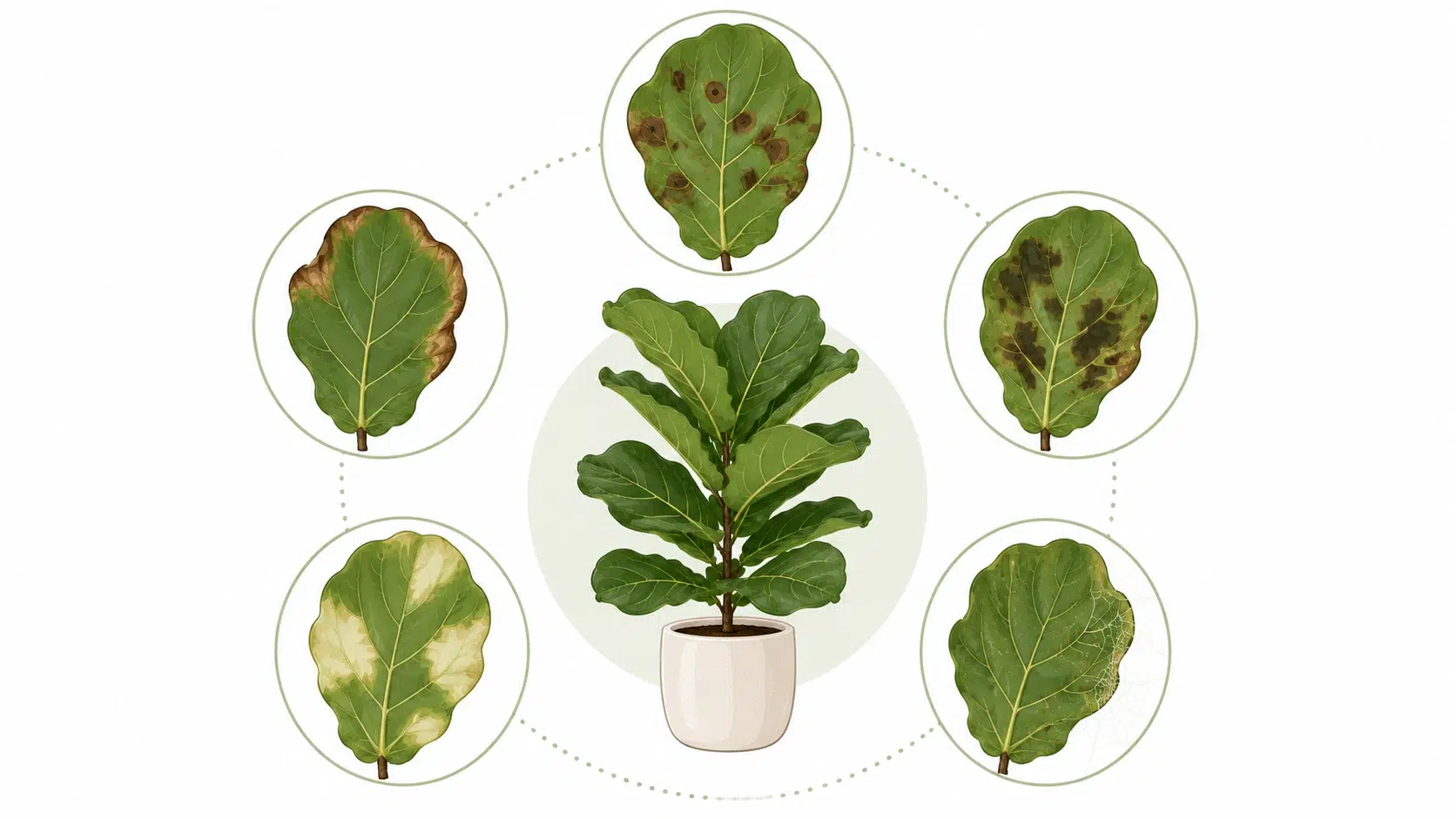
Brown spots are among the most common signs that something in the growing environment needs adjustment. Identifying the location and appearance of the spots helps determine the underlying cause.
Five Common Causes of Brown Spots
-
Overwatering
Symptoms:
- Brown spots near the center of leaves
- Soft or mushy tissue
- Wet soil
- Root rot
Fix:
- Allow soil to dry.
- Improve drainage.
- Inspect roots and remove rotted sections if necessary.
-
Underwatering
Symptoms:
- Dry, crispy leaf edges
- Curling leaves
- Dry potting soil
Fix:
- Water thoroughly whenever the top 2 inches become dry.
- Maintain a consistent watering routine.
-
Bacterial Infection
Symptoms:
- Irregular dark brown blotches
- Spots spreading from leaf edges
Fix:
- Remove infected leaves.
- Improve airflow.
- Avoid splashing water on foliage.
-
Sunburn
Symptoms:
- Tan or bleached patches
- Damage on leaves exposed to direct afternoon sun
Fix:
- Move the plant to bright, indirect light.
-
Pests
Symptoms:
- Small brown spots
- Sticky residue
- Fine webbing
Fix:
- Inspect regularly.
- Treat with insecticidal soap or horticultural oil if needed.
If you notice insects or recurring pest problems, our Bugs in Indoor Plant Soil: Identification, Treatment & Prevention guide explains how to identify and eliminate common indoor plant pests safely.
Brown Spot Diagnosis Guide
| Cause | Spot Location | Appearance | Recommended Fix |
| Overwatering | Leaf center | Soft brown patches | Improve drainage and reduce watering |
| Underwatering | Leaf edges | Dry, crispy margins | Water consistently |
| Bacterial infection | Leaf edges | Irregular blotches | Remove infected leaves |
| Sunburn | Sun-facing areas | Tan or bleached patches | Reduce direct sunlight |
| Pests | Anywhere | Small spots with residue or webbing | Treat pests promptly |
Preventing Brown Spots
To reduce future problems:
- Water only when needed.
- Use well-draining soil.
- Maintain stable temperatures.
- Avoid placing the plant near heating or cooling vents.
- Inspect foliage regularly for pests and disease.
What Does an Overwatered Fiddle Leaf Fig Look Like?
An overwatered fiddle leaf fig typically develops yellow or brown spots near the center of its leaves, drops healthy-looking green leaves, and sits in consistently wet soil. If left untreated, overwatering can lead to root rot, one of the most serious problems affecting Ficus lyrata.
Common Signs of Overwatering
Look for these symptoms:
- Yellow-brown spots near the center of leaves
- Leaves falling while still green
- Soft or mushy stem base
- Soggy or foul-smelling soil
- Black or brown roots instead of firm white roots
- Stunted or halted growth
How to Recover an Overwatered Plant
Follow these steps:
- Stop watering until the top several inches of soil have dried.
- Remove the plant from the pot and inspect the roots.
- Trim away soft, black, or rotten roots using sterilized scissors.
- Repot into fresh, well-draining soil if root rot is present.
- Return the plant to bright, indirect light.
- Resume watering only when the top 2 inches of soil become dry.
Avoid trying to compensate with fertilizer or extra sunlight, as this can add more stress while the plant is recovering.
Common Fiddle Leaf Fig Problems and How to Fix Them
Most fiddle leaf fig problems are caused by inconsistent care rather than disease. Identifying the symptoms early makes recovery much easier.
Leaf Drop
Why it happens:
- Sudden environmental changes
- Overwatering or underwatering
- Low light
- Drafts
- Temperature fluctuations
How to fix it:
- Keep the plant in one location.
- Adjust watering based on soil moisture.
- Provide bright, indirect light.
- Avoid cold drafts and heating vents.
Yellow Leaves
Why it happens:
- Excess moisture
- Poor drainage
- Nutrient imbalance
- Aging lower leaves
How to fix it:
- Allow soil to dry appropriately.
- Improve drainage.
- Fertilize during the growing season if needed.
No New Growth
Why it happens:
- Insufficient light
- Winter dormancy
- Root-bound conditions
- Nutrient deficiency
How to fix it:
- Increase bright indirect light.
- Wait until spring if growth has naturally slowed.
- Repot if roots are crowded.
- Resume monthly fertilization during active growth.
Leggy or Lopsided Growth
Why it happens:
- Uneven light exposure
- Lack of pruning
How to fix it:
- Rotate the plant regularly.
- Prune above healthy nodes to encourage branching.
What Not to Do with a Fiddle Leaf Fig
Avoid these common mistakes:
- Moving the plant frequently
- Watering on a fixed schedule without checking soil
- Using oversized pots
- Placing the plant near heating or air-conditioning vents
- Watering with extremely cold water
- Repotting too often
How to Bring a Struggling Fiddle Leaf Fig Back to Life
A simple recovery plan includes:
- Diagnose the underlying problem.
- Correct watering habits.
- Improve lighting.
- Check the roots if decline continues.
- Remove severely damaged leaves.
- Be patient and avoid making multiple changes at once.
Healthy recovery often takes several weeks or months.
Fiddle Leaf Fig Care for Beginners
Although fiddle leaf figs have a reputation for being challenging, beginners can successfully grow them by focusing on a few essential care practices.
Beginner Success Checklist
- Place the plant in bright, indirect light.
- Avoid moving it unnecessarily.
- Water only when the top 2 inches of soil are dry.
- Use a pot with drainage holes.
- Fertilize monthly during spring and summer.
- Clean leaves regularly with a damp cloth.
- Monitor for pests and discoloration every week.
Weekly Care Routine
Each week:
- Check soil moisture before watering.
- Inspect leaves for pests or brown spots.
- Rotate the pot slightly if needed.
- Wipe dust from the leaves.
- Observe for healthy new growth.
Common Beginner Myths
Myth: More water helps the plant grow faster.
Reality: Excess water is one of the leading causes of root rot and leaf loss.
Myth: Frequent repotting improves growth.
Reality: Repot only when the plant becomes root-bound.
Myth: Any sunny window is suitable.
Reality: Bright, indirect light is ideal, while harsh afternoon sun may scorch the leaves.
How to Care for a Fiddle Leaf Fig in Pots Indoors
Container choice and indoor growing conditions play a major role in long-term plant health.
Choosing the Right Pot
| Pot Material | Advantages | Disadvantages |
| Terracotta | Excellent airflow and drainage | Dries out more quickly |
| Plastic | Lightweight and retains moisture | Less breathable |
| Ceramic | Attractive and stable | Often heavier and may retain more moisture |
Regardless of the material, always choose a container with drainage holes.
Pot Size and Moisture
Choose a pot only slightly larger than the existing root ball.
Oversized containers:
- Stay wet longer
- Increase the risk of root rot
- Slow healthy root establishment
Indoor Humidity
Fiddle leaf figs generally prefer humidity levels between 30% and 65%.
During dry seasons you can:
- Use a humidifier nearby.
- Place the pot on a pebble tray with water.
- Group houseplants together to increase local humidity.
Avoid misting excessively, as constantly wet leaves may contribute to disease under poor air circulation.
Fiddle Leaf Fig vs. Similar Plants: Key Differences
Several popular houseplants share a similar bold appearance, but their care requirements differ. If you’re looking for a more forgiving houseplant in the same genus, our Caring for a Ficus Elastica: Complete Indoor Care Guide explains why the rubber plant is often recommended as an easier alternative to a fiddle leaf fig.
Comparison Table
| Feature | Fiddle Leaf Fig | Rubber Plant | Monstera |
| Scientific Name | Ficus lyrata | Ficus elastica | Monstera deliciosa |
| Light Needs | Bright indirect light | Medium to bright indirect light | Bright indirect light |
| Watering | Moderate | Moderate | Moderate |
| Difficulty | Moderate to high | Easy to moderate | Easy |
| Mature Indoor Size | 6–10 feet | 6–10 feet | 6–8 feet |
| Appearance | Large violin-shaped leaves | Thick oval glossy leaves | Split tropical leaves |
Which Plant Fits Your Lifestyle?
Choose a fiddle leaf fig if you:
- Enjoy structured plant care.
- Have a bright indoor location.
- Want a dramatic statement plant.
Choose a rubber plant if you:
- Prefer a more forgiving Ficus species.
- Want easier maintenance.
Choose a Monstera if you:
- Want fast growth.
- Prefer a lower-maintenance tropical plant with distinctive split leaves.
Does a Fiddle Leaf Fig Produce Fruit?
Fiddle leaf figs rarely produce fruit indoors.
Can They Produce Fruit?
Yes, mature outdoor specimens growing in suitable tropical climates may develop small fig-like fruits.
However, indoor plants almost never fruit because they lack the specialized pollinators required for normal reproduction.
Is the Fruit Edible?
No.
Although fiddle leaf figs belong to the same genus as edible figs, they are not the same species.
- Fiddle leaf fig: Ficus lyrata
- Edible common fig: Ficus carica
The fruits of Ficus lyrata are not grown for consumption and should not be confused with edible figs.
Conclusion
Learning how to take care of a fiddle leaf fig becomes much easier when you focus on consistency rather than perfection. Bright, indirect light, careful watering, well-draining soil, and a stable indoor environment are the foundations of healthy growth. Regular monitoring allows you to identify problems such as overwatering, brown spots, or nutrient deficiencies before they become serious. Although fiddle leaf figs have a reputation for being demanding, they can thrive for decades with proper care. Maintaining consistent conditions and avoiding common mistakes are the most reliable ways to grow a healthy, attractive fiddle leaf fig.
Frequently Asked Questions
1. How do you care for a fiddle leaf fig indoors?
Place it in bright, indirect light, water only when the top 2 inches of soil are dry, use well-draining potting soil, maintain moderate humidity, and fertilize monthly during spring and summer.
2. Why does my fiddle leaf fig have brown spots?
Brown spots are commonly caused by overwatering, underwatering, bacterial infections, sunburn, or pests. Identifying the location and appearance of the spots helps determine the correct treatment.
3. How often should a fiddle leaf fig grow a new leaf?
A healthy fiddle leaf fig usually produces one new leaf every 4–6 weeks during the active growing season, provided it receives adequate light, water, and nutrients.
4. How do I bring my fiddle leaf fig back to life?
Identify the underlying problem, correct watering habits, improve lighting, inspect the roots if necessary, remove damaged leaves, and allow the plant time to recover without making frequent care changes.
5. What soil is best for a fiddle leaf fig?
The ideal soil is a well-draining mix containing quality potting soil combined with perlite and coarse sand or orchid bark. A slightly acidic to neutral pH of 6.0–7.0 is recommended.
6. Is Miracle-Gro good for fiddle leaf figs?
Yes, Miracle-Gro products can be suitable if they provide an appropriate nutrient balance for foliage plants and are used according to the recommended application rates.
7. How do I propagate a fiddle leaf fig?
The simplest method is taking a healthy stem cutting with at least one node and one leaf, rooting it in clean water under bright, indirect light, and transplanting it into soil once roots reach approximately 1–2 inches in length.