
Introduction
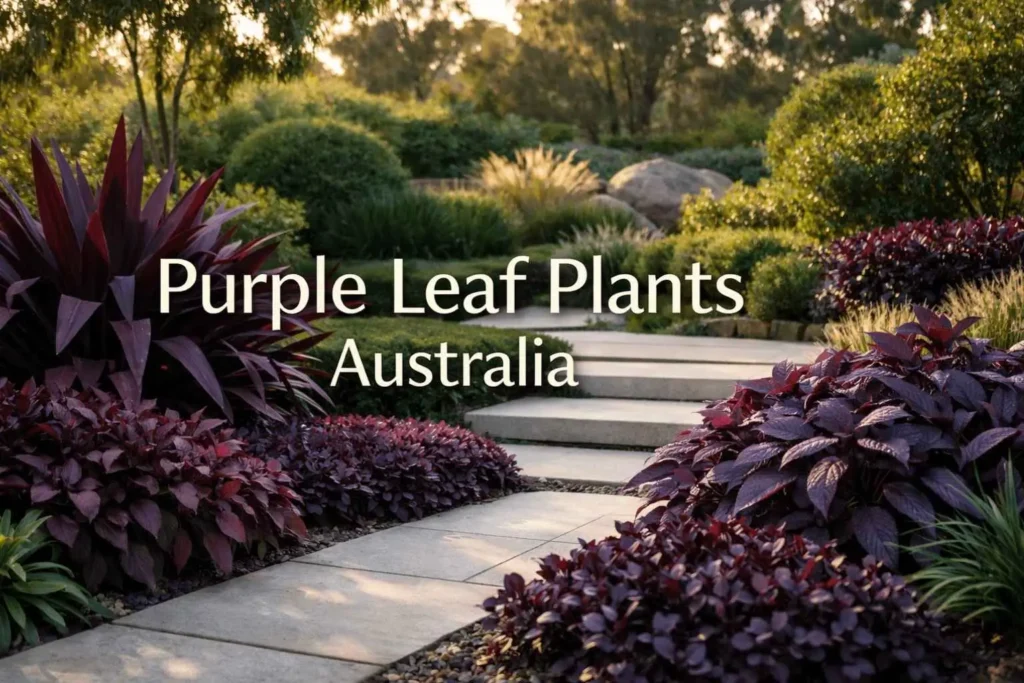
Purple leaf plants Australia refers to ornamental plants with naturally pigmented purple foliage that thrive in Australian climates. These plants are valued for their bold color contrast, landscaping appeal, and ability to complement green gardens or flowering species.
They include a mix of native and non-native species, ranging from ground covers to shrubs and tall feature plants, often paired with purple flowers or contrasting foliage. Purple foliage plants Australia are widely used to create structure, depth, and visual balance in modern and traditional garden designs.
Quick Summary
- Purple leaf plants in Australia enhance contrast and structure in landscapes.
- They range from ground covers to tall feature plants for different garden sizes.
- Many combine purple foliage with purple flowers for added visual appeal.
- Selection depends on sunlight, size, and native vs non-native preference.
What Are Purple Leaf Plants and Why Do They Appear Purple?
Understanding Purple Pigmentation in Plants
Purple leaf plants contain natural pigments called anthocyanins, which give leaves their purple, red, or deep burgundy tones. These pigments can dominate over chlorophyll, making the leaves appear purple instead of green.
In many purple leaves plant varieties, anthocyanins act as a protective layer, helping plants manage sunlight intensity and environmental stress. Factors influencing pigmentation include:
- High sunlight exposure
- Genetic traits of the plant
- Temperature fluctuations
- Nutrient availability
The purple coloration in leaves is primarily caused by Anthocyanin, a natural pigment that helps plants protect against environmental stress and intense sunlight.
Differences Between Purple Leaves and Purple Flowers
Purple foliage plants Australia are classified based on leaf color, while purple flowering plants are identified by their blooms.
Key differences:
- Purple leaves: Provide year-round color and structure
- Purple flowers: Offer seasonal visual interest
- Some plants combine both traits, creating layered color effects
Types of Purple Leaf Plants in Australia (By Growth Form)
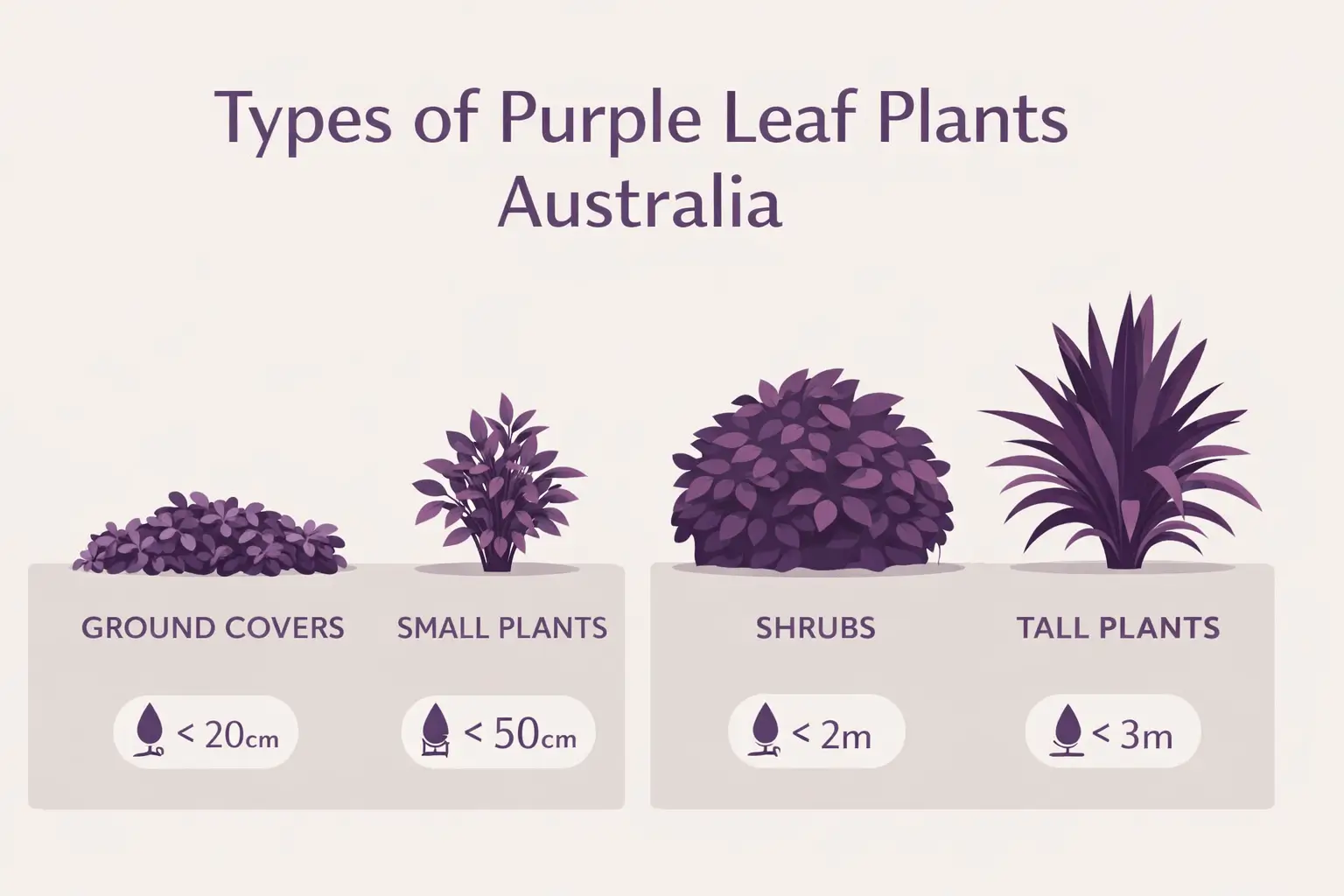
Ground Covers and Low-Growing Plants
Purple leaf ground cover plants spread across soil surfaces and are ideal for:
- Borders and pathways
- Erosion control
- Filling empty spaces
Small and Dwarf Purple Leaf Plants
Small purple leaf plants Australia are suitable for:
- Containers and pots
- Compact gardens
- Balcony landscaping
Dwarf purple leaf plants Australia are commonly used where space is limited but visual impact is needed. Low-growing options like Australian Violet Ground Cover are widely used for borders and erosion control while adding subtle purple tones to garden spaces.
Shrubs and Medium-Sized Plants
Purple shrubs Australia provide structure and layering. These plants often:
- Combine purple leaves and flowers
- Serve as hedging or screening plants
- Add depth to garden design
Tall and Large Purple Leaf Plants
Tall purple leaf plants Australia function as feature elements. Large purple leaf plants Australia are used for:
- Statement planting
- Shade creation
- Focal points in landscaping
For larger landscapes, combining tall purple foliage plants with evergreen species such as 7+ Essential Evergreen Trees Brisbane Gardens Need helps create year-round structure and visual balance.
Native vs Non-Native Purple Leaf Plants in Australia
Australian Native Purple Leaf and Flower Plants
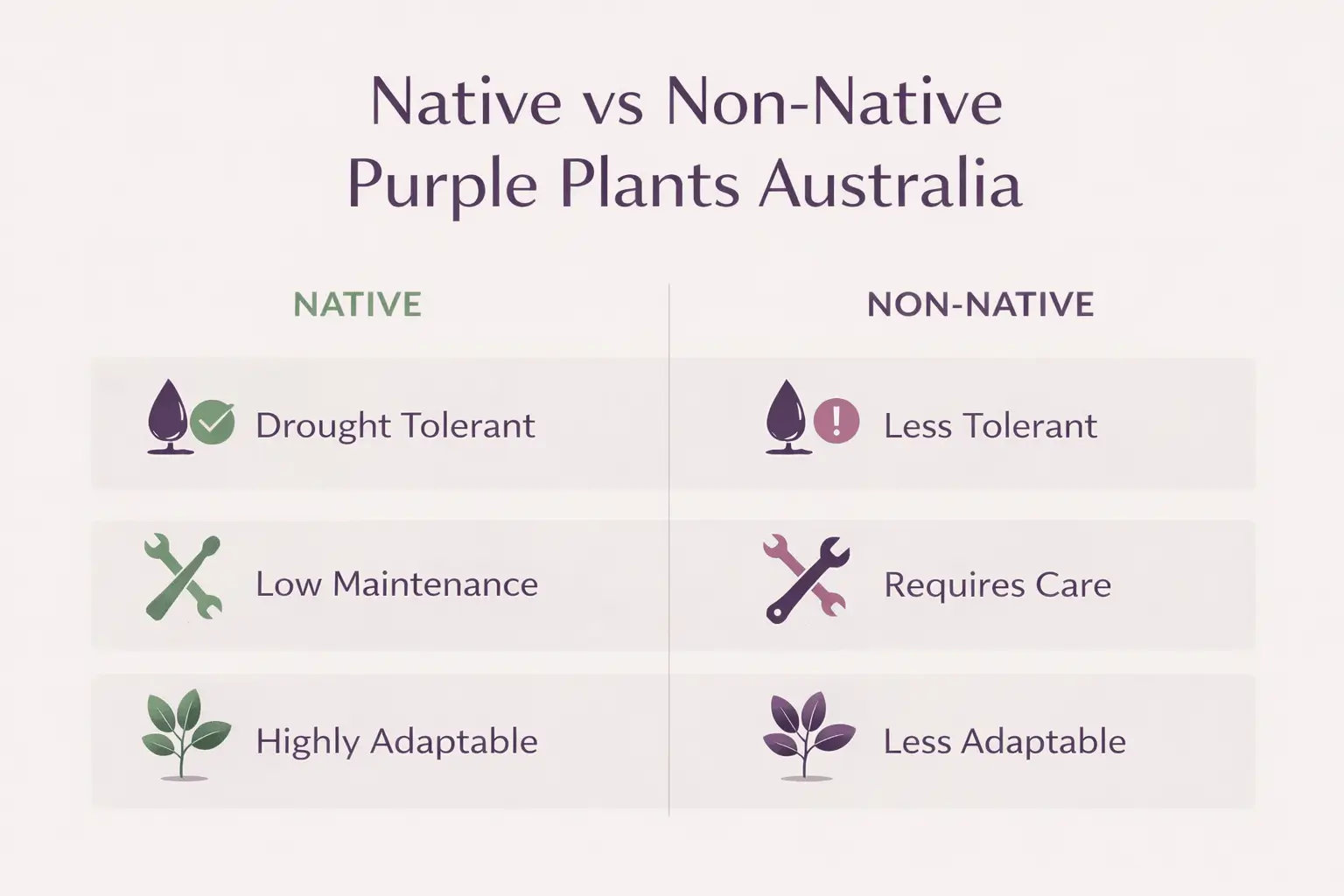
Native purple flowers Australia and foliage plants are adapted to local climates and soils. Benefits include:
- Drought tolerance
- Low maintenance requirements
- Better resistance to local pests
Purple native flowers Australia are commonly used in sustainable landscaping.
Non-Native Ornamental Purple Plants
Non-native purple foliage plant varieties are often chosen for:
- Unique colors and textures
- Decorative landscaping
- Broader plant selection
However, they may require more care and specific growing conditions compared to native species.
Common Purple Leaf Plant Varieties in Australia
| Plant Type | Growth Size | Leaf Color | Flower Type | Best Use |
| Purple foliage plants | Small to large | Deep purple | Variable | General landscaping |
| Purple and green leaf plant Australia | Medium | Variegated | Occasional blooms | Decorative contrast |
| Purple leaf and flower plant | Medium to large | Purple | Purple flowers | Feature planting |
These examples help with identification and selecting the right purple plant Australia based on garden needs.
How to Choose the Best Purple Leaf Plants for Your Garden
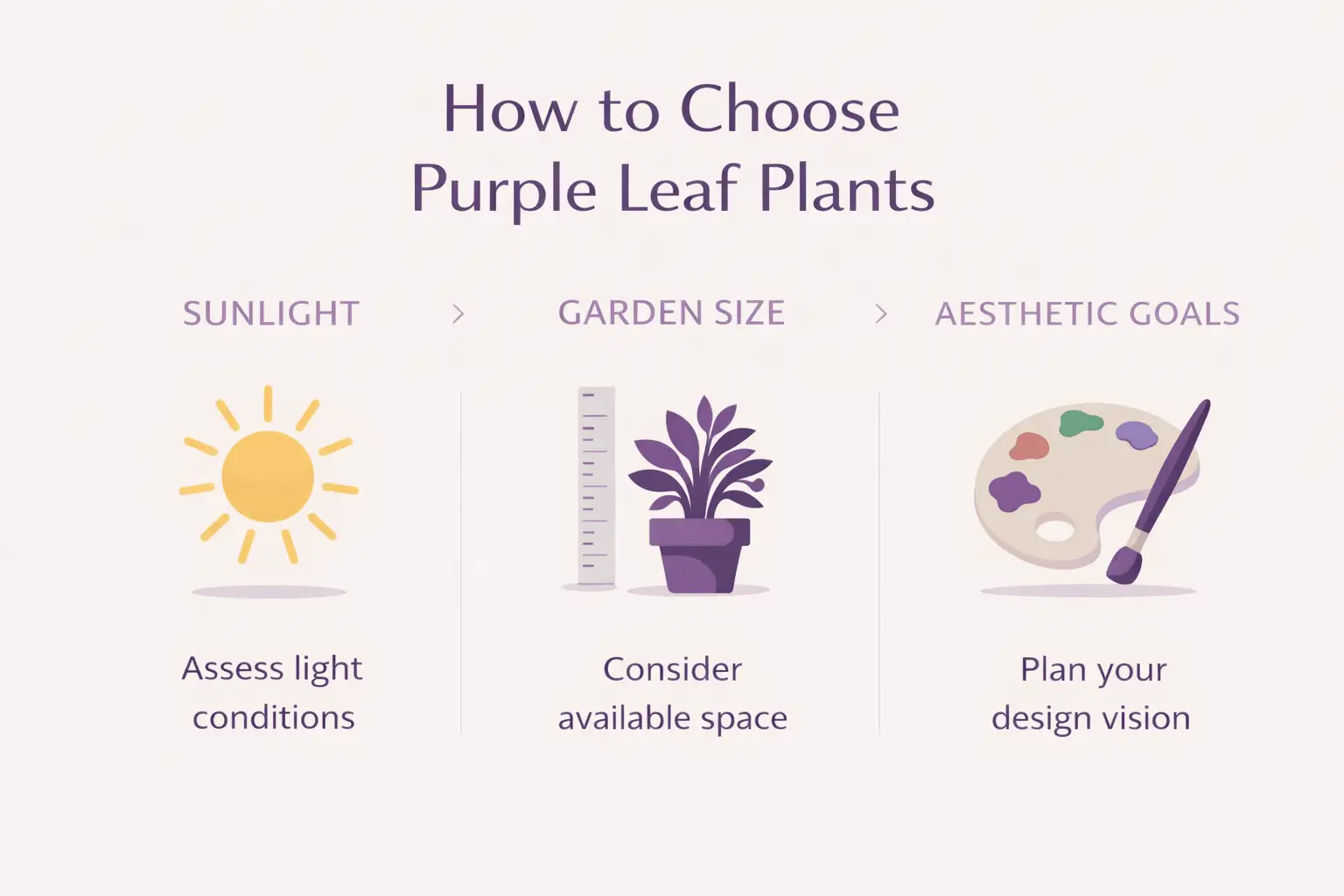
Based on Sunlight Conditions
Full sun plants Australia often produce deeper purple coloration due to increased anthocyanin activity. In shade, leaves may appear greener.
Based on Garden Size and Layout
- Small gardens: choose compact or dwarf varieties
- Large gardens: use tall or spreading plants
- Containers: select slow-growing plants
Based on Aesthetic Goals
- Combine purple with green for contrast
- Pair purple foliage with purple flowers for layered color
- Use bold plants as focal points
Purple Leaf Plants vs Purple Flowering Plants (Comparison)
Comparison Table: Foliage vs Flowering Plants
| Feature | Purple Leaf Plants | Purple Flowering Plants |
| Visual Impact | Year-round foliage | Seasonal blooms |
| Maintenance | Moderate | Often higher |
| Usage | Structure & contrast | Accent & color bursts |
Purple flowering plants Australia are often used alongside foliage plants for balanced landscaping.
Care Guide for Purple Leaf Plants in Australia
Watering and Soil Requirements
Well-draining soil is essential for healthy root systems. Native plants generally tolerate dry conditions better.
Light Requirements
Full sun enhances purple color, while low light may reduce intensity.
Pruning and Maintenance
- Regular pruning promotes dense growth
- Remove weak or leggy stems
- Maintain shape for visual appeal
Fertilization and Growth Support
Balanced nutrients help maintain vibrant foliage color. Over-fertilizing can reduce pigmentation.
Growth Rate and Size Expectations
Purple foliage plants vary in growth speed:
- Slow-growing: suitable for containers
- Moderate-growing: common in shrubs
- Fast-growing: useful for quick coverage
Growth is influenced by:
- Climate conditions
- Soil quality
- Water availability
Common Problems with Purple Leaf Plants (And How to Fix Them)
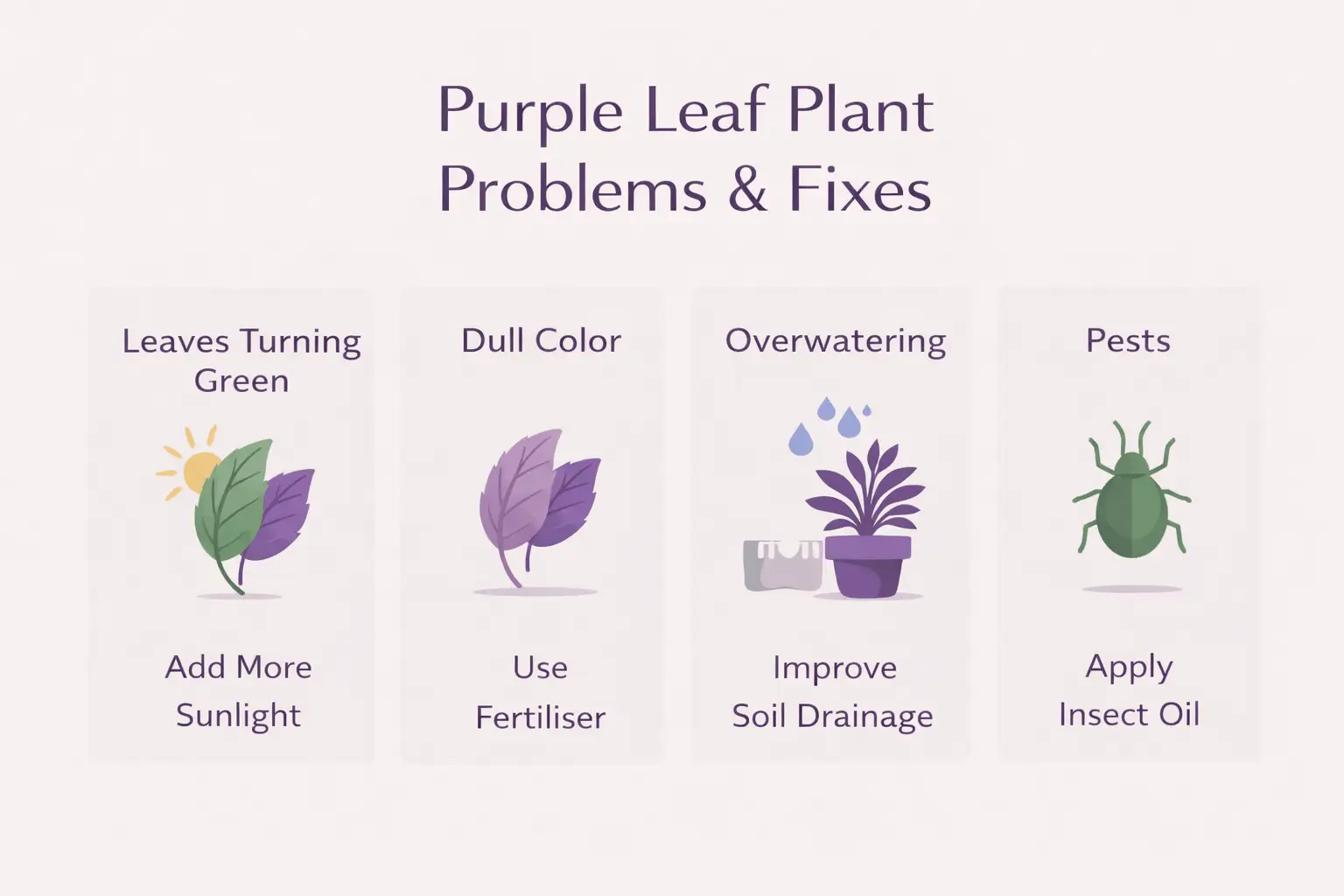
Leaves Turning Green Instead of Purple
Cause: insufficient sunlight
Solution: move plant to brighter location
Fading or Dull Leaf Color
Cause: poor soil or nutrient deficiency
Solution: improve soil quality and fertilization
Overwatering and Root Issues
Symptoms:
- Yellowing leaves
- Root rot
Prevention:
- Use well-draining soil
- Avoid excessive watering
Pest and Environmental Stress
Common issues include heat stress and humidity imbalance. Proper placement and airflow help reduce damage.
Beginner Mistakes to Avoid When Growing Purple Leaf Plants
- Choosing plants too large for available space
- Ignoring sunlight requirements
- Overwatering non-native species
- Mixing plants with incompatible needs
These mistakes often reduce plant health and visual impact.
Landscaping Ideas Using Purple Leaf Plants
Contrast Planting with Green and Red Foliage
Purple foliage creates strong contrast when paired with green or red plants.
Combining Purple Leaves with Purple Flowers
Layering foliage and blooms enhances visual depth and cohesion.
Using Purple Plants as Focal Points
Tall or bold plants can act as statement features in gardens.
Ground Covers and Borders
Low-growing purple leaf plants are effective for edging and filling spaces. Ground covers like Creeping Thyme Australia pair well with purple foliage plants, offering texture contrast and low-maintenance coverage.
How to Identify Purple Leaf Plants in Australia
Identification involves observing:
- Leaf shape and texture
- Shade and intensity of purple color
- Presence of purple under leaves
- Flower characteristics
Purple leaf plant identification helps determine species and care requirements.
Conclusion
Purple leaf plants Australia provide year-round visual interest, structural contrast, and versatility across different garden styles. From ground covers to large feature plants, they suit a wide range of landscaping needs. Choosing the right plant depends on sunlight, space, and whether native or ornamental varieties are preferred. With proper care, these plants enhance both aesthetic value and garden functionality.
FAQs
What plants have purple leaves in Australia?
Purple leaf plants include ground covers, shrubs, and ornamental foliage plants that produce anthocyanin pigments, giving them their distinct color.
Are purple leaf plants suitable for full sun?
Yes, many purple leaf plants thrive in full sun, which enhances leaf color intensity and overall growth.
What is the difference between purple foliage and purple flowering plants?
Purple foliage plants provide consistent color year-round, while flowering plants offer seasonal blooms.
Are there native purple leaf plants in Australia?
Yes, some native species produce purple foliage or flowers and are well adapted to Australian conditions.
Why are my purple leaves turning green?
This usually occurs due to insufficient sunlight or improper environmental conditions.
Can purple leaf plants be grown in small gardens?
Yes, dwarf and compact varieties are ideal for small gardens, containers, and limited spaces.



One Response