
Introduction
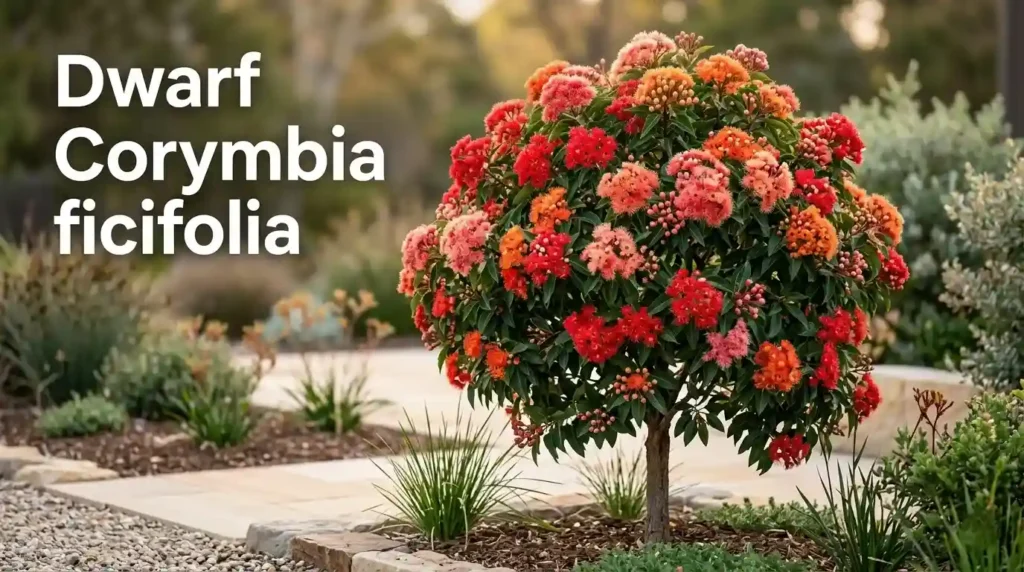
Dwarf Corymbia ficifolia, commonly known as the dwarf flowering gum, is a compact Australian native tree valued for its intense summer flowering and adaptability to small landscapes. This grafted form of Corymbia ficifolia produces vivid red, orange, or pink blossoms while maintaining a significantly smaller size than the standard species. It is widely used in residential gardens, streetscapes, and patios due to its ornamental appeal, drought tolerance, and reliable flowering performance in warm climates.
Dwarf Corymbia ficifolia belongs to the genus Corymbia, a group of trees closely related to eucalyptus and widely studied for their ecological and horticultural importance.
Quick Summary
- Compact ornamental tree growing 3–5m tall and wide
- Produces dense summer flowers in red, orange, or pink shades
- Requires full sun and well-drained soil for best performance
- Grafted cultivars ensure consistent dwarf size and flowering reliability
Plant Size
Typical Mature Dimensions
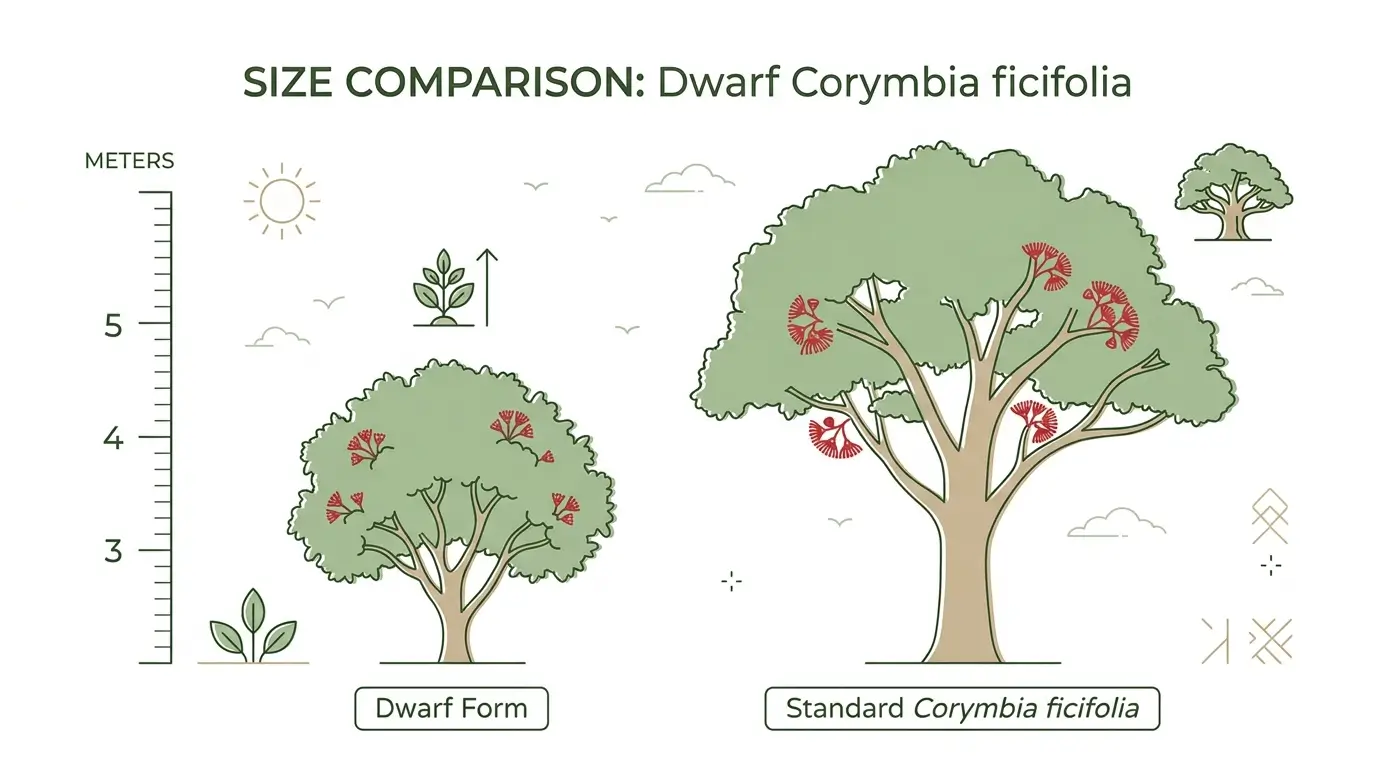
Dwarf Corymbia ficifolia generally reaches a mature height of 3–5 meters with a similar spread of 2–4 meters. Its naturally rounded canopy makes it ideal for compact garden layouts.
Indoor vs Outdoor Growth
When grown outdoors in optimal conditions, the tree achieves full dwarf size potential. In restricted container environments, growth may remain limited to 2–3 meters due to confined root space and reduced nutrient availability.
Environmental Influence on Size
Growth can be affected by soil quality, water availability, and sunlight exposure. Poor drainage or low light may stunt development, reducing overall size and flowering density.
Growth Rate
Development Speed
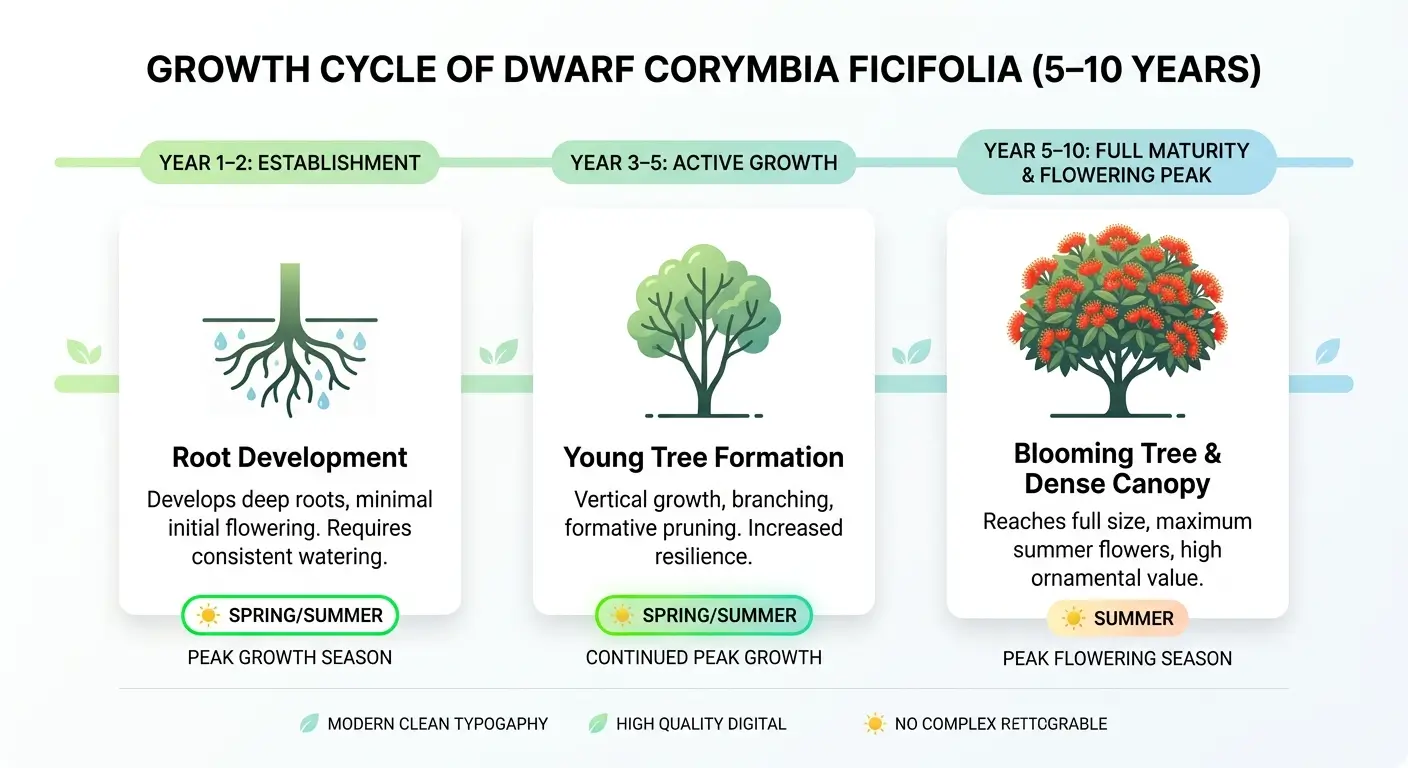
Dwarf Corymbia ficifolia has a moderate growth rate, typically reaching maturity within 5–10 years under favorable conditions.
Seasonal Growth Pattern
Growth is most active during spring and summer when warm temperatures and extended sunlight support vegetative expansion and flowering development. Winter months typically bring reduced growth activity.
Key Growth Factors
- Full sun exposure enhances growth speed and flower production
- Well-drained soils promote strong root establishment
- Regular watering in early stages improves long-term vigor
- Fertile soil supports denser foliage and improved blooming
Varieties and Cultivars
Common Cultivars
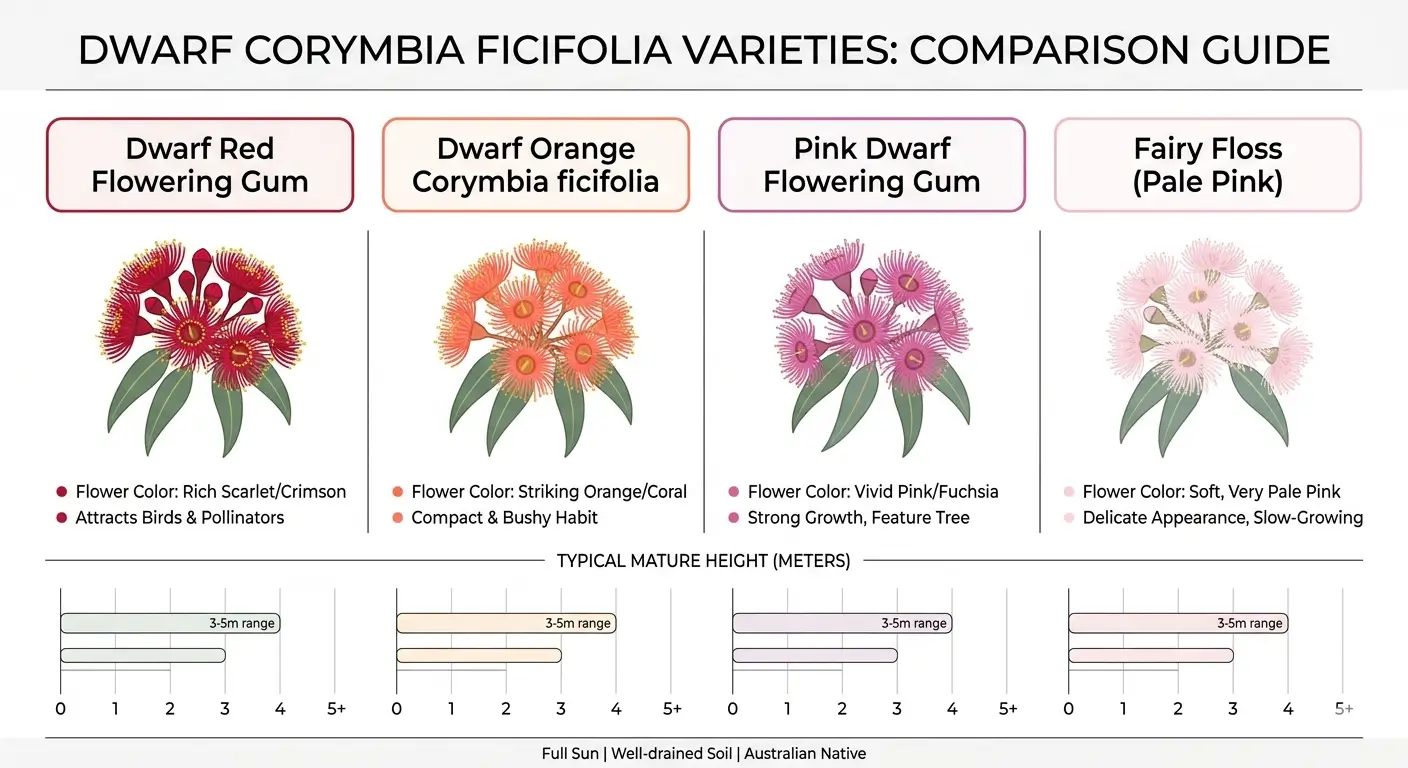
Dwarf Corymbia ficifolia is available in several ornamental selections bred for flower color and compact growth habits.
Variety Overview
| Variety | Flower Color | Mature Size (H x W) | Key Notes |
| Dwarf Red Flowering Gum | Red | 3m x 3m | High bird attraction, grafted stability |
| Dwarf Orange Corymbia ficifolia | Orange | 3m x 2–3m | Western Australian selection |
| Pink Dwarf Flowering Gum | Pink | 4m x 3m | Soft ornamental contrast |
| Fairy Floss | Pale Pink | 3–4m x 3m | Delicate seasonal display |
Grafted vs Seed-Grown Plants
Grafted cultivars are preferred because they guarantee predictable dwarf size, consistent flowering color, and improved resilience compared to seed-grown variations, which may grow larger and less uniformly.
Care Guide
Watering Requirements
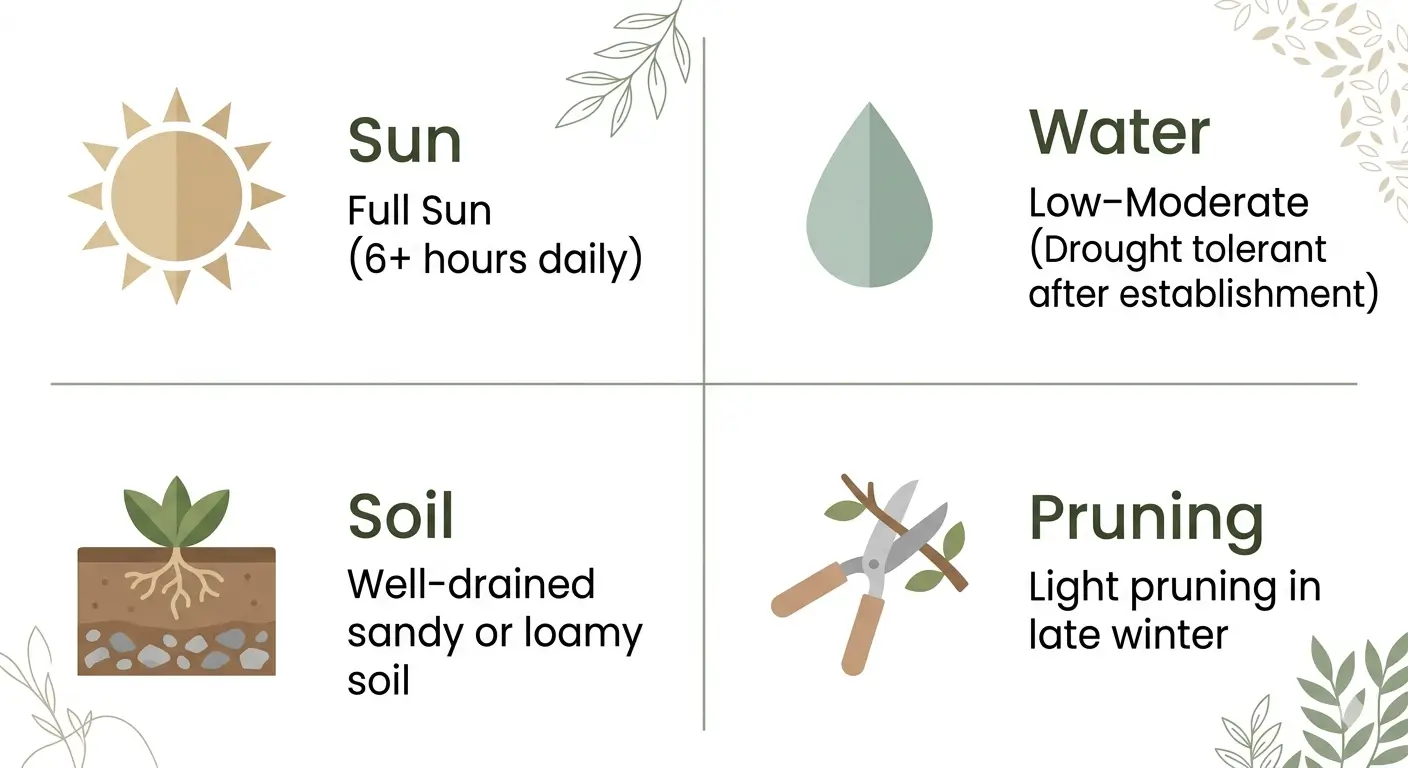
Young trees require regular watering for the first 1–2 years. Once established, they become drought-tolerant and only need occasional deep watering during dry periods.
Light Requirements
Full sun exposure (at least 6 hours daily) is essential for strong flowering and compact growth habit. For gardeners exploring more drought-tolerant and low-maintenance landscaping options, you may also like our guides on Fast Growing Australian Native Trees, Easy Low Maintenance Australian Native Garden Guide, and Best Evergreen Trees Australia.
Soil Conditions
Prefers well-drained sandy or loamy soil. It tolerates poor soils but cannot survive in waterlogged conditions.
Fertilization
Apply a slow-release balanced fertilizer during spring. Mature trees require minimal fertilization.
Pruning
Light pruning in late winter maintains shape and removes dead or weak branches, improving airflow and structure.
Climate Suitability
Best suited for USDA zones 9–11. It is heat and drought tolerant but sensitive to frost below -2°C.
Comparison with Standard Corymbia ficifolia
Size and Structure Differences
Dwarf varieties remain compact at 3–5 meters, while standard Corymbia ficifolia can reach 10–15 meters in height, forming large canopy trees.
Landscape Use
Dwarf forms are ideal for residential gardens, patios, and small urban landscapes, whereas standard forms are suited for parks and open environments.
Root Behavior
Dwarf varieties generally have less aggressive root systems compared to full-sized trees, making them safer for planting near structures.
If you are comparing flowering and structural differences between native ornamentals, you may also find our comparisons on Magnolia Little Gem vs Teddy Bear, Strelitzia Reginae vs Nicolai, and Gardenia Florida vs Magnifica useful for broader landscape planning insights.
Common Problems and Solutions
Yellowing Leaves
Often caused by overwatering or poor drainage. Improving soil aeration and reducing watering frequency helps resolve the issue.
Slow Growth and Pests
Insufficient sunlight or environmental stress may slow growth. Occasional pest issues like borers can be managed with pruning and neem oil treatments.
Root Concerns
While less invasive than larger gums, planting should still avoid underground pipes and foundations to prevent long-term issues.
Environmental Limitations and Seasonal Care
Weather Sensitivity
Young plants may require staking in windy environments to prevent structural damage. Mature trees are more resilient to heat and drought.
Seasonal Behavior
Flowering peaks in summer, while winter brings reduced growth activity and partial dormancy.
Protection Measures
Mulching around the base helps retain moisture and protect roots during cooler months or temperature fluctuations.
For better understanding of seasonal planting and climate adaptation in Australia, explore Brisbane Planting Guide, Plants for Dry Areas, and Tropical Screening Plants for Garden Privacy.
Conclusion
Dwarf Corymbia ficifolia is a highly ornamental and space-efficient flowering gum ideal for modern gardens. Its compact growth habit, seasonal floral display, and low-maintenance requirements make it a reliable landscaping choice. Grafted dwarf varieties ensure consistent performance, making them especially valuable for gardeners seeking predictable size and vibrant summer blooms.
FAQ
What is the mature size of dwarf Corymbia ficifolia?
It typically grows between 3–5 meters in height and width, making it suitable for small to medium gardens.
How often should you water dwarf flowering gum?
Water regularly during the first 1–2 years, then only during prolonged dry periods once established.
Which dwarf Corymbia ficifolia varieties are best?
Popular options include dwarf red, orange, and pink flowering gums, especially grafted cultivars for reliability.
Are dwarf Corymbia ficifolia roots invasive?
No, they are generally less invasive than standard gums but still require proper planting distance from structures.
When does dwarf flowering gum bloom?
It typically blooms in summer, producing vibrant flowers from December to February in warm climates.