
Introduction
Maple tree care refers to the essential practices required to grow, maintain, and protect maple trees, including watering, pruning, soil management, and seasonal care. Proper maple tree care ensures steady growth, vibrant foliage, and long-term health across different varieties. From large outdoor shade trees to delicate ornamental species like Japanese maples, each type requires specific attention. Environmental factors such as soil quality, sunlight, and climate significantly influence outcomes. Understanding these core requirements helps prevent stress-related issues such as leaf discoloration, poor growth, and structural weakness, making maple trees reliable and visually striking additions to landscapes. Maple trees belong to the genus Acer, a group of deciduous trees known for their distinctive leaves and seasonal color changes.
Quick Summary
- Maple tree care focuses on watering, soil quality, pruning, and seasonal adjustments.
- Japanese maples require more delicate handling, especially in winter and container growth.
- Growth success depends on climate, sunlight, and proper soil drainage.
- Understanding common problems helps prevent leaf damage, slow growth, and stress.
What Does Proper Maple Tree Care Involve?
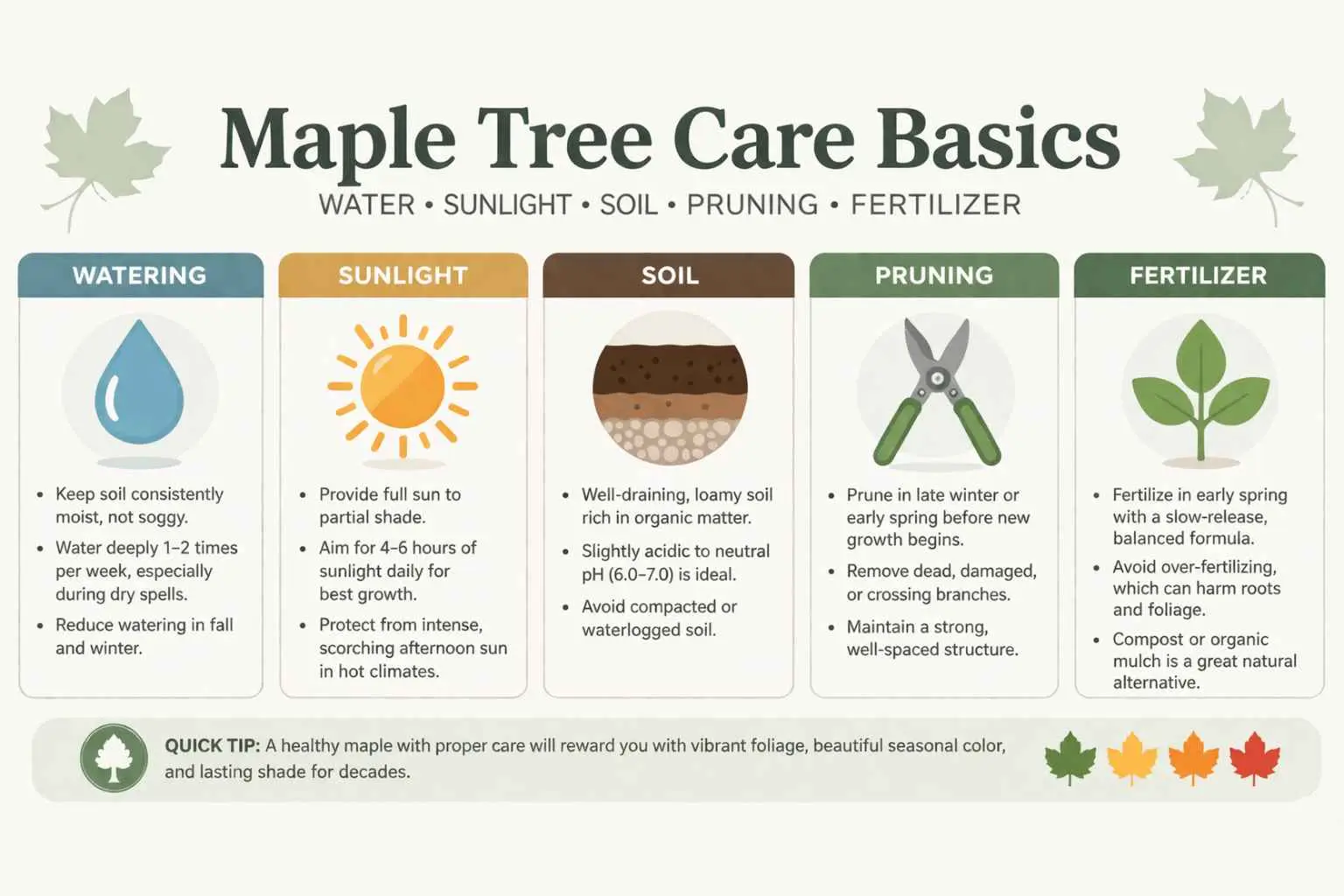
Proper maple tree care involves managing water, soil, light, pruning, and nutrient supply to support balanced growth and long-term resilience. These elements apply to both general maple tree care and maple tree care outdoor conditions, though specific requirements vary by species.
Core care elements include:
- Watering: Consistent moisture without waterlogging
- Light: Adequate sunlight depending on variety
- Soil: Well-draining, slightly acidic soil
- Pruning: Seasonal removal of dead or overcrowded branches
- Feeding: Balanced nutrients during active growth periods
Japanese maples differ slightly, requiring more protection from environmental stress such as direct heat and strong winds.
Ideal Growing Conditions for Maple Trees
Soil, Light, and Climate Requirements
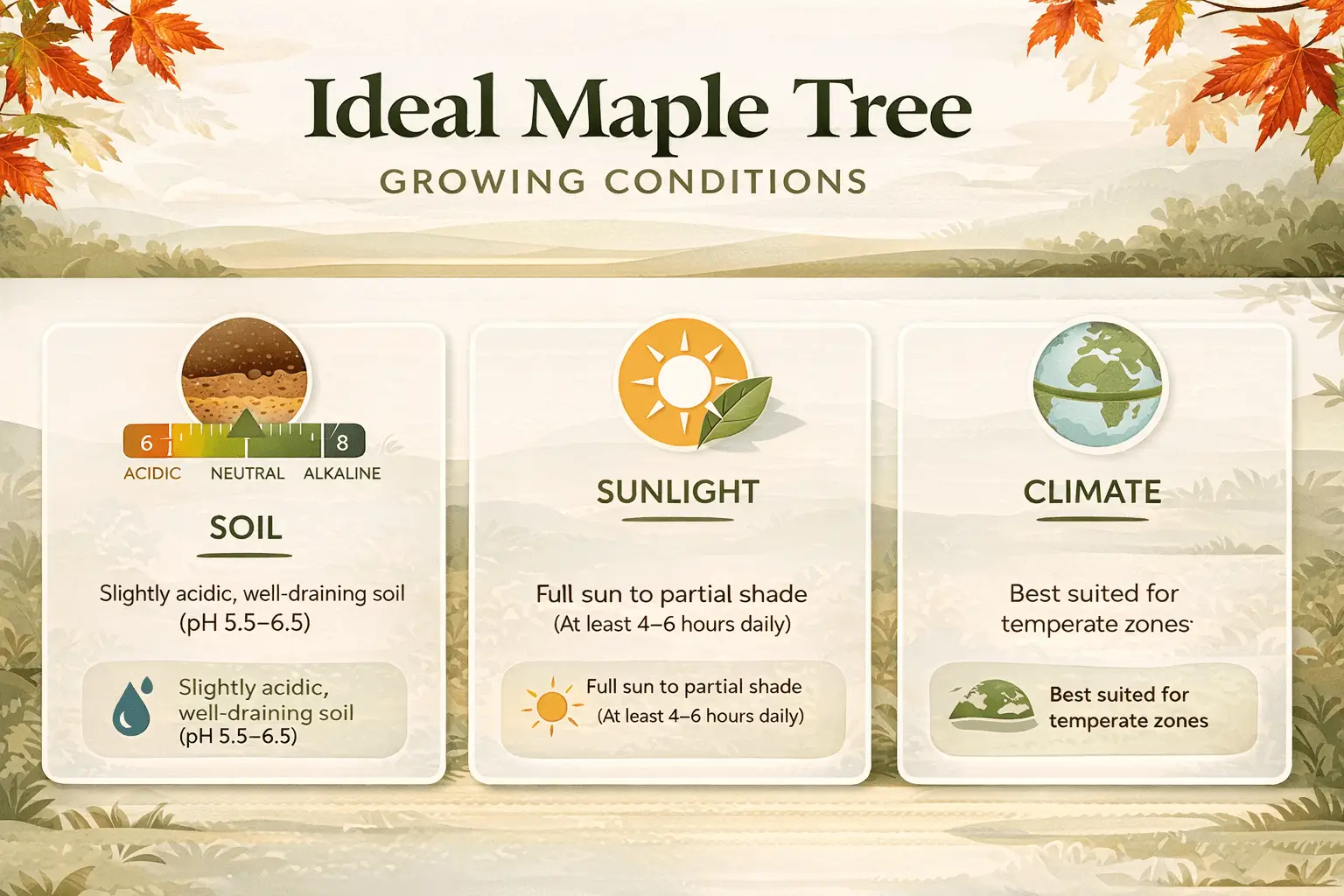
Maple trees thrive in stable environmental conditions where soil, light, and climate align with their natural growth patterns. Understanding japanese maple growing conditions and proper japanese maple soil is essential for optimal performance.
- Soil: Moist, well-drained, slightly acidic soil (pH 5.5–6.5)
- Light: Full sun to partial shade; Japanese maples prefer filtered or dappled light
- Climate: Temperate regions with seasonal variation support healthy dormancy cycles
In warmer regions, providing afternoon shade reduces leaf burn, especially for sensitive varieties. While maple trees thrive in temperate climates, gardeners in warmer regions often compare them with evergreen tree options suited for year-round structure and shade.
How to Water and Fertilize Maple Trees
Watering Schedule and Moisture Needs
Maple trees require balanced watering based on age and seasonal conditions. Excess moisture can lead to root rot, while insufficient watering slows growth.
- Young trees: frequent, shallow watering
- Mature trees: deep watering at longer intervals
- Increase watering during dry or hot periods
- Reduce watering in cooler seasons
Choosing the Right Fertilizer
Fertilization supports steady growth but should be applied carefully. Products similar to maple tree fertilizer Bunnings options typically include slow-release nutrients.
- Apply slow-release fertilizer in early spring
- Avoid excessive nitrogen to prevent weak growth
- Use organic compost to improve soil structure
Japanese Maple Care: Key Differences Explained
How Japanese Maple Care Differs from Other Maples
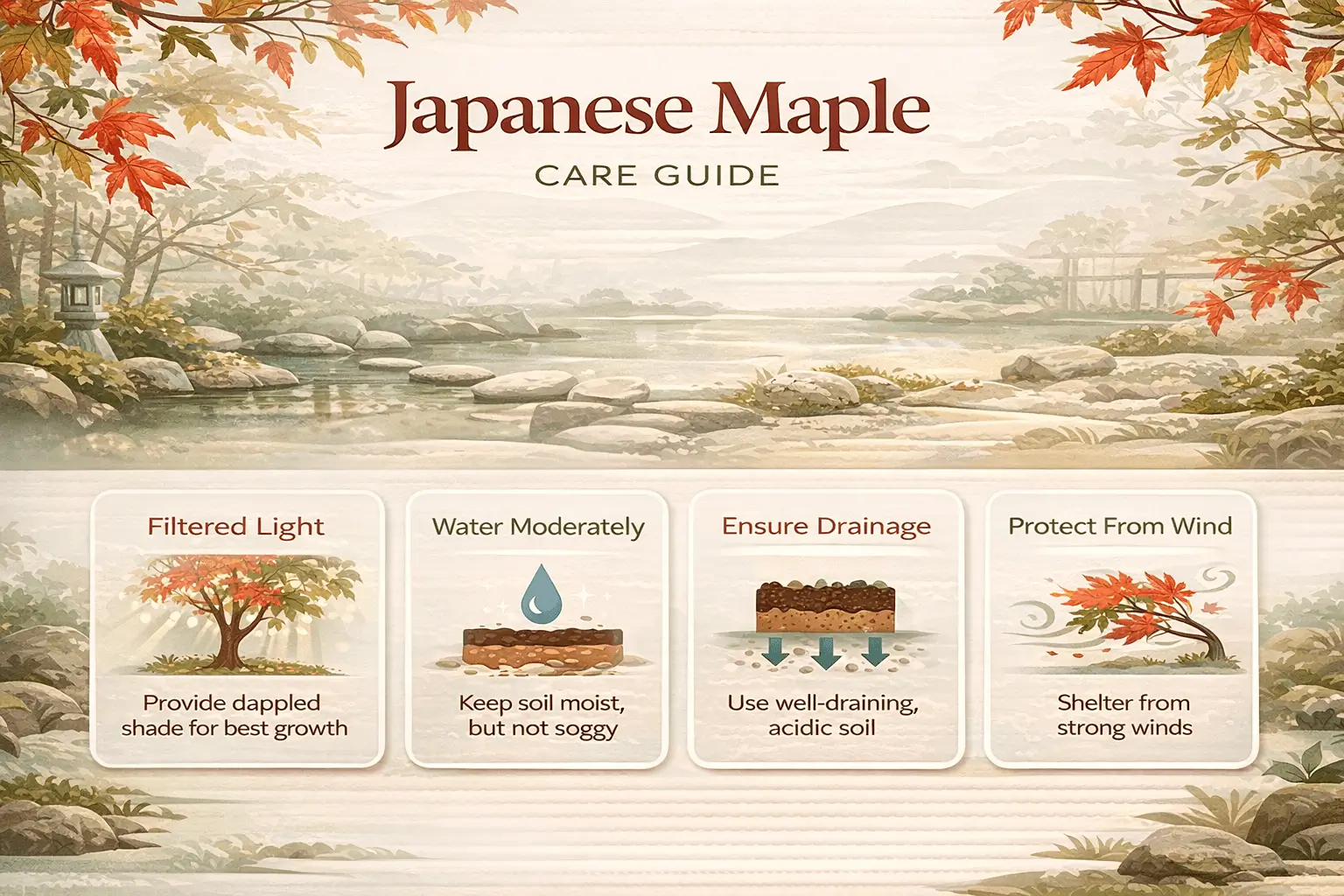
Japanese maple care requires more precision due to the plant’s delicate structure and ornamental nature. Compared to standard maple tree care, japanese maple tree care focuses more on environmental protection.
- More sensitive to heat and drying winds
- Requires superior soil drainage
- Often grown as ornamental focal plants or in containers
- Slower growth rate than larger shade maples
Caring for Japanese maple trees involves maintaining consistent moisture and avoiding stress conditions.
Japanese Maple Care in Winter
Do Japanese Maples Lose Their Leaves in Winter?
Yes, Japanese maples are deciduous trees and naturally lose their leaves during winter dormancy. This process conserves energy and prepares the tree for spring growth.
How to Protect Japanese Maple Trees in Cold Weather
During winter, proper care reduces damage from frost and temperature fluctuations.
- Reduce watering as growth slows
- Apply mulch to insulate roots
- Protect young trees from frost exposure
- Shield container plants from freezing conditions
Understanding japanese maple in winter behavior helps prevent unnecessary concern during leaf drop.
Growing Maple Trees in Pots (Container Care Guide)
Best Practices for Container Growth
Growing maple trees in pots requires careful control of water, soil, and space. Japanese maple tree care in pots is especially common due to their compact size.
- Use large containers with proper drainage holes
- Water more frequently than ground-planted trees
- Choose high-quality, well-draining potting mix
- Repot every 2–3 years to prevent root binding
Container-grown trees are more sensitive to temperature and moisture changes. Understanding how different trees grow over time—such as comparing maple growth patterns with columnar or narrow tree types—can help in better landscape planning.
Maple Tree Growth Rate and Size Expectations
Maple tree growth rate varies depending on species and environmental conditions. Some maples grow quickly, while others develop slowly over time.
- Japanese maples: slow-growing, compact
- Red maples: fast-growing, large canopy
- Sugar maples: moderate growth with long lifespan
Growth is influenced by:
- Sunlight availability
- Soil quality
- Water consistency
- Climate conditions
If you’re comparing growth speeds across species, you may also find it helpful to explore fast-growing tree options for landscaping, especially when planning long-term garden structure.
Pruning and Maintenance Techniques
When and How to Prune Maple Trees
Pruning improves structure, airflow, and overall health. Proper timing is essential to avoid stress or excessive sap loss.
- Best time: late winter or early spring
- Remove dead, damaged, or crossing branches
- Maintain natural shape rather than heavy cutting
- Avoid pruning during active growth seasons
A maple tree pruning diagram can help visualize correct branch removal techniques.
October Glory Maple Tree: Pros, Cons, and Problems
Benefits and Drawbacks of October Glory Maple
The October Glory maple tree is a popular variety known for its vibrant seasonal color and adaptability.
Common October Glory Maple Problems
While generally low maintenance, it may experience issues under poor conditions.
| Feature | Advantage | Disadvantage |
| Growth | Fast-growing | Requires ample space |
| Color | Vibrant red fall foliage | Heavy leaf drop |
| Maintenance | Low maintenance | Potential root stress |
Common Maple Tree Problems and How to Fix Them
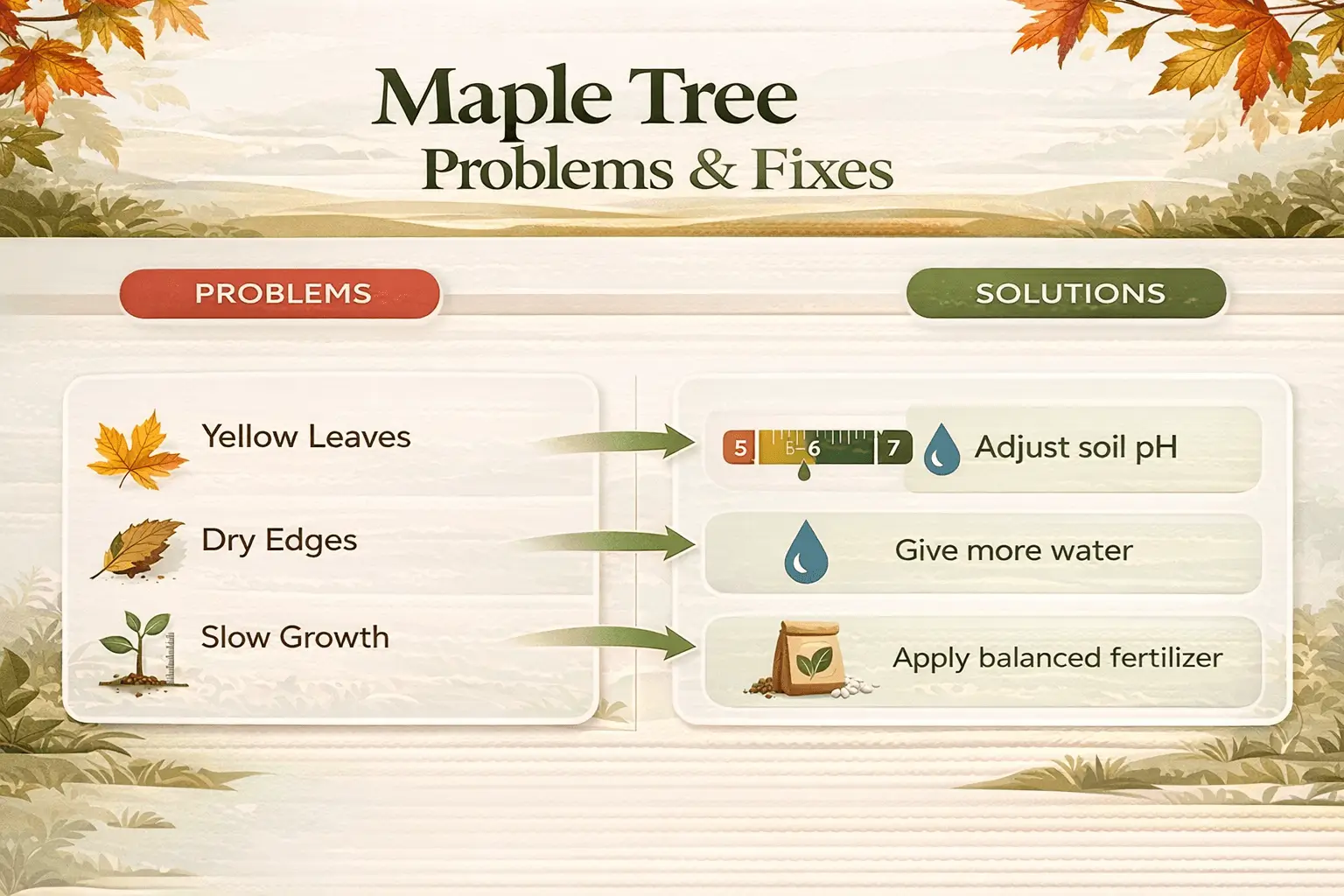
Yellow Leaves, Slow Growth, and Stress
Common issues in maple tree care often result from environmental imbalance.
- Yellow leaves: overwatering or poor drainage
- Slow growth: lack of nutrients or sunlight
- Leaf burn: excessive heat or wind exposure
Overwatering, Pests, and Soil Issues
Addressing root and soil conditions is essential for recovery.
- Improve drainage to prevent root rot
- Monitor for pests such as aphids or scale
- Adjust soil composition for better aeration
Beginner Mistakes in Maple Tree Care
Many issues arise from avoidable mistakes, especially for new gardeners.
- Planting in poorly drained soil
- Overwatering young trees
- Ignoring seasonal care adjustments
- Pruning at the wrong time
Correcting these mistakes significantly improves tree health and longevity.
Maple Tree Care for Different Varieties (Comparison Section)
Different maple species require slightly different care approaches. Understanding these differences improves planting decisions.
| Type | Growth | Care Difficulty | Best Use |
| Japanese Maple | Slow | Moderate | Decorative |
| Red Maple | Fast | Easy | Shade |
| Sugar Maple | Moderate | Moderate | Landscape |
Red maple tree care is generally easier, while sugar maple tree care requires stable conditions for optimal growth.
Conclusion
Maple tree care involves balancing water, soil, sunlight, and seasonal maintenance to ensure healthy growth and vibrant foliage. From hardy outdoor maples to delicate Japanese varieties, understanding each tree’s needs—especially during winter and container growth—makes long-term success much easier. With consistent care and proper environmental management, maple trees can thrive for decades as both functional shade providers and ornamental landscape features.
FAQs
What is the best way to care for a maple tree?
Provide consistent watering, well-draining soil, proper sunlight, and seasonal pruning.
How often should you water a maple tree?
Young trees need frequent watering, while mature trees require deep watering less often.
Do Japanese maples lose leaves in winter?
Yes, they are deciduous and naturally shed leaves during winter dormancy.
Can maple trees grow in pots?
Yes, especially Japanese maples, but they require more frequent watering and proper drainage.