
Introduction
Veronica arenaria is a low-growing species within the Veronica genus, commonly known as speedwell, belonging to the Plantaginaceae family. It is valued for its delicate flowering habit, compact growth form, and suitability for ground cover and border planting. Like other speedwell plants, it produces slender flower spikes and thrives in well-drained garden environments.
The plant is part of a large and diverse genus that includes both ornamental garden varieties and wild species found across temperate regions. Veronica arenaria is especially appreciated for its adaptability, making it suitable for rock gardens, edging, and naturalistic landscapes.
Quick Summary
- Veronica arenaria is a speedwell species known for its low-growing, spreading habit and delicate flowers.
- It belongs to the Veronica genus (Plantaginaceae family), which includes many ornamental garden species.
- The plant prefers well-drained soil, full sun to partial shade, and moderate watering.
- It is suitable for rockeries, borders, and ground cover planting in diverse garden styles.
- Related Veronica species offer variation in height, flower color, and growth form for landscaping use.
What Is Veronica arenaria?
Botanical definition and classification
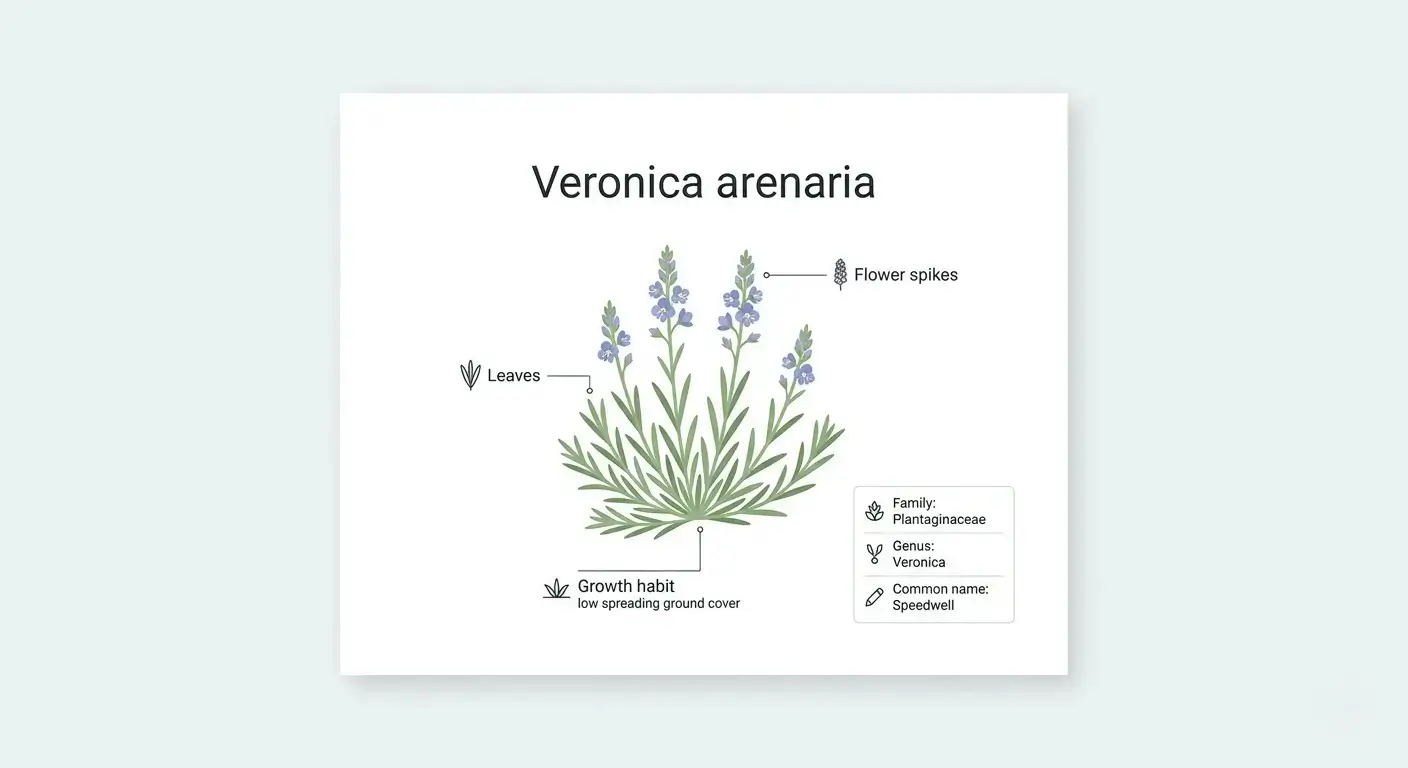
Veronica arenaria is a herbaceous perennial plant in the Plantaginaceae family. The genus Veronica, commonly called speedwell, includes hundreds of species known for their small, clustered flowers and versatile growth habits.
The Veronica genus, commonly known as speedwell, is well documented in botanical taxonomy and can be further explored through its scientific classification on Wikipedia under Veronica (plant).
Common name and appearance
The plant is generally associated with the common name “speedwell,” while “sandy speedwell” is sometimes used informally due to its preference for well-drained soils. It typically features:
- Narrow to oval green leaves
- Small flower spikes in blue to violet shades (varies by form)
- A low, spreading growth habit
Natural habitat and origin
Species within this group are typically adapted to temperate climates and open habitats such as grasslands, rocky slopes, and sandy soils. Veronica arenaria performs best in similar free-draining environments in cultivated gardens.
Veronica arenaria vs. Related Speedwell Species
Key differences among Veronica species
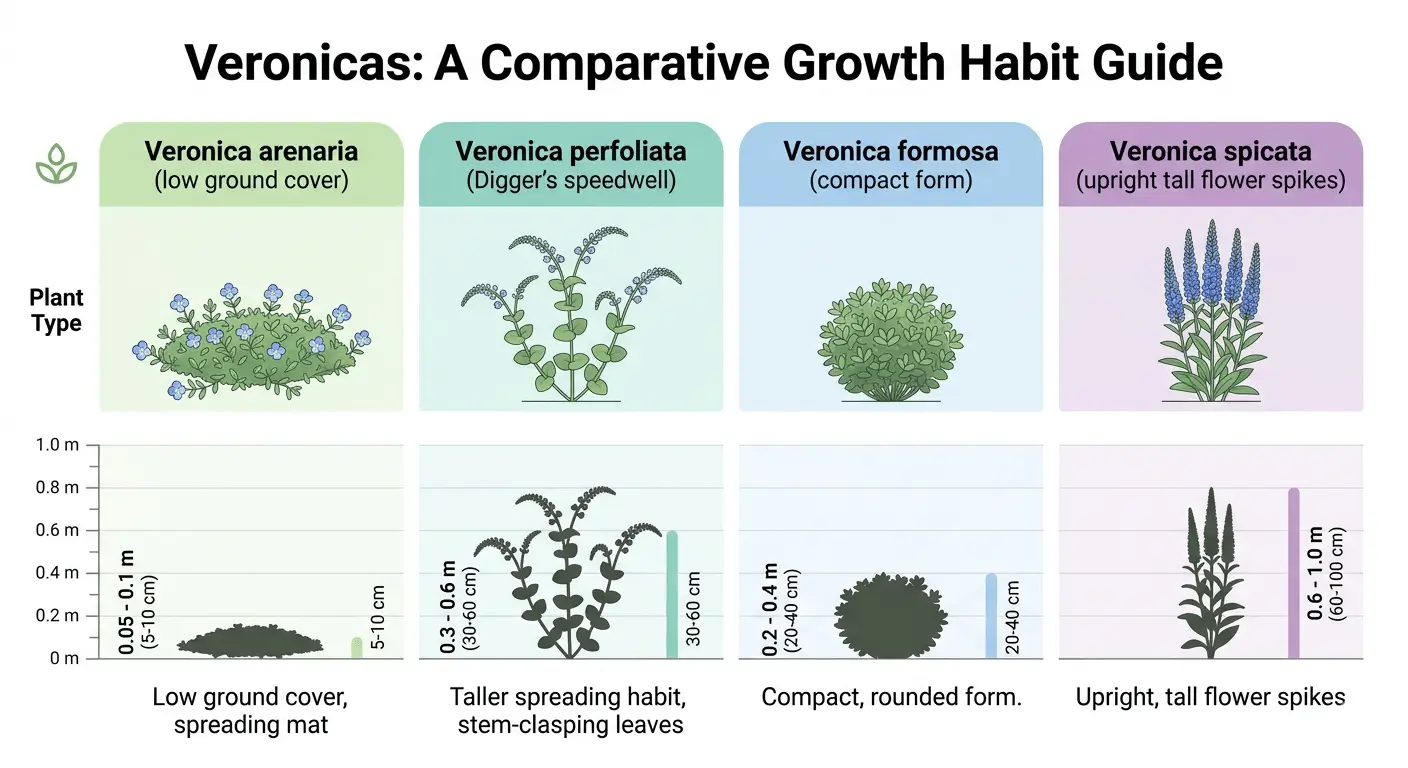
Veronica arenaria belongs to a large genus that includes several closely related ornamental species. These differ in size, flower structure, and garden use.
Comparison table
| Feature | Veronica arenaria | Veronica perfoliata (Digger’s Speedwell / Derwentia perfoliata / Parahebe perfoliata) | Veronica formosa | Veronica spicata |
| Common name | Sandy speedwell | Digger’s speedwell | — | Spiked speedwell |
| Growth habit | Low-growing | Spreading / arching | Compact | Upright |
| Flower spike height | Short–medium | Medium | Short | Tall (up to 60cm) |
| Origin | — | Australia | — | Europe/Asia |
| Best use | Rockery / border | Ground cover / banks | Border | Back of border |
Taxonomic notes
Some species, such as Derwentia perfoliata and Parahebe perfoliata, have historically been reclassified under Veronica perfoliata, reflecting changes in botanical taxonomy.
In Australian horticulture, Veronica species are widely explored in Veronica Plant Australia: 10+ Essential Care & Types Guide, where different speedwell varieties are compared for climate suitability and garden use.
Veronica arenaria Varieties and Cultivars
Diversity within the genus
While specific registered cultivars of Veronica arenaria are limited, the broader Veronica genus includes many cultivated forms selected for flower color and growth habit.
Variation in traits
- Flower color ranges from blue and violet to white and pink in related species
- Growth habit varies from creeping ground covers to upright spikes
- Leaf structure may differ depending on environmental adaptation
This diversity allows gardeners to choose Veronica varieties suited to ornamental design needs.
Plant Size and Growth Habit
Typical size characteristics
Veronica arenaria generally forms a low-growing mat or clump. Mature plants typically reach:
- Height: low to moderate ground cover level
- Spread: wider than height in established plants
Environmental influence
The final veronica plant height and spread depend on:
- Soil fertility and drainage
- Sun exposure
- Climate conditions
The speedwell Veronica plant size can increase significantly in fertile, well-drained soil.
Growth Rate
Growth classification
Veronica arenaria is considered a moderate-growing perennial.
Seasonal growth pattern
- Active growth occurs in spring and early summer
- Flowering typically follows peak vegetative growth
- Growth slows during colder or drought periods
Environmental factors
Growth speed is influenced by:
- Soil moisture levels
- Temperature stability
- Nutrient availability
Veronica arenaria Care Guide
Watering requirements
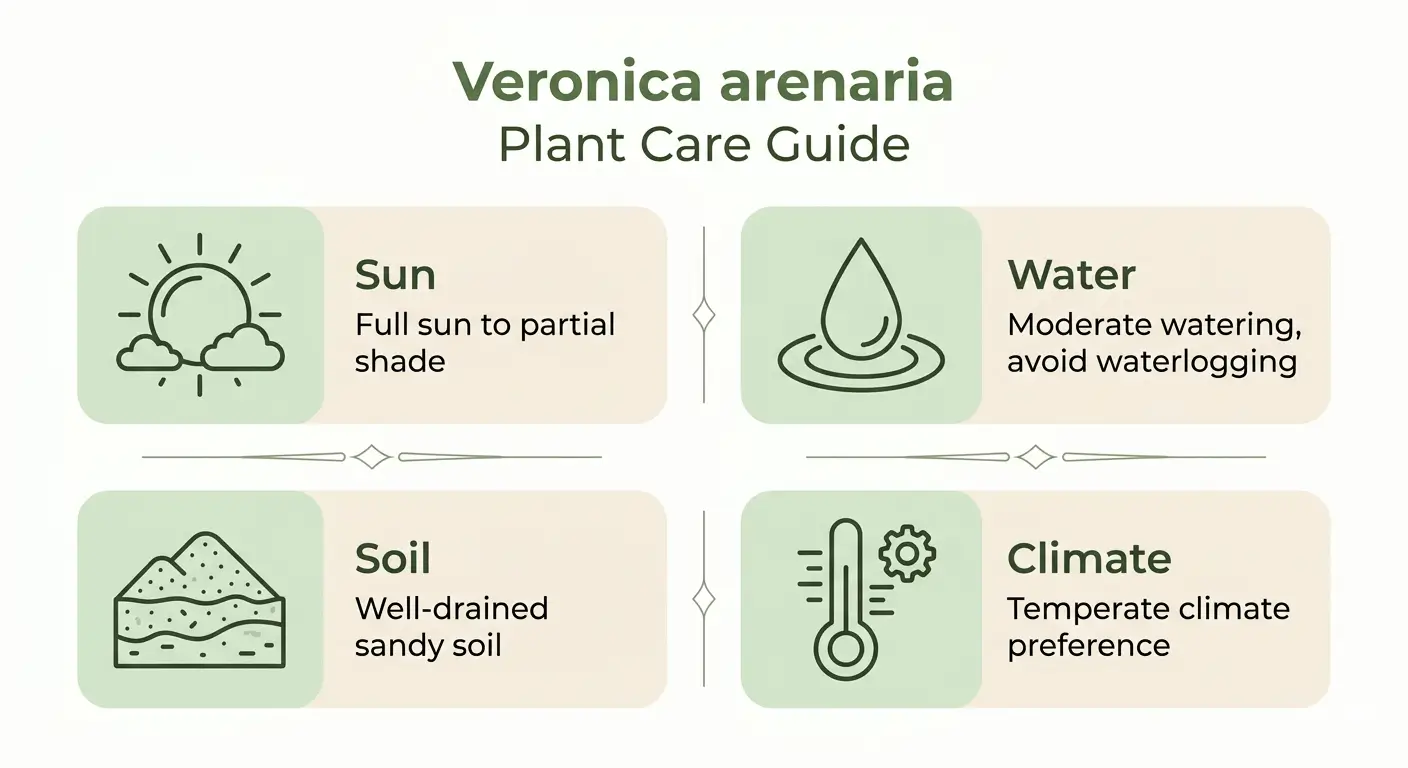
New plants require regular watering until established. Mature plants prefer moderate watering, with dry intervals between sessions. Overwatering may lead to root stress.
Light and sun exposure
Best growth occurs in full sun, although partial shade is tolerated. Reduced sunlight can lead to fewer flowers and weaker stems.
Soil preferences
- Well-drained sandy or loamy soil
- Slightly acidic to neutral pH
- Improved drainage in clay soils is essential
Fertilization
Light feeding in spring supports healthy growth. Balanced, slow-release fertilizers are generally suitable.
Pruning and deadheading
Cut back after flowering to encourage compact growth and potential reblooming. Remove spent spikes to maintain appearance.
Climate tolerance
Veronica arenaria tolerates mild frost and moderate heat but performs best in temperate climates with seasonal variation.
What to Plant with Veronica arenaria
Companion planting ideas
- Yellow or orange flowering perennials for color contrast
- Low-growing rock garden plants for layered texture
- Taller shrubs or grasses as background structure
- Drought-tolerant species with similar soil needs
These combinations support what to plant with veronica and what to plant with veronica speedwell strategies in garden design.
Plants That Look Like Veronica arenaria
Common look-alikes
Several plants resemble Veronica arenaria in foliage or flower structure, including:
- Other Veronica species (especially creeping types)
- Certain ground-cover perennials with similar flower spikes
- Low alpine flowering plants
Identification tips
True Veronica species usually have:
- Opposite leaf arrangement
- Slender flower spikes
- Distinctive four-petaled flowers
Veronica arenaria in Australian Gardens
Garden relevance
Speedwell species are widely used in ornamental gardening, including Australian landscapes. While Veronica perfoliata (Digger’s speedwell) is native to Australia, Veronica arenaria is cultivated for similar aesthetic and functional uses.
Climate suitability
It adapts well to temperate and coastal Australian regions, particularly in well-drained soils and rock garden settings. Veronica plants Australia landscaping often includes multiple species for seasonal contrast.
Veronica arenaria is often included in broader landscape planning alongside other low-maintenance species featured in Australian Native Garden Plants: Types, Care Tips & Design Ideas, especially in drought-tolerant and rock garden designs.
Common Problems, Mistakes, and How to Fix Them
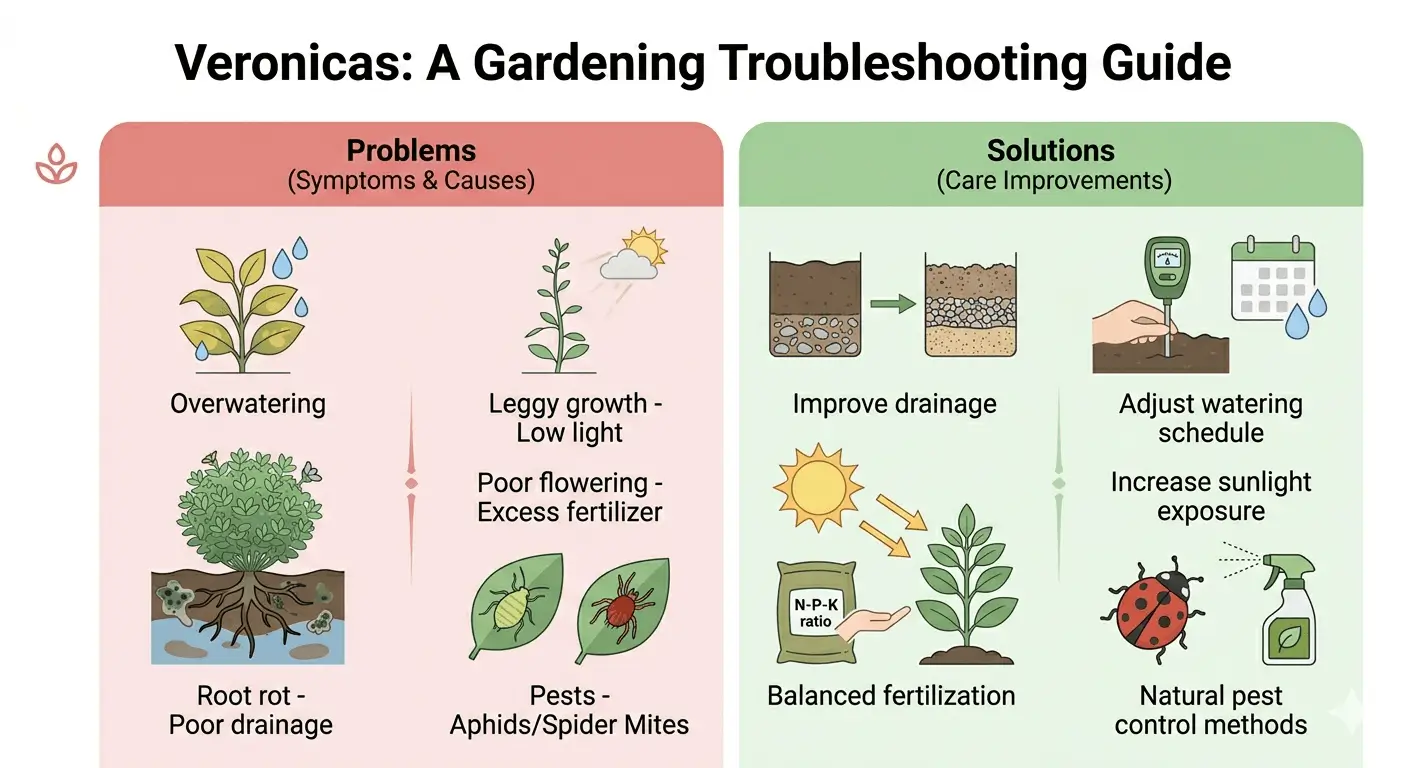
Typical issues
- Yellowing leaves: usually caused by overwatering or nutrient imbalance
- Leggy growth: due to insufficient sunlight or lack of pruning
- Poor flowering: linked to excess nitrogen or low light
- Root rot: caused by poorly drained soil
- Pests: aphids and spider mites may occasionally appear
Solutions
Improve drainage, adjust watering frequency, and ensure proper sunlight exposure to prevent recurrence.
For detailed identification and treatment of common pests such as aphids and spider mites, refer to Common Garden Bugs Guide: 12+ Essential ID Tips for practical pest control strategies.
Beginner Mistakes When Growing Speedwell
Frequent errors
- Planting in heavy, water-retaining soil
- Overwatering young plants
- Pruning at incorrect times
- Growing in deep shade
Correcting these early ensures healthier Veronica development and better flowering performance.
Growing Veronica arenaria from Seeds
Seed germination process
Veronica arenaria seeds should be sown in a well-draining seed mix under controlled moisture conditions.
Key steps
- Sow in early spring or autumn
- Maintain consistent moisture without waterlogging
- Provide light exposure for germination
- Expect variable germination rates depending on conditions
Stratification may improve germination success in some cases.
Where to Buy Veronica arenaria
Sourcing options
Veronica arenaria is available through:
- Local plant nurseries
- Specialist perennial growers
- Online seed and plant retailers
Availability may vary depending on region and seasonal stock. Searches for veronica arenaria for sale or veronica plants often help locate suppliers.
Conclusion
Veronica arenaria is a versatile and low-maintenance speedwell species suited for rockeries, borders, and ground cover planting. Its moderate growth rate, adaptable nature, and attractive floral display make it a valuable addition to ornamental gardens. With proper soil, light, and watering conditions, it provides reliable seasonal interest and integrates well with a wide range of companion plants.
Frequently Asked Questions
1. What is the common name for Veronica arenaria?
Veronica arenaria is commonly referred to as a type of speedwell, a general name used for species within the Veronica genus.
2. How tall does Veronica arenaria grow?
It typically remains low-growing, forming ground cover or small clumps depending on soil and climate conditions.
3. What is the difference between Veronica arenaria and Digger’s speedwell?
Veronica perfoliata (Digger’s speedwell) is an Australian native with broader leaves and taller growth, while Veronica arenaria is lower-growing and more ground-cover oriented.
4. How do I grow Veronica arenaria from seed?
Sow seeds in well-drained soil, keep moist but not wet, and provide light conditions for germination in spring or autumn.
5. What plants pair well with Veronica speedwell?
It pairs well with drought-tolerant perennials, rock garden plants, and taller shrubs that provide contrast in structure and color.