

Introduction
Lilly Pilly (Syzygium species) is a popular evergreen tree or shrub native to Australia, prized for its dense foliage, vibrant berries, and suitability for backyard and urban garden plantings. A key consideration for gardeners is whether Lilly Pilly trees have invasive roots, as root growth can impact landscaping, poolside areas, and nearby structures. Understanding the Lilly Pilly root system, including depth, spread, and growth behavior, is essential for proper placement. While generally manageable, certain varieties may exhibit deeper or more spreading roots, influencing environmental and structural planning for urban gardens, backyards, and poolside settings. Lilly Pilly (Syzygium species) is a popular evergreen tree native to Australia [Syzygium].
Quick Summary
- Lilly Pilly trees mostly have non-aggressive roots suitable for gardens and poolside planting.
- Some varieties have specialized root systems that require careful placement.
- Root invasiveness depends on species, soil type, and location.
- Proper selection and ongoing maintenance reduce risks to buildings and hardscapes.
Understanding Lilly Pilly Root Systems
The Lilly Pilly root system is generally fibrous, spreading moderately rather than aggressively. Root depth and lateral spread vary by species and variety. Standard Lilly Pilly trees develop a typical fibrous root network, while “weeping” or “straight and narrow” varieties may have more vertical or confined root patterns. Recognizing the type of Lilly Pilly root system is critical for safe planting near structures, pools, or pavement.
Typical vs. Specialized Root Systems
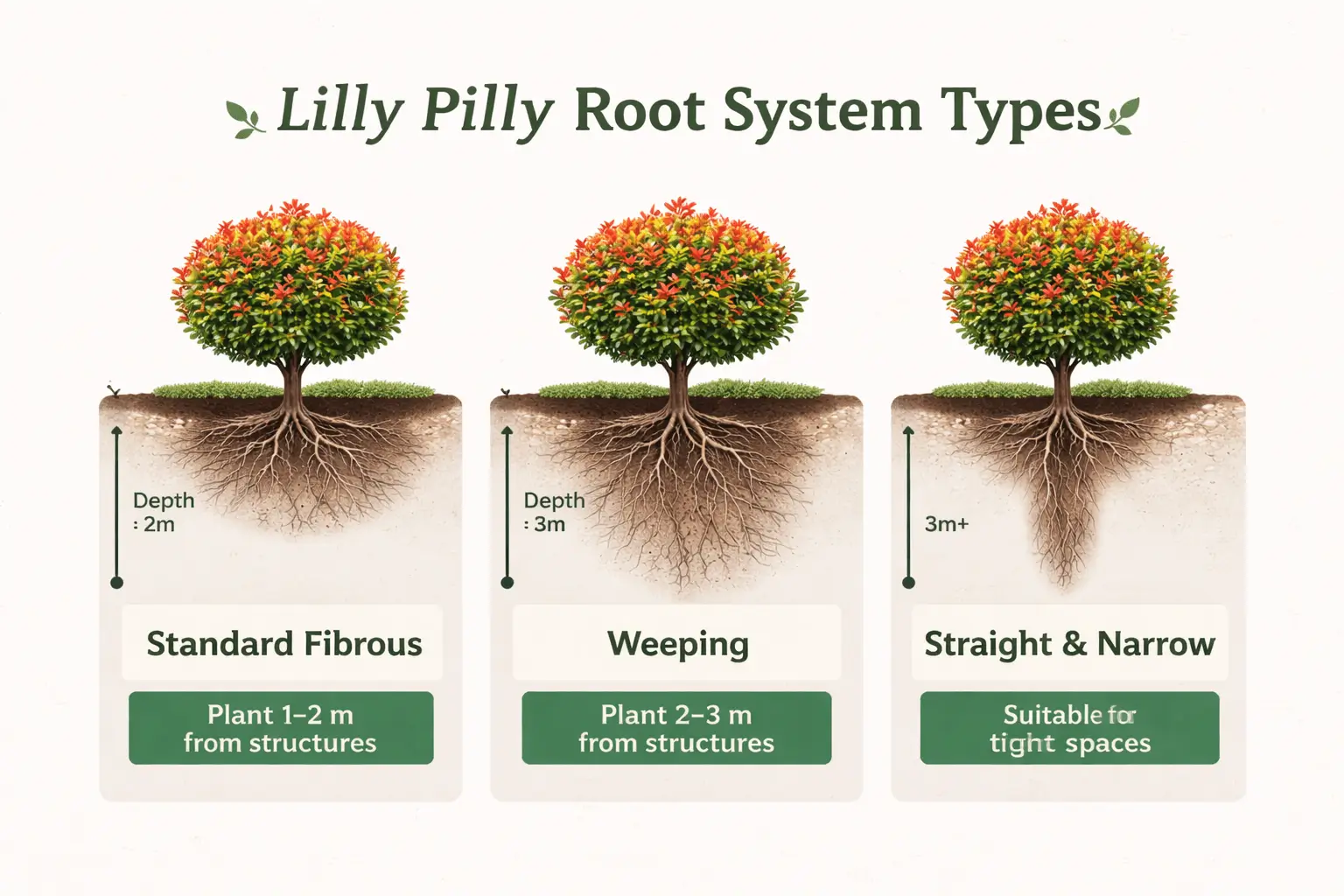
Typical Lilly Pilly roots spread horizontally near the soil surface, providing stability without aggressive intrusion. In contrast:
- Weeping Lilly Pilly root system: deeper taproots with moderate lateral spread. Suitable for narrow garden spaces.
- Straight and narrow root system: primarily vertical growth with limited horizontal extension. Ideal near pathways and structures.
For a technical breakdown of fibrous vs. taproot structures across Syzygium varieties, our Lilly Pilly Root Reference documents depth and spread data by cultivar.
This open-source reference is useful if you’re comparing root behavior across multiple planting zones or soil types.
Table: Root System Type vs. Depth vs. Recommended Distance from Structures
| Root System Type | Depth | Recommended Distance from Structures |
| Standard Fibrous | 0.5–1.5 m | 2–3 m |
| Weeping | 1–2 m | 3–4 m |
| Straight and Narrow | 1–1.5 m | 1.5–2 m |
Are Lilly Pilly Roots Invasive?
Do Lilly pillies have invasive roots? Generally, Lilly Pilly roots are not invasive, though environmental conditions influence spread. Sandy soils, high water availability, and fertile environments can encourage broader root expansion. Understanding these factors helps mitigate potential damage to nearby structures, pools, or underground pipes.
Conditions That Affect Root Spread
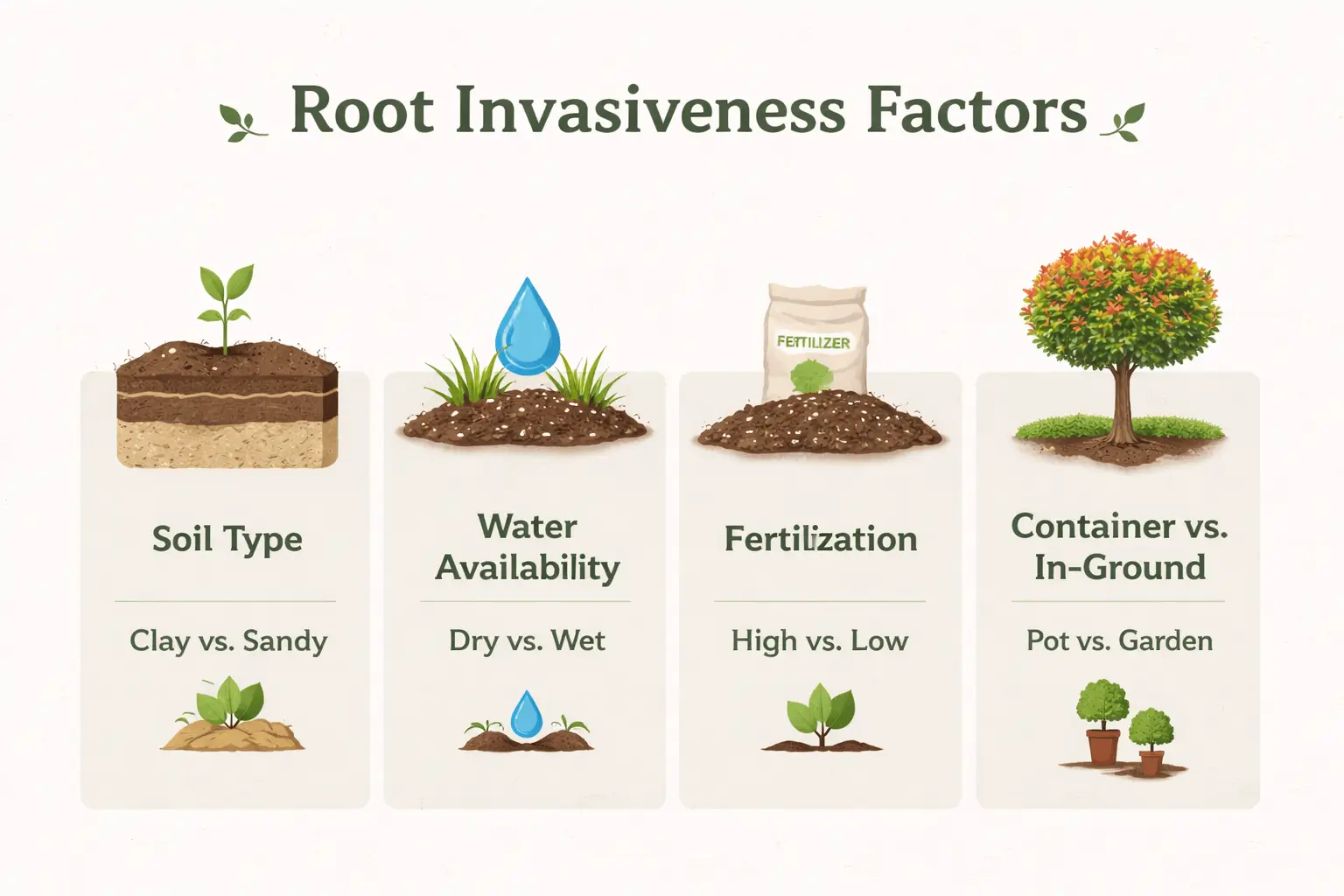
- Soil type: Clay or compacted soils limit spread; sandy soils allow more lateral expansion.
- Water availability: Consistent irrigation can increase root spread.
- Fertilization: Excess nutrients promote more vigorous root growth.
- Planting location: Container-grown Lilly Pillies have contained roots; in-ground plantings may extend further.
Keywords: do lilly pillies have invasive roots in pots, do lilly pillies have invasive roots in Australia, lilly pilly roots near house, lilly pilly roots near pool.
Planting Considerations for Lilly Pilly
Lilly Pilly trees are versatile, suitable for garden beds, poolside areas, and hedging. Choosing the best variety for screening, hedges, or decorative purposes ensures root management aligns with landscaping goals. For practical tips on using Lilly Pilly for screening and privacy, see [Lilly Pilly Privacy Screen: 7+ Essential Growing Tips].
Distance from Structures
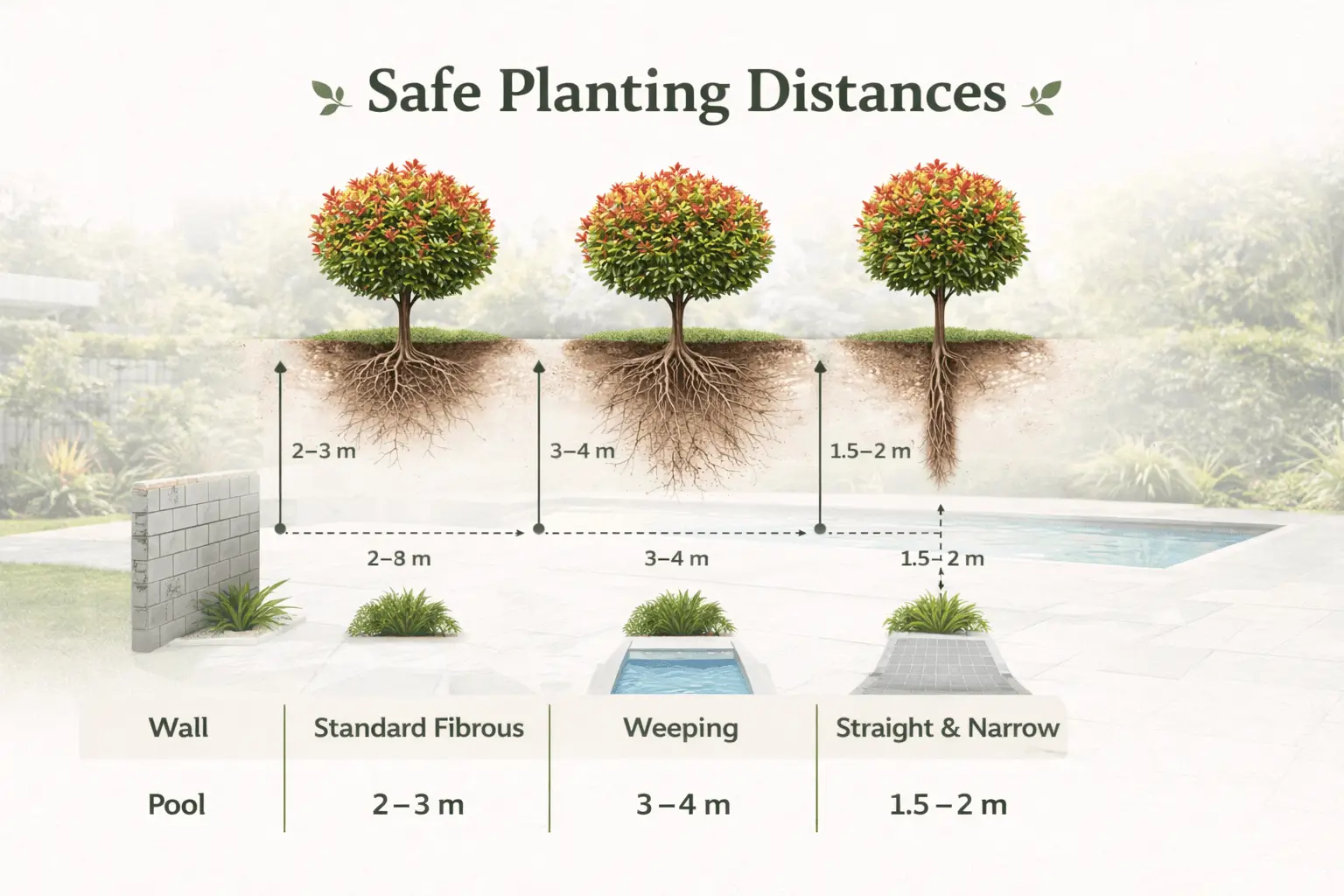
Safe planting distances depend on root type:
- Standard fibrous: 2–3 m from walls or pools.
- Weeping: 3–4 m to accommodate deeper roots.
- Straight and narrow: 1.5–2 m, ideal for confined spaces.
If you’d like editable, exportable figures for the safe-distance table above, our Lilly Pilly Root Data Spreadsheet breaks down depth and clearance by root type.
It’s handy for landscapers or DIY planners who want to plug numbers directly into a site plan.
Container Planting Tips
Planting Lilly Pillies in pots or confined spaces limits root spread, reducing risk to nearby structures. Regular root pruning may be necessary to maintain plant health in containers.
Growth Patterns and Root Depth
Lilly Pilly trees exhibit moderate growth rates, with roots growing slowly to moderately deep, depending on species and environmental conditions. Seasonal growth patterns include increased root development during wet seasons.
Full-Grown Tree Considerations
A mature Lilly Pilly tree may reach heights of 4–8 m, with corresponding root depth. Understanding full-grown tree size helps plan safe distances from structures and prevent interference with pools or hardscapes.
Common Lilly Pilly Problems and Root-Related Issues
While generally resilient, Lilly Pilly trees can face root-related challenges, especially in poor soil or high moisture conditions. Addressing root issues early prevents damage and maintains plant health.
Pests and Diseases Impacting Roots
- Lilly Pilly bugs: sap-sucking insects that weaken roots.
- Fungal diseases: root rot and hedge diseases may impair root systems.
- Other pathogens: certain plant diseases reduce root stability and vigor.
Root Management Solutions
- Install root barriers near sensitive structures.
- Prune roots carefully to prevent encroachment.
- Use containers for constrained root growth.
- Maintain proper irrigation and fertilization schedules to avoid excessive root spread.
Comparing Lilly Pilly Varieties and Their Root Systems
Different Syzygium species and varieties display distinct root patterns, affecting suitability for hedges and screening. Selection should consider root invasiveness, growth rate, and garden space. You can also compare popular hedge varieties in detail, such as [Lilly Pilly Select vs Resilience: Key Hedge Differences]. To see how Lilly Pilly root invasiveness ranks against other common Australian trees and shrubs, browse our Tree & Shrub Root Invasiveness Database (AU).
It’s a growing reference covering species beyond Lilly Pilly, helpful when planning a mixed garden bed near structures.
Table: Root System Comparison of Popular Varieties
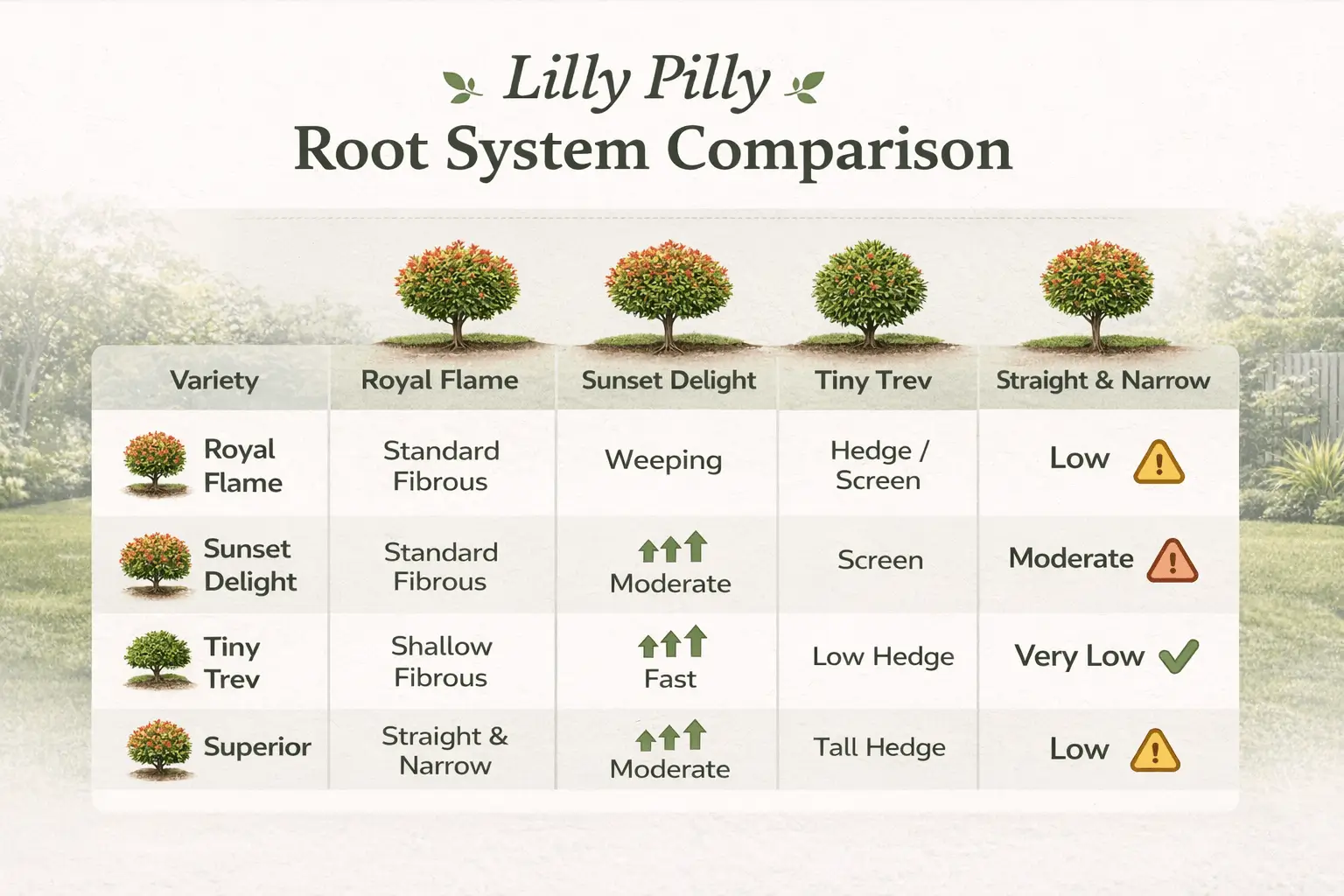
| Variety | Root Type | Growth Rate | Best Use | Risk of Invasiveness |
| Syzygium australe Straight & Narrow | Vertical, limited spread | Moderate | Hedges, pathways | Low |
| Weeping Lilly Pilly | Deep, moderate lateral | Moderate | Poolside, privacy | Medium |
| Standard Lilly Pilly | Fibrous, spreading | Fast | Garden, screening | Low–Medium |
For a full overview of different species and their ideal uses, see [Types of Lilly Pilly: Varieties, Heights & Best Uses].
Environmental and Landscaping Limitations
Lilly Pilly trees should be planted with consideration for pools, underground pipes, and buildings. Proper spacing, root-type selection, and maintenance prevent structural interference and ensure healthy growth.
Conclusion
Do Lilly pillies have invasive roots? In most cases, no. With proper variety selection, placement, and maintenance, Lilly Pilly roots remain non-invasive and suitable for urban gardens, backyards, and poolside plantings. Key takeaways: root system type matters, planting location affects risk, and regular maintenance prevents root-related issues.
FAQ
Do all Lilly Pilly trees have invasive roots?
No. Most Lilly Pilly trees have non-invasive roots, but certain varieties with deeper or spreading roots require careful placement.
How deep do Lilly Pilly roots grow in Australian soil?
Roots typically grow 0.5–2 meters deep depending on soil type, moisture, and variety.
Can Lilly Pilly roots damage pools or buildings?
Generally, no, if planted at recommended distances; improper placement near structures may pose minor risks.
Which Lilly Pilly varieties are safest for hedges near houses?
Straight-and-narrow varieties like Syzygium australe are ideal for hedges near houses due to limited lateral root spread.