
Introduction
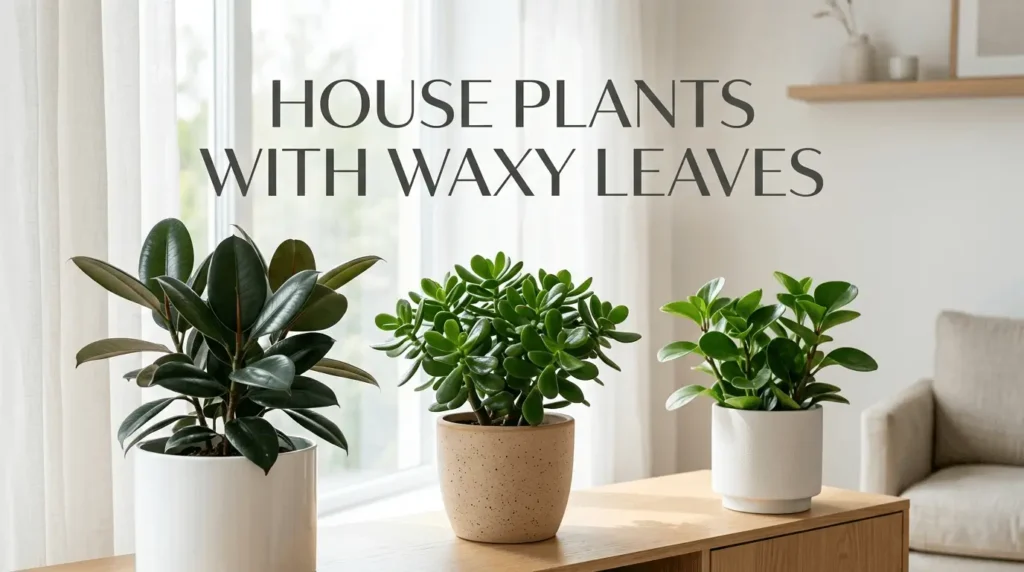
House plants with waxy leaves feature thick, glossy foliage coated in a natural wax that helps them store moisture and thrive indoors. These plants, often succulents or tropical varieties, add elegance to homes while requiring minimal care due to their drought-tolerant nature. Their waxy surface reduces water loss and improves adaptability in indoor environments with varying humidity levels. Popular varieties include jade plant, rubber plant, and peperomia, all known for resilience, attractive shine, and easy maintenance for beginner plant owners.
Quick Summary
- Waxy leaves reduce water loss, making these plants ideal for busy indoor gardeners.
- Popular examples include jade plant, rubber plant, and peperomia, suited for low to bright indirect light.
- They resist pests better than fuzzy-leafed plants but need occasional cleaning to maintain shine.
- Perfect for beginners, with growth influenced by humidity and soil drainage.
What Are Waxy Leaves on House Plants
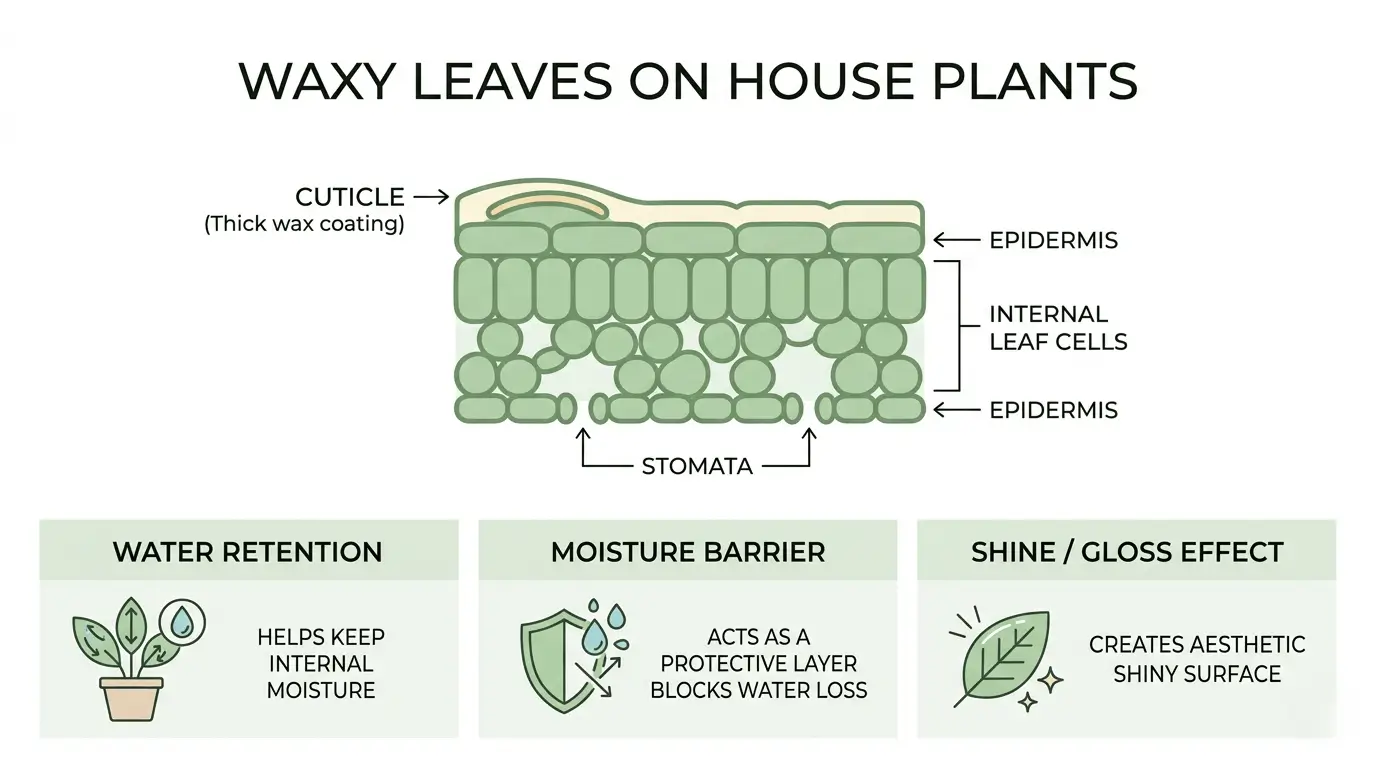
Waxy leaves on house plants are leaves covered with a protective cuticle layer that gives them a glossy surface. This wax layer regulates moisture, reduces water loss, and helps plants survive indoor and outdoor stress conditions. In simple terms, a waxy leaf plant has a natural moisture barrier that improves durability and indoor adaptability. Plants with waxy surfaces, such as ZZ plant and peperomia, are commonly covered in guides like Zamioculcas Zamiifolia Care Guide and Peperomia Rotundifolia Care Guide, where their structure and indoor adaptability are explained in detail.
The wax coating minimizes transpiration through stomata while still allowing gas exchange. Thickness varies between species, from thin glossy layers in philodendrons to thick succulent-like leaves in jade plants.
- High-gloss appearance
- Leathery or firm texture
- Oval or rounded leaf shapes
Why Plants Have Waxy Leaves
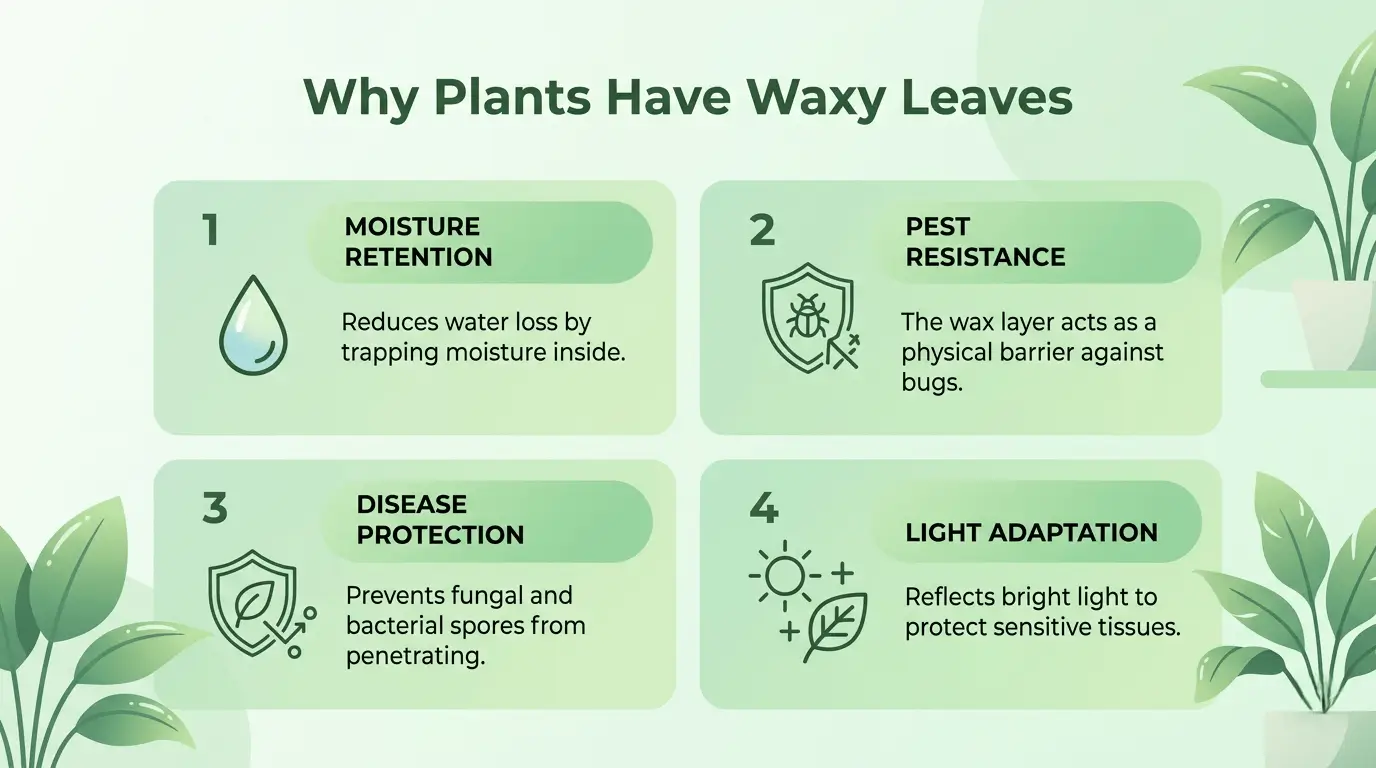
Plants develop waxy leaves as an adaptation to conserve water and survive in changing environments. This trait is especially useful for indoor house plants exposed to dry air or inconsistent humidity.
- Moisture retention: Reduces evaporation in dry conditions
- Pest resistance: Makes leaves harder for insects to damage
- Disease prevention: Limits fungal growth on leaf surfaces
- Light adaptation: Helps manage excess sunlight exposure
Indoor waxy leaf plants mimic their natural tropical or arid environments, making them highly resilient in homes. This protective layer is part of the plant cuticle (see scientific reference: Plant cuticle), which plays a key role in reducing water loss while supporting survival in indoor environments.
Common House Plants with Waxy Leaves
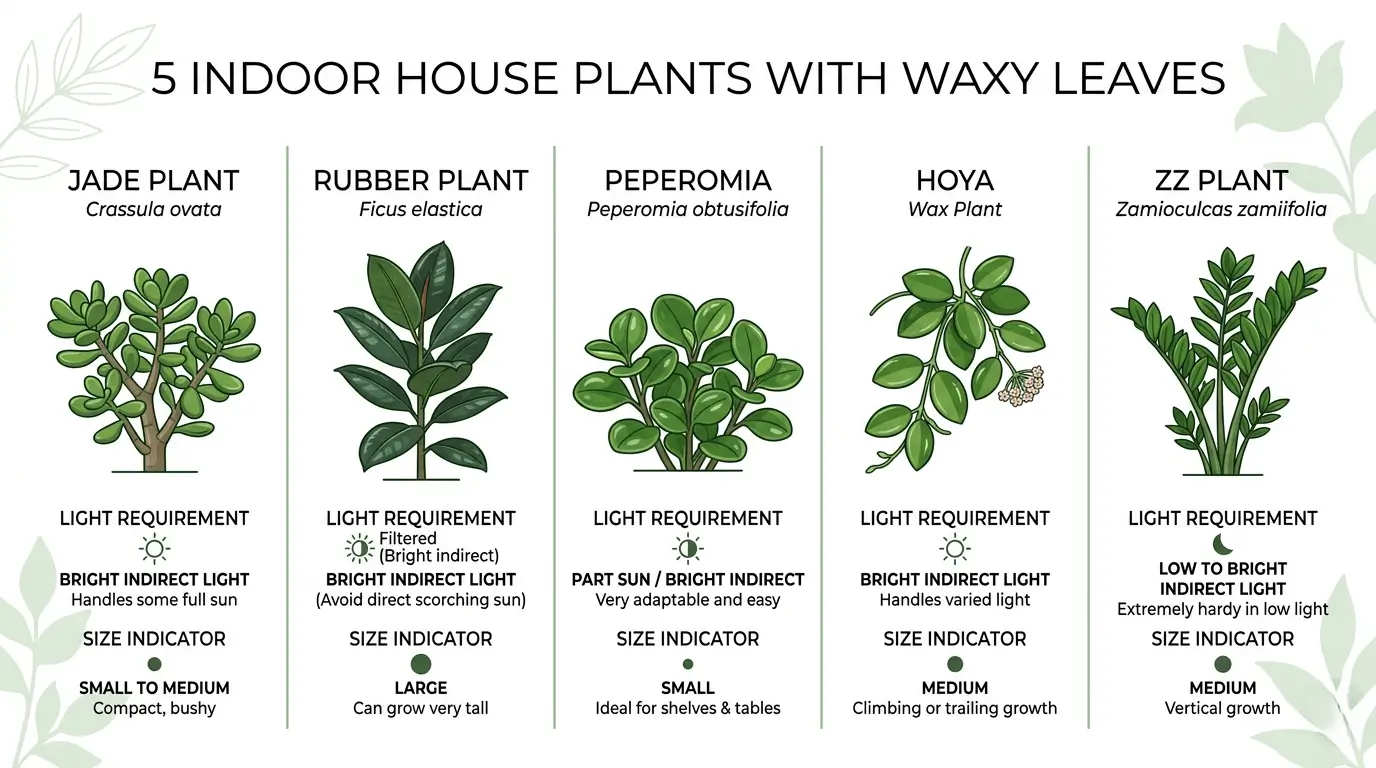
These plants are widely grown indoors due to their glossy foliage and easy maintenance.
| Plant Name | Leaf Description | Mature Size Indoors | Light Needs |
| Jade Plant (Crassula ovata) | Thick, rounded jade-green leaves | 2–3 ft | Bright indirect |
| Rubber Plant (Ficus elastica) | Large, glossy oval leaves | 6–10 ft | Medium to indirect |
| Peperomia Obtusifolia | Small, plump rounded leaves | ~1 ft | Low to medium |
| Hoya Carnosa | Waxy semi-succulent leaves | Trailing 3–6 ft | Bright indirect |
| ZZ Plant (Zamioculcas zamiifolia) | Thick upright glossy leaves | 2–3 ft | Low light |
Each plant offers durability, decorative shine, and adaptability for indoor environments. Many waxy leaf indoor plants are also featured in care-focused guides such as Lucky Money Plant Meaning, Care & Feng Shui Guide, where their symbolism and easy maintenance make them popular in indoor green living spaces. Want to filter these plants by water needs, pest resistance, or pet safety instead of scrolling the table above? The sortable waxy-leaf houseplant database lets you cross-reference all 17 glossy-leaved species side by side.
It’s especially useful if you’re choosing between a few options and want growth rate or toxicity data without digging through separate guides.
Plant Size
House plants with waxy leaves vary in size depending on species and growing conditions.
- Small plants like peperomia stay under 12 inches, ideal for shelves and desks
- Medium plants like jade grow up to 2–3 feet indoors
- Large plants like rubber plant can reach up to 10 feet indoors with support
- Growth is influenced by pot size, pruning, and light exposure
Indoor environments generally limit their maximum natural size. If you’d rather browse mature sizes and light needs in a clean, searchable layout, the Houseplants With Waxy Leaves reference database on Notion organizes every species by size category for quick comparison.
It’s a handy companion when you’re deciding which plant fits a shelf, desk, or floor space at home.
Growth Rate
Growth rates depend on plant type and care conditions.
- Slow growers: Jade plant adds 6–12 inches per year
- Moderate growers: ZZ plant and peperomia grow steadily throughout the year
- Faster growers: Rubber plant can grow up to 2 feet annually in ideal conditions
- Growth peaks in spring and summer, slowing in winter
Light, humidity, and fertilization strongly affect growth speed. For a condensed, at-a-glance breakdown of which waxy-leaf plants grow fastest versus slowest, check the quick reference summary spreadsheet.
It’s structured as a simple sheet, so you can scan growth rates without sorting through full plant profiles.
Care Guide for Waxy Leaf House Plants
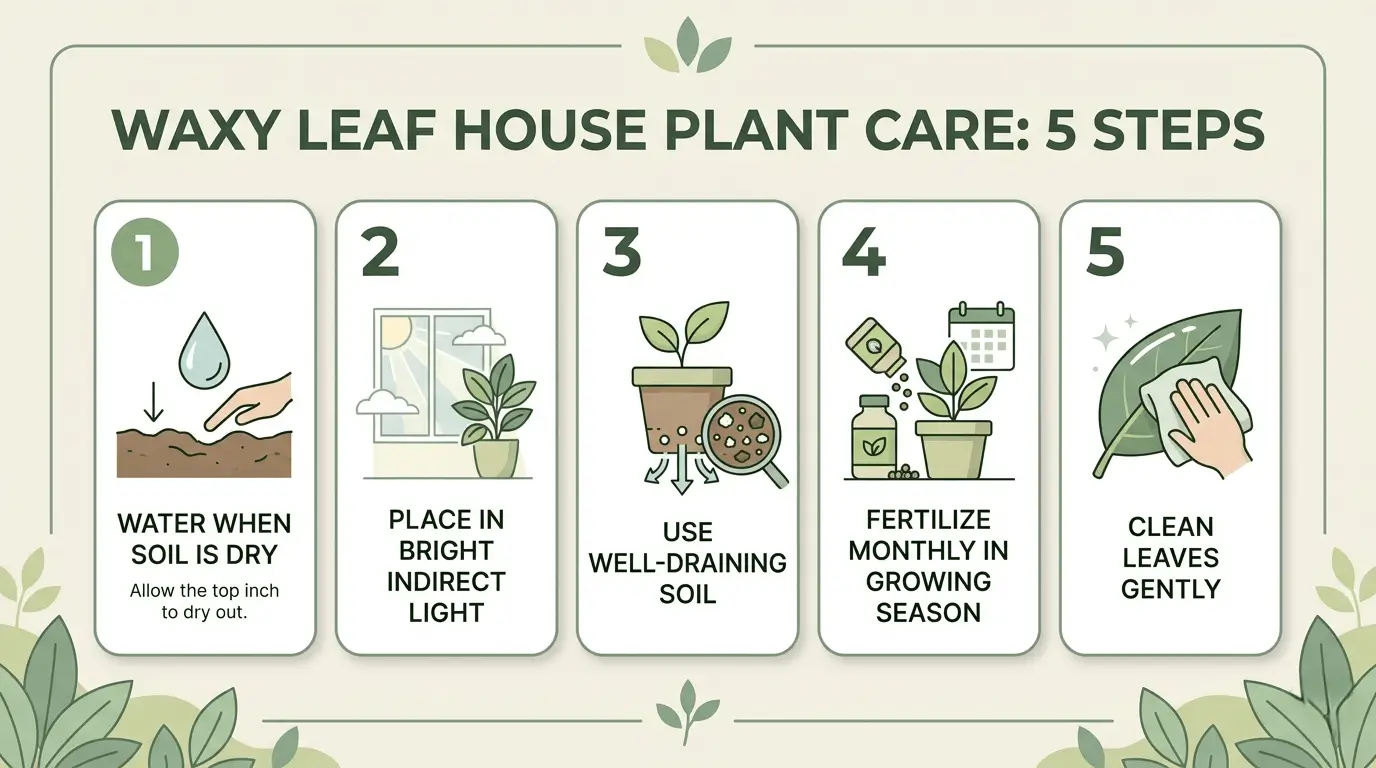
Proper care ensures healthy growth and maintains glossy foliage.
- Water when the top 2 inches of soil are dry
- Use well-draining soil to prevent root rot
- Place in bright indirect light for best results
- Tolerates low light but grows slower
- Fertilize monthly during active growing seasons
- Maintain moderate humidity levels
Cleaning Waxy Leaves
Waxy leaves should be gently wiped with a damp cloth to remove dust buildup. This helps maintain their natural shine and supports healthy photosynthesis without damaging the wax coating.
Troubleshooting Common Problems
Common issues are usually linked to care mistakes.
- Yellow leaves: Often caused by overwatering or poor drainage
- Pests (mealybugs): Treat with neem oil and inspect leaf undersides
- Slow growth: Usually due to low light or root-bound conditions
- Leaf drop: Caused by sudden temperature or environment changes
Comparisons: Waxy vs. Similar House Plants
| Feature | Waxy Leaves (e.g., Jade) | Big Non-Waxy (e.g., Monstera) |
| Water Needs | Low, drought-tolerant | Higher, consistent moisture |
| Pest Resistance | High due to wax layer | Moderate, prone to pests |
| Light Needs | Low to bright adaptable | Bright indirect required |
Waxy leaf plants are generally easier to maintain due to their moisture-retaining structure.
Conclusion
House plants with waxy leaves are resilient, low-maintenance indoor plants known for their glossy foliage and water-saving adaptation. They thrive in a range of indoor environments and are ideal for beginners seeking durable greenery. Choosing the right variety based on space and lighting ensures long-term healthy growth.
FAQs
What are the best house plants with waxy leaves for low light?
ZZ plant and peperomia are excellent choices for low-light environments.
Why do waxy leaves turn brown?
This is usually caused by underwatering or dry indoor air conditions.
Are waxy leaf plants toxic to pets?
Some, like rubber plant, can be toxic and should be kept out of reach of pets.
How do you propagate waxy leaf plants?
Stem cuttings in water or soil work well for jade plant and hoya.



5 Responses