
Introduction
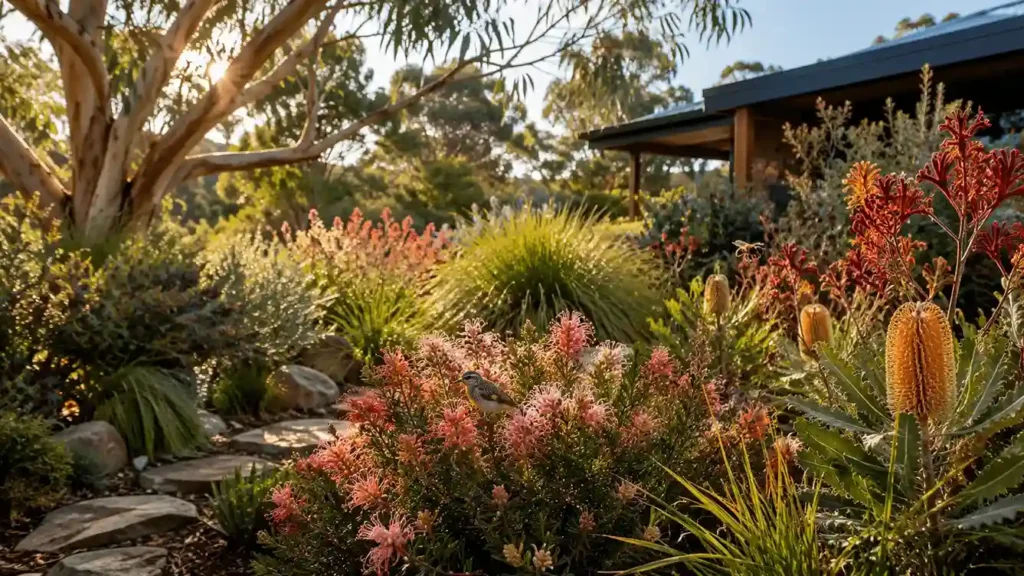
Australia is home to some of the world’s most extraordinary plants — tough, beautiful, and perfectly adapted to our harsh conditions. Growing native plants isn’t just a trend; it’s a smart, sustainable choice for any gardener. From flowering shrubs to towering trees, the range of options is genuinely exciting.
This guide gives you a broad overview of everything you need to grow and enjoy Australian native garden plants. You’ll find quick care tips, seasonal advice, design ideas, and links to detailed guides for specific plants. Think of it as your starting point — not the whole story.
Whether you’re just getting started or refining an established garden, this pillar article will point you in the right direction. Use the links throughout to dive deeper into any topic that interests you.
What Are Australian Native Garden Plants?
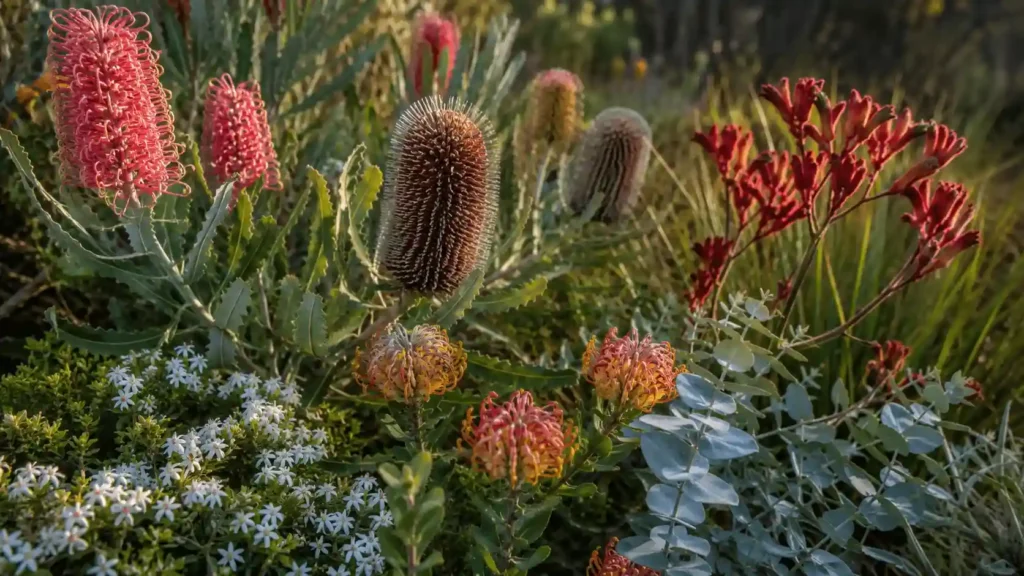
Australian native garden plants are species that evolved naturally in Australia, adapting over thousands of years to local soils, climate, and wildlife. They form the backbone of sustainable, low-maintenance gardens across the country.
Key benefits of growing Australian natives:
- Drought-tolerant once established, reducing water bills
- Support local birds, bees, and butterflies
- Generally require fewer fertilisers and pesticides
- Thrive in poor, sandy, or clay-heavy soils
- Add unique texture, colour, and form not found in exotic plants
Quick Australian Native Garden Plants Checklist
| Factor | Key Focus |
| Soil Type | Well-drained, low-phosphorus preferred |
| Watering | Deep, infrequent once established |
| Sunlight | Most prefer full sun to part shade |
| Fertilising | Use native-specific, low-phosphorus blends |
| Pruning | Light tip pruning after flowering |
| Mulching | Keep mulch away from the crown |
| Pest Watch | Monitor for scale, aphids, and leaf miners |
| Seasonal Care | Prune in autumn; feed lightly in spring |
🌿 For design planning to complement your plant choices, explore “Australian Cottage Garden: 10+ Smart Design Ideas.”
🌿 Understanding Your Australian Native Garden Environment
Soil and Drainage
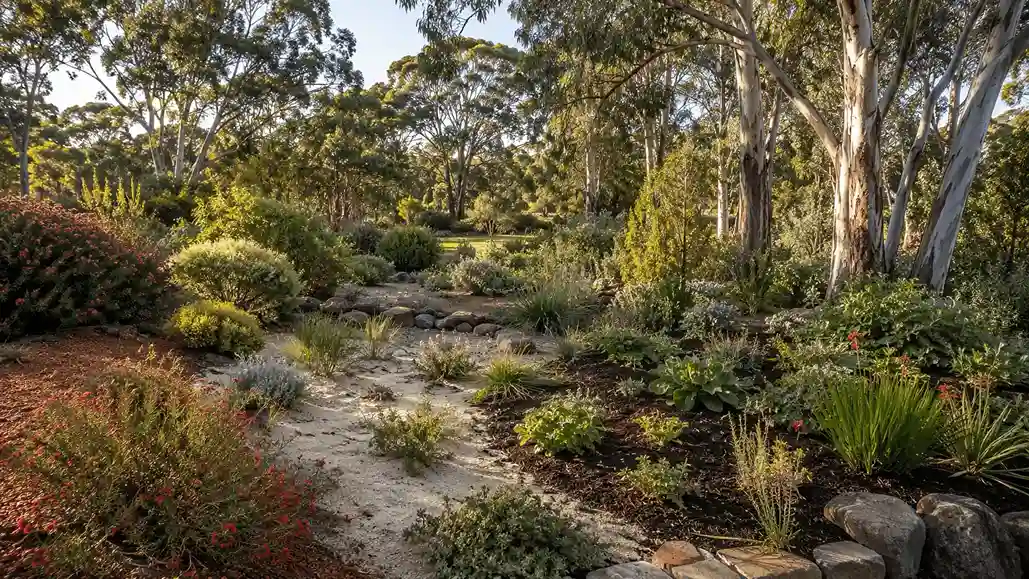
Most Australian natives evolved in nutrient-poor, free-draining soils. Heavy clay or waterlogged conditions quickly cause root rot and decline. Always improve drainage before planting, and avoid phosphorus-rich fertilisers.
Sunlight and Aspect
The majority of native shrubs and flowering plants prefer full sun for at least six hours a day. However, several species — including ferns and some ground covers — thrive beautifully in shaded spots beneath larger trees.
Climate and Rainfall Zones
Australia’s native plants span diverse climate zones, from tropical north to cool-temperate south. Matching your plant to your local rainfall and temperature range is the single most important success factor.
🌿 For shade-specific planting solutions, explore “7+ Essential Native Full Shade Plants Australia Guide.”
🌱 Soil Preparation and Planting Foundations
Improving Your Soil
Add coarse sand or gypite to clay soils to improve drainage before planting natives. Avoid adding compost heavily, as overly rich soil encourages soft, disease-prone growth in many species.
Planting Technique
Dig a hole twice as wide as the root ball but no deeper. Plant at the same level as the nursery pot and backfill with the existing soil — no additives needed for most native species.
What to Avoid
Never use standard fertilisers high in phosphorus around Australian natives — it can kill them. Avoid planting in poorly drained spots, overwatering new plants, or disturbing established root zones unnecessarily.
🌿 For growing natives indoors or in small spaces, explore “7+ Essential Indoor Australian Native Plants to Grow.”
🌿 For ideas specific to small outdoor spaces, explore “10+ Smart Small Native Garden Ideas in Australia.”
💧 Watering Australian Native Garden Plants
Establishing New Plants
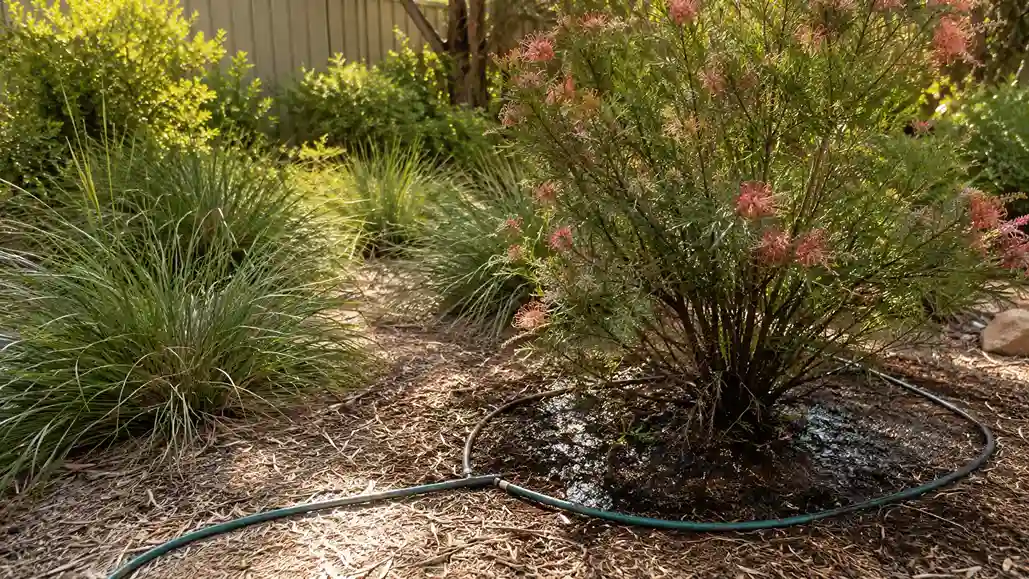
New plantings need regular watering for the first two seasons while roots develop. Water deeply and less frequently to encourage roots to seek moisture deep in the soil profile.
Established Plant Watering
Once established, most Australian natives are surprisingly drought-resilient. A deep watering every one to two weeks during summer is usually all they need — less in cooler months.
Signs of Overwatering
- Yellowing leaves with no other apparent cause
- Soft, mushy stem base near soil level
- Fungal spots or mould appearing on foliage
- Plant wilts despite wet soil
Signs of Underwatering
- Crispy brown leaf tips and edges
- Leaves curling inward to conserve moisture
- Soil pulling away from pot or garden edges
- Sudden leaf drop in summer heat
🌿 For specific watering guidance on individual shrubs, explore “Standard Grevillea Guide: 8+ Essential Care & Types.”
Grevillea is one of the most diverse Australian native plant groups, with varieties ranging from compact shrubs to larger screening plants and forms suited to different climates and garden styles. For help choosing between different types, colours, sizes and uses, see our Grevillea varieties comparison guide.
🌿 For pest problems that can mimic watering stress, explore “Common Garden Bugs Guide: 12+ Essential ID Tips.”
🌾 Fertilising Australian Native Garden Plants
Choosing the Right Fertiliser
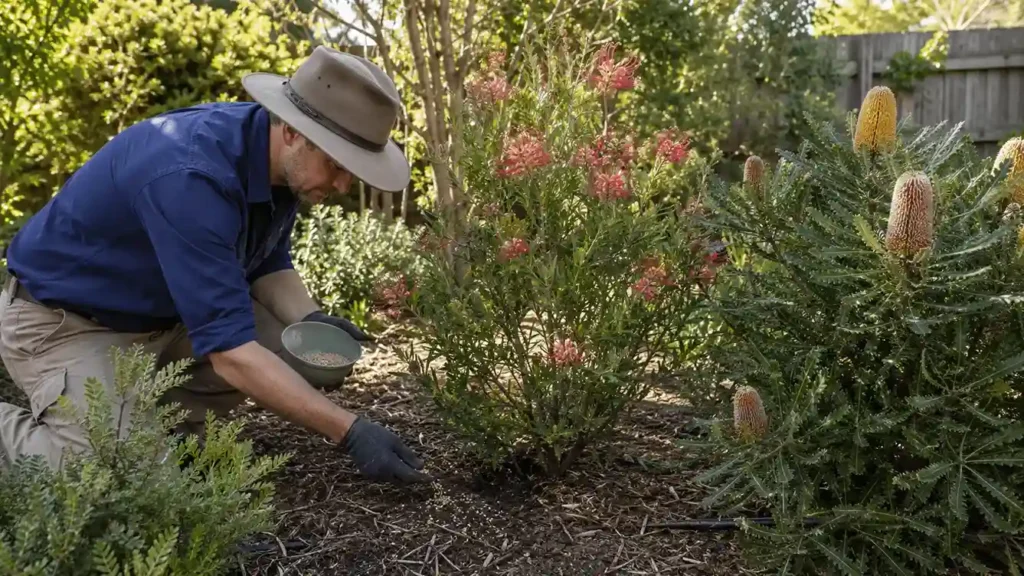
Always use a fertiliser specifically formulated for Australian native plants. These are low in phosphorus and balanced for the unique nutritional needs of natives without causing fertiliser burn. For further expert guidance, see the Australian National Botanic Gardens fertilising guide, which explains fertiliser use for Australian native plants.
When and How to Fertilise
Apply a slow-release native fertiliser lightly in early spring to support new growth and flowering. Avoid fertilising in late autumn or winter, as this pushes soft growth that is vulnerable to frost and wind damage.
Seasonal Schedule
Spring is the primary fertilising window for most natives. A second, lighter application can be made in early summer for heavy-flowering species like grevilleas and banksias to support repeat bloom.
🌿 For flowering plant care that includes fertilising tips, explore “Australian Crowea Guide: 8+ Essential Care Tips.”
🌿 For fragrant natives that benefit from careful feeding, explore “Boronia Megastigma Lutea: 7+ Essential Care Tips.”
Pruning Australian Native Garden Plants
When to Prune
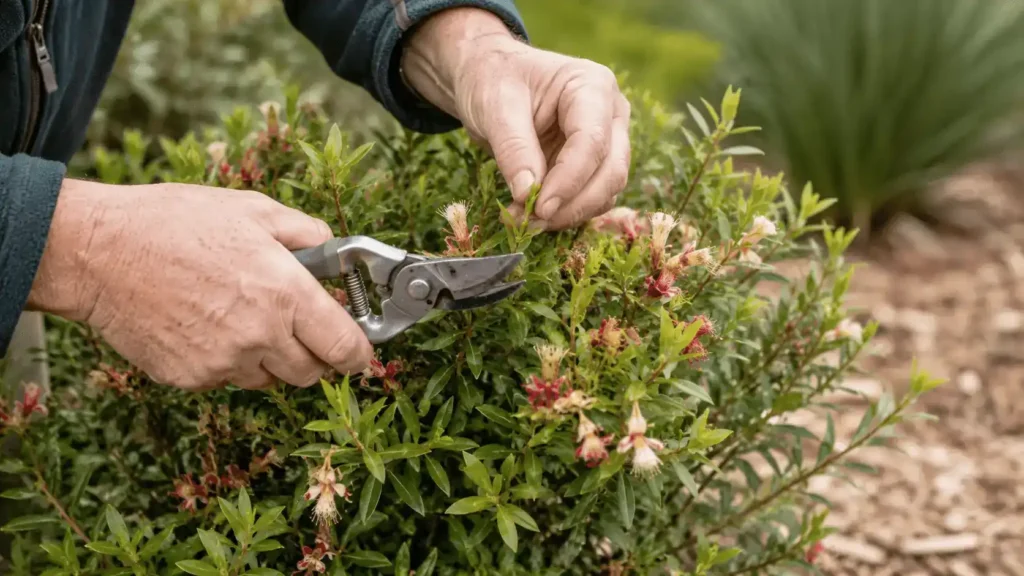
Most natives respond best to pruning immediately after flowering. This encourages fresh, dense growth and prepares the plant for the next season without cutting off developing flower buds.
Hard Pruning vs Tip Pruning
Tip pruning removes the growing tips regularly to keep plants compact and bushy — ideal for small shrubs like thryptomene and correa. Hard pruning cuts back into older wood and is reserved for overgrown plants that need rejuvenation.
Never Prune into Dead Wood
Avoid cutting back past the green, living wood on most native species. Unlike exotic plants, many Australian natives will not regenerate from bare, old wood and the plant may not recover.
🌿 For pruning specifics on a popular hedging native, explore “Philotheca Myoporoides Hedge Size, Care & Pruning.”
🌿 For pruning-sensitive flowering shrubs, explore “Thryptomene FC Payne: 7 Essential Care & Growth Tips.”
🐞 Pest and Disease Management
Common Pests
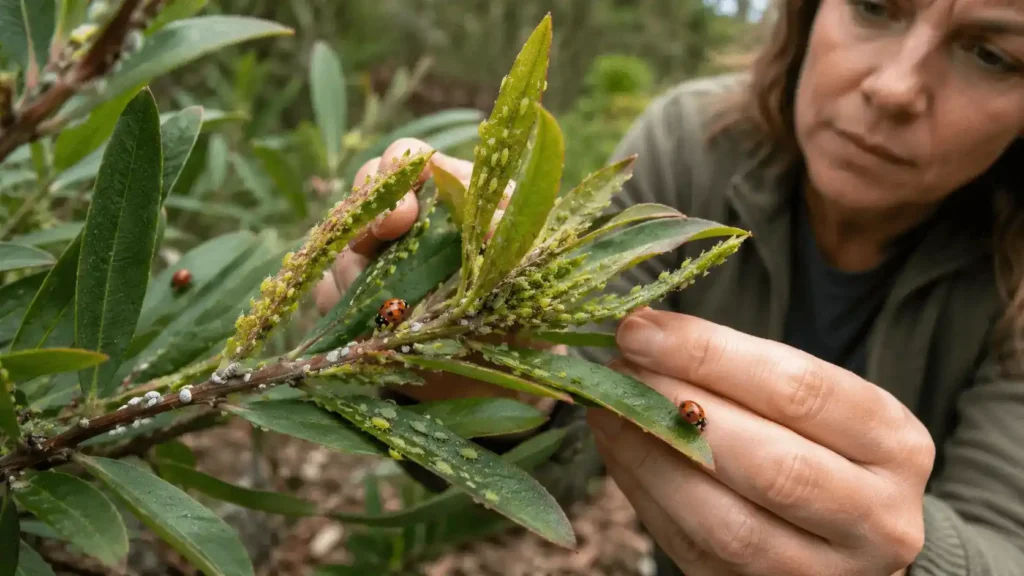
Scale insects, aphids, and lerp psyllid are the most frequent visitors to native gardens. Grevilleas and banksias can also attract caterpillars, while container-grown plants are prone to fungus gnats in moist potting mix.
Organic Solutions
- Use a diluted neem oil spray for scale and aphids
- Introduce ladybirds and lacewings as natural predators
- Apply horticultural soap spray directly on pest clusters
- Remove caterpillars by hand in small gardens
- Improve drainage and airflow to prevent fungal disease
🌿 For detailed aphid control methods, explore “Aphids on Houseplants: 8+ Proven Ways to Remove Them.”
🌿 For identifying garden bugs before treating, explore “Common Garden Bugs Guide: 12+ Essential ID Tips.”
🪴 Growing in Containers
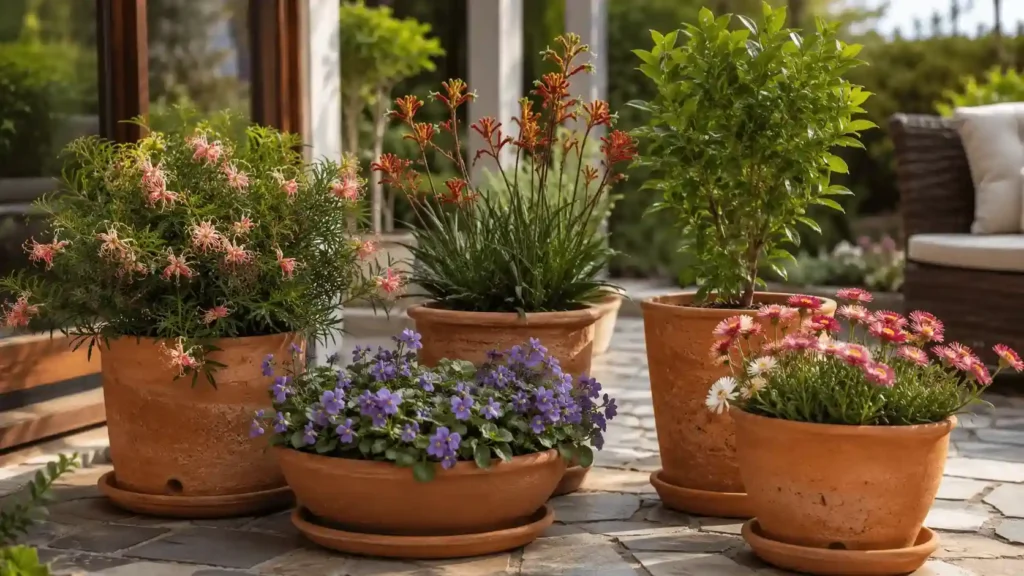
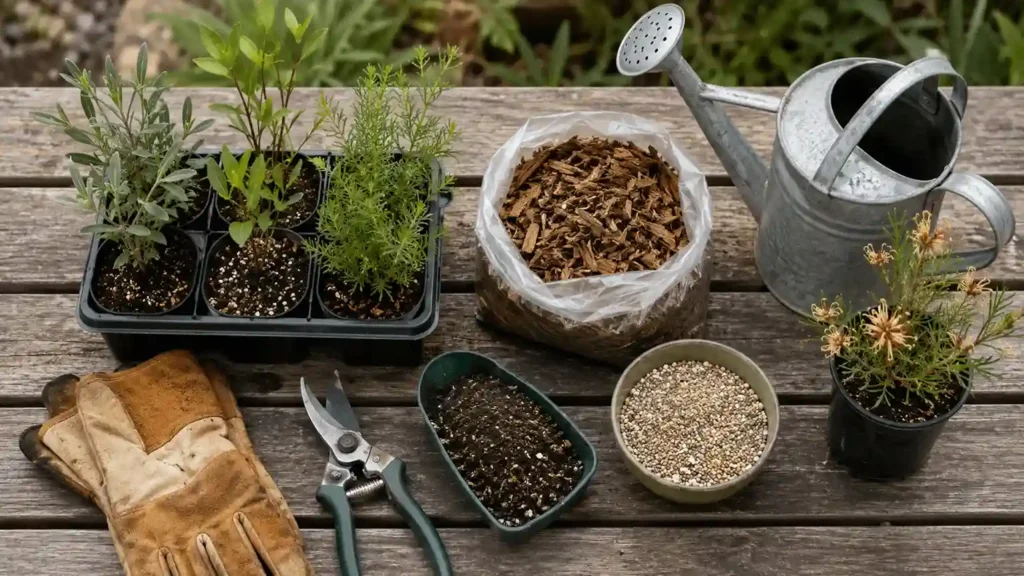
Australian native plants can thrive in containers when chosen wisely and given the right mix of drainage, sunlight, and native-formulated fertiliser. Use a premium native potting mix and ensure every pot has drainage holes — waterlogging is the fastest way to lose a container native.
Best native plants for pots:
- Dwarf grevillea varieties (compact, long-flowering)
- Native violets (ground cover, shade-tolerant)
- Kangaroo paw (striking vertical form)
- Paper daisy (cottage-style seasonal colour)
- Dwarf lemon myrtle (fragrant, edible foliage)
🌿 For colourful container-friendly natives, explore “Paper Daisy Plant: 7+ Essential Care & Growth Tips.”
🌼 Seasonal Australian Native Garden Plants Calendar
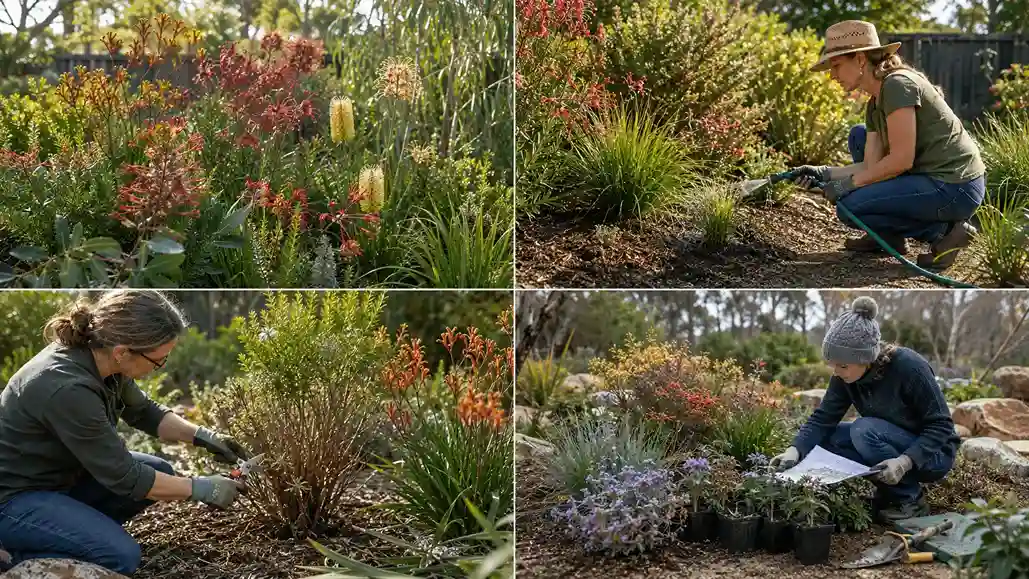
Spring and autumn are the golden seasons for planting and maintenance, while summer calls for water management and summer mulching. Winter is your window for planning, redesigning, and ordering new plant stock.
🌸 Spring — Prime planting time arrives. New growth surges and most flowering species begin their main display.
☀️ Summer — Water management becomes critical. Mulch heavily and hold off on pruning or fertilising.
🍂 Autumn — The best season to prune, tidy, and plant trees and large shrubs before winter.
❄️ Winter — Growth slows but many natives still flower. Plan any redesign now and protect frost-sensitive species.
| Season | Key Tasks | Purpose |
| Spring | Plant, fertilise, tip prune | Encourage new growth and flowers |
| Spring | Mulch garden beds | Retain moisture and suppress weeds |
| Summer | Deep water weekly | Support plants during heat stress |
| Summer | Monitor for pests | Catch infestations early |
| Autumn | Hard prune if needed | Rejuvenate overgrown plants |
| Autumn | Plant trees and shrubs | Roots establish before summer |
| Winter | Plan and redesign | Maximise next season’s impact |
| Winter | Minimal watering | Match reduced plant water needs |
🌿 For colour-coordinated seasonal planting, explore “7+ Essential Pink Flower Australian Native Plants Guide.”
🌿 For a colour-themed guide to native flowers by season, explore “8+ Essential Yellow Australian Native Flowers to Grow.”
Common Australian Native Garden Plants Mistakes to Avoid
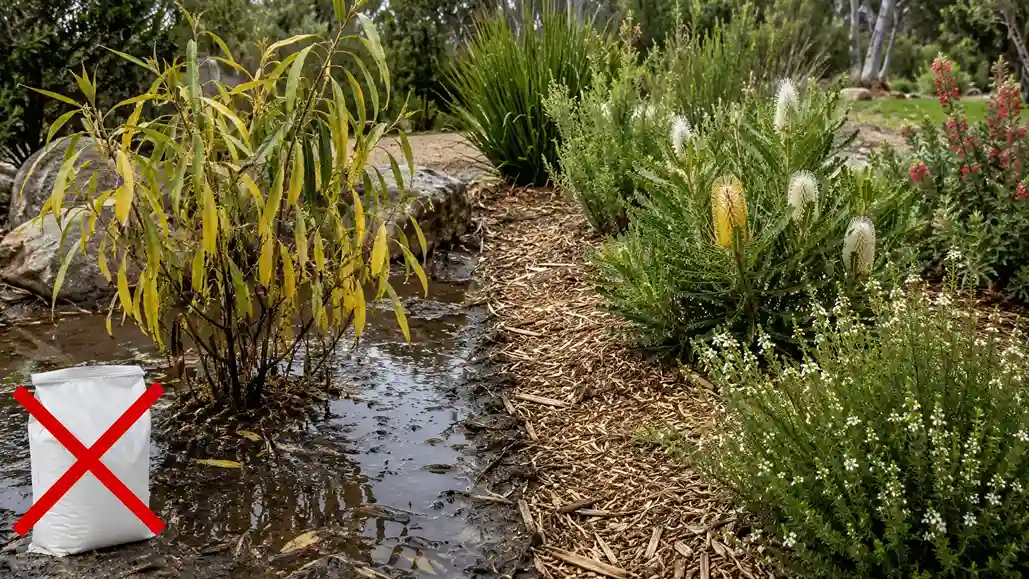
- Using standard fertiliser high in phosphorus — it can kill most natives
- Planting in poorly drained, waterlogged soil
- Overwatering established natives during cooler months
- Pruning into bare, dead wood with no green growth
- Choosing plants unsuited to your local climate zone
- Neglecting mulch, which is critical for moisture retention
- Forgetting to check for pests during spring flush of new growth
Beginner vs Experienced Australian Native Garden Plants Approach
Beginner Focus
- Start with hardy, low-maintenance species like grevillea, westringia, and lomandra
- Choose plants already suited to your climate zone — no adapting needed
- Focus on one or two species to learn before expanding your garden
- Use native potting mix and native fertiliser from the start — no shortcuts
Experienced Focus
- Experiment with rare or difficult species like boronia and native orchids
- Design with layered planting — canopy, understorey, and ground cover
- Propagate from cuttings to expand your collection and share with others
- Integrate habitat features such as rock piles, water dishes, and log piles
🌍 Sustainable and Eco-Friendly Practices
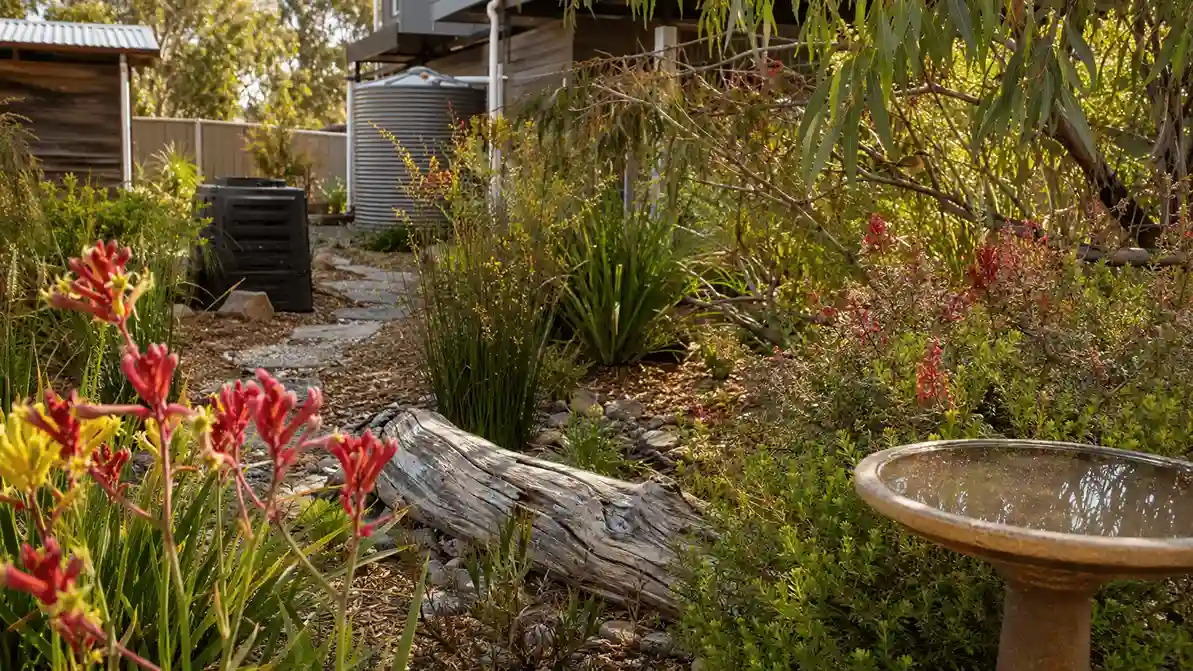
Australian native gardens are inherently eco-friendly — they need less water, fewer chemicals, and less maintenance than traditional exotic gardens. By choosing natives, you’re actively reducing your garden’s environmental footprint while creating habitat for local wildlife.
Go further by collecting rainwater for irrigation, composting green waste on-site, and avoiding all pesticides in areas frequented by bees and birds. A thoughtfully planted native garden can become a genuine urban wildlife corridor.
🌿 For sustainable garden planning tools, explore “Procreate Landscape Design: 7+ Smart Planning Tips.”
🪴 Troubleshooting Common Australian Native Garden Plants Problems
| Symptom | Likely Cause | Quick Fix |
| Yellowing leaves | Overwatering or poor drainage | Reduce watering; improve drainage |
| Brown leaf tips | Underwatering or heat stress | Deep water; add mulch |
| No flowers | Too much shade or over-fertilising | Move to sunnier spot; reduce feed |
| Root rot | Waterlogged soil | Repot or improve soil drainage |
| Leggy, sparse growth | Insufficient light or no pruning | Tip prune; relocate to sunnier spot |
| White powdery coating | Powdery mildew fungal disease | Improve airflow; apply fungicide |
| Sticky leaves | Scale insect infestation | Neem oil spray or horticultural soap |
| Plant collapse after repotting | Root disturbance or wrong soil mix | Use native mix; water in gently |
🌿 For targeted pest identification support, explore “Common Garden Bugs Guide: 12+ Essential ID Tips.”
Explore Detailed Australian Native Garden Plants Guides
Use these in-depth cluster guides to go deeper on any specific plant, design style, or garden challenge:
Native Shrubs & Flowering Plants
- Dorothy Gordon Grevillea: 7+ Essential Care Tips
- Standard Grevillea Guide: 8+ Essential Care & Types
- Orange Grevillea: 10+ Essential Care & Varieties Guide
- Calothamnus Grey Form: 7+ Essential Care & Growth Tips
- Snow in Summer Melaleuca: 7+ Essential Care Tips
- Hakea Stockdale Sensation: 7+ Essential Care Tips
Native Trees, Climbers & Structural Plants
- Lemon Myrtle Tree: 10+ Essential Growing & Care Tips
- Agonis Flexuosa Burgundy: 8+ Essential Care Tips
- Mallee Eucalyptus: 8+ Essential Types & Care Tips Guide
- Weeping Wattle Australia: 10+ Essential Care Tips
- Acacia Mini Cog: 7+ Essential Care & Growth Tips
Native Flowers by Colour
- Purple Native Flowers Australia: 7+ Best Types & Guide
- 7+ Essential Pink Flower Australian Native Plants Guide
- 7+ Essential Red Australian Native Flowers Guide
- 8+ Essential Yellow Australian Native Flowers to Grow
- White Native Flowers Australia: 7+ Essential Types Guide
Garden Design, Style & Inspiration
- Australian Cottage Garden: 10+ Smart Design Ideas
- 10+ Smart Small Native Garden Ideas in Australia
- 7+ Essential Native Full Shade Plants Australia Guide
- 7+ Essential Indoor Australian Native Plants to Grow
- Modern Bird Baths: 8+ Essential Tips for Smart Choice
Garden Problems & Pest Control
- Aphids on Houseplants: 8+ Proven Ways to Remove Them
- Common Garden Bugs Guide: 12+ Essential ID Tips
🌿 Final Thoughts
Growing Australian native garden plants is one of the most rewarding decisions any gardener can make. You’re choosing plants that belong here — evolved for our soils, our seasons, and our wildlife — and that makes every success feel earned.
Start small, observe closely, and don’t be afraid to experiment. The more time you spend with natives, the more you’ll appreciate their resilience, their beauty, and the community of birds and insects they attract. Your garden can be a refuge for both you and local wildlife — and it starts with choosing the right plants.
🌿 FAQs – Australian Native Garden Plants
1. What are the easiest Australian native plants for beginners?
Grevillea, westringia, and lomandra are the most beginner-friendly natives — they're tough, adaptable, and available at most nurseries. They thrive in a wide range of climates with minimal care.
2. Can I grow Australian natives in pots?
Yes, many compact natives thrive in containers with the right native potting mix and adequate drainage. Dwarf grevilleas, kangaroo paws, and paper daisies are all excellent pot choices.
3. Do Australian native plants need fertiliser?
They need very little — but when you do fertilise, always use a low-phosphorus blend formulated specifically for Australian natives. Standard fertilisers can cause serious damage or death.
4. How often should I water established native plants?
Most established natives need deep watering only once every one to two weeks in summer. In cooler months, rainfall is usually sufficient for most species.
5. When is the best time to plant Australian natives?
Autumn is the ideal planting season, as cooler temperatures and seasonal rain help roots establish before summer heat arrives. Spring is the second-best window for most regions.



16 Responses