
Introduction
Trees that like wet soil Australia are specially adapted species that thrive in poorly drained, saturated, or seasonally flooded environments. In gardening terms, “wet soil” refers to ground that retains excess moisture for long periods, while “wet feet” describes plant roots that can tolerate or even prefer consistently damp conditions. These natural adaptations are commonly found in Australian ecosystems such as riparian zones, swamps, and floodplains. Understanding these plants helps gardeners successfully design resilient landscapes using native plants for wet areas, wet soil, and plants that like wet soil Australia.
Quick Summary
- Many Australian native trees and shrubs naturally tolerate saturated or seasonally flooded soils.
- Wet-soil–tolerant plants include Melaleuca, Callistemon, Banksia, and floodplain-adapted eucalypts.
- Small trees and shrubs that like wet soil Australia are ideal for compact, waterlogged garden spaces.
- Combining trees with understorey plants that like wet feet Australia improves water absorption and soil stability.
What “wet soil” means for Australian gardens
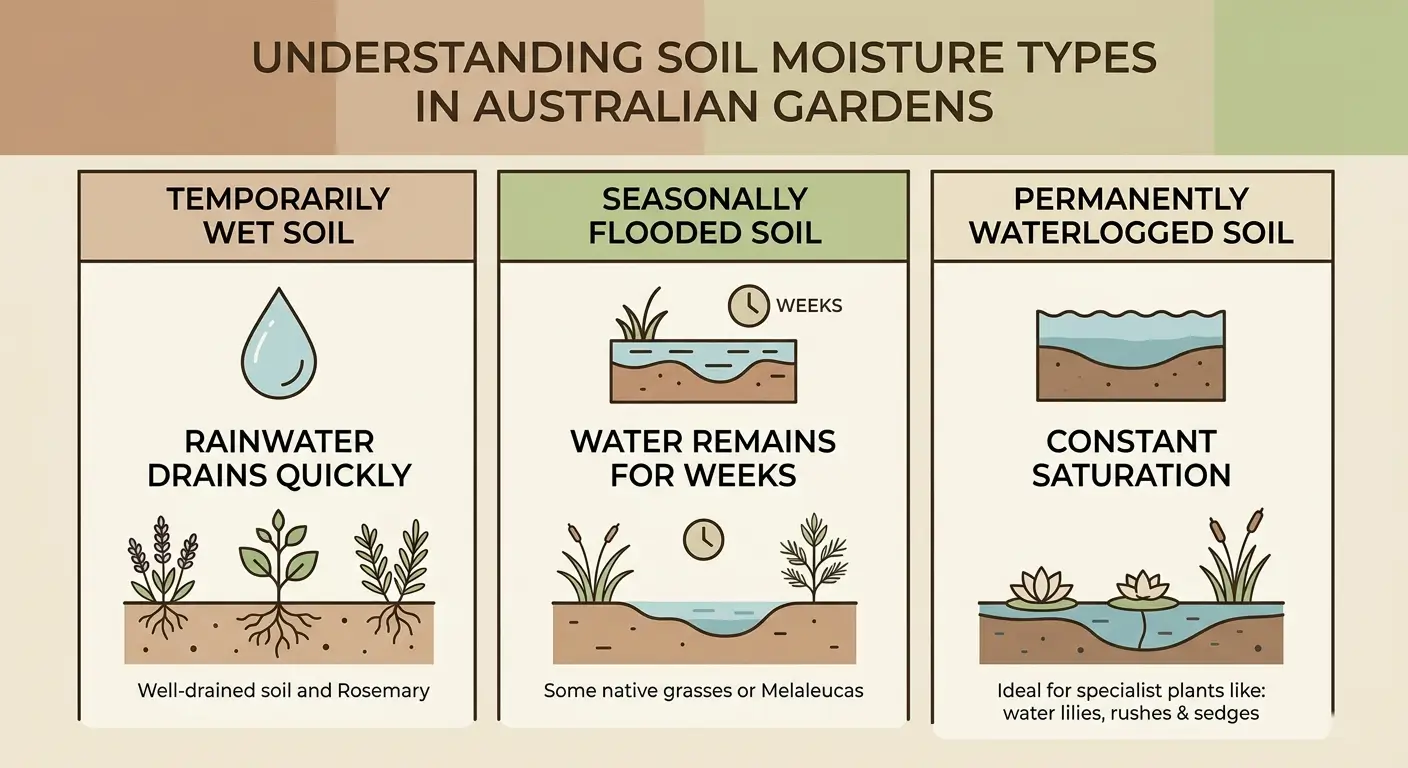
Wet soil in Australian gardens refers to soil conditions where water remains present for extended periods, limiting oxygen availability for plant roots. This commonly occurs in clay-rich soils with poor drainage or in low-lying areas after heavy rainfall. Wet soil conditions are closely related to natural ecosystems such as swamps and floodplains, which are formally described in ecological terms like wetlands, a concept explained in detail by the broader definition of wetlands.
Temporary, seasonal, and permanent wet conditions
Temporary wet soil occurs after rainfall and drains within hours or days. Seasonal flooding happens in wet months when water remains for weeks before receding. Permanent waterlogging is when soil stays saturated year-round, often causing stress to non-adapted plants.
Plants that like wet soil Australia survive these conditions through specialized root systems that tolerate low oxygen levels, while unsuitable plants often suffer root rot and decline due to poor respiration.
Trees that like wet soil Australia (overview)
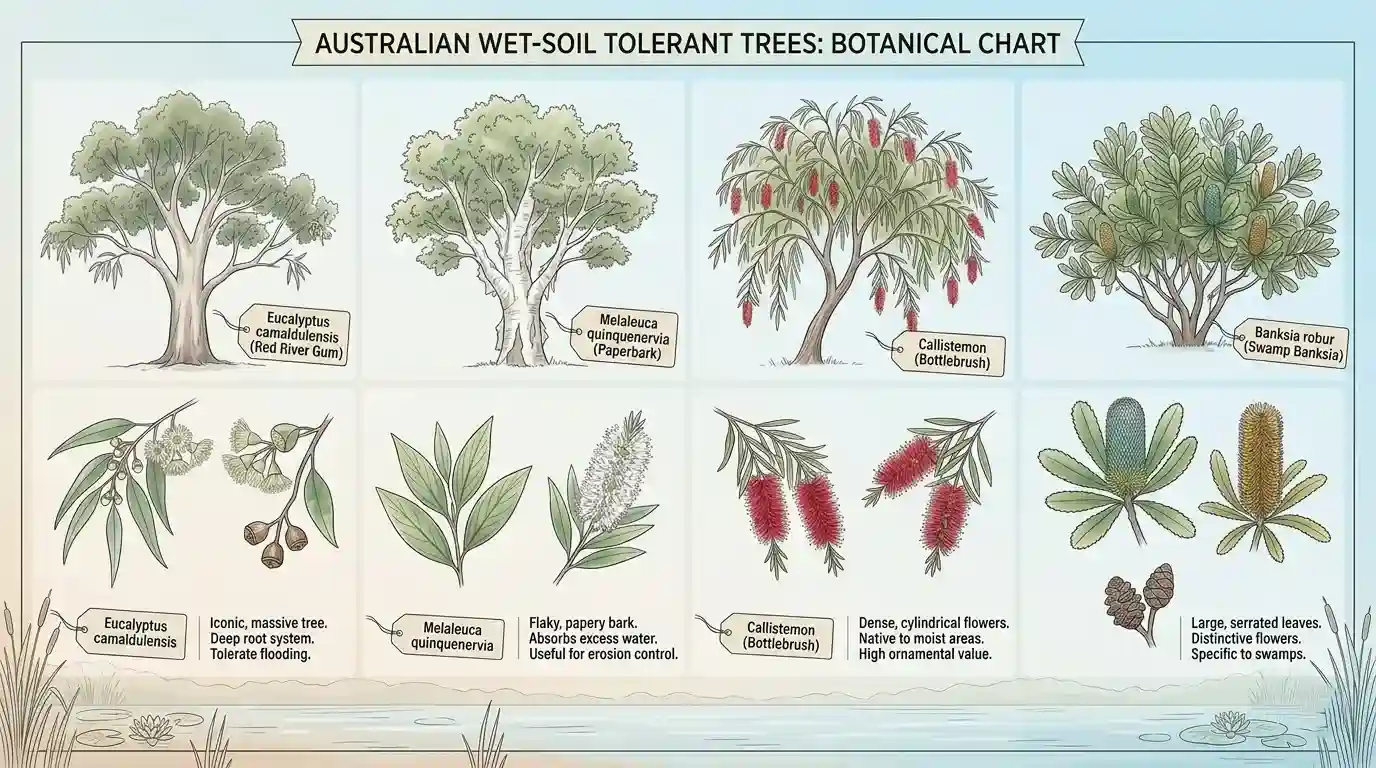
Trees that like wet soil Australia include native species adapted to floodplains, swamp edges, and riverbanks. These trees are essential for stabilizing waterlogged yards, drainage channels, and low-lying paddocks where most ornamental species fail.
These trees are valuable because they:
- Improve soil structure in wet areas
- Reduce standing water through root absorption
- Provide habitat in wet ecosystems
- Stabilize erosion-prone landscapes
Examples of larger wet-soil–tolerant trees
Common large trees include:
- Eucalyptus camaldulensis (Red River Gum) – thrives along rivers and handles prolonged flooding
- Melaleuca quinquenervia (Broad-leaved Paperbark) – common in swampy coastal regions
- Selected Callistemon (Bottlebrush) species – adaptable to wet soils and seasonal inundation
These species typically grow in full sun and tolerate alternating wet and dry cycles.
Evergreen and low-maintenance options
Evergreen trees that like wet soil Australia, especially Melaleuca and swamp-adapted Banksia species, are ideal for long-term landscape stability. Once established, they require minimal care and significantly reduce maintenance in boggy garden zones while improving drainage naturally.
Small trees that like wet soil Australia
Small trees that like wet soil Australia are ideal for suburban gardens, compact wet zones, and areas near drainage systems. These species provide structure without overwhelming limited space or damaging underground infrastructure.
Examples include:
- Callicoma serratifolia (Black Wattle) – thrives in moist forest margins
- Hymenosporum flavum (Native Frangipani) – adaptable to moderately wet soils
- Compact Melaleuca and Banksia varieties – suited to small wet landscapes
These trees are especially useful for adding shade and form in wet areas without excessive root spread.
Ideal siting and conditions
Small trees that like wet soil Australia perform best in:
- Low-lying garden beds
- Near downpipes or water runoff zones
- Edges of ponds or wet depressions
Sun requirements vary:
- Full sun: Melaleuca and many Banksia species
- Partial shade: Callicoma serratifolia and similar understory species
Comparison with larger wet-soil trees
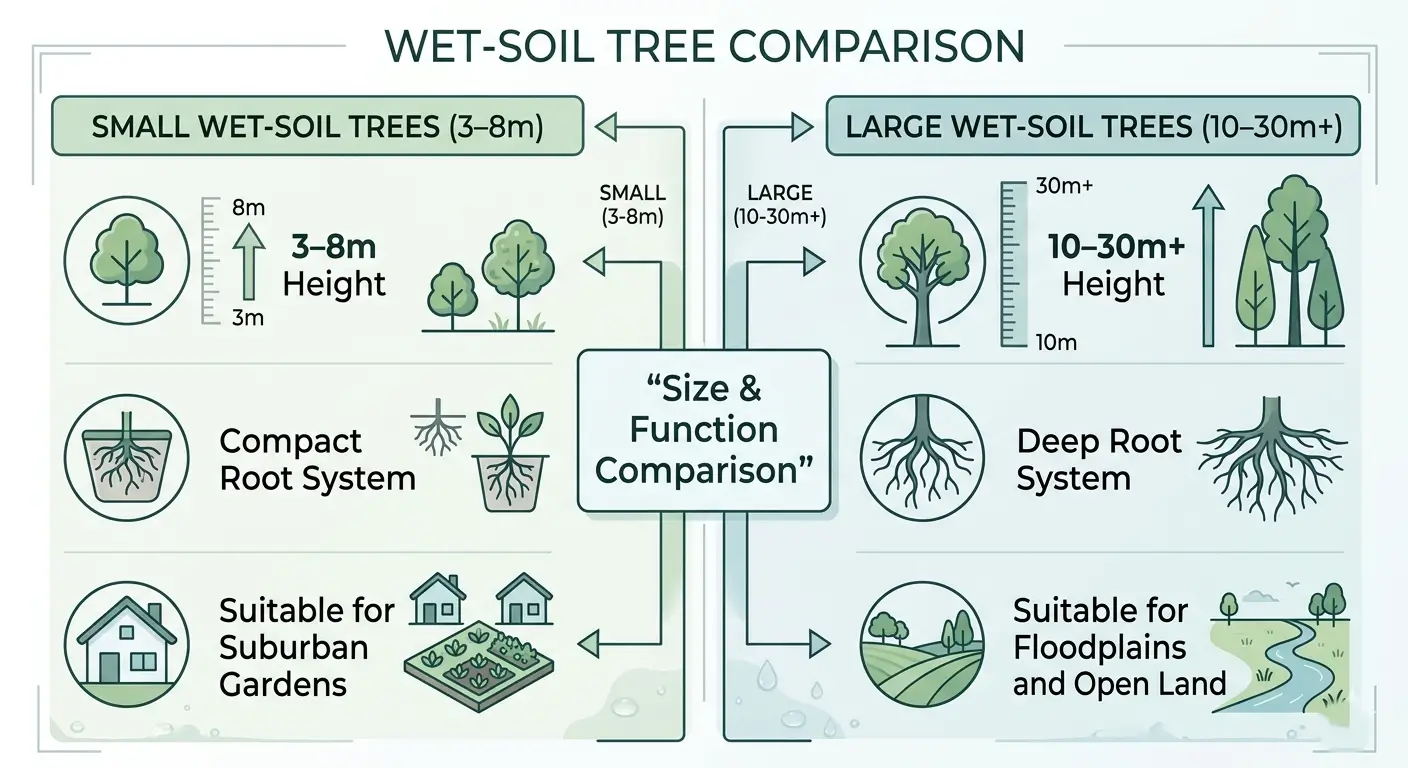
| Tree type | Typical height | Best soil type | Light preference |
| Small wet-soil tree | 3–8 meters | Moist to waterlogged clay | Sun or partial shade |
| Larger wet-soil tree | 10–30+ meters | Floodplain, riparian soils | Full sun |
Native plants for wet areas Australia
Native plants for wet areas Australia include trees, shrubs, and ground covers naturally adapted to swampy, riparian, and poorly drained ecosystems. These plants are highly resilient, low maintenance, and support local biodiversity.
Benefits include:
- Reduced fertiliser requirements
- Strong pest resistance
- High adaptability to Australian climates
- Improved ecosystem stability
To create a balanced and low-maintenance wet garden ecosystem, many gardeners combine native plants for wet areas Australia with related landscape species such as 7+ Essential Trees That Like Wet Feet for Smart Gardens and 7+ Essential Banksia Varieties: Types, Colors & Care Guide, which help improve drainage, biodiversity, and long-term soil stability.
Key native genera for wet soils
Important genera include:
- Melaleuca – dominant in swamp ecosystems
- Callistemon – adaptable bottlebrush species
- Banksia – selected species tolerate damp soils
- Certain Eucalyptus species – especially floodplain types
These genera support both sun-exposed and partially shaded wet environments depending on species selection.
Plants that like wet soil and shade vs full sun
Plants that like wet soil Australia vary significantly based on light exposure. Some species thrive in shaded, damp understories, while others require full sun to perform well in wet conditions.
Shade-adapted species include moisture-loving ferns, gingers, and ground covers that tolerate low light. Sun-loving species include bottlebrush, swamp banksia, and Melaleuca varieties that flourish in open, wet landscapes.
Example planting combinations
Effective combinations include:
- Small wet-soil trees + ferns + ground covers that like wet feet Australia
- Melaleuca + shrubs that like wet feet Australia for layered moisture control
- Banksia + native grasses for erosion reduction and water absorption
Plants that soak up water Australia
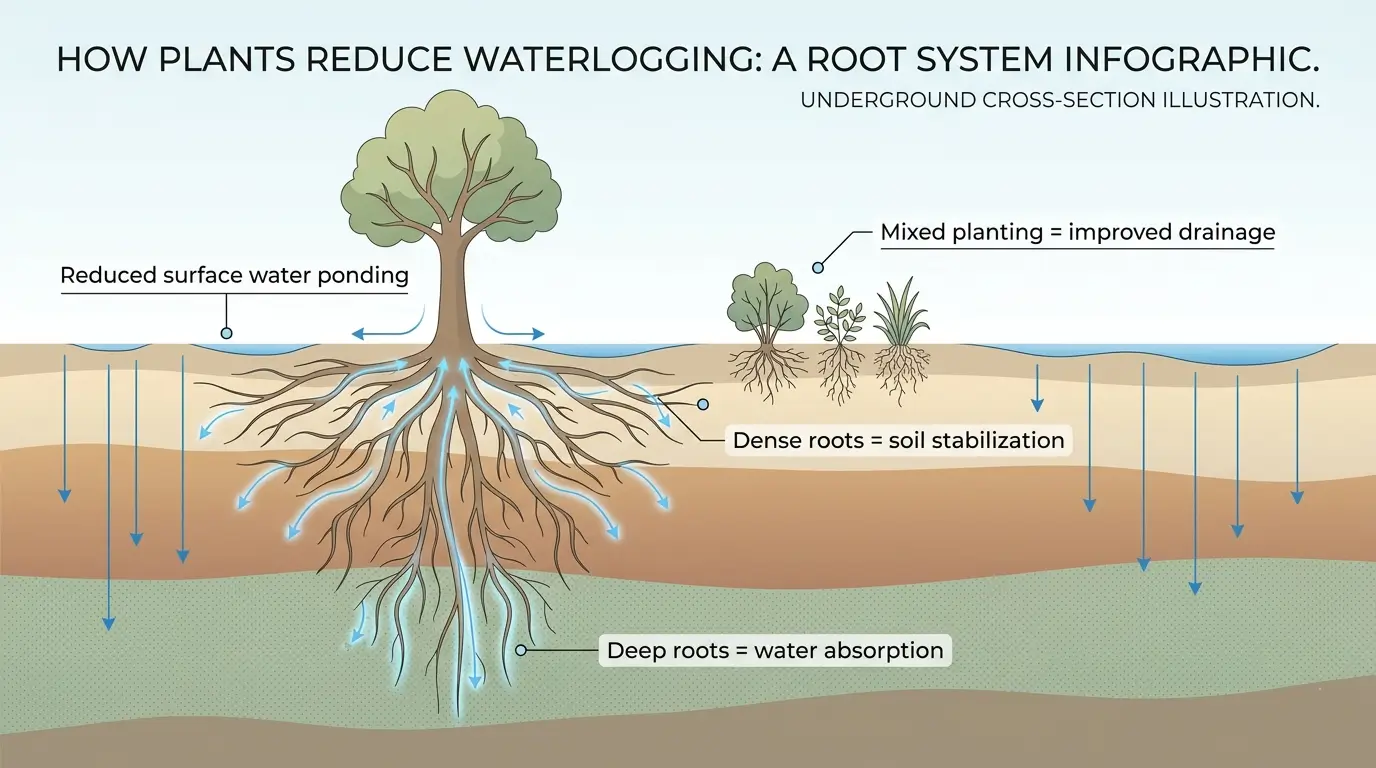
Plants that soak up water Australia act as natural drainage systems by absorbing excess moisture through dense and deep root networks. Trees are especially effective due to their ability to reach deeper soil layers.
These systems help:
- Reduce standing water in gardens
- Improve soil aeration over time
- Prevent erosion in wet landscapes
Trees + shrubs vs just shrubs
Tree-based systems provide deeper and more long-term water management compared to shrub-only systems. While shrubs that like wet feet Australia offer fast coverage, trees deliver stronger and more sustained water absorption due to deeper root systems.
Care guide for trees in wet soil Australia
Trees that like wet soil Australia require balanced care to ensure healthy growth in saturated environments while avoiding root stress.
Watering, mulching, and drainage balance
Light mulching is recommended to maintain soil aeration. Heavy organic amendments should be avoided in already wet soils as they can increase compaction. Proper spacing ensures oxygen movement around roots, preventing stress even in plants that like wet soil and shade Australia.
Seasonal care and pruning
Growth is typically strongest during warm, wet seasons and slows in cooler periods. Light pruning helps maintain structure and airflow, especially for small trees that like wet soil Australia and moisture-adapted shrubs.
Common problems in wet-soil plantings (problem–solution)
Common issues in wet gardens include root rot, algae formation, foul soil odours, and weak plant growth. These occur due to low oxygen levels and prolonged saturation.
Solutions include:
- Improving plant spacing for airflow
- Using shrubs that like wet feet Australia instead of dry-soil species
- Avoiding soil compaction and overwatering
Yellowing leaves and slow growth
Yellowing leaves often indicate nutrient leaching, poor oxygen availability, or incorrect species selection. In plants for clay soil with poor drainage Australia, this is common when unsuitable plants are used.
Solutions:
- Soil testing for nutrient balance
- Replacing unsuitable plants with true water-loving plants Australia
- Improving structure with organic matter in moderation
Most guides overlook microclimate variation, suburban constraints, and native-first planting strategies. Focusing on evergreen trees that like wet soil Australia and layering them with shrubs and ground covers provides a more practical and ecologically sound approach for Australian gardens.
How to choose trees that like wet soil Australia for your site
Selecting the right tree depends on space availability, sunlight, waterlogging severity, and landscape goals. Small trees are ideal for compact wet zones, while larger trees suit broad flood-prone areas.
Combining trees for wet areas Australia with plants that like wet feet Australia creates a multi-layered system that maximizes water absorption and landscape stability.
Conclusion
Many Australian native trees and plants are naturally adapted to wet or poorly drained soils, making them ideal for challenging garden conditions. By selecting trees that like wet soil Australia and combining them with shrubs and ground covers that like wet feet Australia, gardeners can transform soggy, unusable areas into stable, productive, and visually appealing landscapes.
FAQ
Which native trees are best for wet soil in Australia?
Red River Gum, Melaleuca species, Callistemon, and some Banksia species are highly suitable due to their tolerance for flooding and saturated soils.
Are there small trees that like wet soil Australia suitable for small gardens?
Yes, species like Callicoma serratifolia, compact Melaleuca, and small Banksia varieties are ideal for tight, wet garden spaces
How do I stop standing water using plants that like wet soil Australia?
Strategically planting trees, shrubs, and ground covers that like wet feet Australia helps absorb excess moisture and improve drainage naturally.
Can plants that like wet soil and shade Australia also grow in full sun?
Some species are adaptable, but many are specialized for either shade or sun conditions, so selection must match the garden microclimate.
What should I avoid when planting trees in wet soil Australia?
Avoid dry-soil species, over-amending heavy clay, and blocking natural drainage paths, as these worsen waterlogging and root stress.