Introduction
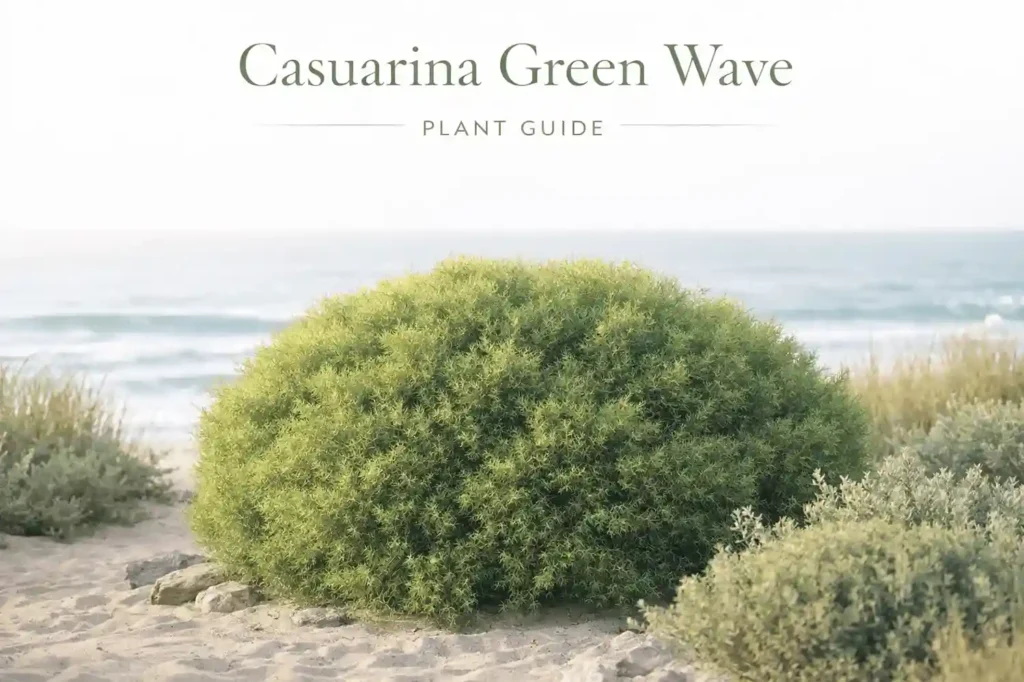
Casuarina Green Wave, scientifically known as Casuarina glauca ‘Greenwave’, is a compact Australian native shrub valued for its dense, rounded shape and fine, bright green foliage. The casuarina greenwave plant is widely used in coastal landscaping because it tolerates wind, salt, drought, and poor soils while maintaining year-round greenery. Its soft, needle-like branchlets resemble a she-oak, giving landscapes a flowing, textured appearance.
This hardy shrub is especially popular in low-maintenance gardens where structure, privacy, and resilience are needed. It grows quickly, adapts to harsh environments, and requires minimal care once established.
Quick Summary
- Forms a dense, rounded shrub ideal for hedging and screening (1.5–2m typical height and width).
- Highly drought-tolerant once established with strong salt and wind resistance.
- Features fine, needle-like foliage that creates soft movement in landscapes.
- Fast-growing and low-maintenance, suitable for erosion control and coastal gardens.
Plant Identification
What is Casuarina Green Wave?
Casuarina Green Wave is a cultivated form of Casuarina glauca known for its compact, ball-shaped growth habit. The green wave plant is distinguished by its fine segmented branchlets that resemble pine needles but are actually modified stems, not true leaves.
Mature plants may produce small tan woody cones, a key identifying feature of the species. Compared to standard Casuarina glauca, which can grow into a tall tree, the Green Wave cultivar remains much smaller and denser, making it ideal for landscaping.
Key botanical traits include:
- Segmented green stems acting as photosynthetic structures
- Absence of true leaves (reduced to tiny scale-like teeth)
- Woody cone formation at maturity
- Dense branching habit creating a rounded form
The plant belongs to the family Casuarinaceae, commonly associated with she-oaks, a group of trees and shrubs widely studied in Australian ecology. Learn more about the genus on Wikipedia.
Plant Size
How big does Casuarina Green Wave grow?
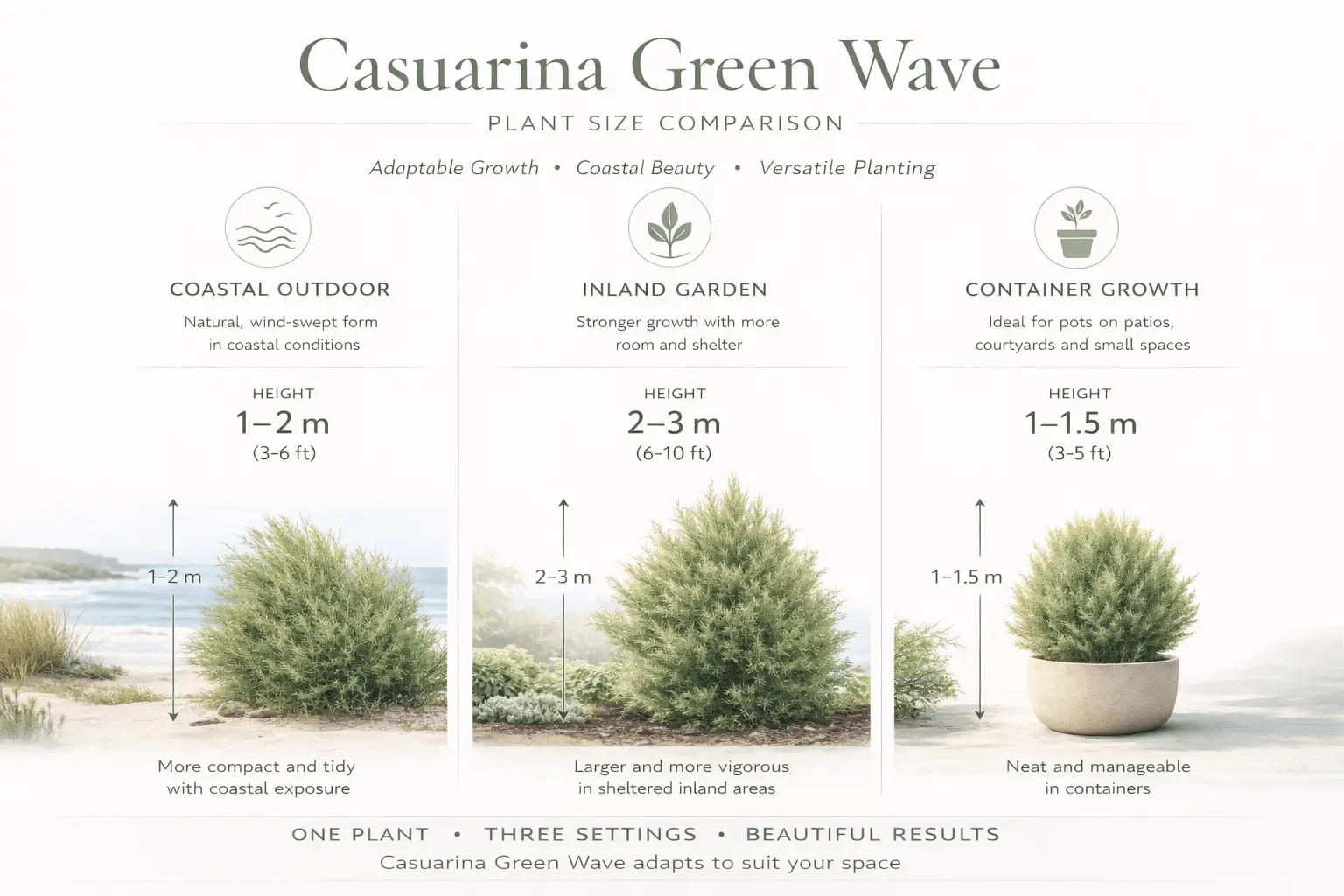
Casuarina Green Wave typically grows between 1.5–2 meters in both height and width, forming a naturally compact mound. Growth size can vary depending on environment, pruning, and soil conditions.
In coastal exposure, wind naturally keeps the plant tighter and smaller, while inland conditions may allow slightly taller growth. Container planting restricts root expansion, resulting in more compact development.
Size Comparison Table
| Environment | Height | Width | Key Factors |
| Coastal Outdoor | 1.5–2m | 1.5–2m | Wind-pruned, compact growth |
| Inland Full Sun | 2–3m | 1.5–2.5m | Faster vertical growth |
| Container Growth | 1–1.5m | ~1m | Root restriction limits size |
Growth Rate
How fast does Casuarina Green Wave grow?
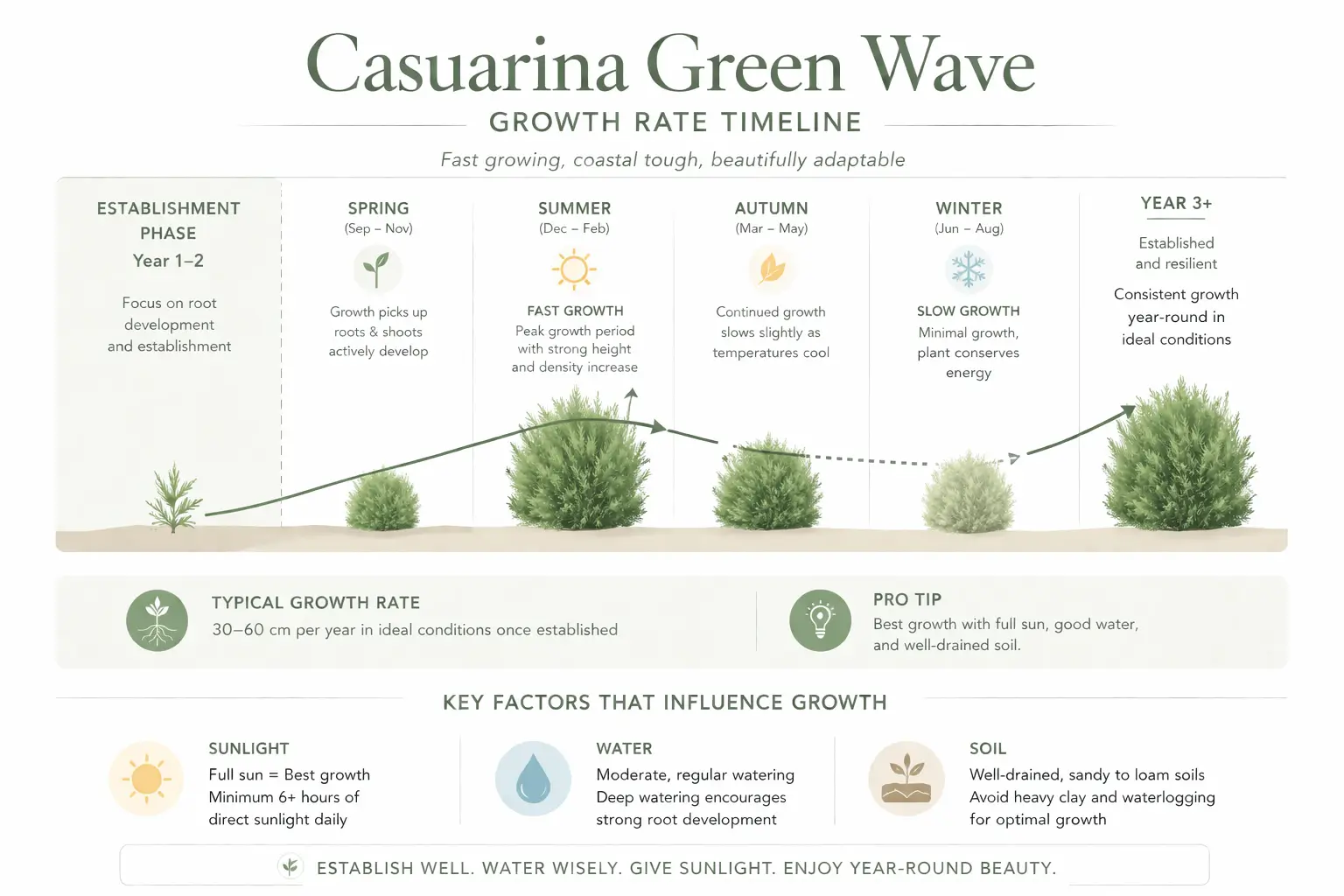
Casuarina Green Wave has a fast growth rate, particularly during its establishment phase in the first 1–2 years. It responds strongly to warm temperatures, sunlight, and adequate moisture.
Growth is most active in spring and summer, while winter slows development significantly. Compared to slower native plants like Lomandra Tanika, the casuarina greenwave establishes much faster and forms dense coverage quickly.
Growth influences include:
- Full sun exposure increasing density and speed
- Well-drained soils promoting root development
- Moderate watering during establishment phase
- Coastal wind shaping compact structure
Care Guide
How do you care for Casuarina Green Wave?
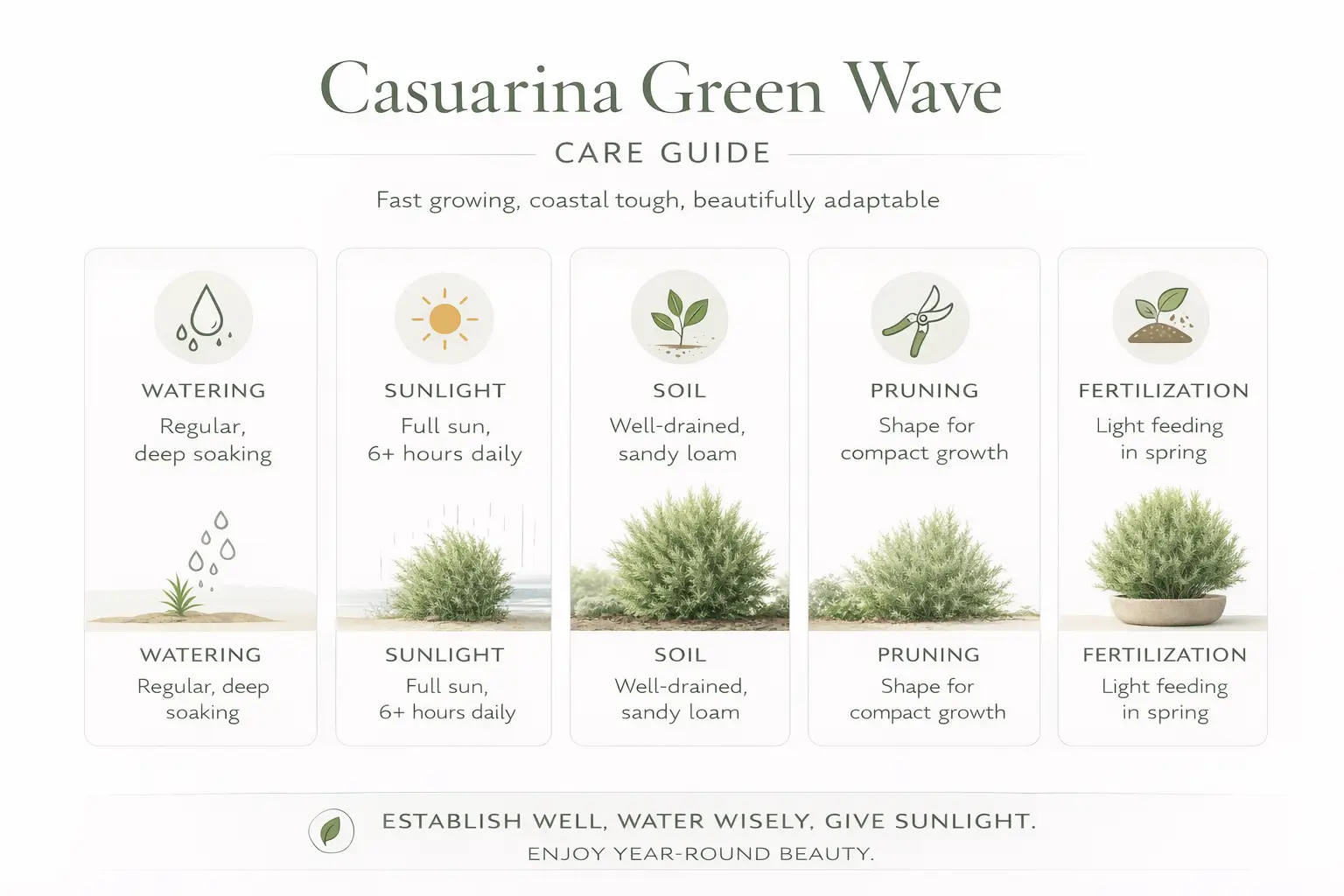
Casuarina Green Wave is a low-maintenance shrub that thrives with minimal intervention once established. Proper early care ensures long-term resilience.
Watering:
Water regularly for the first 12 weeks. After establishment, it becomes highly drought-tolerant and only needs water during prolonged dry periods.
Light:
Full sun is ideal. Partial shade is tolerated but may reduce density.
Soil:
Adapts to sandy, clay, or nutrient-poor soils, but prefers well-drained conditions.
Fertilization:
Apply a low-phosphorus native fertilizer once per year in spring.
Pruning:
Light tip-pruning in early stages encourages bushiness. Mature plants require minimal shaping.
Climate:
Tolerates coastal winds, mild frost, and dry conditions effectively.
Additional Care Notes:
- Space plants about 1 meter apart for hedging
- Use mulch to retain moisture during establishment
- Avoid overwatering, especially in heavy soils
- “casuarina greenwave” responds best to consistent sunlight exposure
For gardeners designing broader low-maintenance native landscapes, Casuarina Green Wave pairs well with other resilient Australian plants such as Easy Low Maintenance Australian Native Garden Guide 7+ Steps and drought-tolerant planting systems used in modern garden design.
Common Problems and Solutions
Why is my Casuarina Green Wave turning yellow?
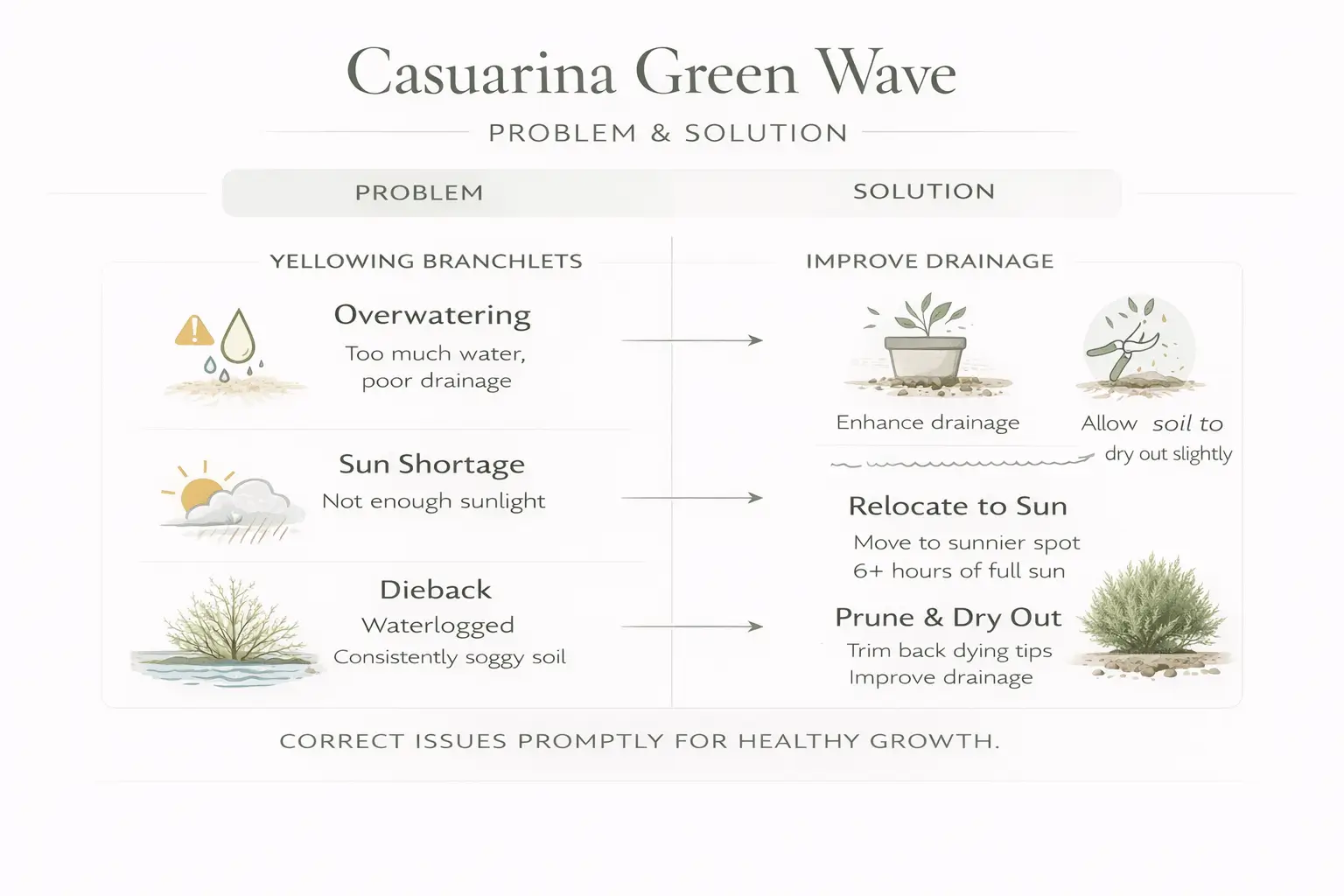
Yellowing branchlets usually indicate overwatering or poor drainage. Excess moisture suffocates roots and leads to stress in the plant.
Other common issues include nutrient burn from high-phosphorus fertilizers and slow growth caused by excessive shade.
Common Problems
- Sparse Growth: Caused by insufficient sunlight; fix by relocating to a sunnier position.
- Dieback: Results from waterlogged soil; improve drainage and reduce watering.
- Pest Damage: Rare but may occur in stressed plants; prune affected areas and improve overall plant health.
Prevention Tips
- Ensure well-drained soil before planting
- Avoid heavy, water-retaining mulch layers
- Use native plant fertilizers only
- Position in full sun for best resilience
Comparisons with Similar Plants
How does Casuarina Green Wave compare to similar plants?
Casuarina Green Wave is more structured and upright than ground-cover varieties like Casuarina glauca ‘Cousin It’, making it better suited for hedging and screening applications.
Comparison Table
| Plant | Height/Width | Foliage | Key Use | Tolerance |
| Casuarina Green Wave | 1.5–2m | Green needle-like | Hedges, screens | Coastal, drought |
| Casuarina ‘Cousin It’ | ~0.5m | Fine trailing | Ground cover | Salt, wind |
| Lomandra Tanika | ~0.6m | Strappy green | Edging | Dry, frost |
| Eremophila Blue Horizon | ~0.5m | Blue-grey foliage | Feature planting | Arid, poor soil |
Environmental Limitations
Where does Casuarina Green Wave struggle?
Casuarina Green Wave performs best in full sun, coastal, and dry climates. It struggles in shaded, humid, or poorly drained environments where airflow is limited.
In tropical regions or heavy rainfall zones, such as parts of far northern Australia, the plant may experience slower growth or fungal stress. Cold climates may require protection during frost events, especially in young plants.
Wind exposure is generally beneficial but can cause damage if plants are not well established. In regions where plant selection is critical for resilience, many gardeners compare it with other drought-tolerant options featured in 9+ Essential Plants for Dry Areas: Smart Garden Guide.
Uses in Landscaping
How is Casuarina Green Wave used in gardens?
Casuarina Green Wave is widely used in landscaping for its versatility and resilience. It is especially effective as a natural hedge or privacy screen due to its dense growth habit.
Common uses include:
- Coastal windbreaks and erosion control
- Formal and informal hedging
- Native and low-water-use gardens
- Mass planting for screening
- Habitat support for birds using cone structures
- Container planting in compact spaces
Its adaptability makes it a strong choice for sustainable landscaping projects.
Conclusion
Casuarina Green Wave is a resilient and versatile Australian native shrub ideal for low-maintenance gardens. With its fast growth, compact form, and tolerance to harsh environments, it excels in hedging, screening, and coastal landscaping. When planted in full sun with well-drained soil, the casuarina greenwave delivers long-term structure and greenery with minimal care requirements.
FAQ
What is the mature size of Casuarina Green Wave?
It typically grows 1.5–2 meters in height and width, though in ideal conditions it may reach up to 3 meters or more.
Is Casuarina Green Wave invasive?
No, this cultivar is non-invasive and is considered safe for controlled landscape use.
How do you prune Casuarina Green Wave?
Light tip pruning during early growth encourages density. Mature plants require only minimal shaping.
Can Casuarina Green Wave grow in shade?
It can tolerate partial shade but grows best in full sun where it develops a denser structure.