
Introduction
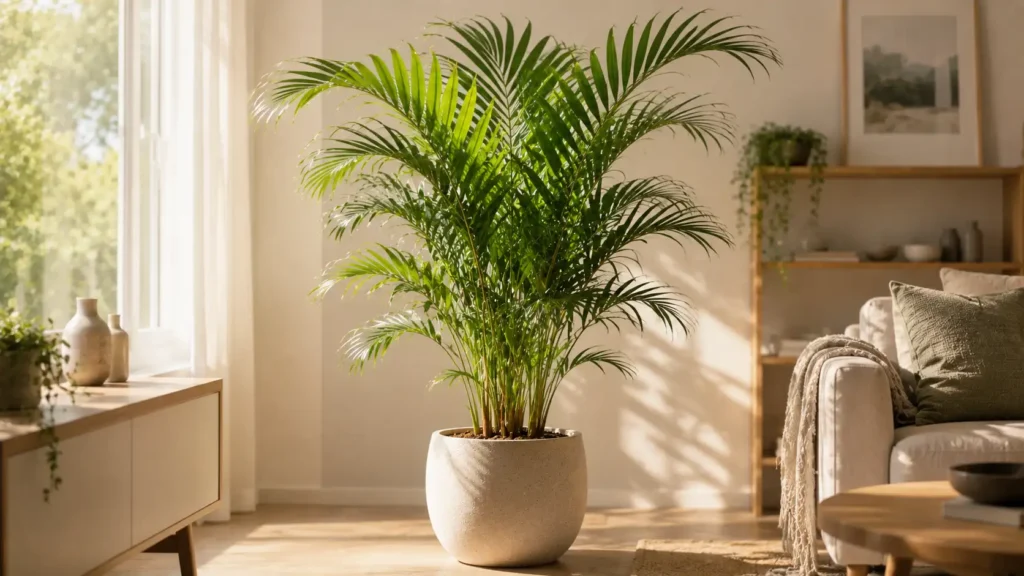
Areca palm care refers to the complete set of practices needed to grow and maintain the Areca palm (Dypsis lutescens) successfully indoors or outdoors. This tropical plant is widely appreciated for its elegant feather-like fronds, air-purifying qualities, and adaptability to home environments. Native to Madagascar, the areca palm is commonly used as a decorative houseplant and landscape feature due to its lush appearance and manageable care needs. In this guide, you will learn everything about watering, lighting, fertilization, growth conditions, seasonal care, and common problems. The goal is to help beginners and experienced plant owners maintain a healthy, long-living areca palm.
Quick Summary
- The areca palm thrives in bright indirect light with consistent moisture and well-draining soil.
- Overwatering and direct sunlight exposure are the leading causes of leaf damage.
- Fertilizing 2–3 times during the growing season promotes healthy fronds.
- Indoor areca palms can live 10+ years with proper care.
- Humidity, drainage, and seasonal adjustments are key to long-term plant health.
What Is an Areca Palm and Why Is It a Popular Plant?
The areca palm, scientifically known as Dypsis lutescens, is a tropical palm species also called the butterfly palm or golden cane palm. It originates from Madagascar and is known for its clustered stems and feathery, arching fronds. This plant is widely used both indoors and outdoors because of its aesthetic appeal and adaptability.
The areca palm (Dypsis lutescens) belongs to the Arecaceae family and is widely studied in tropical botany.
Learn more about its botanical classification on Wikipedia.
Key Characteristics
- Botanical name: Dypsis lutescens
- Family: Arecaceae
- Common names: Areca palm, butterfly palm, golden cane palm
- Native region: Madagascar
Why It Is Popular
- Acts as a natural air-purifying plant
- Adds tropical aesthetics to interiors and landscapes
- Suitable for homes, offices, and gardens
- Considered auspicious in Vastu practices
- Low to moderate maintenance requirements
Areca Palm Indoor Care: Everything You Need to Know
Areca palm indoor care focuses on maintaining the right balance of light, water, humidity, and soil conditions to ensure healthy growth indoors. Areca palm care is similar to other tropical indoor plants such as the Dracaena fragrans Care Guide, especially in terms of light and humidity requirements.
Ideal Light Requirements for Indoor Areca Palms
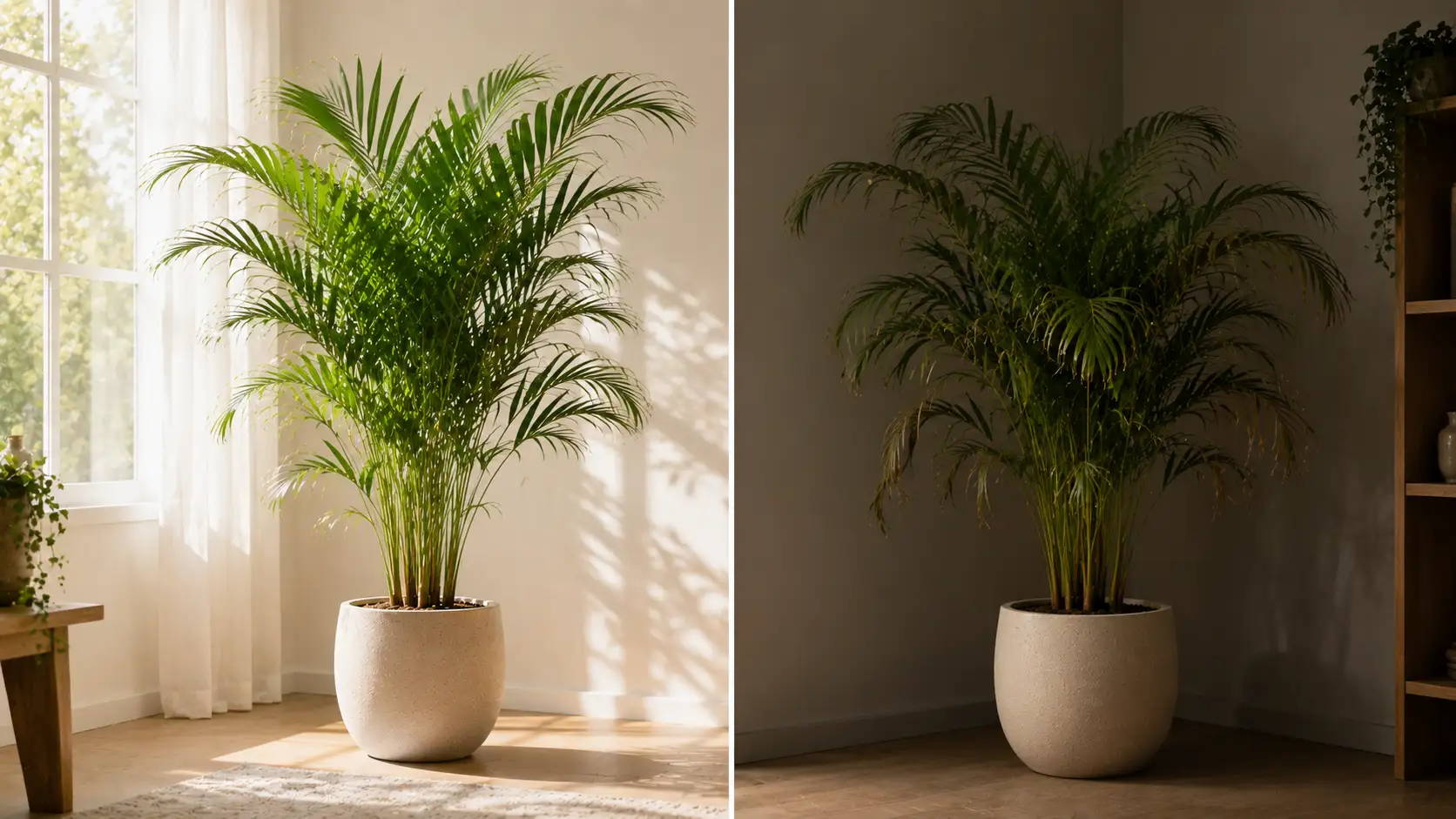
Areca palms require bright, indirect light for optimal growth. Placement near east or west-facing windows is ideal. Too much direct sunlight can cause leaf scorch, while insufficient light leads to slow growth and yellowing fronds.
How to Water an Areca Palm Indoors
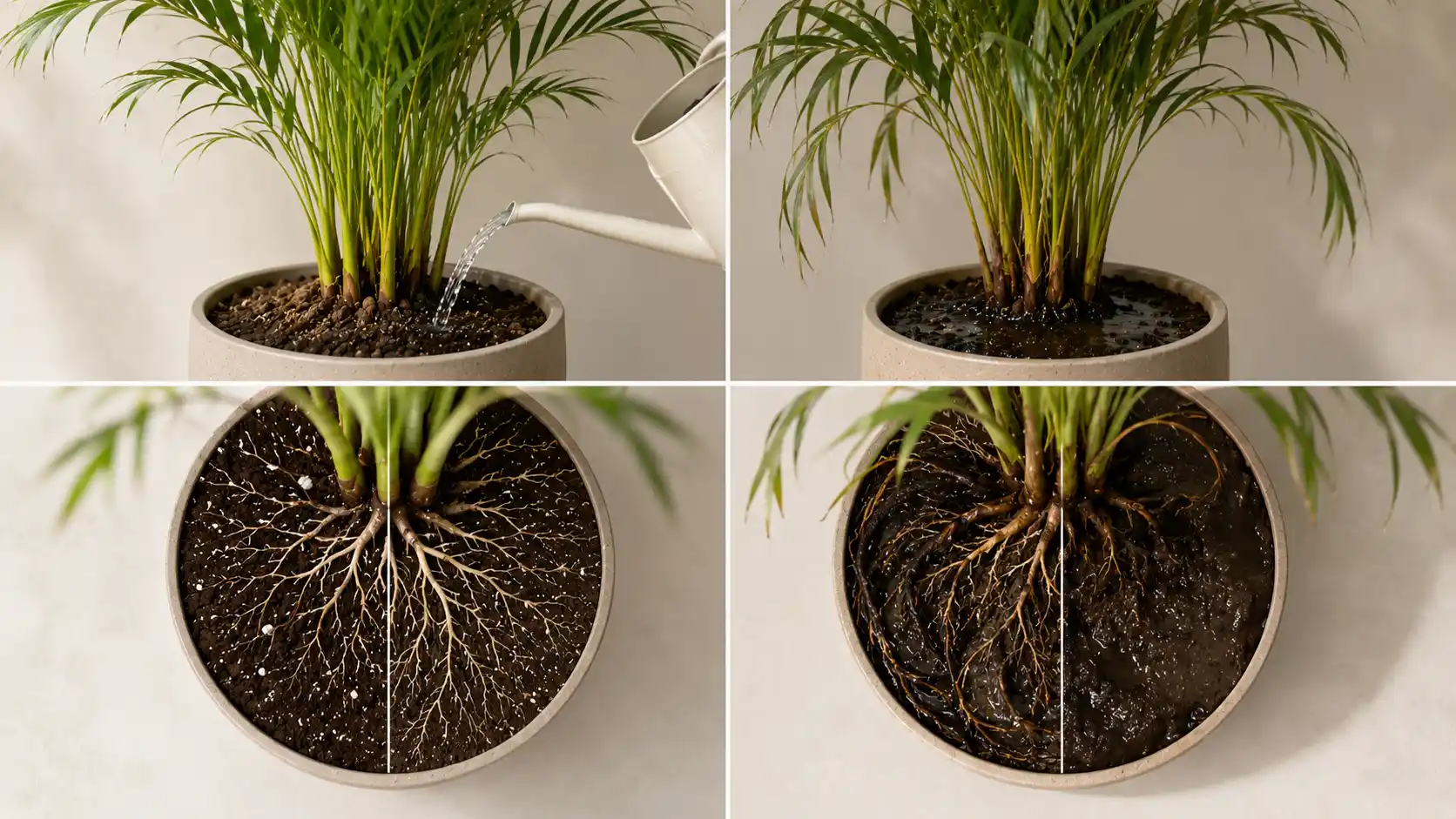
Watering should maintain moist but not soggy soil conditions. The top inch of soil should dry before the next watering. In summer, watering frequency increases, while winter requires reduced watering to prevent root rot.
Soil and Potting Requirements
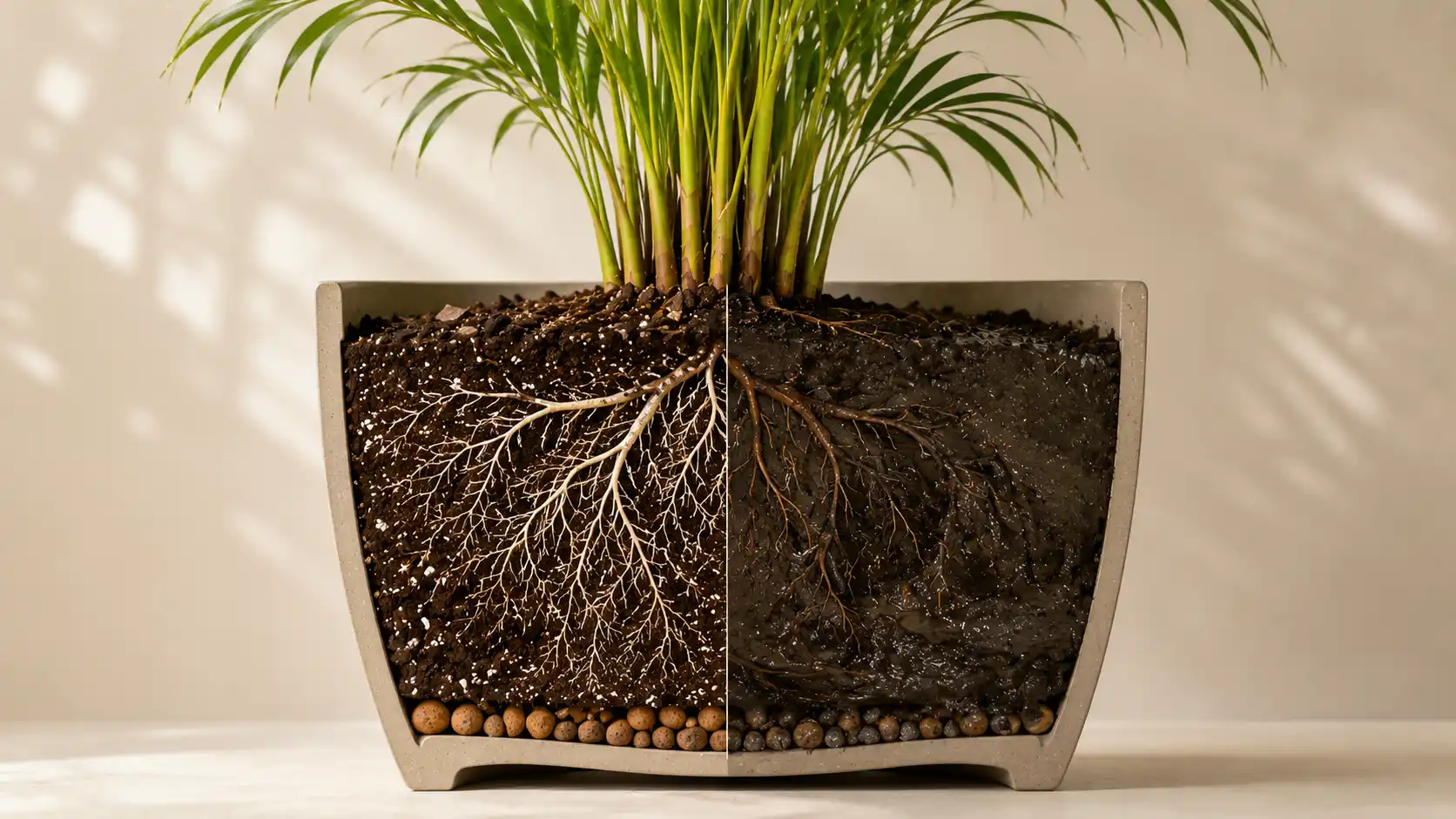
A well-draining, slightly acidic soil mix is ideal. A peat-based or palm-specific mix works best. Drainage holes are essential to prevent water accumulation and root rot. Repotting is usually needed every 2–3 years.
Indoor Temperature and Humidity Needs
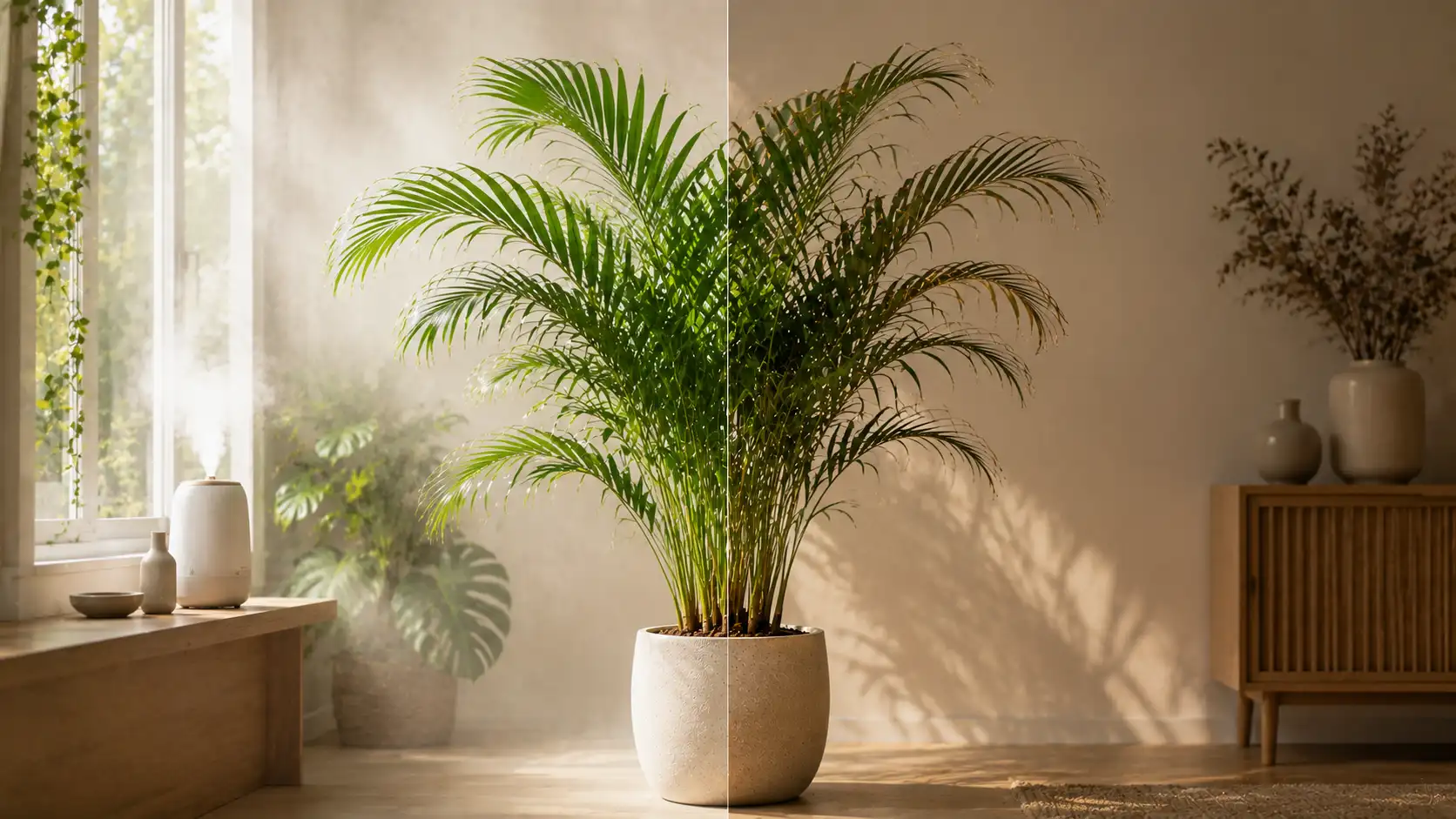
Areca palms prefer temperatures between 18°C–29°C (65°F–85°F). Humidity above 50% supports healthy fronds. Misting, pebble trays, or humidifiers can help maintain moisture levels. Avoid cold drafts and sudden temperature changes. Unlike low-maintenance plants like Sansevieria Laurentii Care Guide, areca palms require higher humidity and more frequent watering.
Areca Palm Fertilizer: How and When to Feed Your Palm
Fertilization supports healthy growth and vibrant green foliage. Feeding is most effective during the growing season (spring and summer).
Best Fertilizer for Areca Palms
A balanced palm fertilizer containing nitrogen, potassium, magnesium, and manganese is ideal.
Fertilizer Comparison Table
| Type | Frequency | Best Use | Pros | Cons |
| Slow-release granular | 2–3 times/year | Long-term feeding | Low maintenance, steady release | Slower response |
| Liquid fertilizer | Every 4–6 weeks | Fast growth boost | Quick absorption | Requires regular application |
| Organic fertilizer | Monthly | Eco-friendly care | Improves soil health | Slower nutrient release |
Avoid over-fertilization as it can lead to salt buildup and root damage. Plants like Alocasia Amazonica Care Indoors also share similar humidity-sensitive care needs as areca palms.
Areca Palm Size: How Big Do Areca Palms Get?
Indoors, areca palms typically grow 6–8 feet tall, while outdoor plants can reach 20–30 feet under ideal conditions. Growth depends on pot size, light exposure, fertilization, and climate conditions.
Areca Palm Growth Rate: How Fast Does It Grow?
Areca palms are moderate growers. They grow actively during spring and summer, while growth slows in fall and winter. Indoor environments usually limit their maximum size compared to outdoor landscapes.
How to Take Care of Areca Palm Outdoors
Outdoor areca palm care involves managing sunlight, soil drainage, and watering frequency in a natural environment.
Outdoor Sunlight and Placement
Young plants require partial shade, while mature palms tolerate more sunlight. Ideal USDA hardiness zones are 10–11.
Watering and Soil for Outdoor Areca Palms
Outdoor palms need consistent watering during dry periods. Mulching helps retain soil moisture and regulate temperature. Well-draining soil is essential to prevent waterlogging.
Outdoor Fertilizer Requirements
Outdoor palms require more frequent fertilization, especially during active growth seasons. Balanced palm fertilizers applied in spring and summer are ideal.
Seasonal Areca Palm Care Guide
Summer Care
Increase watering frequency due to higher evaporation. Provide partial shade during extreme heat and maintain fertilization.
Winter Care
Reduce watering and stop fertilization. Protect from cold drafts and bring outdoor plants indoors when temperatures drop below 10°C. Areca palms can be combined in landscape design with principles from Australian Native Garden Plants: Types, Care Tips & Design Ideas to create layered tropical gardens.
Areca Palm Problems and Solutions
| Symptom | Cause | Solution |
| Brown tips | Low humidity, fluoride water | Use filtered water, increase humidity |
| Brown leaves | Underwatering or salt buildup | Adjust watering, flush soil |
| Black leaves | Root rot or cold damage | Improve drainage, remove damaged roots |
| Yellow fronds | Nutrient deficiency | Apply balanced fertilizer |
| Dry leaves | Low moisture | Increase humidity and watering |
Common Issues Explained
- Overwatering leads to root rot and blackening leaves
- Underwatering causes dry, crispy fronds
- Pests like spider mites weaken plant health
- Nutrient deficiencies affect leaf color and growth
Pest and soil issues such as fungus gnats can also be understood better through Bugs in Indoor Plant Soil: Identification, Treatment & Prevention.
Areca Palm Benefits and Uses
Areca palms improve indoor air quality by filtering toxins and increasing oxygen levels. They are also considered beneficial in Vastu practices, where they are believed to promote positive energy and harmony in living spaces.
Disadvantages of Areca Palm
Despite its benefits, areca palm requires consistent care. It can grow large, needs high humidity, is sensitive to fluoride in water, and may require frequent pruning of dead fronds. Indoor space limitations can also restrict long-term growth.
Lifespan of Areca Palm Indoors
With proper care, areca palms can live 10 years or more indoors. Lifespan depends on watering consistency, light exposure, fertilization, and pest management practices.
Areca Palm vs Other Palms
| Feature | Areca Palm | Kentia Palm | Majesty Palm |
| Light needs | Bright indirect | Low–medium | Bright light |
| Water needs | Moderate | Low | High |
| Growth rate | Moderate | Slow | Fast |
| Indoor suitability | High | Very high | Moderate |
| Care difficulty | Easy–moderate | Easy | Moderate–high |
Complete Care Summary
- Light: Bright indirect light indoors
- Water: Allow topsoil to dry slightly between watering
- Soil: Well-draining, slightly acidic mix
- Fertilizer: Every 4–6 weeks during growing season
- Temperature: 18°C–29°C preferred
- Humidity: Above 50% ideal
- Repotting: Every 2–3 years
- Pruning: Remove only fully dead fronds
Conclusion
Areca palm care is centered on maintaining balance between water, light, humidity, and nutrients. When these conditions are properly managed, the areca palm grows into a lush, long-lasting tropical plant suitable for both indoor and outdoor environments. Consistent seasonal adjustments and proper feeding ensure healthy fronds and sustained growth, making it a reliable ornamental plant for homes and gardens.
Frequently Asked Questions About Areca Palm Care
1. How often should I water an areca palm indoors?
Water when the top inch of soil is dry, usually every 7–10 days in summer and every 14 days in winter.
2. How long do areca palms live indoors?
They typically live 10 years or more with proper care and maintenance.
3. Why are my areca palm leaf tips turning brown?
This is usually due to low humidity, fluoride in tap water, or salt buildup in soil.
4. What is the best fertilizer for areca palms?
A slow-release palm fertilizer with magnesium, potassium, and manganese is ideal during the growing season.
5. Can areca palms be grown outdoors year-round?
Yes, but only in USDA zones 10–11 or warmer climates without frost.
6. What are the disadvantages of areca palms?
They require frequent care, are sensitive to water quality, and can outgrow indoor spaces.



One Response