Introduction
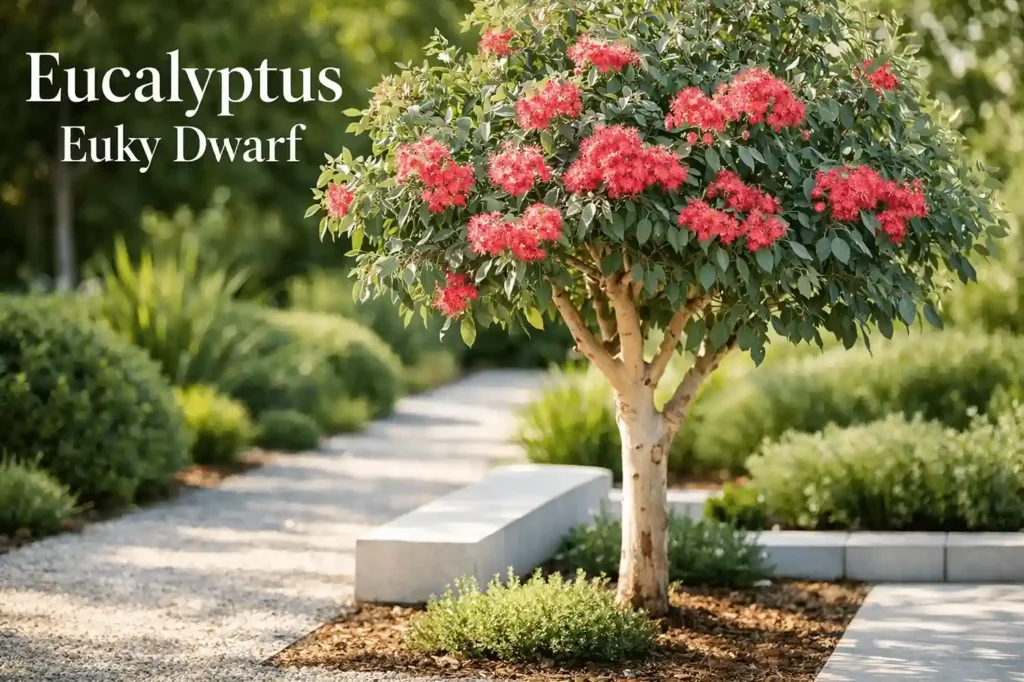
Eucalyptus euky dwarf is a compact Australian flowering gum commonly treated as a dwarf form of Eucalyptus leucoxylon. It is widely valued for its manageable size, smooth shedding bark, grey-green foliage, and attractive seasonal blooms. This plant is especially popular in ornamental landscaping because it offers the visual appeal of a eucalyptus tree without the excessive height or aggressive spread of standard forms. It is ideal for small gardens, streetscapes, and wildlife-friendly planting designs where controlled growth and year-round structure are important.
Quick Summary
- Euky dwarf is a compact flowering gum suitable for small gardens and urban landscapes.
- It produces pink, red, or cream flowers depending on conditions and genetics.
- The plant typically forms a small to medium tree with a rounded canopy.
- It thrives in full sun and well-drained soils with moderate climate tolerance.
- It is commonly associated with Eucalyptus leucoxylon ‘Euky Dwarf’ and dwarf yellow gum names.
What Eucalyptus Euky Dwarf Is
Eucalyptus euky dwarf is a cultivated dwarf form of Eucalyptus leucoxylon, developed for smaller garden spaces while maintaining the ornamental qualities of flowering gums. It is commonly referred to as “euky dwarf tree” or “dwarf yellow gum” in nurseries and landscaping contexts. The plant is valued for its compact structure, attractive bark, and vibrant flower display. Eucalyptus belongs to one of the most widely studied plant groups in Australia. Learn more about the genus on Wikipedia.
Botanical classification
Euky dwarf belongs to the genus Eucalyptus and is classified under the species Eucalyptus leucoxylon. The name “Euky Dwarf” represents a cultivar selection rather than a separate species. In botanical naming, cultivar names are written in single quotes, such as Eucalyptus leucoxylon ‘Euky Dwarf’. This indicates a selected form bred or chosen for specific traits like reduced height and improved ornamental value.
Common names and synonyms
This plant is known by several common names including dwarf yellow gum, dwarf gum tree, and euky dwarf gum. These names vary depending on region and nursery labeling practices. Despite the differences in naming, they typically refer to the same compact cultivar of Eucalyptus leucoxylon.
Size, Height, and Form
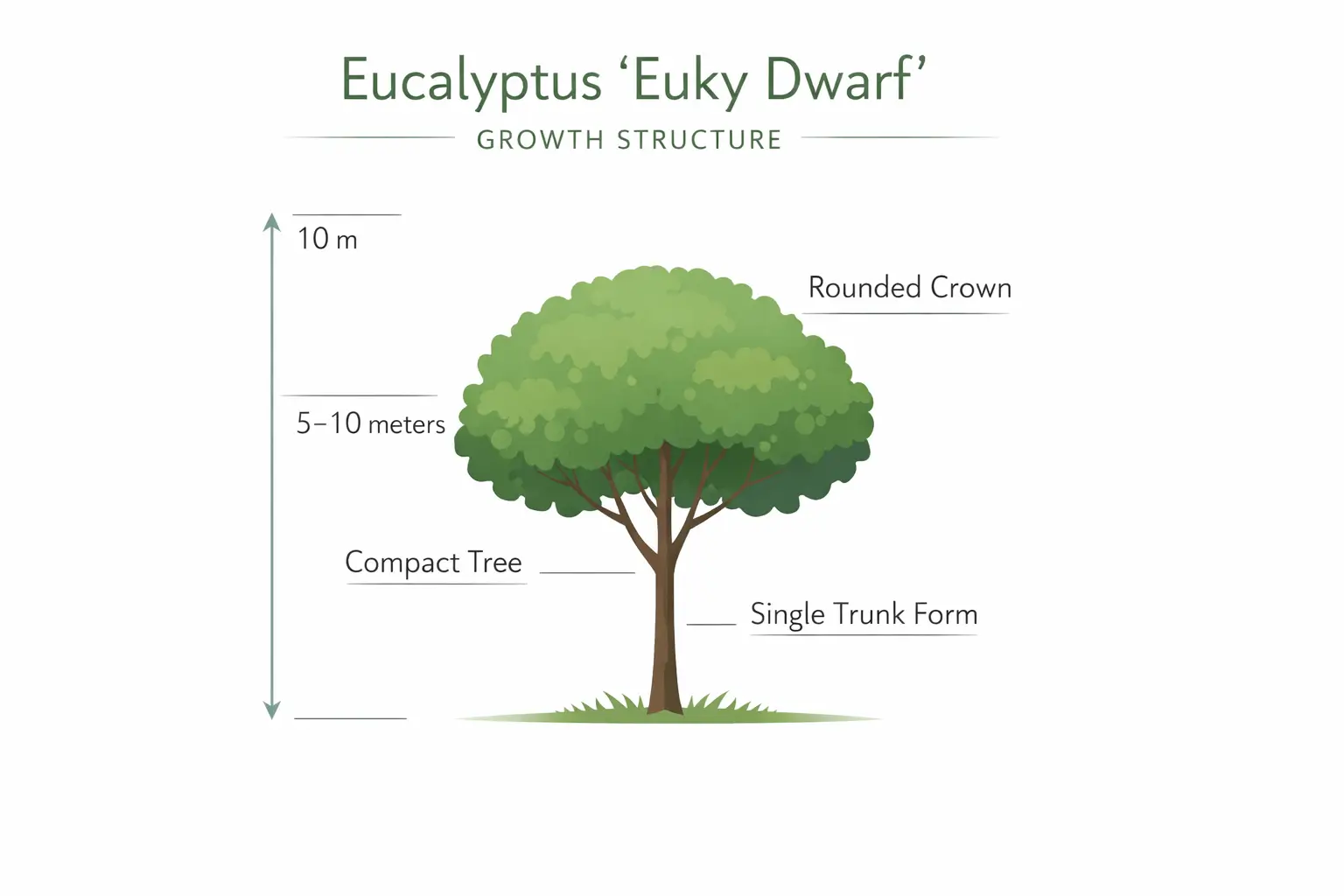
Euky dwarf is classified as a small to medium ornamental eucalyptus tree. Its compact growth habit makes it suitable for residential landscapes where space is limited.
Typical mature size
The mature height of eucalyptus euky dwarf generally ranges from 5 to 10 meters depending on soil quality, climate, and maintenance. In many garden settings, it commonly stabilizes around 6 meters tall with a moderate spread. However, favorable conditions such as deep soil and consistent moisture may result in slightly larger growth.
Growth habit and canopy
This cultivar develops a rounded canopy with a relatively dense branching structure. It usually forms a single trunk and produces a balanced crown that offers light shade. Its compact branching makes it suitable for shaping and controlled pruning in urban landscapes.
Flowers, Bark, and Foliage
Euky dwarf is highly valued for its ornamental features, particularly its flowers and smooth bark, which provide year-round visual interest.
Flower color and season
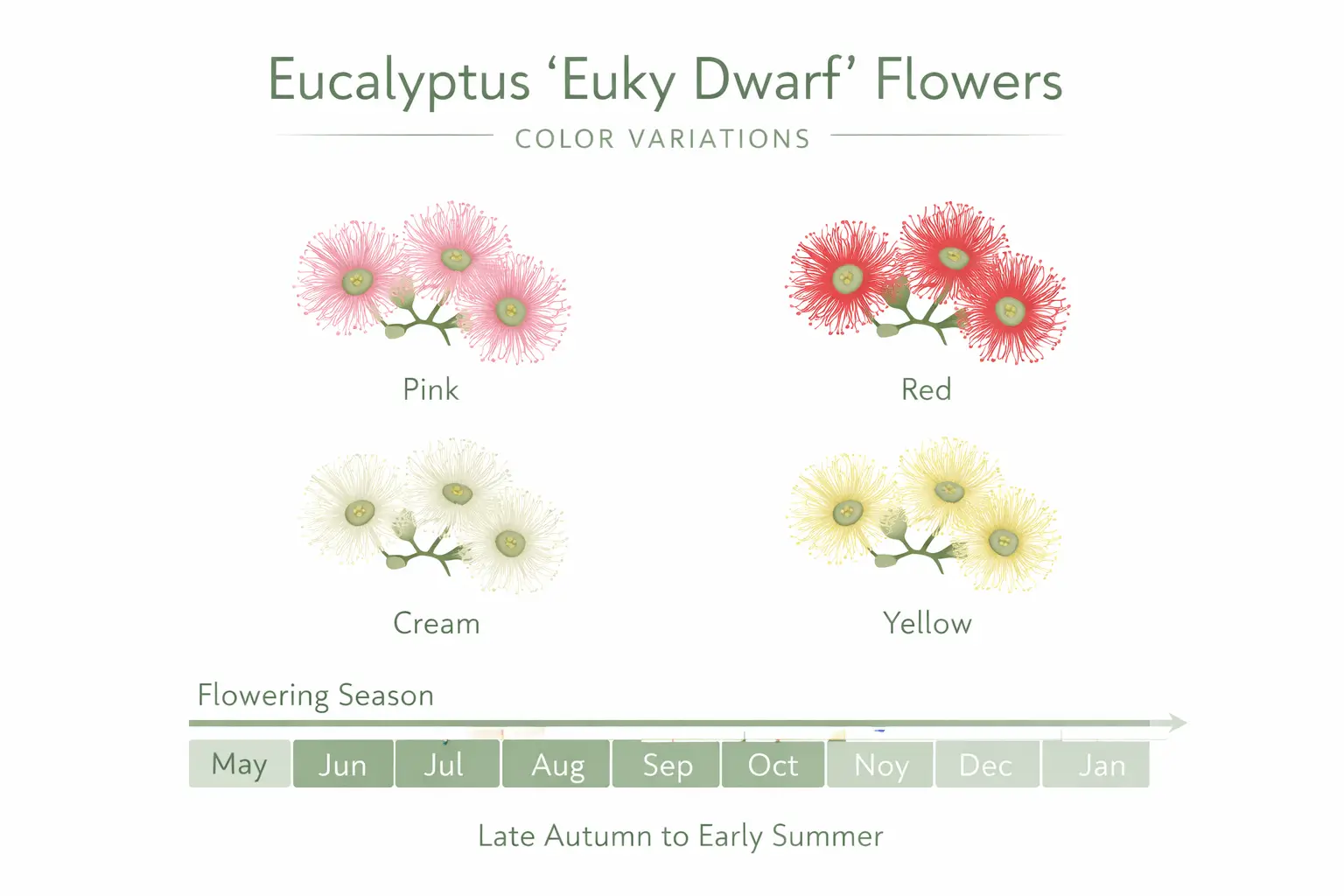
The plant produces clusters of flowers in shades of pink, red, yellow, or cream depending on genetic variation and environmental conditions. Flowering typically occurs from late autumn through early summer, making it an extended seasonal bloomer compared to many ornamental trees.
Bark and leaves
The bark of eucalyptus euky dwarf is smooth and sheds in patches, revealing lighter layers underneath. Its foliage is grey-green to light green, with lance-shaped leaves that remain evergreen throughout the year. These features contribute to its strong aesthetic appeal even outside the flowering season.
Growing Conditions
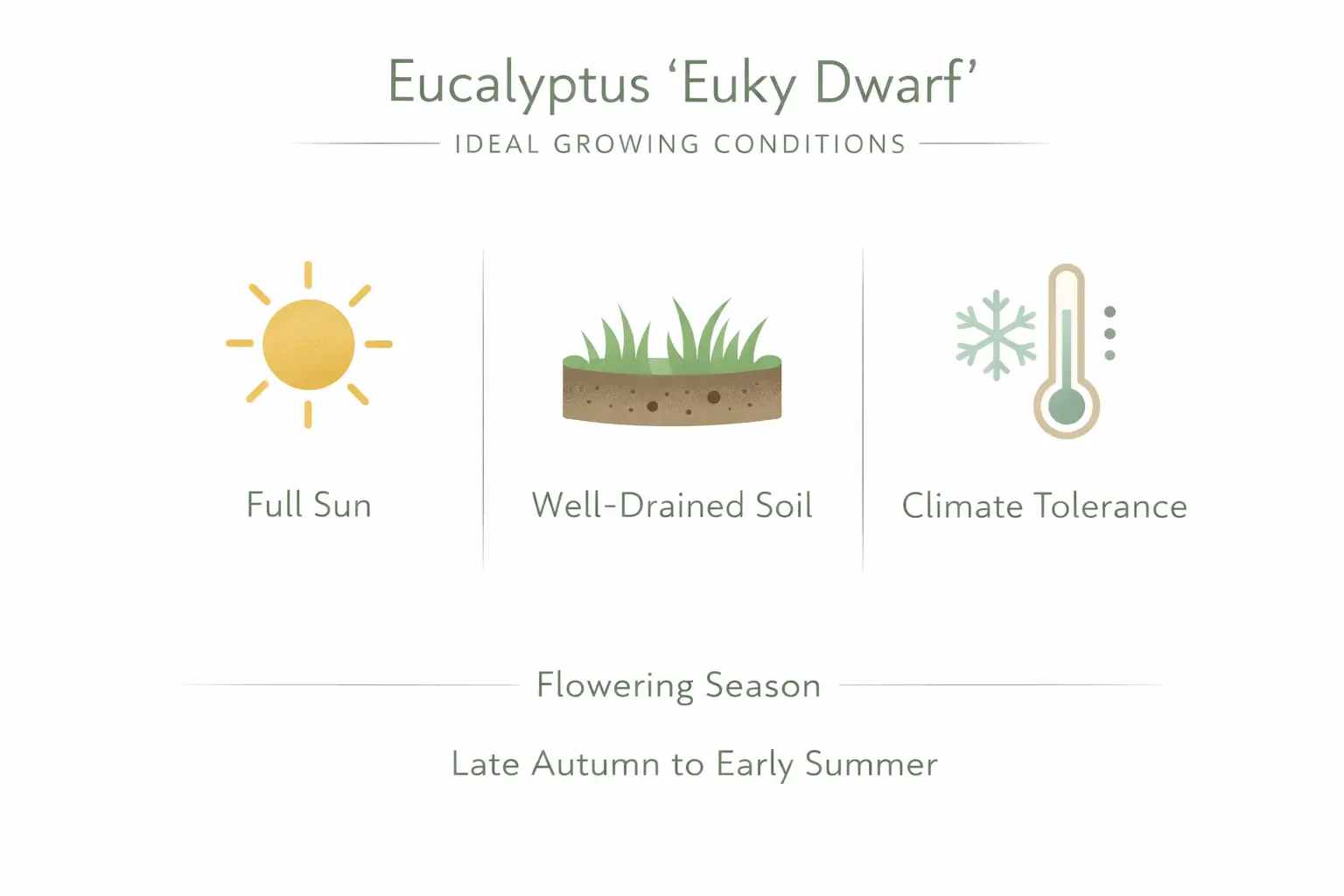
Euky dwarf grows best in conditions that mimic its native Australian environment, especially in sunny and well-drained locations.
Light and exposure
Full sun exposure is essential for strong flowering and compact growth. Partial shade may be tolerated, but it often reduces flower production and can lead to a looser growth habit with fewer blooms.
Soil and drainage
This plant prefers well-drained soils and adapts well to sandy, loamy, and even clay-based soils if drainage is adequate. Poorly drained soils can lead to root stress and reduced vigor. It can also tolerate limestone-based soils in many regions.
Climate tolerance
Euky dwarf performs well in temperate, coastal, and semi-arid climates. It has moderate frost tolerance once established and can adapt to a range of environmental conditions, making it suitable for various regions in Australia and similar climates worldwide.
Care Guide
Proper care ensures healthy establishment and long-term structural balance in eucalyptus euky dwarf.
Watering and establishment
Young plants require regular watering during their first 1–2 years to develop strong root systems. Once established, the tree becomes drought tolerant and requires minimal supplemental watering, except during prolonged dry periods.
Pruning and shaping
Pruning is useful for shaping structure, removing lower branches, and maintaining clearance. Light formative pruning during early growth helps establish a strong central trunk and balanced canopy.
Fertility and mulching
Moderate feeding with low-phosphorus fertilizer supports healthy growth. Mulching around the base helps conserve soil moisture and regulate temperature, but mulch should not touch the trunk directly.
Uses in Landscaping
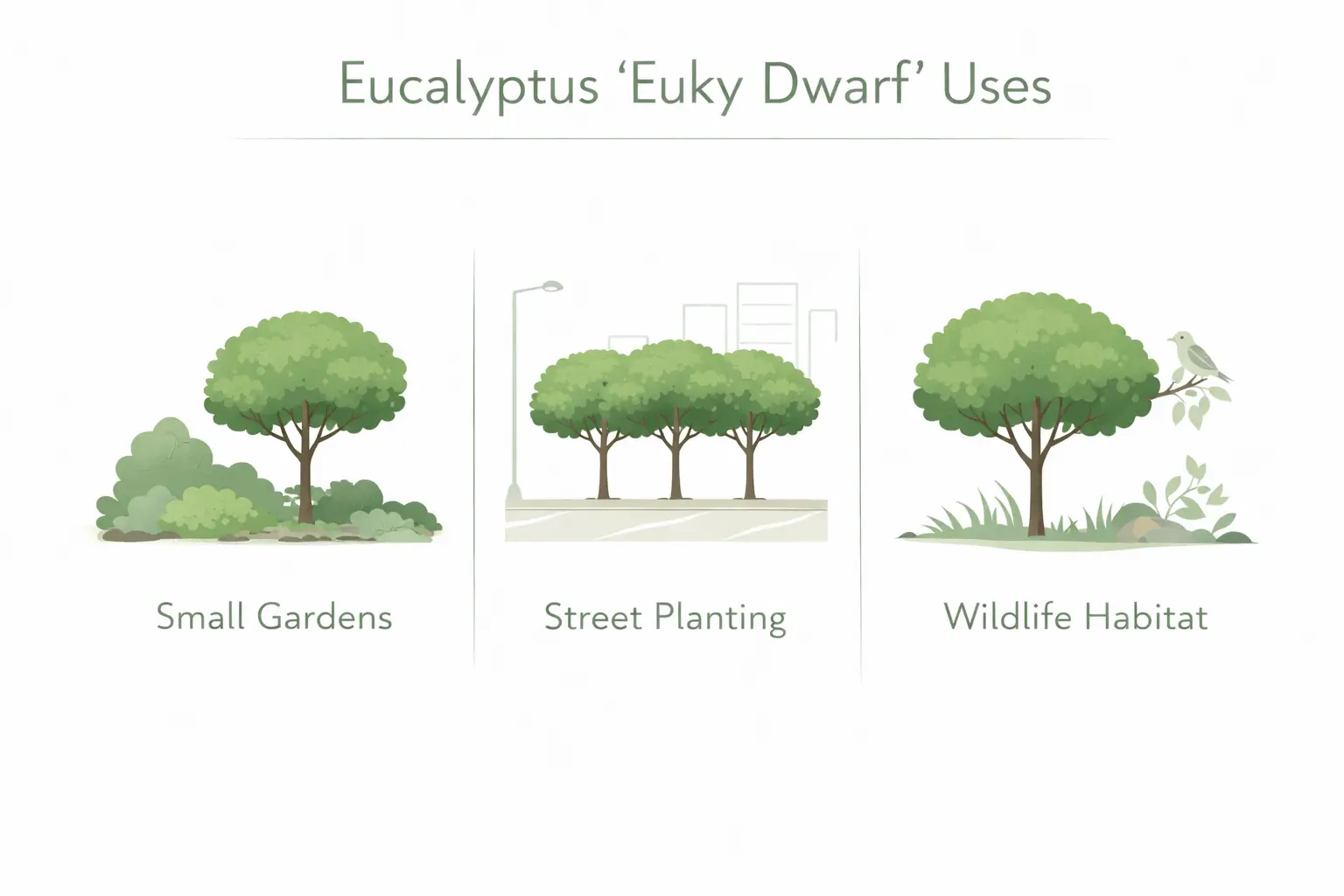
Euky dwarf is widely used in ornamental and functional landscape designs due to its compact size and attractive features.
Small gardens and streetscapes
Its controlled height makes it suitable for small gardens, driveways, and street planting. It can be placed near paths or open spaces where overhead clearance is limited. Euky dwarf is often used alongside other compact Australian landscaping species such as Fast Growing Australian Native Trees: 8+ Smart Picks, Best Evergreen Trees Australia: Proven Small, Fast-Growing & Drought-Tolerant, and Fast Growing Trees for Privacy: Ultimate Guide for Quick Screening, especially in designs focused on screening, structure, and low-maintenance greenery.
Wildlife and habitat value
The flowers attract bees, birds, and other pollinators, making it an excellent choice for biodiversity-friendly gardens. Flowering gums are commonly used in ecological landscaping for this reason.
In wildlife-focused gardens, it is commonly paired with habitat-supporting plants like 7+ Australian Native Plants That Repel Mosquitoes, Banksia ericifolia Little Eric: 7+ Proven Care Secrets Guide, and 7+ Essential Banksia Varieties: Types, Colors & Care Guide, which together help attract pollinators and increase biodiversity.
Ornamental value
The combination of evergreen foliage, colorful flowers, and smooth bark ensures year-round visual appeal. This makes it a popular feature tree in modern landscape design.
Varieties and Related Plants
Euky dwarf is closely related to other forms of Eucalyptus leucoxylon and similar dwarf flowering gums.
Euky Dwarf vs similar flowering gums
| Type | Height | Flower Color | Growth Habit |
| Euky Dwarf | 5–10 m | Pink, red, cream | Compact, rounded |
| Eucalyptus leucoxylon rosea dwarf | 6–12 m | Pink/red | Slightly larger form |
| Standard leucoxylon | 10–20 m | Cream/yellow | Tall forest tree |
Euky Dwarf vs standard yellow gum
The dwarf cultivar is significantly smaller and more suitable for residential landscapes, while the standard yellow gum grows much taller and requires more space. Euky dwarf is specifically selected for controlled growth and ornamental use.
Common Problems and Mistakes
Poor flowering
Insufficient sunlight is the most common cause of reduced flowering. Trees planted in shaded areas often produce fewer blooms. Relocating or improving sun exposure is the best corrective action.
Waterlogging and root stress
Poor drainage can lead to root decline and fungal issues. Improving soil structure and avoiding overwatering helps prevent long-term damage.
Slow or awkward growth
Competing vegetation, poor pruning, or unsuitable soil conditions can cause irregular growth. Early structural pruning and proper site selection reduce these issues.
Buying and Plant Selection
What to look for in a healthy plant
A healthy eucalyptus euky dwarf should have firm stems, vibrant foliage, and a well-developed root system. Avoid plants that appear root-bound, wilted, or discolored.
Nursery labels and naming
The same plant may be labeled differently across nurseries due to marketing practices. Names like “Euky Dwarf,” “dwarf yellow gum,” and Eucalyptus leucoxylon ‘Euky Dwarf’ generally refer to the same cultivar.
Conclusion
Eucalyptus euky dwarf is a compact flowering gum that combines ornamental beauty with practical landscape versatility. Its controlled size, attractive blooms, and adaptable nature make it suitable for a wide range of garden styles. With proper sunlight, well-drained soil, and minimal maintenance, it performs reliably as a feature tree in both residential and public landscapes. For larger landscape planning, Euky dwarf also complements structured planting designs seen in 8+ Smart Trees to Plant Along Driveway for Perfect Shade and 7+ Smart Trees with Wide Canopy for Shade & Cooling, especially when balancing shade and ornamental flowering features.
FAQs
1. How big does Eucalyptus euky dwarf get?
It typically grows between 5 to 10 meters tall, depending on conditions such as soil quality, water availability, and climate.
2. Is dwarf yellow gum the same as Eucalyptus leucoxylon ‘Euky Dwarf’?
Yes, dwarf yellow gum is a common name for the cultivar Eucalyptus leucoxylon ‘Euky Dwarf’, though naming may vary by nursery.
3. Does Euky dwarf need full sun?
Yes, full sun is preferred for optimal flowering and compact growth, while partial shade may reduce bloom production.
4. What soil is best for Euky dwarf?
Well-drained soil is essential. It tolerates sandy, loamy, and even clay soils if drainage is adequate.
5. When does Euky dwarf flower?
It typically flowers from late autumn through early summer, depending on local climate conditions.



One Response