
Introduction
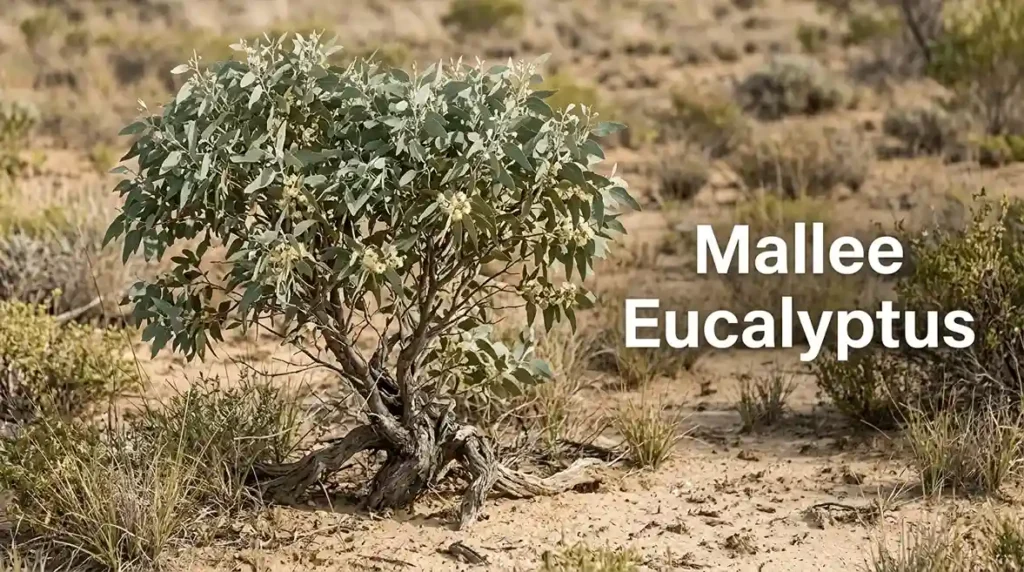
Mallee eucalyptus is a growth form of eucalyptus that typically develops multiple stems from a woody underground lignotuber instead of growing as one tall, single trunk. Mallee eucalypts are common in dry Australian landscapes, where they survive drought, fire, poor soils, and harsh seasonal conditions. The term “mallee” can describe both the eucalyptus mallee plant form and the dry vegetation communities where these plants grow. In gardens, mallee gums are valued for resilience, flowers, compact structure, aromatic foliage, and ornamental use in smaller landscapes. This guide explains mallee trees, common varieties, growth habits, care needs, comparisons, and common problems.
Quick Summary
- Mallee eucalyptus refers to eucalyptus species or forms that grow with multiple stems from a woody underground base.
- Many mallee eucalypts stay smaller than typical eucalyptus trees, making them useful as a small eucalyptus tree or dwarf eucalyptus tree in suitable gardens.
- Popular examples include rose mallee, blue mallee eucalyptus, book leaf mallee eucalyptus, and mallee snowgum eucalyptus gregsoniana.
- Mallee eucalyptus plants usually need full sun, well-drained soil, and careful watering when young.
- Species selection matters because mature size, flower color, cold tolerance, and climate suitability vary widely.
What Is a Mallee Eucalyptus?
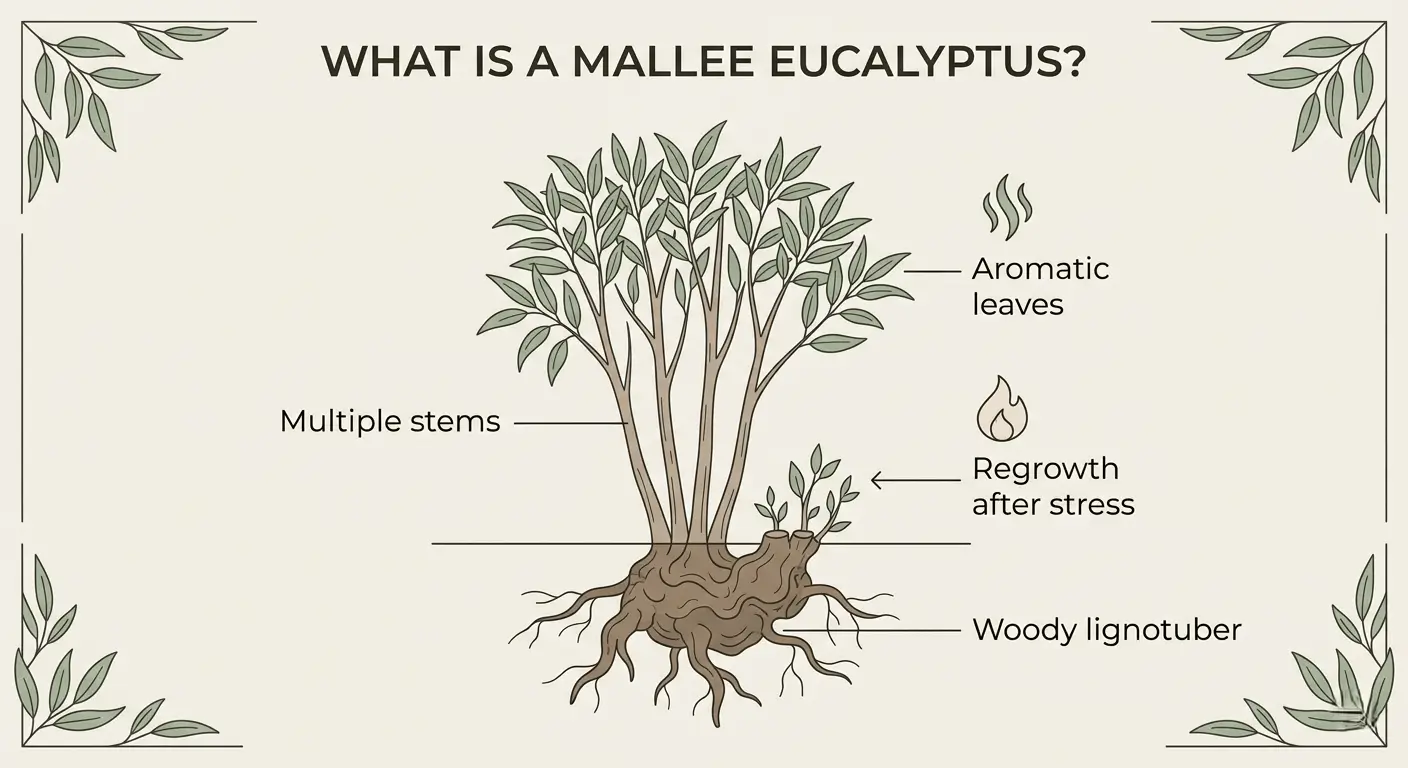
A mallee eucalyptus is a eucalyptus plant that usually grows as several stems from a woody underground lignotuber rather than as one dominant trunk. This structure helps the plant regrow after fire, drought, pruning, or physical damage, making mallee eucalypts especially adapted to dry and disturbance-prone landscapes. For a broader botanical reference, Wikipedia’s page on Mallee (habit) explains mallee as a multi-stemmed growth form commonly associated with eucalypts.
The answer to “what is a mallee” or “what is mallee” depends on context. In botany and horticulture, mallee often describes a growth habit found in some eucalyptus species. In Australian geography and ecology, “mallee” can also describe vegetation communities dominated by these multi-stemmed eucalyptus plants.
A mallee eucalyptus tree is often shorter, bushier, and more spreading than tall forest eucalyptus trees. However, size varies by species. Some mallee eucalyptus plants remain shrub-like, while others become small or medium mallee trees. Common names such as mallee gums, mallee eucalyptus plant, and mallee eucalyptus tree are often used for these multi-stemmed gum trees.
Mallee Form vs Single-Trunk Eucalyptus Form
A mallee form eucalyptus grows with multiple stems from a lignotuber, while a single-trunk eucalyptus usually develops one main vertical trunk and a taller canopy. Not every eucalyptus is a mallee, and not every small eucalyptus tree is automatically a mallee.
Key differences include:
- Mallee form: Multiple stems, woody underground base, often shrub-like or spreading.
- Tree form: One dominant trunk, taller canopy, and more vertical structure.
- Environmental influence: Drought, fire, poor soil, pruning, and genetics can affect whether a eucalyptus develops a mallee-like structure.
- Regrowth response: Mallee plants often reshoot strongly from the lignotuber after stress or damage.
This distinction is important in landscaping because a compact eucalyptus may still have a tree form, while a mallee eucalyptus may naturally produce a broader, multi-stemmed shape.
Mallee vs Eucalyptus: What Is the Difference?
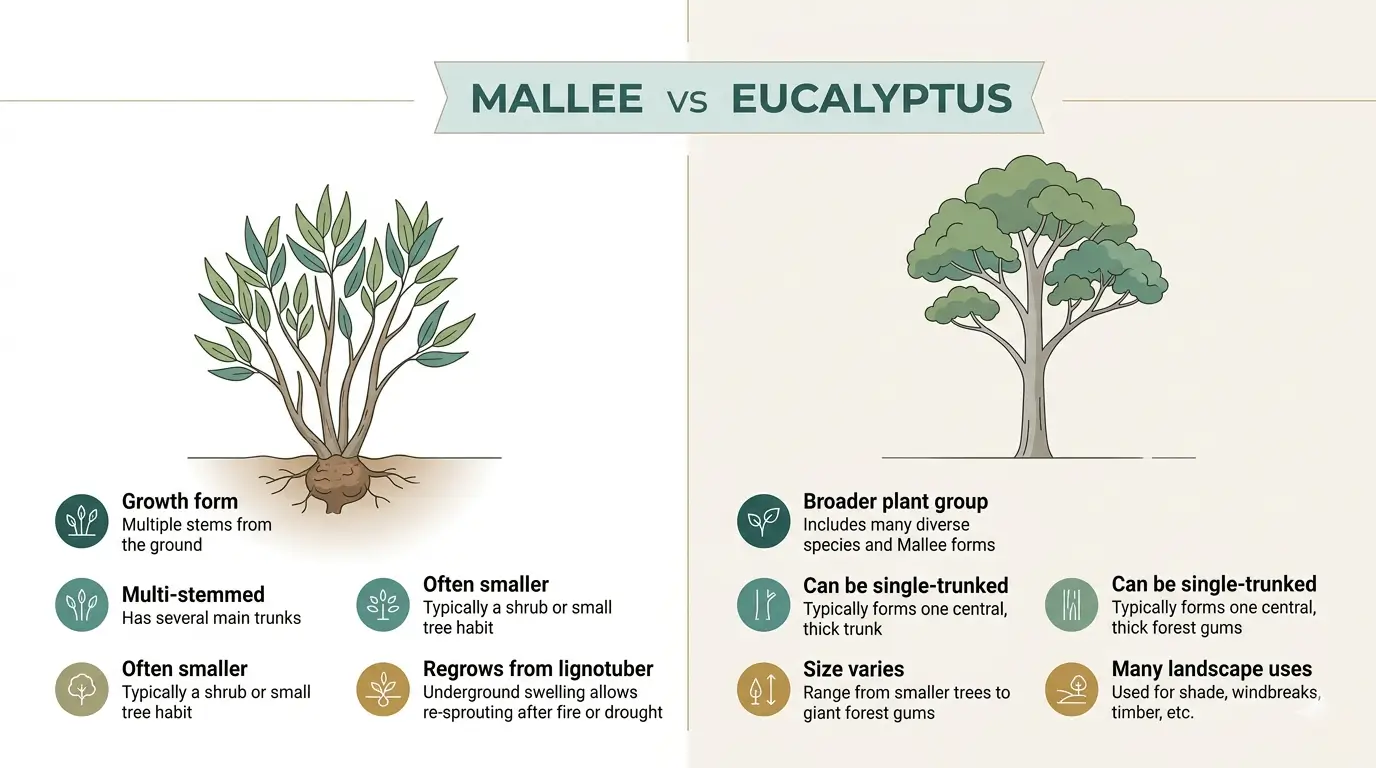
Mallee describes a growth habit or vegetation type, while eucalyptus is the broader plant group that includes many gum trees, shrubs, and woodland species. In simple terms, a mallee can be a type of eucalyptus form, but eucalyptus includes many plants that are not mallees.
| Feature | Mallee | Eucalyptus |
| Meaning | Growth form or vegetation type | Broad group of gum trees |
| Structure | Usually multi-stemmed | Can be single-trunked or multi-stemmed |
| Size | Often smaller or shrub-like | Ranges from shrubs to giant trees |
| Regrowth | Often from lignotuber | Depends on species |
| Common use | Dry gardens, habitat planting, ornamental shrubs | Shade trees, timber, oil, landscaping |
The phrase “mallee vs eucalyptus” can be misleading because mallee is not separate from eucalyptus. It is more accurate to say that some eucalyptus species grow in a mallee form.
Main Characteristics of Mallee Eucalyptus Plants
Mallee eucalyptus plants are identified by their multi-stemmed growth, woody lignotuber, aromatic foliage, and strong adaptation to dry or nutrient-poor environments. These traits help them survive in landscapes where many softer, moisture-loving plants struggle.
Common characteristics include:
- Multi-stemmed growth: Several stems arise from the base rather than one main trunk.
- Woody underground lignotuber: This storage structure supports regrowth after disturbance.
- Aromatic eucalyptus leaves: Leaves often contain fragrant oils.
- Gum bark variation: Bark may be smooth, rough, fibrous, flaky, or box-like depending on species.
- Flower buds and capsules: Buds, flowers, and woody seed capsules are useful for identification.
- Nectar-rich flowers: Many species support birds, bees, and native pollinators.
- Drought tolerance: Many mallee eucalypts tolerate dry conditions once established.
- Regrowth after damage: The lignotuber allows recovery after pruning, fire, drought, or browsing.
These features make mallee eucalyptus species useful in drought-tolerant gardens, native plantings, and wildlife-friendly landscapes.
Mallee Tree Flower Features
A mallee tree flower is usually nectar-rich and attractive to birds, bees, and native pollinators. Flower color varies by species and may include cream, white, pink, red, or yellow, making some mallee eucalypts valuable as ornamental flowering shrubs or small trees.
Important flower features include:
- Bud shape: Flower buds help identify many eucalyptus species.
- Flowering season: Timing varies by climate, rainfall, and species.
- Nectar value: Flowers often support wildlife and pollinator activity.
- Woody capsules: Flowers are followed by hard seed capsules that can also aid identification.
Some species are grown mainly for foliage, while others, such as rose mallee eucalyptus rhodantha, are valued for large, colorful flowers.
Common Mallee Eucalyptus Varieties and Species
Mallee eucalyptus varieties include both true mallee species and compact eucalyptus types discussed alongside them for garden use. Botanical names are usually more precise than common names because common names can vary by region, nursery, and reference source.
| Common Name | Botanical Name | Notable Feature | Typical Use |
| Rose mallee | Eucalyptus rhodantha | Large rose-red flowers | Ornamental gardens |
| Blue mallee eucalyptus | Often associated with blue-leaved mallee species | Bluish foliage, aromatic leaves | Dry gardens, foliage interest |
| Book leaf mallee eucalyptus | Commonly linked with compact, decorative foliage types | Distinctive leaf arrangement | Ornamental planting |
| Webster’s mallee eucalyptus | Species name varies by reference | Decorative mallee habit | Collector gardens |
| Dainty mallee eucalyptus | Compact ornamental mallee type | Smaller habit | Small landscapes |
| Mallee box | Eucalyptus porosa | Box-like bark and hardy form | Dry landscapes |
| Mallee snowgum | Eucalyptus gregsoniana | Cold-tolerant snow gum relative | Cooler gardens |
| Plunkett mallee | Eucalyptus curtisii | White flowers and narrow foliage | Ornamental screening |
| Heart leaf mallee eucalyptus | Heart-shaped juvenile foliage | Decorative foliage | Feature planting |
A mallee eucalyptus species list should always be checked against local climate, mature size, and botanical references because some common names are used inconsistently.
Rose Mallee and Eucalyptus Rhodantha
Rose mallee, botanically known as Eucalyptus rhodantha, is one of the best-known ornamental mallee eucalyptus plants because of its large, colorful flowers. The name eucalyptus rhodantha rose mallee is often used for plants grown as feature shrubs or small trees in dry, open gardens.
Rose mallee eucalyptus rhodantha is valued for:
- Large rose-red flowers.
- Strong ornamental impact.
- Pollinator attraction.
- Multi-stemmed mallee form.
- Suitability as a feature shrub in the right climate.
It generally needs excellent drainage, full sun, and a suitable dry or Mediterranean-type climate. Poor drainage, heavy humidity, or unsuitable cold conditions can reduce plant health. Like many mallee eucalypts, rose mallee should be chosen for the site rather than forced into conditions that do not match its natural preferences.
Eucalyptus Luehmanniana and Other Compact Eucalyptus Types
Eucalyptus luehmanniana is often discussed alongside compact eucalyptus and mallee-style plants because of its ornamental value and potential use in gardens. However, gardeners should distinguish between a true mallee form and a eucalyptus that is simply compact, slow-growing, or suitable for smaller landscapes.
Some eucalyptus species are included in small-garden discussions because they offer:
- Decorative foliage.
- Manageable mature size.
- Attractive flowers or bark.
- Screening potential.
- Suitability for dry or low-water gardens.
The key point is that “compact eucalyptus” and “mallee eucalyptus” are related ideas but not always the same. A plant may be small without being a true mallee, and a mallee may still become too large for a restricted urban site.
Lemon Scented Gum Compared With Mallee Eucalyptus
Lemon scented gum is usually known as a taller, more upright eucalyptus tree, while many mallee eucalypts are multi-stemmed, bushier, and better suited to dry gardens or smaller landscapes. This comparison helps gardeners avoid choosing a tree that may outgrow the available space.
| Plant Type | Growth Habit | Best For | Caution |
| Mallee eucalyptus | Multi-stemmed, often compact | Dry gardens, smaller landscapes | Needs drainage and sun |
| Lemon scented gum | Often taller and upright | Large landscapes, scent, shade | Can outgrow small gardens |
| Dwarf eucalyptus | Selected for smaller size | Courtyards, compact gardens | Size still varies by species |
Lemon scented gum can be beautiful in large landscapes, but it is usually not the safest choice for small gardens, narrow courtyards, or sites close to buildings. Mallee eucalyptus or dwarf eucalyptus options may be more suitable where mature size and root space are limited.
Dwarf Eucalyptus and Small Mallee Eucalyptus Options
Dwarf eucalyptus refers to smaller-growing eucalyptus selections, while small mallee eucalyptus refers to mallee-form plants that naturally stay more compact than large gum trees. “Dwarf” is relative because many eucalyptus plants can still grow taller than expected over time.
Important selection points include:
- Choose naturally compact species rather than relying only on pruning.
- Check mature height and spread before planting.
- Match the plant to climate, soil, and available root space.
- Understand that containers may restrict growth but do not make every eucalyptus permanently dwarf.
- Use pruning as a management tool, not as the only way to keep a large tree small.
A dwarf eucalyptus tree, dwarf gum tree, or small eucalyptus tree may still need significant space. Mallee forms often suit small gardens better than large single-trunk gum trees, but species choice remains essential. For readers comparing compact eucalyptus choices, the Eucalyptus Euky Dwarf: 7+ Proven Facts & Easy Care Guide can help explain how dwarf eucalyptus selections differ from naturally multi-stemmed mallee forms.
Small Eucalyptus Tree Selection Criteria
A small eucalyptus tree should be selected according to mature size, climate tolerance, soil drainage, root space, wind exposure, and long-term maintenance needs. The best choice is a species that naturally fits the site rather than one that requires constant correction.
Consider these factors before planting:
- Mature height and width: Confirm the likely adult size, not just nursery size.
- Local climate tolerance: Check frost, heat, humidity, and rainfall suitability.
- Flowering value: Choose species with flowers that match ornamental or wildlife goals.
- Root space: Avoid cramped sites near hard surfaces or underground utilities.
- Wind exposure: Multi-stemmed forms may need good early structure.
- Distance from buildings and pipes: Allow enough space for roots and canopy spread.
- Pruning tolerance: Some species respond better to pruning than others.
Good planning prevents the common mistake of planting a eucalyptus that is attractive when young but unsuitable when mature. Gardeners looking for compact flowering alternatives can also compare mallee eucalyptus with the Dwarf Corymbia ficifolia Guide: Easy Growth & Care Tips, especially when choosing small feature trees for ornamental gardens.
Plant Size
Mallee eucalyptus trees vary widely in mature size, from shrub-like plants to small or medium trees. Outdoor plants usually grow larger than container-grown plants because they have more root space, soil volume, and access to natural moisture.
| Growing Situation | Expected Size Pattern | Notes |
| Open ground | Largest mature size | Best root development |
| Large container | More restricted growth | Needs careful watering |
| Dry exposed site | Slower, smaller growth | Stress may limit canopy |
| Rich watered garden | Faster, larger growth | May exceed expected size |
Some mallee eucalyptus plants remain compact and bushy, while others develop into broader mallee trees with multiple strong stems. Indoor growing is generally not ideal for most eucalyptus plants long term. Young plants may be grown temporarily in large containers, but most need outdoor sun, airflow, and root space to remain healthy.
Final size is influenced by:
- Species genetics.
- Soil depth.
- Full sun exposure.
- Water availability.
- Container size.
- Climate and seasonal temperature.
- Wind and drought stress.
Mallee Eucalyptus Growth Rate
Mallee eucalyptus growth rate varies by species, rainfall, soil, temperature, and establishment care. Many mallee eucalypts grow moderately once established, but young plants may grow faster when they receive deep watering, full sun, and suitable soil during the first growing seasons.
Growth usually slows when plants face:
- Drought stress.
- Poor drainage.
- Cold weather.
- Heavy shade.
- Root restriction in containers.
- Unsuitable climate conditions.
- Transplant shock.
Some mallee eucalyptus plants respond quickly after pruning or fire because the lignotuber stores energy for regrowth. However, fast regrowth does not mean every species is fast-growing in normal garden conditions. Site quality and species selection remain the strongest influences. If growth speed is a major factor, compare mallee eucalyptus with other options in Fast Growing Australian Native Trees: 8+ Smart Picks before choosing a long-term landscape tree.
Seasonal Growth Patterns
Mallee eucalyptus growth changes by season, especially in climates with distinct wet, dry, hot, or cold periods. Seasonal plant care should support root establishment while avoiding excessive watering or fertilization.
Typical seasonal patterns include:
- Spring: Active root and shoot growth often increases as temperatures rise.
- Summer: Growth depends on heat tolerance and water availability.
- Autumn: Root development and establishment may continue in mild climates.
- Winter: Growth slows, especially in cold or low-light conditions.
In drought gardening, the goal is not to force constant growth. It is better to help the plant establish a strong root system, then allow it to adapt to natural seasonal rhythms.
Care Guide for Mallee Eucalyptus
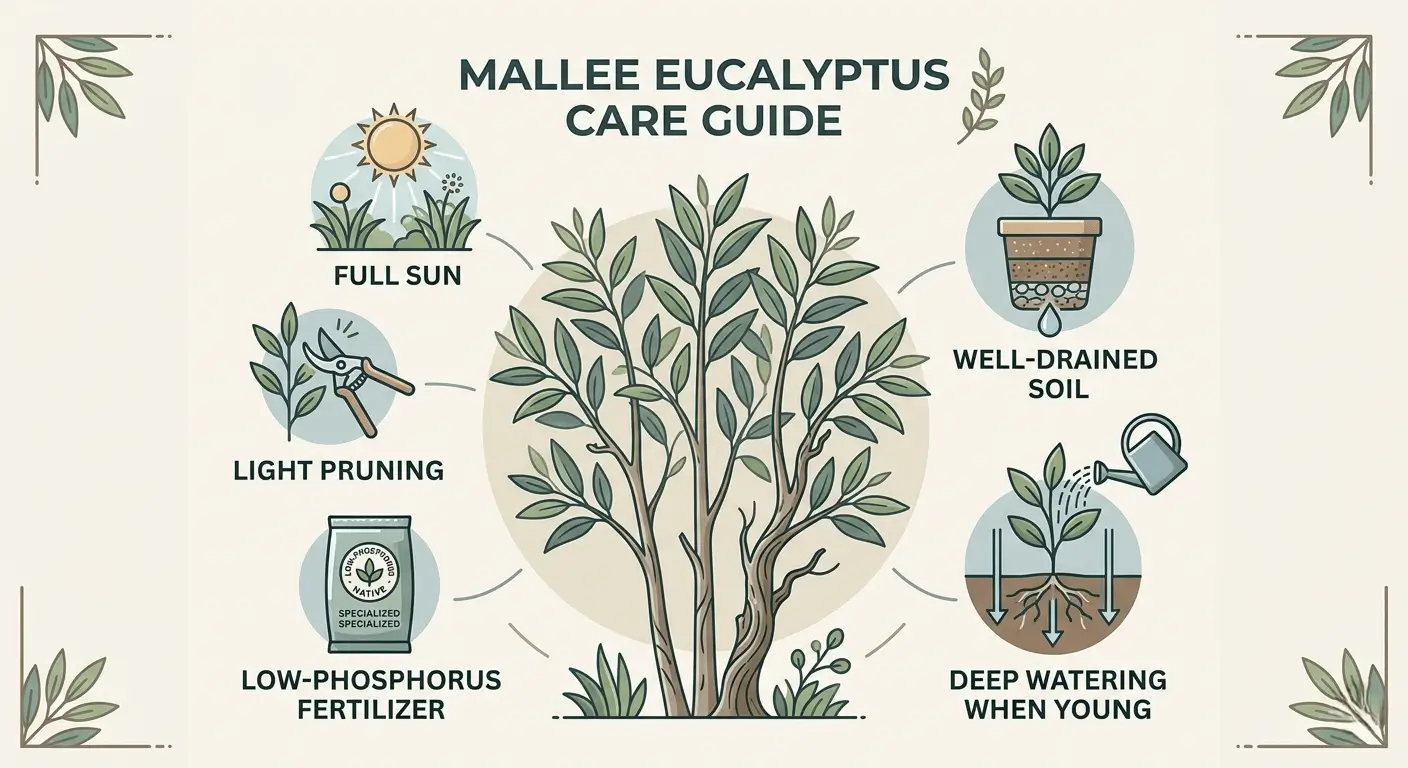
Mallee eucalyptus care focuses on full sun, well-drained soil, careful establishment watering, low to moderate fertility, and pruning that respects the natural multi-stemmed form. Mallee plants are often tough once established, but young plants need thoughtful early care.
Light Requirements
Most mallee eucalyptus plants prefer full sun. Strong light supports compact growth, better flowering, stronger stems, and healthier foliage. Shade can cause weak growth, fewer flowers, thin branching, and poor structure.
For best results, plant mallee eucalyptus where it receives at least several hours of direct sunlight each day. In shaded sites, a different plant may be more suitable.
Watering Needs
Mallee eucalyptus plants need regular deep watering when young, but many become more drought tolerant after establishment. Overwatering is a common problem because constantly wet soil can damage roots and weaken the plant.
Practical watering guidance:
- Water deeply after planting.
- Allow soil to dry slightly between watering.
- Reduce watering once the plant is established.
- Avoid constantly wet soil.
- Increase attention during heatwaves or the first dry season.
A beginner-friendly schedule is to check soil moisture before watering rather than watering automatically. Deep, occasional watering is usually better than frequent shallow watering.
Soil and Drainage
Well-drained soil is essential for many mallee eucalyptus species. Sandy, gravelly, or low-fertility soils often suit mallee plants better than heavy, wet clay. Poor drainage increases the risk of root stress, yellowing leaves, fungal problems, and decline.
If soil stays wet for long periods, improve drainage before planting or choose a species better adapted to the site. Raised planting areas may help in some gardens.
Fertilization Practices
Many Australian native plants, including numerous eucalyptus species, perform best with light feeding and low-phosphorus fertilizer. Heavy feeding can cause weak growth, nutrient imbalance, or excessive leafy growth at the expense of structure.
Use fertilizer carefully:
- Apply only when needed.
- Choose low-phosphorus native plant fertilizer where appropriate.
- Avoid overfeeding young plants.
- Do not use rich fertilizer to compensate for poor site selection.
Healthy soil structure and correct drainage are usually more important than frequent fertilization.
Pruning Considerations
Pruning can shape mallee eucalyptus, remove damaged stems, improve structure, or manage size. However, pruning should respect the plant’s natural mallee form rather than forcing it into a single-trunk shape.
Good pruning practices include:
- Remove dead, damaged, or crossing stems.
- Prune lightly rather than severely when possible.
- Avoid cutting during periods of severe heat or drought.
- Consider natural multi-stemmed balance.
- Do not rely on pruning to keep a large species permanently small.
Some mallee eucalypts reshoot well from the base, but pruning response varies by species and plant health.
Climate Tolerance
Climate tolerance varies widely among mallee eucalyptus species. Some handle heat, drought, and dry winds well, while others may struggle with frost, humidity, coastal exposure, or poorly drained winter soils.
Important climate factors include:
- Heat tolerance.
- Drought resistance.
- Frost sensitivity or cold tolerance.
- Coastal wind and salt exposure.
- Humidity tolerance.
- Rainfall pattern.
Mallee snowgum eucalyptus gregsoniana, for example, is associated with cooler conditions compared with many dry-region mallee species. Always match the plant to the climate rather than assuming all mallee eucalypts behave the same way.
Common Mallee Eucalyptus Problems and How to Fix Them
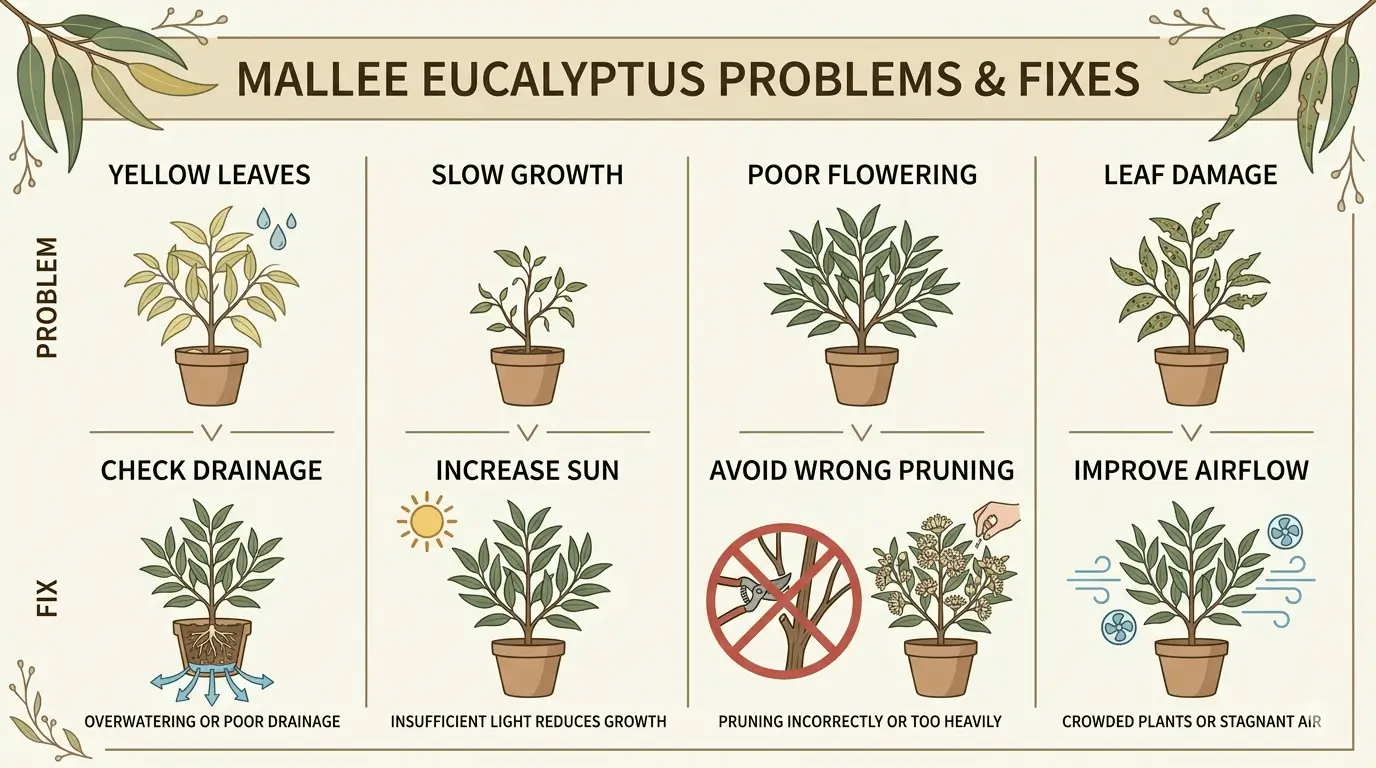
Common mallee eucalyptus problems often come from poor drainage, overwatering, insufficient sun, unsuitable climate, transplant stress, or incorrect species selection. Most issues are easier to prevent through proper siting than to fix after the plant is stressed.
Leaves Turning Yellow
Mallee eucalyptus leaves may turn yellow because of overwatering, poor drainage, nutrient imbalance, transplant shock, cold stress, or root damage. The first step is to check soil moisture and drainage before adding fertilizer.
Fixes and prevention:
- Check soil moisture before watering.
- Improve drainage if soil stays wet.
- Avoid high-phosphorus fertilizer unless appropriate for the species and soil.
- Give newly planted eucalyptus time to establish.
- Protect young plants from severe cold where needed.
- Avoid waterlogged containers.
Yellow leaves are often a root-zone warning sign. Correct watering and drainage usually matter more than quick feeding.
Slow Growth
Slow growth can result from insufficient sun, compacted soil, root restriction, drought stress, transplant shock, unsuitable climate, or poor establishment care. A mallee eucalyptus growing slowly is not always unhealthy, but persistent weak growth needs investigation.
To improve growth:
- Move container plants into stronger light if suitable.
- Water deeply during establishment.
- Avoid compacted or waterlogged soil.
- Check whether the species suits the local climate.
- Give young plants time to recover from transplanting.
- Use only appropriate low-phosphorus fertilizer if nutrients are lacking.
Growth rate should be judged against the species, season, and site conditions.
Poor Flowering
Poor flowering in a mallee tree may be caused by plant immaturity, too much shade, incorrect pruning timing, drought stress, overwatering, or natural species differences. Some mallee eucalypts flower heavily, while others are grown more for foliage, form, or resilience.
Possible fixes include:
- Increase sun exposure where possible.
- Avoid pruning off developing flower buds.
- Allow young plants to mature.
- Reduce stress from poor watering practices.
- Choose species known for ornamental flowers if flowering is a priority.
A weak mallee tree flower display does not always mean the plant is unhealthy; it may simply be too young or not a heavy-flowering species.
Pests and Leaf Damage
Mallee eucalyptus may experience leaf-chewing insects, scale, psyllids, or fungal stress, especially when plants are weakened by poor siting or unsuitable climate. Healthy plants in full sun with good airflow are usually more resilient.
Prevention strategies include:
- Maintain good spacing and airflow.
- Avoid overwatering.
- Remove heavily damaged small branches where appropriate.
- Monitor young plants regularly.
- Choose climate-suitable species.
- Avoid excessive nitrogen fertilizer that encourages soft growth.
Pest pressure varies by region, so local gardening or horticultural references are useful for accurate diagnosis.
Beginner Mistakes When Growing Mallee Eucalyptus
Beginner mistakes with mallee eucalyptus usually involve choosing the wrong species, underestimating mature size, or treating a dry-adapted plant like a moisture-loving garden shrub. These mistakes can lead to poor growth, yellow leaves, weak structure, or future space problems.
Common mistakes include:
- Choosing a species too large for the space.
- Assuming all dwarf eucalyptus trees stay tiny.
- Planting in poorly drained soil.
- Overwatering established plants.
- Pruning too aggressively or at the wrong time.
- Ignoring local frost, humidity, or heat limits.
- Planting too close to paving, foundations, walls, or pipes.
- Buying by common name without checking the botanical name.
The best approach is to choose a species that naturally fits the garden’s climate, soil, and available space.
Environmental Limitations of Mallee Eucalyptus
Mallee eucalyptus may not be suitable for every garden because species vary in humidity tolerance, cold hardiness, root behavior, drainage needs, and mature size. Even compact mallee forms can become unsuitable if planted in the wrong environment.
Limitations to consider include:
- Some species dislike humid climates.
- Poor drainage can cause root problems.
- Cold tolerance varies widely.
- Large root systems may be unsuitable near foundations, paving, or pipes.
- Some species may be restricted, invasive, or unsuitable in certain regions.
- Heavy soils may need drainage improvement.
- Small urban gardens may not provide enough root or canopy space.
Responsible planting means checking local regulations, climate suitability, and mature growth before choosing a mallee gum tree.
Mallee Eucalyptus in Landscaping and Garden Design
Mallee eucalyptus works well in landscaping when used as a feature shrub, small eucalyptus tree, drought-tolerant structure plant, wildlife planting, informal screen, or foliage contrast. Its multi-stemmed form gives gardens a natural, sculptural shape.
Common landscape uses include:
- Feature shrub or small tree.
- Dry garden structure.
- Native wildlife planting.
- Windbreak or informal screen.
- Pollinator-friendly planting.
- Silver, blue, or aromatic foliage contrast.
- Background planting for drought-tolerant gardens.
A mallee gum tree or dwarf gum tree can add texture and ecological value, but it should be spaced properly. Even smaller forms need room for stems, roots, and airflow. Because mallee eucalyptus suits dry, open landscapes, it also fits naturally with ideas from 9+ Essential Plants for Dry Areas: Smart Garden Guide.
Best Companion Planting Situations
Mallee eucalyptus pairs best with drought-tolerant shrubs, grasses, and native groundcovers that prefer similar sun, drainage, and low-water conditions. Companion plants should not require constantly moist soil because that can harm many mallee eucalyptus plants.
Good companion planting principles include:
- Choose plants with similar water needs.
- Allow enough spacing for airflow.
- Avoid crowding the root zone.
- Use low-growing plants where root competition is manageable.
- Keep irrigation compatible with eucalyptus needs.
- Select plants suited to dry or native-style gardens.
Suitable companion situations often include native grasses, dryland shrubs, gravel gardens, wildlife borders, and open sunny slopes. The goal is a planting design that supports both visual balance and long-term plant health. For broader planting combinations, pair mallee eucalyptus with ideas from the Easy Low Maintenance Australian Native Garden Guide 7+ Steps.
Propagation: Seeds and Young Mallee Eucalyptus Plants
Many eucalyptus species can be grown from seed, including some mallee eucalyptus species. Mallee eucalyptus seeds require correct identification, suitable freshness, proper temperature, strong light, and careful watering during the seedling stage.
Key propagation points include:
- Many eucalyptus species germinate from seed.
- Freshness and storage conditions affect germination.
- Temperature and light needs may vary by species.
- Seedlings need strong light to avoid weak growth.
- Young plants require careful watering without waterlogging.
- Seedlings should be hardened off before outdoor planting.
- Botanical names matter when growing from seed.
Young mallee eucalyptus plants should be protected from severe stress while establishing. Once planted outdoors, they need deep watering, full sun, and time to develop a strong root system.
Blue Mallee Eucalyptus and Eucalyptus Oil Context
Blue mallee eucalyptus is associated with aromatic foliage and, in some species, essential oil production. However, oil content varies by species, and ornamental mallee eucalyptus plants should not automatically be assumed suitable for oil use.
Important distinctions include:
- Leaves contain aromatic compounds.
- Oil-producing eucalyptus species are not always the same as ornamental selections.
- Oil concentration and composition vary by species.
- Garden plants should be chosen for landscape suitability, not assumed oil value.
- Blue foliage can be ornamental even when oil production is not relevant.
Blue mallee eucalyptus oil belongs in an informational botanical context, not as a reason to grow any unidentified mallee plant. Accurate species identification is essential.
How to Identify a Mallee Eucalyptus
A mallee eucalyptus can often be identified by its multi-stemmed base, woody lignotuber, aromatic leaves, bark texture, flower buds, seed capsules, and local species range. Identification is strongest when several features are considered together.
Look for these clues:
- Multi-stemmed base.
- Woody lignotuber or swollen underground base.
- Aromatic eucalyptus leaves.
- Flower buds and capsules.
- Bark texture and color.
- Leaf color and shape.
- Juvenile versus adult foliage.
- Local species range.
- Flower color and timing.
A mallee gum, mallee gum tree, or related eucalyptus may look similar to other gum trees when young. Mature form, flowers, and fruit capsules often provide better evidence than leaf shape alone.
Identification Limits
Mallee eucalyptus identification can be difficult because many eucalyptus species look similar, especially before flowering. Common names may also vary between nurseries, regions, and botanical references.
For accurate identification, use:
- Botanical names.
- Flower bud shape.
- Fruit capsule shape.
- Bark characteristics.
- Mature plant form.
- Local flora references.
- Regional herbarium or botanical guidance where available.
A plant should not be identified only by size or foliage color. Many eucalyptus species share bluish leaves, aromatic foliage, or smooth bark, so multiple traits are needed.
Conclusion
Mallee eucalyptus is a resilient, multi-stemmed eucalyptus form that grows from a woody underground lignotuber and is strongly associated with dry Australian landscapes. These plants are valued for drought tolerance, regrowth ability, wildlife-friendly flowers, aromatic foliage, and ornamental use in suitable gardens.
The most important takeaway is that species selection matters. Rose mallee, blue mallee eucalyptus, mallee box, mallee snowgum, and other mallee eucalypts differ in size, flower color, growth rate, climate tolerance, and care needs. A mallee eucalyptus can be a good choice for dry gardens, native plantings, and some smaller landscapes, but only when the plant matches the site’s climate, soil drainage, root space, and long-term mature size. For more plant care, growth, and landscaping guides, explore the complete Plants: Benefits and Guides resource.
FAQs
What is a mallee eucalyptus?
A mallee eucalyptus is a eucalyptus plant that usually grows with multiple stems from a woody underground lignotuber. This growth form helps the plant regrow after fire, drought, pruning, or damage. Mallee eucalyptus plants are often shorter and bushier than tall single-trunk gum trees.
Is a mallee eucalyptus the same as a gum tree?
Many mallee eucalyptus plants are also called gum trees, but “gum tree” is a broader and less precise term. Gum tree can refer to many eucalyptus and related species, while mallee specifically describes a multi-stemmed growth habit or mallee vegetation type.
How big does a mallee eucalyptus tree get?
A mallee eucalyptus tree can range from a compact shrub-like plant to a small or medium tree, depending on the species and growing conditions. Open-ground plants usually grow larger than container-grown plants, and rich, watered sites may produce faster and larger growth.
Is mallee eucalyptus good for small gardens?
Mallee eucalyptus can be good for small gardens when a naturally compact species is chosen and enough root space is available. It may not be suitable if the species grows too large, the soil drains poorly, or the site is too close to buildings, paving, or pipes.
What is the difference between dwarf eucalyptus and mallee eucalyptus?
Dwarf eucalyptus refers to smaller size, while mallee eucalyptus refers to multi-stemmed growth from a lignotuber. Some plants may be both compact and mallee-like, but the terms are not identical. A dwarf eucalyptus may still grow as a single-trunk tree.
Does mallee eucalyptus grow fast?
Mallee eucalyptus growth rate varies by species, sun, water, soil, season, and establishment care. Many grow moderately once established. Growth may be faster in young plants with deep watering and full sun, but slower in drought, shade, cold weather, containers, or poor soil.
Why is my mallee eucalyptus not flowering?
A mallee eucalyptus may not flower because it is too young, lacks enough sun, was pruned at the wrong time, is under water stress, or belongs to a species that flowers less heavily. Flowering also depends on climate, season, and overall plant health.
Can mallee eucalyptus grow in pots?
Young or naturally compact mallee eucalyptus plants can grow in large pots for a time, but containers restrict roots and limit long-term size. Good drainage, strong sunlight, careful watering, and eventual size planning are essential. Many eucalyptus plants perform better outdoors in open ground.



One Response