
Introduction
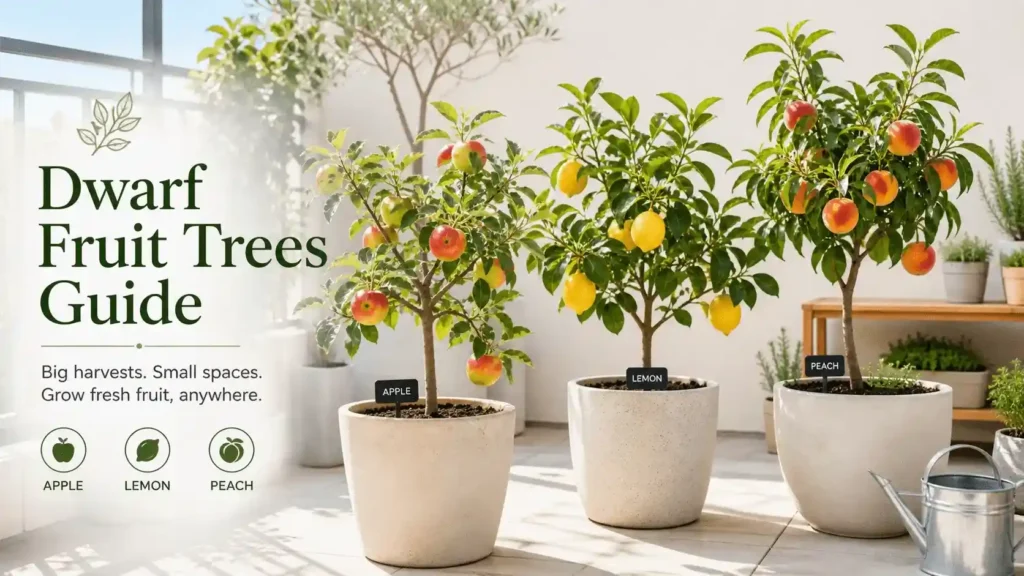
Dwarf fruit trees are compact, space-efficient versions of traditional fruit trees designed to grow in small gardens, patios, or containers. These trees produce full-sized fruit while requiring less space, making them ideal for urban gardening and beginners. Understanding how dwarf fruit trees work, their types, and care requirements helps gardeners maximize yield in limited spaces. With proper care, these trees can thrive indoors or outdoors, offering a practical solution for modern gardening environments where space is limited but productivity is still a priority.
Quick Summary
- Dwarf fruit trees are smaller versions of standard fruit trees that still produce normal-sized fruit.
- They are ideal for pots, balconies, and small gardens due to their compact growth.
- Proper care, including sunlight, watering, and pruning, is essential for healthy fruit production.
- Many varieties are self-pollinating, making them suitable for single-tree planting.
What Are Dwarf Fruit Trees and How Do They Work?
Definition and Key Characteristics
Dwarf fruit trees are small-sized trees created through grafting onto dwarfing rootstocks or through genetic modification that limits their growth. These trees typically grow between 6 to 10 feet tall, making them manageable for small spaces. Dwarf fruit trees are typically created through grafting techniques, a horticultural method explained in detail on Grafting.
Key differences include:
- Dwarf trees: Compact size, easier maintenance
- Semi-dwarf trees: Medium size with higher yield
- Standard trees: Full size, require large space
Tree size affects fruit production and maintenance. Smaller trees produce less total fruit but allow easier pruning, harvesting, and pest control. Dwarfing rootstocks restrict growth while maintaining fruit quality, which is why mini fruit trees and small fruit trees fall into this category.
Types of Dwarf Fruit Trees for Home Gardening
Common Fruit Varieties Available
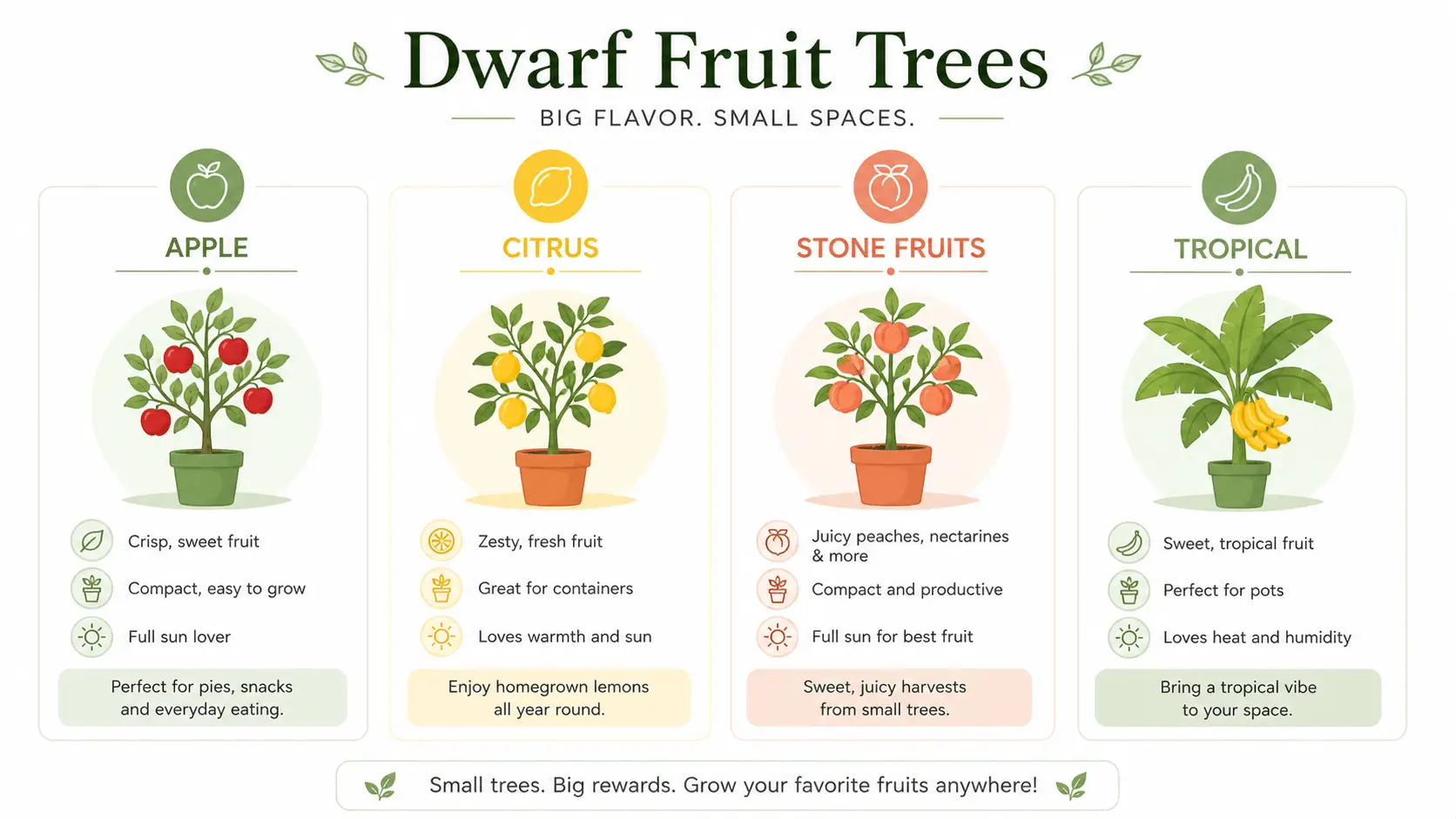
Dwarf fruit trees come in a wide range of varieties suitable for home use:
- Dwarf apple trees: Popular and adaptable
- Citrus trees: Lemon, orange, and lime varieties
- Stone fruits: Peach, plum, and cherry
- Tropical types: Dwarf banana and similar varieties
Specialized Categories
Different categories serve specific gardening needs:
- Self-pollinating dwarf fruit trees: Produce fruit without another tree
- Dwarf indoor fruit trees: Suitable for indoor environments
- Dwarf patio fruit trees: Designed for containers and outdoor patios
- Ultra dwarf vs semi dwarf: Ultra dwarf trees are smaller but produce less than semi-dwarf varieties
Benefits of Growing Dwarf Fruit Trees
Why Choose Compact Fruit Trees?
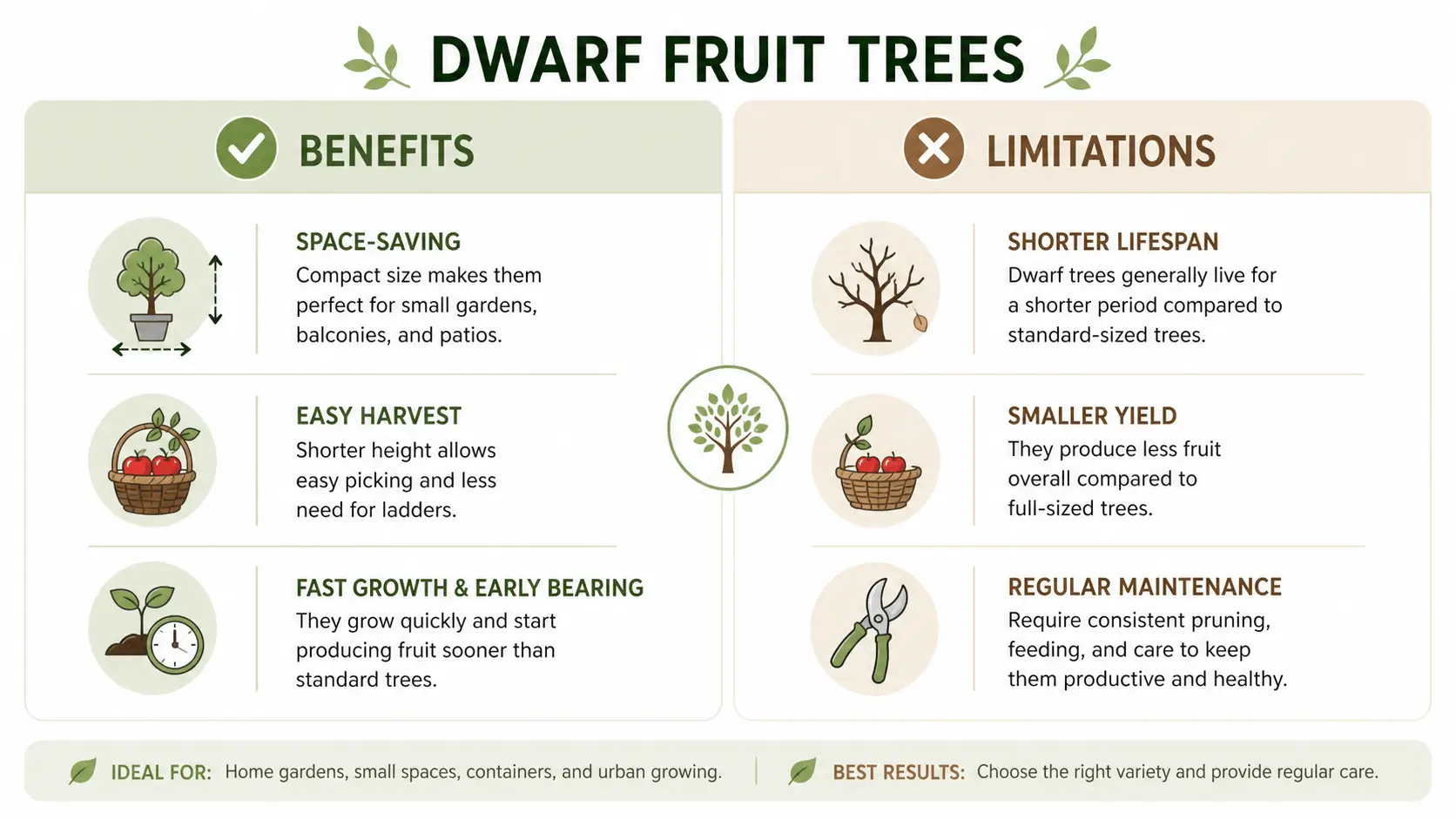
Dwarf fruit trees are preferred for their practical advantages:
- Save space in urban and small garden settings
- Easier to prune, manage, and harvest
- Ideal for container gardening
- Produce fruit faster than standard trees
These benefits make them highly suitable for balconies, patios, and indoor gardening setups. For a broader understanding of productive fruit cultivation, refer to the Ultimate Guide to Growing Fruit: Fast, Easy & Productive Trees.
Limitations and Disadvantages of Dwarf Fruit Trees
Potential Challenges to Consider
Despite their advantages, dwarf fruit trees have limitations:
- Shorter lifespan compared to full-sized trees
- Lower overall fruit yield
- Require more frequent care in containers
- Sensitive to improper watering and soil conditions
Gardeners should understand these challenges to maintain realistic expectations.
Best Conditions for Growing Dwarf Fruit Trees
Light, Climate, and Environment
Dwarf fruit trees require the right environmental conditions:
- Sunlight: Most need full sun (6–8 hours daily)
- Climate: Varies by species (tropical vs temperate)
- Placement: Indoor trees need bright windows; outdoor trees thrive in open sunlight
Soil and Container Requirements
Proper soil and containers are essential:
- Well-draining soil prevents root rot
- Pots must have drainage holes
- Larger containers support root growth
- Repot every 2–3 years to refresh soil and space
How to Grow Dwarf Fruit Trees in Pots
Step-by-Step Growing Process
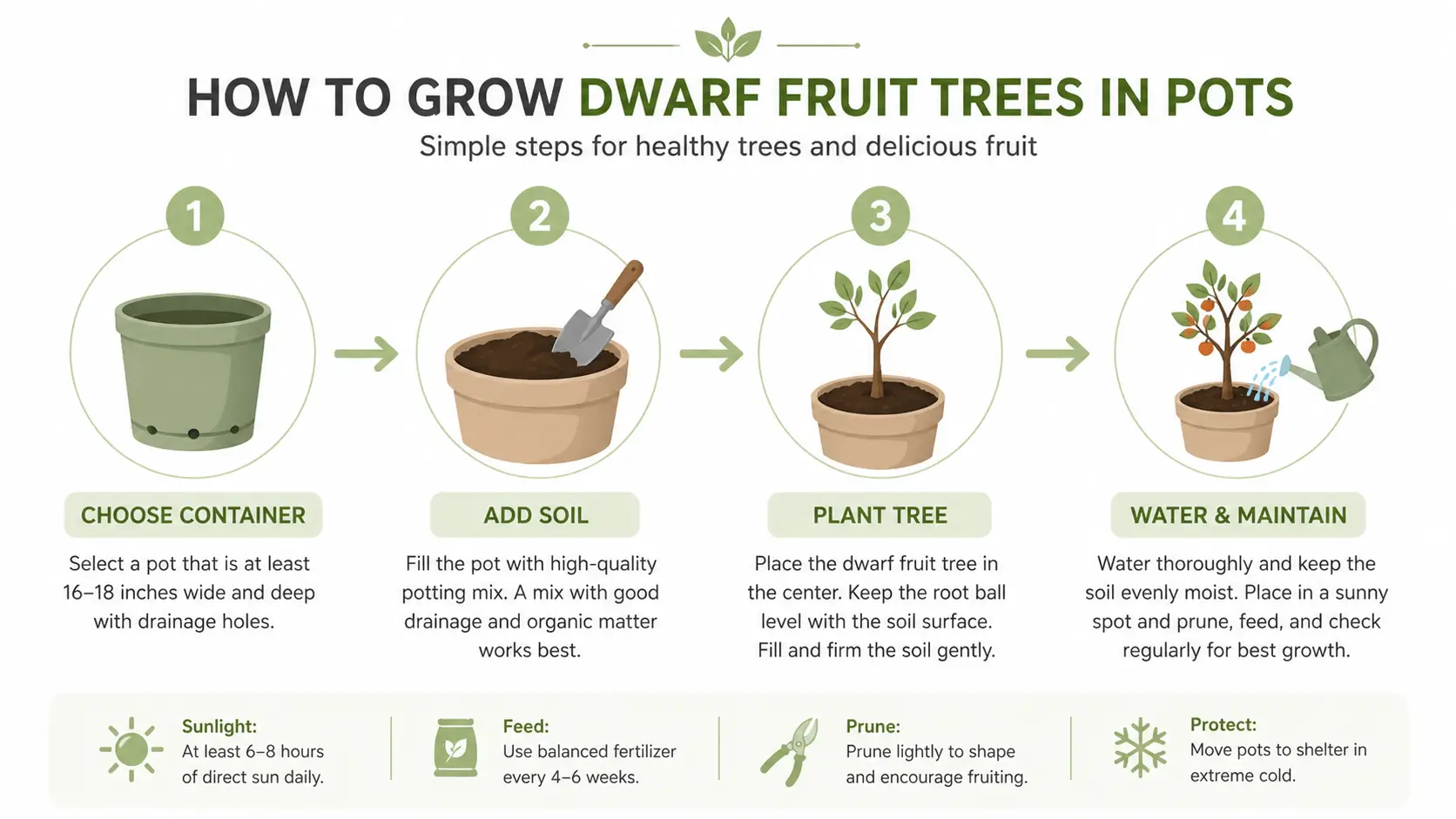
- Choose a container large enough for root expansion
- Use a high-quality, well-draining soil mix
- Ensure proper drainage setup
- Plant at correct depth and water thoroughly
Ongoing Maintenance
- Water consistently but avoid overwatering
- Apply fertilizer during growing seasons
- Adjust care based on seasonal conditions
Container gardening is ideal for controlling soil, water, and placement. Choosing the right container is essential for healthy growth, and you can learn more in this guide: Ultimate Guide: Best Trees to Grow in Pots Australia Easily.
Care Guide for Healthy Dwarf Fruit Trees
Essential Care Requirements
- Watering: Keep soil moist but not waterlogged; yellow leaves may indicate overwatering
- Light: Ensure sufficient sunlight for fruit production
- Soil: Maintain nutrient-rich, well-drained soil
- Fertilization: Feed regularly during active growth
- Pruning: Shape the tree and improve fruit yield
Consistent care ensures long-term productivity and plant health. If you want a deeper understanding of general plant care principles, explore the Plants: Benefits and Guides (Complete Care, Types & Growing Tips).
Growth Rate and Fruit Production Timeline
How Fast Do Dwarf Fruit Trees Grow?
Dwarf fruit trees typically grow at a slow to moderate rate and begin producing fruit within 1–3 years.
Key points:
- Growth depends on species and environment
- Most growth occurs during spring and summer
- Fruit production may vary based on care and climate
Understanding this timeline helps set realistic expectations.
Comparison: Dwarf vs Semi-Dwarf vs Standard Fruit Trees
Key Differences Table
| Feature | Dwarf | Semi-Dwarf | Standard |
| Height | Small | Medium | Large |
| Space Required | Low | Moderate | High |
| Yield | Moderate | High | Very High |
| Maintenance | Easy | Moderate | Complex |
This comparison highlights the suitability of dwarf fruit trees for limited spaces.
Common Problems and How to Fix Them
Troubleshooting Dwarf Fruit Trees
- Yellowing leaves: Often caused by overwatering or nutrient deficiency
- Poor fruiting: Due to insufficient sunlight or lack of pollination
- Pests: Aphids and mites can damage leaves
- Root-bound plants: Occur when containers are too small
Prevention Tips
- Water properly and avoid excess moisture
- Provide adequate sunlight
- Inspect plants regularly for pests
- Repot when roots outgrow containers
Beginner Mistakes to Avoid with Dwarf Fruit Trees
Common Errors
- Using pots that are too small
- Overwatering or poor drainage
- Skipping regular pruning
- Selecting varieties unsuitable for local climate
Avoiding these mistakes improves success rates for beginners.
Seasonal Care for Dwarf Fruit Trees
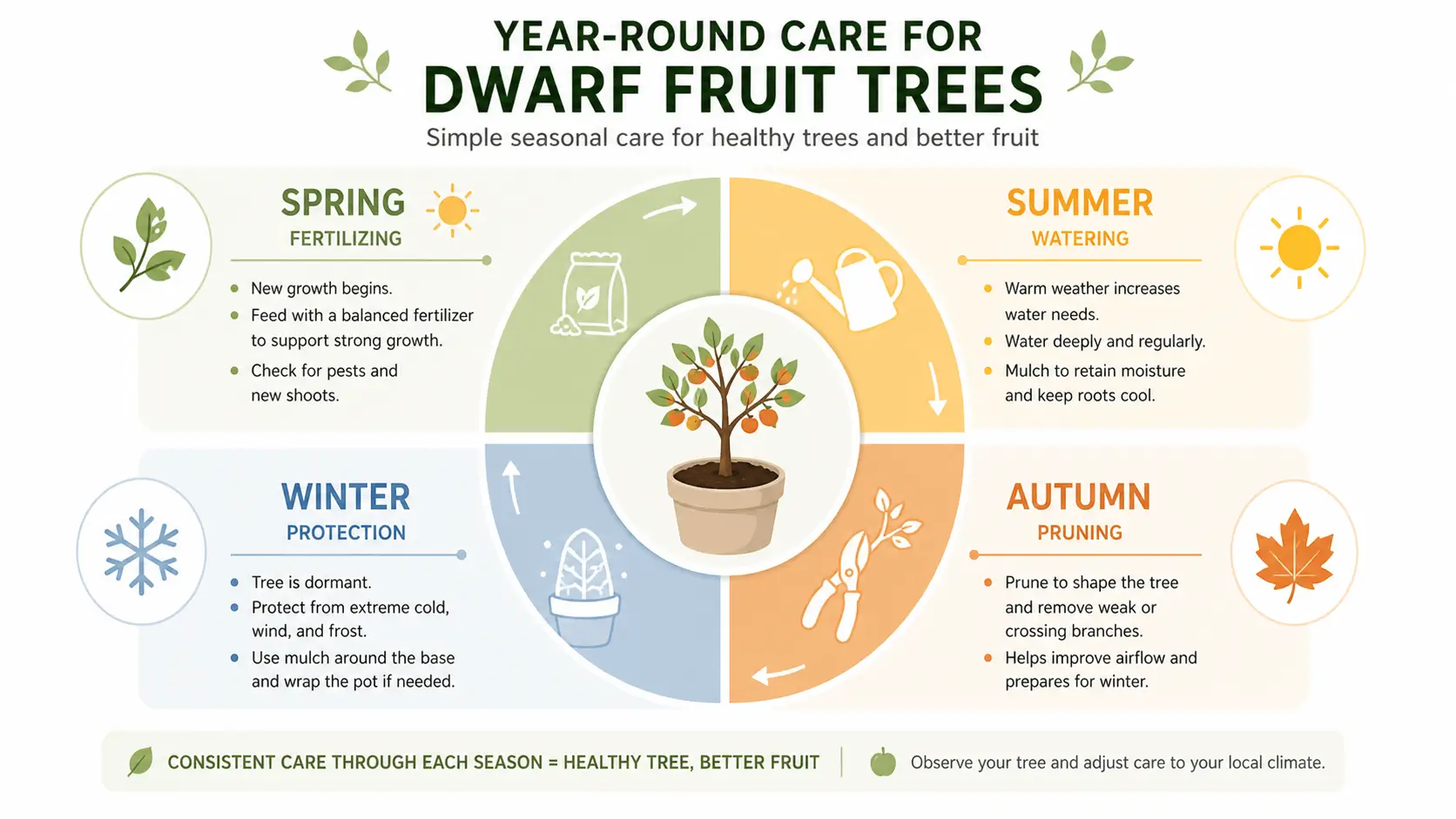
Adjusting Care Throughout the Year
- Spring: Fertilize and encourage new growth
- Summer: Increase watering during fruit development
- Autumn: Prune and prepare for dormancy
- Winter: Protect from cold and reduce watering
Seasonal adjustments are essential for maintaining healthy trees.
Choosing the Best Dwarf Fruit Trees for Different Needs
Based on Space and Environment
- Indoor trees require bright, stable conditions
- Balcony trees should tolerate wind and limited space
- Backyard trees can grow slightly larger
Based on Ease of Care
- Beginner-friendly varieties require less maintenance
- Low-maintenance trees are ideal for busy gardeners
Choosing the right tree depends on environment and experience level.
Conclusion
Dwarf fruit trees provide an efficient and practical way to grow fresh fruit in limited spaces. Their compact size, faster fruiting, and adaptability make them ideal for modern gardening environments. By understanding the types, care requirements, and limitations of dwarf fruit trees, gardeners can successfully cultivate healthy and productive plants. Whether placed indoors, on patios, or in small gardens, these trees offer a flexible and accessible solution for growing fruit at home.
FAQs
1. What are dwarf fruit trees?
Dwarf fruit trees are compact versions of standard fruit trees that grow smaller due to grafting or genetic traits while still producing full-sized fruit.
2. Can dwarf fruit trees grow in pots?
Yes, most dwarf fruit trees are well-suited for container gardening as long as they have proper drainage, sunlight, and proper care.
3. How long do dwarf fruit trees take to produce fruit?
Most dwarf fruit trees produce fruit within 1–3 years depending on the variety and growing conditions.
4. Do dwarf fruit trees need pollination?
Some require cross-pollination, while others are self-pollinating and can produce fruit independently.
5. What is the difference between dwarf and semi-dwarf fruit trees?
Dwarf trees are smaller and easier to manage, while semi-dwarf trees grow larger and typically produce higher yields.