
Introduction
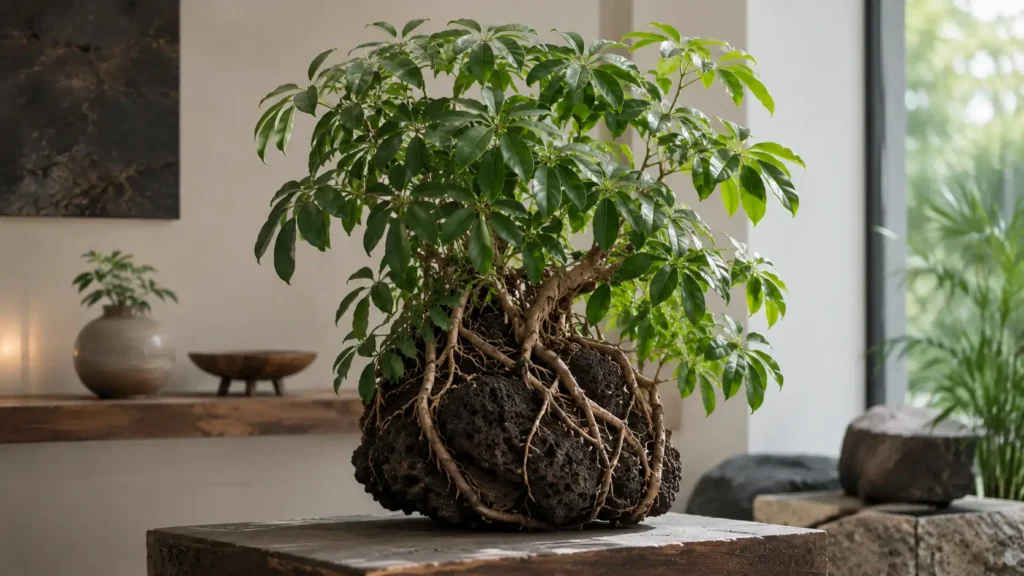
A plant on lava rock is a distinctive living arrangement in which a tropical plant—most commonly Schefflera arboricola—is grown with its roots wrapped around or threaded through a porous volcanic rock. This unique growing style combines horticultural techniques with natural artistry, creating a striking display that resembles how plants establish themselves in volcanic environments. Popular in tropical regions such as Bali and Hawaii, lava rock plant arrangements are valued for their sculptural appearance, excellent drainage, and low-maintenance nature. Whether displayed as an indoor decorative specimen or incorporated into tropical landscaping, a plant on lava rock offers both visual appeal and practical growing benefits.
Plant on lava rock arrangements are part of a broader world of indoor plant care, where understanding plant types, benefits, and growing requirements helps create healthier and longer-lasting displays. Explore more plant care insights in our Plants: Benefits and Guides (Complete Care, Types & Growing Tips) collection.
Quick Summary
- A plant on lava rock usually features Schefflera arboricola trained to grow around porous volcanic stone.
- Lava rock improves drainage, aeration, and root health while providing structural support.
- These arrangements are strongly associated with Balinese and Hawaiian plant traditions.
- Proper care includes bright indirect light, consistent moisture, and moderate fertilization.
- Lava rock can function as both a growing medium and a decorative element.
What Is a Plant on Lava Rock?
A plant on lava rock is a tropical plant grown with exposed roots attached to a piece of porous volcanic rock. The most common example is Schefflera arboricola, also known as the umbrella tree. During cultivation, roots are trained to grow over and around the rock until they naturally anchor themselves to its surface.
This growing method originated in tropical regions where plants naturally colonize rocky volcanic landscapes. The finished arrangement creates a natural-looking specimen that highlights both the plant and the unique texture of the stone.
How the Plant and Rock Relationship Works
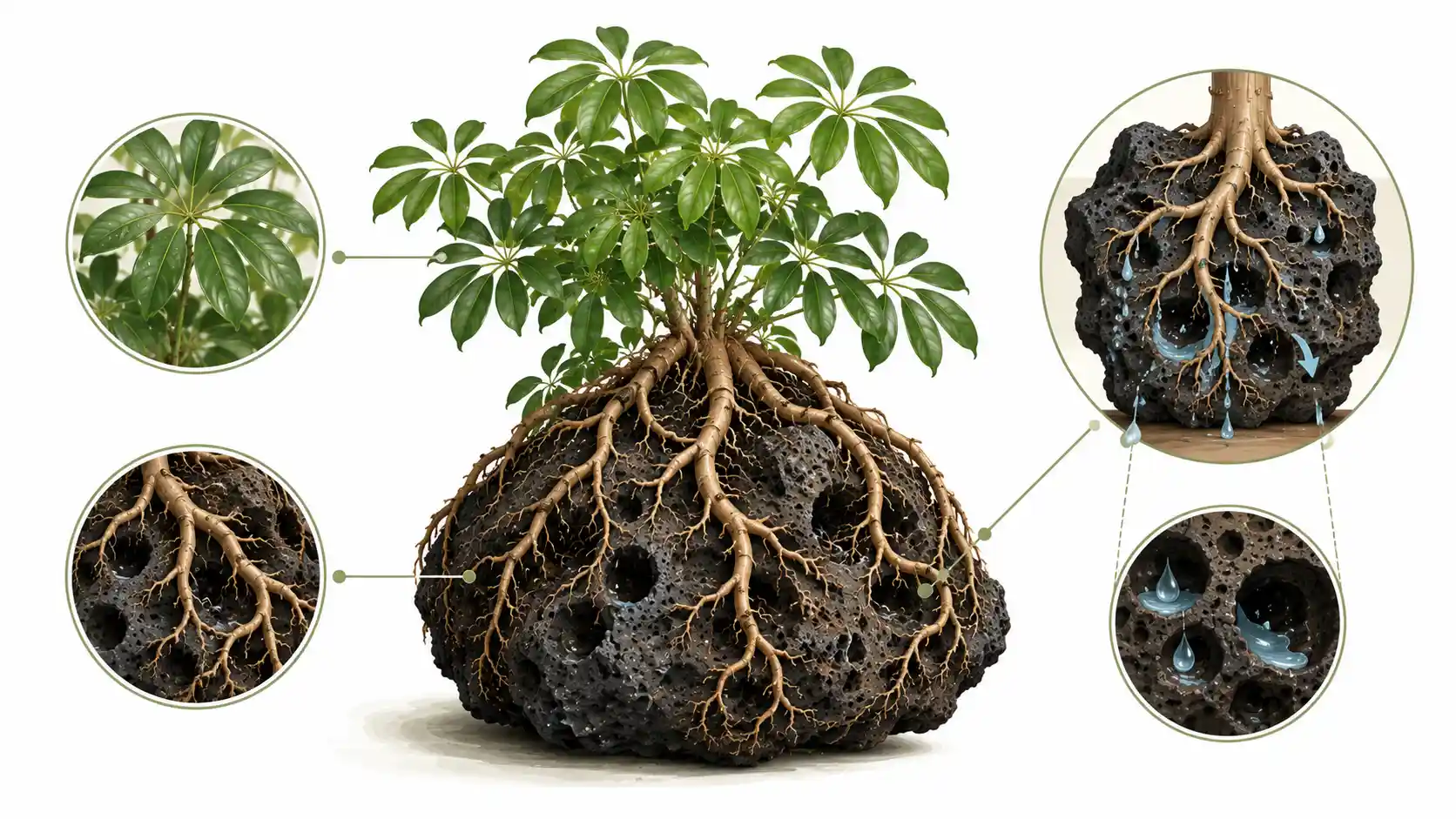
The relationship between the plant and lava rock is both functional and decorative. The porous surface of volcanic rock allows roots to grip tiny openings and crevices as they grow.
The rock serves multiple purposes:
- Structural support for the root system
- Moisture retention around roots
- Air circulation enhancement
- Decorative display base
Although lava rock can hold some moisture, it is not a complete replacement for nutrients. Plants often rely on moss, potting mix, or supplemental feeding to remain healthy.
Common Names for This Plant Style
Several names are commonly used for these arrangements:
- Lava plant
- Lava umbrella tree
- Schefflera lavasteen
- Volcanic rock plant
- Bali plant
- Schefflera on lava
These terms are often used interchangeably. “Lavasteen” is frequently used in European markets, while “Bali plant” reflects the popularity of these arrangements in Indonesian horticulture.
The Schefflera on Lava Rock: The Most Popular Variety
Schefflera arboricola is the most widely cultivated plant for lava rock arrangements. Its compact growth habit, flexible roots, and adaptability make it ideal for this style.
The plant naturally develops attractive root structures that can be trained over volcanic stone, creating a mature and sculptural appearance.
Why Schefflera Is Ideal for Lava Rock Growing
Several characteristics make Schefflera arboricola particularly suitable:
- Adaptable root systems
- Tolerance for varying moisture levels
- Compact indoor growth
- Easy pruning and shaping
- Strong tolerance of indoor environments
Its semi-epiphytic tendencies allow roots to attach effectively to surfaces, making it an excellent candidate for lava rock cultivation.
Other Plants That Can Grow on Lava Rock
While Schefflera dominates this category, other plants can also thrive on lava rock:
- Ficus species
- Pothos
- Epiphytic orchids
- Moss varieties
These species benefit from the excellent airflow and drainage provided by volcanic stone.
What Is Lava Rock and Why Is It Used for Plants?
Lava rock is a porous igneous rock formed when volcanic lava cools and solidifies. Due to trapped gas bubbles during formation, the stone develops numerous pores and cavities.
Gardeners and horticulturists use lava rock because it improves root-zone conditions while remaining stable and durable for many years. Lava rock is a porous volcanic material formed from cooled lava, and its structure makes it useful in horticulture and decorative landscaping. Learn more about this volcanic material through Wikipedia’s overview of lava rock.
Key Properties That Benefit Plants
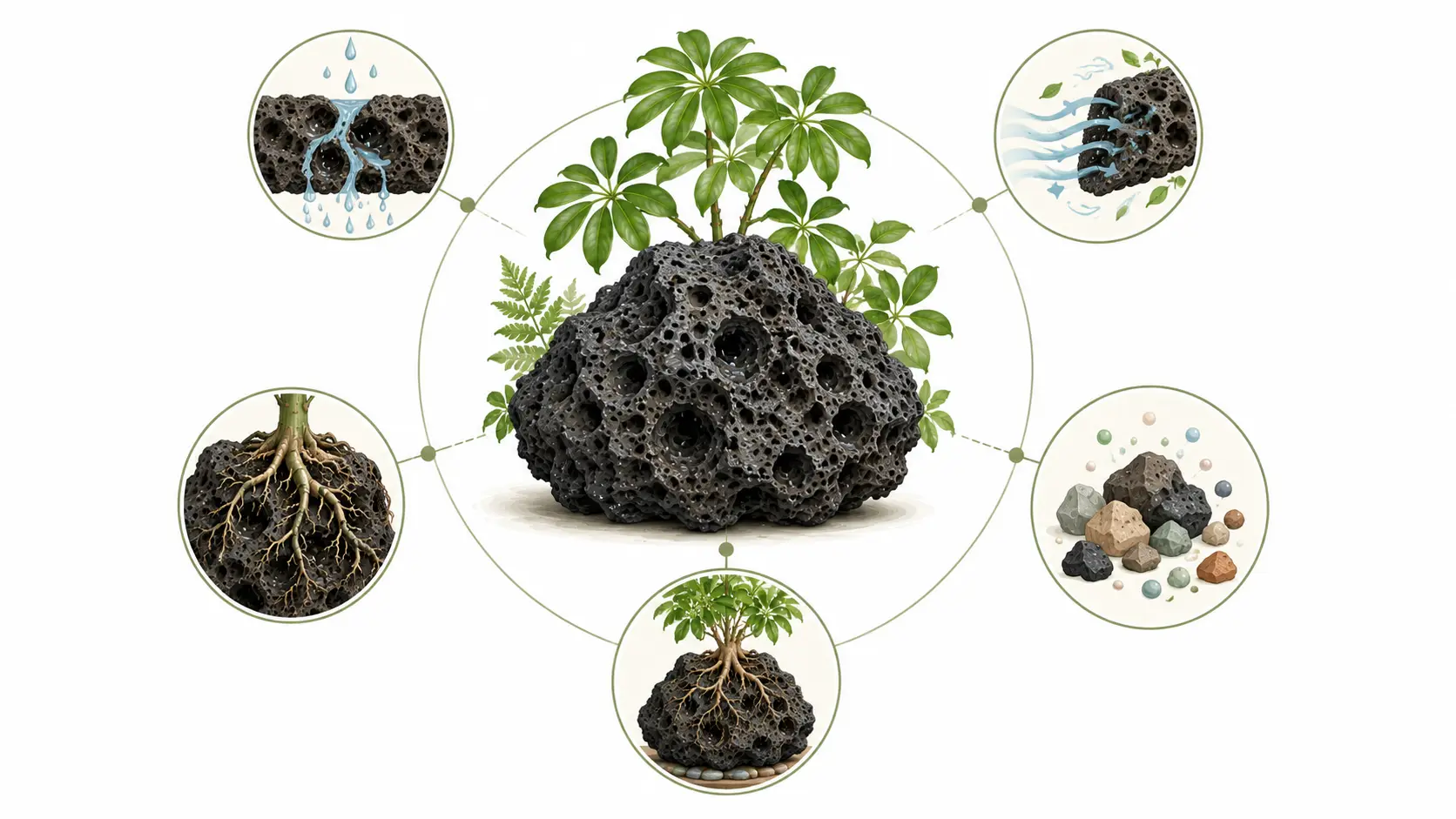
- Porosity: Allows water and oxygen to move freely around roots.
- Drainage: Reduces the risk of waterlogged soil.
- Mineral content: Contains trace amounts of iron, magnesium, and calcium.
- Weight and stability: Anchors plants securely.
- pH neutrality: Generally does not significantly alter soil chemistry.
Is Lava Rock Good for Drainage?
Yes, lava rock is excellent for drainage. Its porous structure creates air pockets that allow excess water to move away from roots while maintaining adequate oxygen levels.
Compared with gravel, lava rock offers superior aeration due to its internal pore structure. Compared with perlite, it provides greater stability and decorative value.
Lava rock is commonly used in:
- Indoor plant pots
- Raised beds
- Flower beds
- Container gardens
- Tropical plant displays
Lava Rock as a Growing Medium vs. Decorative Base
Lava rock can function either as a growing medium or as a decorative feature.
As a growing medium, roots are embedded directly into or around the rock. As a decorative base, the plant remains rooted in soil while lava rock enhances appearance and drainage.
Using Lava Rock in Pots and Planters
Small lava rocks are frequently incorporated into containers to improve drainage and aeration. Container choice also influences drainage, airflow, and root development in indoor plants. Our Best Pot for Monstera: 7+ Proven Size & Material Tips guide explains how pot materials and sizing affect plant health.
Common methods include:
- Mixing lava rock into potting soil
- Adding a bottom drainage layer
- Using lava rock as a decorative top dressing
This helps prevent compaction while encouraging healthier root development.
Using Lava Rock in Flower Beds and Landscaping
In outdoor landscapes, lava rocks provide both practical and aesthetic benefits.
Benefits include:
- Weed suppression
- Improved moisture management
- Decorative mulch effect
- Long-lasting ground coverage
Dark-colored lava rock also creates strong visual contrast with green foliage.
Comparison: Lava Rock vs. Other Common Growing Mediums
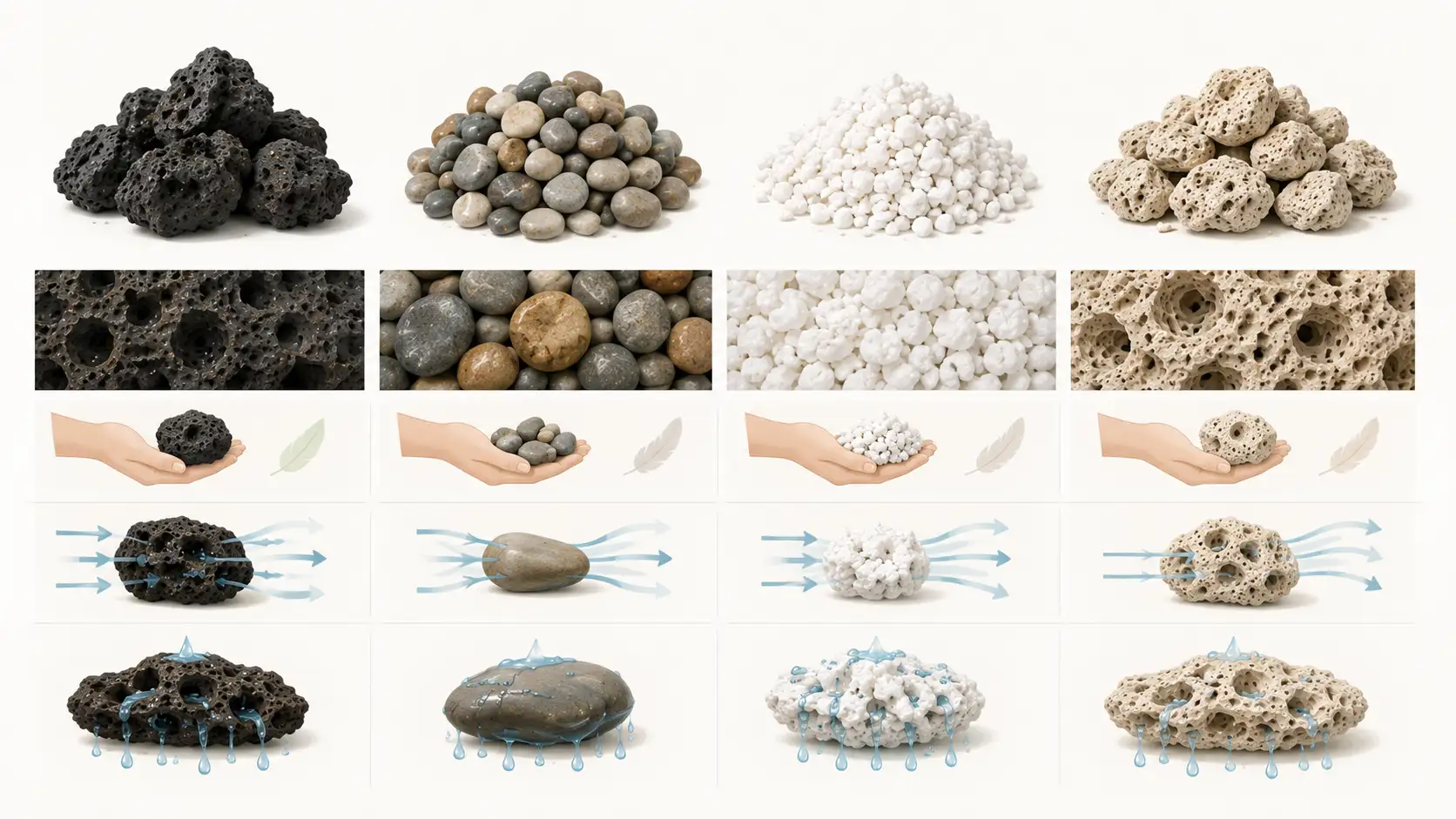
| Feature | Lava Rock | Gravel | Perlite | Pumice |
| Drainage | Excellent | Good | Excellent | Excellent |
| Aeration | High | Moderate | High | High |
| Mineral Content | Present | Minimal | None | Minimal |
| Water Retention | Low–Moderate | Low | Low | Low–Moderate |
| Decorative Value | High | Moderate | Low | Low |
| Weight | Moderate–Heavy | Heavy | Very Light | Light |
Plant on Lava Rock Meaning and Cultural Significance
A plant on lava rock symbolizes the balance between living growth and enduring natural elements. In Balinese horticulture, these arrangements often represent harmony between nature and design.
In Hawaiian contexts, volcanic stone reflects the islands’ geological heritage. Many collectors appreciate lava rock plants as symbols of resilience, adaptation, and natural beauty.
In interior design, they are valued for creating a connection between tropical greenery and organic materials. Some feng shui practitioners associate volcanic stone with grounding and stability.
Plant Size and Growth Characteristics
Most Schefflera on lava rock arrangements range from 12 to 36 inches tall, depending on age and growing conditions. Indoor specimens typically remain smaller because root growth is naturally restricted by the rock structure. Outdoor specimens in tropical climates may become significantly larger.
Plant growth can vary significantly depending on environmental conditions and care routines. To estimate growth patterns and better understand how factors like time and conditions influence plant development, use our Plant Growth Calculator.
Factors affecting size include:
- Light availability
- Humidity levels
- Fertilization
- Root space
- Overall growing environment
Growth Rate
Schefflera on lava rock is generally considered a slow-to-moderate grower.
Growth is most active during spring and summer when temperatures and light levels increase. During winter, growth often slows considerably.
Factors influencing growth rate include:
- Bright indirect light
- Consistent moisture
- Proper humidity
- Balanced fertilization
- Warm temperatures
Care Guide: How to Keep a Plant on Lava Rock Healthy
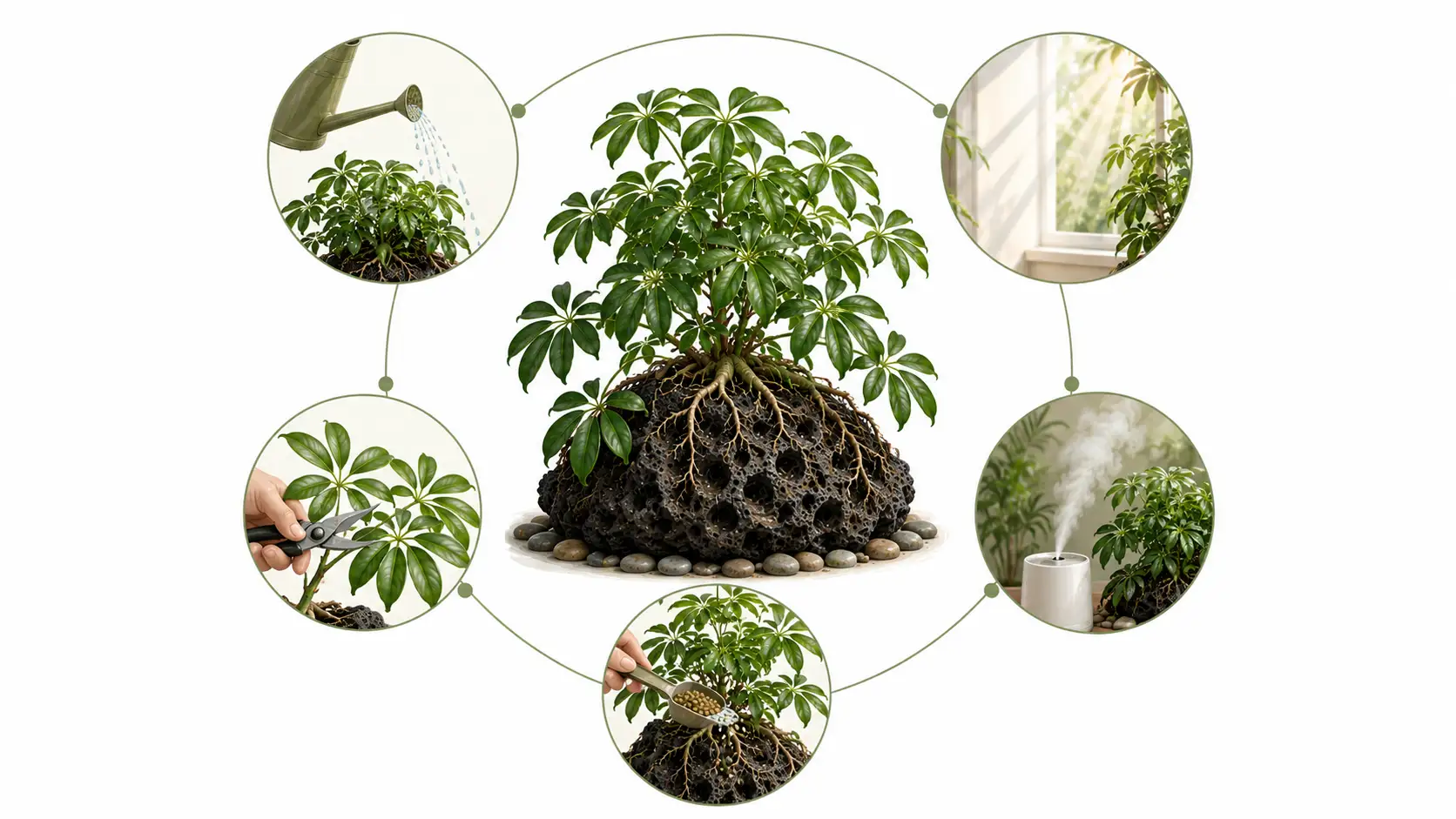
Watering a Plant on Lava Rock
Plants growing on lava rock typically dry faster than those planted solely in soil. Regular moisture monitoring is essential. Similar to lava rock plants, ZZ plants are valued for their adaptability and tolerance of indoor conditions. Learn more about another easy-care indoor species in our Zamioculcas Zamiifolia Care Guide: ZZ Plant Growing Tips.
For rooted lava rock arrangements:
- Check moisture several times weekly.
- Water when roots begin to dry.
- Ensure excess water can drain freely.
Many growers soak the rock briefly to fully hydrate exposed roots before allowing excess water to drain away.
Light Requirements
Schefflera thrives best in bright indirect light.
Ideal locations include:
- East-facing windows
- Bright rooms with filtered sunlight
- Areas near south-facing windows with sheer curtains
Although Schefflera tolerates lower light conditions, growth may slow and foliage density may decrease.
Soil and Root Medium Considerations
Some lava rock arrangements are completely soil-free, while others use supplemental growing materials.
Suitable root media include:
- Sphagnum moss
- Well-draining tropical potting mix
- Coconut coir blends
The chosen medium should maintain moisture without remaining saturated.
Fertilization
Apply a balanced liquid fertilizer every four to six weeks during active growth.
Although volcanic rock contains trace minerals, these are not sufficient to meet all plant nutritional requirements.
Avoid excessive fertilization because salt buildup can damage exposed roots.
Pruning and Shaping
Pruning helps maintain both plant health and appearance.
Best practices include:
- Remove damaged leaves promptly.
- Prune during spring or early summer.
- Use clean, sterilized tools.
- Shape branches to enhance the natural sculpture-like form.
Climate and Humidity Tolerance
Schefflera performs best between 60°F and 85°F.
Indoor humidity should ideally remain above 40–50%.
To increase humidity:
- Use a humidifier.
- Place plants on pebble trays.
- Group plants together.
- Mist occasionally when conditions are very dry.
Protect plants from cold drafts and sudden temperature fluctuations.
Common Problems, Mistakes, and How to Fix Them
Yellowing Leaves
Yellow leaves often indicate environmental stress.
Common causes include:
- Overwatering
- Underwatering
- Low light
- Nutrient deficiencies
Correcting the underlying cause usually restores healthy growth.
Root Rot and Overwatering
Although lava rock improves drainage, root rot can still occur.
Warning signs include:
- Soft roots
- Persistent moisture
- Leaf drop
- Foul odors
Reduce watering and ensure proper drainage if symptoms appear.
Slow or Stalled Growth
Growth may slow due to:
- Insufficient light
- Root restriction
- Low fertility
- Seasonal dormancy
Increasing light and maintaining a consistent feeding schedule often improves growth.
Pest Issues
Common Schefflera pests include:
- Spider mites
- Scale insects
- Mealybugs
Inspect foliage regularly and treat infestations early using insecticidal soap or horticultural oil.
Beginner Mistakes When Caring for a Plant on Lava Rock
Common mistakes include:
- Assuming the rock completely replaces all growing media
- Watering on a fixed schedule instead of checking moisture
- Keeping the plant in overly dark locations
- Applying fertilizer too frequently
- Ignoring humidity requirements
Monitoring environmental conditions is generally more effective than following rigid care schedules.
Best Plants for Lava Rock Arrangements
| Plant Type | Suitability | Notes |
| Schefflera arboricola | Excellent | Most common; flexible aerial roots |
| Ficus | Good | Requires consistent moisture |
| Pothos | Good | Tolerates lower light; fast-growing |
| Orchids (epiphytic) | Excellent | Natural rock attachment in the wild |
| Moss varieties | Excellent | Fills gaps and adds texture |
Where to Find Plants on Lava Rock and What to Look For
Plants on lava rock are commonly available through specialty tropical plant nurseries, bonsai growers, and collectors specializing in Balinese or Hawaiian-inspired plant displays.
When selecting a specimen, look for:
- Healthy green foliage
- Firm, well-attached roots
- Stable rock placement
- No signs of pests
- Balanced overall growth
Avoid specimens showing extensive yellowing, root damage, or instability.
Internal Linking Opportunities
- How to Care for Schefflera Arboricola Indoors
- Best Rocks and Substrates for Indoor Plants
- Tropical Indoor Plants: A Beginner’s Guide
Conclusion
A plant on lava rock is far more than a decorative novelty—it is a functional living arrangement that combines tropical plant growth with the natural benefits of volcanic stone. Whether grown as a Schefflera lavasteen centerpiece or as part of a broader indoor plant collection, these unique displays provide excellent drainage, aeration, and visual appeal. With proper watering, lighting, humidity, and maintenance, a plant on lava rock can remain healthy and attractive for many years. Understanding the interaction between roots, volcanic rock, and environmental conditions is the key to long-term success.
Frequently Asked Questions
1. What is a plant on lava rock called?
A plant on lava rock may be called a lava plant, lava umbrella tree, Schefflera lavasteen, volcanic rock plant, Bali plant, or Schefflera on lava. Different regions and sellers use different names, but they generally refer to the same style of plant arrangement.
2. How do you water a plant growing on lava rock?
Watering is usually done by soaking the rock briefly, watering around the root zone, or maintaining moisture in surrounding moss. Frequency depends on temperature, humidity, light exposure, and rock size.
3. Is lava rock good for plant drainage?
Yes. Lava rock provides excellent drainage because its porous structure creates air spaces that allow excess water to move away from roots. It is commonly used both as a drainage amendment and as a growing medium component.
4. Can you grow plants directly in lava rock without soil?
Yes, certain plants can grow directly on lava rock in semi-hydroponic or epiphytic setups. However, many arrangements benefit from supplemental materials such as sphagnum moss or specialized growing media.
5. What type of Schefflera is used on lava rock?
The most common species is Schefflera arboricola, also known as the dwarf umbrella tree. Its compact growth habit and flexible root system make it ideal for lava rock cultivation.
6. How fast does a plant on lava rock grow?
Growth is generally slow to moderate. Factors such as light levels, humidity, fertilization, and temperature strongly influence overall growth speed.
7. What are the benefits of lava rock for indoor plants?
The primary benefits include excellent drainage, improved aeration, trace mineral content, decorative appeal, and structural stability. These characteristics help support healthy root development while enhancing plant presentation.