
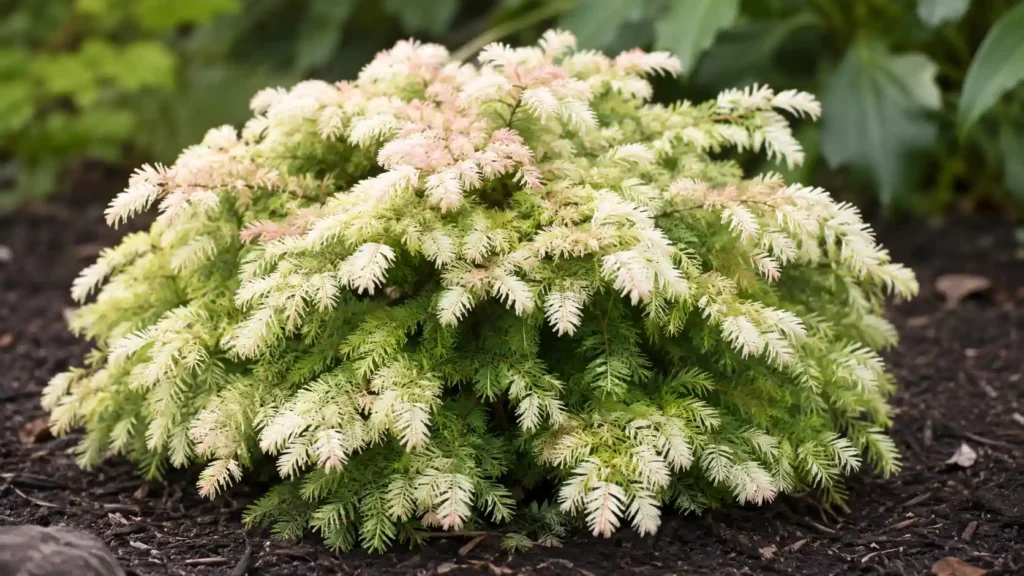
Tsuga canadensis ‘Moon Frost’ is a dwarf Canadian hemlock cultivar, a seedling selected by Ed Wood, prized for bright white new growth that fades to a silvery green and takes on a pink blush in winter. According to Manuela Nogueira, it grows slowly into a compact, rounded form, reaching roughly 3 to 4 feet in height and hardy to USDA zone 4.
The cultivar performs best with morning sun and afternoon shade, since intense heat can scorch its variegated needles, and it shows notably low drought tolerance compared with straight-species hemlocks. Growers in exposed sites often wrap it in burlap for winter protection, and it’s considered too sensitive to urban pollution for streetside plantings.
By Manuela Nogueira | Plant Care & Gardening Expert
Last Updated: August 2026
Quick Summary
- Moon Frost Canadian hemlock is a dwarf, slow-growing conifer, typically 2–4 ft tall and wide, with white new growth that blushes pink in winter.
- It needs partial shade, consistently moist acidic soil, and shelter from wind and hot afternoon sun.
- It’s dramatically smaller and slower than the wild-type Canadian hemlock, which reaches 40–70+ ft and can live for centuries.
- Its main long-term threat is the hemlock woolly adelgid, an invasive pest, not the plant itself.
What Is Moon Frost Canadian Hemlock?
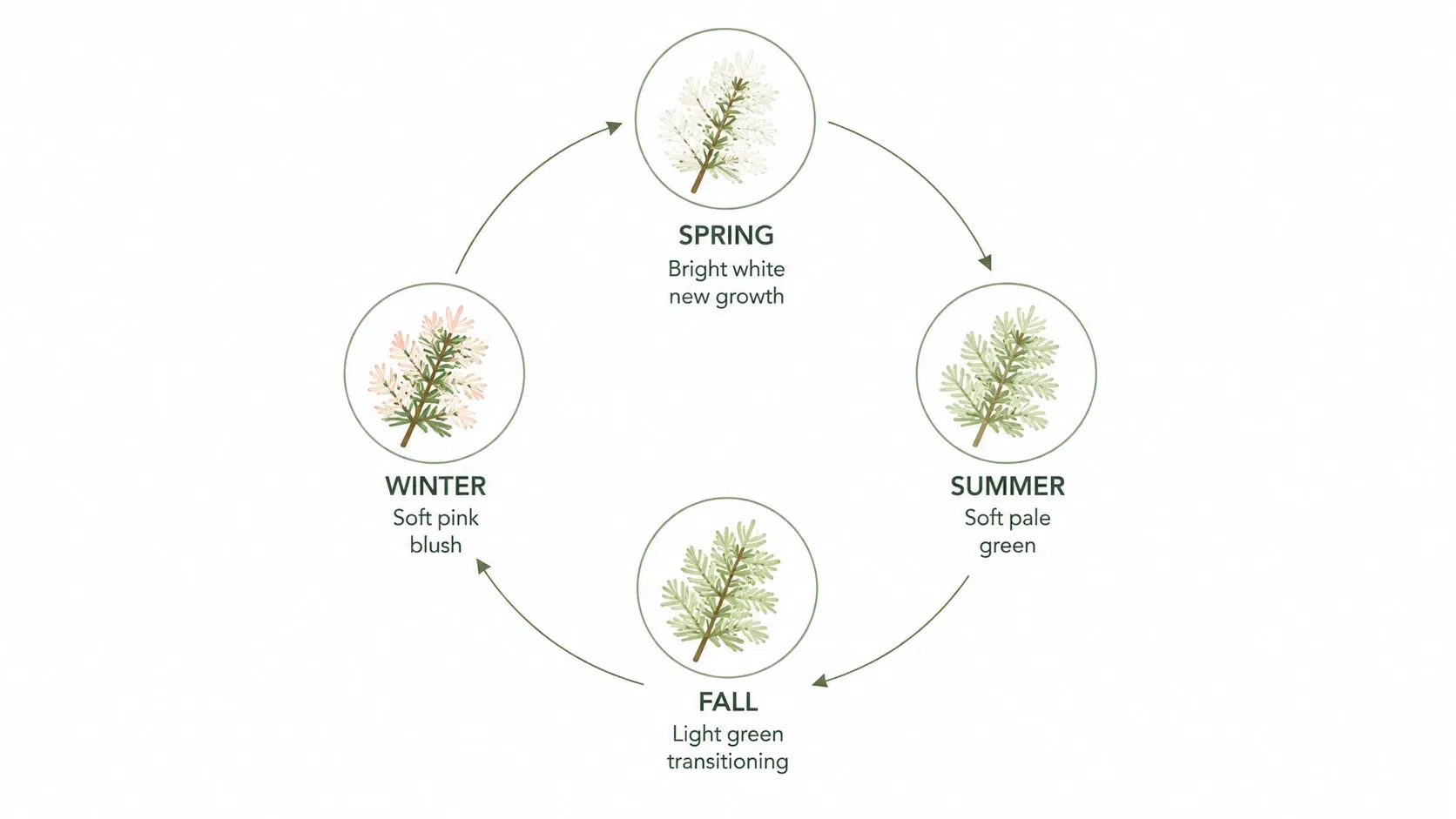
Moon Frost Canadian hemlock is a dwarf cultivar of Tsuga canadensis (family Pinaceae), selected for its variegated, frost-white new growth. It originated as a seedling selection by Oregon nurseryman Ed Wood and is also sold as “dwarf hemlock” or “moonfrost hemlock.” New foliage emerges bright white, older interior needles stay pale, and the whole plant takes on a pink blush in winter.
Not the Same as “Poison Hemlock”
Tsuga species, including Moon Frost, are non-toxic evergreen conifers, unrelated to poison hemlock (Conium maculatum) or water hemlock (Cicuta spp.), which are herbaceous perennials in the carrot family. No part of a Tsuga plant is poisonous.
Moon Frost Canadian Hemlock Size
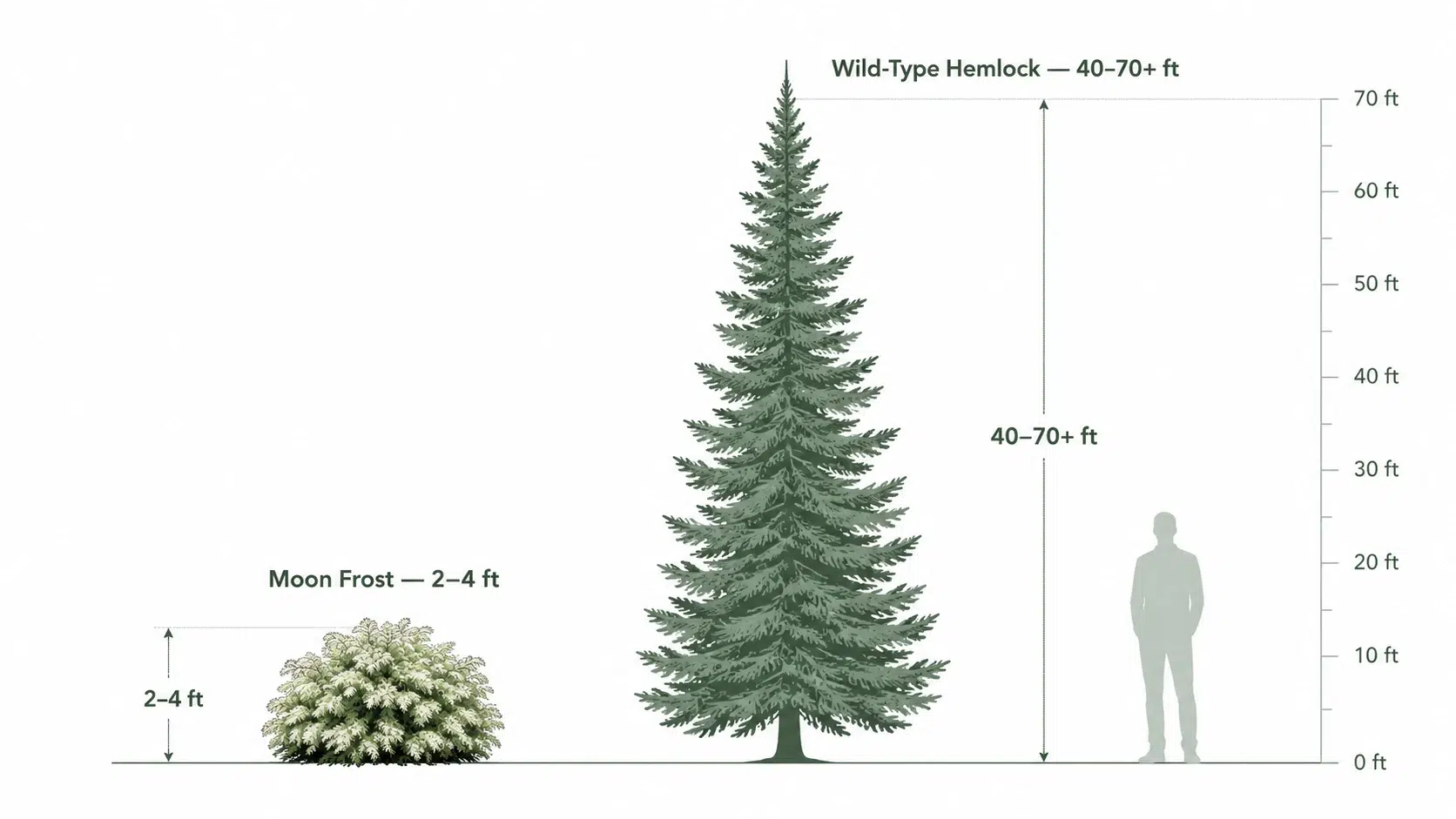
Moon Frost typically reaches 2–4 ft tall and wide over its first 10 years, broadening slowly toward 4–6 ft over two to three decades. In containers or as bonsai, its size stays even more compact. Final size depends on climate zone, light exposure, and soil moisture.
| Trait | Moon Frost (dwarf cultivar) | Straight-Species Canadian Hemlock |
| Mature height | 2–4 ft (to ~6 ft over time) | 40–70+ ft |
| Mature spread | 2–4 ft | 20–35 ft |
| Years to near-mature size | ~10 years | 250–300 years |
| Typical use | Shrub, specimen, container | Forest tree, hedge |
This scale gap explains why “Canadian hemlock” can mean both a towering forest tree and a 3-foot garden shrub, the difference is the cultivar, not the species.
Growth Rate
Moon Frost is slow-growing, adding roughly 2–4 inches per year, versus 12–24 inches for the species. Bright white new growth flushes each spring, hardens to a lighter green through summer, then develops its pink winter tone. Growth speed depends on light, soil fertility, and, most of all, moisture consistency, since hemlocks respond poorly to drought. For comparison, see our Pencil Pine Growth Rate guide to see how another slow, columnar conifer measures up.
Care Guide
Light Requirements
Partial shade is best, ideally morning sun with afternoon shade. In hot climates, afternoon shade prevents leaf scorch on the pale new growth.
Soil & Watering
Moist, well-drained, slightly acidic soil is essential. Unlike many conifers, Moon Frost has poor drought tolerance, so consistent watering is non-negotiable.
Fertilizing
Once established, a light, balanced, slow-release feeding in spring supports steady growth. Avoid over-fertilizing, which encourages soft growth that attracts pests.
Pruning
Little pruning is needed to maintain its natural mounded shape. Light shaping is fine, but heavy topping permanently changes its habit.
Winter Care & Climate Tolerance
Moon Frost is hardy in USDA Zones 4–7. Wrap exposed plants in burlap against drying winter wind, and avoid streetside or urban plantings, since it’s intolerant of pollution and road salt.
Quick Reference
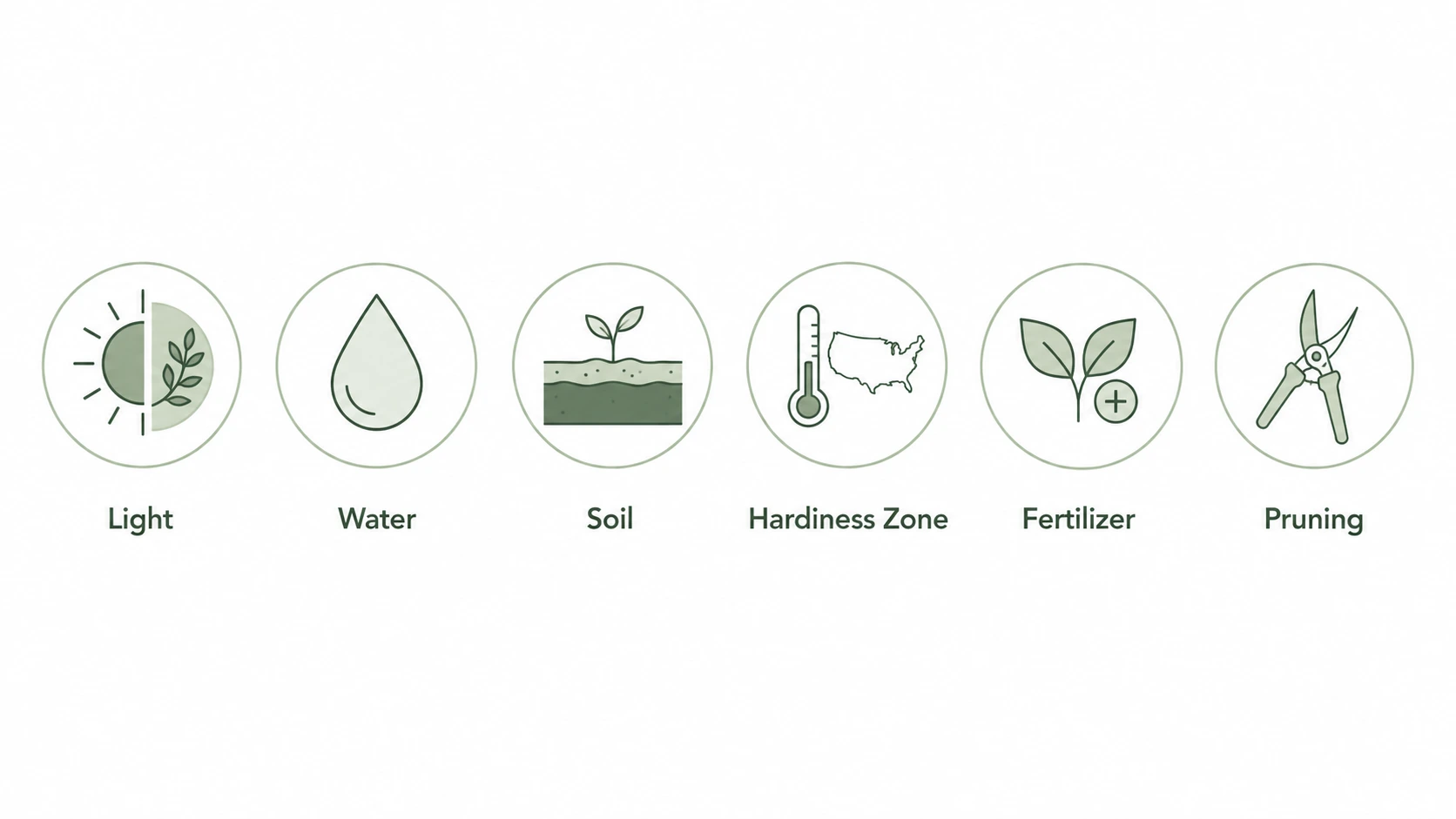
| Light | Water | Soil | Zone | Fertilizer | Pruning |
| Partial shade | Consistent, no drought | Moist, acidic | 4–7 | Light, spring | Minimal |
Planting & Spacing Guide
Space Moon Frost plants roughly 4–6 ft apart, close to its mature spread, rather than the wider spacing used for full-size hemlock hedging. Its compact, slow habit also suits container growing and bonsai training. In the landscape, it fits shade gardens, mixed borders, rock gardens, and foundation plantings.
Moon Frost vs. Other Canadian Hemlock Cultivars
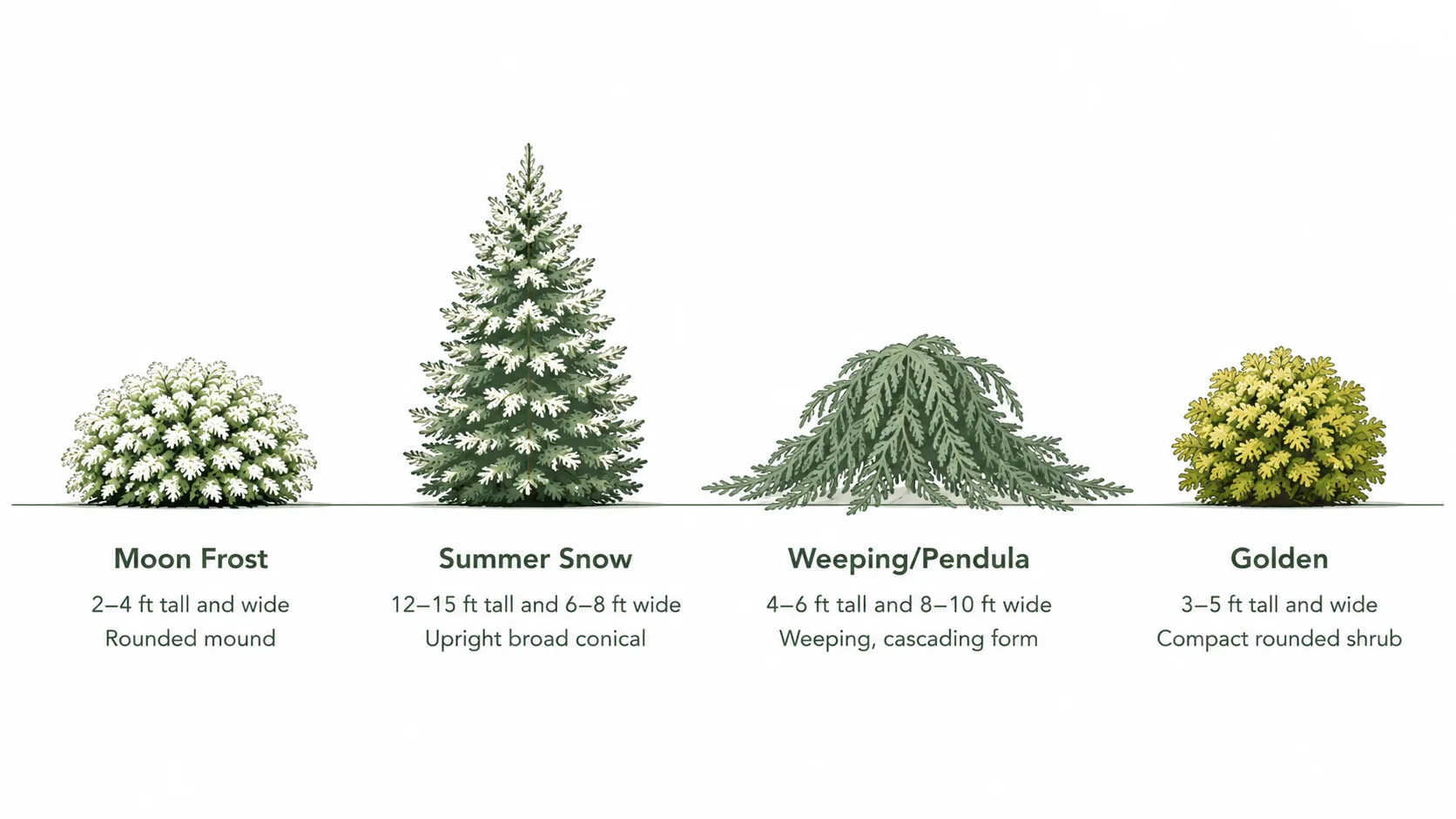
Moon Frost vs. Summer Snow
Both show white spring growth, but Moon Frost stays a dwarf, mounded shrub around 2–4 ft, while Summer Snow grows into a broad, upright small tree reaching 15–20 ft at a much faster pace. Moon Frost also blushes pink in winter; Summer Snow’s new growth simply fades to green.
Moon Frost vs. Weeping Canadian Hemlock Varieties
Moon Frost mounds; true weeping cultivars, including Pendula, Sargentii (Sargent’s weeping hemlock), and Dawsoniana, cascade outward and downward instead, forming a wide, ground-hugging silhouette rather than a globe.
Moon Frost vs. Golden Canadian Hemlock
Golden-foliage cultivars like Aurea Compacta are selected for yellow-gold needles instead of white variegation, giving gardeners a warm-toned alternative to Moon Frost’s cool white-and-pink look. For another conifer color-and-form comparison, see Cupressus Sempervirens Stricta vs Glauca. If you’re weighing cultivars by size and growth habit the way you would with our Magnolia Little Gem vs Teddy Bear comparison, here’s how Moon Frost stacks up against its closest hemlock relatives.
| Cultivar | Mature Size | Foliage Color | Growth Habit | Light Needs |
| Moon Frost | 2–4 ft | White, pink in winter | Dwarf, mounded | Partial shade |
| Summer Snow | 15–20 ft | White, fades to green | Upright, broad | Sun to part shade |
| Pendula / Sargentii | Wide-spreading | Green | Weeping, cascading | Sun to shade |
| Golden (e.g., Aurea Compacta) | Dwarf to medium | Gold-yellow | Compact, rounded | Sun to part shade |
Pros and Cons of Growing Canadian Hemlock
Pros: deep shade tolerance, graceful year-round texture, wildlife and bird habitat value, non-toxic, low pruning needs.
Cons: poor drought tolerance, susceptible to hemlock woolly adelgid, dislikes urban pollution and hot afternoon sun, attractive to browsing deer.
Common Hemlock Problems & How to Fix Them
Hemlock Woolly Adelgid
Why: an invasive, aphid-like insect feeds on sap at the needle base and is the biggest long-term threat to hemlocks like Moon Frost.
Fix: treat with horticultural oil or an insecticide applied by a licensed professional.
Prevent: inspect regularly for small white, cottony masses and avoid moving hemlock brush or firewood between properties. The pest is invasive, the plant itself is not.
If aphids are also a recurring issue elsewhere in your garden, our Aphids on Houseplants removal guide covers safe treatment options.
Needle Browning & Yellowing
Why: winter desiccation, drought stress, compacted roots, or fungal needle blight. Fix: water deeply, improve drainage, and prune out dead tissue. Prevent: water thoroughly before winter and avoid compacted planting sites.
Deer Browsing
Why: hemlock foliage is a preferred winter food source for deer, and young plants are especially vulnerable. Fix: apply deer repellent. Prevent: fence young plants or rotate repellents through the dormant season.
Roots & Structural Concerns
Hemlock roots are shallow to moderately deep and spreading, not aggressive, so they’re not typically a threat to foundations, pipes, or sidewalks, though their shallow nature makes wind protection important in exposed sites. If you’re also weighing root behavior in other hedging shrubs, see Do Lilly Pillies Have Invasive Roots?
Beginner Mistakes to Avoid
- Planting in full, hot afternoon sun instead of partial shade
- Skipping supplemental watering during dry spells, hemlocks are not drought-tolerant despite being conifers
- Planting streetside or in compacted urban soil
- Ignoring early adelgid signs (small white cottony masses) until infestation is advanced
- Spacing a dwarf cultivar the same way as a full-size hemlock
Canadian Hemlock Background Facts
Tsuga canadensis is an evergreen, needled conifer native to eastern North America. While Moon Frost stays under 6 ft, the wild-type species can live for centuries, old-growth specimens have been recorded at 800 years or more. Historically, its bark was harvested for tannin used in leather tanning, and its wood is still used in pulp, paper, and construction. The genus is especially notable for its extreme shade tolerance and high value as wildlife habitat for birds, deer, and small mammals.
Conclusion
Moon Frost Canadian hemlock offers the ornamental appeal of Tsuga canadensis, fine texture, deep shade tolerance, and year-round color, without the towering footprint of the wild-type species. Given consistent moisture, partial shade, and early monitoring for hemlock woolly adelgid, this dwarf cultivar makes a manageable, long-lived accent for shaded gardens, borders, and containers.
FAQs
Is Moon Frost Canadian Hemlock the same plant as a regular Canadian hemlock?
No. It’s a dwarf, variegated cultivar of the same species, staying 2–4 ft tall instead of the 40–70+ ft reached by the wild-type tree.
How big does Moon Frost Canadian Hemlock actually get?
Most plants reach 2–4 ft tall and wide within 10 years, with some broadening toward 4–6 ft over two to three decades.
Is Moon Frost hemlock deer-resistant?
No. Hemlock foliage is a preferred winter browse for deer, so young plants benefit from repellent or fencing.
Can Moon Frost Canadian Hemlock be grown in a container or trained as bonsai?
Yes. Its compact, slow-growing habit suits both container growing and bonsai training.
Is Canadian hemlock poisonous to touch?
No. Tsuga species are non-toxic. Poison hemlock and water hemlock are unrelated herbaceous plants that only share the common name.
Why is my Moon Frost hemlock turning brown, and is it treatable?
Browning usually comes from winter desiccation, drought stress, poor drainage, or needle blight, and is typically treatable with deep watering and pruning, though advanced adelgid infestations need insecticidal treatment.