
Introduction
Spider plant indoor benefits make this plant one of the most widely recommended houseplants for homes, offices, and apartments. The spider plant (Chlorophytum comosum), a member of the Asparagaceae family, is known for its arching green leaves and small plantlets called spiderettes. Native to tropical and southern Africa, it adapts exceptionally well to indoor environments.
Many homeowners grow spider plants indoors because they tolerate varied lighting, require minimal care, and bring natural greenery into living spaces. In addition to their decorative appeal, spider plants are commonly associated with improving indoor environments, supporting psychological wellbeing, and symbolizing growth and resilience in cultural traditions.
Understanding spider plant indoor benefits helps gardeners and homeowners set realistic expectations while learning how to care for this resilient indoor plant.
What Is a Spider Plant and Why Is It Popular Indoors?
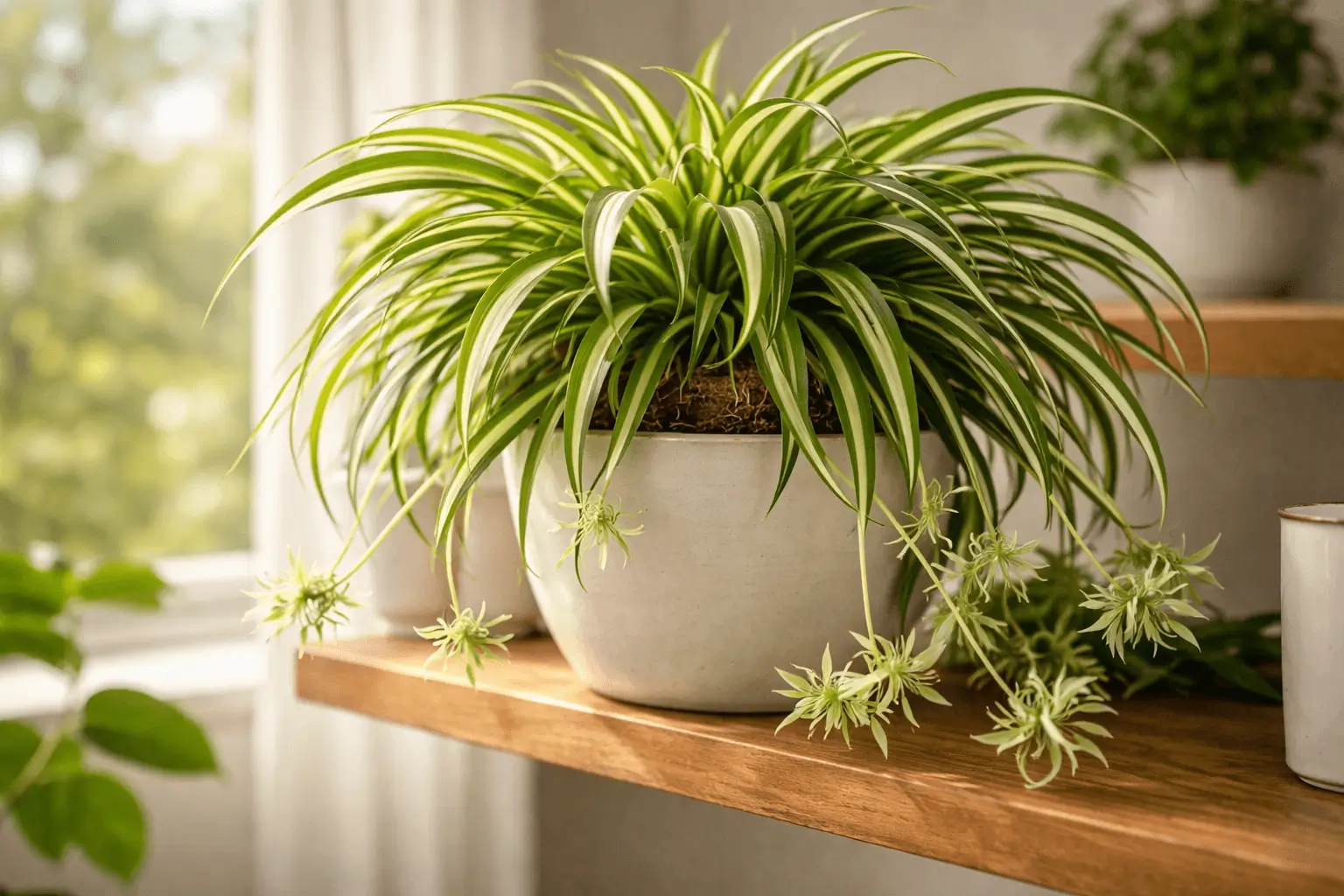
A spider plant (Chlorophytum comosum) is a hardy perennial houseplant recognized for its long arching leaves and dangling plantlets. It is widely grown indoors because it tolerates moderate light conditions and adapts well to household environments.
In its natural habitat, spider plants grow in shaded forest environments where filtered light and consistent moisture are common. Indoor environments mimic these conditions well, especially in rooms with bright indirect sunlight.
Beginners often choose spider plants because they are forgiving when care conditions are not perfect. They tolerate occasional watering mistakes and adapt to different indoor spaces such as kitchens, offices, and living rooms.
Common uses of spider plants indoors include:
- Decorative houseplant displays
- Hanging baskets with trailing foliage
- Indoor greenery for workspaces
- Low-maintenance plants for beginners
Because of this adaptability, many people ask whether spider plants are indoor or outdoor plants. While they can grow outdoors in warm climates, they perform best as indoor houseplants in temperate regions.
Main Spider Plant Indoor Benefits
Improving Indoor Air Environment
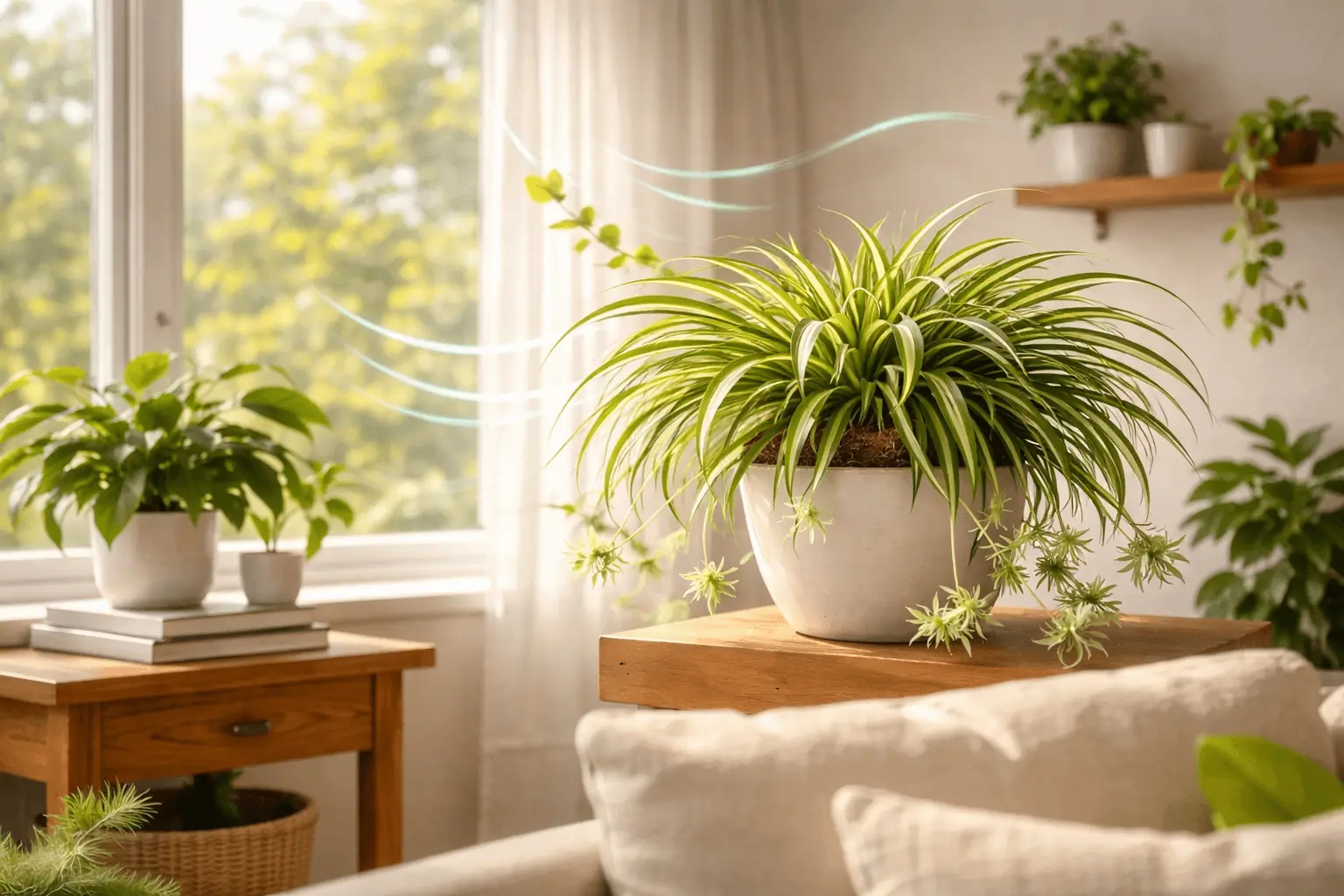
Spider plants can contribute to a healthier indoor environment by interacting with surrounding air and humidity. While houseplants are not replacements for ventilation systems, they can play a small supportive role in maintaining indoor freshness.
NASA’s well-known Clean Air Study highlighted several plants, including spider plants, that can absorb certain airborne pollutants under controlled conditions. In real homes, the effect is modest but still beneficial.
Spider plants also help by:
- Trapping dust particles on leaf surfaces
- Participating in oxygen exchange during photosynthesis
- Increasing indoor humidity slightly through transpiration
These processes support indoor air quality and create a more comfortable living environment.
Stress Reduction and Psychological Benefits
Indoor plants, including spider plants, are linked to improved mental wellbeing and reduced stress. Research in environmental psychology suggests that natural elements in indoor spaces help people feel calmer and more focused.
Spider plants offer visual relaxation through their flowing leaves and soft green color. Many people place them in workspaces, bedrooms, or reading areas to create a calming atmosphere.
Potential psychological benefits include:
- Reduced visual stress in indoor environments
- Improved concentration in workspaces
- Increased sense of connection with nature
Even simple exposure to indoor greenery can positively influence mood and productivity.
Decorative and Interior Design Value
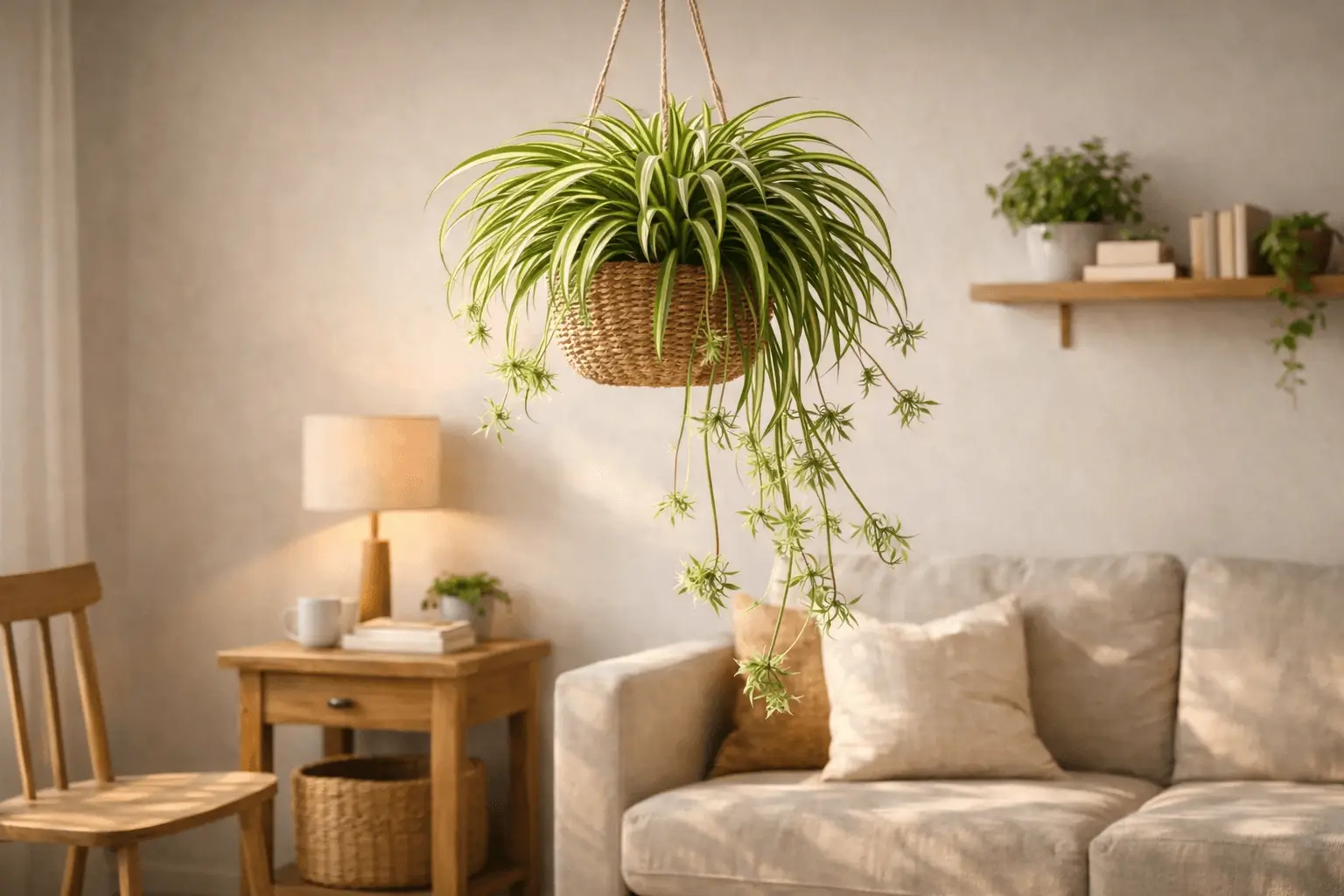
Spider plants are popular decorative houseplants because their arching foliage creates natural movement and softness in interiors.
Interior designers often use spider plants in:
- Hanging baskets
- Floating shelves
- Minimalist plant corners
- Window ledges
Their striped leaves add contrast to neutral interiors while their trailing growth habit adds depth to indoor plant displays. Because of their adaptability, they work well in both modern and traditional home décor styles.
Spider Plant Benefits at Home and in Bedrooms
Spider Plant Benefits at Night
Spider plants do not produce large amounts of oxygen at night because most plants respire after dark. However, they remain safe and beneficial bedroom plants due to their low maintenance and calming visual presence.
Unlike some plants that require strong sunlight, spider plants tolerate bedroom lighting conditions well. Their presence may contribute to a relaxing atmosphere that supports better sleep environments.
Benefits of Keeping Spider Plants in Living Spaces
Spider plants adapt easily to common indoor locations such as living rooms, offices, and kitchens. They tolerate temperature fluctuations and moderate humidity, making them practical houseplants.
Additional benefits include:
- Generally non-toxic to humans and most pets
- Easy propagation through spiderettes
- Minimal fertilizer requirements
- Compact root systems suitable for containers
Because of these characteristics, spider plants are often recommended as starter plants for indoor gardening.
Health and Traditional Uses of Spider Plants
Spider Plants Health Benefits
Spider plants are sometimes associated with general wellness benefits due to their ability to slightly increase indoor humidity and improve room aesthetics.
Higher humidity from plant transpiration may support:
- Reduced dry air discomfort
- Improved indoor comfort during winter
- Healthier indoor microclimates
While these benefits are indirect, indoor plants can still contribute to a more comfortable living environment.
Spider Plant Medicinal Uses and Benefits
Some traditional plant references mention spider plants in folk remedies. However, scientific medical evidence supporting medicinal use is limited.
Most modern horticultural sources emphasize spider plants as ornamental and environmental plants rather than medicinal herbs. Therefore, they should not be relied upon for medical treatment.
Cultural and Spiritual Meanings of Spider Plants
Spider Plant Spiritual Meaning and Symbolism
Spider plants are often associated with growth, resilience, and renewal. Their ability to produce multiple plantlets symbolizes abundance and continuous development.
In symbolic interpretations, spider plants represent:
- Prosperity and expansion
- Adaptability to changing environments
- Positive household energy
These meanings make them popular gifts and decorative plants.
Spider Plant in Feng Shui and Vastu
In Feng Shui, spider plants are believed to help balance energy in indoor environments. They are commonly placed near windows or entryways to encourage fresh energy flow.
In Vastu traditions, indoor plants such as spider plants are considered beneficial when placed in well-lit areas of the home, particularly living rooms or balconies.
Spider Plant Indoor Benefits for Skin, Hair, and Wellness
Claims about spider plants benefiting skin or hair are mostly based on indirect effects rather than direct biological properties.
Indoor plants can improve indoor comfort by increasing humidity slightly. Higher humidity levels may reduce dryness in indoor environments, which can indirectly support skin comfort and hair health.
However, there is no scientific evidence showing spider plants directly improve skin or hair.
Spider Plant Advantages vs Disadvantages
Spider Plant Advantages
Spider plants offer several advantages that make them ideal houseplants.
Key benefits include:
- Extremely easy to grow
- Rapid propagation through plantlets
- Adaptable to different indoor environments
- Attractive trailing foliage
These qualities make spider plants popular among both beginner and experienced gardeners. For a deeper breakdown of care requirements and beginner difficulty across similar houseplants, browse our low-maintenance houseplant database, which catalogs growth rates, common problems, and toxicity levels in one organized workspace. It’s a useful companion when weighing the spider plant’s advantages against other beginner-friendly options.
Spider Plant Disadvantages
Despite their resilience, spider plants can develop problems under poor conditions.
Common disadvantages include:
- Brown leaf tips caused by fluoride or salt buildup
- Sensitivity to overwatering
- Occasional pest issues
- Leggy growth in low light
Most issues are easily corrected with proper care.
Common Spider Plant Problems and How to Fix Them
Why Spider Plant Leaves Turn Brown
Brown leaf tips are usually caused by fluoride or mineral buildup in tap water. Spider plants are sensitive to salts that accumulate in soil.
Solutions include:
- Using filtered or distilled water
- Flushing soil occasionally
- Increasing humidity
Spider Plant Diseases and Pests
Spider plants can occasionally develop pests such as:
- Spider mites
- Aphids
- Mealybugs
Overwatering may also lead to root rot, which is the most common disease affecting spider plants.
Troubleshooting a Struggling Spider Plant
If a spider plant shows yellow leaves or slow growth, check the following:
- Excess watering
- Insufficient light
- Poor drainage
- Salt buildup in soil
Correcting these factors usually restores plant health quickly.
Indoor Care Basics for Maximizing Spider Plant Benefits
Light, Water, and Soil Needs
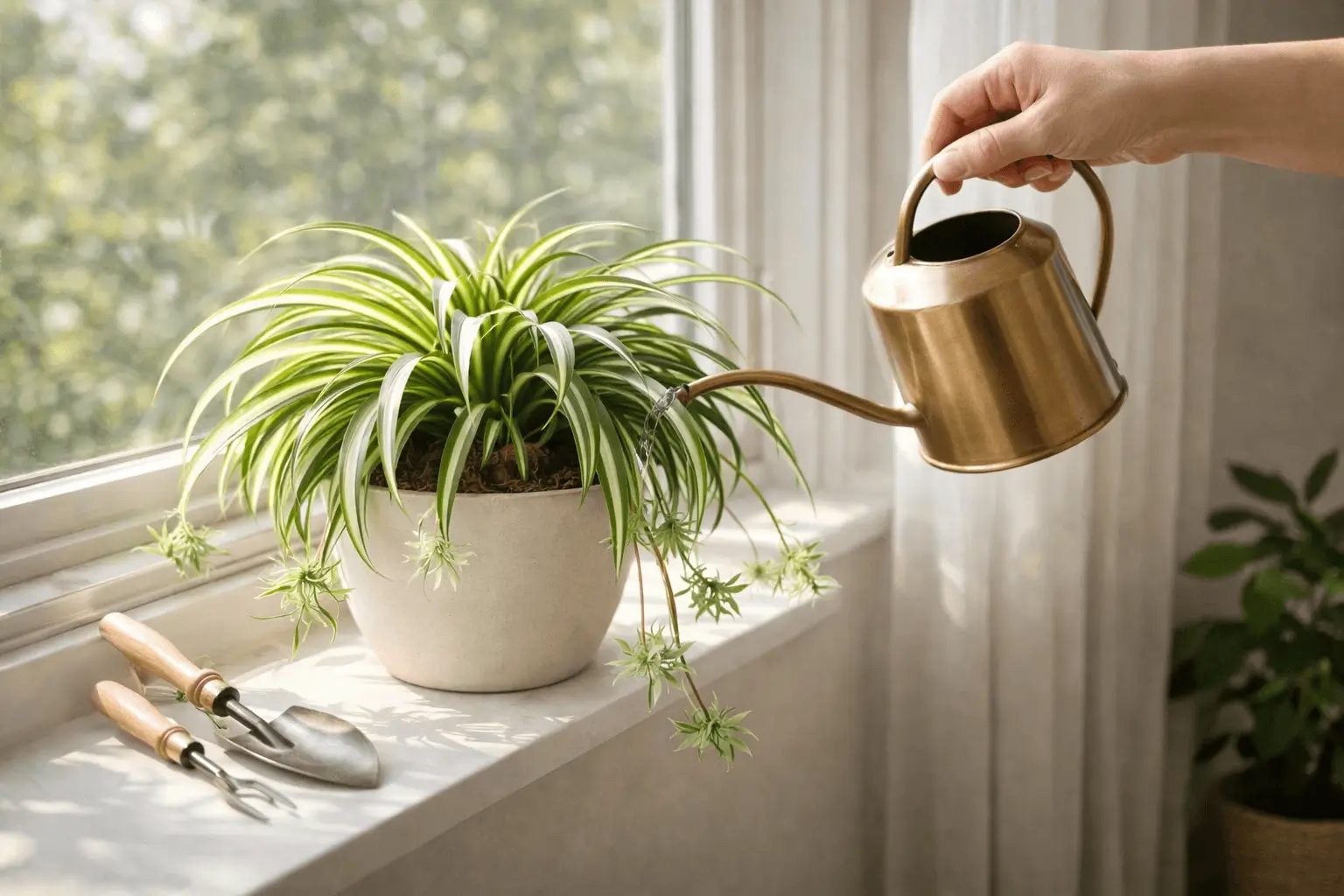
Spider plants grow best in bright indirect light but can tolerate moderate indoor lighting.
Basic care guidelines include:
- Water when the top inch of soil dries
- Use well-draining potting soil
- Avoid overwatering
Maintaining balanced moisture and light ensures healthy growth. If you’d rather compare care specs in a familiar spreadsheet format, our houseplant comparison database on Google Sheets lists watering schedules, light needs, and common issues for spider plants and other low-maintenance species. It’s an easy reference to keep open while adjusting your own indoor plant care routine.
Indoor vs Outdoor Growing Conditions
Spider plants can grow outdoors in warm climates but are most commonly grown indoors.
Ideal indoor conditions include:
- Temperatures between 18–27°C (65–80°F)
- Bright filtered light
- Moderate humidity
In colder regions, indoor growing protects spider plants from frost damage.
Comparison: Spider Plant vs Snake Plant Benefits
Spider plants and snake plants are two of the most common houseplants.
Key differences include:
Spider plant (Chlorophytum comosum)
- Faster growth
- Produces plantlets
- Requires moderate watering
Snake plant (Sansevieria trifasciata, now Dracaena trifasciata)
- Extremely drought tolerant
- Upright architectural leaves
- Slower growth
Both plants contribute to indoor greenery and require minimal maintenance.
If you want to see how the spider plant stacks up against other easy-care houseplants beyond just the snake plant, our low-maintenance houseplant comparison reference breaks down light needs, watering frequency, and pet safety for 18 popular species side by side. It’s a fast way to confirm the spider plant’s “Very Easy” difficulty rating against alternatives like pothos or the ZZ plant.
Beginner Mistakes When Growing Spider Plants Indoors
Several beginner mistakes can reduce spider plant health indoors.
Common errors include:
- Overwatering
Spider plants prefer slightly dry soil between watering. - Using mineral-heavy tap water
Salt buildup can cause brown leaf tips. - Placing plants in deep shade
Low light slows growth and reduces leaf color. - Ignoring humidity needs
Dry air may cause leaf tip damage.
Avoiding these mistakes helps maintain strong and healthy plants.
Conclusion
Spider plant indoor benefits make this plant one of the most practical and beginner-friendly houseplants for modern homes. The spider plant (Chlorophytum comosum) combines low-maintenance care, decorative value, and adaptability, making it suitable for living rooms, offices, kitchens, and bedrooms.
While spider plants are often associated with air purification and wellness benefits, their most reliable advantages come from their ability to enhance indoor environments, add natural greenery, and support a calming atmosphere. Their fast propagation, tolerance of indoor conditions, and resilience to minor care mistakes also make them ideal for people new to indoor gardening.
When provided with bright indirect light, moderate watering, and well-draining soil, spider plants can thrive indoors year-round. Understanding both their benefits and potential challenges—such as brown leaf tips or overwatering—helps gardeners maintain healthy plants.
Overall, spider plants remain one of the most accessible and rewarding indoor plants, offering long-lasting greenery and practical benefits for homes and indoor spaces.
FAQs
1. What are the main spider plant indoor benefits?
Spider plants improve indoor aesthetics, help maintain a fresher indoor environment, and require very little maintenance. Their adaptability and decorative foliage make them excellent beginner houseplants.
2. Is a spider plant good for indoor air quality?
Spider plants can absorb small amounts of airborne pollutants and contribute to indoor freshness, though proper ventilation remains the most important factor for healthy indoor air.
3. Can spider plants grow indoors all year?
Yes. Spider plants adapt well to indoor conditions and can grow year-round when provided with bright indirect light, moderate watering, and well-draining soil.
4. Are spider plants safe to keep in bedrooms?
Yes. Spider plants are safe bedroom plants and help create a calm environment while requiring minimal care.
5. What causes common spider plant problems indoors?
The most common issues include overwatering, mineral buildup from tap water, low humidity, and insufficient light.
6. Do spider plants have spiritual meaning?
Many cultures associate spider plants with growth, prosperity, and positive energy, especially in Feng Shui and Vastu traditions.


12 Responses