

Introduction
The comparison magnolia little gem vs teddy bear is common among gardeners choosing compact evergreen magnolia trees for landscaping, privacy screens, or decorative garden planting. Both little gem magnolia and teddy bear magnolia are cultivars of Magnolia grandiflora, valued for their glossy evergreen leaves, fragrant white flowers, and relatively manageable size compared to traditional magnolia trees.
However, these two varieties differ in growth rate, mature height, leaf structure, spacing needs, and best landscaping uses. Understanding the differences between magnolia ‘little gem’ and magnolia ‘teddy bear’ helps gardeners choose the right tree for hedges, small gardens, pots, or feature planting.
This guide explains the characteristics, growth habits, size differences, and practical garden uses when comparing little gem magnolia vs teddy bear magnolia.
What Are Little Gem and Teddy Bear Magnolia Trees?
Origin and botanical background
Both magnolia ‘little gem’ and magnolia ‘teddy bear’ are compact cultivars of the species Magnolia grandiflora, a well-known evergreen magnolia native to the southeastern United States. This species belongs to the Magnoliaceae family and is widely planted for its glossy foliage and large fragrant flowers.
The magnolia little gem cultivar was developed to provide a smaller version of the traditional Southern magnolia tree. Likewise, magnolia ‘teddy bear’, often referred to as magnolia grandiflora teddy bear, was bred for its dense growth and distinctive foliage.
The teddy bear magnolia is recognized for its rounded growth habit and leaves with a velvety bronze underside. In comparison, the magnolia teddy bear and magnolia ‘little gem’ both retain the evergreen magnolia characteristics that gardeners value: thick glossy leaves, creamy white blooms, and year-round structure in the landscape.
Dwarf evergreen magnolias have become popular in modern garden design because they provide the visual impact of a magnolia tree while remaining manageable in suburban landscapes and smaller gardens.
Why gardeners compare magnolia little gem vs teddy bear
Gardeners often compare magnolia teddy bear vs little gem because both varieties serve similar landscaping roles. They are frequently chosen for privacy hedges, feature trees, and structured planting in compact gardens.
The teddy bear magnolia vs little gem comparison is especially relevant when planning evergreen hedges or narrow garden borders. Both trees offer dense foliage, but their growth habits and spacing requirements differ slightly.
Many landscape designers evaluate little gem vs teddy bear magnolia when selecting trees for driveways, entryways, or architectural garden features. Because of their manageable size and evergreen foliage, the teddy bear magnolia tree vs little gem magnolia tree is a common decision for homeowners seeking structure without planting very large magnolia species.
Magnolia Little Gem vs Teddy Bear: Key Differences at a Glance
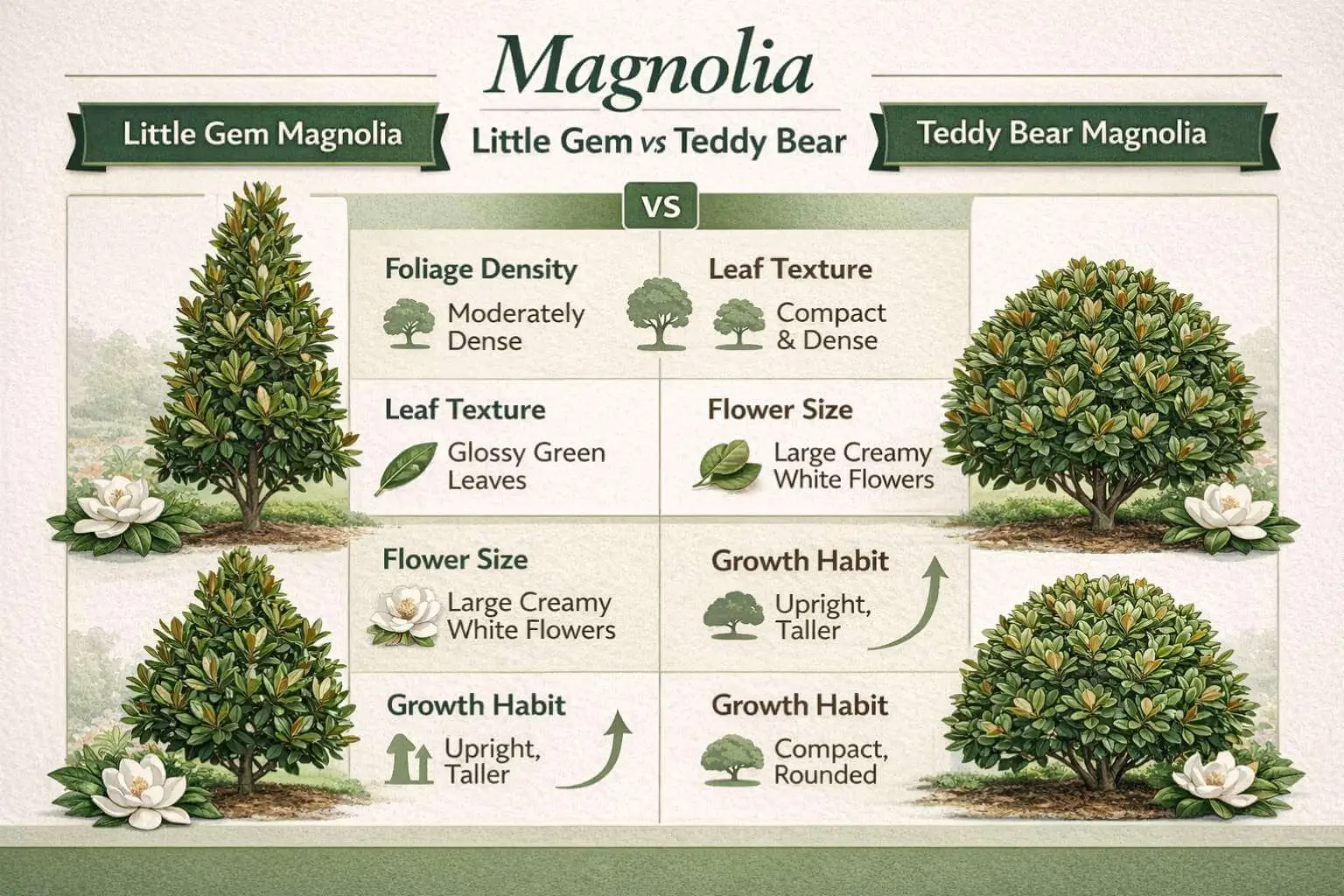
-
Growth habit and overall appearance
The teddy bear magnolia tree and little gem magnolia tree differ noticeably in structure and branching patterns.
The little gem magnolia tree typically grows in a slightly upright form with a looser branching structure. Its canopy becomes taller over time, creating a narrow vertical tree that works well in rows or hedges.
In contrast, the teddy magnolia tree — often called magnolia teddy bear tree — develops a denser and more compact growth habit. Branching tends to be tighter and more uniform, giving the tree a rounded or column-shaped appearance.
Because of this dense foliage structure, teddy bear magnolia trees often appear fuller and more structured in formal landscapes.
-
Leaf size and texture differences
One of the most noticeable visual differences between these two magnolias is their foliage.
Little Gem leaves are generally longer and smoother, with a glossy dark green surface. The underside may have a light brown tint but is usually less textured.
Teddy Bear magnolia leaves are more compact and thicker, with a distinctive fuzzy bronze underside. This velvety texture gives the tree its “teddy bear” name and creates visual contrast when leaves move in the wind.
In gardens, this difference makes teddy bear magnolias appear slightly darker and denser compared with the longer leaves of the little gem magnolia.
-
Flower size and fragrance
Both varieties produce the classic creamy white magnolia bloom, known for its strong fragrance and large petals.
The teddy bear magnolia flower typically appears during late spring and early summer. The blooms are similar in shape to traditional Southern magnolia flowers but may be slightly smaller due to the compact growth habit.
Little Gem magnolias often produce flowers over a longer seasonal period, sometimes repeating blooms through summer in warm climates. Both varieties maintain the sweet citrus-like fragrance associated with evergreen magnolias.
Tree Size Comparison: How Tall Do They Grow?
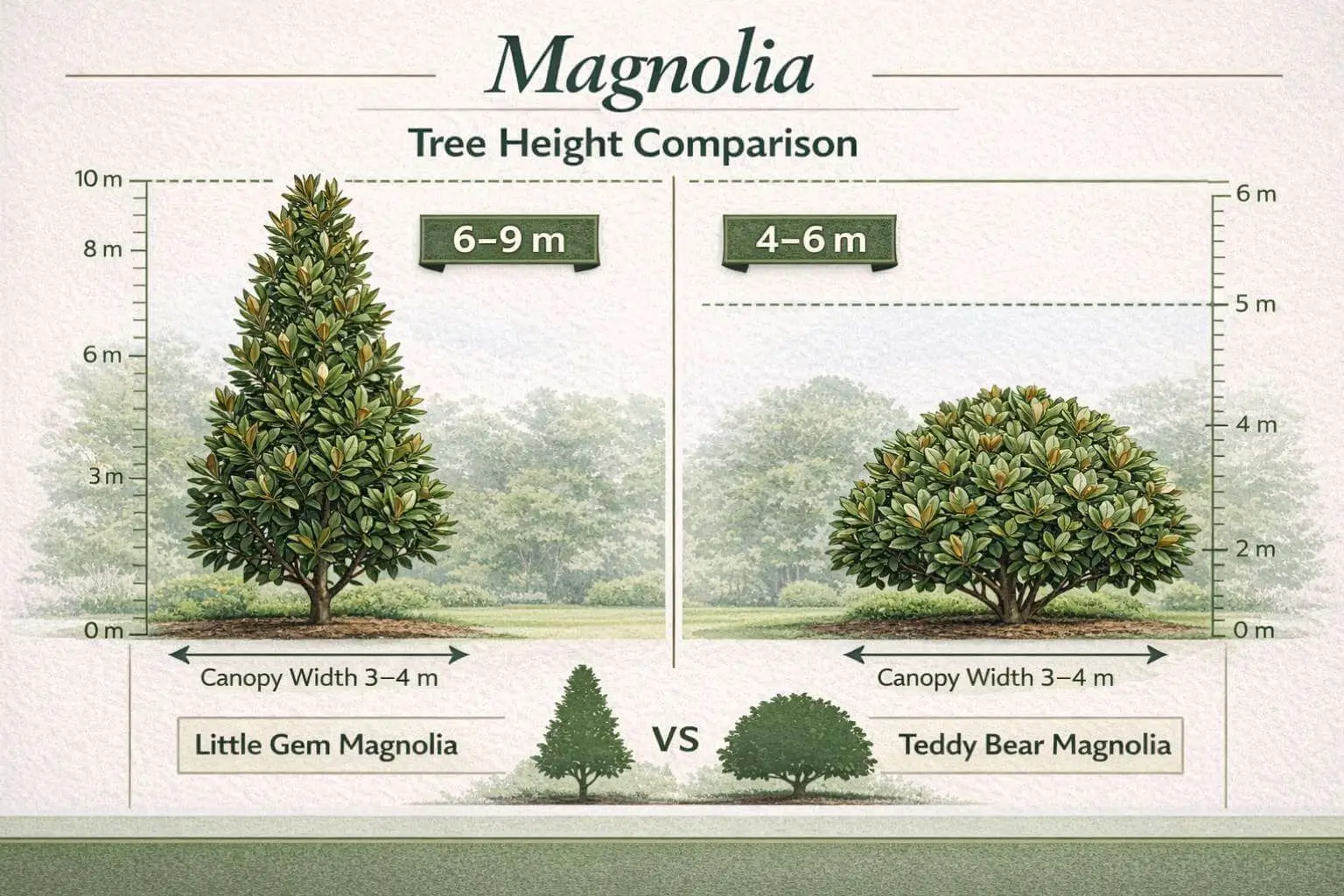
Little gem magnolia height and mature size
The magnolia little gem height generally reaches between 6–9 meters at maturity in favorable conditions. However, many residential plantings remain slightly smaller due to pruning or limited space.
In terms of width, the magnolia little gem size typically spreads about 3–4 meters. The little gem magnolia tree tends to grow vertically, making it suitable for narrow gardens or screening plantings.
Because of its upright growth pattern, little gem magnolia trees are frequently used for structured rows along property boundaries.
Teddy bear magnolia height and mature size
The magnolia teddy bear height usually reaches around 4–6 meters when fully mature. Compared with Little Gem, the magnolia teddy bear size is slightly shorter but denser.
The teddy bear magnolia size typically spreads about 2–3 meters wide. Gardeners often ask how big do teddy bear magnolias grow, and the answer depends on climate, soil quality, and pruning practices.
Because of its compact canopy, the teddy bear magnolia works well in smaller landscapes or areas where a narrower evergreen tree is preferred.
Full grown teddy bear magnolia vs little gem
A full grown teddy bear magnolia tree generally appears shorter and more compact than a mature Little Gem magnolia.
When comparing full grown teddy bear magnolia vs little gem magnolia vs teddy bear size, Little Gem often develops a taller vertical silhouette. Meanwhile, Teddy Bear trees maintain a fuller, rounded canopy.
This difference is one reason gardeners choose Teddy Bear magnolias for compact gardens while Little Gem magnolias are often used for taller screens or hedges.
Growth Rate and Development
-
Magnolia little gem growth rate
The magnolia little gem growth rate is considered moderate. Under ideal conditions with full sunlight and fertile soil, trees may grow approximately 30–60 centimeters per year.
Growth speed depends on several environmental factors, including soil quality, drainage, sunlight exposure, and temperature. Young trees often grow faster during the establishment phase when roots are expanding into surrounding soil.
-
Teddy bear magnolia growth rate
The teddy bear magnolia growth rate is typically slightly slower than Little Gem magnolia. The magnolia teddy bear growth rate often averages about 20–40 centimeters per year.
Because Teddy Bear magnolias develop dense foliage and compact branching, they may prioritize canopy density rather than rapid height growth.
-
Which magnolia establishes faster in gardens
In many landscapes, Little Gem magnolias establish slightly faster than Teddy Bear magnolias. Their vertical growth pattern allows them to gain height more quickly during early development.
However, environmental conditions strongly influence establishment. Adequate sunlight, well-drained soil, and consistent watering during the first growing season significantly improve root development for both magnolia varieties.
Landscaping Uses: Which Magnolia Works Best?
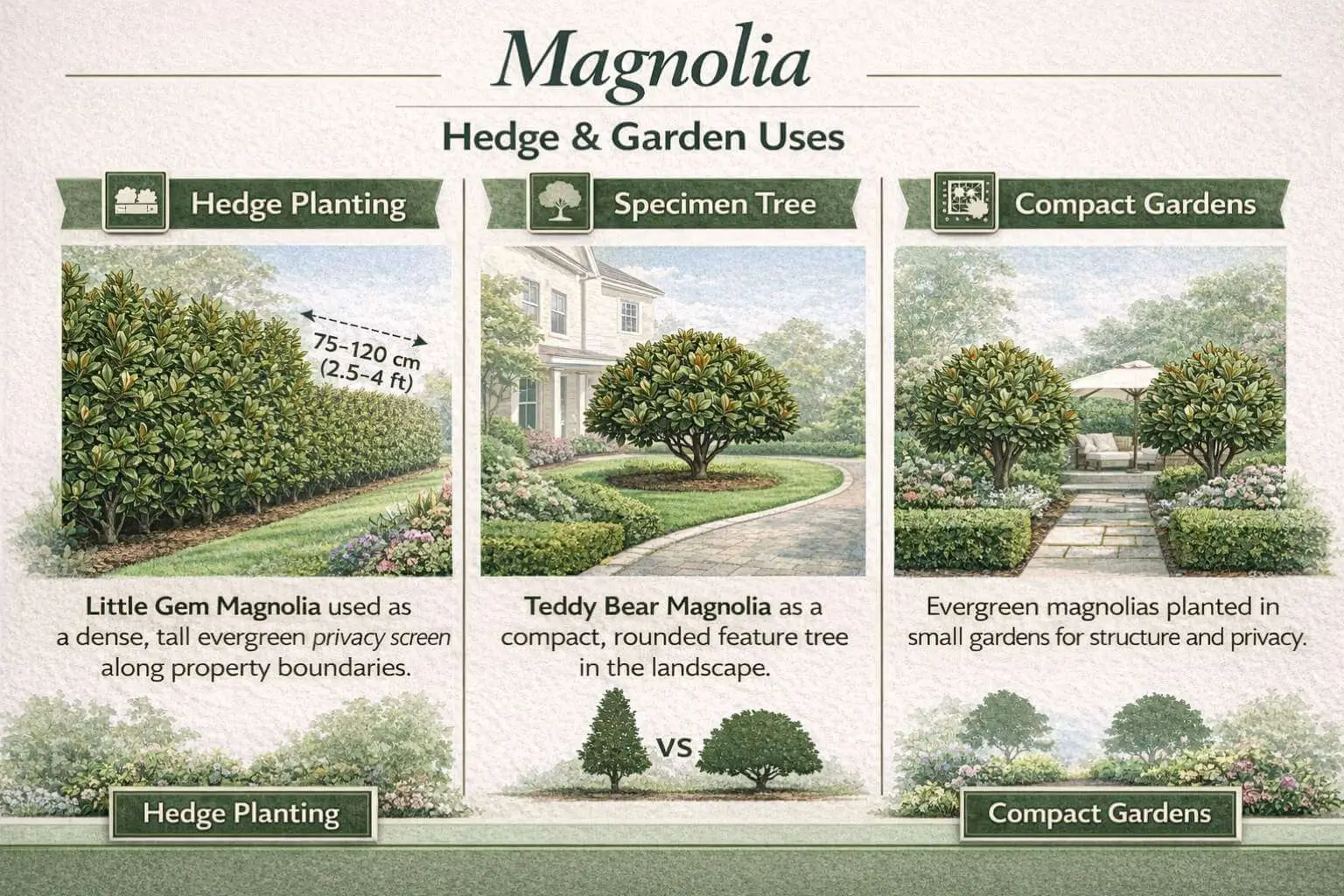
Magnolia hedge and privacy screen planting
Both varieties are popular for evergreen hedges and privacy screening.
A little gem magnolia hedge is commonly used to create tall living screens along property boundaries. Gardeners often plant magnolia little gem hedge rows because the trees grow vertically and form dense foliage.
Proper little gem magnolia hedge spacing is important to avoid overcrowding. Trees are typically planted 2–3 meters apart to allow natural canopy development.
Similarly, a magnolia teddy bear hedge can provide a compact and dense privacy screen. Because Teddy Bear magnolias grow slightly shorter, they are often used where moderate-height hedges are desired.
Feature tree vs compact garden planting
Both magnolias also function well as specimen trees.
The teddy bear dwarf magnolia tree is often planted as a decorative focal point in small landscapes. Its compact growth and dense foliage create a sculptural appearance.
A magnolia tree teddy bear may also be used in narrow garden beds, courtyard gardens, or driveway plantings where space is limited.
Little Gem magnolias are often chosen for feature planting when a taller evergreen tree is desired.
Growing magnolias in containers or small spaces
Growing little gem magnolia in pots is possible if large containers and well-draining soil are used. Magnolia little gem in pots requires regular watering and occasional pruning to maintain manageable size.
Container planting works best when trees are placed in bright locations with adequate sunlight. While magnolias prefer open soil for root expansion, dwarf cultivars can adapt to large containers in patios or small gardens.
Climate and Environmental Considerations
Evergreen magnolia adaptability
Evergreen magnolia teddy bear and evergreen magnolia little gem trees adapt well to warm and temperate climates. These magnolias thrive in full sunlight and prefer slightly acidic, well-drained soil.
Their evergreen foliage allows them to maintain year-round visual interest in landscapes.
Regional differences in growth
Climate conditions can influence growth patterns and flowering.
In regions such as Australia, magnolia teddy bear australia plantings are common because the trees perform well in warm climates. Gardeners comparing magnolia teddy bear vs little gem australia often notice differences in growth rate depending on rainfall and soil type.
Common Problems and Beginner Mistakes
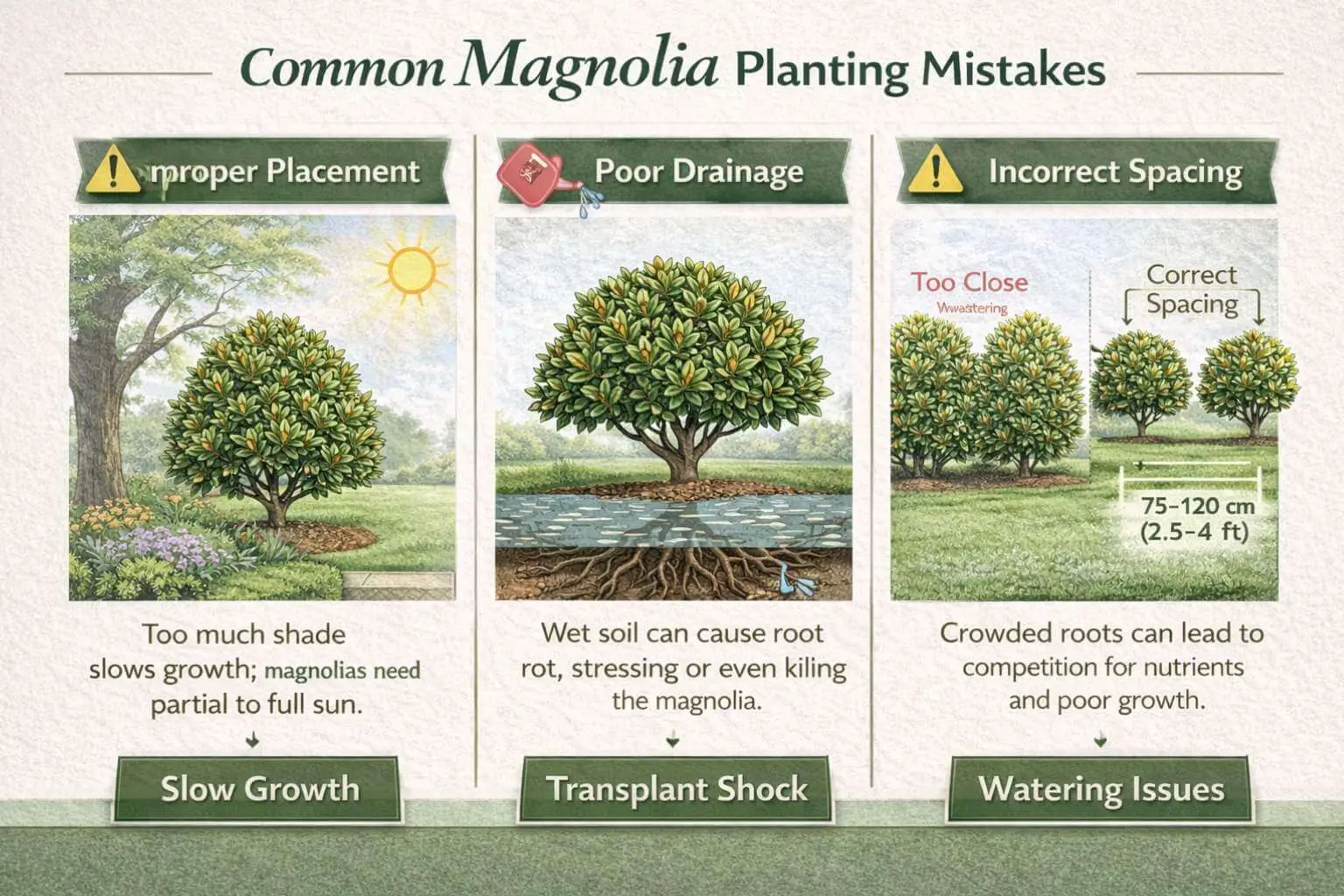
-
Slow growth or poor flowering
Slow growth or limited flowering can occur if magnolias are planted in poor soil or areas with insufficient sunlight. Magnolia trees generally require full sun for healthy flowering.
Transplant shock may also slow growth during the first year after planting.
-
Planting spacing mistakes in magnolia hedges
Incorrect little gem magnolia hedge spacing is a common beginner mistake. Trees planted too closely may compete for nutrients and sunlight, resulting in uneven growth.
Allowing adequate spacing helps trees develop full canopies and healthy root systems.
-
Overwatering or soil drainage issues
Magnolia trees prefer moist but well-drained soil. Overwatering or poorly drained soil can lead to root stress and reduced plant health.
Ensuring proper drainage is essential for maintaining strong root systems and preventing fungal problems.
Pros and Cons of Little Gem vs Teddy Bear Magnolia
Little gem magnolia pros and cons
Little gem magnolia trees are valued for their moderate growth rate and taller mature height. They are particularly effective for privacy hedges and vertical landscape structures.
However, their slightly larger size may require occasional pruning in smaller gardens.
Teddy bear magnolia pros and cons
Teddy bear magnolia trees are appreciated for their compact growth habit and dense foliage. Their bronze leaf undersides add decorative interest throughout the year.
Because they grow more slowly, they may take longer to reach full height compared with Little Gem magnolias.
Conclusion
When comparing magnolia little gem vs teddy bear, both varieties offer compact evergreen magnolia options suitable for residential gardens, privacy screens, and decorative landscaping. The little gem magnolia typically grows slightly taller with a looser canopy, while the teddy bear magnolia is known for its dense foliage, fuzzy bronze leaf undersides, and more compact structure.
Choosing between little gem vs teddy bear magnolia depends largely on garden size, desired tree shape, and planting purpose. Understanding their growth habits, mature height, and landscaping applications ensures gardeners select the magnolia tree best suited to their space.
Learn more: lucky money plant
FAQs
What is the difference between magnolia little gem vs teddy bear?
Little Gem magnolia generally grows slightly taller and faster, while Teddy Bear magnolia has denser foliage and a more compact growth habit.
Which magnolia is better for hedges: little gem or teddy bear?
Both varieties can form hedges, but little gem magnolia hedge plantings are often preferred for tall privacy screens.
How tall does a teddy bear magnolia grow?
The teddy bear magnolia height typically reaches around 4–6 meters depending on climate and pruning.
Can little gem magnolia grow in pots?
Yes, little gem magnolia in pots is possible if the container is large and the soil is well-draining.
Do teddy bear magnolia trees grow faster than little gem?
Generally little gem magnolia growth rate is slightly faster, although growth varies depending on soil quality, sunlight, and climate.



4 Responses