
Introduction
A hakea salicifolia hedge is a dense, fast-growing native hedge formed from Hakea salicifolia (willow-leaved hakea or willow leaf hakea). It is commonly used for privacy screens, windbreaks, and informal hedging in warm–temperate to subtropical climates, especially in Australia. This plant is valued for its rapid growth, evergreen foliage, and strong adaptability in low-maintenance landscapes.
This article focuses purely on how Hakea salicifolia functions as a hedge, including its size, growth rate, spacing, care needs, and common issues.
Quick Summary
- Hakea salicifolia is a fast-growing evergreen shrub or small tree used for dense hedges and screening.
- A hakea salicifolia hedge is typically planted 1.0–2.0 m apart for best results.
- Mature height usually reaches 4–6 m unless regularly pruned.
- Common issues include yellowing leaves, borers, and invasive potential in some regions.
- It is low-maintenance once established but requires good drainage and light pruning.
What is Hakea salicifolia?
Hakea salicifolia (willow-leaved hakea or willow leaf hakea) is an evergreen shrub or small tree in the Proteaceae family, native to eastern Australia. It is widely used in landscaping due to its dense growth and ornamental flowers.
Hakea salicifolia belongs to the Proteaceae family, a well-known group of flowering plants that also includes banksias and grevilleas.
Learn more about the family here: Proteaceae
Plant description and identification
It features narrow, willow-like leaves and produces clusters of white to cream flowers in winter and spring. After flowering, it develops woody seed pods typical of pincushion-type hakeas. These traits make it easy to identify in gardens and natural habitats.
Why choose a hakea salicifolia hedge?
A hakea salicifolia hedge is chosen for its fast growth, dense screening ability, and resilience in tough conditions.
Key advantages
- Fast-growing natural privacy screen
- Excellent windbreak capability
- Drought tolerant once established
- Supports birds and pollinators
Compared to pittosporum or privet, it is more drought-resistant and better suited to native-style landscapes. For gardeners exploring broader landscaping options, fast-growing screening species like Fast Growing Australian Native Screening Plants Guide and Tropical Screening Plants: Best Choices for Garden Privacy provide alternative hedge solutions for different climates and design needs.
Plant Size and Growth Rate
Hakea salicifolia hedge size and height
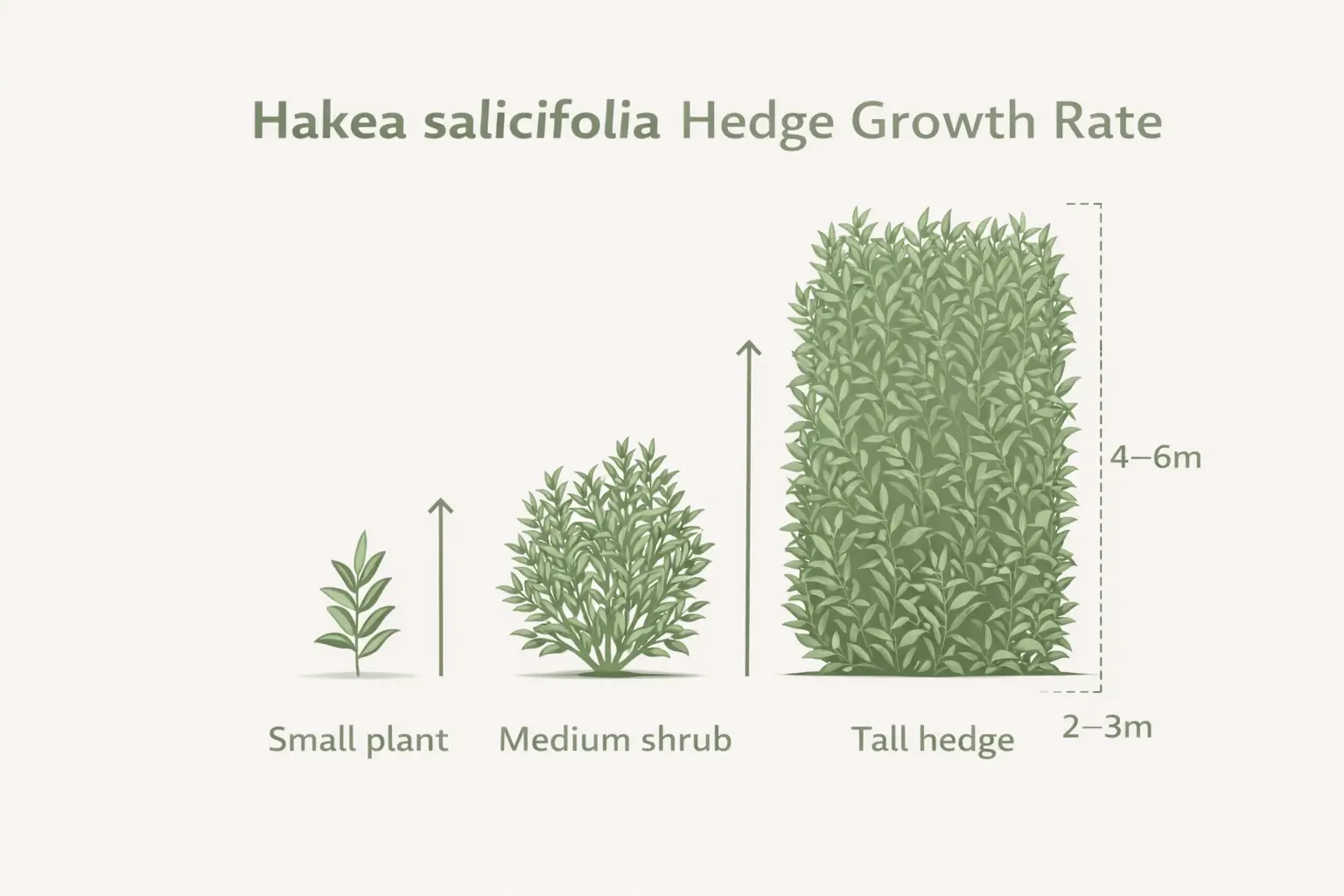
A mature hedge typically reaches 4–6 m in height and 2–3 m in width if unpruned. With regular trimming, it can be maintained at 2–3 m or lower for residential use.
Hakea salicifolia hedge growth rate
This species is fast-growing among native hedging plants. It establishes quickly and forms a dense structure within a few years under suitable conditions. Its lifespan is generally around 12–14 years depending on environment and care.
Planting and Spacing
Hakea salicifolia prefers full sun to partial shade and well-drained soil. It grows well in temperate to subtropical climates and tolerates light frost once established.
Hakea salicifolia hedge spacing
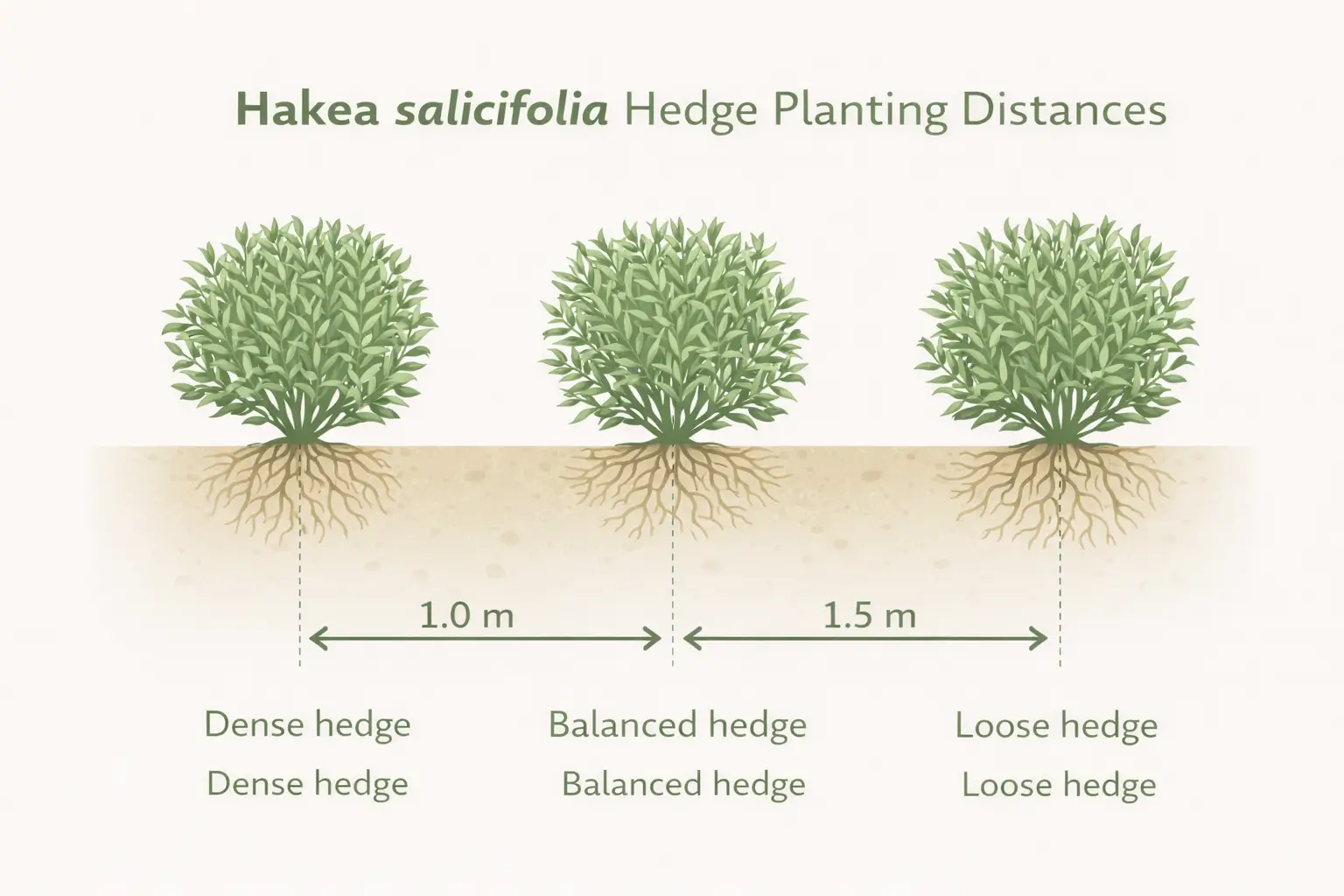
Recommended spacing is 1.0–2.0 m apart. Closer spacing produces faster screening, while wider spacing creates a looser hedge.
When to plant a hakea salicifolia hedge
Best planted in late winter to early spring or just before the wet season in subtropical regions to support root establishment.
Care Guide for a Hakea salicifolia Hedge
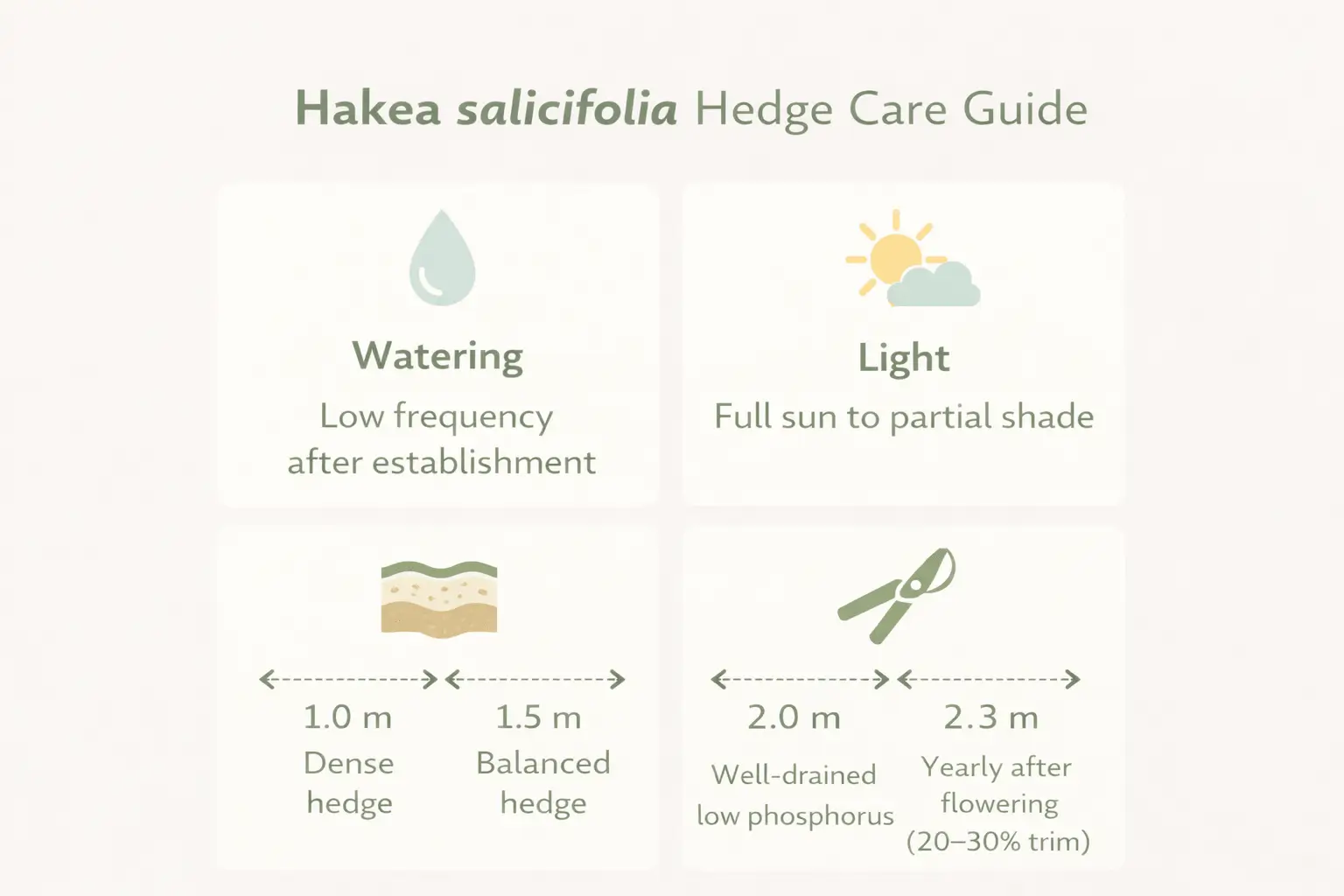
This hedge is low-maintenance once established and thrives with minimal intervention.
Watering and soil needs
Water regularly for the first 1–2 years, then reduce frequency. Well-drained, low-phosphorus soil is essential for healthy growth.
Light and climate tolerance
It prefers full sun to light shade and tolerates moderate frost. Shelter improves performance in colder or coastal regions.
Fertilization and pruning
Use low-phosphorus native fertilizer sparingly. Prune after flowering, removing 20–30% of growth to maintain density and shape.
Common Hakea salicifolia Problems
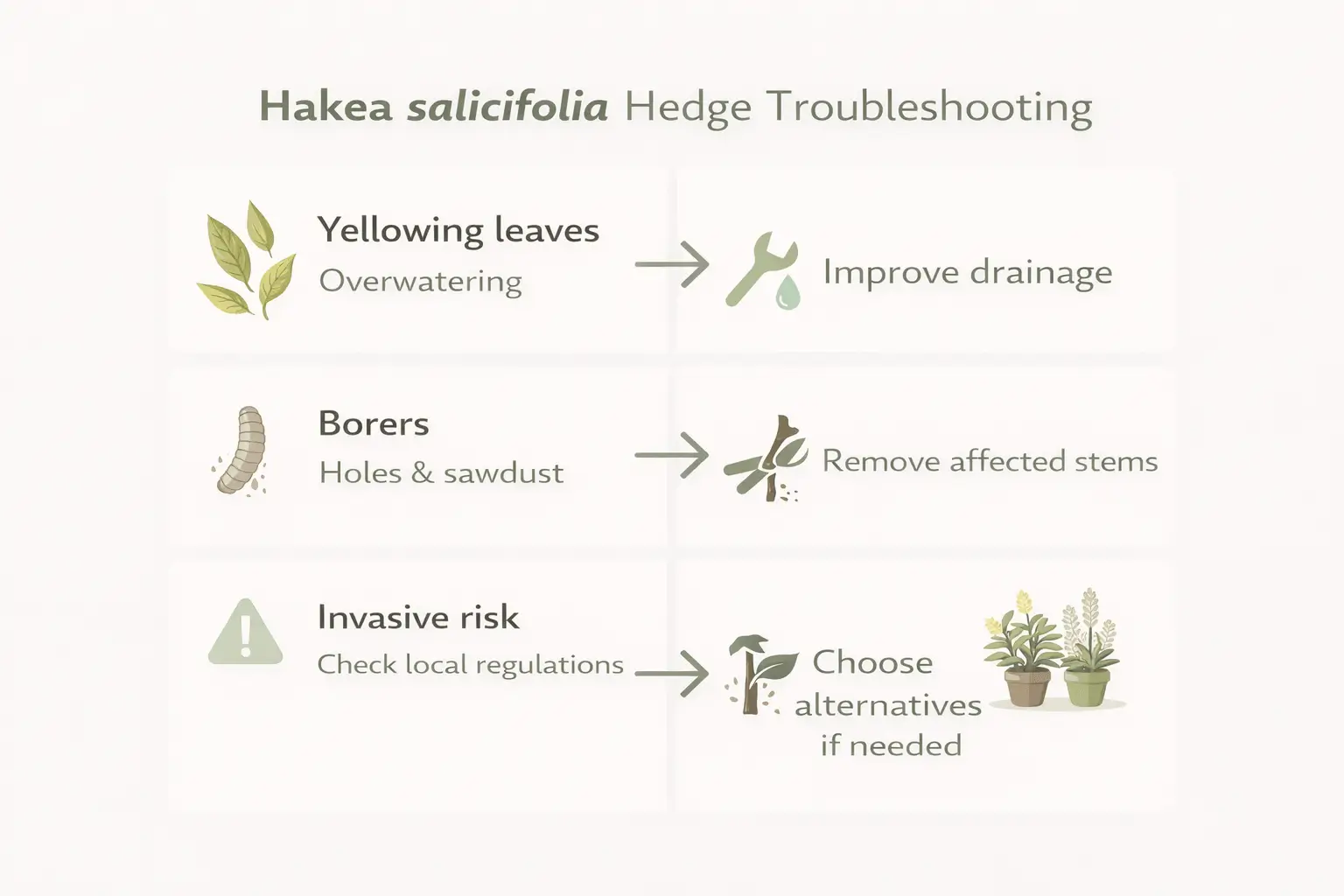
Yellowing leaves and overwatering
Yellow leaves usually indicate overwatering or poor drainage. Improving soil conditions typically resolves the issue.
Borers and stem damage
Borers may attack stems, leaving holes and sawdust. Early detection and removal of affected stems is important.
Environmental and invasive-weed issues
In some regions, it is considered invasive. Always check local guidelines before planting.
Seasonal and Environmental Considerations
Prune after flowering and monitor pest activity in warmer months. Avoid waterlogged or extremely cold sites. In invasive-prone areas, planting should be carefully managed.
Comparison with Similar Plants
Hakea salicifolia vs pittosporum hedges
Hakea grows faster and is more drought-tolerant, while pittosporum is easier to shape into formal hedges. Many gardeners compare this hedge with structured alternatives such as Lilly Pilly Privacy Screen: 7+ Essential Growing Tips or Pittosporum Silver Sheen Growth Rate: 5+ Proven Facts, especially when aiming for more formal or compact hedge designs.
Hakea salicifolia vs other hedges and privet
Privet is denser and more formal but less environmentally friendly. Pincushion hakea is more compact but less suitable for tall hedges.
| Plant | Typical Height | Growth Rate | Drought Tolerance | Wildlife Value | Weed Risk |
| Hakea salicifolia | 4–6 m | Fast | High | High | Medium–High |
| Pittosporum | 3–5 m | Moderate | Moderate | Medium | Low |
| Privet | 3–5 m | Fast | Low | Low | High |
Propagation and Varieties
Propagation is done via seeds or semi-hardwood cuttings. Cuttings provide more uniform growth. Some nursery selections may be labeled as special cultivars, but most are seed-grown.
Content Differentiation and Practical Tips
Avoid planting too close to buildings, overwatering, or ignoring invasive status. Annual pruning and correct spacing are key to long-term success. For sustainable garden planning and climate-smart landscaping, species selection can be explored further in Easy Low Maintenance Australian Native Garden Guide 7+ Steps, which highlights drought-tolerant and low-maintenance planting strategies.
Conclusion
A hakea salicifolia hedge is a fast-growing, dense, and wildlife-friendly screening option suitable for native landscapes. With proper spacing, well-drained soil, and annual pruning, it remains manageable and effective. However, its invasive potential in some regions means careful planting decisions are essential.
Frequently Asked Questions (FAQs)
How fast does a hakea salicifolia hedge grow?
It grows quickly and can form a functional hedge within a few years under good conditions.
What spacing is best for a hakea salicifolia hedge?
A spacing of 1.0–2.0 m is ideal depending on how dense you want the hedge.
How tall does it get?
It can reach 4–6 m if unpruned, but is commonly maintained at 2–3 m.
Is it drought tolerant?
Yes, once established it handles dry conditions well but needs water during early growth.
Can it become invasive?
Yes, in some regions it is considered invasive, so local guidelines should always be checked.