
Introduction
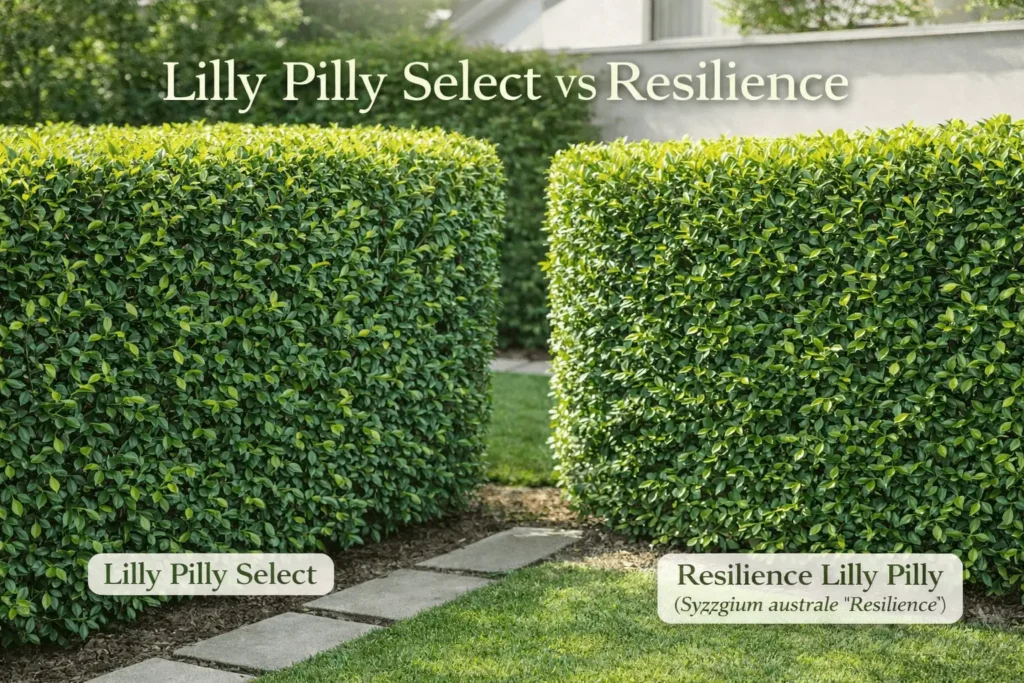
The comparison between lilly pilly select vs resilience helps gardeners determine which hedge variety best fits their landscaping needs. Both lilly pilly select and resilience lilly pilly (Syzygium australe ‘Resilience’) are Australian native evergreen plants widely used for privacy hedges, screening plants, and structured landscape borders.
These plants belong to the Syzygium australe species, part of the Myrtaceae botanical family, and are valued for their dense foliage, fast establishment, and adaptability in residential gardens. Gardeners often compare these cultivars when selecting hedge plants because of differences in growth rate, mature height, hedge density, spacing requirements, pest resistance, and maintenance needs. Understanding these factors helps homeowners choose a variety that will create healthy, long-lasting hedges and privacy screens in garden landscapes.
What Is Lilly Pilly Select?
Botanical characteristics and hedge qualities
Lilly pilly select is a cultivated variety of Syzygium australe, an Australian native evergreen shrub known for its compact growth and dense foliage. This cultivar produces glossy green leaves and forms tight branching structures that respond well to pruning.
Because of its naturally dense canopy, it is frequently used for lilly pilly select hedge planting, where gardeners want a neat and structured hedge line. The plant develops thick foliage that helps block views and create natural privacy barriers.
Lilly pilly select performs well in hedging applications such as:
- Privacy screens
- Garden boundary hedges
- Formal landscape hedges
- Residential screening plants
Its compact form allows it to maintain a tidy hedge shape with consistent trimming.
Typical Uses in Landscaping
Typical uses in landscaping
Gardeners frequently select lilly pilly select for structured hedges in residential landscapes. The dense foliage and strong branching pattern allow it to maintain uniform hedge lines.
This cultivar is often used in:
- Formal garden hedges
- Privacy hedges along fences
- Landscape borders and property screening
- Structured garden designs requiring symmetrical hedges
Among various lilly pilly varieties, select cultivars are popular for creating hedges that maintain a clear, defined shape with regular pruning.
What Is Resilience Lilly Pilly (Syzygium australe ‘Resilience’)?
Key traits of syzygium australe resilience
Resilience lilly pilly (Syzygium australe ‘Resilience’) is another cultivated form of the Australian native lilly pilly species. This variety was developed to improve resistance to certain pests and environmental stresses that can affect hedge plants.
Like other members of the Syzygium australe group, resilience produces glossy evergreen foliage and forms dense hedge structures suitable for screening and privacy planting.
However, its defining characteristic is its improved durability and reliability in garden environments. Because of this, resilience lilly pilly is often selected for gardens where plant health and pest resistance are important considerations.
Why Gardeners Choose Resilience Varieties
Why gardeners choose resilience varieties
Gardeners choose syzygium australe resilience because it offers dependable growth and strong resistance to common lilly pilly issues.
This cultivar has become widely used in landscaping due to its ability to perform well in suburban environments where plants may experience environmental stress.
Common reasons gardeners select resilience varieties include:
- Improved tolerance to common hedge pests
- Reliable growth in residential landscapes
- Reduced maintenance compared with some other cultivars
Because of these traits, resilience lilly pilly is often regarded as a reliable low-maintenance hedge plant for screening and boundary hedges.
Lilly Pilly Select vs Resilience: Key Differences
Growth habit and hedge structure
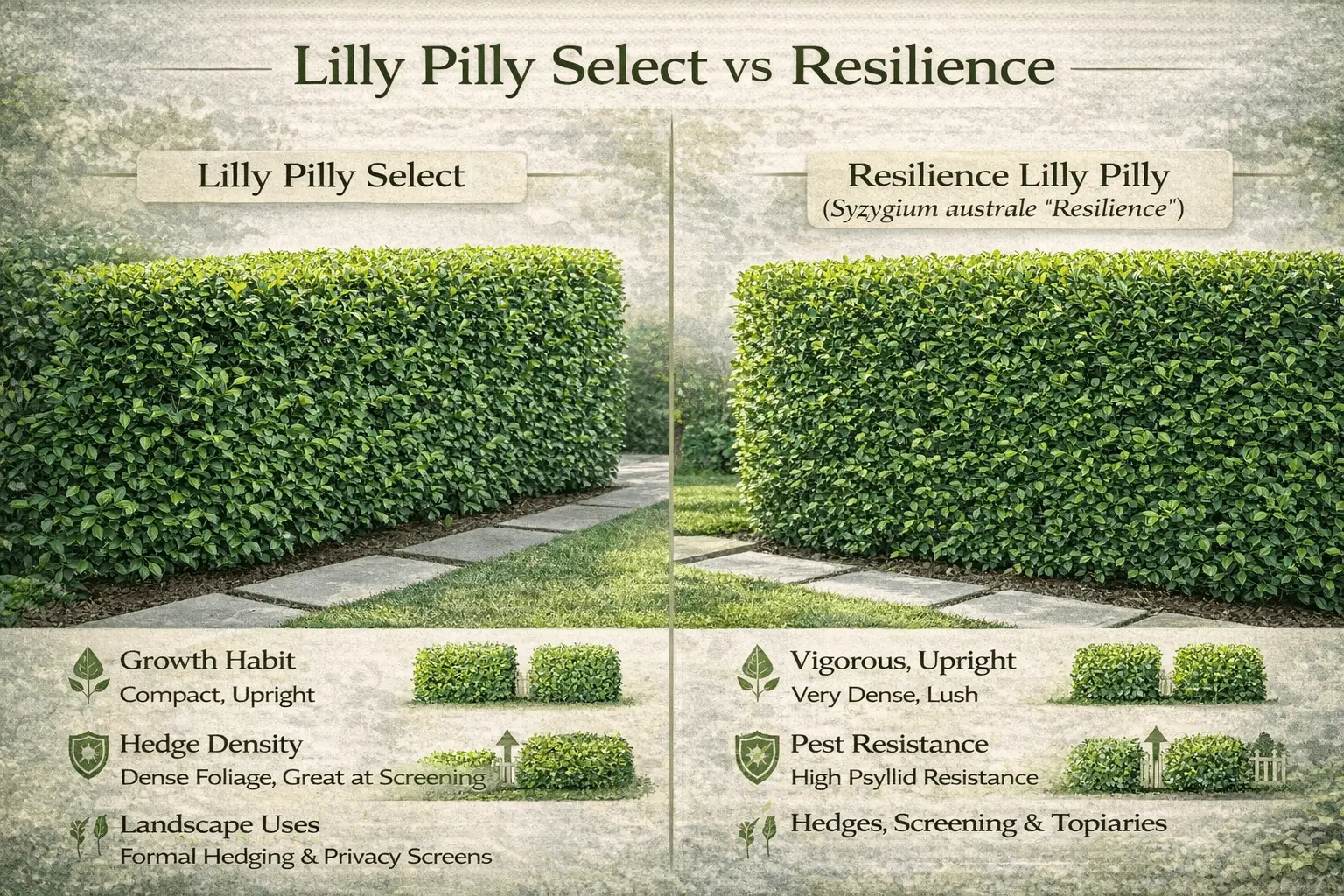
When comparing lilly pilly select vs resilience, both varieties create dense evergreen hedges, but their growth structure can differ slightly.
Lilly pilly select tends to form compact, tightly branched hedges that respond well to frequent shaping. This makes it particularly suitable for formal hedges and structured garden layouts.
Resilience lilly pilly, on the other hand, may show slightly broader branching and can be used for both structured hedges and natural screening hedges.
Pest resistance and plant health
One of the main differences between these cultivars involves pest resistance and overall plant durability.
Resilience lilly pilly was bred to improve resistance to certain issues that affect some lilly pilly varieties. This makes it a preferred choice for gardens where plant health and reliability are priorities.
Lilly pilly select remains a healthy hedge plant but may require more monitoring in some environments.
Landscape uses and design preferences
Landscape designers often choose between the two cultivars depending on hedge style and maintenance goals.
- Lilly pilly select suits formal hedges and structured landscape designs.
- Resilience lilly pilly works well for screening hedges and lower-maintenance landscapes.
Both varieties remain common choices for privacy hedges in suburban gardens.
Plant Size and Mature Height
Lilly pilly select height
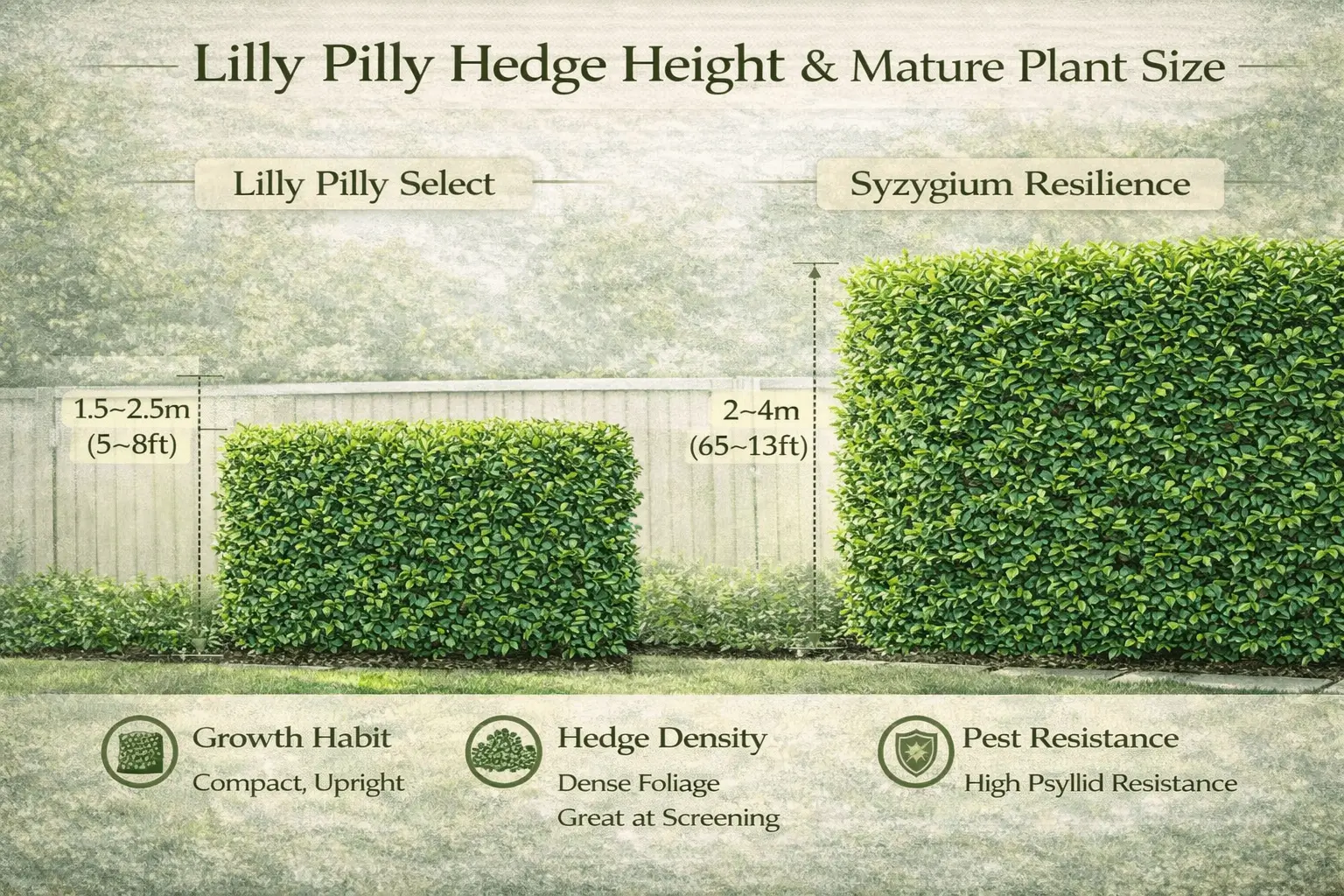
The lilly pilly select height can vary depending on pruning and environmental conditions. When grown as a hedge, plants are typically maintained between 2 and 4 meters tall.
If left untrimmed, plants may grow taller and develop into small ornamental trees. Regular pruning helps maintain dense hedge shapes and controls final plant height.
Environmental conditions such as sunlight, soil fertility, and watering influence the plant’s ultimate size.
Syzygium resilience height
The syzygium resilience height is generally comparable to other Syzygium australe cultivars. Mature plants may reach 3 to 5 meters tall when grown without pruning.
In hedge plantings, gardeners usually maintain resilience hedges at lower heights through trimming and shaping.
Regular pruning keeps the hedge compact and encourages dense foliage growth.
Growth Rate and Establishment Speed
Lilly pilly select growth rate
The lilly pilly select growth rate is typically considered moderate to fast under suitable growing conditions.
Factors affecting growth include:
- Sunlight availability
- Soil fertility and drainage
- Consistent watering during establishment
With proper care, hedges may begin filling out within the first few growing seasons.
Lilly pilly resilience growth rate
The lilly pilly resilience growth rate is also moderate to fast. Under favorable garden conditions, resilience hedges can establish privacy coverage relatively quickly.
In many landscapes, a hedge may form a noticeable screen within two to three years, depending on planting density and environmental conditions.
Hedge Spacing and Planting Distance
Recommended lilly pilly resilience spacing
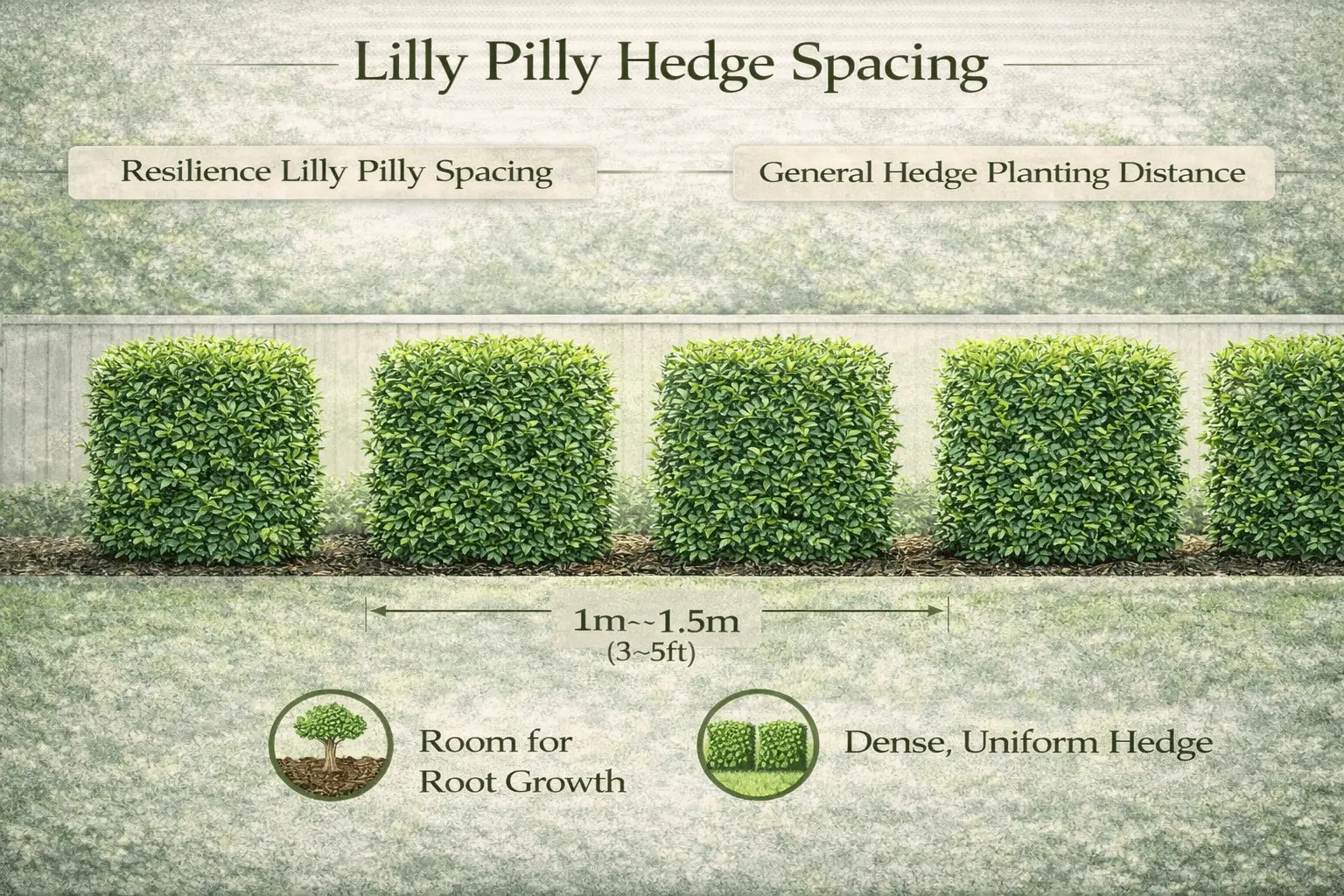
Proper lilly pilly resilience spacing ensures hedges develop dense and uniform foliage.
For most privacy hedges, plants are spaced approximately 1–1.5 meters apart. Closer spacing can create faster hedge coverage, while wider spacing allows for more natural plant growth.
Spacing may also vary depending on the desired hedge height and garden design.
General lilly pilly hedge spacing guidelines
General lilly pilly hedge spacing guidelines help maintain healthy plant growth and hedge density.
Common recommendations include:
- Around 1 meter spacing for dense privacy hedges
- Around 1.5 meters spacing for informal hedges
- Wider spacing for decorative plantings
Correct planting distance reduces overcrowding and helps plants develop strong branching structures.
Care Guide for Lilly Pilly Varieties
-
Watering and soil requirements
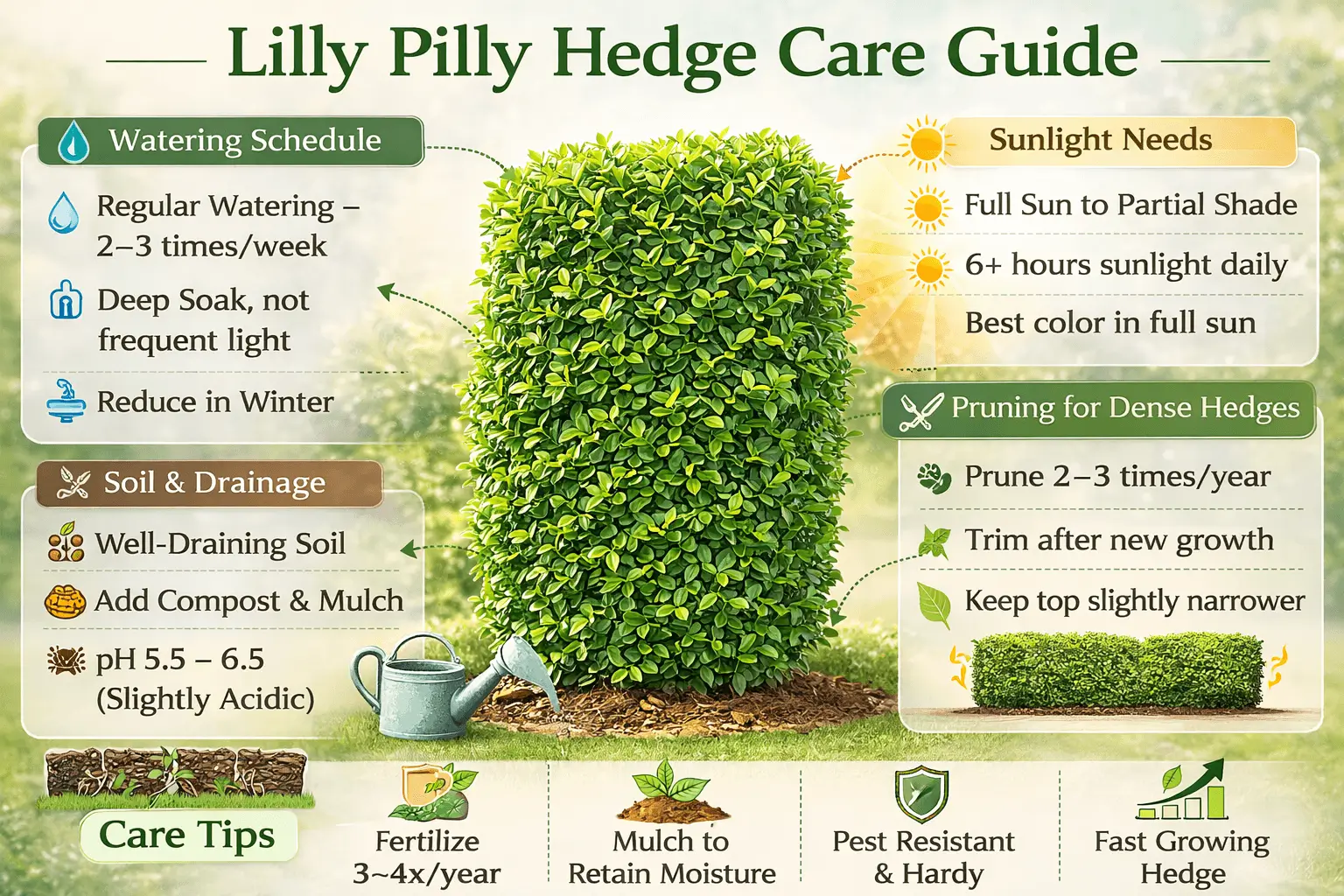
Lilly pilly plants grow best in well-drained soil with consistent moisture, particularly during the establishment period.
Newly planted hedges should be watered regularly until root systems become established. Once mature, these plants tolerate short dry periods but perform best with occasional deep watering.
-
Sunlight and climate tolerance
Most lilly pilly varieties thrive in full sun to partial shade. They are adaptable plants capable of growing in many temperate and subtropical climates.
These plants also show moderate cold tolerance, although young plants may require protection from severe frost.
-
Pruning and hedge maintenance
Pruning is essential for maintaining dense hedges. Gardeners typically trim lilly pilly hedges several times during the growing season to maintain shape.
Regular trimming encourages branching, which increases hedge density and improves privacy screening.
Common Lilly Pilly Problems and How to Fix Them
-
Leaves turning brown
Lilly pilly leaves turning brown often indicate watering stress or poor soil drainage. Inconsistent watering or compacted soil may cause leaf discoloration.
Adjusting watering schedules and improving soil drainage typically resolves this issue.
-
Branch dieback and plant decline
Lilly pilly branches dying may occur due to drought stress, root damage, or poor soil conditions.
Removing affected branches and improving watering practices can help restore plant health.
-
Variety-specific problems
Although lilly pilly resilience problems are generally less common, environmental stress may still affect plant health.
Other cultivars such as Syzygium ‘Big Red’ or Backyard Bliss lilly pilly may show different responses depending on climate, soil, and garden conditions.
Choosing the Best Lilly Pilly Variety for Hedges
Best lilly pilly for hedge planting
Selecting the best lilly pilly hedge variety depends on landscape goals and garden conditions.
Important factors include:
- Desired hedge height
- Hedge density and growth habit
- Pest resistance
- Maintenance requirements
Both select and resilience varieties are reliable hedge plants widely used in residential landscaping.
Other popular syzygium varieties
Several syzygium varieties are used in landscaping beyond select and resilience cultivars.
Common hedge varieties include:
- Syzygium ‘Big Red’
- Syzygium ‘Backyard Bliss’
- Syzygium ‘Straight and Narrow’
Each cultivar offers different growth habits and hedge characteristics.
Beginner Mistakes When Growing Lilly Pilly
Common beginner mistakes when growing lilly pilly hedges involve incorrect spacing, watering issues, and poor variety selection.
Overcrowding plants due to incorrect spacing can prevent proper air circulation and weaken hedge structure. Another frequent mistake is inconsistent watering during the establishment phase.
Choosing a variety unsuitable for the garden’s sunlight conditions or desired hedge height can also limit plant performance.
Proper planning, spacing, and maintenance help prevent these common problems.
Conclusion
Understanding the differences between lilly pilly select vs resilience helps gardeners select the most suitable hedge plant for their landscape. Lilly pilly select is valued for its compact growth and dense hedge formation, while Syzygium australe ‘Resilience’ is known for improved pest resistance and dependable growth.
By considering plant height, hedge spacing, growth rate, and care requirements, gardeners can determine which cultivar best suits their landscaping goals. Both varieties remain popular Australian native hedge plants capable of forming long-lasting privacy screens and healthy garden hedges when maintained properly.
Learn more: Native Gardenia Fruit: Taste, Edibility & Growing Guide
FAQs
What is the difference between lilly pilly select and resilience?
Both are hedging varieties of Syzygium australe. Resilience lilly pilly is bred for stronger pest resistance, while lilly pilly select is widely valued for its dense foliage and compact hedge form.
How fast does resilience lilly pilly grow?
Resilience lilly pilly generally grows at a moderate to fast rate. Under favorable conditions, hedges may begin forming privacy coverage within two to three years.
How tall does lilly pilly select grow?
Typical lilly pilly select height can reach several meters. When maintained as a hedge, gardeners usually keep plants between two and four meters tall.
How far apart should you plant resilience lilly pilly?
Proper lilly pilly resilience spacing typically ranges from 1 to 1.5 meters apart for hedge planting, depending on the desired hedge density.
What are common problems with lilly pilly plants?
Common lilly pilly problems include leaf browning, branch dieback, and environmental stress. Maintaining proper watering, soil drainage, and pruning practices can prevent many of these issues.



One Response