
Introduction
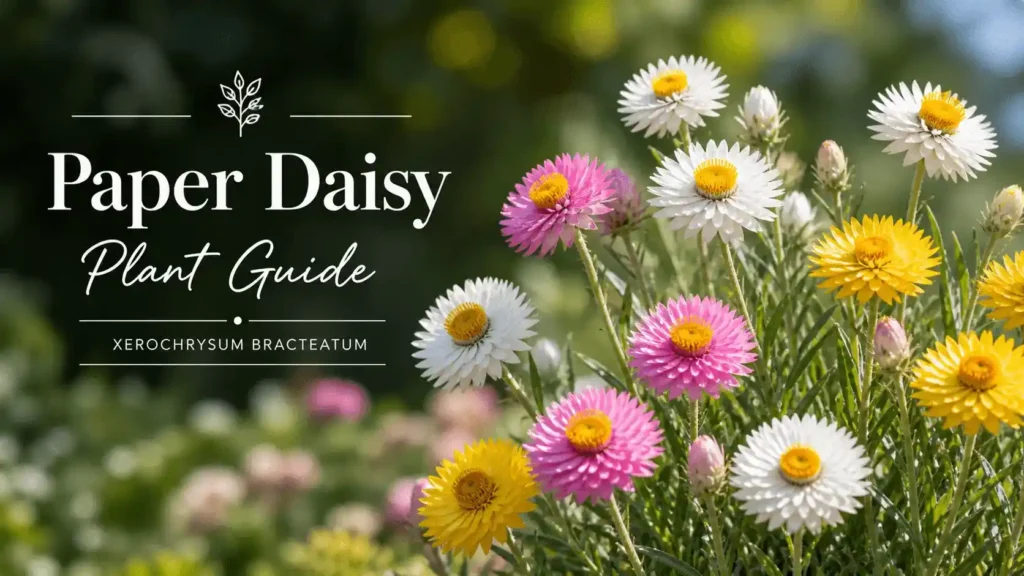
The paper daisy plant is a widely cultivated ornamental species valued for its vibrant, papery-textured flowers and long-lasting color. Commonly associated with australian daisies and australian native paper daisy species, it is known for resilience and adaptability. These plants are especially popular in dry climates and are frequently used in gardens and dried floral arrangements. Their ability to retain color after drying makes them part of the everlasting daisy group. With minimal care requirements and striking visual appeal, paper daisies are suitable for both beginner and experienced gardeners.
Quick Summary
- The paper daisy plant is an Australian native with papery flowers that retain color after drying.
- It belongs to everlasting daisies used in ornamental gardening and floral crafts.
- These plants thrive in full sun and well-drained soil with low maintenance needs.
- Available in colors like white paper daisy, pink, and yellow varieties.
What Is a Paper Daisy Plant? (Definition & Botanical Background)
The paper daisy plant is a flowering ornamental plant classified within australian paper daisies, known for its dry, bract-like petals. Its botanical name is Xerochrysum bracteatum, belonging to the Asteraceae family. This species is closely related to everlasting paper daisy plants, which are valued for their durability and preserved appearance. The species Xerochrysum bracteatum is well-documented in botanical references such as Wikipedia, where its classification and native habitat are подробно explained.
Paper daisies are native to Australia and are often referred to as australian native paper daisy species. The terms paper daisy, paper daisies, and paper daisys all refer to the same plant group, though “paper daisys” is a common misspelling.
Key Characteristics of Paper Daisy Plants
Physical Features and Flower Structure
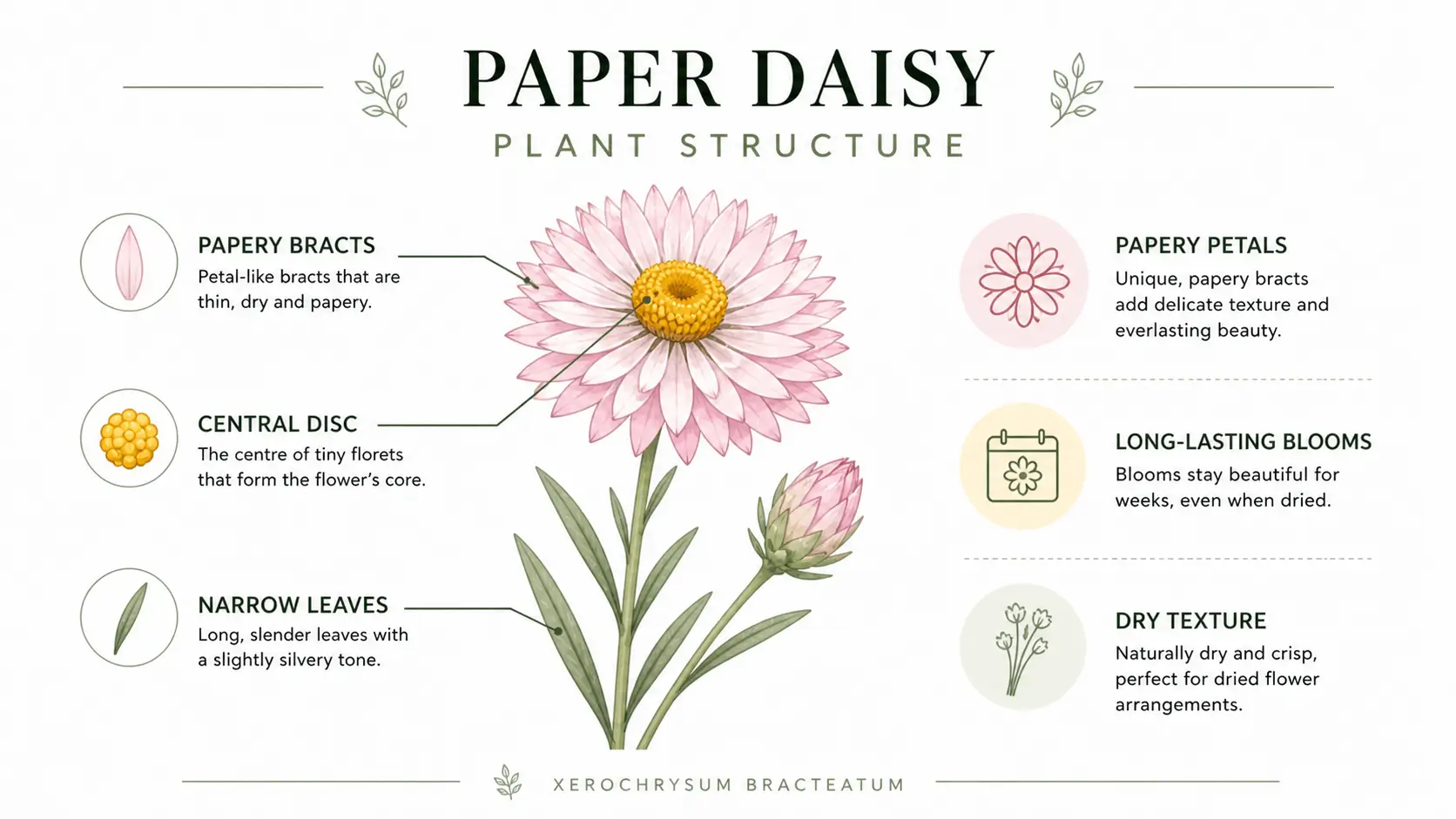
Paper daisy plants are distinguished by their unique flower structure:
- The “petals” are actually papery bracts that surround the central disc
- Flowers feel dry and crisp rather than soft
- Leaves are narrow, slightly rough, and gray-green in color
- Blooms maintain their shape and color even after drying
These features make them ideal for dried flower arrangements.
Color Variations and Types
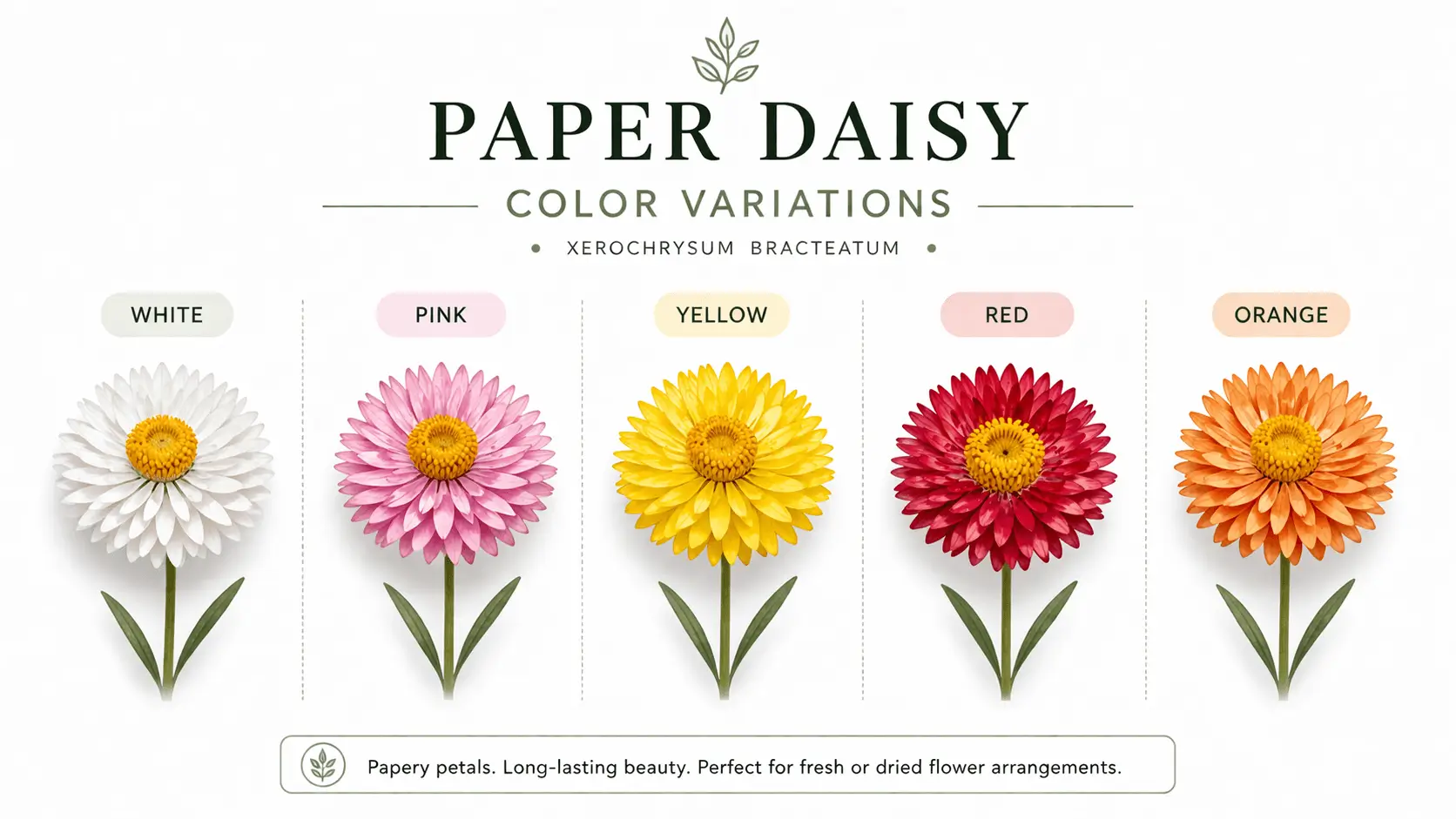
Paper daisies display a wide range of colors:
- White paper daisy
- Pink paper daisy plant
- Yellow paper daisy plant
- Red and orange variations
This diversity enhances their ornamental value in gardens and landscapes. Similar ornamental flowers like Blue Cosmos Flower also offer vibrant color diversity, making them popular in decorative garden designs.
Paper Daisy Plant Varieties and Types
Paper daisy plant varieties can be categorized based on origin and cultivation:
- Native wild varieties
- Hybrid ornamental varieties
- Dwarf vs tall-growing types
Australian paper daisy plant types are typically more drought-tolerant, while cultivated varieties may be bred for color intensity and size. Regional variations such as paper daisy plant Australia and paper daisy plant NZ reflect adaptation to local climates.
Paper Daisy Plant Size and Growth Habit
Typical Height and Spread
Paper daisy plant height typically ranges from:
- 30 cm to 90 cm tall
- Spread of 20 cm to 45 cm
Compact varieties are suitable for containers, while taller types are used in garden beds.
Growth Rate and Seasonal Behavior
Paper daisies are generally fast-growing plants:
- Often grown as annuals in cooler climates
- Can behave as short-lived perennials in warm regions
- Flowering occurs in spring through summer
Warm temperatures and consistent sunlight promote continuous blooming.
Paper Daisy Plant Care Guide
Light, Soil, and Water Requirements
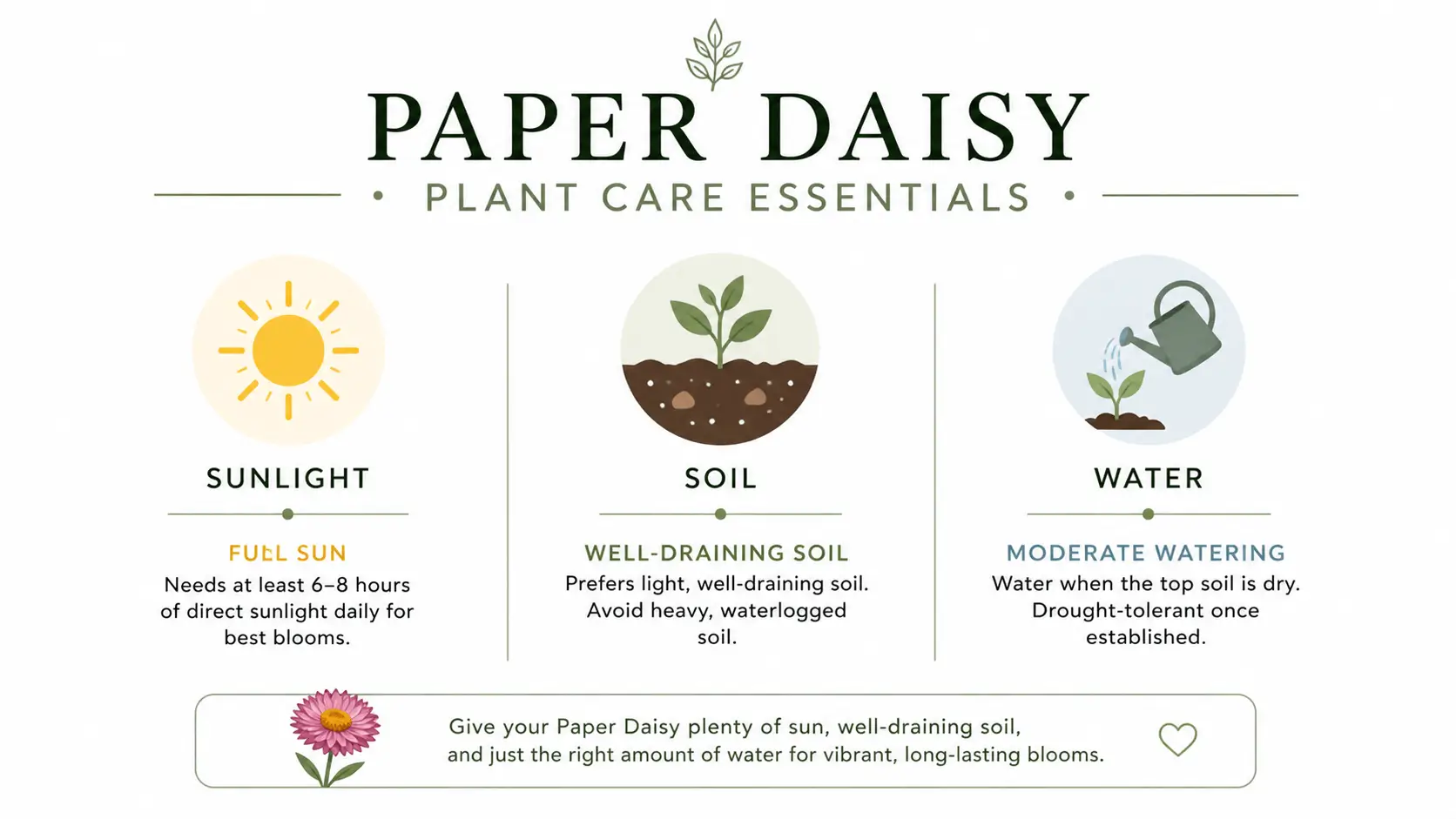
Proper paper daisy plant care includes:
- Full sun exposure (minimum 6–8 hours daily)
- Well-draining sandy or loamy soil
- Moderate watering; avoid waterlogging
These conditions mimic their native Australian habitat.
Fertilization and Maintenance
- Light feeding with balanced fertilizer
- Deadheading encourages continuous blooms
- Minimal pruning required
Over-fertilization should be avoided as it may reduce flowering.
Climate and Environmental Tolerance
- High drought tolerance once established
- Performs well in dry, warm climates
- Adapted to Australian environmental conditions
Similar Australian native flowering plants such as Kangaroo Paw Care share comparable sunlight and soil requirements.
Growing Paper Daisy Plants from Seeds
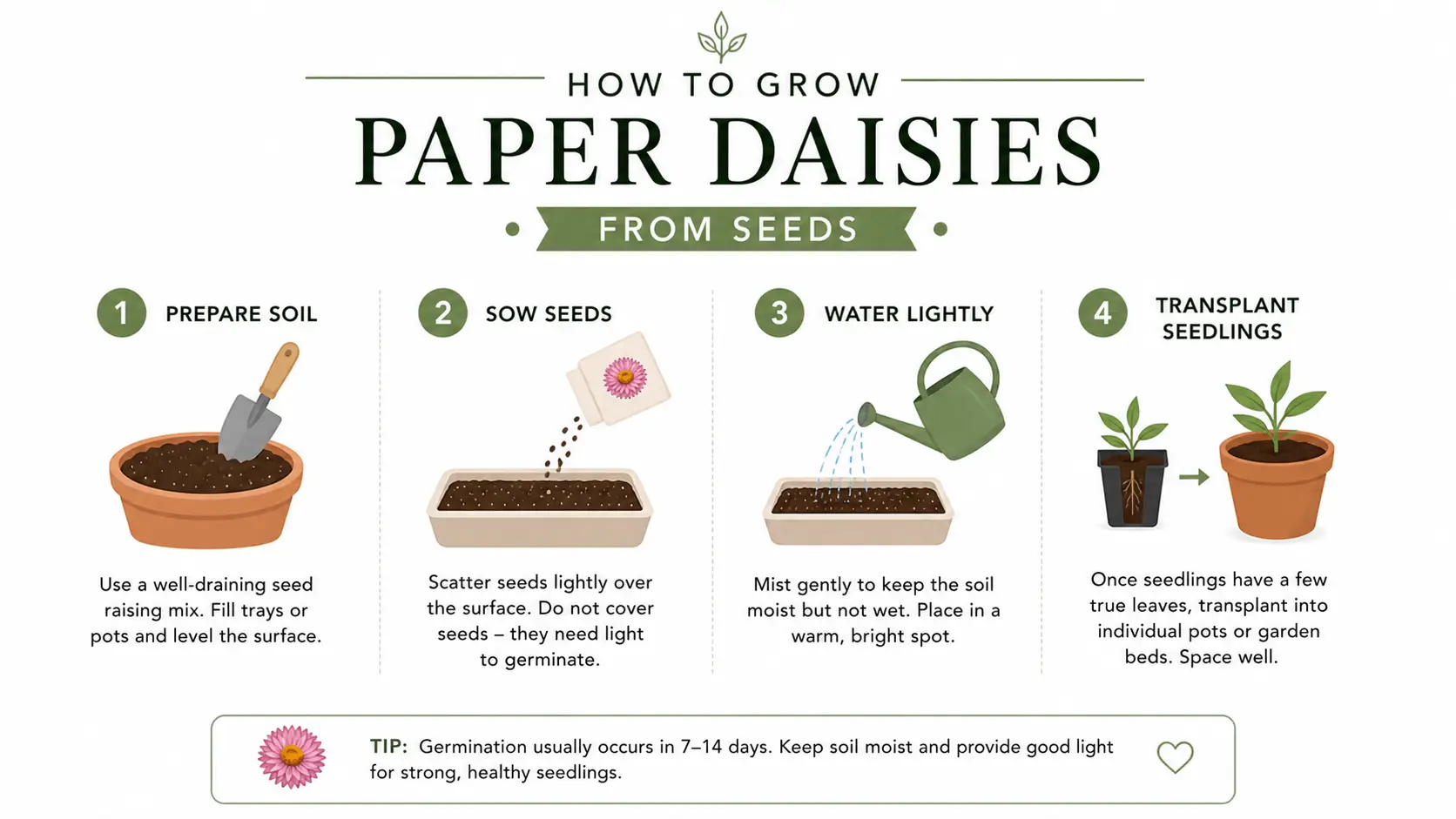
Paper daisy seeds are easy to germinate under proper conditions.
Steps:
- Prepare well-draining soil
- Sow seeds lightly on the surface
- Maintain consistent moisture without overwatering
- Transplant seedlings after establishment
Germination typically occurs within 7–14 days in warm temperatures.
Paper Daisy Plant vs Other Daisy Types (Comparison Section)
Paper daisies differ significantly from common garden daisies in texture and durability.
| Feature | Paper Daisy Plant | Common Daisy |
| Flower texture | Papery | Soft petals |
| Lifespan | Long-lasting/dried use | Short-lived |
| Climate tolerance | High (dry conditions) | Moderate |
| Origin | Australian native | Various regions |
Paper daisies are better suited for dry climates and decorative uses.
Common Problems and Troubleshooting Paper Daisy Plants
Why Are Paper Daisy Leaves Turning Yellow?
Leaves turn yellow primarily due to:
- Overwatering
- Poor soil drainage
Ensuring proper watering and soil conditions resolves this issue.
Why Is the Plant Not Flowering?
Lack of flowering may result from:
- Insufficient sunlight
- Nutrient imbalance
Providing full sun and balanced nutrients improves bloom production.
Pest and Disease Issues
Common issues include:
- Aphids and mites
- Fungal problems in overly wet conditions
Prevention strategies include proper spacing and avoiding excess moisture.
Beginner Mistakes to Avoid When Growing Paper Daisies
Common mistakes include:
- Overwatering in poorly draining soil
- Growing plants in low-light conditions
- Ignoring proper spacing
Avoid:
- Heavy clay soil
- Overcrowding plants
- Insufficient sunlight exposure
These factors significantly affect plant health and flowering.
Environmental and Growing Limitations
Paper daisies have specific environmental preferences:
- Not suitable for highly humid climates
- Sensitive to frost in some varieties
- Best adapted to dry, sunny environments
Understanding these limitations helps ensure successful growth. For gardeners in arid regions, exploring drought-tolerant species like those listed in Plants for Dry Areas can improve plant survival and landscape sustainability.
Uses of Paper Daisy Plants
Paper daisies serve multiple purposes:
- Ornamental garden displays
- Dried flower arrangements
- Landscaping in dry regions
Common uses:
- Decorative borders
- Floral crafts
- Pollinator-friendly gardens
Their long-lasting blooms make them highly versatile.
Conclusion
The paper daisy plant is a resilient and visually striking flowering species known for its papery blooms and low maintenance requirements. As part of the australian paper daisies group, it thrives in full sun and well-drained soil while offering extended flowering periods. Its adaptability, color variety, and usefulness in both fresh and dried arrangements make it a valuable choice for gardeners. Understanding its care, growth habits, and limitations ensures optimal results and long-lasting ornamental value. For a broader understanding of plant care, varieties, and growing techniques, refer to the main pillar guide on plant benefits and gardening essentials.
FAQs
What is the botanical name of the paper daisy plant?
The botanical name is Xerochrysum bracteatum, a species native to Australia.
Are paper daisies annual or perennial plants?
They can be grown as annuals or short-lived perennials depending on climate.
How long do paper daisy flowers last?
The flowers are long-lasting and retain their color even after drying.
Can paper daisies grow indoors?
They prefer outdoor conditions but can grow indoors with strong sunlight.
How do you propagate paper daisy plants?
They are commonly propagated using seeds, which germinate easily in warm conditions.