
Introduction to Common Palm Trees
Common palm trees refer to widely known and frequently grown species within the Arecaceae family. They are valued for their aesthetic appeal, ability to create tropical landscapes, and adaptability to both indoor and outdoor environments. Palm trees differ based on climate suitability, ranging from tropical humidity-loving species to drought-tolerant varieties. Their diversity includes different palm tree names, structures, and uses, making them suitable for gardens, homes, and commercial landscaping. Palm trees belong to the Arecaceae family, a group of flowering plants widely studied in botany (source: Wikipedia).
What Makes a Palm Tree “Common”?
A palm tree is considered “common” when it is widely cultivated, easy to grow, and readily available in nurseries. These palms typically adapt well to different conditions and require moderate care.
Common types of palm trees often fall into two categories: native palms and ornamental palms. Native palms grow naturally in a region, while ornamental palms are introduced for landscaping purposes. Regional dominance also defines common palms—for example, certain species are common in Florida, while others dominate Australian landscapes due to climate compatibility.
Types of Common Palm Trees Around the World
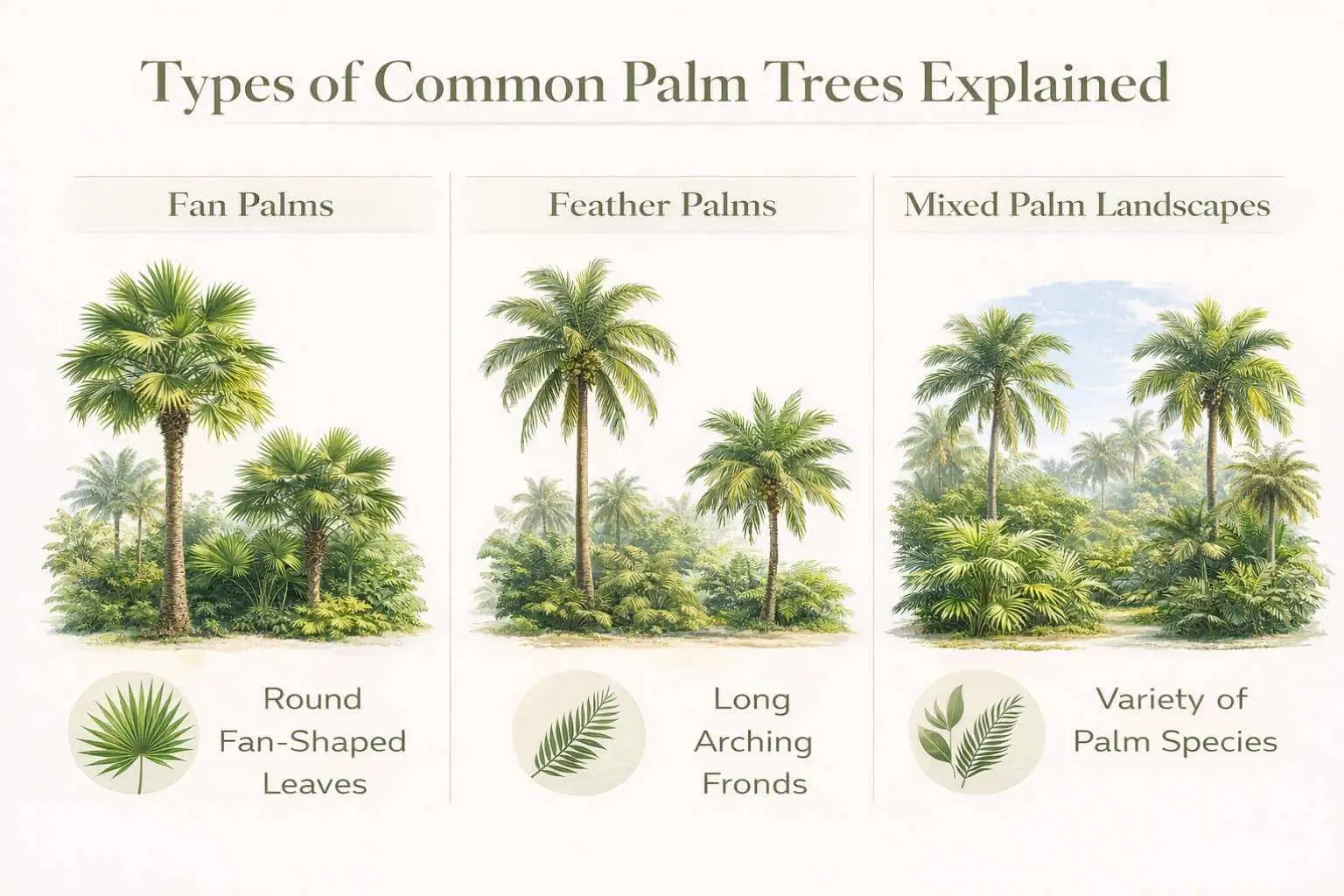
Common palm trees can be grouped based on structure, size, and growing conditions rather than just species names.
Fan Palms vs Feather Palms
Fan palms have broad, circular leaves that spread like a fan, while feather palms have long, arching fronds with a feather-like appearance. Fan palms are often more drought-tolerant, whereas feather palms typically thrive in humid environments.
Tall vs Dwarf Palm Trees
Tall palm trees can reach significant heights and are used for large landscapes or streetscapes. In contrast, dwarf palm trees remain compact, making them suitable for small gardens, patios, or container planting. Small palm trees are commonly used as decorative plants in limited spaces.
Indoor vs Outdoor Palm Trees
Indoor palm trees are selected for their ability to tolerate lower light and controlled environments. Outdoor palms require full sun or partial shade depending on species. House palm trees and potted palm trees are commonly used indoors due to their manageable size and adaptability.
Most Common Palm Trees by Region
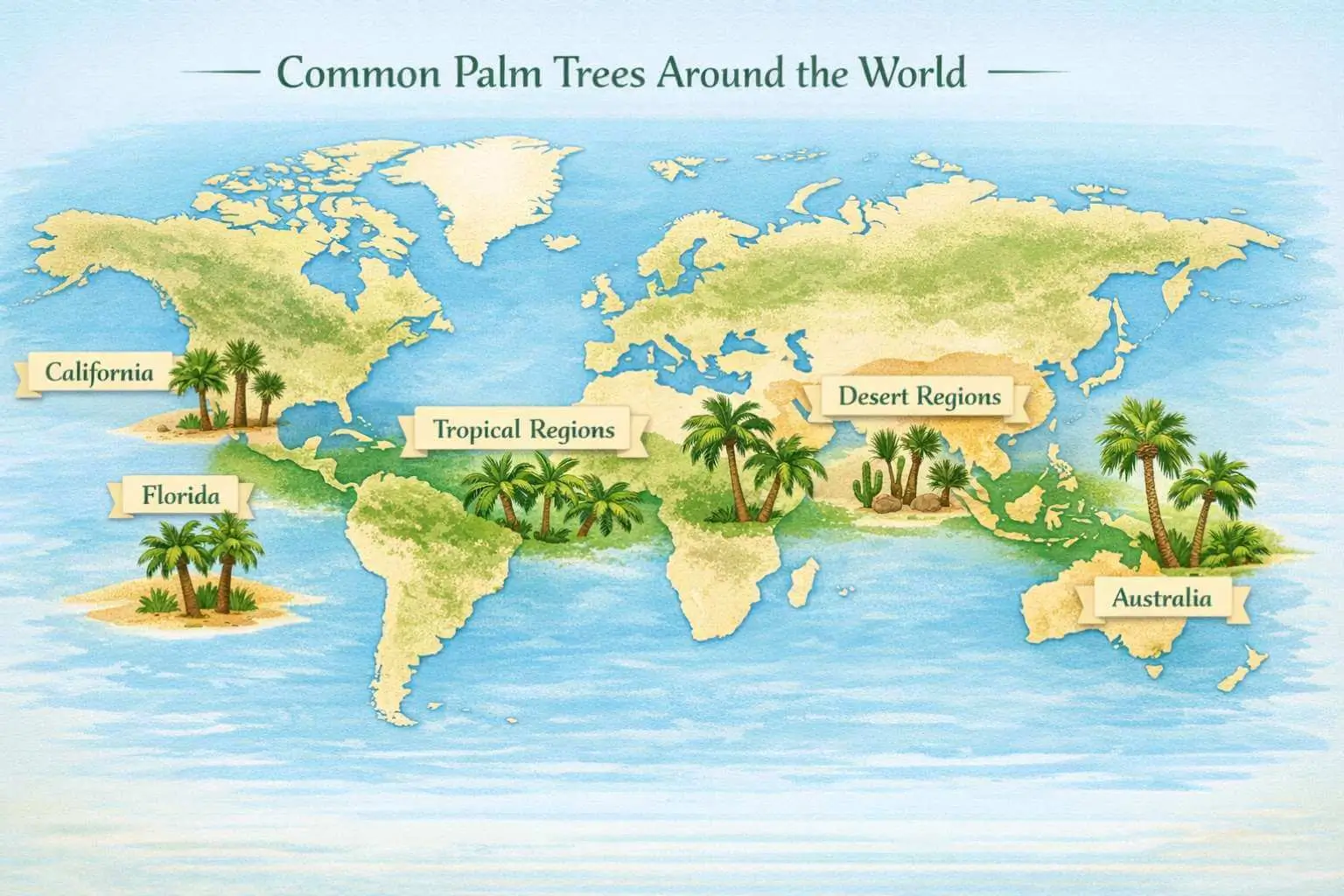
Palm tree distribution is strongly influenced by climate conditions such as temperature, humidity, and rainfall.
-
Common Palm Trees in Australia
Common palm trees in Australia include both native and introduced species. Australian palm trees are adapted to warm climates and are often used in landscaping for their resilience and aesthetic appeal.
-
Common Palm Trees in Florida and California
Florida’s humid subtropical climate supports lush, fast-growing palms, while California’s Mediterranean climate favors drought-tolerant species. Common palm trees in south Florida differ significantly from those in southern California due to differences in humidity and rainfall.
-
Common Palm Trees in Tropical Regions
Tropical regions such as Southeast Asia, Hawaii, and the Philippines support a wide range of palm species due to consistent warmth and high humidity. These conditions allow palms to grow rapidly and develop dense foliage.
-
Palm Trees in Dry and Desert Regions
In arid regions like Arizona and Las Vegas, common palm trees are selected for drought tolerance. These species are adapted to survive with minimal water and high temperatures.
Australian Native Palm Trees and Their Importance
Australian native palm trees are species that naturally occur in Australia and are adapted to local ecosystems. They play a role in supporting biodiversity and require less maintenance compared to non-native species.
Popular Native Palm Species
Popular native palms include species like the Bangalow palm, known for its tall growth and suitability for landscaping. These palms are often used in gardens for their natural compatibility with the environment.
Are Palm Trees Native to Australia?
Yes, several palm species are native to Australia, particularly in tropical and subtropical regions. However, many commonly seen palms are introduced species used for ornamental purposes.
How to Identify Common Palm Trees
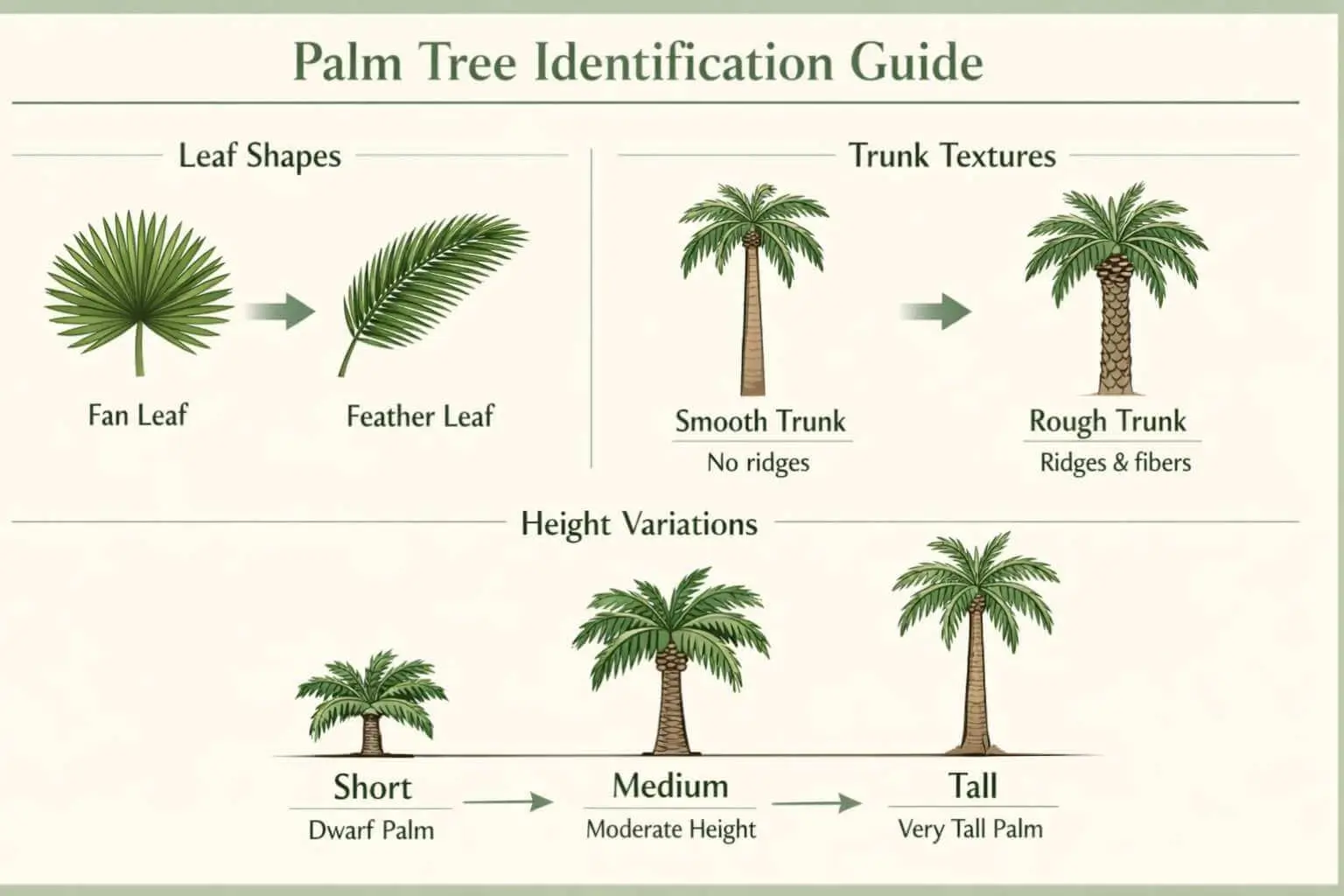
Palm tree identification involves observing physical characteristics such as leaves, trunk, and growth pattern.
Key Features for Identification
Key features include leaf shape (fan or feather), trunk structure (smooth or textured), and overall height. These traits help differentiate between palm species.
Using Palm Identification Charts
Palm tree identification charts provide visual references that simplify identification. These charts often include palm tree types with pictures, making them useful for beginners.
Small and Indoor Palm Trees for Homes
Small palm trees are ideal for indoor spaces or compact gardens due to their manageable size. Many indoor palms share similar care needs with popular houseplants, and guides like Spider Plant Indoor Benefits and Zamioculcas Zamiifolia Care Guide help explain how low-light plants adapt well indoors.
Best Small Palm Trees
The best small palm trees are compact, slow-growing, and suitable for containers. They are often used in patios or small garden spaces.
Common House Palm Trees
Common house palm trees thrive indoors due to their tolerance for indirect light and moderate humidity. These palms are popular as decorative indoor plants.
Common Palm Tree Problems and Solutions
Palm trees can face several common issues related to care, environment, and pests.
Yellowing Leaves and Nutrient Issues
Yellowing leaves are often caused by overwatering or nutrient deficiencies. Adjusting watering schedules and providing balanced fertilizers can resolve this issue.
Pest Infestations
Common pests affecting palm trees include insects that damage leaves and stems. Regular inspection and proper plant care help prevent infestations.
Slow Growth or Stunted Development
Slow growth may result from poor soil, lack of nutrients, or unsuitable climate conditions. Improving soil quality and ensuring proper light can enhance growth.
Care Guide for Common Palm Trees
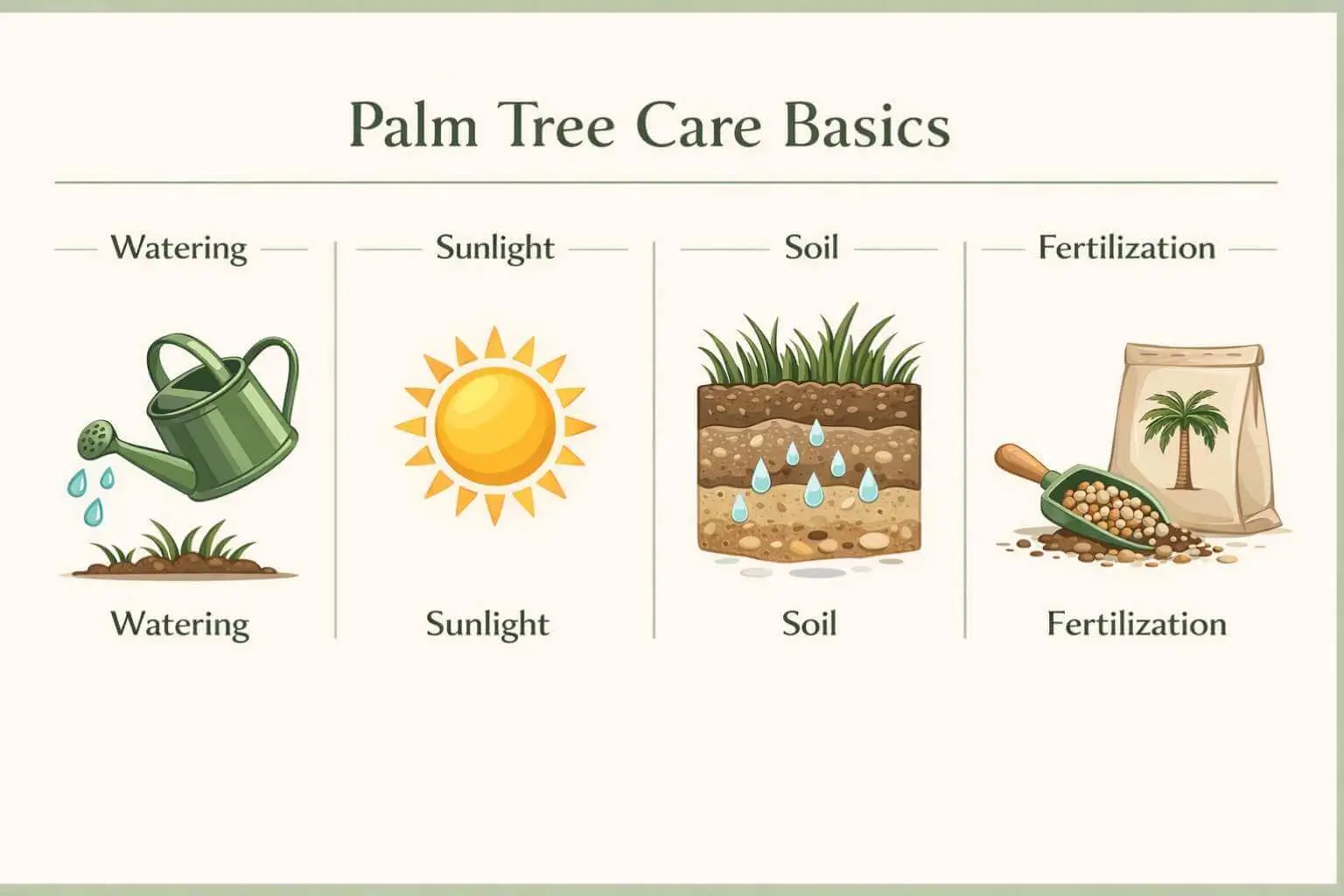
Proper care ensures healthy growth and longevity of palm trees. Understanding palm care becomes easier when compared to other indoor plants, and resources like Japanese Money Plant Care provide similar insights into watering, light, and soil requirements.
-
Watering Needs
Palm trees require consistent watering, but overwatering can lead to root rot. Well-balanced watering is essential.
-
Light Requirements
Most palms prefer bright, indirect light indoors and full sun outdoors, depending on species.
-
Soil and Fertilization
Well-draining soil is crucial for palm health. Fertilizers should provide essential nutrients like nitrogen, potassium, and magnesium.
-
Climate Tolerance
Palm trees vary in climate tolerance. Some thrive in tropical conditions, while others adapt to subtropical or arid environments.
Growth Rate and Size of Palm Trees
Palm trees vary widely in growth speed and mature size depending on species and conditions.
Growth Rate Differences
Some palms grow quickly in warm climates, while others grow slowly. Temperature, water, and soil quality significantly influence growth rate.
Mature Size Expectations
Palm trees range from small indoor varieties to tall outdoor species. Indoor palms typically remain smaller due to limited space and controlled conditions.
Beginner Mistakes When Growing Palm Trees
Common mistakes include overwatering, selecting the wrong species for the climate, ignoring soil drainage, and placing indoor palms in unsuitable lighting conditions. Avoiding these issues improves plant health and growth success.
Conclusion: Understanding Common Palm Trees for Better Selection
Common palm trees vary widely in type, size, and environmental requirements. Understanding palm identification, climate compatibility, and care practices helps in selecting the right palm species. Whether for indoor decoration or outdoor landscaping, choosing suitable palm trees ensures long-term growth and minimal maintenance.
FAQs About Common Palm Trees
What are the most common palm trees used in landscaping?
The most common palm trees used in landscaping include species that are adaptable, visually appealing, and easy to maintain, such as fan palms and feather palms.
How can I identify different types of palm trees easily?
Palm trees can be identified by examining leaf shape, trunk structure, and height. Using a palm tree identification chart can simplify the process.
Which palm trees grow well indoors?
Palm trees that tolerate low light and indoor conditions, such as small and compact species, are best suited for indoor environments.
Are palm trees easy to maintain for beginners?
Yes, many common palm trees are low-maintenance if provided with proper watering, light, and soil conditions.
What causes palm tree leaves to turn yellow?
Yellow leaves are usually caused by overwatering, poor drainage, or nutrient deficiencies.
Do palm trees grow in cold climates?
Some palm species can tolerate cooler climates, but most prefer warm, tropical, or subtropical environments.



One Response