Introduction: What Are Front Yard Small Hedges and Why They Matter
Front yard small hedges are low-height, structured plants used to define borders, enhance design, or create light privacy in residential landscapes. These hedges typically remain compact and are easy to shape, making them ideal for modern front yard layouts.
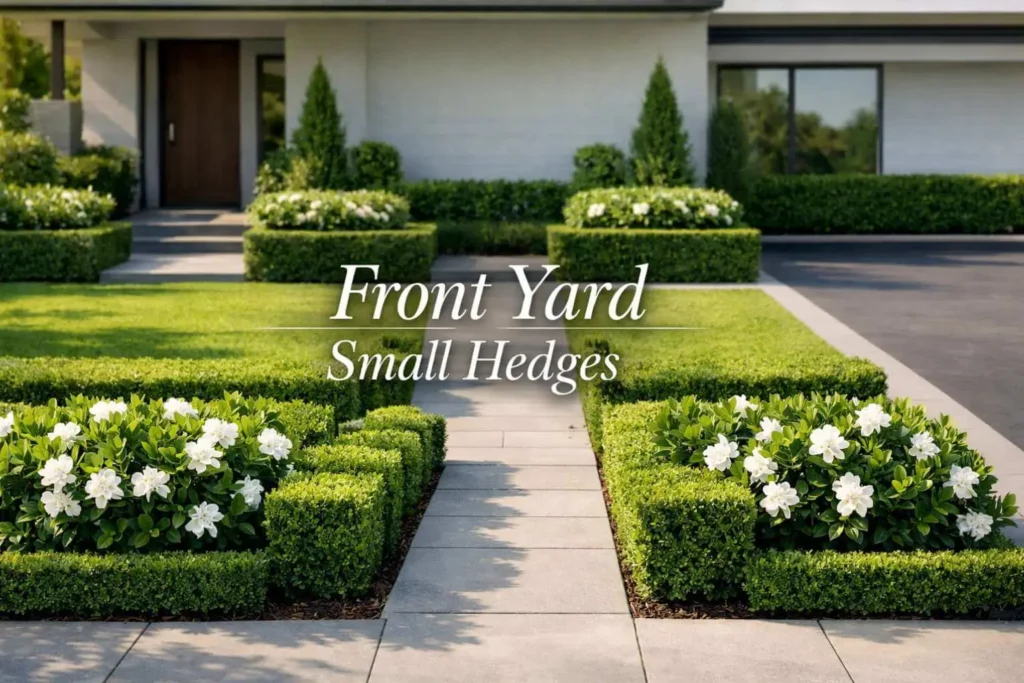
They play a key role in improving curb appeal by adding clean lines, greenery, and visual structure. Small hedges also help organize space, guide pathways, and frame entrances without overwhelming the yard. A front yard gardenia hedge is a popular choice due to its evergreen foliage and fragrant flowers. Hedges are commonly used in landscaping to create defined boundaries and structure, a concept widely explained in hedge (gardening).
These hedges are highly relevant across different climates, especially in regions like Australia where front yard small hedges Australia must adapt to varying sunlight, soil, and water conditions.
What Defines the Best Front Yard Small Hedges
The best front yard small hedges are defined by compact growth, evergreen foliage, and manageable maintenance requirements. Low growing hedge plants are preferred because they maintain structure without excessive pruning.
Evergreen front yard small hedges provide year-round greenery, while deciduous types may offer seasonal interest but reduce privacy during dormant periods. Maintenance level is also critical, as front yard small hedges low maintenance are more suitable for homeowners seeking minimal upkeep.
Environmental conditions influence selection. Limited space, sun exposure, and soil quality determine which hedge plants perform well. The concept of best front yard small hedges depends on purpose—whether used for borders, privacy, or decorative landscaping.
Types of Front Yard Small Hedges Based on Function
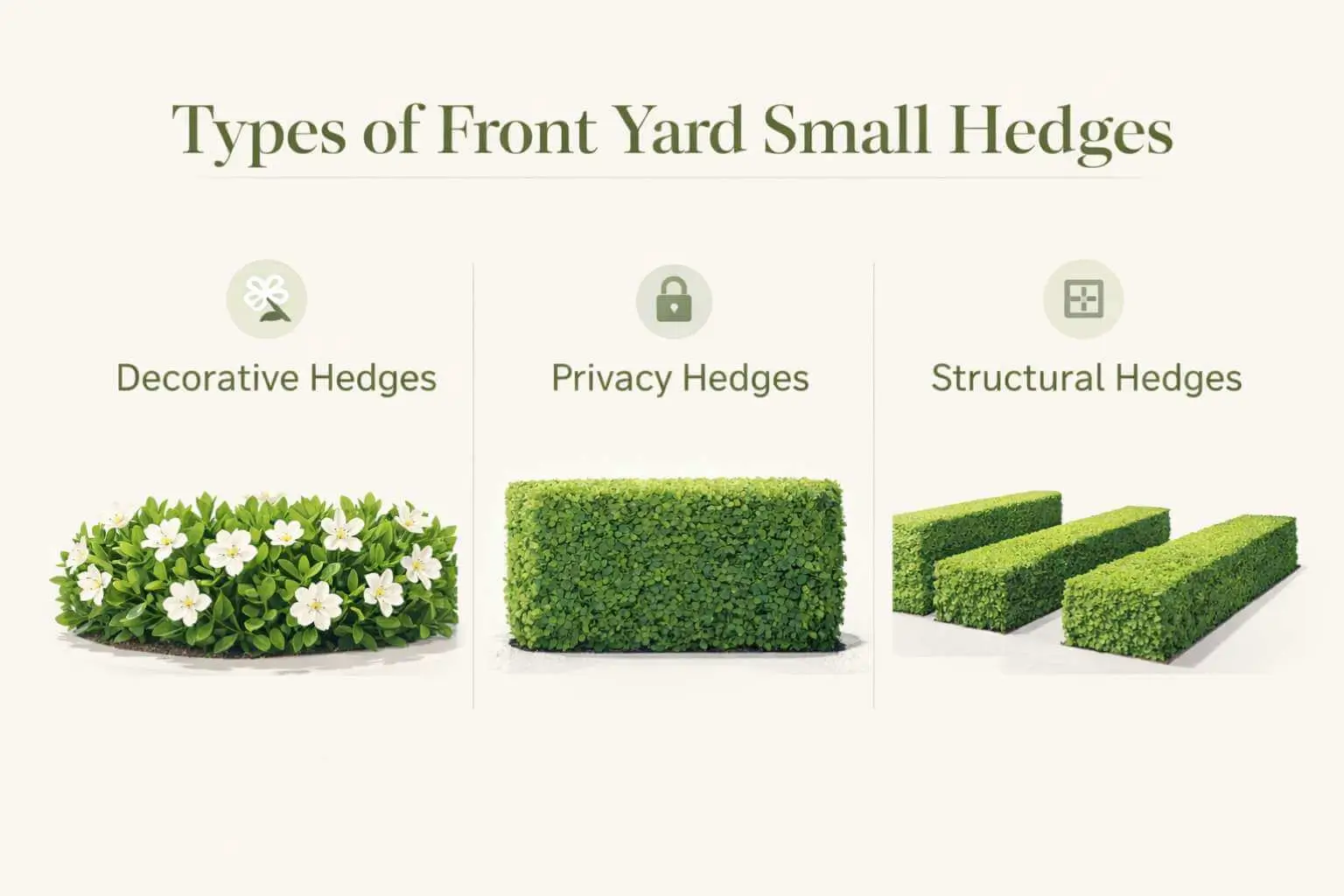
Front yard small hedges can be categorized based on their primary function: decorative, privacy, or structural. Decorative hedges include small flowering hedges and flowering hedge plants that add seasonal color and visual interest. These are often used along pathways or as feature borders. Privacy hedges focus on density, forming a compact hedge row that reduces visibility from the street. These are commonly used in front yard privacy hedge ideas where screening is needed. Structural hedges emphasize clean lines and geometric shapes, often seen in modern landscaping. These hedges define spaces clearly and support minimalist garden designs. These categories align with common landscaping needs such as front yard hedge ideas, front yard hedge row layouts, and selecting suitable front yard hedge plants.
You can explore suitable dense hedge options in our guide on Tropical Screening Plants, which explains how to create effective front yard hedge rows.
Best Small Hedge Plants for Front Yards (Australia Focus)
The best small hedging plants Australia must tolerate local climate conditions, including heat, drought, and variable rainfall. Small hedges Australia often include both native and adaptable ornamental shrubs.
Flowering options such as small flowering hedge plants Australia and white flowering hedge plants Australia provide seasonal blooms while maintaining compact size. Evergreen compact shrubs are also widely used for consistent structure.
Regional suitability matters. For example, best hedge plants Brisbane must handle humidity, while hedge plants Sydney require tolerance to mild winters and coastal conditions. Hedging plants Sydney often include hardy, adaptable species.
Many homeowners source plants from retailers like small hedge plants Bunnings, where a range of suitable hedge plants are available for different conditions. For native hedge options, see Types of Lilly Pilly, which are widely used for small hedges in Australian front yards.
Front Yard Gardenia Hedge: Features, Benefits, and Uses
A front yard gardenia hedge is a compact evergreen hedge formed using Gardenia jasminoides, known for its glossy leaves and fragrant white flowers.
Benefits include strong fragrance, dense foliage for privacy, and suitability for small spaces. Gardenias create a refined and premium appearance in front yard landscapes.
Gardenias require well-drained, slightly acidic soil and consistent watering. They perform best in full sun to partial shade and benefit from regular feeding. As a flowering hedge, they are considered a top option among flowering hedges Australia.
Choosing Low Maintenance and Low Growing Hedge Plants
Low growing hedge plants are ideal for front yards where space and maintenance are limited. These plants require minimal pruning and maintain their shape naturally.
Low maintenance hedging plants Australia are selected based on water efficiency, slow growth, and resilience to environmental stress. Low hedge plants Australia typically require less frequent trimming and watering once established.
Beginners should focus on plants with predictable growth habits and moderate water needs. Over-pruning or neglecting spacing can affect hedge density and structure, so balanced care is essential.
Fast-Growing vs Slow-Growing Hedges: What to Choose
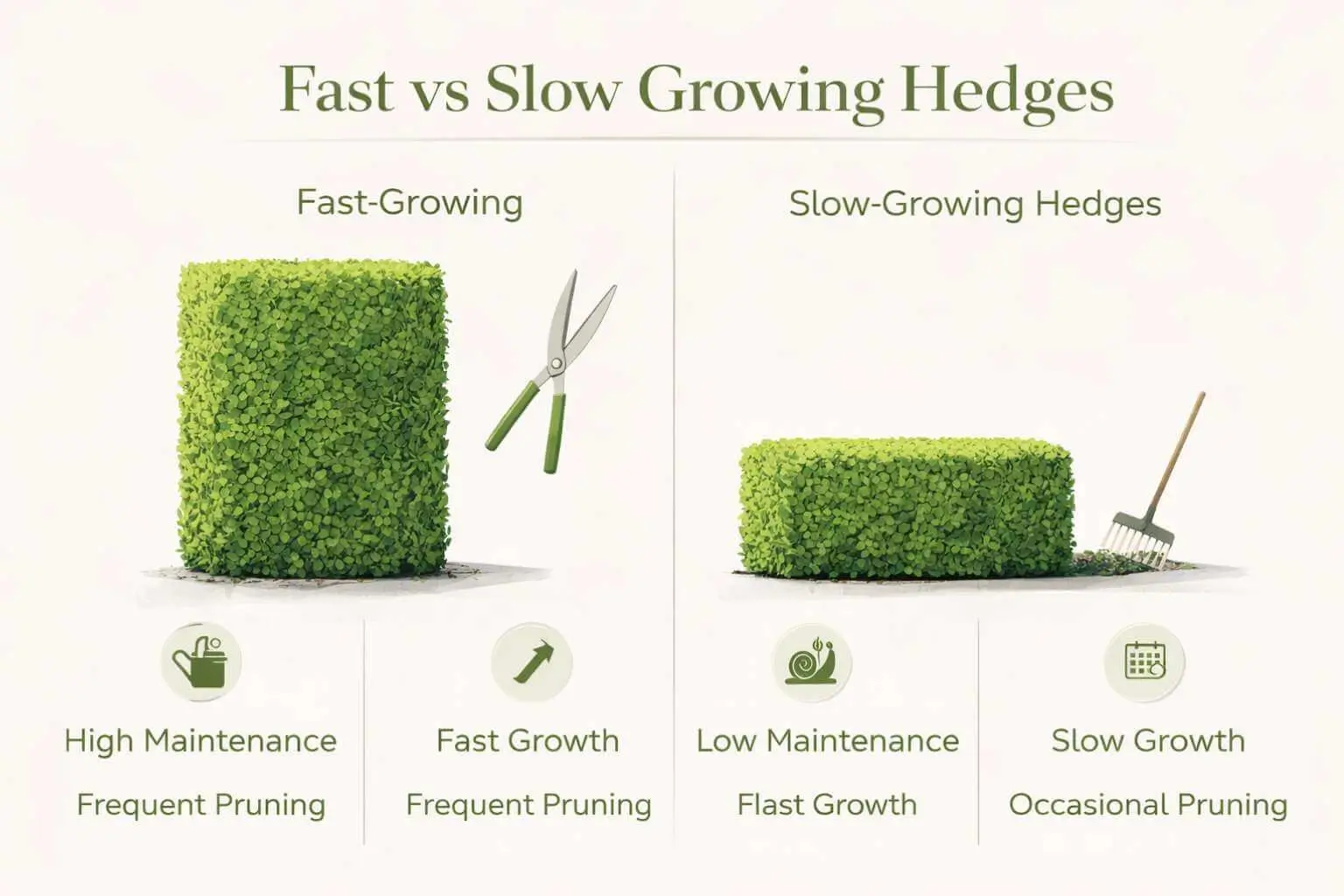
Fast-growing hedges provide quick privacy but require frequent trimming. Fast growing hedge plants Australia and fast-growing small hedge plants Australia are suitable for rapid coverage.
Slow-growing hedges, in contrast, require less maintenance and maintain compact shapes more easily. The choice depends on whether immediate screening or long-term ease of care is the priority.
The fastest growing hedge Australia options are useful for urgent landscaping needs, while slow growers are better for structured, low-maintenance designs. Fast growing hedges Australia often demand more consistent pruning.
Hedge Ideas for Front Yard Design and Landscaping
Front hedge ideas Australia include border hedges along pathways, layered hedges with trees, and symmetrical designs for visual balance.
Small garden hedge ideas often use low hedges to define edges without blocking views. Fence line plants Australia can be combined with hedges to create layered privacy.
Design strategies include symmetry for formal gardens and curved hedge rows for natural aesthetics. Combining hedges with best screening trees Australia enhances vertical and horizontal structure.
Hedges for Shade vs Full Sun Conditions
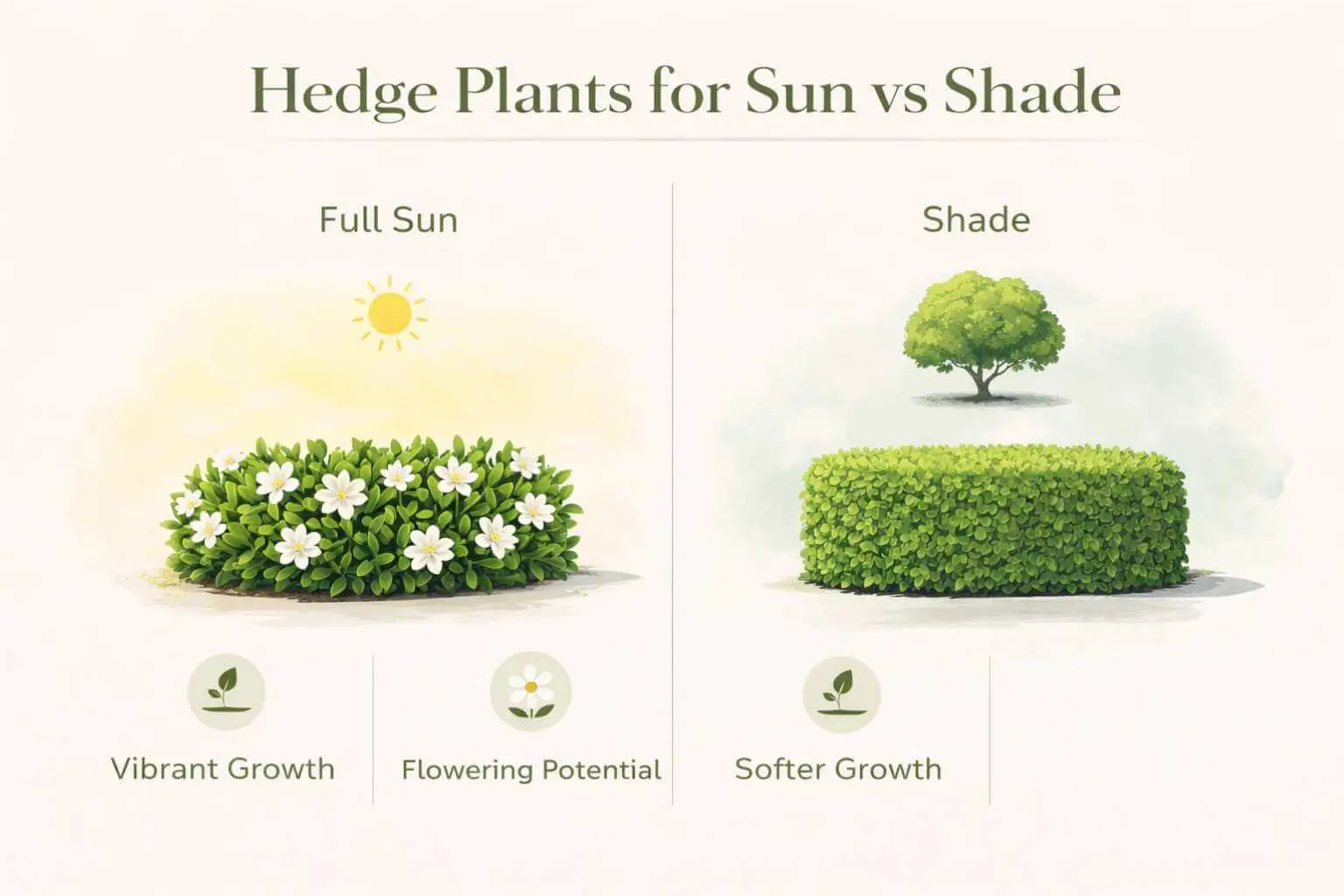
Hedge plants for shade Australia must tolerate reduced light and slower growth. Hedging plants for shade Australia often produce less dense foliage compared to sun-loving varieties.
Sun-loving hedge plants grow faster and produce more flowers. Shade hedge plants Australia require careful placement to avoid poor growth and sparse coverage.
Understanding light conditions is essential, as flowering performance is typically reduced in shaded environments.
Flowering Hedges: Adding Color to Front Yard Landscapes
Flowering hedges provide seasonal color and attract pollinators such as bees and butterflies. Small hedge plants with flowers are commonly used in decorative landscapes.
Flower hedging plants and hedging with flowers enhance visual appeal while maintaining structure. Flower hedges in Australia include a range of species suited to local climates.
Flowering hedge Australia options combine aesthetics with functionality, offering both beauty and defined garden boundaries.
Common Problems with Small Hedges and How to Fix Them
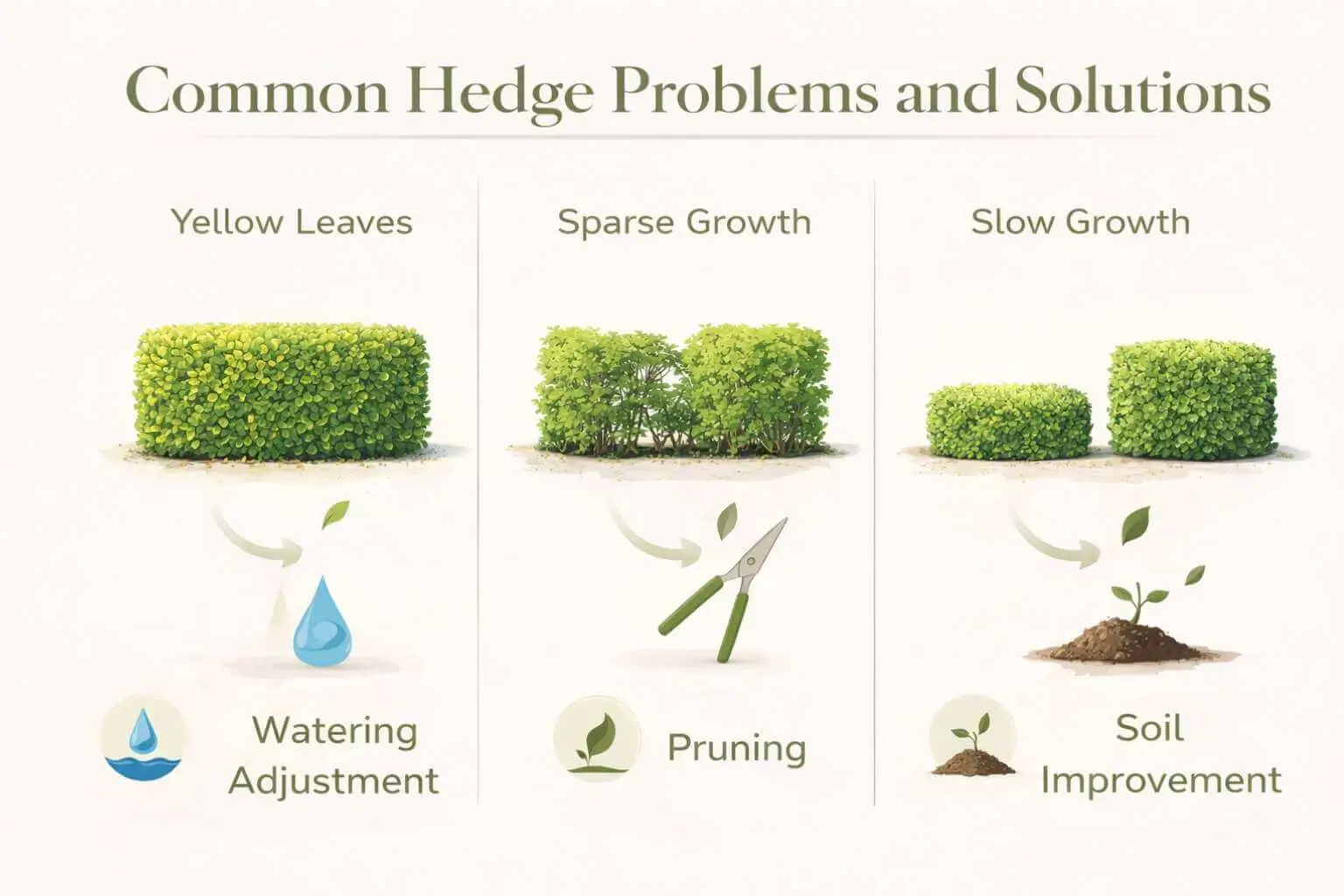
Yellow leaves often indicate overwatering or poor drainage. Adjust watering frequency and improve soil structure to resolve this issue.
Slow growth is usually caused by inadequate sunlight or poor soil quality. Adding compost and ensuring proper light exposure can improve growth.
Sparse hedges result from improper pruning or incorrect spacing. Regular trimming and correct planting distance help maintain density.
Preventative care includes proper soil preparation, consistent watering, and routine maintenance.
Beginner Mistakes When Planting Front Yard Small Hedges
Choosing plants unsuitable for the climate is a common mistake, particularly in regions like front yard small hedges NSW or broader Australia.
Overcrowding hedge rows restricts airflow and leads to poor growth. Ignoring growth rate can result in uneven or unmanageable hedges.
Selecting the right plant for the environment and allowing proper spacing are essential for long-term success.
Where to Find Small Hedge Plants (Australia Context)
Small hedge plants are commonly available at retailers such as small hedge plants Bunnings, hedging plants Bunnings, and hedge plants Bunnings.
When selecting plants, look for healthy foliage, strong root systems, and consistent growth patterns. Smaller plants are more affordable but take longer to establish, while mature plants provide instant impact but cost more.
Conclusion: How to Choose the Right Front Yard Small Hedges
Choosing the right front yard small hedges depends on matching plant characteristics with climate, maintenance level, and design goals. Compact growth, adaptability, and purpose—whether decorative, structural, or privacy—are key factors.
A front yard gardenia hedge stands out as a premium option for fragrance and visual appeal. The best results come from selecting hedges that suit local conditions while aligning with landscaping needs.
FAQs: Front Yard Small Hedges
What are the best front yard small hedges for beginners?
The best front yard small hedges for beginners are low maintenance, slow-growing, and adaptable plants. These hedges require minimal pruning and tolerate a range of conditions, making them easier to manage.
How tall should front yard small hedges be?
Front yard small hedges typically range from 30 cm to 1 meter in height. Lower hedges are used for borders, while slightly taller hedges provide light privacy without blocking visibility.
Are gardenia hedges good for front yards?
Yes, a front yard gardenia hedge is ideal due to its evergreen foliage, dense growth, and fragrant flowers. It provides both decorative value and moderate privacy.
What are the fastest growing small hedge plants?
Fast growing small hedge plants include species that establish quickly and provide rapid coverage. However, they require regular trimming to maintain shape and prevent overgrowth.
Can small hedges grow in shade?
Yes, some small hedges can grow in shade, but growth may be slower and less dense. Shade-tolerant hedge plants are best suited for low-light areas.
How do you maintain a small hedge in front yard?
Maintaining a small hedge involves regular pruning, consistent watering, and proper soil care. Occasional fertilization and monitoring for pests or diseases help ensure healthy growth.

2 Responses